Rewrite
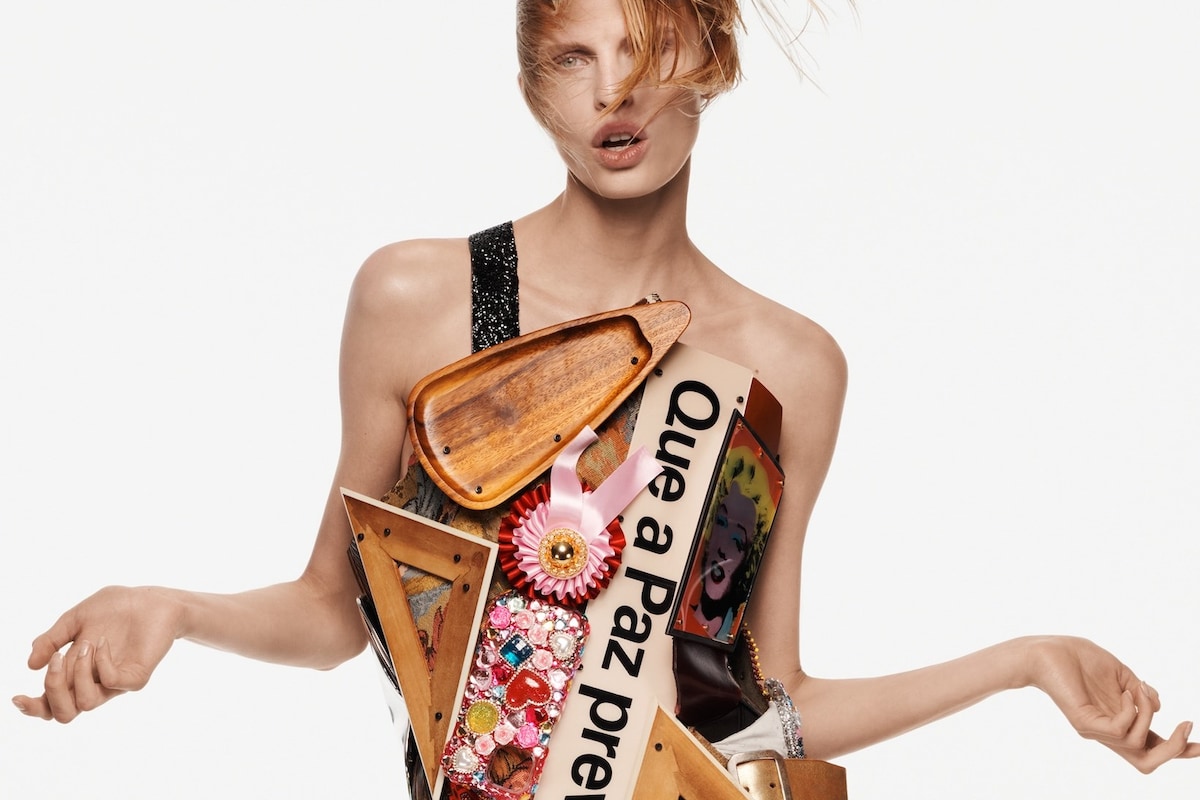
Lead ImageKarolina is wearing JUNYA WATANABE
This story is taken from the Autumn/Winter 2026 issue of AnOther Magazine:
The term pattern maker may appear charmless – technical. Similarly, the applied craft of making – as opposed to the more lofty ‘creating’ – is at times denigrated in both fashion and art, despite the difference between the two being a hair’s breadth, if not nonexistent.
But contrary to that mythology, pattern making, and indeed just making, is paramount to the work of any great designer. That has long been the case, for everyone from Cristóbal Balenciaga to Alexander McQueen: both, at very different times, pattern makers par excellence. Pattern makers are pathfinders, devising masterful ways to manipulate two dimensions into three, often making the impossible seem possible. Pattern making is pivotal to any significant fashion goal.
The designer Junya Watanabe joined Comme des Garçons as a pattern maker straight out of Bunka Fashion College in Tokyo in 1984, working alongside that company’s founder, Rei Kawakubo, until, with her blessing, financial support and the considerable infrastructure of Comme des Garçons Co Ltd behind him, his own label was established in 1992. Both Watanabe and Kawakubo share a desire to explore what is, and is not, achievable in clothing, and in pattern making more specifically. They investigate this through trial, error and paying particular attention to any mistakes – intentional or unintentional – made along the way. The latter are central to what appears to be a relentless pursuit of the new, which is, above all else the driving force behind the work.
And newness in fashion is only ever truly achieved through pattern making. Until silhouette, shape and form are mastered, and the boundaries and representation of the body questioned, there are few meaningful ways to move forward. Tinkering with the surfaces of garments simply doesn’t cut it. For great pattern makers, the possibilities are open and endless. With that firmly in mind, Watanabe is the finest pattern maker of his generation. Such prowess takes time and determination: through experimentation across four decades, he has honed his craft to the point where his technical expertise is second to none.

Alongside, and important, lies Watanabe’s willingness to embrace the cliché. He has a tendency to riff on what he himself has described as “dumb” clothes – the familiar, the known, the perhaps paradoxically anything-but-new. That viewpoint has to date been seen in denim – patchworked, shredded, reworked into shapes following everything from a disrupted belle époque line to drop-crotch workwear; the leather perfecto and nylon MA-1 jackets – with or without peplum, asymmetric, trimmed with faux fur, sleeves long or lopped off entirely; the trench coat – full length, abbreviated, exploding with panels of sunray pleats, or, arms fused to the body, a cape; the tea dress – repeat printed with pretty flowers, deconstructed then reconstructed over technical jersey and designed for women who do rather more than take tea; and the cotton shirt – plain white or in pieced multicoloured check. All are integral to his lexicon. Watanabe’s appropriation of such garments is never simple or single-minded. It is the very dumbness of these wardrobe archetypes that provide the designer with the self-imposed boundaries that he needs to function as a designer, as a pattern maker. They are the limits within which his creativity is set free, rules for him to buck against, if you will.
Watanabe’s exhaustive expression of a boundless push for invention, within unexpectedly narrow parameters, has proven endlessly influential. Any fashion designer working today who may aspire to reinvent the aforementioned wheels – a trench coat, a perfecto, a new pair of jeans – will have his iterations on their mood board. They are a measure of pre-eminence, an exemplar. Any such painstaking exploration, or time-consuming manipulation, may prove futile. Chances are, Watanabe has done it already. His ability not only to reimagine but to invent anew with such staggering aplomb is unrivalled.
“What is truly new? It is not only things that have never been seen before that can move people emotionally” – Junya Watanabe
The (new) work of three designers from the Comme des Garçons stable – Kawakubo herself, Watanabe and Kei Ninomiya, who also began his career as a pattern maker in Kawakubo’s studio before the company launched his label, Noir, in 2012 – comes to fruition on the same Saturday of every season’s womenswear collections in Paris. It is an occasion notable for the fact that both those who work for the houses and their strictly limited audience stand out in a crowd. Their guerrilla singularity is expressed in wild prints and even wilder silhouettes – or they wear head-to-toe black. It is fashion folklore, its root, as with all the best folklore, in truth, that Comme des Garçons gave birth to that. Their shoes are flat. They rarely carry branded handbags. Their position is to purposefully, even aggressively, subvert fashion’s bourgeois status quo, said accessories being the most potent signifier of that. Those devoted to these names – and it is a form of devotion – are different in appearance from any hackneyed idea of a fashion follower. That goes for gender presentation, skin colour, age. They are, however, united in spirit. The Comme des Garçons designers don’t photograph their collections for advertising campaigns and they certainly don’t pay people to wear their clothes. They rely on brand loyalty, individuality, word of mouth – they are spirits kindred for the fact that they are rebellious, anarchic, though all underpinned by a sense of fairness, humanity and modesty that in this particular milieu is rare. Most extraordinary of all, despite an almost pathological aversion to playing the game, the Comme des Garçons empire remains hugely successful – on the runway just as it is with the merchandising at Dover Street Market 1. Originally conceived as a place to gather the work of the most inspirational designers in the world, again with none of the trappings of the luxury goods industry elsewhere – market by name and by nature – that retail space is now an unmissable fashion destination, with a presence in London, Tokyo, New York, Los Angeles, Paris, Beijing and Singapore.
It is Watanabe, who first showed in the French capital under his own name in 1993, who kicks off this fêted Saturday on the busiest of all fashion calendars. His mid-morning womenswear shows are warmly anticipated riots: no holds barred. For the new season, he turned his attention away from “dumb” garments and towards the kind of everyday (also dumb?) objects that are, again, about as far from anything normally associated with luxury as is possible to imagine. Even by Watanabe’s standards, his Autumn/Winter 2026 collection was exceptional. The Art of Assemblage Couture, the designer called it – with Watanabe, as with Kawakubo, there is rarely much of an explanation beyond one line (the same goes for Ninomiya). That too is a rarity, given that providing press with extended explanatory texts to accompany collections is today the norm. Here is what Watanabe states of the collection: “The Art of Assemblage Couture explores form born from pure creative instinct, free from conventional notions of dressmaking. Through the direct presentation of raw materials, this approach expresses the surrounding social environment.” And now, a perhaps foolhardy attempt to list some of the things that Watanabe assembled artfully …
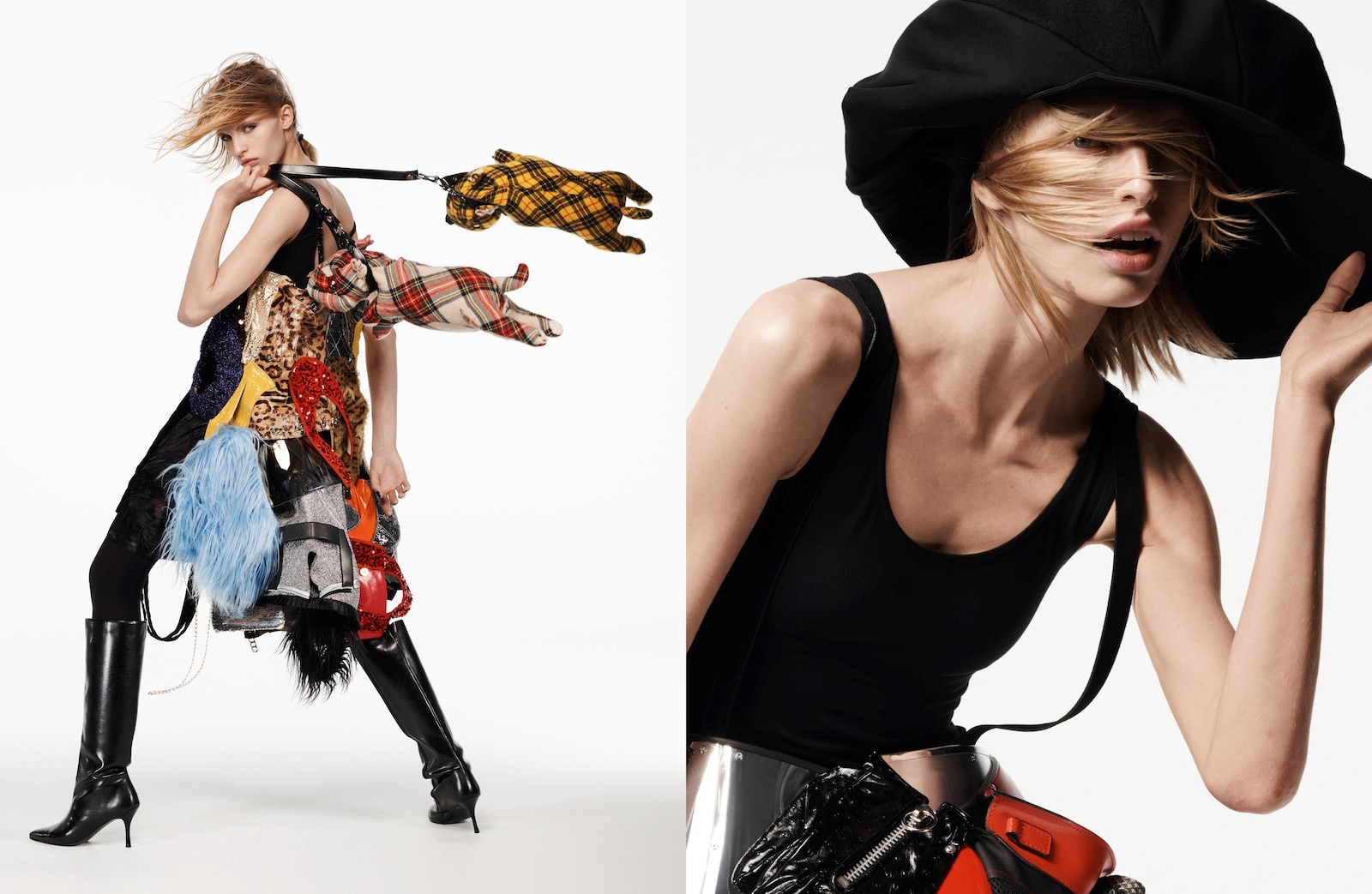
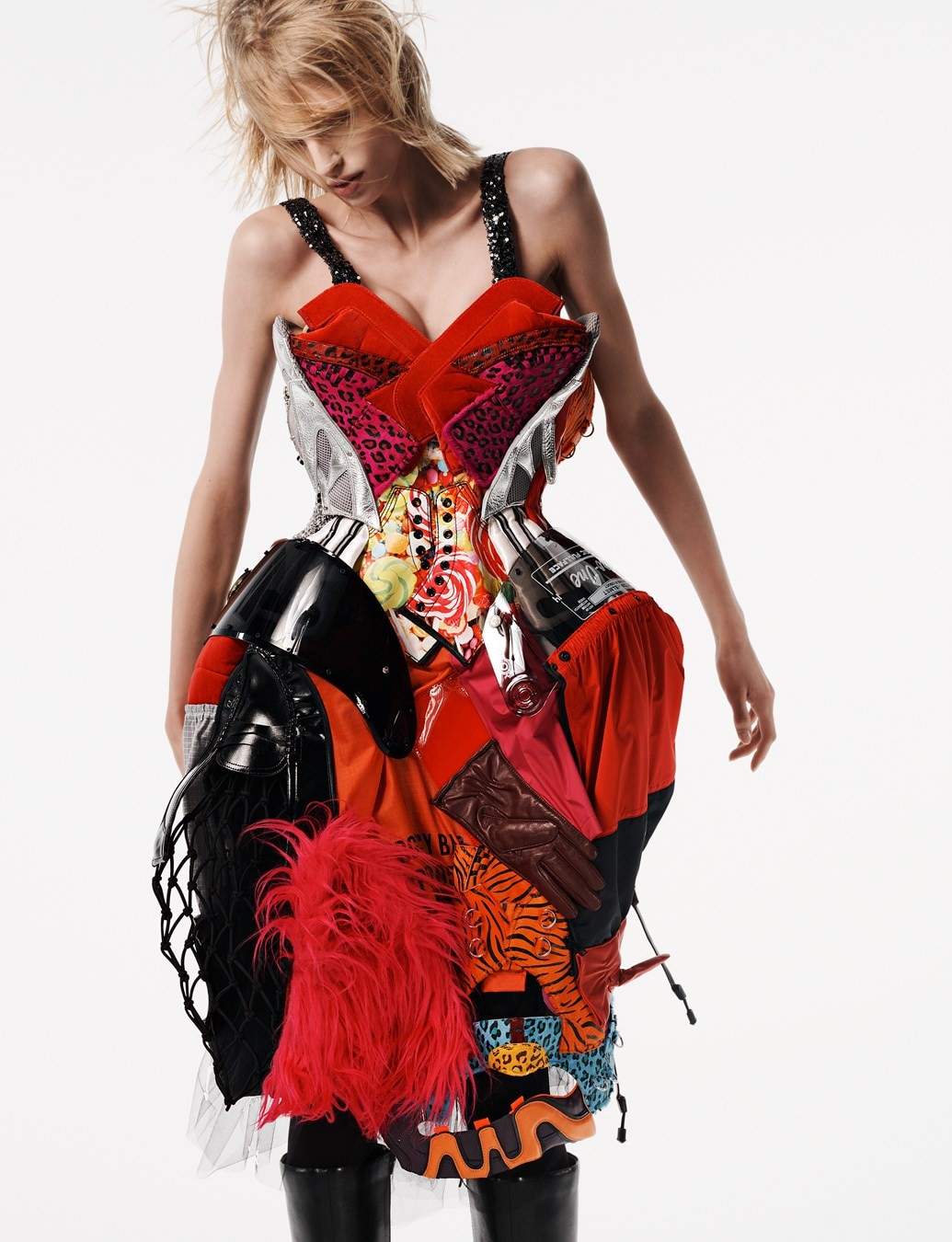
A pieced, tailored leather coat branded with the name Degner, a respected Kyoto-based motocross-apparel brand founded in 1987, from where the majority of the material for this garment was salvaged. A dress, the skirt of which comprised two graphically printed, vintage American curtains. Another skirt reassembled with parts of car mirrors, car handles, motorcycle-helmet shields, shoes and bags. What was shown on this runway this time was inspirational. Much of it will never go into production – not even the sassy tartan dog-shaped purses that had what looked like leads for straps – unless in strictly limited numbers, and even then will likely be bought by museums and collectors. A more obviously commercial collection will be sold alongside. Back on the runway there were picture frames, foil blankets, protective pads and straps, antique carpets, signage and number plates, a wooden tray, set squares, iPhone covers, tufted fur in nursery blue and hot pink, scraps of gold sequins, acrylic leopard and tiger print, a reproduction of Warhol’s 1967 Marilyn silkscreen, doorknobs … All of this was transformed – crashing, clashing and colliding – into single pieces, the silhouettes of which nodded to Victoriana and Edwardiana. Those in turn were seen through the eye of the glory days of haute couture – Cristóbal Balenciaga and Hubert de Givenchy; Jeanne Lanvin and Christian Dior. The haute in the equation may have been duly undermined by Watanabe’s choice of materials – our notions of power dressing here quite literally ripped apart at the seams, but the finished garments displayed a level of technical expertise equal to that métier.
Watanabe’s staging was no less impactful. True, the location was an underground carpark in the 11th arrondissement, a quintessential Comme des Garçons situation. The audience was tiny. A chequerboard runway, a black wooden chair strategically placed as the single prop, was all there was to go on until Irina Shayk emerged – it is unusual if not unique for Watanabe to cast such a well-known name to model his clothes – in the opening gown, built around leather motocross gloves, bags and car parts, to the strains of Libertango. The soundtrack is especially important to this designer, from obscure thrash metal and avant-garde fusion to the greats – Tom Waits, James Brown – and pop classics by Debbie Harry, Donna Summer and even, on one particularly memorable occasion, Karen Carpenter 2.
“Nostalgia is also an important element in creation” – Junya Watanabe
Hair and make-up was no less spectacular: marcel waves, thick black eyelashes and kohl-rimmed eyes – the perfection of which was broken by black streaks running down faces, glistening with glossy made-up tears. It seemed not insignificant that the movement director Pat Boguslawski was responsible for the choreography, hitherto best known for his work on John Galliano’s by-now-famous swansong Maison Margiela Artisanal collection for the Spring/Summer 2024 season. For his part, Watanabe used references that appeared to be straight out of Paris in the 1920s and 1930s, making the comparison between interwar Europe in the throes of the rise of fascism and the world as we know it now well-nigh impossible to ignore. The designer would never say that explicitly. Neither, he says, was this a reflection on the last time that haute couture – and fashion more generally – had such a forceful injection of audacity, of pure creativity over and above commercial necessity. That was the late Nineties, when not only Galliano (at Dior) but also McQueen (at Givenchy), and both for their own labels, set the fashion world alight with a level of experiential fashion presentations that made the traditional catwalk seem about as interesting as a trip to the drycleaners.
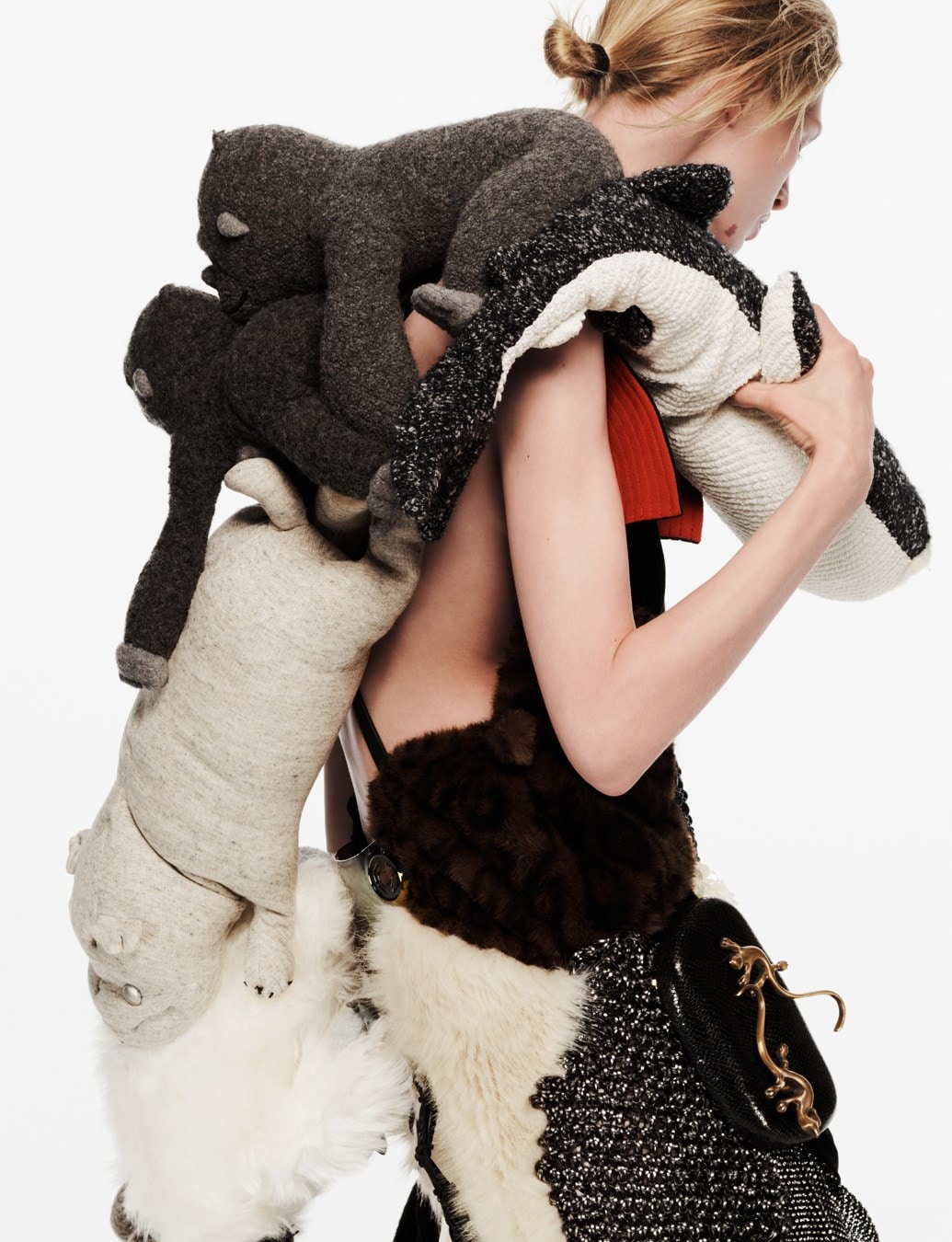
Junya Watanabe began this exploration of everyday objects a season ago. His Spring/Summer 2026 collection was constructed out of coat hangers, rain boots, umbrellas and, again, gloves. This time, however, the daily flotsam and jetsam of life, determinedly banal and carelessly discarded, was more cut up, more apparently unrestrained in appearance – and more lovingly repurposed still. Consider a scarf made from children’s toys: two soft fluffy sloths, two gorillas, a whale shark, a koala and a penguin among them. This is presumably as close as designer fashion has ever come to Noah’s Ark. And finally, a large stole read, in Portuguese: “Que a Paz prevaleça no Mundo”. It translates as, “May peace prevail in the world”. That the meaning behind the clothes is more heavyweight – and more emotionally and intellectually resonant – than their surfaces may on first impression suggest goes without saying. Watanabe refuses, always politely, to be drawn on anything approaching the political. He did, however, happily agree to a rare interview via email.
Susannah Frankel You named this collection The Art of Assemblage Couture. Do you see it connecting to last season, a show you declared was “extraordinary art born from the everyday”? I wonder if perhaps there is a continuation, an exploration of similar ideas between the two.
Junya Watanabe It is a three-dimensional collage. I believe we were able to create a tension between ordinary ready-made objects and creation. These ideas are an extension of the previous collection but I felt the final result could be described as assemblage art.
SF There was a sense of Paris in the Twenties, of the work of Brassaï, the tango, Josephine Baker perhaps. Did you feel that period had relevance/resonance and, if so, how is the now connected to the then for you?
JW When thinking about how to present the finished garments as a show, I felt that a more emotional and nostalgic expression would create a more interesting contrast with the clothes than something overtly contemporary. There was no specific image in mind.
SF Were you also thinking about haute couture in the late Nineties? That was just after you first came to show your own label in Paris. Is it a time of personal significance to you? What are your memories of that time? How do you feel fashion was different then? And do you harbour any nostalgia, perhaps, for those earlier days?
JW I am not very knowledgeable about the history of fashion, but I do not think I was particularly interested in haute couture from that era.
SF You worked with Pat Boguslawski on the show’s movement direction, a role I don’t think you have engaged for your shows previously. What was the significance of that choice and of the models’ movement this time?
JW I thought it would be interesting to express these inorganic costumes in an emotional way. I asked Pat to move the models according to the emotional atmosphere of the tango music, without focusing too much on the garments themselves. I believed this would help bring out the energy of the costumes to the fullest.
SF And the casting itself felt remarkable – characterful models with the distinct ability to carry haute couture, to exaggerate gesture and posture almost in the spirit of fashion illustration. Your choreography always feels specific, significant. How do you feel the way women move in the clothes can elevate or enhance your message? And what did the very specific choreography of the models’ movements mean this time?
JW When thinking about the emotional and nostalgic atmosphere of the show, the first thing that came to mind was [the Argentine tango composer] Astor Piazzolla. Specific images expanded from the music of [his instrumental piece] Libertango and I imagined the models dancing on stage. It would have been impossible for me to make the models move in such a way myself, so I needed a wonderful director like him. We were able to share the vision simply through discussions about the music and its structure. Pat and the models built the show through inspiration drawn from the music.
SF Similarly, your soundtracks are always highly considered and reflective of your own interest in and knowledge of music. What did you want the music to convey this time? You titled the show The Art of Assemblage Couture – what does couture mean to you?
JW To me, couture means freedom – the freedom of creation that is not restricted by business or technique.
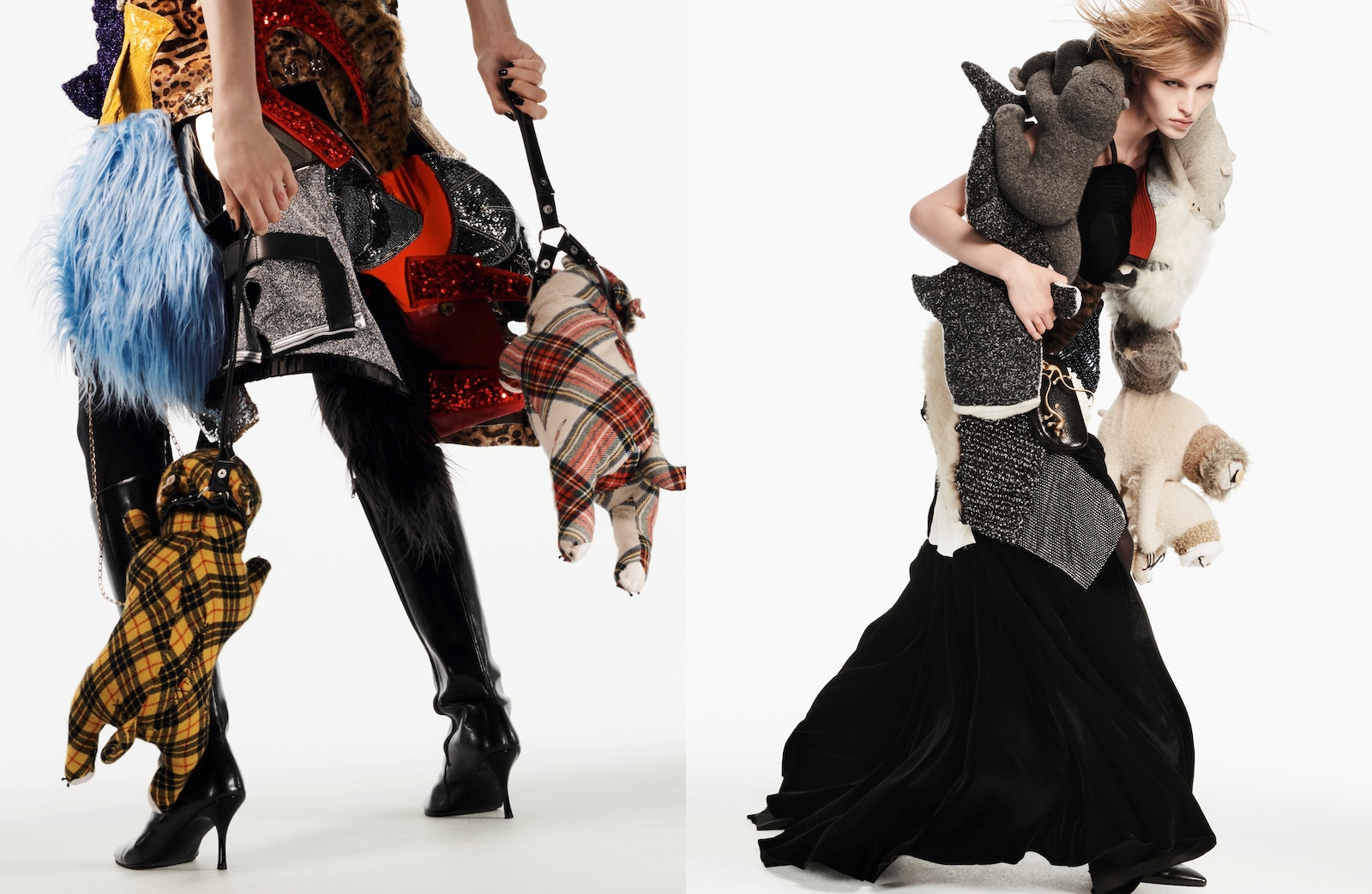
SF You talked about a freedom from conventional notions of dressmaking. Were there specific technical challenges to creating these pieces? Obviously you were working with unconventional materials, found objects, and crafting these into clothes. Were they difficult to control to determine a silhouette? Did the materials determine the shapes or was it about you finding objects that could create the shapes you wished? I am interested in that creative exchange.
JW It is a very flattering question. It was difficult to work with the factories that had previously partnered with us in making clothes. If we had been thinking about what garments should be as commercially viable products, we could never have created pieces like these. The silhouettes emerged naturally through the free combination of materials. Another goal was to reinterpret the great designs of the 1940s and 1950s in a completely different and contemporary way.
SF How difficult was it – is it – to eschew the normal way of making clothes? Did you have to discover new ways of crafting them? And was this a process you find inspiring – that you perhaps wish to explore further?
JW It was an extremely difficult path. Right now, I want to do something different.
SF Couture, to many people, means the exceptional, the one-off and often the unique – pieces that aren’t made for mass consumption. Can these pieces be reproduced to be sold? Is that something that interests you? Or are these purely about free creative expression?
JW We will reproduce and sell them in the same way for a limited number of clients who place orders. In addition, we are planning to sell simple dresses printed with photographs of the show pieces themselves.
SF Couture is also sometimes considered a laboratory of ideas – how do you relate to that concept? Do you see your clothes, your shows, as similar means of experimentation?
JW For me as well, it truly feels like an experiment.
SF There is often a reflection of historic lines in your clothes – the 1920s, the 1950s, the belle époque – you seem to return to these periods specifically again and again. Are those times points of fascination? Are these references conscious? How do you relate to history, and histories, especially given your interest, always, in creating something new?
JW What is truly new? It is not only things that have never been seen before that can move people emotionally. As I mentioned earlier, I admire the great designs of the past. I believe nostalgia is also an important element in creation, which is why I intentionally referenced great designs from the past.
SF Many people cited your show as among the greatest expressions of creativity this season. Is that kind of acclaim rewarding? Do you read reviews – do you engage with them? Do you like it when people like what you do?
JW I feel very honoured.
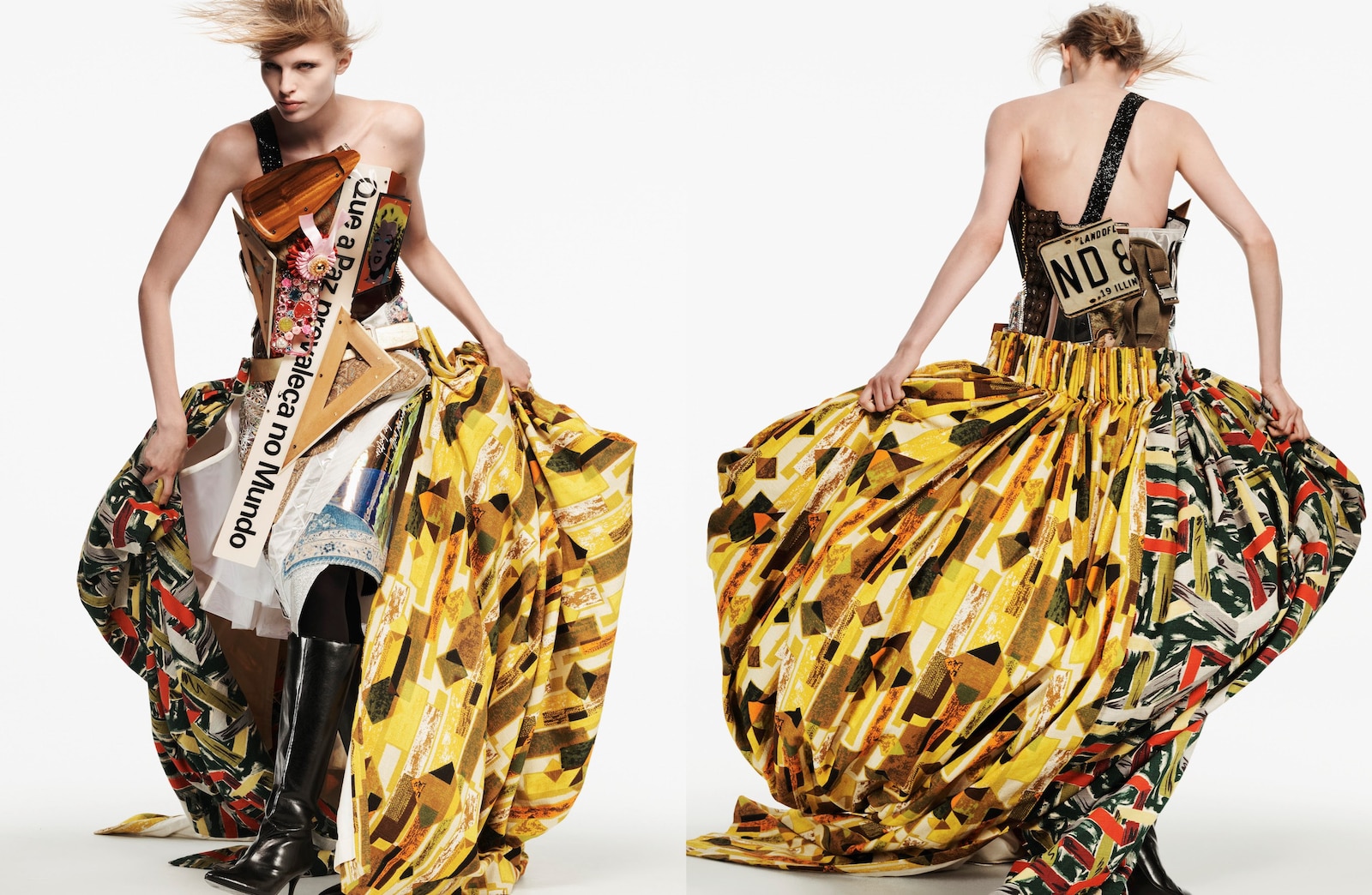
Hair: Esther Langham at Art + Commerce using ORIBE. Make-up: Francelle Daly at Bryant Artists using LOVE + CRAFT + BEAUTY. Manicure: Eri Handa at Home Agency using ESSIE. Casting: Mischa Notcutt for 11casting at Drive Represents. Model: Karolina Spakowski at The Lions. Digital technician: Geoffrey Leung. Photographic assistants: Shri Prasham Parameshwaran, Nick Krasznai and Tony Jarum. Styling assistants: Precious Greham and Alexa Levine. Hair assistant: Claire Beaton. Make-up assistant: Madrona Redhawk. Production: Craig McDean Studio. Producer: Gracey Connelly. Post-production: Gloss. Special thanks to Pier59 Studios
This story features in the Autumn/Winter 2026 issue, marking 25 years of AnOther Magazine, on sale internationally from 17 September 2026. Pre-order here
in HTML format, including tags, to make it appealing and easy to read for Japanese-speaking readers aged 20 to 40 interested in fashion. Organize the content with appropriate headings and subheadings (h1, h2, h3, h4, h5, h6), translating all text, including headings, into Japanese. Retain any existing
tags from
Lead ImageKarolina is wearing JUNYA WATANABE
This story is taken from the Autumn/Winter 2026 issue of AnOther Magazine:
The term pattern maker may appear charmless – technical. Similarly, the applied craft of making – as opposed to the more lofty ‘creating’ – is at times denigrated in both fashion and art, despite the difference between the two being a hair’s breadth, if not nonexistent.
But contrary to that mythology, pattern making, and indeed just making, is paramount to the work of any great designer. That has long been the case, for everyone from Cristóbal Balenciaga to Alexander McQueen: both, at very different times, pattern makers par excellence. Pattern makers are pathfinders, devising masterful ways to manipulate two dimensions into three, often making the impossible seem possible. Pattern making is pivotal to any significant fashion goal.
The designer Junya Watanabe joined Comme des Garçons as a pattern maker straight out of Bunka Fashion College in Tokyo in 1984, working alongside that company’s founder, Rei Kawakubo, until, with her blessing, financial support and the considerable infrastructure of Comme des Garçons Co Ltd behind him, his own label was established in 1992. Both Watanabe and Kawakubo share a desire to explore what is, and is not, achievable in clothing, and in pattern making more specifically. They investigate this through trial, error and paying particular attention to any mistakes – intentional or unintentional – made along the way. The latter are central to what appears to be a relentless pursuit of the new, which is, above all else the driving force behind the work.
And newness in fashion is only ever truly achieved through pattern making. Until silhouette, shape and form are mastered, and the boundaries and representation of the body questioned, there are few meaningful ways to move forward. Tinkering with the surfaces of garments simply doesn’t cut it. For great pattern makers, the possibilities are open and endless. With that firmly in mind, Watanabe is the finest pattern maker of his generation. Such prowess takes time and determination: through experimentation across four decades, he has honed his craft to the point where his technical expertise is second to none.
Alongside, and important, lies Watanabe’s willingness to embrace the cliché. He has a tendency to riff on what he himself has described as “dumb” clothes – the familiar, the known, the perhaps paradoxically anything-but-new. That viewpoint has to date been seen in denim – patchworked, shredded, reworked into shapes following everything from a disrupted belle époque line to drop-crotch workwear; the leather perfecto and nylon MA-1 jackets – with or without peplum, asymmetric, trimmed with faux fur, sleeves long or lopped off entirely; the trench coat – full length, abbreviated, exploding with panels of sunray pleats, or, arms fused to the body, a cape; the tea dress – repeat printed with pretty flowers, deconstructed then reconstructed over technical jersey and designed for women who do rather more than take tea; and the cotton shirt – plain white or in pieced multicoloured check. All are integral to his lexicon. Watanabe’s appropriation of such garments is never simple or single-minded. It is the very dumbness of these wardrobe archetypes that provide the designer with the self-imposed boundaries that he needs to function as a designer, as a pattern maker. They are the limits within which his creativity is set free, rules for him to buck against, if you will.
Watanabe’s exhaustive expression of a boundless push for invention, within unexpectedly narrow parameters, has proven endlessly influential. Any fashion designer working today who may aspire to reinvent the aforementioned wheels – a trench coat, a perfecto, a new pair of jeans – will have his iterations on their mood board. They are a measure of pre-eminence, an exemplar. Any such painstaking exploration, or time-consuming manipulation, may prove futile. Chances are, Watanabe has done it already. His ability not only to reimagine but to invent anew with such staggering aplomb is unrivalled.
“What is truly new? It is not only things that have never been seen before that can move people emotionally” – Junya Watanabe
The (new) work of three designers from the Comme des Garçons stable – Kawakubo herself, Watanabe and Kei Ninomiya, who also began his career as a pattern maker in Kawakubo’s studio before the company launched his label, Noir, in 2012 – comes to fruition on the same Saturday of every season’s womenswear collections in Paris. It is an occasion notable for the fact that both those who work for the houses and their strictly limited audience stand out in a crowd. Their guerrilla singularity is expressed in wild prints and even wilder silhouettes – or they wear head-to-toe black. It is fashion folklore, its root, as with all the best folklore, in truth, that Comme des Garçons gave birth to that. Their shoes are flat. They rarely carry branded handbags. Their position is to purposefully, even aggressively, subvert fashion’s bourgeois status quo, said accessories being the most potent signifier of that. Those devoted to these names – and it is a form of devotion – are different in appearance from any hackneyed idea of a fashion follower. That goes for gender presentation, skin colour, age. They are, however, united in spirit. The Comme des Garçons designers don’t photograph their collections for advertising campaigns and they certainly don’t pay people to wear their clothes. They rely on brand loyalty, individuality, word of mouth – they are spirits kindred for the fact that they are rebellious, anarchic, though all underpinned by a sense of fairness, humanity and modesty that in this particular milieu is rare. Most extraordinary of all, despite an almost pathological aversion to playing the game, the Comme des Garçons empire remains hugely successful – on the runway just as it is with the merchandising at Dover Street Market 1. Originally conceived as a place to gather the work of the most inspirational designers in the world, again with none of the trappings of the luxury goods industry elsewhere – market by name and by nature – that retail space is now an unmissable fashion destination, with a presence in London, Tokyo, New York, Los Angeles, Paris, Beijing and Singapore.
It is Watanabe, who first showed in the French capital under his own name in 1993, who kicks off this fêted Saturday on the busiest of all fashion calendars. His mid-morning womenswear shows are warmly anticipated riots: no holds barred. For the new season, he turned his attention away from “dumb” garments and towards the kind of everyday (also dumb?) objects that are, again, about as far from anything normally associated with luxury as is possible to imagine. Even by Watanabe’s standards, his Autumn/Winter 2026 collection was exceptional. The Art of Assemblage Couture, the designer called it – with Watanabe, as with Kawakubo, there is rarely much of an explanation beyond one line (the same goes for Ninomiya). That too is a rarity, given that providing press with extended explanatory texts to accompany collections is today the norm. Here is what Watanabe states of the collection: “The Art of Assemblage Couture explores form born from pure creative instinct, free from conventional notions of dressmaking. Through the direct presentation of raw materials, this approach expresses the surrounding social environment.” And now, a perhaps foolhardy attempt to list some of the things that Watanabe assembled artfully …
A pieced, tailored leather coat branded with the name Degner, a respected Kyoto-based motocross-apparel brand founded in 1987, from where the majority of the material for this garment was salvaged. A dress, the skirt of which comprised two graphically printed, vintage American curtains. Another skirt reassembled with parts of car mirrors, car handles, motorcycle-helmet shields, shoes and bags. What was shown on this runway this time was inspirational. Much of it will never go into production – not even the sassy tartan dog-shaped purses that had what looked like leads for straps – unless in strictly limited numbers, and even then will likely be bought by museums and collectors. A more obviously commercial collection will be sold alongside. Back on the runway there were picture frames, foil blankets, protective pads and straps, antique carpets, signage and number plates, a wooden tray, set squares, iPhone covers, tufted fur in nursery blue and hot pink, scraps of gold sequins, acrylic leopard and tiger print, a reproduction of Warhol’s 1967 Marilyn silkscreen, doorknobs … All of this was transformed – crashing, clashing and colliding – into single pieces, the silhouettes of which nodded to Victoriana and Edwardiana. Those in turn were seen through the eye of the glory days of haute couture – Cristóbal Balenciaga and Hubert de Givenchy; Jeanne Lanvin and Christian Dior. The haute in the equation may have been duly undermined by Watanabe’s choice of materials – our notions of power dressing here quite literally ripped apart at the seams, but the finished garments displayed a level of technical expertise equal to that métier.
Watanabe’s staging was no less impactful. True, the location was an underground carpark in the 11th arrondissement, a quintessential Comme des Garçons situation. The audience was tiny. A chequerboard runway, a black wooden chair strategically placed as the single prop, was all there was to go on until Irina Shayk emerged – it is unusual if not unique for Watanabe to cast such a well-known name to model his clothes – in the opening gown, built around leather motocross gloves, bags and car parts, to the strains of Libertango. The soundtrack is especially important to this designer, from obscure thrash metal and avant-garde fusion to the greats – Tom Waits, James Brown – and pop classics by Debbie Harry, Donna Summer and even, on one particularly memorable occasion, Karen Carpenter 2.
“Nostalgia is also an important element in creation” – Junya Watanabe
Hair and make-up was no less spectacular: marcel waves, thick black eyelashes and kohl-rimmed eyes – the perfection of which was broken by black streaks running down faces, glistening with glossy made-up tears. It seemed not insignificant that the movement director Pat Boguslawski was responsible for the choreography, hitherto best known for his work on John Galliano’s by-now-famous swansong Maison Margiela Artisanal collection for the Spring/Summer 2024 season. For his part, Watanabe used references that appeared to be straight out of Paris in the 1920s and 1930s, making the comparison between interwar Europe in the throes of the rise of fascism and the world as we know it now well-nigh impossible to ignore. The designer would never say that explicitly. Neither, he says, was this a reflection on the last time that haute couture – and fashion more generally – had such a forceful injection of audacity, of pure creativity over and above commercial necessity. That was the late Nineties, when not only Galliano (at Dior) but also McQueen (at Givenchy), and both for their own labels, set the fashion world alight with a level of experiential fashion presentations that made the traditional catwalk seem about as interesting as a trip to the drycleaners.
Junya Watanabe began this exploration of everyday objects a season ago. His Spring/Summer 2026 collection was constructed out of coat hangers, rain boots, umbrellas and, again, gloves. This time, however, the daily flotsam and jetsam of life, determinedly banal and carelessly discarded, was more cut up, more apparently unrestrained in appearance – and more lovingly repurposed still. Consider a scarf made from children’s toys: two soft fluffy sloths, two gorillas, a whale shark, a koala and a penguin among them. This is presumably as close as designer fashion has ever come to Noah’s Ark. And finally, a large stole read, in Portuguese: “Que a Paz prevaleça no Mundo”. It translates as, “May peace prevail in the world”. That the meaning behind the clothes is more heavyweight – and more emotionally and intellectually resonant – than their surfaces may on first impression suggest goes without saying. Watanabe refuses, always politely, to be drawn on anything approaching the political. He did, however, happily agree to a rare interview via email.
Susannah Frankel You named this collection The Art of Assemblage Couture. Do you see it connecting to last season, a show you declared was “extraordinary art born from the everyday”? I wonder if perhaps there is a continuation, an exploration of similar ideas between the two.
Junya Watanabe It is a three-dimensional collage. I believe we were able to create a tension between ordinary ready-made objects and creation. These ideas are an extension of the previous collection but I felt the final result could be described as assemblage art.
SF There was a sense of Paris in the Twenties, of the work of Brassaï, the tango, Josephine Baker perhaps. Did you feel that period had relevance/resonance and, if so, how is the now connected to the then for you?
JW When thinking about how to present the finished garments as a show, I felt that a more emotional and nostalgic expression would create a more interesting contrast with the clothes than something overtly contemporary. There was no specific image in mind.
SF Were you also thinking about haute couture in the late Nineties? That was just after you first came to show your own label in Paris. Is it a time of personal significance to you? What are your memories of that time? How do you feel fashion was different then? And do you harbour any nostalgia, perhaps, for those earlier days?
JW I am not very knowledgeable about the history of fashion, but I do not think I was particularly interested in haute couture from that era.
SF You worked with Pat Boguslawski on the show’s movement direction, a role I don’t think you have engaged for your shows previously. What was the significance of that choice and of the models’ movement this time?
JW I thought it would be interesting to express these inorganic costumes in an emotional way. I asked Pat to move the models according to the emotional atmosphere of the tango music, without focusing too much on the garments themselves. I believed this would help bring out the energy of the costumes to the fullest.
SF And the casting itself felt remarkable – characterful models with the distinct ability to carry haute couture, to exaggerate gesture and posture almost in the spirit of fashion illustration. Your choreography always feels specific, significant. How do you feel the way women move in the clothes can elevate or enhance your message? And what did the very specific choreography of the models’ movements mean this time?
JW When thinking about the emotional and nostalgic atmosphere of the show, the first thing that came to mind was [the Argentine tango composer] Astor Piazzolla. Specific images expanded from the music of [his instrumental piece] Libertango and I imagined the models dancing on stage. It would have been impossible for me to make the models move in such a way myself, so I needed a wonderful director like him. We were able to share the vision simply through discussions about the music and its structure. Pat and the models built the show through inspiration drawn from the music.
SF Similarly, your soundtracks are always highly considered and reflective of your own interest in and knowledge of music. What did you want the music to convey this time? You titled the show The Art of Assemblage Couture – what does couture mean to you?
JW To me, couture means freedom – the freedom of creation that is not restricted by business or technique.
SF You talked about a freedom from conventional notions of dressmaking. Were there specific technical challenges to creating these pieces? Obviously you were working with unconventional materials, found objects, and crafting these into clothes. Were they difficult to control to determine a silhouette? Did the materials determine the shapes or was it about you finding objects that could create the shapes you wished? I am interested in that creative exchange.
JW It is a very flattering question. It was difficult to work with the factories that had previously partnered with us in making clothes. If we had been thinking about what garments should be as commercially viable products, we could never have created pieces like these. The silhouettes emerged naturally through the free combination of materials. Another goal was to reinterpret the great designs of the 1940s and 1950s in a completely different and contemporary way.
SF How difficult was it – is it – to eschew the normal way of making clothes? Did you have to discover new ways of crafting them? And was this a process you find inspiring – that you perhaps wish to explore further?
JW It was an extremely difficult path. Right now, I want to do something different.
SF Couture, to many people, means the exceptional, the one-off and often the unique – pieces that aren’t made for mass consumption. Can these pieces be reproduced to be sold? Is that something that interests you? Or are these purely about free creative expression?
JW We will reproduce and sell them in the same way for a limited number of clients who place orders. In addition, we are planning to sell simple dresses printed with photographs of the show pieces themselves.
SF Couture is also sometimes considered a laboratory of ideas – how do you relate to that concept? Do you see your clothes, your shows, as similar means of experimentation?
JW For me as well, it truly feels like an experiment.
SF There is often a reflection of historic lines in your clothes – the 1920s, the 1950s, the belle époque – you seem to return to these periods specifically again and again. Are those times points of fascination? Are these references conscious? How do you relate to history, and histories, especially given your interest, always, in creating something new?
JW What is truly new? It is not only things that have never been seen before that can move people emotionally. As I mentioned earlier, I admire the great designs of the past. I believe nostalgia is also an important element in creation, which is why I intentionally referenced great designs from the past.
SF Many people cited your show as among the greatest expressions of creativity this season. Is that kind of acclaim rewarding? Do you read reviews – do you engage with them? Do you like it when people like what you do?
JW I feel very honoured.
Hair: Esther Langham at Art + Commerce using ORIBE. Make-up: Francelle Daly at Bryant Artists using LOVE + CRAFT + BEAUTY. Manicure: Eri Handa at Home Agency using ESSIE. Casting: Mischa Notcutt for 11casting at Drive Represents. Model: Karolina Spakowski at The Lions. Digital technician: Geoffrey Leung. Photographic assistants: Shri Prasham Parameshwaran, Nick Krasznai and Tony Jarum. Styling assistants: Precious Greham and Alexa Levine. Hair assistant: Claire Beaton. Make-up assistant: Madrona Redhawk. Production: Craig McDean Studio. Producer: Gracey Connelly. Post-production: Gloss. Special thanks to Pier59 Studios
This story features in the Autumn/Winter 2026 issue, marking 25 years of AnOther Magazine, on sale internationally from 17 September 2026. Pre-order here
and integrate them seamlessly into the new content without adding new tags. Ensure the new content is fashion-related, written entirely in Japanese, and approximately 1500 words. Conclude with a “結論” section and a well-formatted “よくある質問” section. Avoid including an introduction or a note explaining the process.