Rewrite
Sziget Festival 2026
Gallery / 29 images
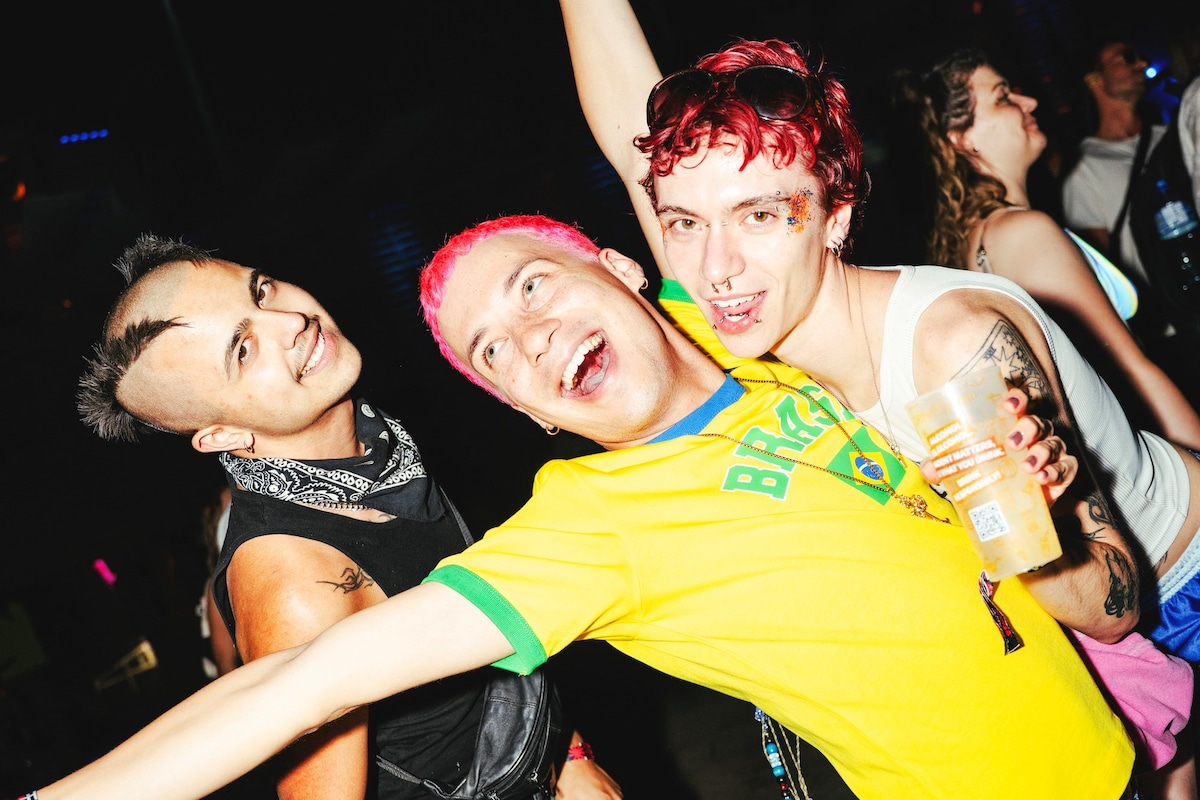
“I’m coming here every year until I die!” screams Jayden from London into my trusty iPhone mic. Hungarian photographer Dominik Farkas and I are in the overflowing crowd for DJ Jazzy’s set when I spot three pretty best friends with different but equally showstopping hairstyles. Funky basslines are booming, and fans lap up every beat at Sziget Festival’s open-air Colosseum arena. Cutting through the noise, though, are the voices of Brits, who this year in particular are willing to go further for something different.
Ranked as one of the biggest music festivals in Europe, Sziget takes place on Obuda Island, a teardrop-shaped piece of land nestled on the Danube. Fresh from returning to its original Hungarian ownership, the annual five-day event shows the festival circuit that it’s back and better than ever before.
Take a look at everything you need to know about what went down, below.

On my inbound flight to Budapest, I spotted a die-hard ‘Szitizen’ in an old festival tee. The Island of Freedom – as it’s commonly known – was still a ways to go on Maps but, spiritually, it felt right around the corner. Getting there was an aura-farming rite of passage in and of itself, between the carriages rammed with partygoers. Every trip there and back made for some hard-earned enjoyment on festival grounds.
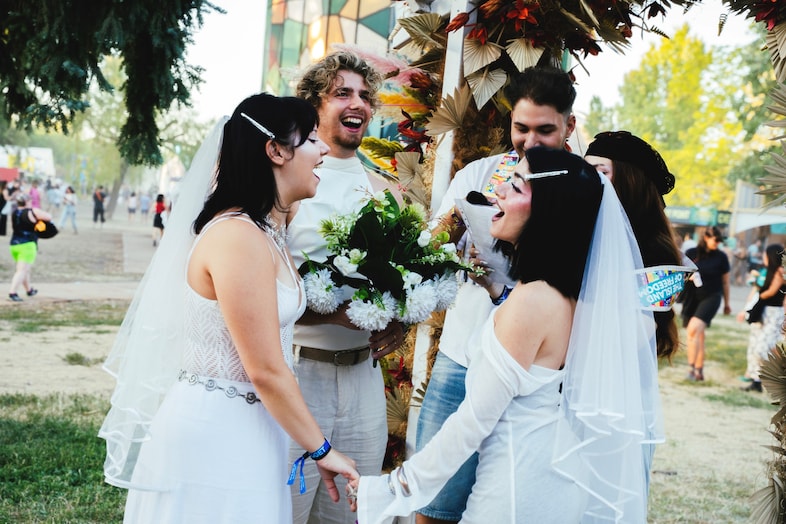
Everyone at Sziget yearned for freedom, especially the festival’s flourishing queer community, who were feeling a step closer after the end of a 16-year rule that had reversed decades of LGBTQ+ progress. Izel, a first-time Sziget explorer after winning tickets via a Dazed Club callout, saw the island as its own separate world, a “fishbowl of excitement and activity”. Though a place of catharsis, the festival wasn’t without its borders – but, unfortunately for island security, one girl was willing to crawl military-style under a metal barrier to get to the main stage by any means necessary.
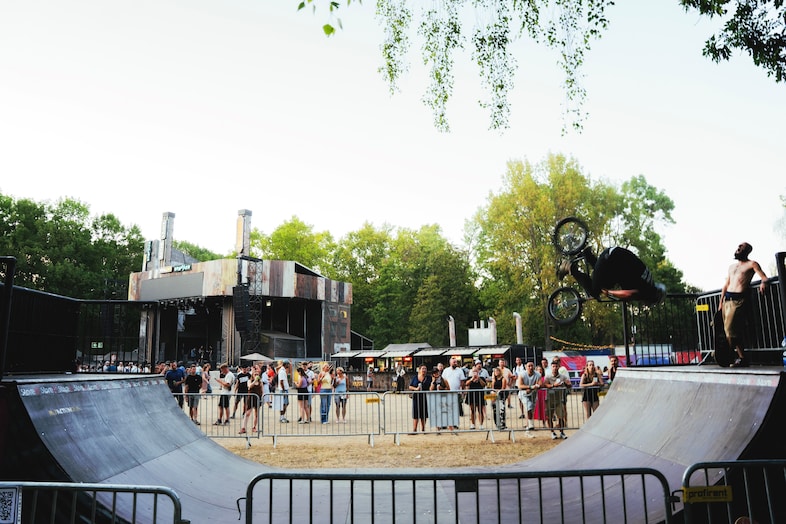
For Sziget fans, it’s not just about the music – after all, the festival is designed with so much more in mind. OG founder, Károly Gerendai, believes that going to a festival is about all the things you can get up to after the 90-minute performance is over. Queer quizzes at Magic Mirror, circus acts in the Wonderland district, and a mini-skatepark with an ambulance parked beside it (just in case) were all things you could indulge in at Sziget festival.
John, one of the constructors of an inflatable luminarium that looked uncannily like the inside of the Tubbytronic Superdome (Teletubbies fans wya), said: “Whether music, art, or structure – the things I stumble upon here are fantastic to me.”

With each conversation, the festival was starting to feel like folklore, tenderly passed on from person to person, and eventually one generation to the next. One woman in her early 40s, feeling sentimental a few drinks in, reminisced about coming to Sziget as a teenager with tickets bought by her mum.
Back at the Bolt Night Stage, Australian house’s reigning prince Dom Dolla delivered a deep and dark set that had strangers ferally dancing with one another and couples making out. In the midst of the crowd, I thought back to the gatecrasher and wondered if she was still running from security. It didn’t matter if you were a Sziget veteran or a newcomer – hey, even if you didn’t have a ticket – the island imprinted a sense of belonging. By night three, I was starting to feel it too.
Head to the gallery above to check out images from the festival by Dazed Club photographer Dominik Farkas.
in HTML format, including tags, to make it appealing and easy to read for Japanese-speaking readers aged 20 to 40 interested in fashion. Organize the content with appropriate headings and subheadings (h1, h2, h3, h4, h5, h6), translating all text, including headings, into Japanese. Retain any existing
tags from
Sziget Festival 2026
Gallery / 29 images
“I’m coming here every year until I die!” screams Jayden from London into my trusty iPhone mic. Hungarian photographer Dominik Farkas and I are in the overflowing crowd for DJ Jazzy’s set when I spot three pretty best friends with different but equally showstopping hairstyles. Funky basslines are booming, and fans lap up every beat at Sziget Festival’s open-air Colosseum arena. Cutting through the noise, though, are the voices of Brits, who this year in particular are willing to go further for something different.
Ranked as one of the biggest music festivals in Europe, Sziget takes place on Obuda Island, a teardrop-shaped piece of land nestled on the Danube. Fresh from returning to its original Hungarian ownership, the annual five-day event shows the festival circuit that it’s back and better than ever before.
Take a look at everything you need to know about what went down, below.
On my inbound flight to Budapest, I spotted a die-hard ‘Szitizen’ in an old festival tee. The Island of Freedom – as it’s commonly known – was still a ways to go on Maps but, spiritually, it felt right around the corner. Getting there was an aura-farming rite of passage in and of itself, between the carriages rammed with partygoers. Every trip there and back made for some hard-earned enjoyment on festival grounds.
Everyone at Sziget yearned for freedom, especially the festival’s flourishing queer community, who were feeling a step closer after the end of a 16-year rule that had reversed decades of LGBTQ+ progress. Izel, a first-time Sziget explorer after winning tickets via a Dazed Club callout, saw the island as its own separate world, a “fishbowl of excitement and activity”. Though a place of catharsis, the festival wasn’t without its borders – but, unfortunately for island security, one girl was willing to crawl military-style under a metal barrier to get to the main stage by any means necessary.
For Sziget fans, it’s not just about the music – after all, the festival is designed with so much more in mind. OG founder, Károly Gerendai, believes that going to a festival is about all the things you can get up to after the 90-minute performance is over. Queer quizzes at Magic Mirror, circus acts in the Wonderland district, and a mini-skatepark with an ambulance parked beside it (just in case) were all things you could indulge in at Sziget festival.
John, one of the constructors of an inflatable luminarium that looked uncannily like the inside of the Tubbytronic Superdome (Teletubbies fans wya), said: “Whether music, art, or structure – the things I stumble upon here are fantastic to me.”
With each conversation, the festival was starting to feel like folklore, tenderly passed on from person to person, and eventually one generation to the next. One woman in her early 40s, feeling sentimental a few drinks in, reminisced about coming to Sziget as a teenager with tickets bought by her mum.
Back at the Bolt Night Stage, Australian house’s reigning prince Dom Dolla delivered a deep and dark set that had strangers ferally dancing with one another and couples making out. In the midst of the crowd, I thought back to the gatecrasher and wondered if she was still running from security. It didn’t matter if you were a Sziget veteran or a newcomer – hey, even if you didn’t have a ticket – the island imprinted a sense of belonging. By night three, I was starting to feel it too.
Head to the gallery above to check out images from the festival by Dazed Club photographer Dominik Farkas.
and integrate them seamlessly into the new content without adding new tags. Ensure the new content is fashion-related, written entirely in Japanese, and approximately 1500 words. Conclude with a “結論” section and a well-formatted “よくある質問” section. Avoid including an introduction or a note explaining the process.