Rewrite
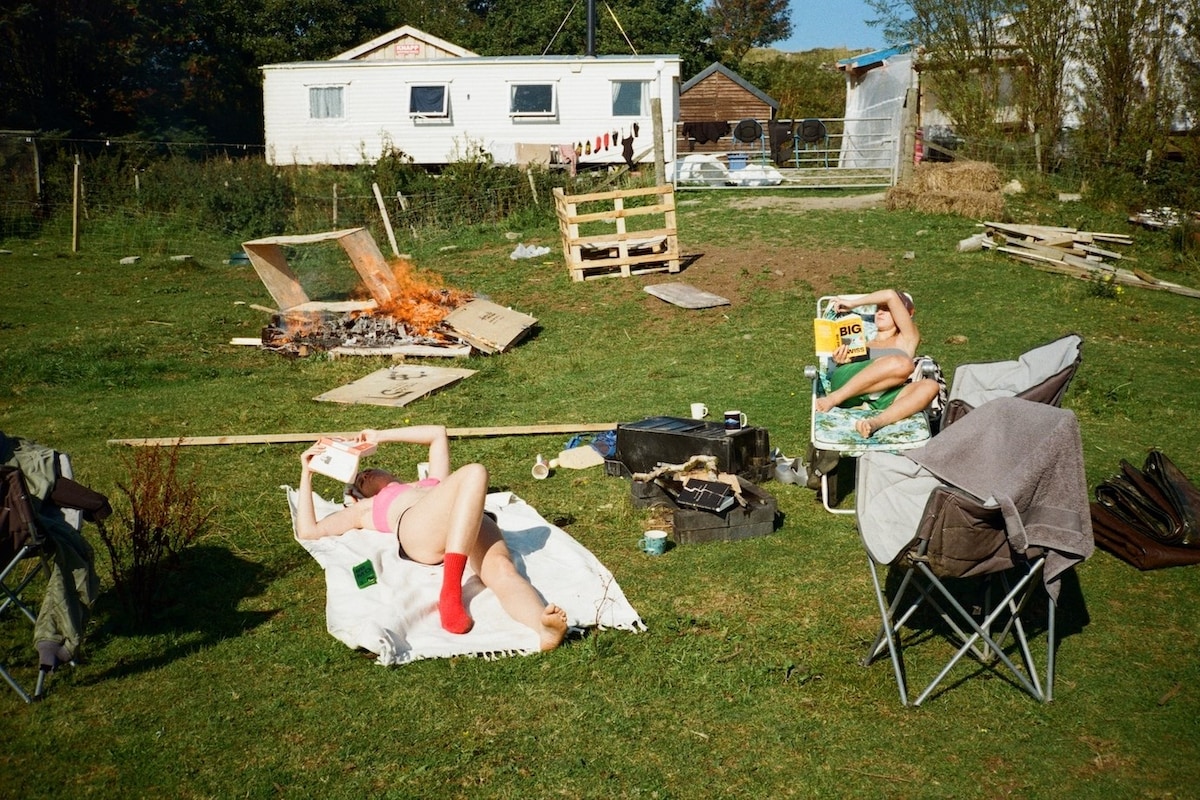
Lead ImagePhotography by Vinca Peterson
“Some people say they were witches in their past lives, but I’m certain I was a farmer,” Vinca Petersen said when I first met her back in 2023. She was preparing to open an exhibition at Edel Assanti gallery in Fitzrovia at the time and she was half-joking. A few years on, however, she has, more or less, become one. “I’ve always felt connected to the land.”
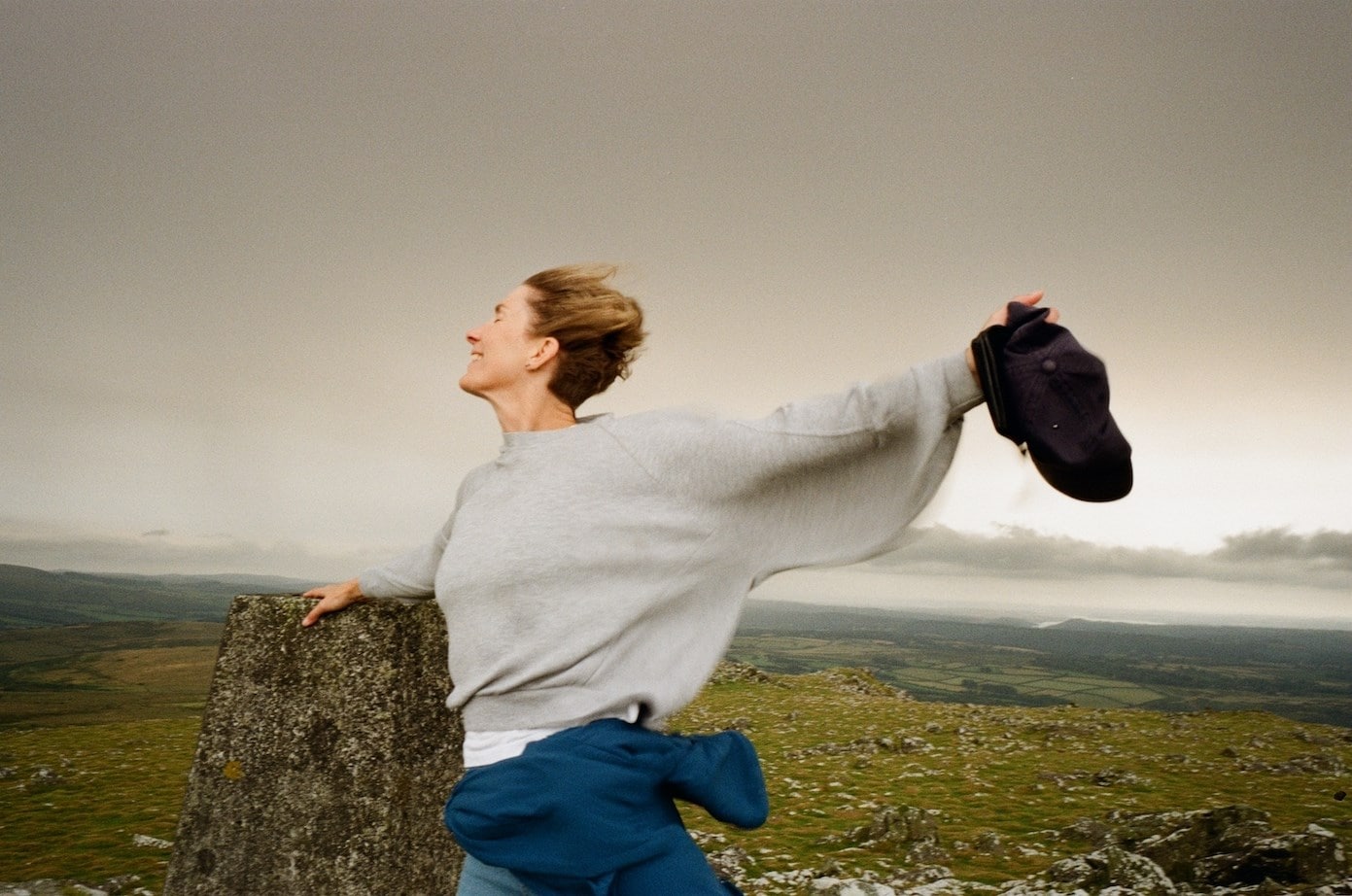
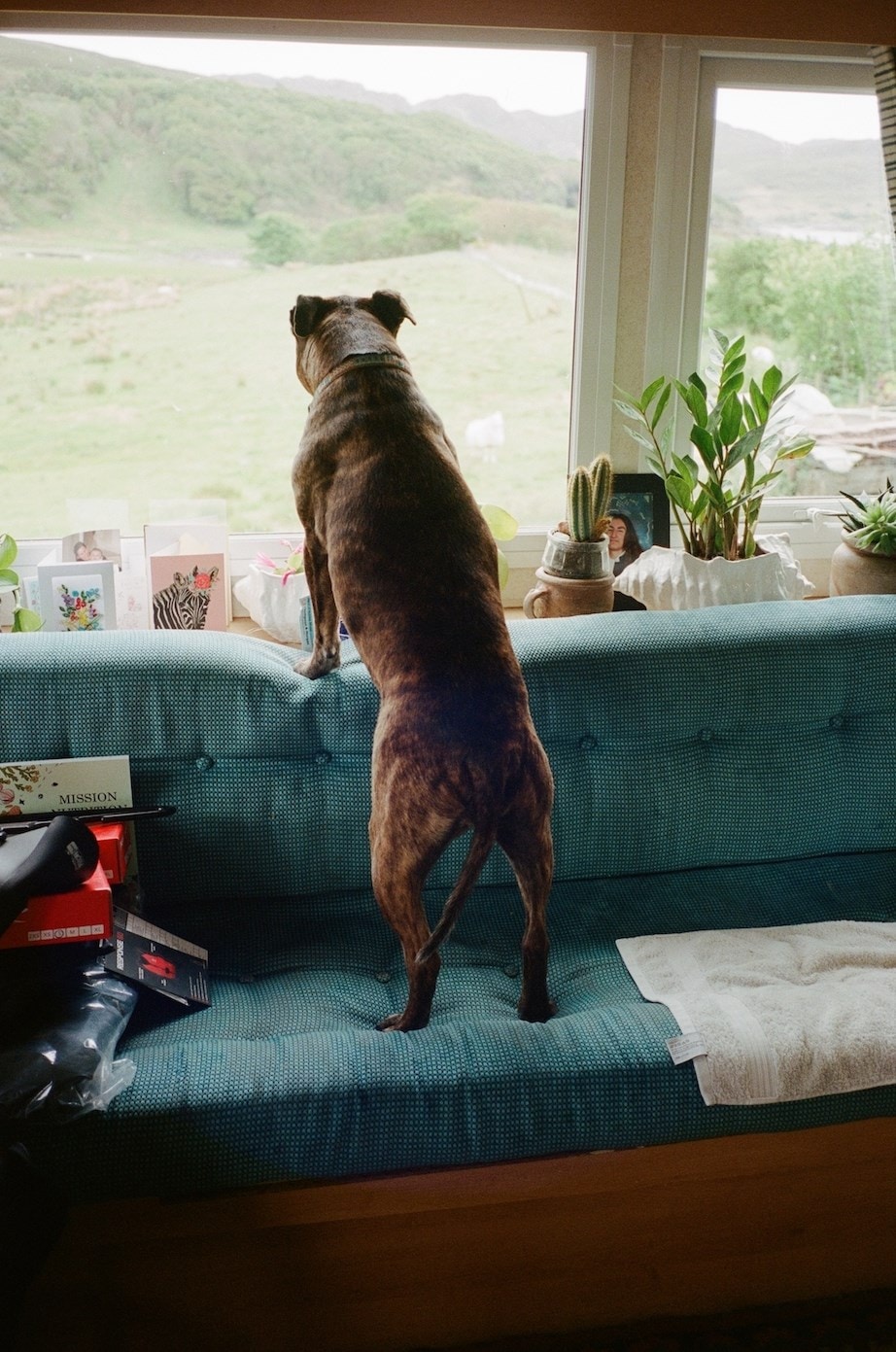
Just shy of her 50th birthday, Petersen left behind the life she had built in Ramsgate and moved to the Isle of Skye, where she took on the tenancy of a croft (a traditional Scottish term for a small agricultural plot of land) and began constructing a straw-bale house with the help of friends, students and fellow builders. Documenting it all through her ever-human photography and diary writing, the resulting body of work, Hulala, traces four years of upheaval, reinvention and collective labour.
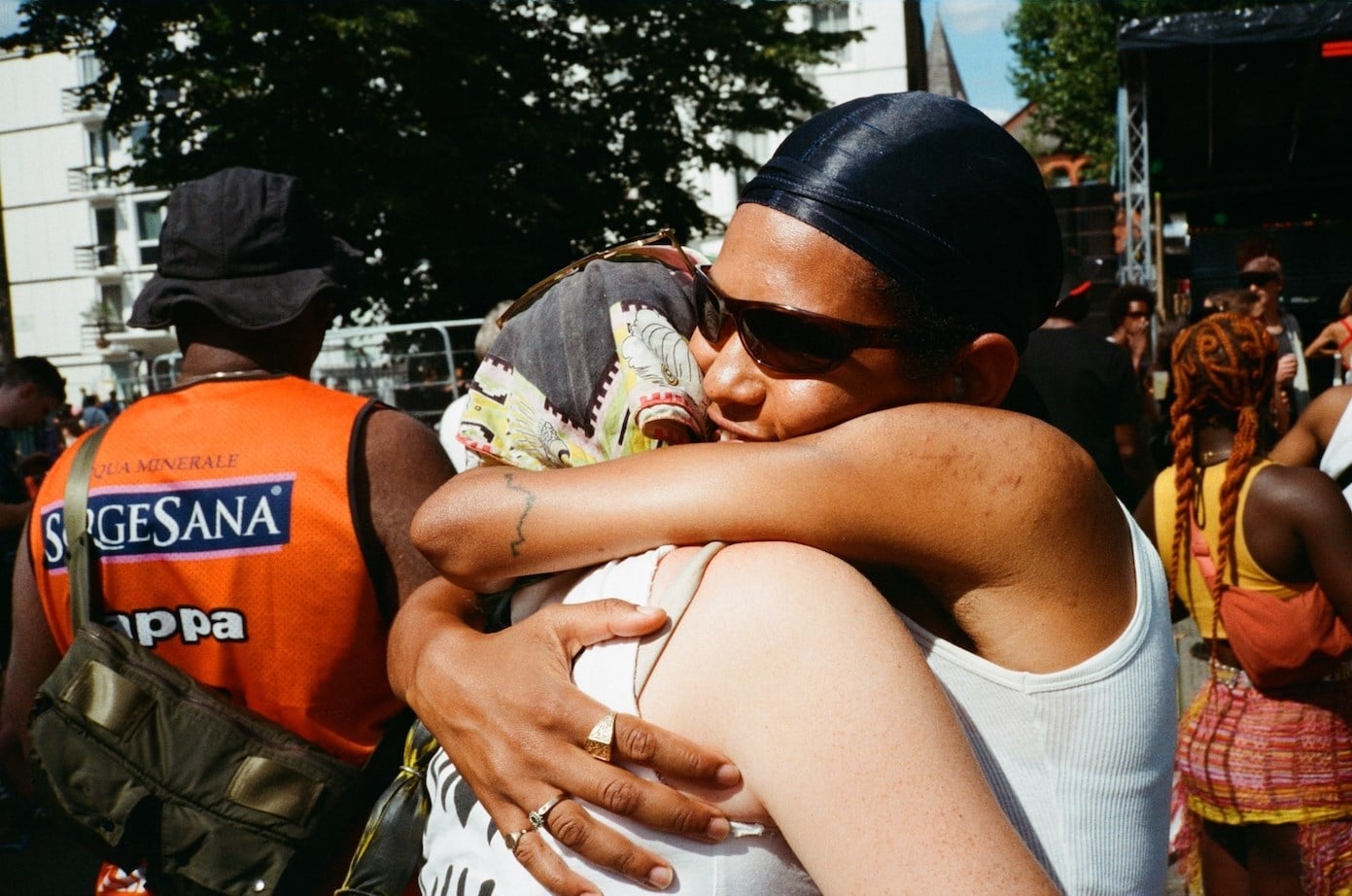
While Hulala emerges from a very different chapter in Petersen’s life, those familiar with her cult 1999 book No System, which chronicled years spent travelling through Europe with rave sound systems, will recognise familiar threads in its ecstatic images taken in nature. But where No System found freedom and collective euphoria in life on the road, Hulala turns its attention to permanence, asking what it means to build a home not only as a physical structure but as a social one.
Alongside curator Gem Fletcher and master builder Barbara Jones, the project, Petersen says, emerged from a particularly collaborative period in her life. The title comes from a Scottish Gaelic expression she learned from another important figure in this story: John, an 83-year-old hill farmer who passed away shortly after the work was shown in Peckham at the end of May. Loosely meaning “for all the days I see you and all the days I don’t”, hulala offers a sentiment of enduring connection: to people, to place and to the relationships that sustain us.
Here, Petersen reflects on reaching a pivotal crossroads at 50, the radical history of Scottish crofting, and the collaborative spirit at the heart of Hulala.

OB: Skye has become a very special place to you. Could you tell me about the first time you went there?
VP: The reason I ended up on Skye is because of two friends of mine, Joel and Dede. I’ve known both of them since I was about 18, and one of them I used to squat with in London. They’re somewhat legendary on Skye because they’re great hosts. It was always a magical time visiting them.
OB: When did you decide to relocate and embark on this huge build there?
VP: I’d reached a crossroads in my life. Archie, my son, was about to turn 18, which is a real milestone in parenthood. A long-term relationship had ended, and I was approaching 50. I looked around me and thought: I’d never really wanted to live where I was living. It was the right place to bring Archie up, but it was never my spiritual home.
Then I had this very pivotal conversation late at night with Dede and Joel. They said, ‘Well, we’ve got some land up here for sale, and take a look at this book.’ It was Building with Straw Bales by Barbara Jones. I opened it and, weirdly, the fact that it had women in it, building, seemed revelatory to me. I thought: that’s me. That can be me. I can do this.
OB: What appealed to you about Barbara’s philosophy?
VP: Barbara Jones is a master builder. She’s in her 60s now and to share her knowledge she set up the School of Natural Building, which runs theoretical courses in the wintertime, and practical when the weather allows. What really resonated with me is that she’s not trying to be one of these artistic builders making a unique house in the woods. She’s trying to promote a building style that can be available to everyone. That’s quite radical.
OB: How did her approach shape what followed?
VP: Going on Barbara’s courses, I started going to work on other people’s house builds. Then as I had helped on their house builds, the School of Natural Building ran three courses on my house build. I did a talk at Glasgow School of Art, too, and at the end I asked if anyone wanted to come to help, and loads of art students came up over the year.
OB: It’s like a lived version of the phrase “it takes a village”. You didn’t buy land in the usual sense – you became a crofter. Why is that an important part of this story?
VP: Crofts are some of the most secure tenancies in the world. The Crofting Commission is a government body set up after the Highland Clearances, which are a really dark piece of Scottish social history. It was after the Industrial Revolution when the landlords decided they wanted to throw the people off the land because they didn’t need them to help with other industries. They just wanted the land to be used for sheep. People were thrown out of the villages they’d been in for generations, burnt out of their homes, starved to death, and there was a huge Scottish diaspora. People started to fight back through Parliament and eventually won the right to stay on a given croft, which is basically a large field on an estate that you are a tenant of. You pay a very small amount to the landlord, I pay £36 a year, but you can’t get thrown off if you work the land and live on the land. I thought, wow, this is almost like squatting.
OB: That’s fascinating. How do you think squatting back in the 90s shaped how you’ve come to think about home and land?
VP: I always had a positive philosophy about squatting. If a building is sitting empty, why shouldn’t people use it? Why shouldn’t it house people? Crofting has a similar logic. You have a right to remain on the land if you care for it and work it.
“If a building is sitting empty, why shouldn’t people use it? Why shouldn’t it house people?” – Vinca Petersen
OB: You made No System directly after that period of squatting. Hulala is also about community and land, but it is about place and permanence. What threads do you see between the two?
VP: I think the exciting thing about life is these phases. I saw my 20s very much as gathering information and absorbing the world. With the raves we were gathering people together, dancing, feeling the power of community. Then my 30s were an inward journey of working out who I am as a human, and going on this journey of motherhood – which doesn’t feel generous at the time, because it feels natural, but it is. By the time I was getting to my late 40s, I felt I understood what’s important to me – the people and the energy I want to absorb and put out again. So it became: what do you want to put into the world, and what is home?
OB: Your home in Skye is a place you’ve consciously chosen. How has building it changed your understanding of home?
VP: When I went to art school, at about 31, something I learnt about that has always stayed with me is Joseph Beuys’ philosophy of social sculpture. The idea is that you don’t sculpt an object – you sculpt a social situation, you sculpt society. Putting on the raves had been a bit of this, and The Future Youth Project I later ran was another. I’ve always been interested in creating situations where people come together and everyone benefits. The house is an embodiment of all this energy of community and collaboration. But it also created a home for me at the end – which I do now share. One of the students is staying there now. I love that.
OB: The title Hulala means “for all the days I see you and all the days I don’t”. Why did it feel right for this project?
VP: This goes back to my friend John, who’s just passed away. In Scotland and the West Highlands there’s a strong sense of wanting to keep Scottish Gaelic alive. When you have a wee dram, you don’t say cheers, you say sláinte, which is cheers in Gaelic. One day over one of the many drams I’ve had over the last few years, John said hulala, and I said, well, what’s that? He said, ‘It means for all the days I see you and all the days I don’t.’ I just thought it was a wonderful thing. It’s not just about now – it’s about you, wherever you are, wherever you’re going.
OB: You’ve described this work as “readying for another future”. What does that future look like to you?
VP: I think artwork made in response to its time is so powerful. Through all the positivity I’ve talked to you about, there is also this: the world I wanted to rebel against in my 20s is now just a world that seems absurd. This body of work has been very much about trying to re-stitch the fabric of society that Thatcher attempted to dismantle, and, on a very fundamental level, about re-attaching ourselves to the earth and to each other.
I feel like Hulala is part of the tonic. It has some magical, slightly odd images, but deep in its soul there are images I wanted people to feel they could literally step into. A young man came out of the exhibition smiling and I said, tell me what you felt. And he said, “I felt like I could touch the grass; I felt I could feel the earth in these photos.” I’ve got goosebumps now just talking about it.
Hulala previewed during Peckham24 in May 2026. A wider exhibition and monograph of the same name will be released later this year.
in HTML format, including tags, to make it appealing and easy to read for Japanese-speaking readers aged 20 to 40 interested in fashion. Organize the content with appropriate headings and subheadings (h1, h2, h3, h4, h5, h6), translating all text, including headings, into Japanese. Retain any existing
tags from
Lead ImagePhotography by Vinca Peterson
“Some people say they were witches in their past lives, but I’m certain I was a farmer,” Vinca Petersen said when I first met her back in 2023. She was preparing to open an exhibition at Edel Assanti gallery in Fitzrovia at the time and she was half-joking. A few years on, however, she has, more or less, become one. “I’ve always felt connected to the land.”
Just shy of her 50th birthday, Petersen left behind the life she had built in Ramsgate and moved to the Isle of Skye, where she took on the tenancy of a croft (a traditional Scottish term for a small agricultural plot of land) and began constructing a straw-bale house with the help of friends, students and fellow builders. Documenting it all through her ever-human photography and diary writing, the resulting body of work, Hulala, traces four years of upheaval, reinvention and collective labour.
While Hulala emerges from a very different chapter in Petersen’s life, those familiar with her cult 1999 book No System, which chronicled years spent travelling through Europe with rave sound systems, will recognise familiar threads in its ecstatic images taken in nature. But where No System found freedom and collective euphoria in life on the road, Hulala turns its attention to permanence, asking what it means to build a home not only as a physical structure but as a social one.
Alongside curator Gem Fletcher and master builder Barbara Jones, the project, Petersen says, emerged from a particularly collaborative period in her life. The title comes from a Scottish Gaelic expression she learned from another important figure in this story: John, an 83-year-old hill farmer who passed away shortly after the work was shown in Peckham at the end of May. Loosely meaning “for all the days I see you and all the days I don’t”, hulala offers a sentiment of enduring connection: to people, to place and to the relationships that sustain us.
Here, Petersen reflects on reaching a pivotal crossroads at 50, the radical history of Scottish crofting, and the collaborative spirit at the heart of Hulala.
OB: Skye has become a very special place to you. Could you tell me about the first time you went there?
VP: The reason I ended up on Skye is because of two friends of mine, Joel and Dede. I’ve known both of them since I was about 18, and one of them I used to squat with in London. They’re somewhat legendary on Skye because they’re great hosts. It was always a magical time visiting them.
OB: When did you decide to relocate and embark on this huge build there?
VP: I’d reached a crossroads in my life. Archie, my son, was about to turn 18, which is a real milestone in parenthood. A long-term relationship had ended, and I was approaching 50. I looked around me and thought: I’d never really wanted to live where I was living. It was the right place to bring Archie up, but it was never my spiritual home.
Then I had this very pivotal conversation late at night with Dede and Joel. They said, ‘Well, we’ve got some land up here for sale, and take a look at this book.’ It was Building with Straw Bales by Barbara Jones. I opened it and, weirdly, the fact that it had women in it, building, seemed revelatory to me. I thought: that’s me. That can be me. I can do this.
OB: What appealed to you about Barbara’s philosophy?
VP: Barbara Jones is a master builder. She’s in her 60s now and to share her knowledge she set up the School of Natural Building, which runs theoretical courses in the wintertime, and practical when the weather allows. What really resonated with me is that she’s not trying to be one of these artistic builders making a unique house in the woods. She’s trying to promote a building style that can be available to everyone. That’s quite radical.
OB: How did her approach shape what followed?
VP: Going on Barbara’s courses, I started going to work on other people’s house builds. Then as I had helped on their house builds, the School of Natural Building ran three courses on my house build. I did a talk at Glasgow School of Art, too, and at the end I asked if anyone wanted to come to help, and loads of art students came up over the year.
OB: It’s like a lived version of the phrase “it takes a village”. You didn’t buy land in the usual sense – you became a crofter. Why is that an important part of this story?
VP: Crofts are some of the most secure tenancies in the world. The Crofting Commission is a government body set up after the Highland Clearances, which are a really dark piece of Scottish social history. It was after the Industrial Revolution when the landlords decided they wanted to throw the people off the land because they didn’t need them to help with other industries. They just wanted the land to be used for sheep. People were thrown out of the villages they’d been in for generations, burnt out of their homes, starved to death, and there was a huge Scottish diaspora. People started to fight back through Parliament and eventually won the right to stay on a given croft, which is basically a large field on an estate that you are a tenant of. You pay a very small amount to the landlord, I pay £36 a year, but you can’t get thrown off if you work the land and live on the land. I thought, wow, this is almost like squatting.
OB: That’s fascinating. How do you think squatting back in the 90s shaped how you’ve come to think about home and land?
VP: I always had a positive philosophy about squatting. If a building is sitting empty, why shouldn’t people use it? Why shouldn’t it house people? Crofting has a similar logic. You have a right to remain on the land if you care for it and work it.
“If a building is sitting empty, why shouldn’t people use it? Why shouldn’t it house people?” – Vinca Petersen
OB: You made No System directly after that period of squatting. Hulala is also about community and land, but it is about place and permanence. What threads do you see between the two?
VP: I think the exciting thing about life is these phases. I saw my 20s very much as gathering information and absorbing the world. With the raves we were gathering people together, dancing, feeling the power of community. Then my 30s were an inward journey of working out who I am as a human, and going on this journey of motherhood – which doesn’t feel generous at the time, because it feels natural, but it is. By the time I was getting to my late 40s, I felt I understood what’s important to me – the people and the energy I want to absorb and put out again. So it became: what do you want to put into the world, and what is home?
OB: Your home in Skye is a place you’ve consciously chosen. How has building it changed your understanding of home?
VP: When I went to art school, at about 31, something I learnt about that has always stayed with me is Joseph Beuys’ philosophy of social sculpture. The idea is that you don’t sculpt an object – you sculpt a social situation, you sculpt society. Putting on the raves had been a bit of this, and The Future Youth Project I later ran was another. I’ve always been interested in creating situations where people come together and everyone benefits. The house is an embodiment of all this energy of community and collaboration. But it also created a home for me at the end – which I do now share. One of the students is staying there now. I love that.
OB: The title Hulala means “for all the days I see you and all the days I don’t”. Why did it feel right for this project?
VP: This goes back to my friend John, who’s just passed away. In Scotland and the West Highlands there’s a strong sense of wanting to keep Scottish Gaelic alive. When you have a wee dram, you don’t say cheers, you say sláinte, which is cheers in Gaelic. One day over one of the many drams I’ve had over the last few years, John said hulala, and I said, well, what’s that? He said, ‘It means for all the days I see you and all the days I don’t.’ I just thought it was a wonderful thing. It’s not just about now – it’s about you, wherever you are, wherever you’re going.
OB: You’ve described this work as “readying for another future”. What does that future look like to you?
VP: I think artwork made in response to its time is so powerful. Through all the positivity I’ve talked to you about, there is also this: the world I wanted to rebel against in my 20s is now just a world that seems absurd. This body of work has been very much about trying to re-stitch the fabric of society that Thatcher attempted to dismantle, and, on a very fundamental level, about re-attaching ourselves to the earth and to each other.
I feel like Hulala is part of the tonic. It has some magical, slightly odd images, but deep in its soul there are images I wanted people to feel they could literally step into. A young man came out of the exhibition smiling and I said, tell me what you felt. And he said, “I felt like I could touch the grass; I felt I could feel the earth in these photos.” I’ve got goosebumps now just talking about it.
Hulala previewed during Peckham24 in May 2026. A wider exhibition and monograph of the same name will be released later this year.
and integrate them seamlessly into the new content without adding new tags. Ensure the new content is fashion-related, written entirely in Japanese, and approximately 1500 words. Conclude with a “結論” section and a well-formatted “よくある質問” section. Avoid including an introduction or a note explaining the process.