Rewrite
Lead ImageCourtesy of Chanel
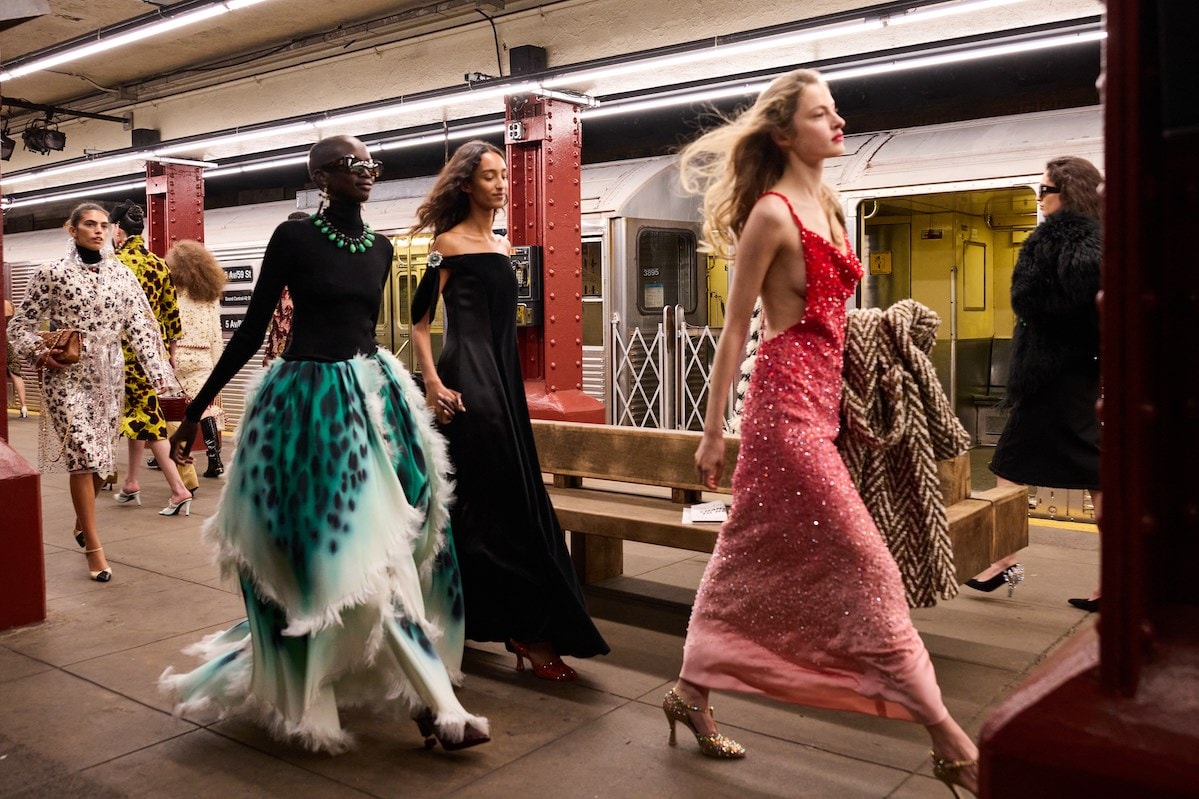
It was the most fabulous rush hour ever: a Chanel-centric subway station, running the 5th Avenue express (of course) and peopled with an 80-odd strong, all-female cast of American archetypes and stock characters, in extraordinary fashion. They represented, simultaneously, a cross-section of New York past and present, contemporary style, and Chanel’s eye-socking mastery of the arts of creation, which is what its annual Métiers d’Art collections are all about. Matthieu Blazy is now two shows in at Chanel – just. But his bold and expansive vision – and truly excellent clothes – are not only measuring up to the awe-inspiring legacy of that house, but pushing it to new levels. With models camping and vamping with a specially printed Chanel Gazette newspaper, making fake phone calls and meandering in and out of the stalled subway carriages, it was also a throwback to a heady tradition of theatrical Chanel productions under former artistic director Karl Lagerfeld, fantastic voyages through spaces and places.
That, Blazy said, was part of the point – he sees the globetrotting Métiers d’Art shows as something singular, distinct. “I would never show this collection in Paris,” he stated. And, indeed, the collection was engineered for its location – both the city, and the “happy chaos” of the subway itself, that Blazy embraces because it exploded hierarchies. “I think it’s one of the only cities in the world where every strata of society are using the subway,” he said. “Is it a mother on the run? Is it a Spiderman Art deco? Everyone was invited.”
Democracy is – perhaps understandably – not the first thing you think of when considering the hautest of French couture house in an increasingly wealth-divided 21st century. But there was a decidedly egalitarian idea to that, to the crossing of different walks of life and ways of living. France, meet America. It also was couched in the lived experience of Gabrielle Chanel, whose real life Blazy seems to be hewing to close, studying intently, but reinventing. It was in 1931, when already world-famous for both her clothes and perfume, that Chanel first came to America. It was at the behest of Samuel Goldwyn of Metro Goldwyn Mayer, to design costumes for films – the idea being to stay ahead of fashion trends by hiring one of the industry’s greatest names. Chanel was paid a million dollars, but wasn’t enamoured with her new career. “She didn’t like so much the experience she had with cinematography in Hollywood,” Blazy said. “But when she came back to New York, she went downtown. And she saw a lot of women who had adopted the Chanel style – not necessarily wearing Chanel, but it looked like Chanel.” That influenced her approach to fashion for the rest of her life. “Being copied is the ransom of success,” she said – and refused to join the Chambre Syndicale to protect her name – and indeed, the Chanel suit becomes, arguably, the most copied clothing of the twentieth century. And one of the most iconic.

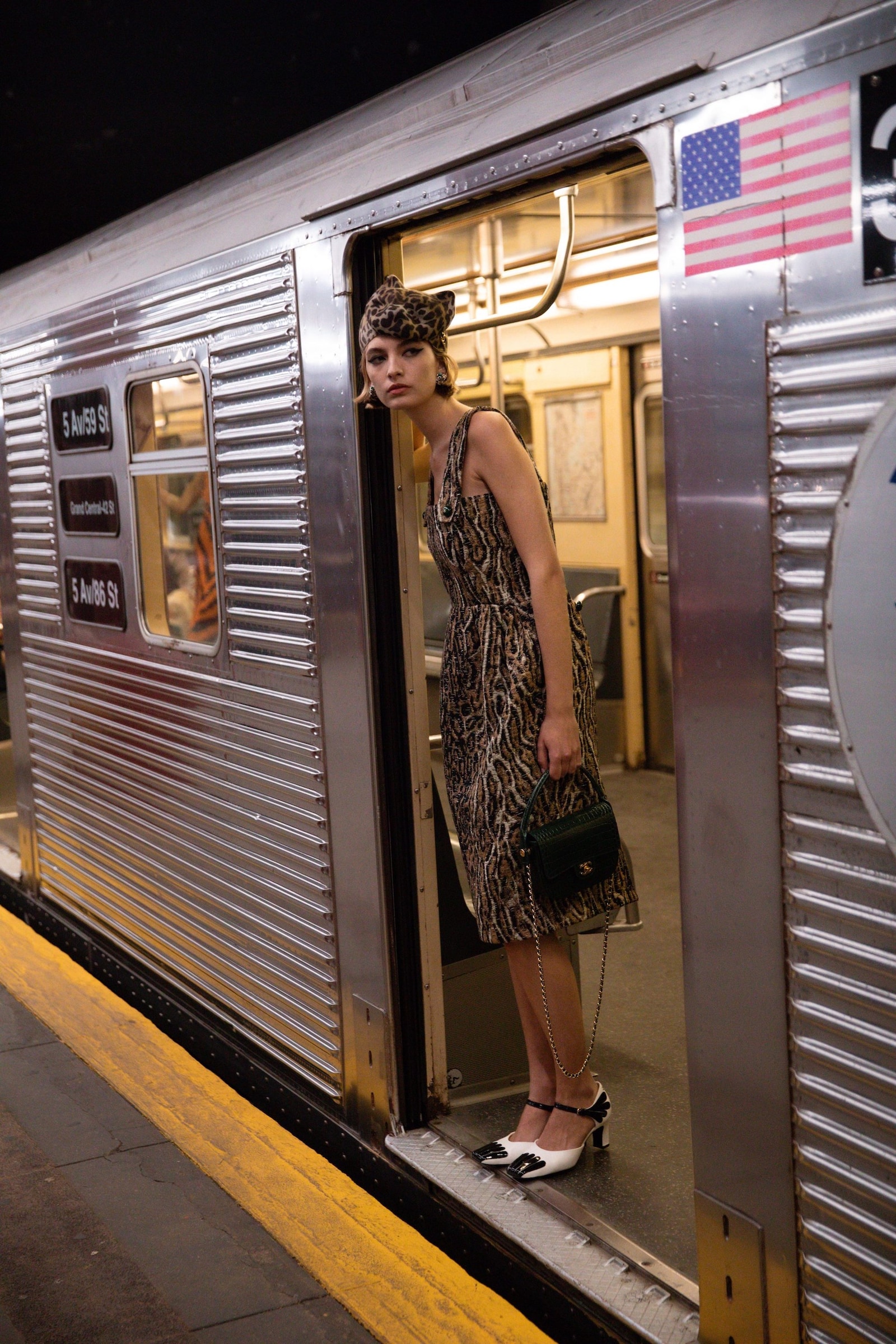
So democracy, diversity, and dressing up were the three pillars, it seems, of this show, models criss-crossing the platform in clothes that exalted their own uniqueness, each woman an aesthetic island. Broadway was pretty close by – and there was a distinct theatricality, an unreality to this apparent presentation of reality – yes, we were on a real subway platform, and that was a real train, but the result was a little like a cross between a restaging of George Cukor’s The Women and an especially fashion-frenzied episode of Sex And The City. “This show, I wanted to give everything a bit of a cinematographic lens,” said Blazy. “When you do costume for cinema, you slightly exaggerate it. I was interested in cinema not for the artificial, but the idea of artifice.” So, here the real became surreal – heightened, extreme, indeed fashioned.
It was also, of course, a jaw-dropping showcase for craft – just as each woman and her clothes were different, so were the techniques and handworks crammed into their making. The classic Chanel suit was given endless twists: knitted to resemble molten lava, dangling with crocheted flowers, executed in painstaking macramé threaded with tiny beads of rock-crystal and malachite, or popped with embroidered raffia, like kernels of popcorn. It became the uniform of mid-century American women, at all levels – a pink dress and jacket nodded, subtly, to Jackie Kennedy’s own tragic tailleur, a fragment of American history. But alongside were easy denims (some real, some trompe l’oeil in embroidered chiffon), mobster and mob wife looks (pinstripe suit, vast fluffed-up feather coat over a Chanel red sequin gown), “I Heart NY” t-shirts in mosaics of sequins, and covetable handbags shaped like Central Park squirrels, or Bronx zoo giraffes, or big apples (duh), or nuts, which is what they kind of were.
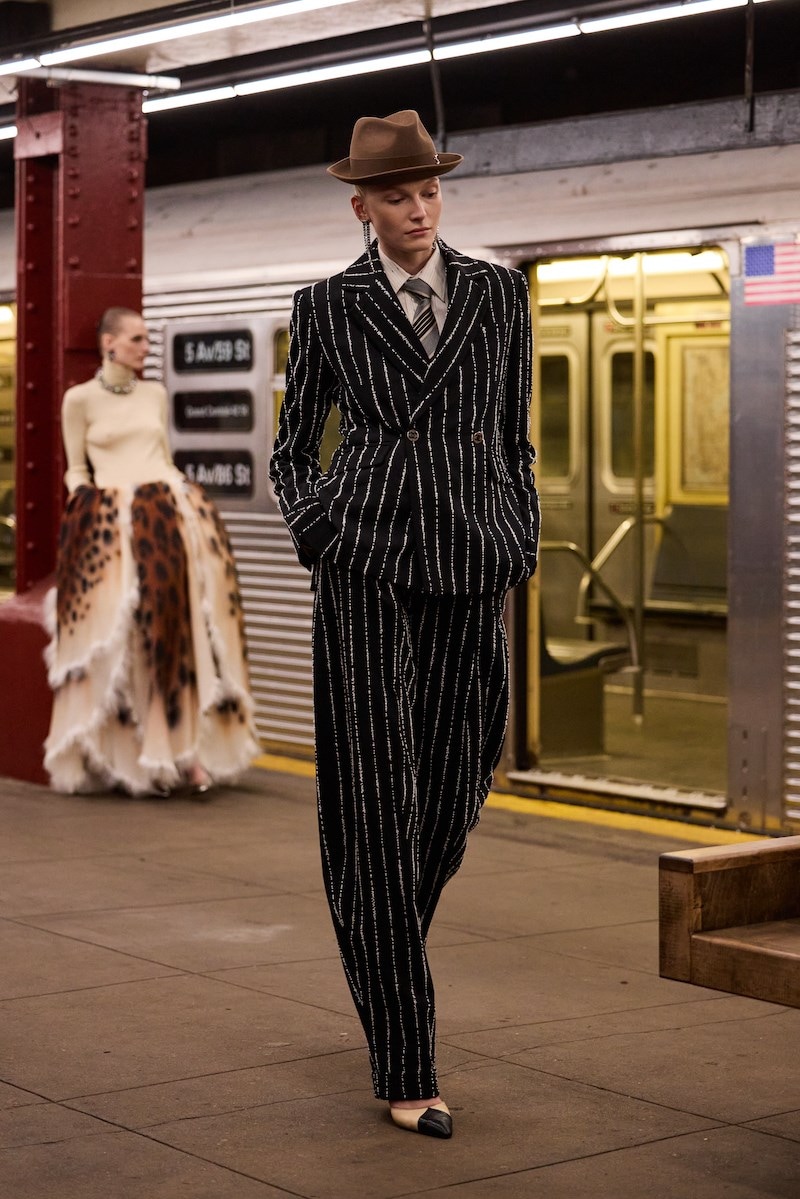
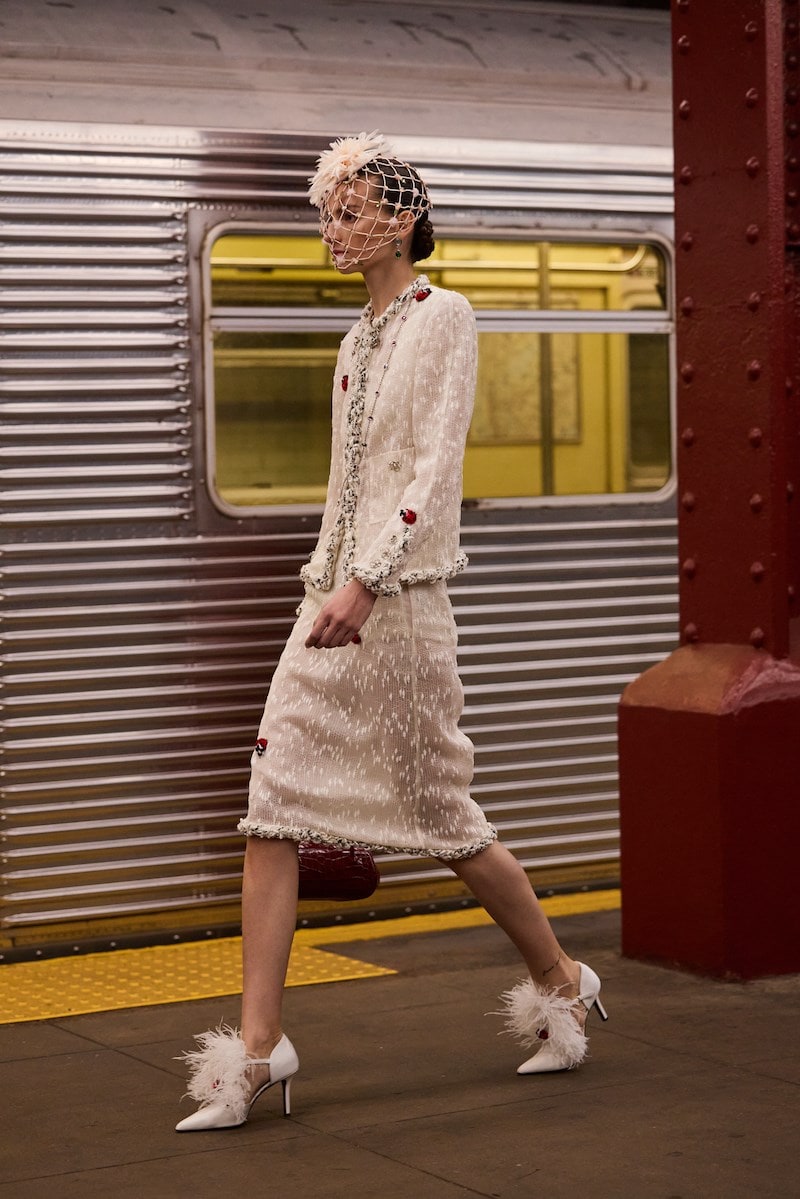
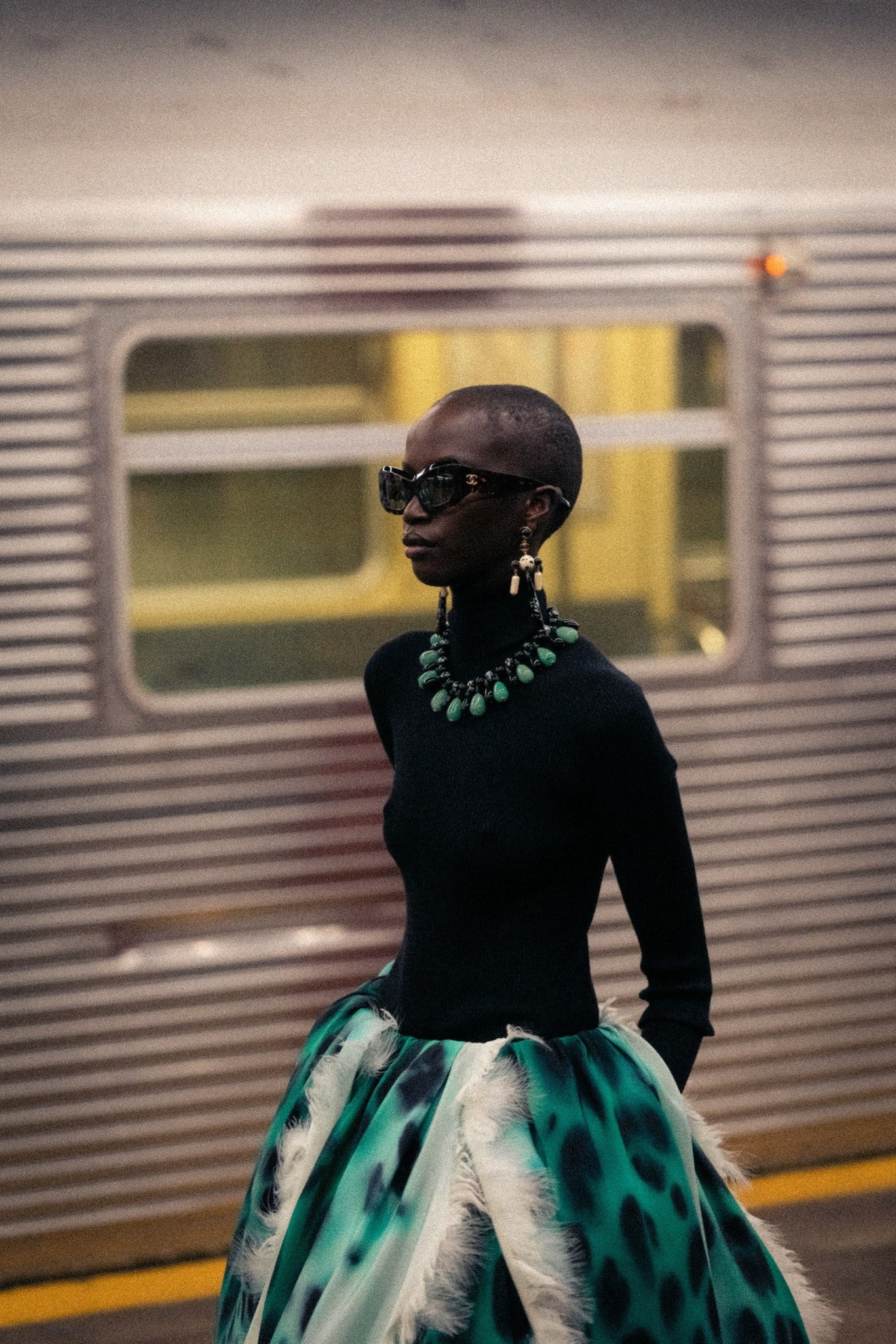
Dichotomies abounded. Evening gowns with a sinuous 1930s line were an homage to Chanel’s abortive Hollywood years – but so too were leather jackets sporting handbag clasps on the pocket and printed with the artwork of Tonight Or Never, the Gloria Swanson vehicle Chanel created costumes for the year she arrived in America. Meanwhile, vast ball skirts hand-painted with leopard spots, hand-frayed and applied with feathers, like Wilma Flintstone meets Millicent Rogers, and leopard tweed hand-woven by Lesage. Chanel herself wore lots of leopard, Blazy asserted – but it’s never been part of the house’s iconography, until now. “New codes” was something he declared he was searching for, and showcasing – which is clever. We all know a Chanel suit, but for a house to not only survive but to thrive, you need to rewrite the playbook. That’s exactly what Blazy is doing, with extraordinary alacrity, intense passion, and true love.
in HTML format, including tags, to make it appealing and easy to read for Japanese-speaking readers aged 20 to 40 interested in fashion. Organize the content with appropriate headings and subheadings (h1, h2, h3, h4, h5, h6), translating all text, including headings, into Japanese. Retain any existing
tags from
Lead ImageCourtesy of Chanel
It was the most fabulous rush hour ever: a Chanel-centric subway station, running the 5th Avenue express (of course) and peopled with an 80-odd strong, all-female cast of American archetypes and stock characters, in extraordinary fashion. They represented, simultaneously, a cross-section of New York past and present, contemporary style, and Chanel’s eye-socking mastery of the arts of creation, which is what its annual Métiers d’Art collections are all about. Matthieu Blazy is now two shows in at Chanel – just. But his bold and expansive vision – and truly excellent clothes – are not only measuring up to the awe-inspiring legacy of that house, but pushing it to new levels. With models camping and vamping with a specially printed Chanel Gazette newspaper, making fake phone calls and meandering in and out of the stalled subway carriages, it was also a throwback to a heady tradition of theatrical Chanel productions under former artistic director Karl Lagerfeld, fantastic voyages through spaces and places.
That, Blazy said, was part of the point – he sees the globetrotting Métiers d’Art shows as something singular, distinct. “I would never show this collection in Paris,” he stated. And, indeed, the collection was engineered for its location – both the city, and the “happy chaos” of the subway itself, that Blazy embraces because it exploded hierarchies. “I think it’s one of the only cities in the world where every strata of society are using the subway,” he said. “Is it a mother on the run? Is it a Spiderman Art deco? Everyone was invited.”
Democracy is – perhaps understandably – not the first thing you think of when considering the hautest of French couture house in an increasingly wealth-divided 21st century. But there was a decidedly egalitarian idea to that, to the crossing of different walks of life and ways of living. France, meet America. It also was couched in the lived experience of Gabrielle Chanel, whose real life Blazy seems to be hewing to close, studying intently, but reinventing. It was in 1931, when already world-famous for both her clothes and perfume, that Chanel first came to America. It was at the behest of Samuel Goldwyn of Metro Goldwyn Mayer, to design costumes for films – the idea being to stay ahead of fashion trends by hiring one of the industry’s greatest names. Chanel was paid a million dollars, but wasn’t enamoured with her new career. “She didn’t like so much the experience she had with cinematography in Hollywood,” Blazy said. “But when she came back to New York, she went downtown. And she saw a lot of women who had adopted the Chanel style – not necessarily wearing Chanel, but it looked like Chanel.” That influenced her approach to fashion for the rest of her life. “Being copied is the ransom of success,” she said – and refused to join the Chambre Syndicale to protect her name – and indeed, the Chanel suit becomes, arguably, the most copied clothing of the twentieth century. And one of the most iconic.
So democracy, diversity, and dressing up were the three pillars, it seems, of this show, models criss-crossing the platform in clothes that exalted their own uniqueness, each woman an aesthetic island. Broadway was pretty close by – and there was a distinct theatricality, an unreality to this apparent presentation of reality – yes, we were on a real subway platform, and that was a real train, but the result was a little like a cross between a restaging of George Cukor’s The Women and an especially fashion-frenzied episode of Sex And The City. “This show, I wanted to give everything a bit of a cinematographic lens,” said Blazy. “When you do costume for cinema, you slightly exaggerate it. I was interested in cinema not for the artificial, but the idea of artifice.” So, here the real became surreal – heightened, extreme, indeed fashioned.
It was also, of course, a jaw-dropping showcase for craft – just as each woman and her clothes were different, so were the techniques and handworks crammed into their making. The classic Chanel suit was given endless twists: knitted to resemble molten lava, dangling with crocheted flowers, executed in painstaking macramé threaded with tiny beads of rock-crystal and malachite, or popped with embroidered raffia, like kernels of popcorn. It became the uniform of mid-century American women, at all levels – a pink dress and jacket nodded, subtly, to Jackie Kennedy’s own tragic tailleur, a fragment of American history. But alongside were easy denims (some real, some trompe l’oeil in embroidered chiffon), mobster and mob wife looks (pinstripe suit, vast fluffed-up feather coat over a Chanel red sequin gown), “I Heart NY” t-shirts in mosaics of sequins, and covetable handbags shaped like Central Park squirrels, or Bronx zoo giraffes, or big apples (duh), or nuts, which is what they kind of were.
Dichotomies abounded. Evening gowns with a sinuous 1930s line were an homage to Chanel’s abortive Hollywood years – but so too were leather jackets sporting handbag clasps on the pocket and printed with the artwork of Tonight Or Never, the Gloria Swanson vehicle Chanel created costumes for the year she arrived in America. Meanwhile, vast ball skirts hand-painted with leopard spots, hand-frayed and applied with feathers, like Wilma Flintstone meets Millicent Rogers, and leopard tweed hand-woven by Lesage. Chanel herself wore lots of leopard, Blazy asserted – but it’s never been part of the house’s iconography, until now. “New codes” was something he declared he was searching for, and showcasing – which is clever. We all know a Chanel suit, but for a house to not only survive but to thrive, you need to rewrite the playbook. That’s exactly what Blazy is doing, with extraordinary alacrity, intense passion, and true love.
and integrate them seamlessly into the new content without adding new tags. Ensure the new content is fashion-related, written entirely in Japanese, and approximately 1500 words. Conclude with a “結論” section and a well-formatted “よくある質問” section. Avoid including an introduction or a note explaining the process.