Rewrite
Confessions II does something remarkable. In a vacuum, guest production from Dutch big room DJ Martin Garrix and lyrics like “The dancefloor isn’t just a place, it’s a threshold” and “Everybody get up and dance” could be read as empty platitudes about dancing as an act of revolution: sweet nothings whispered to a crowd already ready to celebrate the undisputed Queen of Pop. But situated within a wider project that offers an unflinching retrospective on her career, from partying at the dawn of dance music in the 80s to being endlessly scrutinised by the mainstream press, these lines gradually emerge as both personal and profound. Perhaps more than any other artist on earth, the dancefloor is sacred to Madonna.
On closer inspection, for example, “Everybody get up and dance” is a subtle allusion to Madonna’s debut 1982 single “Everybody”, which was shaped by and first performed at the pioneering New York gay club Danceteria. That formative era of early 80s nightlife is a key focus of Confessions II, which Madonna has recently described as the creative result of her long-awaited biopic being stuck in “developmental purgatory”. Clichés aside, the “Good for the Soul” lyric “Travelling through space and time / Interstellar helix unwind” offers a useful metaphor here, with Madonna using the transcendental textures of house, trance and trip-hop to move through different moments and places across her four-decade-plus career.
Being a follow-up to 2005 masterpiece Confessions on a Dance Floor, this album had big shoes to fill. But reuniting with electronic producer Stuart Price for the first time since this landmark project and quite literally penning her most raw and revealing lyrics to date, Confessions II deftly side-steps this burden. Rather than seeking to top her countless hits from the last 40 years, today’s release does something Madonna could have only done right here and right now: it tells her story.
Below, we break down seven of the most confessional lyrics on Confessions II.
Kicking off her career time-travelling right from the get-go, Madonna’s opening monologue on the album (“Thanks for coming / Sometimes I just like to hide in the shadows / Create a new persona / A different identity / I can be whoever I want to be”) is almost verbatim lifted from a 2022 promotional video with V Magazine. The video, which depicts Madonna calling down to a guest from a hotel suite, also includes the words “I like the anonymity of a hotel room […] I don’t allow myself to have too much fun – that’s part of the problem […] I’m too untrained to be a professional” that are missing from the album’s version.
These extra lines add crucial context to the narrative on Confessions II, and particularly her proclamation: “On the dancefloor, I feel so free […] safety in numbers”. Rather than just being empty platitudes about ‘dancefloors saving the world’, it reveals how clubbing has singular importance to someone as endlessly papped and scrutinised as Madonna. Confessions II’s sonics might be globally resonant, but, at its core, it’s a deeply personal story.
Buckle up, because this track is stacked with references. First off, the title itself is lifted from the 1980s New York nightclub Danceteria, where Madonna’s career began. As she recounts on the track, it was there that DJ Mark Kamins played her first single, “Everybody”, and it was also there that she performed for the very first time.
This is crucial, because many of the remaining lyrics are dedicated to vividly recreating other details from the club. Elsewhere on the track, Madonna name-drops the late Haoui Montaug, Danceteria’s doorman and promoter, as well as his club night No Entiendes, and the club’s elevator girl and soon-to-be actress Debi Mazar, whom Madonna first met there and later recruited as a make-up artist for her early music videos.
Even deeper down the rabbit hole, Madonna’s lyrics also name various socialites, artists and landmarks that framed this early, hedonistic, pre-fame period in her life – many of them now tragically gone. There’s Martin Burgoyne, whom Madonna met while partying on the Lower East Side and who, at various points, was her roommate, backing dancer and tour manager, as well as Fab Five Freddy, Basquiat, Keith Haring and Kenny Scharf, all members of Madonna’s wider social circle at the time. On the track, she describes them as “coming from Shafrazi”, the influential New York gallery closely associated with the city’s 80s art scene.
Completing this fresco of 80s New York nightlife are references to the city’s then-emerging hip-hop scene, with lyrics name-checking early breakdancing group Rock Steady Crew, legendary b-boy Crazy Legs and “these guys spinning on their heads”. Madonna also makes a slightly more unfortunate reference to her penchant for young Puerto Rican boys on the track, but we won’t dwell much longer on that.

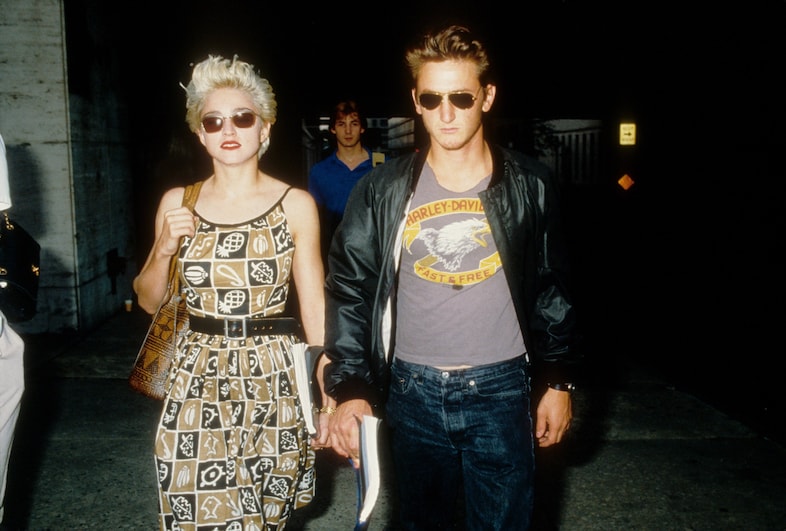
Repeating the lyrics “Movie star, deep blue eyes / In Hollywood we’re a perfect prize / He drove way too fast / Shelby Cobra wasn’t meant to last” on the euphoric Martin Garrix-produced trance-house track “Bizarre”, it is hard not to hear Madonna referring to Sean Penn. Madonna and Penn were married between 1985 and 1989, with Madonna reportedly gifting Penn a Shelby Cobra retro sports car as a wedding present.
But despite being separated for almost four decades, Madonna’s lyrics on the track seem to suggest that some emotions still linger between the pair. While she states there are “a thousand reasons you couldn’t be with me”, she also admits that she remains tempted by Penn, and laments that love is “bizarre” and “impossible to control”. The pair were also spotted holding hands at a Haiti charity gala in 2016.
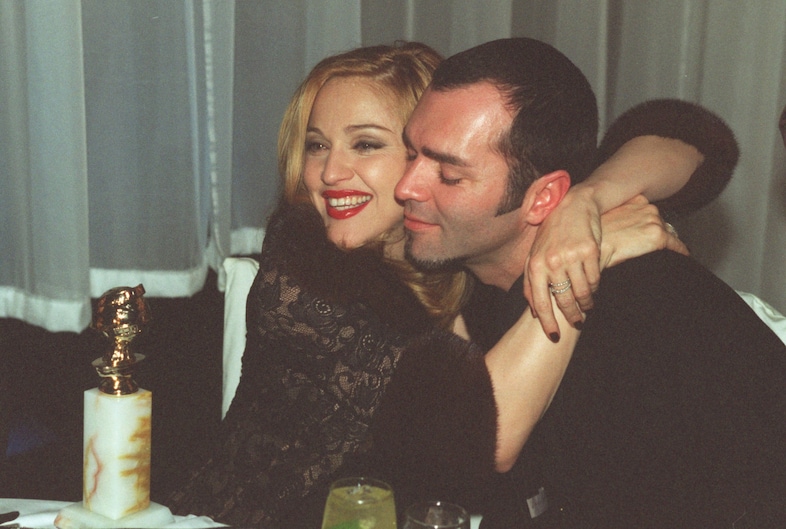
More cryptic than “Bizarre” is the subsequent ethereal, drum ‘n’ bass-tinged track “Fragile”, which appears to be an ode to Madonna’s late younger brother Christopher Ciccone. The pair had previously had a highly publicised falling out after his explosive 2008 memoir Life With My Sister Madonna, the writing of which Christopher described as “a giant fucking orgasm”.
But the siblings appear to have rekindled their relationship later in life, as Christopher struggled with pancreatic cancer in 2024. Speaking to Graham Norton last week, Madonna said of the track: “He was in a lot of pain on the phone, and he was not in a good place. I knew it was close to the end. And then I went upstairs and wrote a song.” Later, she described the track as a promise “to find each other on the other side.”
The spectacular trip-hop track “Betrayal” also includes coded references to Madonna’s personal life. While not explicitly confirmed by the Queen of Pop herself, the incendiary track is strongly suggested to be addressed to her late stepmother, Joan Ciccone, who also passed away in 2024, given the line “You’ll never take my mother’s place.”
Madonna has previously opened up about her conflicts with her stepmother, whom her father married after her mother died when Madonna was nine years old, admitting that she resented her and did not accept her attempts to nurture a relationship while growing up. But despite the track’s rage, Madonna seems to be describing a more nuanced story between the two, inverting the line “It’s just because you lost your faith” into “It’s just because I lost my faith” throughout the track, and elsewhere singing, “We’re dancing, we’re together, forever.” On some level, the track seems to acknowledge a relationship shaped by mutual hurt and abandonment.
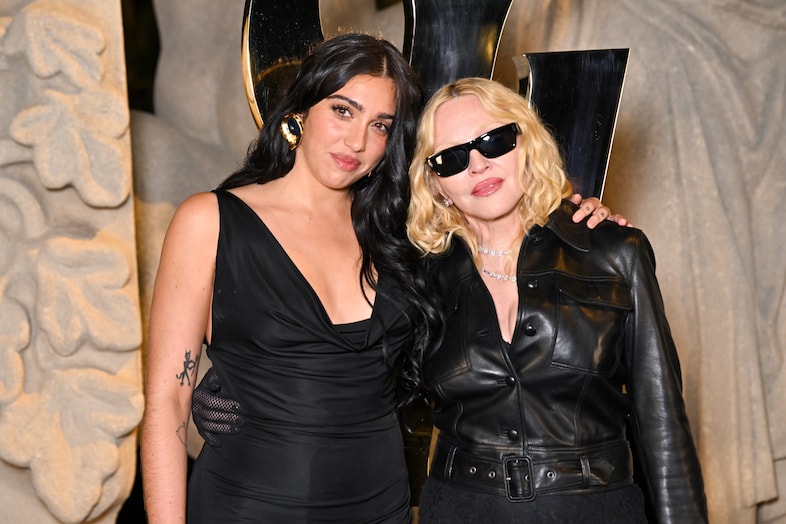
Structured as a duet between her and her daughter, Lourdes Leon, Madonna has since admitted that “The Test” was actually her daughter’s idea. “She approached me about writing a song together as a way to heal our relationship,” M told Interview earlier this year, referencing widely publicised feuds between the mother-daughter pair over the years. “It was a really important moment, and it solidified the idea that now is the time to make this record.”
The track itself is strikingly confessional, with Madonna admitting she didn’t consider how “all the flashing [camera] lights” would “disturb” her daughter, and Lourdes describing her mother as her “reason to be”. Perhaps the biggest full-circle moment on the track, however, arrives with Madonna’s opening words “Little star” – a reference to her 1998 Ray of Light song of the same name, which was initially written as a lullaby to Lourdes.
Here’s one that fans are going to speculate about for months to come. Closing with a return to her infamous Lower East Side era in final track “L.E.S. Girl”, Madonna makes frequent, cryptic references to her boyfriend at the time. In the track, she describes him as having “a Marlon Brando face” and playing “guitar at St. Mark’s Place”. In her recent cover story with Interview, Madonna refused to elaborate on the artist’s identity, stating: “This guy I was dating who was a musician and I was in love with. He was really an archetype. […] But I’m not going to say [his name]. If he had a Marlon Brando face, he’s hot. Who’s hotter than Marlon Brando?” Who indeed.
in HTML format, including tags, to make it appealing and easy to read for Japanese-speaking readers aged 20 to 40 interested in fashion. Organize the content with appropriate headings and subheadings (h1, h2, h3, h4, h5, h6), translating all text, including headings, into Japanese. Retain any existing
tags from
Confessions II does something remarkable. In a vacuum, guest production from Dutch big room DJ Martin Garrix and lyrics like “The dancefloor isn’t just a place, it’s a threshold” and “Everybody get up and dance” could be read as empty platitudes about dancing as an act of revolution: sweet nothings whispered to a crowd already ready to celebrate the undisputed Queen of Pop. But situated within a wider project that offers an unflinching retrospective on her career, from partying at the dawn of dance music in the 80s to being endlessly scrutinised by the mainstream press, these lines gradually emerge as both personal and profound. Perhaps more than any other artist on earth, the dancefloor is sacred to Madonna.
On closer inspection, for example, “Everybody get up and dance” is a subtle allusion to Madonna’s debut 1982 single “Everybody”, which was shaped by and first performed at the pioneering New York gay club Danceteria. That formative era of early 80s nightlife is a key focus of Confessions II, which Madonna has recently described as the creative result of her long-awaited biopic being stuck in “developmental purgatory”. Clichés aside, the “Good for the Soul” lyric “Travelling through space and time / Interstellar helix unwind” offers a useful metaphor here, with Madonna using the transcendental textures of house, trance and trip-hop to move through different moments and places across her four-decade-plus career.
Being a follow-up to 2005 masterpiece Confessions on a Dance Floor, this album had big shoes to fill. But reuniting with electronic producer Stuart Price for the first time since this landmark project and quite literally penning her most raw and revealing lyrics to date, Confessions II deftly side-steps this burden. Rather than seeking to top her countless hits from the last 40 years, today’s release does something Madonna could have only done right here and right now: it tells her story.
Below, we break down seven of the most confessional lyrics on Confessions II.
Kicking off her career time-travelling right from the get-go, Madonna’s opening monologue on the album (“Thanks for coming / Sometimes I just like to hide in the shadows / Create a new persona / A different identity / I can be whoever I want to be”) is almost verbatim lifted from a 2022 promotional video with V Magazine. The video, which depicts Madonna calling down to a guest from a hotel suite, also includes the words “I like the anonymity of a hotel room […] I don’t allow myself to have too much fun – that’s part of the problem […] I’m too untrained to be a professional” that are missing from the album’s version.
These extra lines add crucial context to the narrative on Confessions II, and particularly her proclamation: “On the dancefloor, I feel so free […] safety in numbers”. Rather than just being empty platitudes about ‘dancefloors saving the world’, it reveals how clubbing has singular importance to someone as endlessly papped and scrutinised as Madonna. Confessions II’s sonics might be globally resonant, but, at its core, it’s a deeply personal story.
Buckle up, because this track is stacked with references. First off, the title itself is lifted from the 1980s New York nightclub Danceteria, where Madonna’s career began. As she recounts on the track, it was there that DJ Mark Kamins played her first single, “Everybody”, and it was also there that she performed for the very first time.
This is crucial, because many of the remaining lyrics are dedicated to vividly recreating other details from the club. Elsewhere on the track, Madonna name-drops the late Haoui Montaug, Danceteria’s doorman and promoter, as well as his club night No Entiendes, and the club’s elevator girl and soon-to-be actress Debi Mazar, whom Madonna first met there and later recruited as a make-up artist for her early music videos.
Even deeper down the rabbit hole, Madonna’s lyrics also name various socialites, artists and landmarks that framed this early, hedonistic, pre-fame period in her life – many of them now tragically gone. There’s Martin Burgoyne, whom Madonna met while partying on the Lower East Side and who, at various points, was her roommate, backing dancer and tour manager, as well as Fab Five Freddy, Basquiat, Keith Haring and Kenny Scharf, all members of Madonna’s wider social circle at the time. On the track, she describes them as “coming from Shafrazi”, the influential New York gallery closely associated with the city’s 80s art scene.
Completing this fresco of 80s New York nightlife are references to the city’s then-emerging hip-hop scene, with lyrics name-checking early breakdancing group Rock Steady Crew, legendary b-boy Crazy Legs and “these guys spinning on their heads”. Madonna also makes a slightly more unfortunate reference to her penchant for young Puerto Rican boys on the track, but we won’t dwell much longer on that.
Repeating the lyrics “Movie star, deep blue eyes / In Hollywood we’re a perfect prize / He drove way too fast / Shelby Cobra wasn’t meant to last” on the euphoric Martin Garrix-produced trance-house track “Bizarre”, it is hard not to hear Madonna referring to Sean Penn. Madonna and Penn were married between 1985 and 1989, with Madonna reportedly gifting Penn a Shelby Cobra retro sports car as a wedding present.
But despite being separated for almost four decades, Madonna’s lyrics on the track seem to suggest that some emotions still linger between the pair. While she states there are “a thousand reasons you couldn’t be with me”, she also admits that she remains tempted by Penn, and laments that love is “bizarre” and “impossible to control”. The pair were also spotted holding hands at a Haiti charity gala in 2016.
More cryptic than “Bizarre” is the subsequent ethereal, drum ‘n’ bass-tinged track “Fragile”, which appears to be an ode to Madonna’s late younger brother Christopher Ciccone. The pair had previously had a highly publicised falling out after his explosive 2008 memoir Life With My Sister Madonna, the writing of which Christopher described as “a giant fucking orgasm”.
But the siblings appear to have rekindled their relationship later in life, as Christopher struggled with pancreatic cancer in 2024. Speaking to Graham Norton last week, Madonna said of the track: “He was in a lot of pain on the phone, and he was not in a good place. I knew it was close to the end. And then I went upstairs and wrote a song.” Later, she described the track as a promise “to find each other on the other side.”
The spectacular trip-hop track “Betrayal” also includes coded references to Madonna’s personal life. While not explicitly confirmed by the Queen of Pop herself, the incendiary track is strongly suggested to be addressed to her late stepmother, Joan Ciccone, who also passed away in 2024, given the line “You’ll never take my mother’s place.”
Madonna has previously opened up about her conflicts with her stepmother, whom her father married after her mother died when Madonna was nine years old, admitting that she resented her and did not accept her attempts to nurture a relationship while growing up. But despite the track’s rage, Madonna seems to be describing a more nuanced story between the two, inverting the line “It’s just because you lost your faith” into “It’s just because I lost my faith” throughout the track, and elsewhere singing, “We’re dancing, we’re together, forever.” On some level, the track seems to acknowledge a relationship shaped by mutual hurt and abandonment.
Structured as a duet between her and her daughter, Lourdes Leon, Madonna has since admitted that “The Test” was actually her daughter’s idea. “She approached me about writing a song together as a way to heal our relationship,” M told Interview earlier this year, referencing widely publicised feuds between the mother-daughter pair over the years. “It was a really important moment, and it solidified the idea that now is the time to make this record.”
The track itself is strikingly confessional, with Madonna admitting she didn’t consider how “all the flashing [camera] lights” would “disturb” her daughter, and Lourdes describing her mother as her “reason to be”. Perhaps the biggest full-circle moment on the track, however, arrives with Madonna’s opening words “Little star” – a reference to her 1998 Ray of Light song of the same name, which was initially written as a lullaby to Lourdes.
Here’s one that fans are going to speculate about for months to come. Closing with a return to her infamous Lower East Side era in final track “L.E.S. Girl”, Madonna makes frequent, cryptic references to her boyfriend at the time. In the track, she describes him as having “a Marlon Brando face” and playing “guitar at St. Mark’s Place”. In her recent cover story with Interview, Madonna refused to elaborate on the artist’s identity, stating: “This guy I was dating who was a musician and I was in love with. He was really an archetype. […] But I’m not going to say [his name]. If he had a Marlon Brando face, he’s hot. Who’s hotter than Marlon Brando?” Who indeed.
and integrate them seamlessly into the new content without adding new tags. Ensure the new content is fashion-related, written entirely in Japanese, and approximately 1500 words. Conclude with a “結論” section and a well-formatted “よくある質問” section. Avoid including an introduction or a note explaining the process.