Rewrite
Lead ImageLoewe Spring/Summer 2027Courtesy of Loewe
“New world, old world.” In their own words, that was the crux of what Jack McCollough and Lazaro Hernandez offered for their third Loewe collection. But if it suggests a spiky futurism, that wasn’t the gist – bar the set, a futuristic, Kubrickian reimagining of an ancient amphitheatre, models running round and round. McCollough and Hernandez were rather thinking of the old world of Europe melding with that of America, a cleverer take on the old cliché of Americans in Paris. Except, really, they’re not in Paris – ideologically, and often physically, they’re in Spain, where Loewe was born and where much of its making remains rooted. So this collection exemplified the idea of them grappling with that tension and duality.
Grappling is the wrong term – there was no wrestling for meaning or direction here. Essentially, rather than finding a middle ground, they elected to clash those two identities together, meaning American sportswear references went head-to-head with draperies pulled from Spanish baroque paintings, grand gestures translated to intentionally crumpled paper-bag skirts maybe tied to the body with bungee cords, almost like a Christo. That’s the kind of art McCollough and Hernandez usually reference in their work, but this time they’d been visiting the Prado in what little Loewe downtime they have, and decided to translate the frozen, formal works of Zurbarán and Velázquez – 17th-century monks and Spanish court infantas – into lively, easy clothes that feel relevant to now. Ambitious is the word.

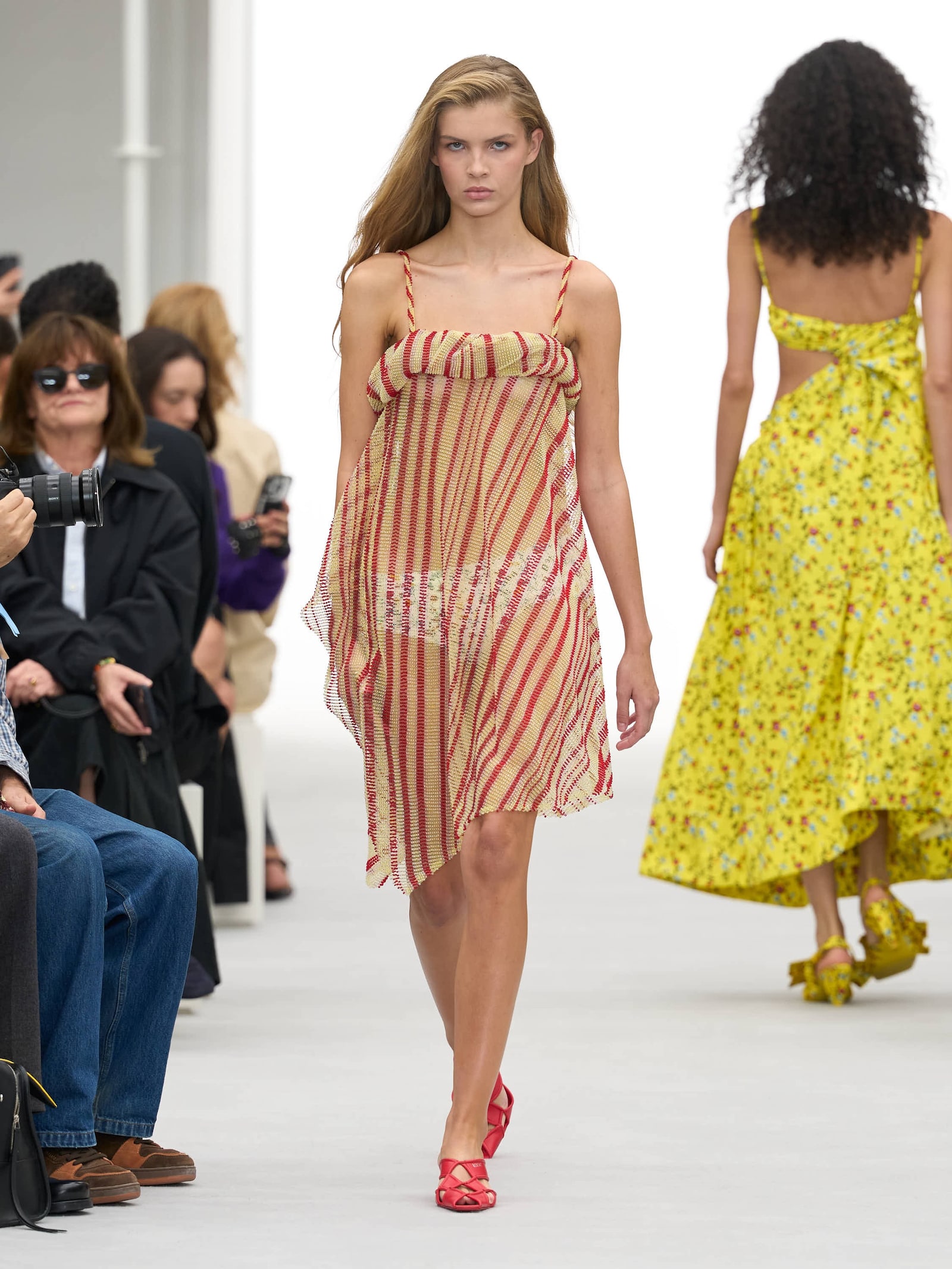
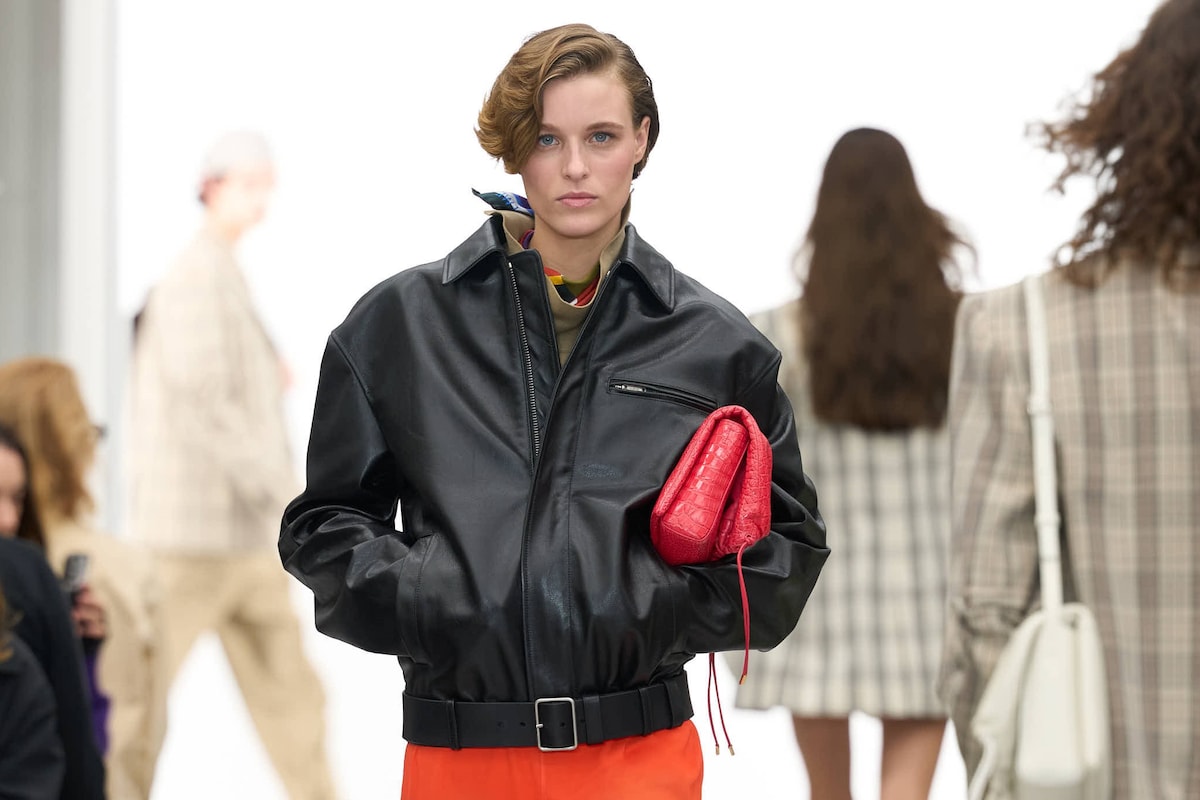
Usually, those kinds of references wind up in majestic evening gowns – which aren’t really McCollough and Hernandez’s bag. Velázquez drapes ended up swagged across the front of those skirts, but also as a pinched shoulder on leather jackets, or loosely twisting sweatshirts. “Autobiography” was a word they used, which is why the clothes all seemed so distinctly American – prep checked blazers, polo shirts, pyjama bottoms and chinos (actually layered). Tina Barney meets Polo Ralph Lauren, with a Bruce Weber chaser – layer on layer of Americana. That’s new world, and a new world for Loewe, too. It was a pointed shift away from surreal twists and modern art referencing: at a preview, McCollough and Hernandez said they didn’t want to create clothes as objects anymore. The Puzzle bag structure was reconfigured to slouch; a new style had a drawstring flap slumped over its frame. They even loosened up the apparently seamless moulded leather they debuted this time last year, creating short dresses that retained that painstaking technique but with a new sense of ease.
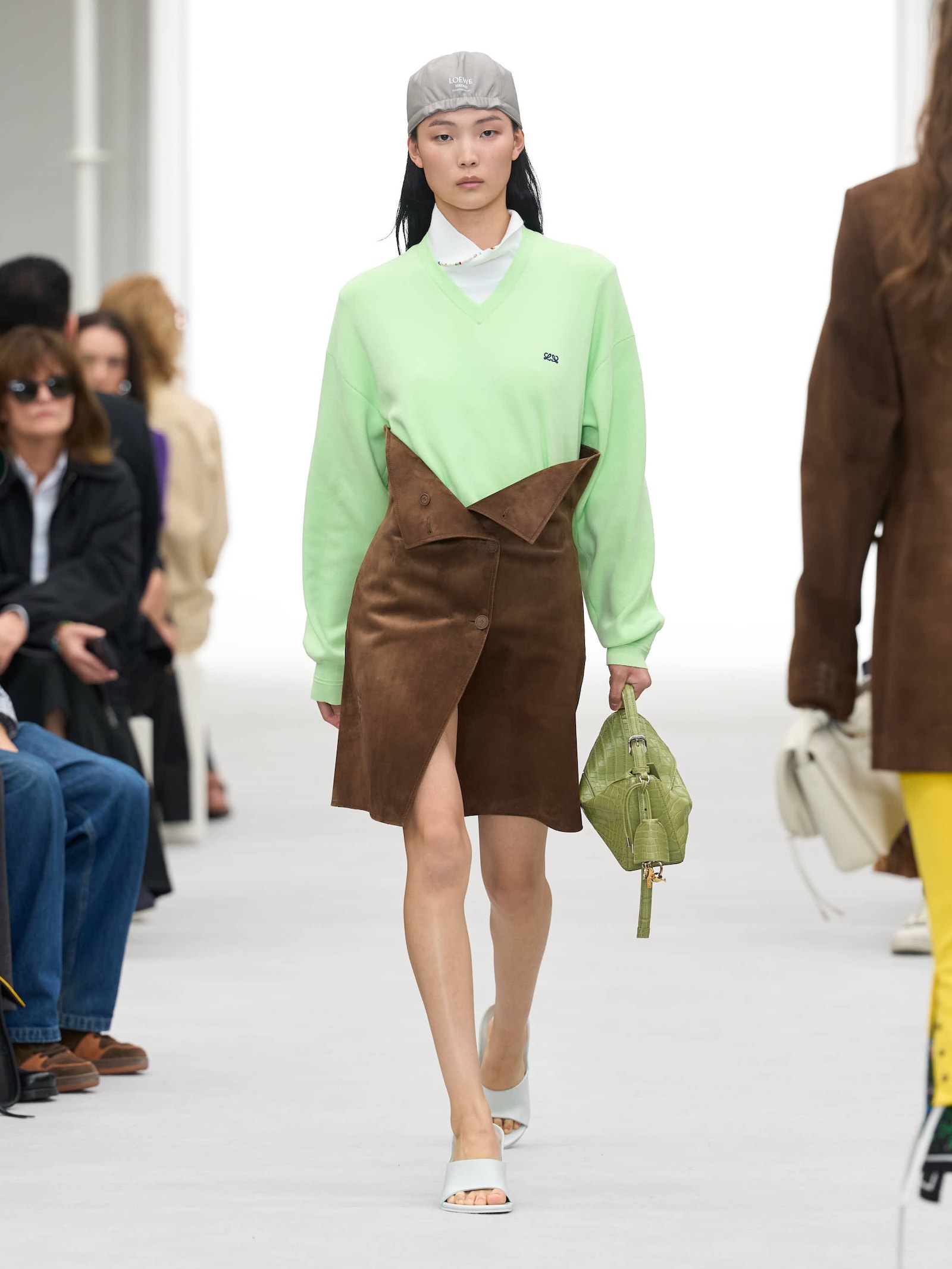
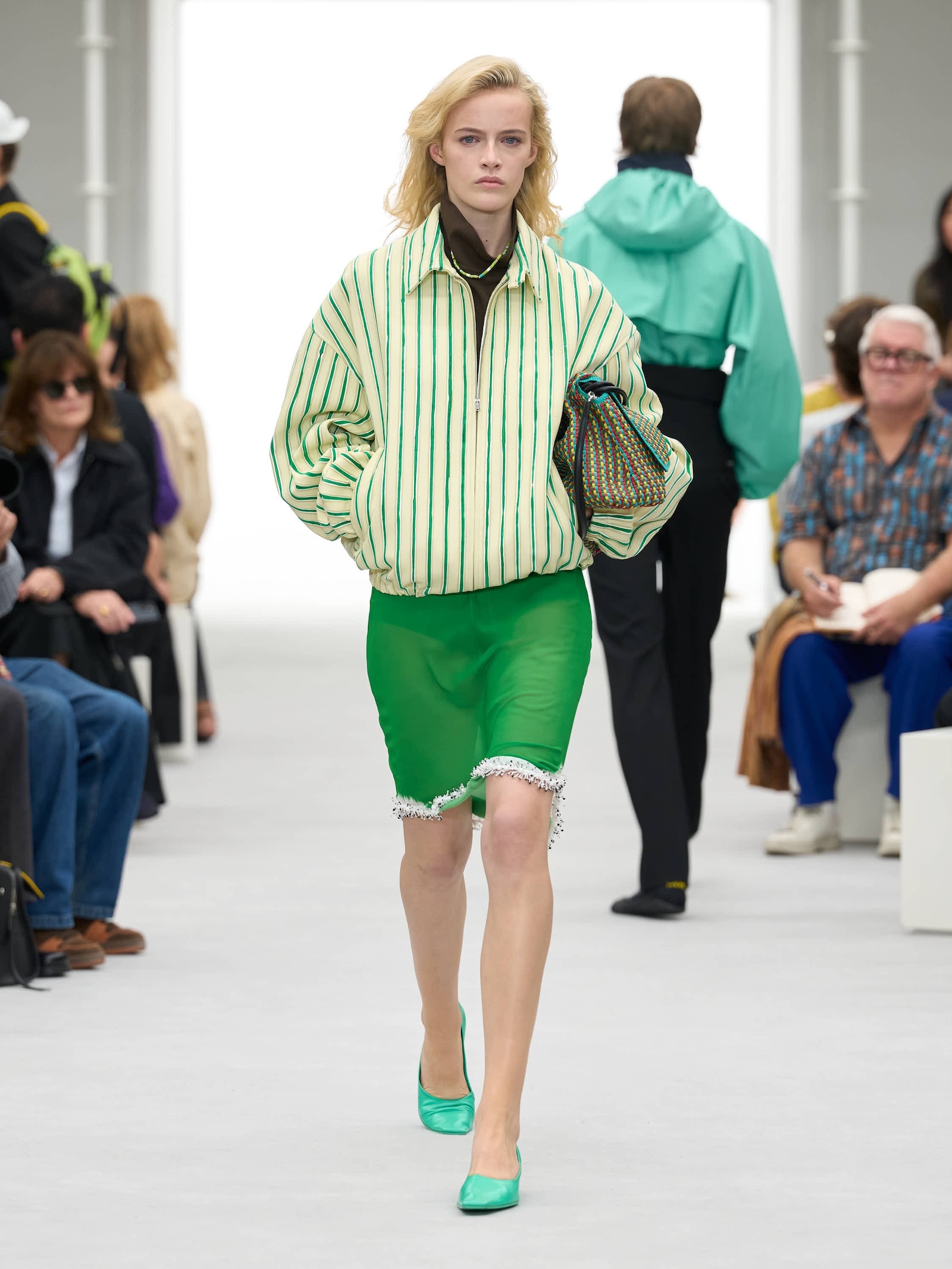
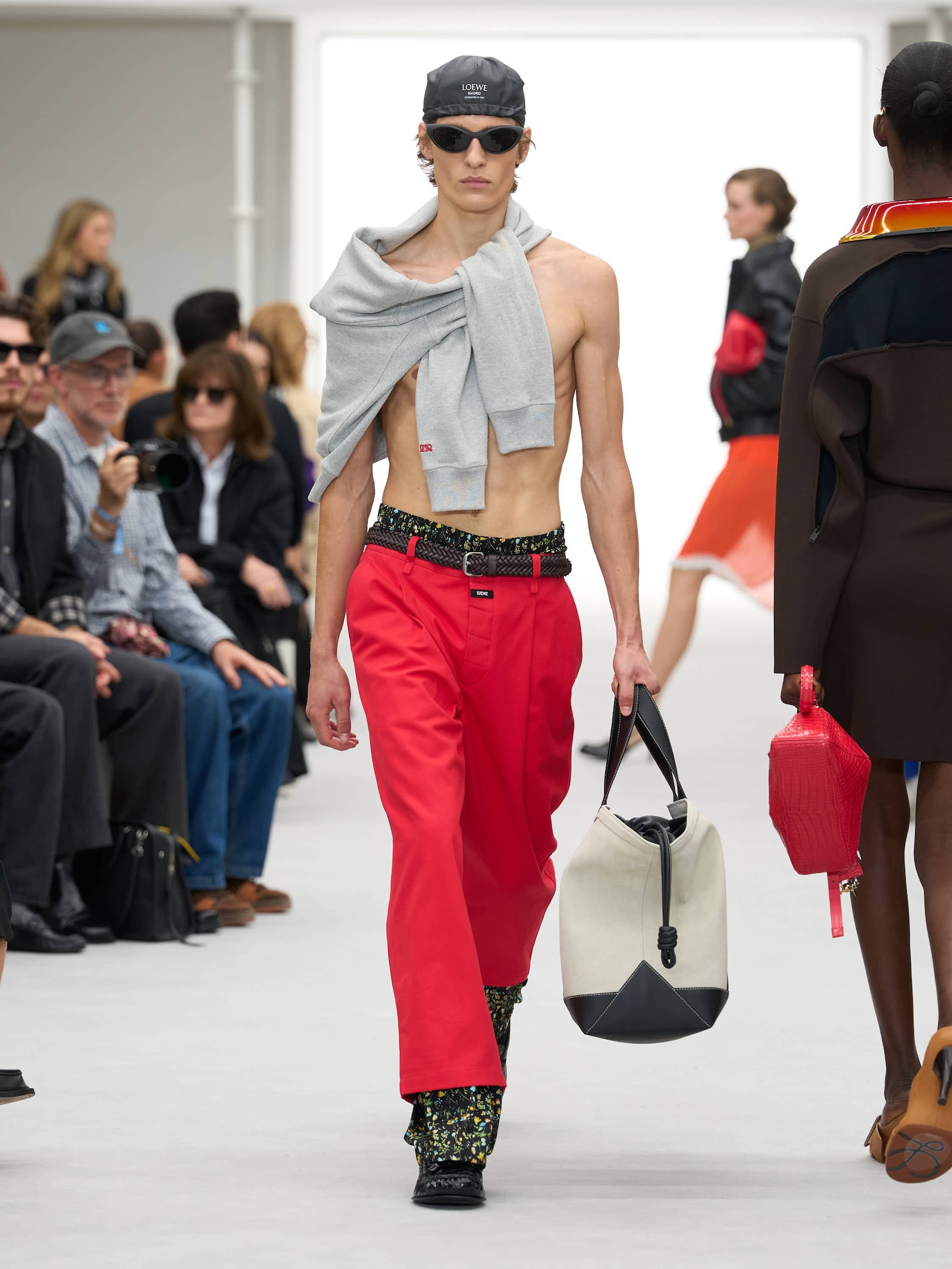
That was the sensation all over, of McCollough and Hernandez easing into their roles and bringing plenty of themselves and their experience to Loewe. They speak the language – Spanish, but also the brand talk within the clothes. There was a direct nod to the brand’s little-known archives with a golden tan suede blazer, a direct iteration of Loewe’s first ever clothing item from the 1960s. But most notable in this was a sense of clothes in heat, of garments sliding and peeling away from the body, some twisted as if taken off and thrown back on – a sweatshirt was draped across a male model’s bare torso, skirts were rucked and tucked like towels, and zippers opening on other layers of fabric resembled clothes falling off, or being tugged off. There’s an undercurrent of easy sexuality to their Loewe, like a bunch of gap year Ivy League students backpacking across Europe – meeting, crushing, maybe falling in love. Maybe it’s not only the clothes in heat. In a season of sly seduction, of underwear as outerwear, McCollough and Hernandez’s take on sex was one of the most compelling.
in HTML format, including tags, to make it appealing and easy to read for Japanese-speaking readers aged 20 to 40 interested in fashion. Organize the content with appropriate headings and subheadings (h1, h2, h3, h4, h5, h6), translating all text, including headings, into Japanese. Retain any existing
tags from
Lead ImageLoewe Spring/Summer 2027Courtesy of Loewe
“New world, old world.” In their own words, that was the crux of what Jack McCollough and Lazaro Hernandez offered for their third Loewe collection. But if it suggests a spiky futurism, that wasn’t the gist – bar the set, a futuristic, Kubrickian reimagining of an ancient amphitheatre, models running round and round. McCollough and Hernandez were rather thinking of the old world of Europe melding with that of America, a cleverer take on the old cliché of Americans in Paris. Except, really, they’re not in Paris – ideologically, and often physically, they’re in Spain, where Loewe was born and where much of its making remains rooted. So this collection exemplified the idea of them grappling with that tension and duality.
Grappling is the wrong term – there was no wrestling for meaning or direction here. Essentially, rather than finding a middle ground, they elected to clash those two identities together, meaning American sportswear references went head-to-head with draperies pulled from Spanish baroque paintings, grand gestures translated to intentionally crumpled paper-bag skirts maybe tied to the body with bungee cords, almost like a Christo. That’s the kind of art McCollough and Hernandez usually reference in their work, but this time they’d been visiting the Prado in what little Loewe downtime they have, and decided to translate the frozen, formal works of Zurbarán and Velázquez – 17th-century monks and Spanish court infantas – into lively, easy clothes that feel relevant to now. Ambitious is the word.
Usually, those kinds of references wind up in majestic evening gowns – which aren’t really McCollough and Hernandez’s bag. Velázquez drapes ended up swagged across the front of those skirts, but also as a pinched shoulder on leather jackets, or loosely twisting sweatshirts. “Autobiography” was a word they used, which is why the clothes all seemed so distinctly American – prep checked blazers, polo shirts, pyjama bottoms and chinos (actually layered). Tina Barney meets Polo Ralph Lauren, with a Bruce Weber chaser – layer on layer of Americana. That’s new world, and a new world for Loewe, too. It was a pointed shift away from surreal twists and modern art referencing: at a preview, McCollough and Hernandez said they didn’t want to create clothes as objects anymore. The Puzzle bag structure was reconfigured to slouch; a new style had a drawstring flap slumped over its frame. They even loosened up the apparently seamless moulded leather they debuted this time last year, creating short dresses that retained that painstaking technique but with a new sense of ease.
That was the sensation all over, of McCollough and Hernandez easing into their roles and bringing plenty of themselves and their experience to Loewe. They speak the language – Spanish, but also the brand talk within the clothes. There was a direct nod to the brand’s little-known archives with a golden tan suede blazer, a direct iteration of Loewe’s first ever clothing item from the 1960s. But most notable in this was a sense of clothes in heat, of garments sliding and peeling away from the body, some twisted as if taken off and thrown back on – a sweatshirt was draped across a male model’s bare torso, skirts were rucked and tucked like towels, and zippers opening on other layers of fabric resembled clothes falling off, or being tugged off. There’s an undercurrent of easy sexuality to their Loewe, like a bunch of gap year Ivy League students backpacking across Europe – meeting, crushing, maybe falling in love. Maybe it’s not only the clothes in heat. In a season of sly seduction, of underwear as outerwear, McCollough and Hernandez’s take on sex was one of the most compelling.
and integrate them seamlessly into the new content without adding new tags. Ensure the new content is fashion-related, written entirely in Japanese, and approximately 1500 words. Conclude with a “結論” section and a well-formatted “よくある質問” section. Avoid including an introduction or a note explaining the process.