Rewrite
Lead ImageFendi Spring/Summer 2027Courtesy of Fendi
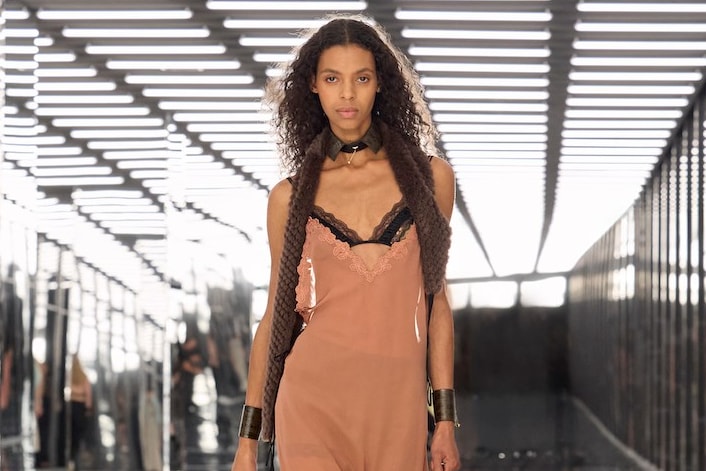
Maria Grazia Chiuri has been back in Italy full-time for just over a year, preceding her appointment to lead the Roman house of Fendi last October. She’s evidently steeping herself in the culture from which she came. “This reference is very close to Italian culture,” she said beforehand, of the heroine that inspired her Spring/Summer 2027 Fendi collection – as a warning, that we may have no idea what she was on about. That was Raffaella Carrà, an Italian film and television star and recording artist – a cult figure in the UK and America, she’s a bona fide Italian and Latin obsession. Her freedom and sexuality, piped into millions of households in the 1970s and often inducing the ire of censors, shook up her birth country, still often shackled by the rigorous doctrine of Catholicism. The equally provocative Italian artist Francesco Vezzoli once said “I think Raffaella Carrà has done more to liberate women than many feminists.” He curated an exhibition of 1970s Italian television for the Fondazione Prada in 2017: Carrà was a major component. Her fashion, meanwhile – jumpsuits, cut-outs, capes and the first exposed midriff on Italian television – have been included in museum exhibitions, with an entire exhibition dedicated to her a few years back.
It’s tricky to contextualise these kinds of figures to outsiders – you either get the fixation, or you don’t. So Chiuri was playing to a home crowd when she played her Eurodisco music and paraded a selection of Carrà-catures in a mirrored box in the Fendi headquarters. But you got the feeling, a bit Studio 54, a little Eyes of Laura Mars, but obviously loaded with the feminist theology that Chiuri embeds in her working processes. That’s also fundamentally Fendi – while Carrà was freeing the navel and writing songs devoted to female sexual liberation, the Fendi sisters were ripping the linings out of fur coats and forging ahead as five women leading a business, which was equally radical in a patriarchal fashion system of the 1970s.

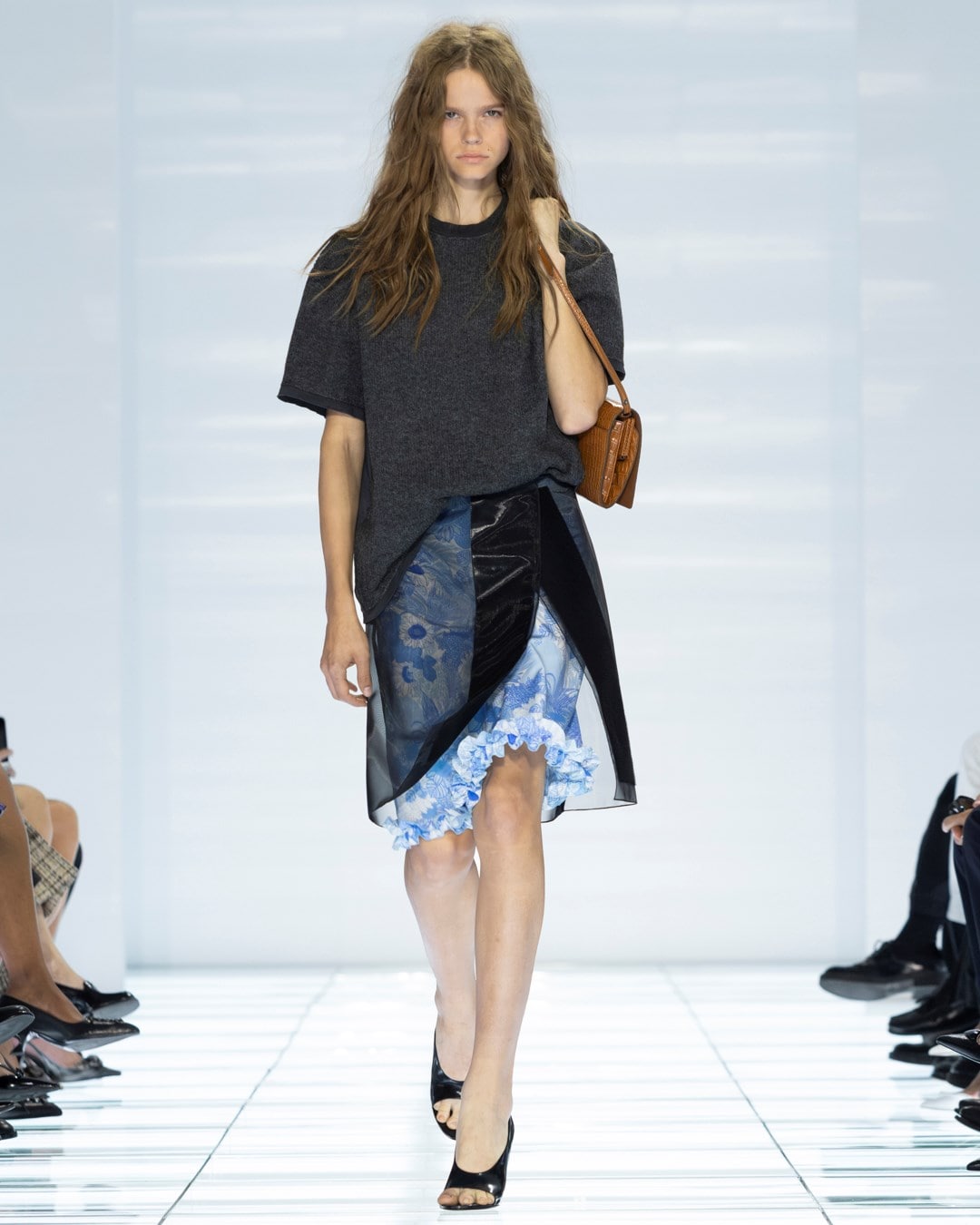
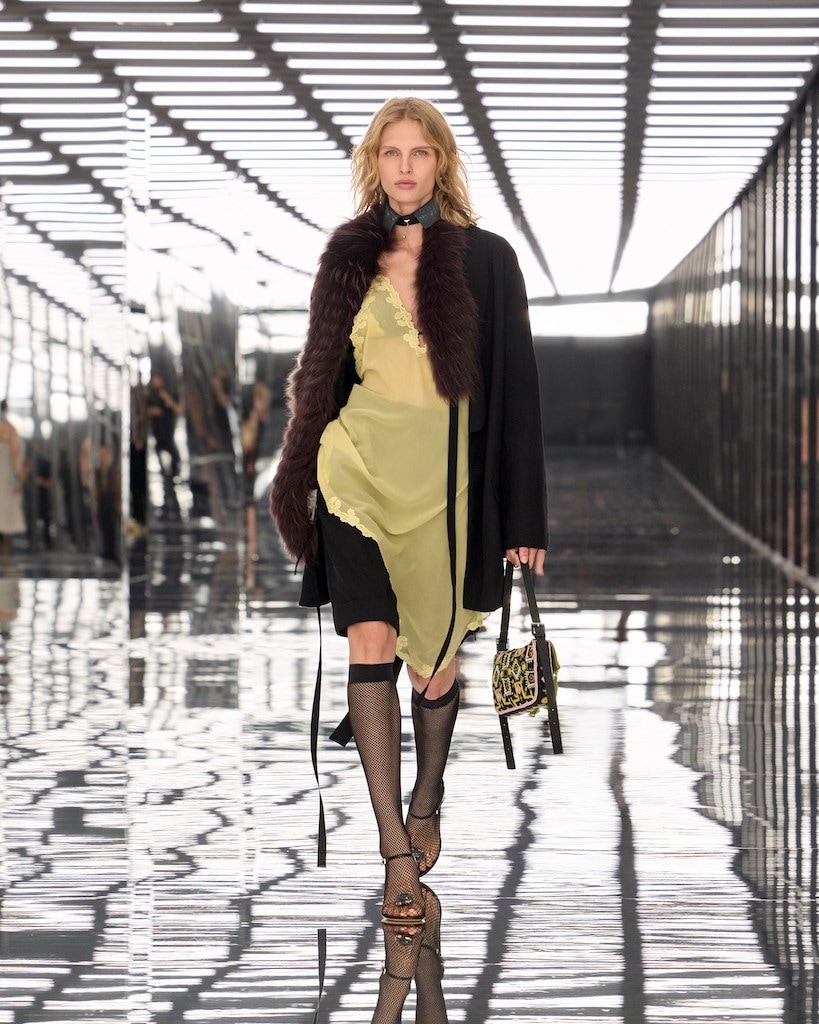
Back in the box, the Fendi models seemed to flit in and out of reflections, like ghosts of the past. A bit like a Victorian parlour trick, it was something of a misfire – at least for fashion press who don’t relish staring at their own reflections both before and during a fashion show. And it made it difficult to see the clothes – especially as, Chiuri insisted, they were loaded with craft. “In Fendi, the idea of craft is very close to the identity of the brand,” she said. “Much more than a silhouette.” Indeed – it’s what Fendi is known for, while its shares and garments ping-pong back and forth between fashion obsessions. Fendi is something dynamic and ever-changing. It’s tricky for a designer to get a grip on that, but Chiuri is obsessed with the act of making, and has poured her attentions into techniques like intarsia, formerly used by the house to create signature graphic furs but now embedded in fabrics too.
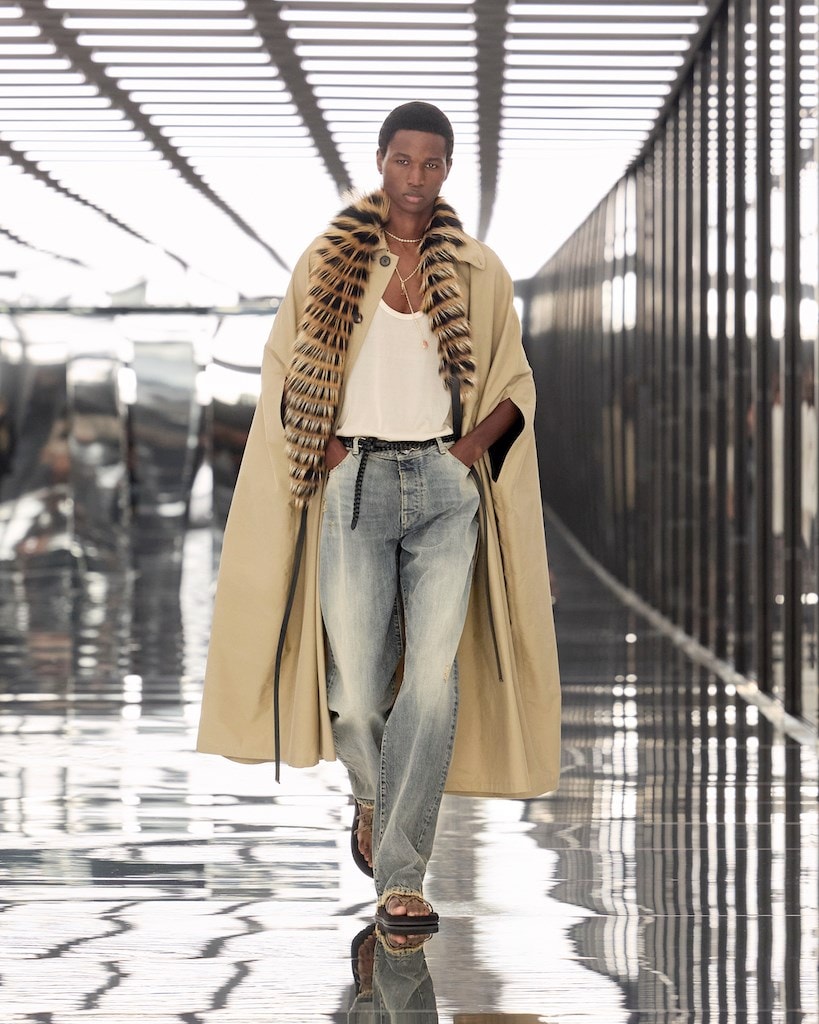
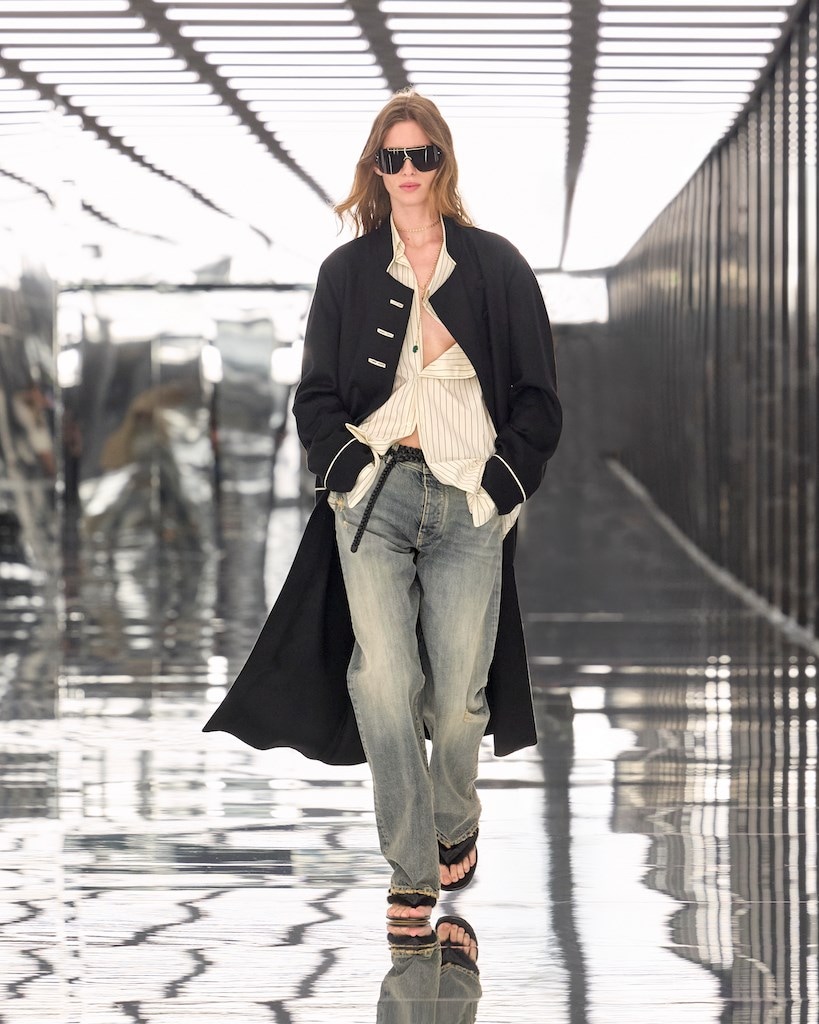
Indeed, a challenge for Fendi has always been to shift beyond its big fur backstory, and find a relevance outside and after that. For Chiuri, it translates to the idea of sensuality, and a closeness to the body. “And everything is light, because to me Fendi is about lightness,” Chiuri stated, of the billowing, easily moving dresses, the featherweight coats. There is also a Romanity to it – her men wore sandals, grand capes, and had the snobbish air of Roman patricians, while her women wore Roman draped dresses, whizzing past behind that glass. There is also the idea of reuse, remodelling, recycling. Fendi’s fur these days is all recycled and reconstituted – which is actually in the old house tradition. The Fendi archives are epic, but limited – there isn’t much prior to 1990 because, as house matriarch Silvia Venturini Fendi once told me, if you had a sable coat one season and it didn’t sell, it was too expensive to leave lying around. You took it apart, reused the fur, and remade and remodelled it until it shifted. It’s a great story of thrift and reinvention.
“A sense of value,” is how Chiuri characterises that approach, which she loves. “Not only reworking a piece with value, but with sentiment.” She is also an excellent curator of an archive – just as she revived with impunity the greatest modern hits of Dior under her tenure, so at Fendi she’s alighted on fragments from Fendi’s often fractured past under Karl Lagerfeld, and brought them back to the fore. Weirdly, I remember well Fendi’s Spring/Summer 2001 collection, with gold-studded parchment-coloured bags and chained-up shoes that Suzy Menkes called “Goddess does S&M”. Chiuri has lifted them out of the archive and onto the catwalk – and slightly sadly, whether proposed by Carrà in the 1970s, Karl in the 2000s, or Chiuri today, the idea of a woman as armed and dangerous seems to have pertinence. They do still look great, though.
in HTML format, including tags, to make it appealing and easy to read for Japanese-speaking readers aged 20 to 40 interested in fashion. Organize the content with appropriate headings and subheadings (h1, h2, h3, h4, h5, h6), translating all text, including headings, into Japanese. Retain any existing
tags from
Lead ImageFendi Spring/Summer 2027Courtesy of Fendi
Maria Grazia Chiuri has been back in Italy full-time for just over a year, preceding her appointment to lead the Roman house of Fendi last October. She’s evidently steeping herself in the culture from which she came. “This reference is very close to Italian culture,” she said beforehand, of the heroine that inspired her Spring/Summer 2027 Fendi collection – as a warning, that we may have no idea what she was on about. That was Raffaella Carrà, an Italian film and television star and recording artist – a cult figure in the UK and America, she’s a bona fide Italian and Latin obsession. Her freedom and sexuality, piped into millions of households in the 1970s and often inducing the ire of censors, shook up her birth country, still often shackled by the rigorous doctrine of Catholicism. The equally provocative Italian artist Francesco Vezzoli once said “I think Raffaella Carrà has done more to liberate women than many feminists.” He curated an exhibition of 1970s Italian television for the Fondazione Prada in 2017: Carrà was a major component. Her fashion, meanwhile – jumpsuits, cut-outs, capes and the first exposed midriff on Italian television – have been included in museum exhibitions, with an entire exhibition dedicated to her a few years back.
It’s tricky to contextualise these kinds of figures to outsiders – you either get the fixation, or you don’t. So Chiuri was playing to a home crowd when she played her Eurodisco music and paraded a selection of Carrà-catures in a mirrored box in the Fendi headquarters. But you got the feeling, a bit Studio 54, a little Eyes of Laura Mars, but obviously loaded with the feminist theology that Chiuri embeds in her working processes. That’s also fundamentally Fendi – while Carrà was freeing the navel and writing songs devoted to female sexual liberation, the Fendi sisters were ripping the linings out of fur coats and forging ahead as five women leading a business, which was equally radical in a patriarchal fashion system of the 1970s.
Back in the box, the Fendi models seemed to flit in and out of reflections, like ghosts of the past. A bit like a Victorian parlour trick, it was something of a misfire – at least for fashion press who don’t relish staring at their own reflections both before and during a fashion show. And it made it difficult to see the clothes – especially as, Chiuri insisted, they were loaded with craft. “In Fendi, the idea of craft is very close to the identity of the brand,” she said. “Much more than a silhouette.” Indeed – it’s what Fendi is known for, while its shares and garments ping-pong back and forth between fashion obsessions. Fendi is something dynamic and ever-changing. It’s tricky for a designer to get a grip on that, but Chiuri is obsessed with the act of making, and has poured her attentions into techniques like intarsia, formerly used by the house to create signature graphic furs but now embedded in fabrics too.
Indeed, a challenge for Fendi has always been to shift beyond its big fur backstory, and find a relevance outside and after that. For Chiuri, it translates to the idea of sensuality, and a closeness to the body. “And everything is light, because to me Fendi is about lightness,” Chiuri stated, of the billowing, easily moving dresses, the featherweight coats. There is also a Romanity to it – her men wore sandals, grand capes, and had the snobbish air of Roman patricians, while her women wore Roman draped dresses, whizzing past behind that glass. There is also the idea of reuse, remodelling, recycling. Fendi’s fur these days is all recycled and reconstituted – which is actually in the old house tradition. The Fendi archives are epic, but limited – there isn’t much prior to 1990 because, as house matriarch Silvia Venturini Fendi once told me, if you had a sable coat one season and it didn’t sell, it was too expensive to leave lying around. You took it apart, reused the fur, and remade and remodelled it until it shifted. It’s a great story of thrift and reinvention.
“A sense of value,” is how Chiuri characterises that approach, which she loves. “Not only reworking a piece with value, but with sentiment.” She is also an excellent curator of an archive – just as she revived with impunity the greatest modern hits of Dior under her tenure, so at Fendi she’s alighted on fragments from Fendi’s often fractured past under Karl Lagerfeld, and brought them back to the fore. Weirdly, I remember well Fendi’s Spring/Summer 2001 collection, with gold-studded parchment-coloured bags and chained-up shoes that Suzy Menkes called “Goddess does S&M”. Chiuri has lifted them out of the archive and onto the catwalk – and slightly sadly, whether proposed by Carrà in the 1970s, Karl in the 2000s, or Chiuri today, the idea of a woman as armed and dangerous seems to have pertinence. They do still look great, though.
and integrate them seamlessly into the new content without adding new tags. Ensure the new content is fashion-related, written entirely in Japanese, and approximately 1500 words. Conclude with a “結論” section and a well-formatted “よくある質問” section. Avoid including an introduction or a note explaining the process.