Rewrite
Lead ImageMarni Spring/Summer 2027Courtesy of Marni
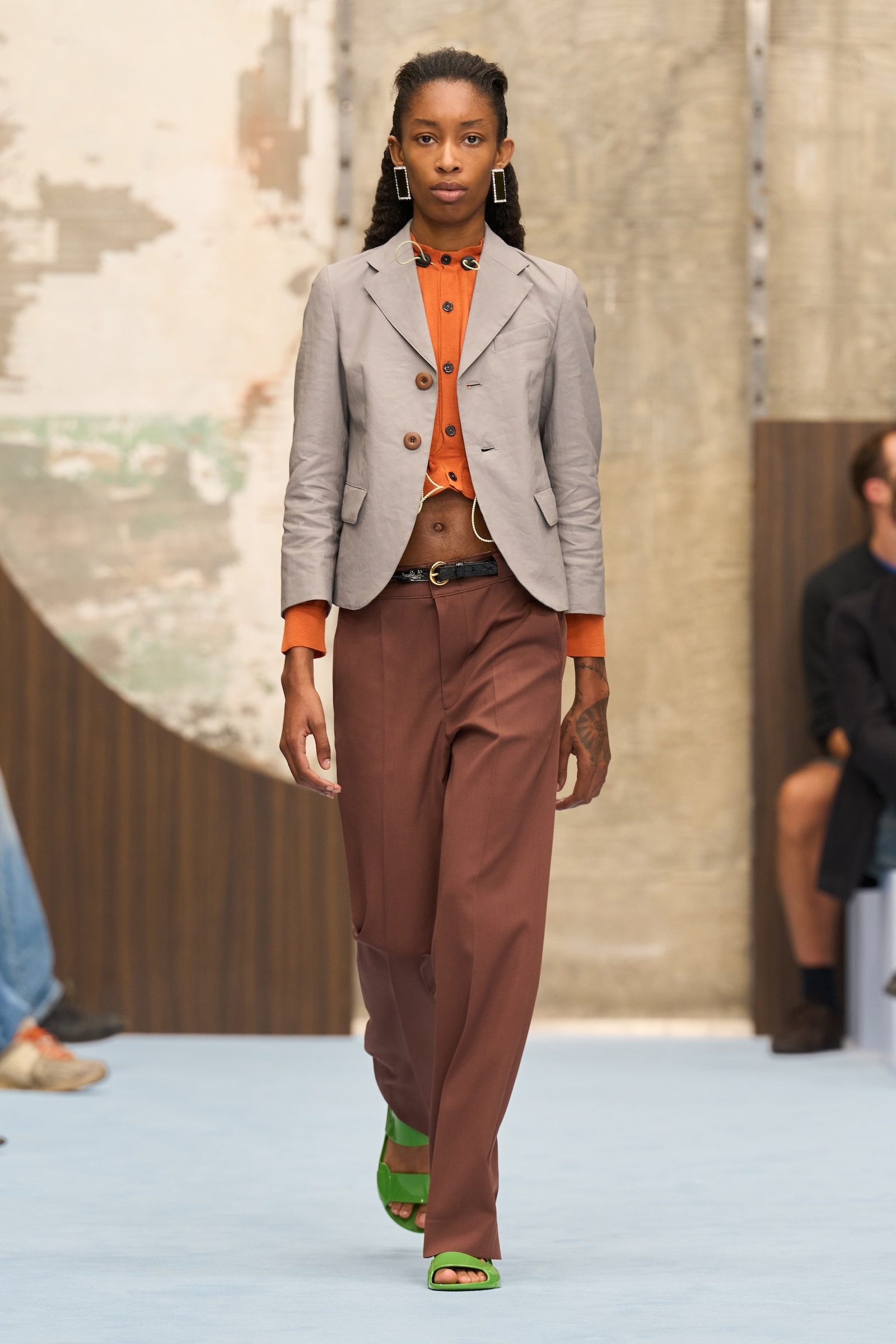
Sometimes, what you don’t do can matter just as much as what you do. This was the thinking of Meryll Rogge, in her sophomore show for Marni. It’s a house known, to a degree, for a cuddly maximalism under founder Consuelo Castiglioni. Rogge showed in a space stripped out to savage, even surgical metal rods and panels of wood veneer, revealing the concrete infrastructure that lay beneath. It felt like a vivisection of the building, accompanying narrow clothes that diced out curious windows on the body, chopping up and opening layers, showing her workings. Cuddly, it was not. “Removing reveals,” she said, simply, a few days before her Spring/Summer 2027 show.
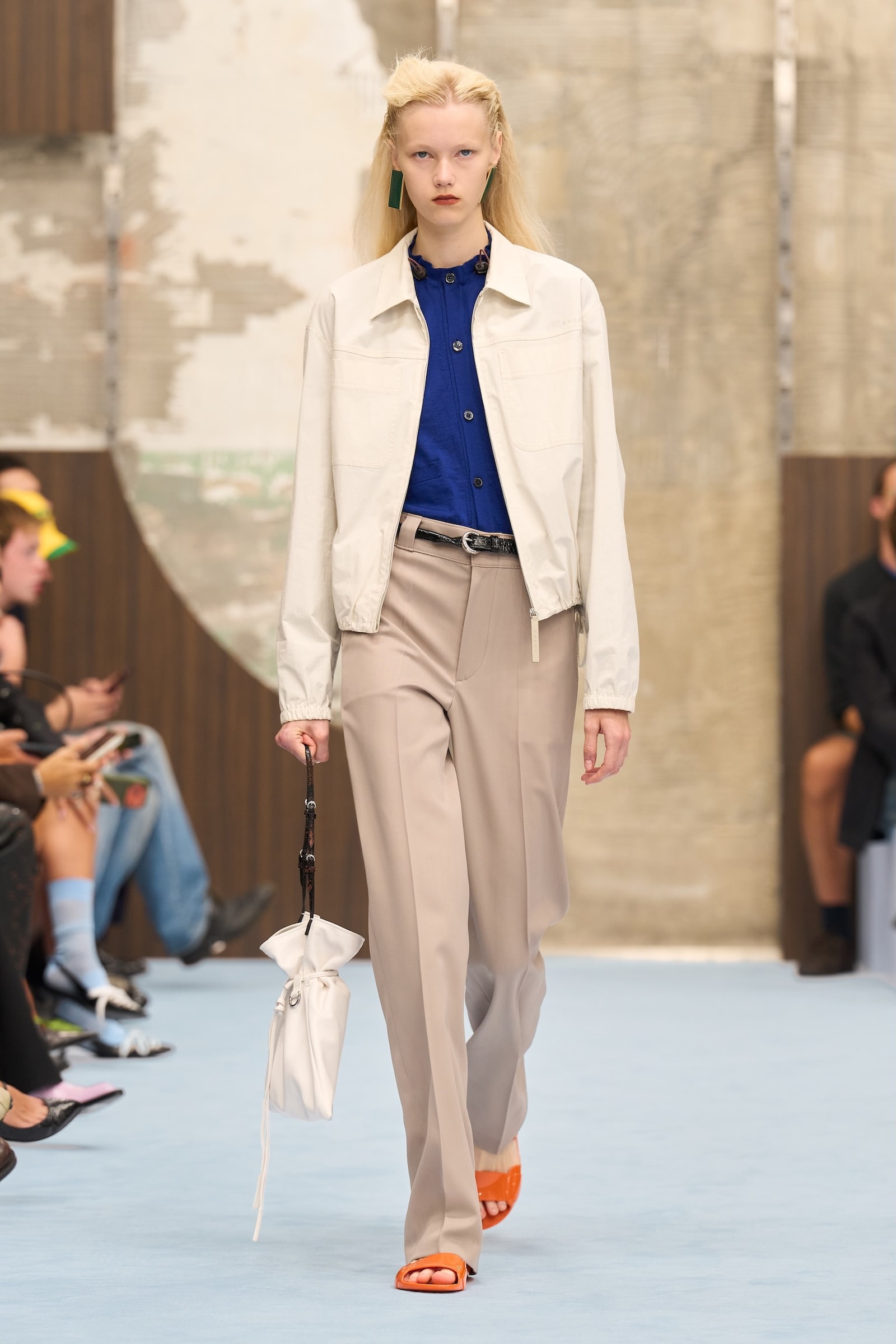
When I say curious, I don’t mean weird, but rather inquisitive, investigative. Rogge is a curious designer. She is grappling with her definition of the meaning of Marni – the Marnian, the Marniesque, the Marnified – combining her own gut instinct with careful examination of past collections to find a probably inexplicable root of what made those best Marni collections tick. I remember watching many of those shows: some were truly great, yet even in retrospect it is never quite apparent what mix made everything click quite so. Rogge’s second outing, however, hit a sweet Marni spot: a bit Sixties, a bit sport, a bit Soviet Socialist Republic, in its spare lines and oddball colour palette of freezepop pastels, olive drab and hi-vis orange. There was a lot of workwear stuff, carpenter pants cut in flat wool, utility-looking straps and flaps buckling clothes across the chest in leather like butcher’s aprons or humdrum tablecloth checks. From each according to his ability, to each according to his needs, indeed.

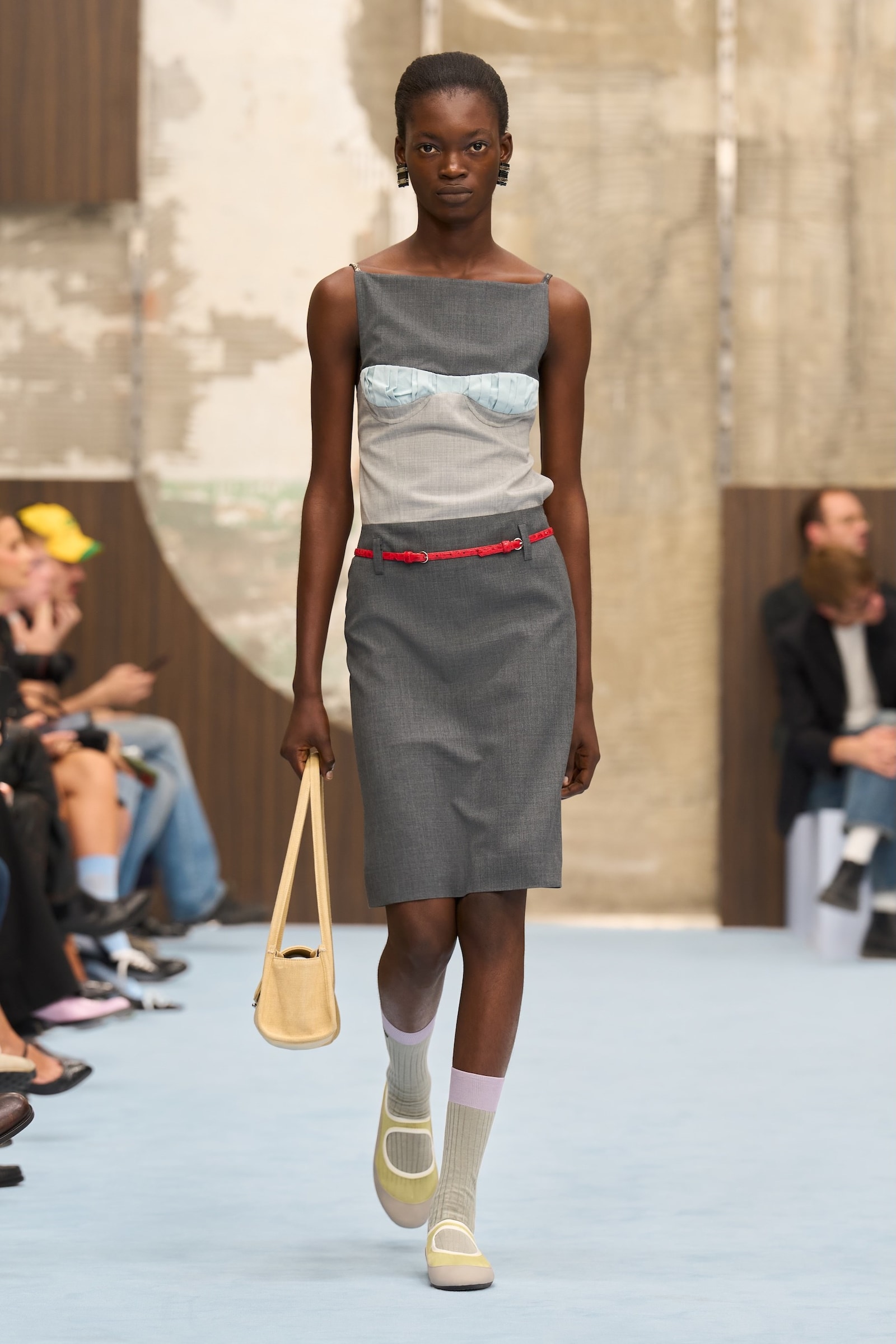
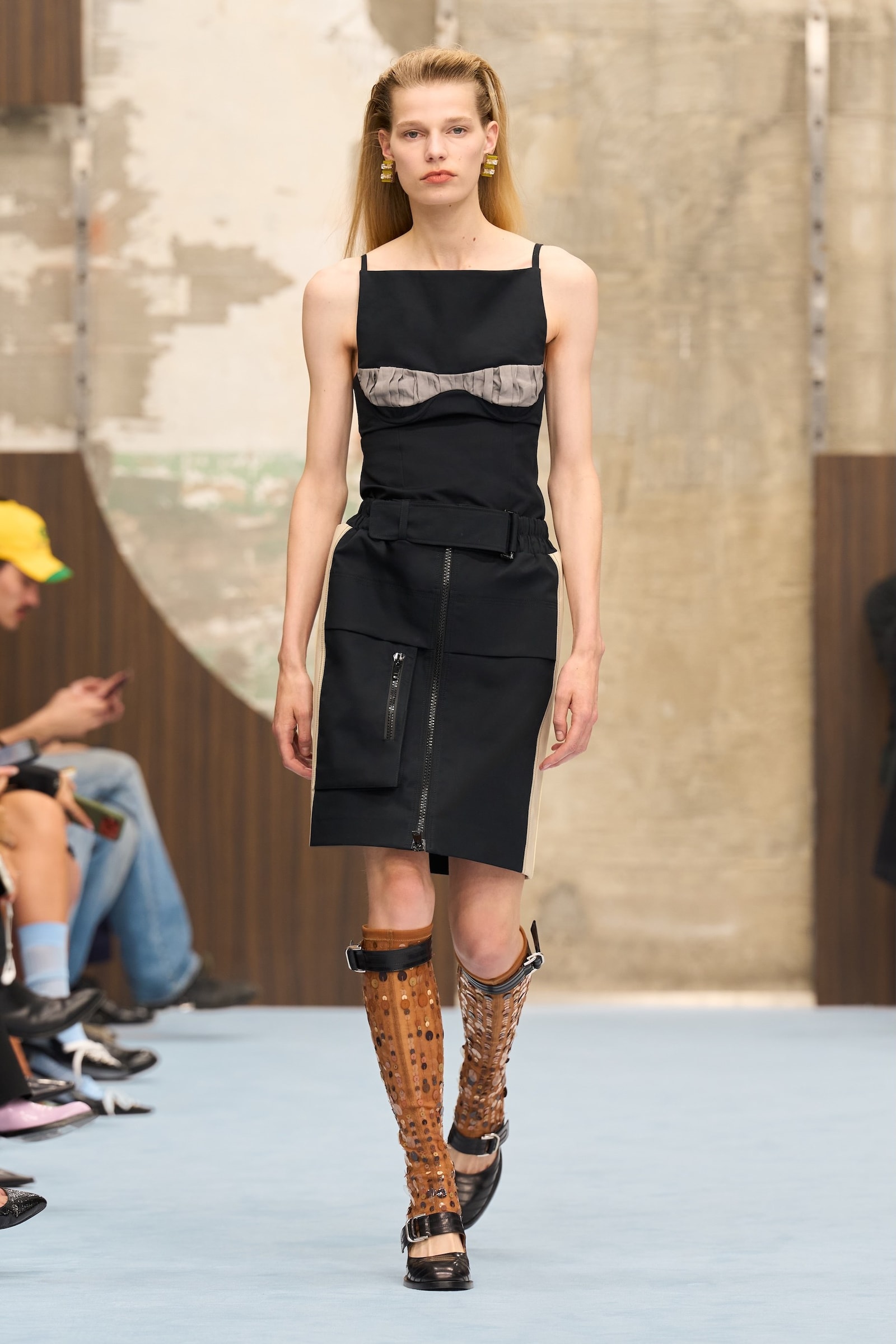
Part of Rogge’s process of removal is to pare Marni right back, to bare bones. It’s been ideological, but here it was literal. Dresses looked as if they had upper layers scalped off to leave seams ragged. Interiority also translated to an underwear fetish – twitchy winks to Victorian nighties and long johns were magnified – indeed, Marnified – their fiddly, finicky little buttons blown up big as if ogled through an intrigued child’s eye view. “Hyper feminine” was Rogge’s descriptor for these, a reflection, she said, of a hankering, over the summer, after the pointedly female in her own dress that has come to be a timely obsession of the season.
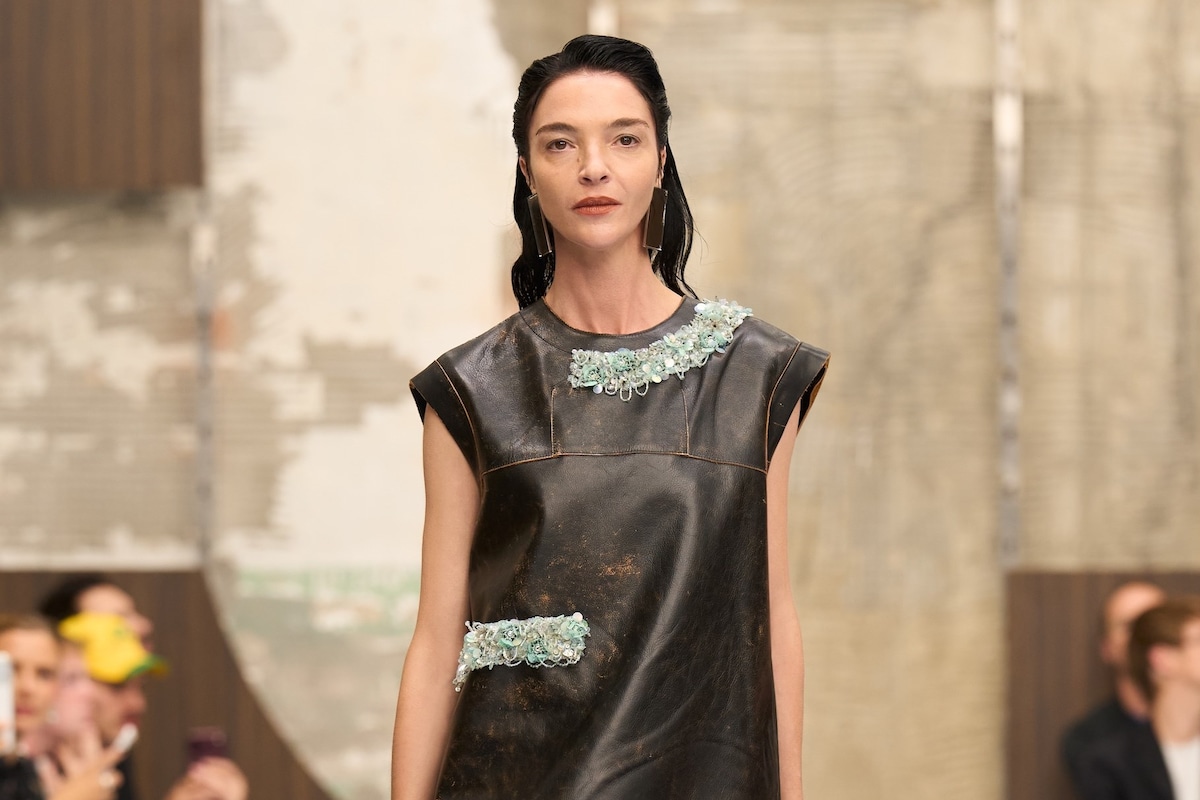
There was Marni decoration this season, but it was restricted to fragments of glittering embroidery “slapped on” (Rogge’s words) to leather or chopped-up satin dresses. Others had sequins punched with proletarian-looking metal eyelets, the dresses themselves printed with blow-up ruffles and buttons taken from elaborate dresses of the past. They had a Communist feel, a fake elaboration – although, as Rogge pointed out, they were printed on a double-duchesse silk twill from the swish mill of Taroni, affording them a Politburo-baiting decadence once you actually got your hands on them.
There was a lot to get your hands on at Marni, like the curly goat coats (a nod to the brand’s roots as a fur house, but sustainably and ethically sourced, as per 2026). Rogge pointed out that their colours were black, brunette, a tawny blonde and grey, like a Milanese signora. That, for Rogge, connected with the idea of a plurality of people – handsome 30 and 40-something women walked in the show alongside girls and boys, indicative of a cross-generational appeal that’s a core of Marni, its clothes looking as good on Octogenarians as their 18-year-old grandchildren. Few can boast such sweep. The Communist thing is all a projection, but there was a sense of society, of that much-overused word community, for sure. Maybe that’s what Marni has always really been about?
in HTML format, including tags, to make it appealing and easy to read for Japanese-speaking readers aged 20 to 40 interested in fashion. Organize the content with appropriate headings and subheadings (h1, h2, h3, h4, h5, h6), translating all text, including headings, into Japanese. Retain any existing
tags from
Lead ImageMarni Spring/Summer 2027Courtesy of Marni
Sometimes, what you don’t do can matter just as much as what you do. This was the thinking of Meryll Rogge, in her sophomore show for Marni. It’s a house known, to a degree, for a cuddly maximalism under founder Consuelo Castiglioni. Rogge showed in a space stripped out to savage, even surgical metal rods and panels of wood veneer, revealing the concrete infrastructure that lay beneath. It felt like a vivisection of the building, accompanying narrow clothes that diced out curious windows on the body, chopping up and opening layers, showing her workings. Cuddly, it was not. “Removing reveals,” she said, simply, a few days before her Spring/Summer 2027 show.
When I say curious, I don’t mean weird, but rather inquisitive, investigative. Rogge is a curious designer. She is grappling with her definition of the meaning of Marni – the Marnian, the Marniesque, the Marnified – combining her own gut instinct with careful examination of past collections to find a probably inexplicable root of what made those best Marni collections tick. I remember watching many of those shows: some were truly great, yet even in retrospect it is never quite apparent what mix made everything click quite so. Rogge’s second outing, however, hit a sweet Marni spot: a bit Sixties, a bit sport, a bit Soviet Socialist Republic, in its spare lines and oddball colour palette of freezepop pastels, olive drab and hi-vis orange. There was a lot of workwear stuff, carpenter pants cut in flat wool, utility-looking straps and flaps buckling clothes across the chest in leather like butcher’s aprons or humdrum tablecloth checks. From each according to his ability, to each according to his needs, indeed.
Part of Rogge’s process of removal is to pare Marni right back, to bare bones. It’s been ideological, but here it was literal. Dresses looked as if they had upper layers scalped off to leave seams ragged. Interiority also translated to an underwear fetish – twitchy winks to Victorian nighties and long johns were magnified – indeed, Marnified – their fiddly, finicky little buttons blown up big as if ogled through an intrigued child’s eye view. “Hyper feminine” was Rogge’s descriptor for these, a reflection, she said, of a hankering, over the summer, after the pointedly female in her own dress that has come to be a timely obsession of the season.
There was Marni decoration this season, but it was restricted to fragments of glittering embroidery “slapped on” (Rogge’s words) to leather or chopped-up satin dresses. Others had sequins punched with proletarian-looking metal eyelets, the dresses themselves printed with blow-up ruffles and buttons taken from elaborate dresses of the past. They had a Communist feel, a fake elaboration – although, as Rogge pointed out, they were printed on a double-duchesse silk twill from the swish mill of Taroni, affording them a Politburo-baiting decadence once you actually got your hands on them.
There was a lot to get your hands on at Marni, like the curly goat coats (a nod to the brand’s roots as a fur house, but sustainably and ethically sourced, as per 2026). Rogge pointed out that their colours were black, brunette, a tawny blonde and grey, like a Milanese signora. That, for Rogge, connected with the idea of a plurality of people – handsome 30 and 40-something women walked in the show alongside girls and boys, indicative of a cross-generational appeal that’s a core of Marni, its clothes looking as good on Octogenarians as their 18-year-old grandchildren. Few can boast such sweep. The Communist thing is all a projection, but there was a sense of society, of that much-overused word community, for sure. Maybe that’s what Marni has always really been about?
and integrate them seamlessly into the new content without adding new tags. Ensure the new content is fashion-related, written entirely in Japanese, and approximately 1500 words. Conclude with a “結論” section and a well-formatted “よくある質問” section. Avoid including an introduction or a note explaining the process.