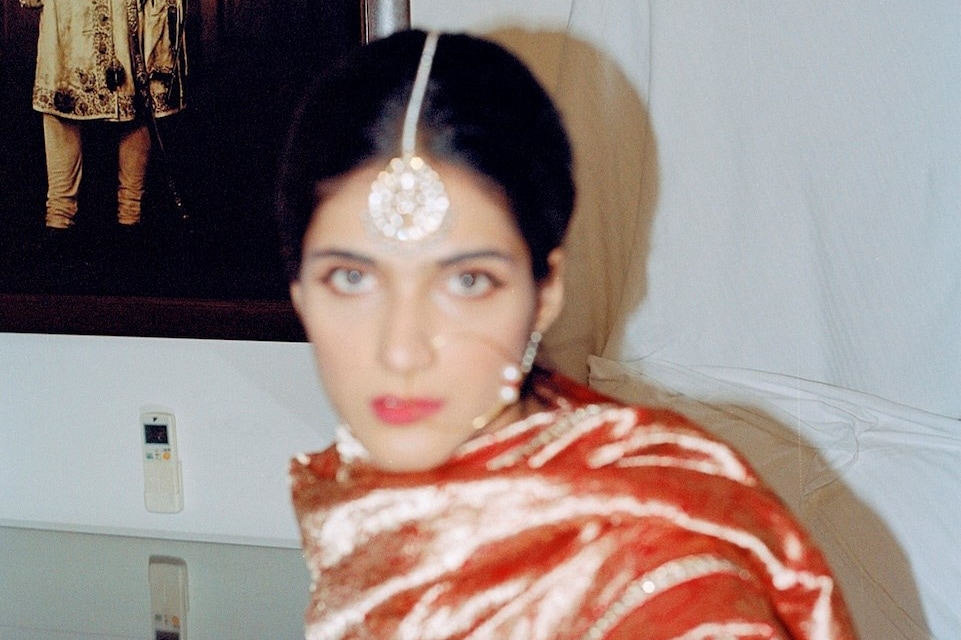
Rewrite
Raw Mango founder Sanjay Garg on handlooms, the enduring power of the sari and building a distinctly Indian fashion language rooted in craft, colour and place
- Who is it? Raw Mango is the womenswear brand founded by textile designer Sanjay Garg, whose work has earned acclaim for its use of traditional weaving clusters across India.
- Why do I want it? For Garg’s rebellious spirit. Raw Mango reimagines the sari, for example, as a modern wardrobe staple rooted in its culture.
- Where can I find it? Raw Mango is available directly from rawmango.com.
Who is it? Earlier this month, New Delhi label Raw Mango enlisted the tennis player and rapper Adil Kalyanpur, known as A-KAL, to write a song about a piece of machinery: the handloom. In a Reel posted to the brand’s Instagram, A-KAL is wearing the Khama, a jacket made from a striped weave, while rapping about this ancient craft (“Y’all maybe thinking, what is that dude? / It’s a tradition that we had that your grandad knew”). “Handlooms are often framed through nostalgia, while rap is rooted in contemporary culture. What happens when those two worlds meet?” says Sanjay Garg, the founder of Raw Mango. “And who is this song really for – the fashion community, music fans, or people who’ve never thought about handlooms?” It’s this relationship, or tension, between the old and the new that informs the ethos of Raw Mango.
Garg spent his childhood in the village of Mubarikpur, Rajasthan, where his grandmother kept her saris, lehengas and brocade skirts inside a sandook, an iron trunk filled with saturated colour. Teal is the shade he remembers most clearly. “The colour that surrounded me, those were my early memories in Rajasthan,” says Garg. “My grandmother used to tell me stories. They used to wear the heaviest garments of 30 kilograms to go and fetch water. I was like, why would you wear that when you’re already carrying water in a pot on top of your head? They were women of all kinds of communities coming together. That’s why they wore their best attire.”

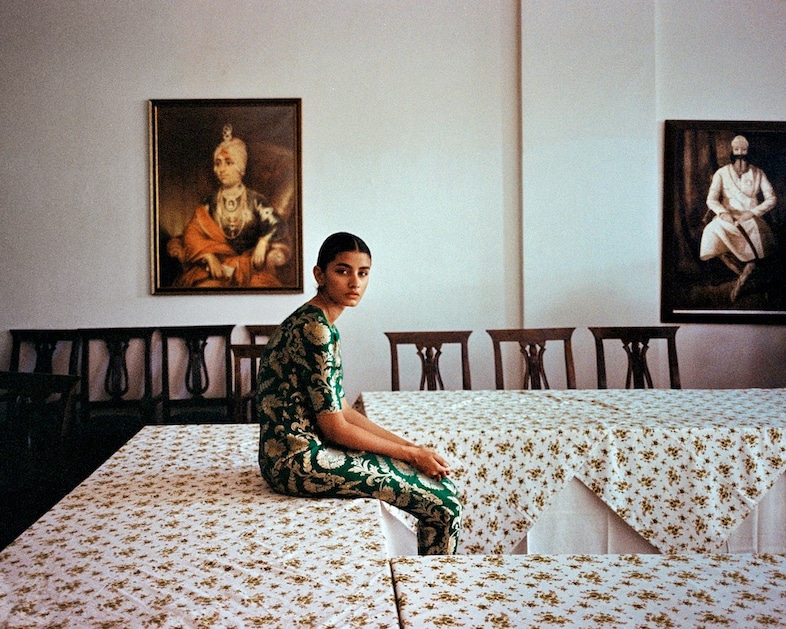
Growing up, fashion hadn’t seeped into his consciousness in quite the same way as cinema, for example. Clothing was, instead, “dependent on the weather and rituals and festivals,” says Garg, from the monsoon festival of Teej to local Melas filled with dancing, music and specially made clothes. “You see everything live so you live and breathe that culture,” says Garg. He later studied at the National Institute of Fashion Technology in Delhi and the Indian Institute of Crafts & Design in Jaipur, where he learnt to weave by hand. “To me, a designer is as important as a doctor, a politician or a writer. I took it very seriously,” he says.
Since founding Raw Mango in 2008, Garg has expanded its practice beyond clothing into interiors, furniture and music. “We design stores. We design objets. We design furniture. We have our own original scores for music. I collaborate with so many different artists,” explains Garg. He has partnered with the India Art Fair – last year the brand organised its own Mela – and the Geoffrey Bawa Trust, hosting a panel talk at its New Dehli store. The V&A also holds four works as part of its South & South East Asia Collection. While the brand showed at London Fashion Week earlier this year, its focus is first and foremost on India. “What makes design and fashion interesting is the fact that it has forever adapted itself to the place and people it has emerged from: the climate, the culture, the geography and available resources,” says Garg. “India does not need to merely follow global trends to fit in but should embrace its own distinct identity.”
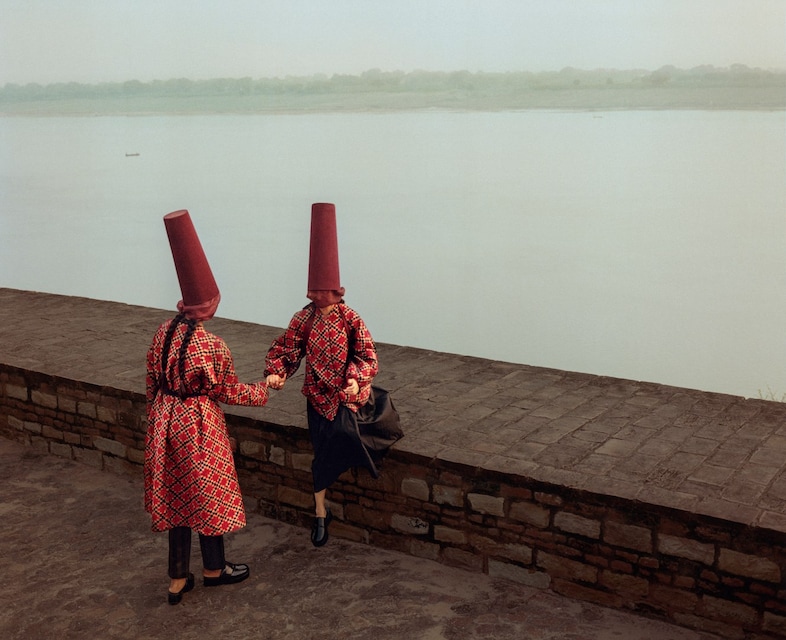
Why do I want it? The sari is integral to Raw Mango; the stone at this fruit’s core, if you like. “I do not think a sari is passé or an ‘old’ thing,” says Garg. “A sari is worn by a politician or a monk or a prince or a princess or a widow or a married woman. She’s cycling, she’s farming. It is not a costume garment for us.” His mother has never worn anything else. “My mother sleeps in a sari, she wakes up in a sari.” A Raw Mango handwoven sari can feel almost weightless on the body or offer protection from the blazing sun. Across the collections, colour and surface do much of the talking: metallic thread gleams against saturated cloth and centuries-old weaving techniques are used in combinations that are bold and contemporary. The Kishalya Palla silk sari is patterned with pairs of lotus butas woven in gold zari, while the Nabendu is made from mint-coloured Bengal cotton with red and green dhanshara, a braided cotton yarn, running through the fabric.
Many of India’s states – and their karigars (craftspeople) – are represented at Raw Mango. The Chanderi textile is woven in Madhya Pradesh; brocade and mashru (silk-cotton cloth) from Varanasi, Uttar Pradesh; sooti in West Bengal; while techniques including chikankari, bandhej and leheriya remain connected to Lucknow, Kutch and Jaipur respectively. Raw Mango doesn’t work with factories, but with weaving clusters, preserving the geographical identity of each textile and technique. “Where the textiles are woven, that is where they are supposed to be woven. I respect that. I never wanted a factory set-up,” says Garg.
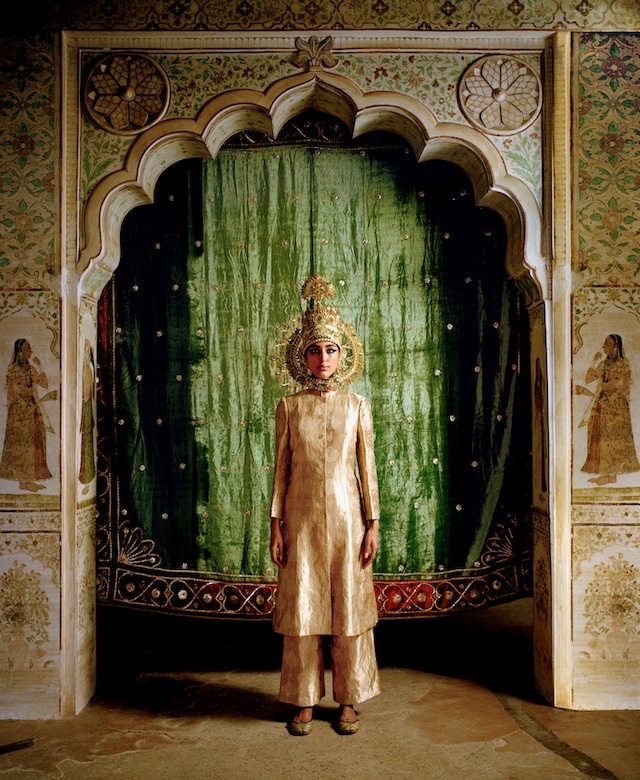
The designer’s whole philosophy, in fact, is one that resists convention, the physical manifestation of which you can see in his choice of stores. Raw Mango has six across India, most of which occupy former residential spaces, transformed into sanctuaries of antiquities and objets collected by Garg. He wanted to challenge the idea of what India, and the country’s fashion, conjures in people’s minds, “kitsch or something very over the top or something very Maharaja,” he says, adding: “We stereotype ourselves and that is how people outside of this country stereotype us. That’s why my store has no mannequins, there’s no display. When you come in it’s like an empty room. It’s not in a mall or an expected design street, all that was part of the whole experience, part of what the brand stands for.”
The Raw Mango collection about to drop into stores in September, which debuted earlier this year in London, is called It’s Not About the Flower. It’s a modern study of the garland’s importance to everyday life in South Asia. Several garments are sculptures of jasmine-like flowers constructed from lustrous fabrics assembled or rolled by hand in delicate arrangements on lightly embroidered brocades, rib-knit cottons, quilted rayon and wool felt. Garg is now looking ahead to his next collection, which will be a complete departure from his previous. “I do not like recipes, I always say that,” says Garg. “The next is about wood and stone. I’m very excited about how abstract it’s going to be – and how brutal in a way.”
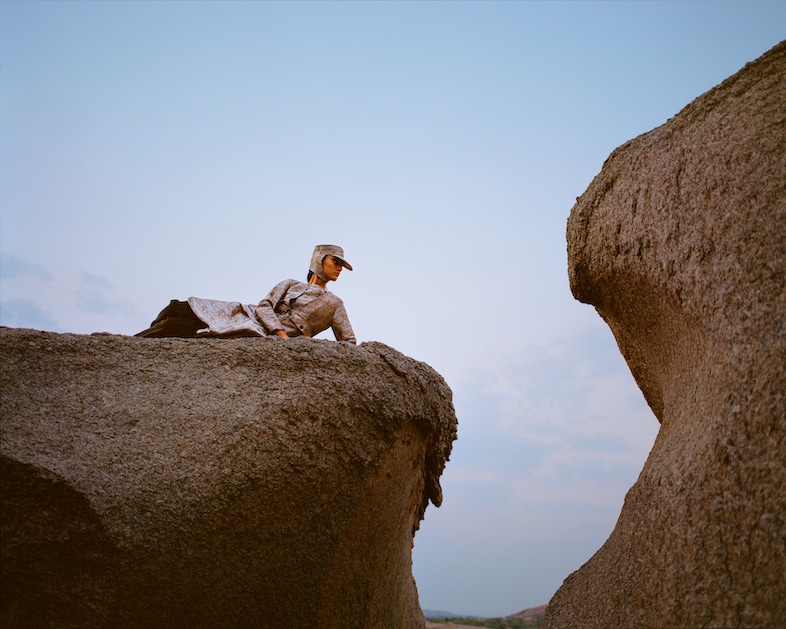
Where can I find it? Raw Mango is available directly from rawmango.com.
in HTML format, including tags, to make it appealing and easy to read for Japanese-speaking readers aged 20 to 40 interested in fashion. Organize the content with appropriate headings and subheadings (h1, h2, h3, h4, h5, h6), translating all text, including headings, into Japanese. Retain any existing
tags from
Raw Mango founder Sanjay Garg on handlooms, the enduring power of the sari and building a distinctly Indian fashion language rooted in craft, colour and place
- Who is it? Raw Mango is the womenswear brand founded by textile designer Sanjay Garg, whose work has earned acclaim for its use of traditional weaving clusters across India.
- Why do I want it? For Garg’s rebellious spirit. Raw Mango reimagines the sari, for example, as a modern wardrobe staple rooted in its culture.
- Where can I find it? Raw Mango is available directly from rawmango.com.
Who is it? Earlier this month, New Delhi label Raw Mango enlisted the tennis player and rapper Adil Kalyanpur, known as A-KAL, to write a song about a piece of machinery: the handloom. In a Reel posted to the brand’s Instagram, A-KAL is wearing the Khama, a jacket made from a striped weave, while rapping about this ancient craft (“Y’all maybe thinking, what is that dude? / It’s a tradition that we had that your grandad knew”). “Handlooms are often framed through nostalgia, while rap is rooted in contemporary culture. What happens when those two worlds meet?” says Sanjay Garg, the founder of Raw Mango. “And who is this song really for – the fashion community, music fans, or people who’ve never thought about handlooms?” It’s this relationship, or tension, between the old and the new that informs the ethos of Raw Mango.
Garg spent his childhood in the village of Mubarikpur, Rajasthan, where his grandmother kept her saris, lehengas and brocade skirts inside a sandook, an iron trunk filled with saturated colour. Teal is the shade he remembers most clearly. “The colour that surrounded me, those were my early memories in Rajasthan,” says Garg. “My grandmother used to tell me stories. They used to wear the heaviest garments of 30 kilograms to go and fetch water. I was like, why would you wear that when you’re already carrying water in a pot on top of your head? They were women of all kinds of communities coming together. That’s why they wore their best attire.”
Growing up, fashion hadn’t seeped into his consciousness in quite the same way as cinema, for example. Clothing was, instead, “dependent on the weather and rituals and festivals,” says Garg, from the monsoon festival of Teej to local Melas filled with dancing, music and specially made clothes. “You see everything live so you live and breathe that culture,” says Garg. He later studied at the National Institute of Fashion Technology in Delhi and the Indian Institute of Crafts & Design in Jaipur, where he learnt to weave by hand. “To me, a designer is as important as a doctor, a politician or a writer. I took it very seriously,” he says.
Since founding Raw Mango in 2008, Garg has expanded its practice beyond clothing into interiors, furniture and music. “We design stores. We design objets. We design furniture. We have our own original scores for music. I collaborate with so many different artists,” explains Garg. He has partnered with the India Art Fair – last year the brand organised its own Mela – and the Geoffrey Bawa Trust, hosting a panel talk at its New Dehli store. The V&A also holds four works as part of its South & South East Asia Collection. While the brand showed at London Fashion Week earlier this year, its focus is first and foremost on India. “What makes design and fashion interesting is the fact that it has forever adapted itself to the place and people it has emerged from: the climate, the culture, the geography and available resources,” says Garg. “India does not need to merely follow global trends to fit in but should embrace its own distinct identity.”
Why do I want it? The sari is integral to Raw Mango; the stone at this fruit’s core, if you like. “I do not think a sari is passé or an ‘old’ thing,” says Garg. “A sari is worn by a politician or a monk or a prince or a princess or a widow or a married woman. She’s cycling, she’s farming. It is not a costume garment for us.” His mother has never worn anything else. “My mother sleeps in a sari, she wakes up in a sari.” A Raw Mango handwoven sari can feel almost weightless on the body or offer protection from the blazing sun. Across the collections, colour and surface do much of the talking: metallic thread gleams against saturated cloth and centuries-old weaving techniques are used in combinations that are bold and contemporary. The Kishalya Palla silk sari is patterned with pairs of lotus butas woven in gold zari, while the Nabendu is made from mint-coloured Bengal cotton with red and green dhanshara, a braided cotton yarn, running through the fabric.
Many of India’s states – and their karigars (craftspeople) – are represented at Raw Mango. The Chanderi textile is woven in Madhya Pradesh; brocade and mashru (silk-cotton cloth) from Varanasi, Uttar Pradesh; sooti in West Bengal; while techniques including chikankari, bandhej and leheriya remain connected to Lucknow, Kutch and Jaipur respectively. Raw Mango doesn’t work with factories, but with weaving clusters, preserving the geographical identity of each textile and technique. “Where the textiles are woven, that is where they are supposed to be woven. I respect that. I never wanted a factory set-up,” says Garg.
The designer’s whole philosophy, in fact, is one that resists convention, the physical manifestation of which you can see in his choice of stores. Raw Mango has six across India, most of which occupy former residential spaces, transformed into sanctuaries of antiquities and objets collected by Garg. He wanted to challenge the idea of what India, and the country’s fashion, conjures in people’s minds, “kitsch or something very over the top or something very Maharaja,” he says, adding: “We stereotype ourselves and that is how people outside of this country stereotype us. That’s why my store has no mannequins, there’s no display. When you come in it’s like an empty room. It’s not in a mall or an expected design street, all that was part of the whole experience, part of what the brand stands for.”
The Raw Mango collection about to drop into stores in September, which debuted earlier this year in London, is called It’s Not About the Flower. It’s a modern study of the garland’s importance to everyday life in South Asia. Several garments are sculptures of jasmine-like flowers constructed from lustrous fabrics assembled or rolled by hand in delicate arrangements on lightly embroidered brocades, rib-knit cottons, quilted rayon and wool felt. Garg is now looking ahead to his next collection, which will be a complete departure from his previous. “I do not like recipes, I always say that,” says Garg. “The next is about wood and stone. I’m very excited about how abstract it’s going to be – and how brutal in a way.”
Where can I find it? Raw Mango is available directly from rawmango.com.
and integrate them seamlessly into the new content without adding new tags. Ensure the new content is fashion-related, written entirely in Japanese, and approximately 1500 words. Conclude with a “結論” section and a well-formatted “よくある質問” section. Avoid including an introduction or a note explaining the process.