Rewrite
One of Europe’s premium electronic festivals delivered craft, chaos and community against a sweltering Barcelona backdrop, writer Josh Crowe reports.
“I worried, as Brunch got bigger, that we might lose the feeling that this was still the city’s party. But we haven’t. I guess more people just got the invite. There’s no secret handshake to be part of this.”
Toni, a Barcelona local, puts it to me like that, and after three days at Brunch Electronik, it feels like an apt assessment of an incredibly considered programme that manages to combine world-class talent with a distinctly local spirit, without losing the foundations that made it special in the first place.
Barcelona has no desire to ease us into our weekend.
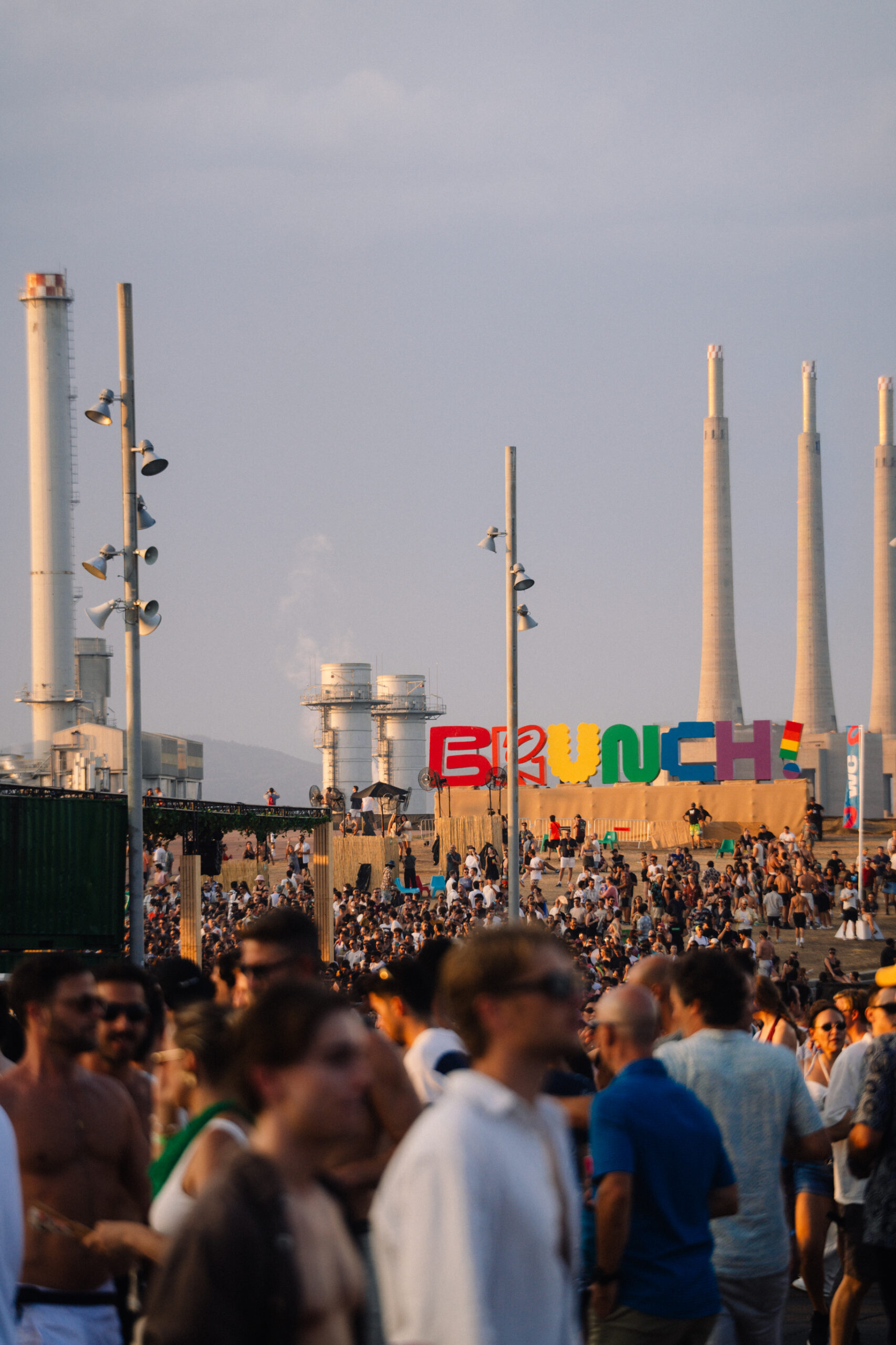
The walk towards Parc del Fòrum is short enough on a map, but in this heat it’s an endurance test. The city seems to radiate from every surface. By the time we reach the festival, we have entered that strange, slightly delirious state where even speaking feels like an unnecessary expenditure of energy.
Then we get inside, and suddenly the initial struggle makes a lot more sense.
We make our way in through the main entrance, and one of the local workers turns towards a colleague and pulls him into an embrace. There is nothing staged about it. Just two people who look genuinely proud of what they have built.
Then I notice the tattoo on the back of his right leg:
ENEMY OF THE END.
It feels almost too perfect. Not a defiant statement so much as an instinct to keep evolving, while staying true to what made something special in the first place.
The global scale is impressive. But it is the local character that is the heartbeat of this festival. This year, 80% of the festival’s 65,000 attendees were local, an extraordinary figure for a festival now operating at this scale.
Martin Petrik, Brunch’s creative director, has been part of the festival for three years. For him, the challenge is not simply making Brunch bigger, but doing so while maintaining its connection to the city.
“The connection with the local community, Barcelona, is really, really strong,” he says. “Of course, festivals can be big business and stuff like that, but I think the city offers an amazing stage to build something incredible. We want to make the most of that, to give something in return.”
It is a simple point, but one that seems to sit at the heart of how Brunch operates. The ambition is seismic, but so is the responsibility to the city and the locals who have no doubt influenced and symbiotically moulded the festival into what it is today.
That means local artists opening almost every stage, every day, while the Open Stage is dedicated specifically to emerging artists from Barcelona. It is a way of making sure the festival grows outwards without simply floating away from where it started.
The programming, he explains, is deliberately dance-oriented, but without the sense of snobbery that can sometimes surround the scene.
“We want to give a bit away from that,” he says. “It’s a place to have fun, and discover new talent”
And that includes the people who live here.
One of those artists is Gigi Ros, who plays the Euphorik stage on Friday.
One of the emerging voices in Barcelona, Gigi Ros looks the part: a cropped white T-shirt, layers of chunky silver chains and a low-slung chainmail-style skirt, somewhere between punk, rave and Barcelona street style.
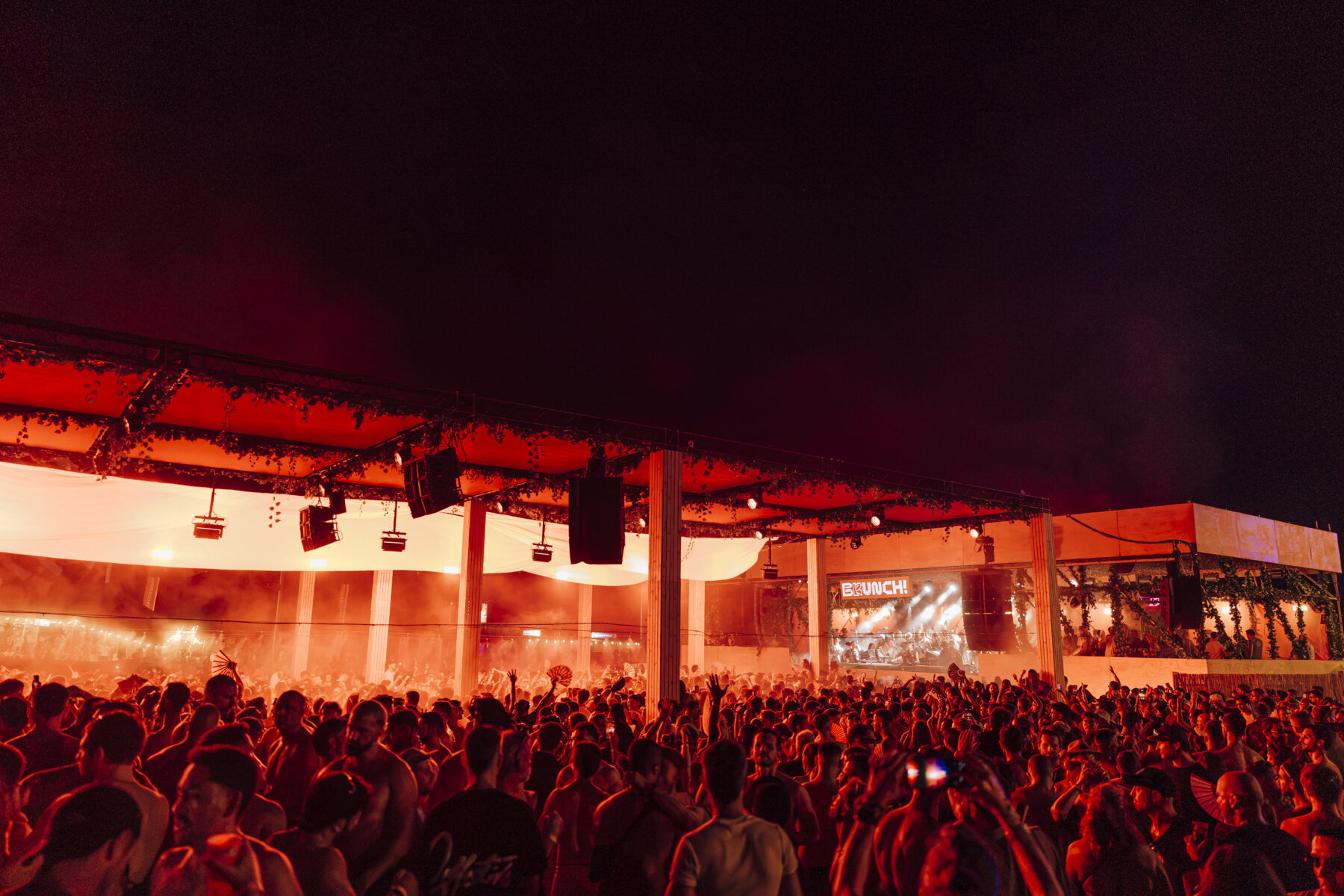
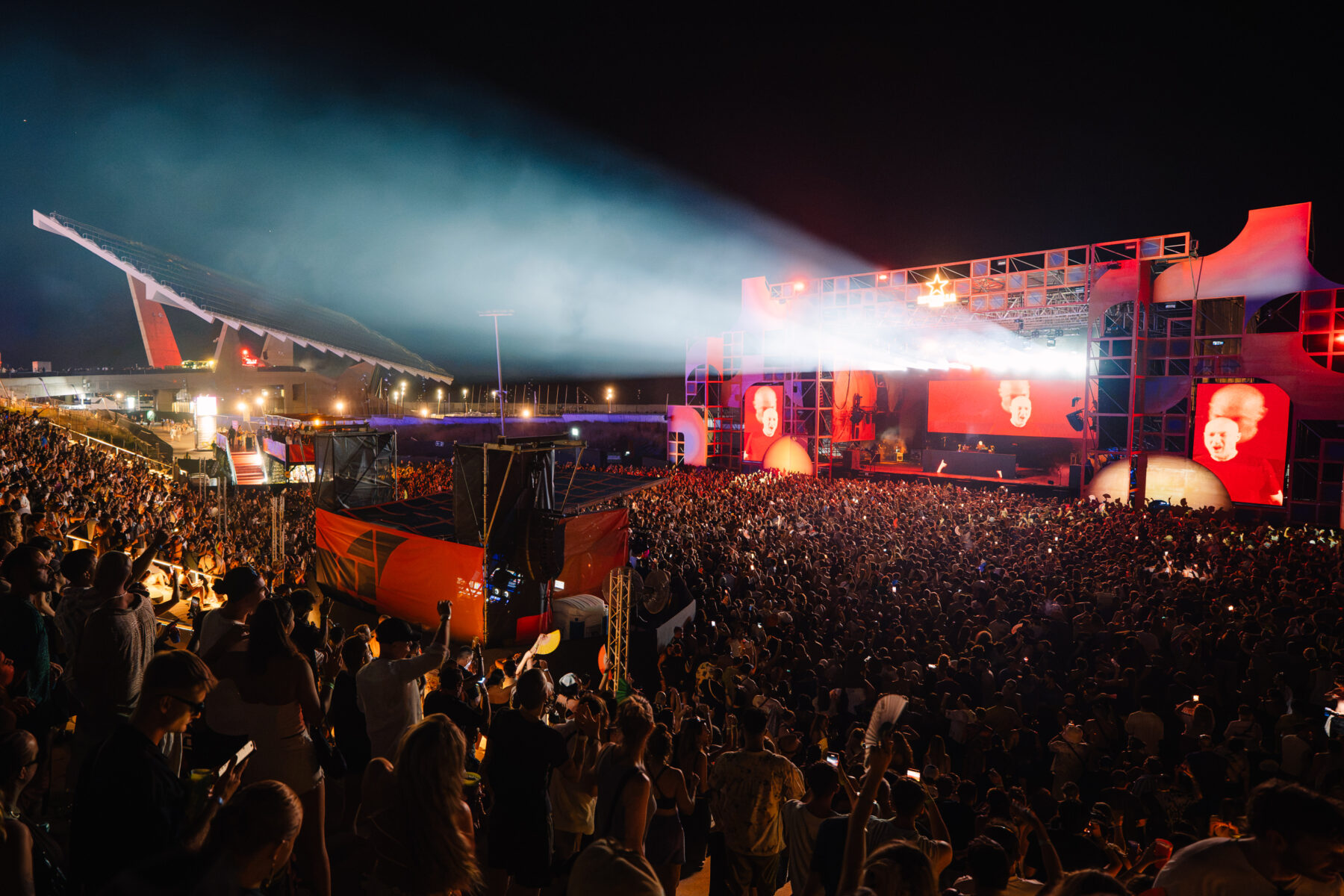
Tonight, she’s playing the EuphoriK stage, one of Brunch Electronik’s open-air main stages. Playful and colourful, with towering stepped structures opposite that rise as the night builds, it feels steeped in Barcelona’s sonic past, present and future.
Ros sits somewhere between pop, R&B and electronic music, but hearing her music and catching her live makes it clear she’s not particularly interested in keeping those worlds separate.
“Music is my excuse to make fashion or design or movies,” she tells me. For Ros, music seems less like a fixed destination than a way into everything else.
And that instinct to let different creative worlds bleed into one another feels particularly suited to Barcelona.
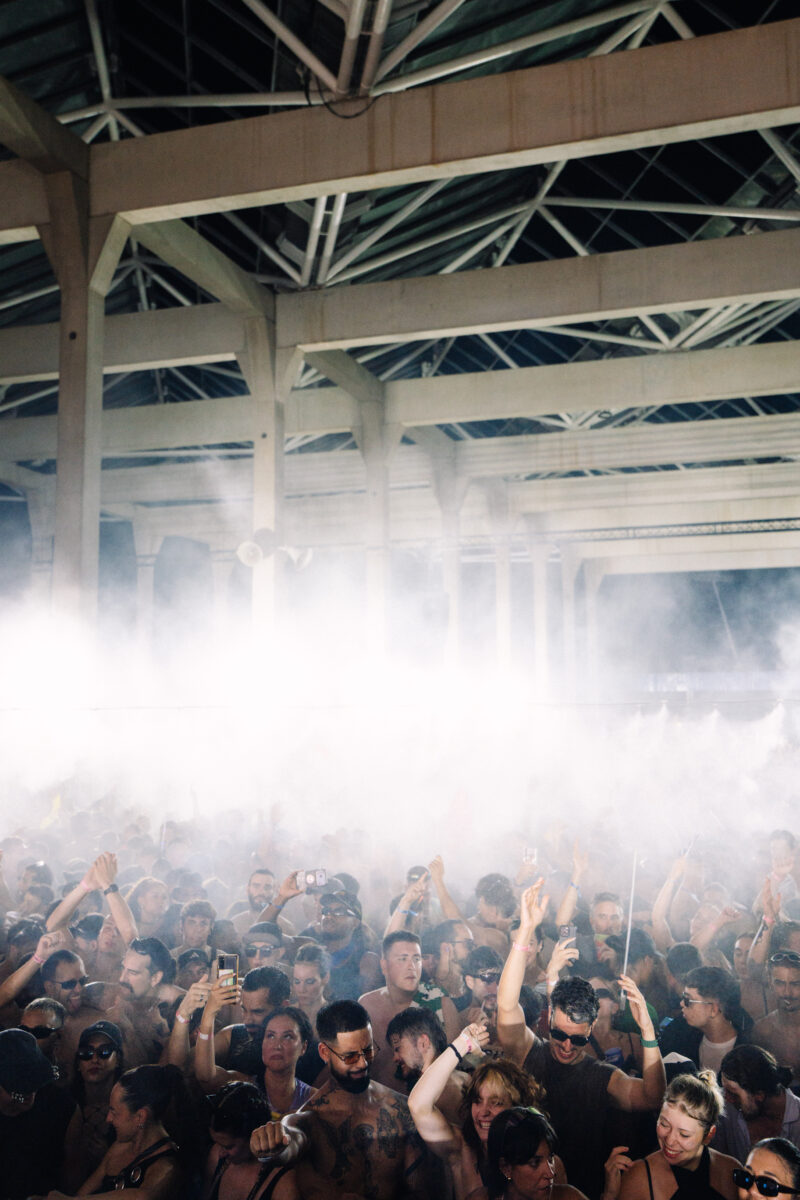
“I think it’s like a little place where you can find a lot of different things,” she says. “There’s a lot going on, and there’s like a big scene, even if it’s a small place.”
It is a good description of Barcelona, and perhaps an even better one for the music coming out of it.
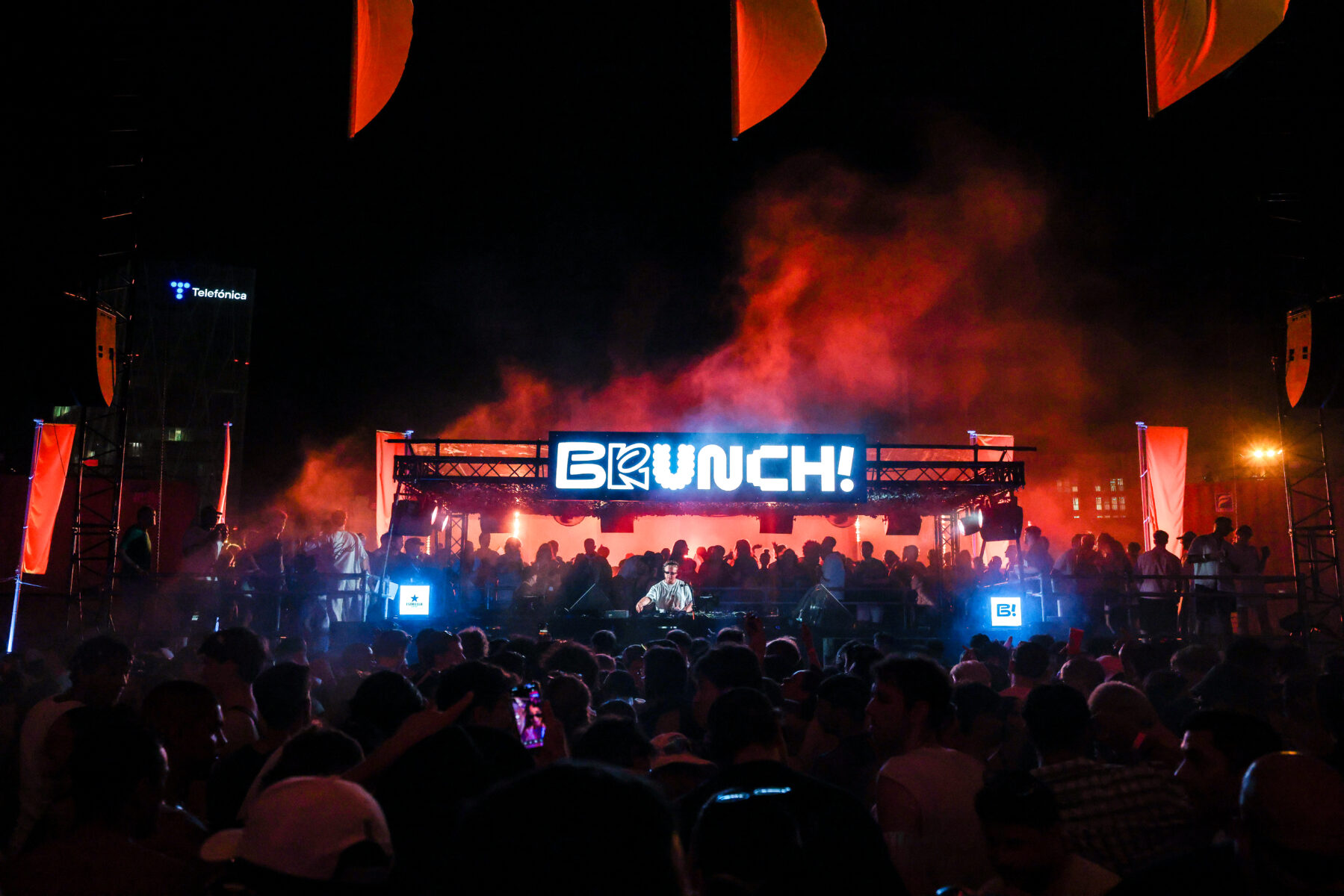
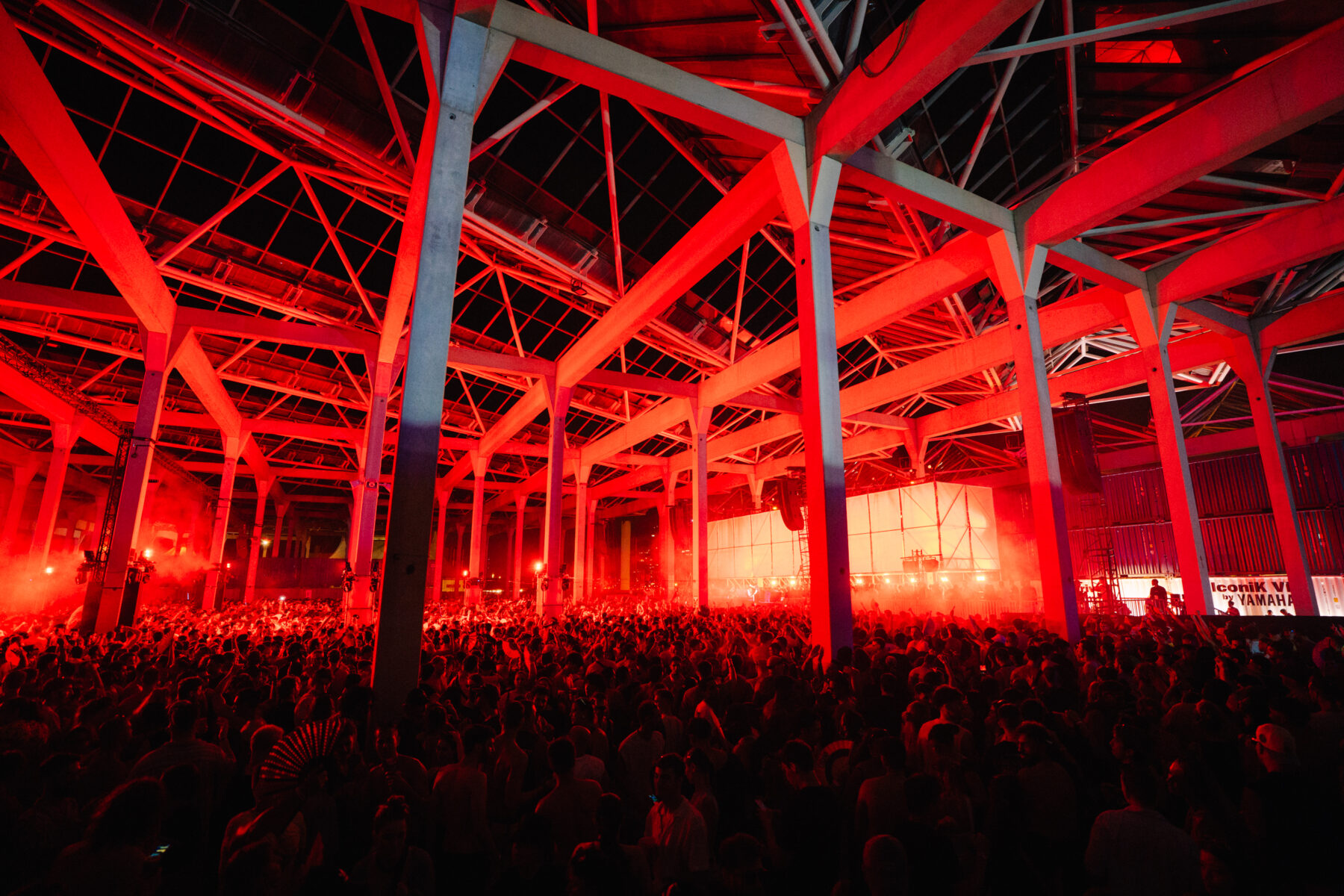
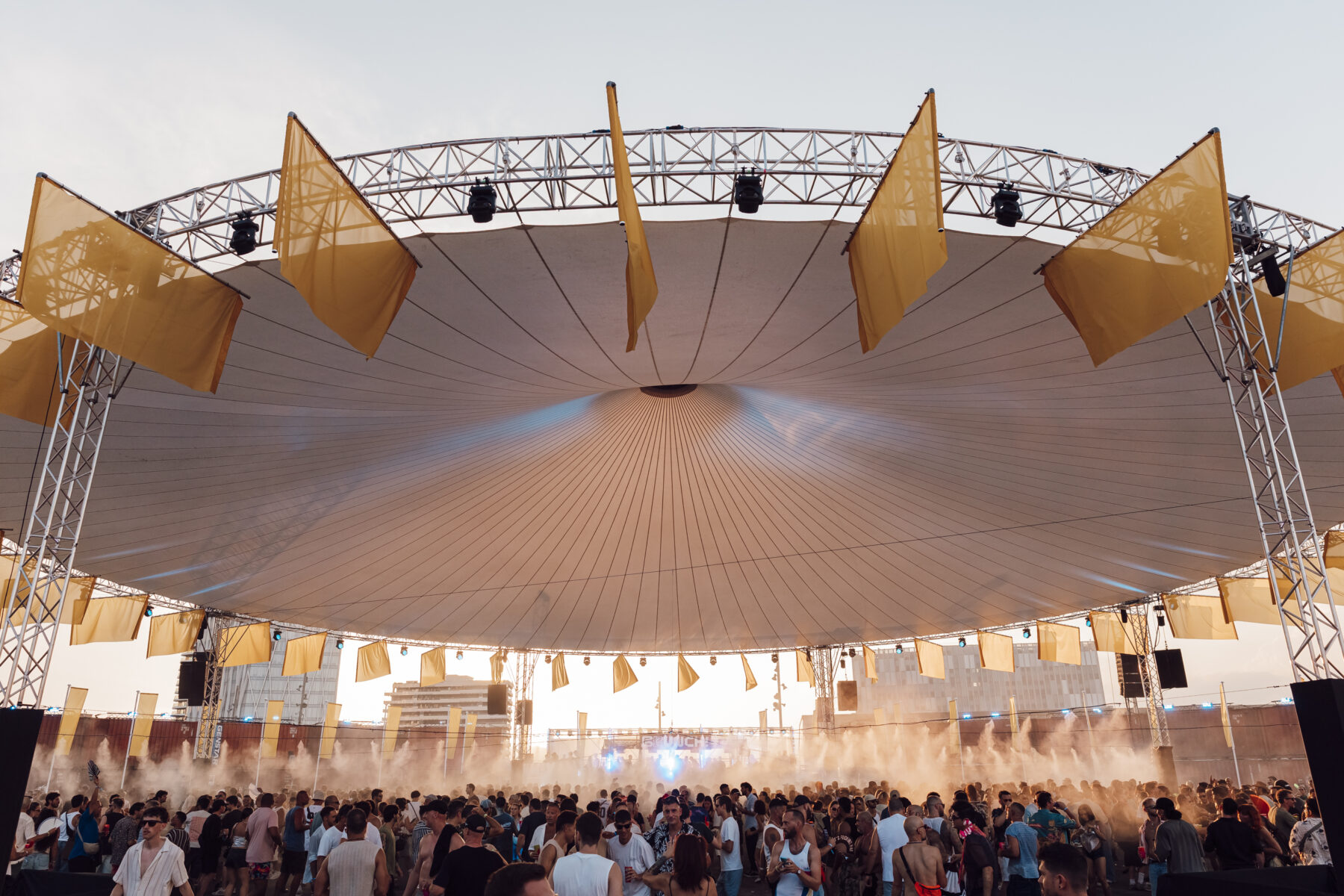
By late afternoon, people are already cramming into the scraps of shade thrown by the vast steel canopy of the IconiK stage. Ignez is playing raging techno, dressed in a loose, pale long-sleeved shirt and black trousers — not exactly the obvious outfit for dancing through Barcelona in August, but somehow he makes it work — while below him the crowd disappears into a haze of mist and heat.
There is a tiny detail attached to the speakers: a sign reading “DJ on duty – please do not disturb”, styled like one of those hotel-room signs. It’s a small joke, but one of many well-judged, slightly nuanced elements that make Brunch still feel innately personable and considered despite its growing global appeal.
And by now, the afternoon is starting to tip into night.
DJ Sweet6teen is playing, and the Rhythmik stage feels less like somewhere to put a DJ booth and more like a piece of temporary architecture dropped onto the waterfront. Coming from Cologne with a love of 90s rave and a knack for digging out forgotten tracks, she settles the crowd into the night with a set moving between house, trance, breakbeat and old-school cuts.
Above her, the white steel canopy frames the sky, with the Mediterranean stretching out beyond it. Then dusk settles in, the structure catches a warm orange glow, and the whole stage seems to shift gear with her set.
We make our way towards the EuphoriK stage, where Hubert Blanc-Francard is carrying the Cassius story forward — the project he built with his friend and bandmate Philippe Zdar, who tragically passed away in 2019.
After Philippe’s death, Hubert found himself thinking about what it meant to keep Cassius alive. “I really wanted to celebrate and do a party about what I did with Philippe in 25 years,” he tells me. That thought became the live show: a way of bringing their story back into the room, and letting it live beyond the two people who made it.
“The show I do live now, it’s our story.”
It doesn’t feel like a museum piece. The music is back in the wild — being played loud, discovered by people who weren’t there the first time and heard differently by those who were. Some know every record. Others are encountering Cassius for the first time. Either way, the story keeps moving.
“When I play at a big festival, everybody is not aware of the story,” Hubert tells me. “So you share something, and I have some really, really beautiful reactions afterwards”. “Cassius 1999” lands. The Pharrell Williams collaborations appear in the journey. “
Then the screen behind him cuts to huge, bold lettering:
“It’s been a long trip, like a big ship in the fog; house music is always the same; it’s people who want to dance. If you make them dance, you’re in.”
“Feeling For You” kicks in.
After 25 years, all the records, all the collaborations, all the history — this is still the simplest measure of whether it works. People dancing.
Hubert knows these songs by heart. But he tells me that something changes when they leave his head and enter a crowd:
“You are not excited to play it, but when you’re in front of the people, you’re excited because you share. They make their own meaning of it”
And perhaps that’s the most fitting way to keep Philippe’s legacy alive: not by holding it still, but by letting people hear it, feel it and take something from it.
Next up is the walk back towards Rhythmik, but I make a couple of stops along the way. First, the Open Stage. Its third edition gave 20 emerging DJs a shot at playing to the festival crowd, picked from more than 1,000 open-call applications.
It feels like exactly the sort of thing Brunch does well: creating spaces for new artists to thrive.
On the way, I find myself perched beside a little cooler of fresh fruit, glowing softly in the afternoon heat, picking through it with a few locals. It’s an initiative Brunch has kept going for years — and whenever you feel a bit lost in the sprawling site, it’s always a good place to end up. A simple idea, but a genuinely lovely one.
Despite Kaytranada headlining tonight, it would feel almost wrong to be here and not catch Shanti Celeste in the thick of Sass Summer — the run of sets she’s been playing alongside Saoirse, Moxie and Peach. They’ve been playing together for a while, but this summer has really underlined just how much people want to see them play together, with dates landing between Dekmantel and Houghton. Casual.
Halfway through her set, someone turns to me and says seeing Shanti is “their World Cup final.”
Valid.
Kaytranada’s only Peninsular show of 2026 has pulled the big one. The smaller pockets of people we’ve been watching drift between stages all day have suddenly fused into one enormous crowd, the whole festival swarming towards the stage. This is what a proper headliner looks like.
Warped graphics stutter behind him as he moves through house, funk, hip-hop and those beautifully elastic beats that make Kaytranada sound like nobody else.“Dance Dance Dance Dance” lands and the place lurches forward. “Be Your Girl” gets another huge reaction.
This is what a Kaytranada crowd does: it dances properly. Not the obligatory festival shuffle, but shoulders, hips, friends copying each other, strangers getting dragged into it. For a while, the sheer size of the crowd almost disappears. It feels like the whole of Brunch has collapsed into one dancefloor.
Saturday morning arrives with the kind of optimism that feels slightly misplaced. I sheepishly park myself by the pool, clutching my phone and hoping the hangxiety will eventually get bored and leave me alone. The same festival responsible for my suffering, meanwhile, is quietly bringing me back to life. Brunch’s Instagram has started documenting the random casualties left behind as the site clears each evening: a brilliant little social feature dedicated to the strange things people have abandoned along the way.
Among my favourites: a pencil sharpener, a completely unopened packet of mac and cheese, VapoRub and half an apple. It is ridiculous, oddly sweet and, somehow, exactly what I needed to see.
Saturday feels like the day Brunch really lets its range off the leash. Deborah de Luca stretches out at IconiK before 999999999, I Hate Models, and SNTS push things into darker, more punishing territory.
Over at Rhythmik, Yu Su is in an oversized, graphic-heavy jacket, headphones on and cigarette in hand, looking part punk, part streetwear, part after-hours mischief. There’s something deliberately undone about it, which suits the set. Born in Kaifeng and now based in London, she has become known for a sound that slips happily between genres, and she plays with that same sense of freedom here.
Then the sunlight cuts through the smoke. Yu Su gets the night moving, easing the festival out of daylight and into whatever comes next. It is one of those moments where you suddenly realise the evening has properly begun.
Luciano and CamelPhat pull the bigger crowds, while Floating Points arrives with the live show. Then I catch Chaos in the CBD, who tell me it is the most comfortable they’ve felt playing at a festival in ages.
“It was the first time in a couple of years that I genuinely really enjoyed myself at a festival,” they say. “Being around my friends, the people that I started doing this with… it was electric, man. I had a good time.” They looked like they were having the best time on stage; a highlight aside from the music was a mid-set shoey.
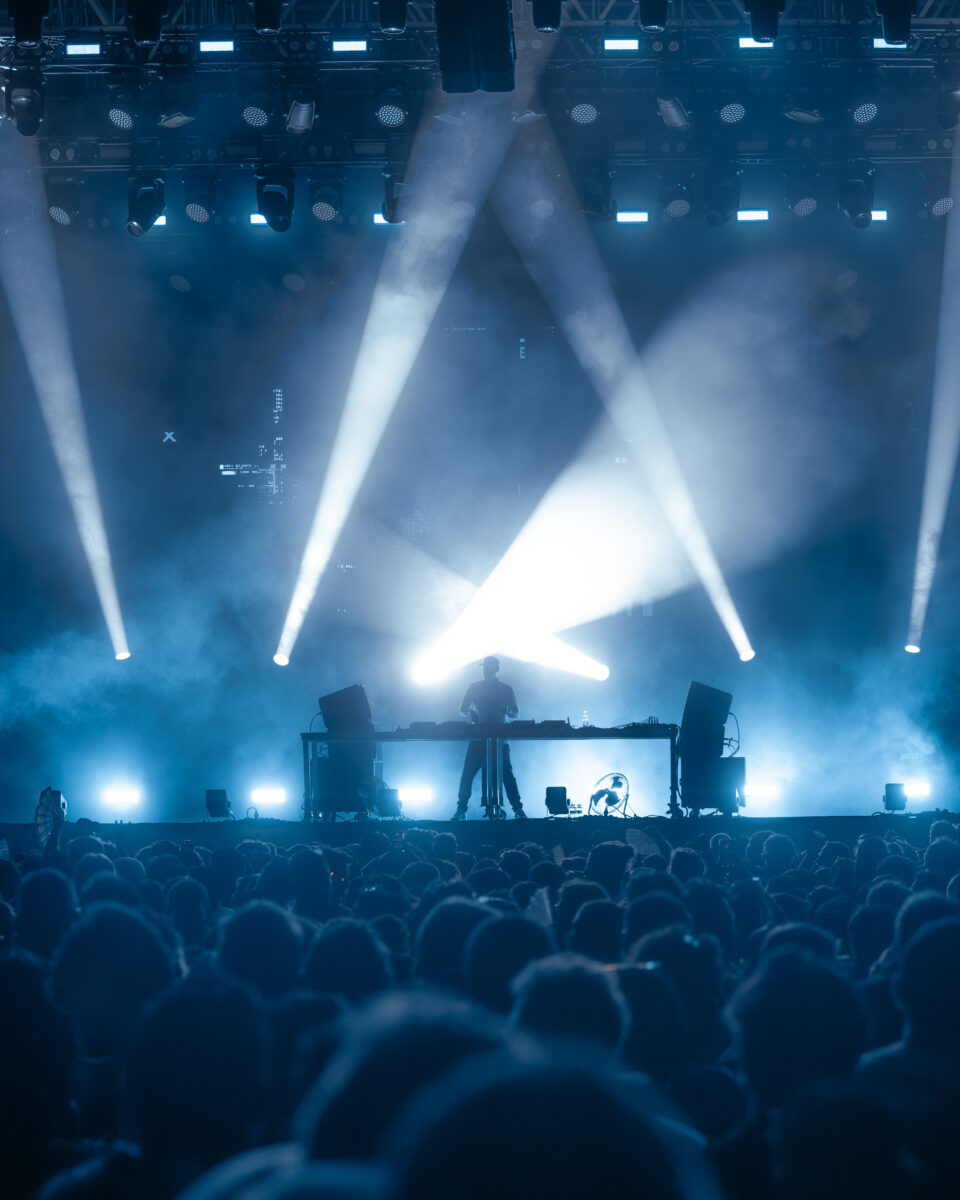
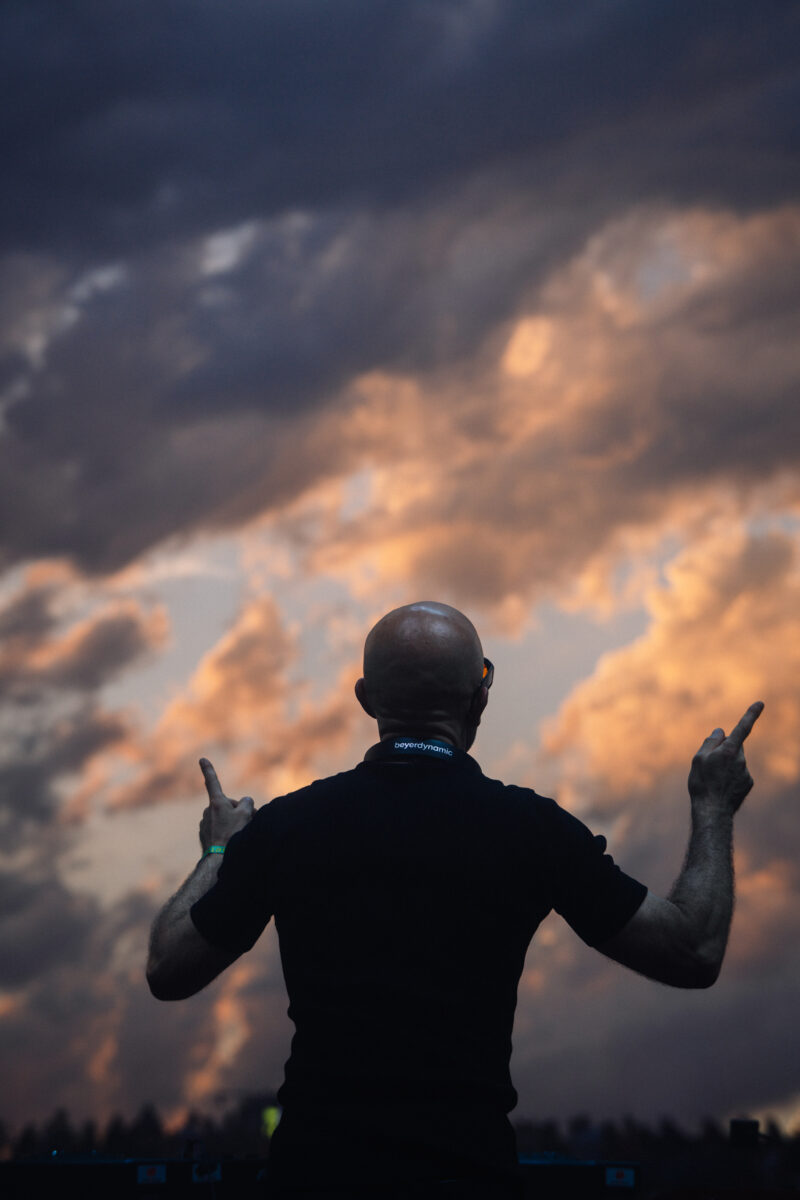
It feels like a pretty good description of Rhythmik itself: familiar, loose and full of people who seem very happy to be exactly where they are. They seem equally taken with the city. “Barcelona is beautiful. It’s got good food, good people, happy vibes. I could live there.”
I also catch Jen Cardini, a fixture in electronic music for more than three decades, whose set turns into an outright crowd-pleaser when Underworld’s “Two Months Off” comes in. The reaction is exactly as you’d expect, perfectly teeing up everyone for the night ahead.
Somewhere in between all of this, I catch Julian Anthony at GrooviK. The Dutch DJ has earned his stripes in the Netherlands’ underground before taking that energy further afield, from Hoppetosse and Fabric to DC10, with tours through Australia and South America and releases on labels including Dungeon Meat, Beeyou Records and X-Kalay. His sets move freely between funk-fuelled house, techno and raw electro, but there’s a playful looseness to the way he approaches it, he tells me:
“You don’t want to lose your own identity, but you also don’t want to lose the fact that you play just for yourself,” he tells me. “Every time you prepare, 90% of the time, it doesn’t happen the way you had it in your head. So I have no expectations. I just see what is happening on the dance floor.”
At 35, he says it feels like things are only just beginning. “I’m here for the long run.” Then, almost as an afterthought: “My mantra has always been, it’s nice to be nice.” Never has a truer word been spoken from a man whose gleaming smile seems incapable of fading, even in the crackling heat.
Sunday is the day you start to feel at home. You recognise people now. You know which way you’re going. You’ve acclimatised to the heat, more or less, and the festival has started to feel familiar.
I spend the morning slightly doomscrolling and find a photo of myself, post-interview, holding one half of Chaos in the CBD like a wild fish I’ve just caught. It makes me slightly nervous to listen back to the audio recording. But thankfully, it was all quite lovely…
Everything feels slightly out of focus today. We sit in a football-themed pizza restaurant near the festival that looks almost AI-generated, which does absolutely nothing to bring me back down to earth.
Eventually, we head back to the festival and catch Mind Against, who have been overrun by about half an hour by the time we arrive. It has a slightly more commercial edge than some of the weekend’s earlier sets — plenty of well-known edits, including turns through Florence + The Machine. It’s not exactly what we’ve spent the weekend chasing, but it definitely does the job.
Then The Blaze.
Their DJ set has the same cinematic quality that runs through their music, and hearing them dip back into their own catalogue is a nice way to close things out. “Territory” lands. So does “Virile.” Tracks that have lived in headphones and festival videos suddenly have thousands of people moving to them at once.
As I head back to the airport, slightly sunburnt, under-slept and not entirely sure what day it is, I keep thinking about that first conversation with the organisers. They wanted Brunch to grow without becoming some polished, anonymous version of itself. After three days, they seem to have done exactly that. The old guard is still being celebrated, but not preserved under glass. New artists are being given room to make a mess, take risks and find their people. The locals still make up the majority of the crowd. The big names pull everyone in, but the strange little moments — the fruit cooler, the lost mac and cheese, someone discovering Cassius for the first time — are what make the place feel alive. Brunch has got bigger without losing the plot. In festival terms, that is no mean feat.
Words – Josh Crowe
in HTML format, including tags, to make it appealing and easy to read for Japanese-speaking readers aged 20 to 40 interested in fashion. Organize the content with appropriate headings and subheadings (h1, h2, h3, h4, h5, h6), translating all text, including headings, into Japanese. Retain any existing
tags from
One of Europe’s premium electronic festivals delivered craft, chaos and community against a sweltering Barcelona backdrop, writer Josh Crowe reports.
“I worried, as Brunch got bigger, that we might lose the feeling that this was still the city’s party. But we haven’t. I guess more people just got the invite. There’s no secret handshake to be part of this.”
Toni, a Barcelona local, puts it to me like that, and after three days at Brunch Electronik, it feels like an apt assessment of an incredibly considered programme that manages to combine world-class talent with a distinctly local spirit, without losing the foundations that made it special in the first place.
Barcelona has no desire to ease us into our weekend.
The walk towards Parc del Fòrum is short enough on a map, but in this heat it’s an endurance test. The city seems to radiate from every surface. By the time we reach the festival, we have entered that strange, slightly delirious state where even speaking feels like an unnecessary expenditure of energy.
Then we get inside, and suddenly the initial struggle makes a lot more sense.
We make our way in through the main entrance, and one of the local workers turns towards a colleague and pulls him into an embrace. There is nothing staged about it. Just two people who look genuinely proud of what they have built.
Then I notice the tattoo on the back of his right leg:
ENEMY OF THE END.
It feels almost too perfect. Not a defiant statement so much as an instinct to keep evolving, while staying true to what made something special in the first place.
The global scale is impressive. But it is the local character that is the heartbeat of this festival. This year, 80% of the festival’s 65,000 attendees were local, an extraordinary figure for a festival now operating at this scale.
Martin Petrik, Brunch’s creative director, has been part of the festival for three years. For him, the challenge is not simply making Brunch bigger, but doing so while maintaining its connection to the city.
“The connection with the local community, Barcelona, is really, really strong,” he says. “Of course, festivals can be big business and stuff like that, but I think the city offers an amazing stage to build something incredible. We want to make the most of that, to give something in return.”
It is a simple point, but one that seems to sit at the heart of how Brunch operates. The ambition is seismic, but so is the responsibility to the city and the locals who have no doubt influenced and symbiotically moulded the festival into what it is today.
That means local artists opening almost every stage, every day, while the Open Stage is dedicated specifically to emerging artists from Barcelona. It is a way of making sure the festival grows outwards without simply floating away from where it started.
The programming, he explains, is deliberately dance-oriented, but without the sense of snobbery that can sometimes surround the scene.
“We want to give a bit away from that,” he says. “It’s a place to have fun, and discover new talent”
And that includes the people who live here.
One of those artists is Gigi Ros, who plays the Euphorik stage on Friday.
One of the emerging voices in Barcelona, Gigi Ros looks the part: a cropped white T-shirt, layers of chunky silver chains and a low-slung chainmail-style skirt, somewhere between punk, rave and Barcelona street style.
Tonight, she’s playing the EuphoriK stage, one of Brunch Electronik’s open-air main stages. Playful and colourful, with towering stepped structures opposite that rise as the night builds, it feels steeped in Barcelona’s sonic past, present and future.
Ros sits somewhere between pop, R&B and electronic music, but hearing her music and catching her live makes it clear she’s not particularly interested in keeping those worlds separate.
“Music is my excuse to make fashion or design or movies,” she tells me. For Ros, music seems less like a fixed destination than a way into everything else.
And that instinct to let different creative worlds bleed into one another feels particularly suited to Barcelona.
“I think it’s like a little place where you can find a lot of different things,” she says. “There’s a lot going on, and there’s like a big scene, even if it’s a small place.”
It is a good description of Barcelona, and perhaps an even better one for the music coming out of it.
By late afternoon, people are already cramming into the scraps of shade thrown by the vast steel canopy of the IconiK stage. Ignez is playing raging techno, dressed in a loose, pale long-sleeved shirt and black trousers — not exactly the obvious outfit for dancing through Barcelona in August, but somehow he makes it work — while below him the crowd disappears into a haze of mist and heat.
There is a tiny detail attached to the speakers: a sign reading “DJ on duty – please do not disturb”, styled like one of those hotel-room signs. It’s a small joke, but one of many well-judged, slightly nuanced elements that make Brunch still feel innately personable and considered despite its growing global appeal.
And by now, the afternoon is starting to tip into night.
DJ Sweet6teen is playing, and the Rhythmik stage feels less like somewhere to put a DJ booth and more like a piece of temporary architecture dropped onto the waterfront. Coming from Cologne with a love of 90s rave and a knack for digging out forgotten tracks, she settles the crowd into the night with a set moving between house, trance, breakbeat and old-school cuts.
Above her, the white steel canopy frames the sky, with the Mediterranean stretching out beyond it. Then dusk settles in, the structure catches a warm orange glow, and the whole stage seems to shift gear with her set.
We make our way towards the EuphoriK stage, where Hubert Blanc-Francard is carrying the Cassius story forward — the project he built with his friend and bandmate Philippe Zdar, who tragically passed away in 2019.
After Philippe’s death, Hubert found himself thinking about what it meant to keep Cassius alive. “I really wanted to celebrate and do a party about what I did with Philippe in 25 years,” he tells me. That thought became the live show: a way of bringing their story back into the room, and letting it live beyond the two people who made it.
“The show I do live now, it’s our story.”
It doesn’t feel like a museum piece. The music is back in the wild — being played loud, discovered by people who weren’t there the first time and heard differently by those who were. Some know every record. Others are encountering Cassius for the first time. Either way, the story keeps moving.
“When I play at a big festival, everybody is not aware of the story,” Hubert tells me. “So you share something, and I have some really, really beautiful reactions afterwards”. “Cassius 1999” lands. The Pharrell Williams collaborations appear in the journey. “
Then the screen behind him cuts to huge, bold lettering:
“It’s been a long trip, like a big ship in the fog; house music is always the same; it’s people who want to dance. If you make them dance, you’re in.”
“Feeling For You” kicks in.
After 25 years, all the records, all the collaborations, all the history — this is still the simplest measure of whether it works. People dancing.
Hubert knows these songs by heart. But he tells me that something changes when they leave his head and enter a crowd:
“You are not excited to play it, but when you’re in front of the people, you’re excited because you share. They make their own meaning of it”
And perhaps that’s the most fitting way to keep Philippe’s legacy alive: not by holding it still, but by letting people hear it, feel it and take something from it.
Next up is the walk back towards Rhythmik, but I make a couple of stops along the way. First, the Open Stage. Its third edition gave 20 emerging DJs a shot at playing to the festival crowd, picked from more than 1,000 open-call applications.
It feels like exactly the sort of thing Brunch does well: creating spaces for new artists to thrive.
On the way, I find myself perched beside a little cooler of fresh fruit, glowing softly in the afternoon heat, picking through it with a few locals. It’s an initiative Brunch has kept going for years — and whenever you feel a bit lost in the sprawling site, it’s always a good place to end up. A simple idea, but a genuinely lovely one.
Despite Kaytranada headlining tonight, it would feel almost wrong to be here and not catch Shanti Celeste in the thick of Sass Summer — the run of sets she’s been playing alongside Saoirse, Moxie and Peach. They’ve been playing together for a while, but this summer has really underlined just how much people want to see them play together, with dates landing between Dekmantel and Houghton. Casual.
Halfway through her set, someone turns to me and says seeing Shanti is “their World Cup final.”
Valid.
Kaytranada’s only Peninsular show of 2026 has pulled the big one. The smaller pockets of people we’ve been watching drift between stages all day have suddenly fused into one enormous crowd, the whole festival swarming towards the stage. This is what a proper headliner looks like.
Warped graphics stutter behind him as he moves through house, funk, hip-hop and those beautifully elastic beats that make Kaytranada sound like nobody else.“Dance Dance Dance Dance” lands and the place lurches forward. “Be Your Girl” gets another huge reaction.
This is what a Kaytranada crowd does: it dances properly. Not the obligatory festival shuffle, but shoulders, hips, friends copying each other, strangers getting dragged into it. For a while, the sheer size of the crowd almost disappears. It feels like the whole of Brunch has collapsed into one dancefloor.
Saturday morning arrives with the kind of optimism that feels slightly misplaced. I sheepishly park myself by the pool, clutching my phone and hoping the hangxiety will eventually get bored and leave me alone. The same festival responsible for my suffering, meanwhile, is quietly bringing me back to life. Brunch’s Instagram has started documenting the random casualties left behind as the site clears each evening: a brilliant little social feature dedicated to the strange things people have abandoned along the way.
Among my favourites: a pencil sharpener, a completely unopened packet of mac and cheese, VapoRub and half an apple. It is ridiculous, oddly sweet and, somehow, exactly what I needed to see.
Saturday feels like the day Brunch really lets its range off the leash. Deborah de Luca stretches out at IconiK before 999999999, I Hate Models, and SNTS push things into darker, more punishing territory.
Over at Rhythmik, Yu Su is in an oversized, graphic-heavy jacket, headphones on and cigarette in hand, looking part punk, part streetwear, part after-hours mischief. There’s something deliberately undone about it, which suits the set. Born in Kaifeng and now based in London, she has become known for a sound that slips happily between genres, and she plays with that same sense of freedom here.
Then the sunlight cuts through the smoke. Yu Su gets the night moving, easing the festival out of daylight and into whatever comes next. It is one of those moments where you suddenly realise the evening has properly begun.
Luciano and CamelPhat pull the bigger crowds, while Floating Points arrives with the live show. Then I catch Chaos in the CBD, who tell me it is the most comfortable they’ve felt playing at a festival in ages.
“It was the first time in a couple of years that I genuinely really enjoyed myself at a festival,” they say. “Being around my friends, the people that I started doing this with… it was electric, man. I had a good time.” They looked like they were having the best time on stage; a highlight aside from the music was a mid-set shoey.
It feels like a pretty good description of Rhythmik itself: familiar, loose and full of people who seem very happy to be exactly where they are. They seem equally taken with the city. “Barcelona is beautiful. It’s got good food, good people, happy vibes. I could live there.”
I also catch Jen Cardini, a fixture in electronic music for more than three decades, whose set turns into an outright crowd-pleaser when Underworld’s “Two Months Off” comes in. The reaction is exactly as you’d expect, perfectly teeing up everyone for the night ahead.
Somewhere in between all of this, I catch Julian Anthony at GrooviK. The Dutch DJ has earned his stripes in the Netherlands’ underground before taking that energy further afield, from Hoppetosse and Fabric to DC10, with tours through Australia and South America and releases on labels including Dungeon Meat, Beeyou Records and X-Kalay. His sets move freely between funk-fuelled house, techno and raw electro, but there’s a playful looseness to the way he approaches it, he tells me:
“You don’t want to lose your own identity, but you also don’t want to lose the fact that you play just for yourself,” he tells me. “Every time you prepare, 90% of the time, it doesn’t happen the way you had it in your head. So I have no expectations. I just see what is happening on the dance floor.”
At 35, he says it feels like things are only just beginning. “I’m here for the long run.” Then, almost as an afterthought: “My mantra has always been, it’s nice to be nice.” Never has a truer word been spoken from a man whose gleaming smile seems incapable of fading, even in the crackling heat.
Sunday is the day you start to feel at home. You recognise people now. You know which way you’re going. You’ve acclimatised to the heat, more or less, and the festival has started to feel familiar.
I spend the morning slightly doomscrolling and find a photo of myself, post-interview, holding one half of Chaos in the CBD like a wild fish I’ve just caught. It makes me slightly nervous to listen back to the audio recording. But thankfully, it was all quite lovely…
Everything feels slightly out of focus today. We sit in a football-themed pizza restaurant near the festival that looks almost AI-generated, which does absolutely nothing to bring me back down to earth.
Eventually, we head back to the festival and catch Mind Against, who have been overrun by about half an hour by the time we arrive. It has a slightly more commercial edge than some of the weekend’s earlier sets — plenty of well-known edits, including turns through Florence + The Machine. It’s not exactly what we’ve spent the weekend chasing, but it definitely does the job.
Then The Blaze.
Their DJ set has the same cinematic quality that runs through their music, and hearing them dip back into their own catalogue is a nice way to close things out. “Territory” lands. So does “Virile.” Tracks that have lived in headphones and festival videos suddenly have thousands of people moving to them at once.
As I head back to the airport, slightly sunburnt, under-slept and not entirely sure what day it is, I keep thinking about that first conversation with the organisers. They wanted Brunch to grow without becoming some polished, anonymous version of itself. After three days, they seem to have done exactly that. The old guard is still being celebrated, but not preserved under glass. New artists are being given room to make a mess, take risks and find their people. The locals still make up the majority of the crowd. The big names pull everyone in, but the strange little moments — the fruit cooler, the lost mac and cheese, someone discovering Cassius for the first time — are what make the place feel alive. Brunch has got bigger without losing the plot. In festival terms, that is no mean feat.
Words – Josh Crowe
and integrate them seamlessly into the new content without adding new tags. Ensure the new content is fashion-related, written entirely in Japanese, and approximately 1500 words. Conclude with a “結論” section and a well-formatted “よくある質問” section. Avoid including an introduction or a note explaining the process.