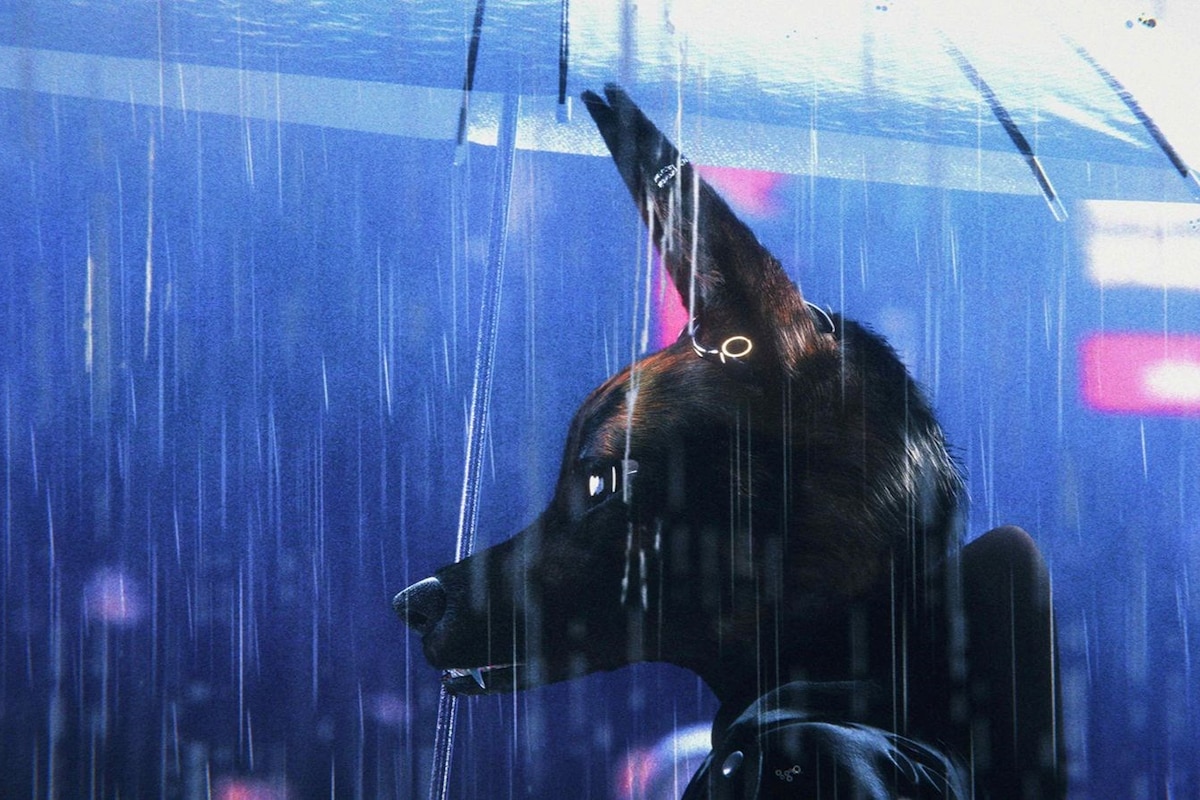
Rewrite
2 Lizards directors Meriem Bennani and Orian Barki reflect on bringing their debut animal-filled animated feature to life
For Meriem Bennani, a queer Moroccan artist writing the script for her first animated feature, picking up the phone to her mum proved the key to unlocking her story. “As soon as we heard it we were like, ‘Fuck, that’s got to be in the film,’” says Bennani, recalling the moment she played back a recording of the conversation to her co-director, Orian Barki. “It was so much more specific and true than anything we’d written up to that point.”
The call concerned a letter Bennani had written to her parents some years ago, explaining that she was now living openly as a lesbian in her adopted city of New York. Bennani had never received a reply, so she called up her mum in Casablanca to better understand her reasons for staying silent. It’s a painful piece of family history the directors sought to include in Bouchra, an animated film starring Bennani and Barki as anthropomorphised animals modelled loosely on themselves. But it’s also, as Barki tells it, a decision Bennani did not make lightly. “I always wanted the film to be more specific and more personal to Meriem, but I didn’t feel like it was something I could keep bringing up,” she says. “So when she called me one day and said, ‘I think what I’m gonna do is call my mom,’ I had to try really hard not to show my excitement.”

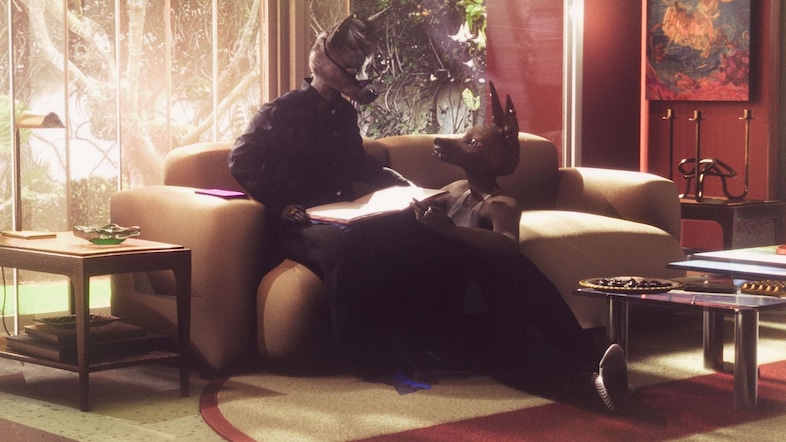
Multimedia artist Bennani first met Barki, a documentary filmmaker born in Tel Aviv, at a party in New York not long after Barki had moved from, as she describes it, “this fake country in the Middle East that is also known as Palestine”. They soon began seeing each other, and were living in a lockdown “bubble” when they decided to work together on an animated web series, 2 Lizards, during the early days of the pandemic. The show became a hit, and when Bennani was commissioned to make an exhibition for Fondazione Prada in 2022, she invited Barki to work with her again on what would become Morocco’s first-ever animated feature.
For Aicha, as it was called for the exhibition, first screened in 2024 as a 59-minute feature, but when the pair secured additional funding they decided to flesh out Bouchra’s world, “and show her as not just a kid going to visit her mum but as a woman with full desires and a full life and all of that”, says Bennani. The extended cut brings frank sexuality to the mix – it’s been described by one Letterboxd user as “Zootropolis if it fucked” – as Bouchra navigates relationships with her ex, a cow “with a sexy, ASMR voice”, and a bear that Bouchra falls for while staying in Morocco.
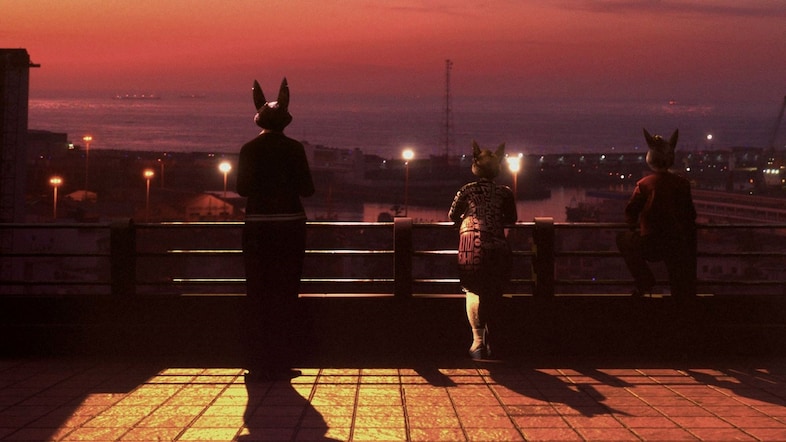
Back in the real world, Bennani and Barki are no longer an item but laugh and bicker on our call exactly as you’d expect an old couple to, Barki gallantly stepping in when Bennani sounds perplexed by a too-personal question. They nitpick the details of their first encounter – Barki suggests they felt a sense of instant familiarity, which Bennani questions – and Barki bristles slightly at Bennani’s description of the ex-girlfriend in the film, a cow voiced by an old flatmate of Bennani’s, as “toxic”. (“It’s complicated,” they finally agree.)
In the end, they explain, the success of their working relationship comes down to a level of trust in each other’s artistic process. “We often disagree,” says Bennani, “but we’ve gotten better at understanding when we’re disagreeing out of ego because we want to push our idea, and when we have some bigger intuition [that will help the film].”
“The thing I love about Meriem’s work,” says Barki, “is there’s this freedom to work with symbolism. Like, you know that things will never be literal or on the nose, but you can enter this world knowing that things will make sense and it’s not just a pile of randomness. There’s a strong inner logic that engages you because it’s never just one thing. It’s slippery.”
While researching her story in the film, Bouchra takes off to Morocco where she connects with the young queer community in ways she’d never gotten to before. At home with her family, she discovers the letter at the heart of the film’s drama, stashed away by her mum all those years in a drawer. It’s a touching reminder of the love that draws Bouchra’s family into a deeper understanding of each other, and persuaded Bennani’s own mum to consent to their calls being reproduced almost word for word in the film. “Her giving that consent was such a beautiful gift,” says Bennani, “I knew that I had to treat it preciously.”
Bouchra is out now in UK cinemas.
in HTML format, including tags, to make it appealing and easy to read for Japanese-speaking readers aged 20 to 40 interested in fashion. Organize the content with appropriate headings and subheadings (h1, h2, h3, h4, h5, h6), translating all text, including headings, into Japanese. Retain any existing
tags from
2 Lizards directors Meriem Bennani and Orian Barki reflect on bringing their debut animal-filled animated feature to life
For Meriem Bennani, a queer Moroccan artist writing the script for her first animated feature, picking up the phone to her mum proved the key to unlocking her story. “As soon as we heard it we were like, ‘Fuck, that’s got to be in the film,’” says Bennani, recalling the moment she played back a recording of the conversation to her co-director, Orian Barki. “It was so much more specific and true than anything we’d written up to that point.”
The call concerned a letter Bennani had written to her parents some years ago, explaining that she was now living openly as a lesbian in her adopted city of New York. Bennani had never received a reply, so she called up her mum in Casablanca to better understand her reasons for staying silent. It’s a painful piece of family history the directors sought to include in Bouchra, an animated film starring Bennani and Barki as anthropomorphised animals modelled loosely on themselves. But it’s also, as Barki tells it, a decision Bennani did not make lightly. “I always wanted the film to be more specific and more personal to Meriem, but I didn’t feel like it was something I could keep bringing up,” she says. “So when she called me one day and said, ‘I think what I’m gonna do is call my mom,’ I had to try really hard not to show my excitement.”
Multimedia artist Bennani first met Barki, a documentary filmmaker born in Tel Aviv, at a party in New York not long after Barki had moved from, as she describes it, “this fake country in the Middle East that is also known as Palestine”. They soon began seeing each other, and were living in a lockdown “bubble” when they decided to work together on an animated web series, 2 Lizards, during the early days of the pandemic. The show became a hit, and when Bennani was commissioned to make an exhibition for Fondazione Prada in 2022, she invited Barki to work with her again on what would become Morocco’s first-ever animated feature.
For Aicha, as it was called for the exhibition, first screened in 2024 as a 59-minute feature, but when the pair secured additional funding they decided to flesh out Bouchra’s world, “and show her as not just a kid going to visit her mum but as a woman with full desires and a full life and all of that”, says Bennani. The extended cut brings frank sexuality to the mix – it’s been described by one Letterboxd user as “Zootropolis if it fucked” – as Bouchra navigates relationships with her ex, a cow “with a sexy, ASMR voice”, and a bear that Bouchra falls for while staying in Morocco.
Back in the real world, Bennani and Barki are no longer an item but laugh and bicker on our call exactly as you’d expect an old couple to, Barki gallantly stepping in when Bennani sounds perplexed by a too-personal question. They nitpick the details of their first encounter – Barki suggests they felt a sense of instant familiarity, which Bennani questions – and Barki bristles slightly at Bennani’s description of the ex-girlfriend in the film, a cow voiced by an old flatmate of Bennani’s, as “toxic”. (“It’s complicated,” they finally agree.)
In the end, they explain, the success of their working relationship comes down to a level of trust in each other’s artistic process. “We often disagree,” says Bennani, “but we’ve gotten better at understanding when we’re disagreeing out of ego because we want to push our idea, and when we have some bigger intuition [that will help the film].”
“The thing I love about Meriem’s work,” says Barki, “is there’s this freedom to work with symbolism. Like, you know that things will never be literal or on the nose, but you can enter this world knowing that things will make sense and it’s not just a pile of randomness. There’s a strong inner logic that engages you because it’s never just one thing. It’s slippery.”
While researching her story in the film, Bouchra takes off to Morocco where she connects with the young queer community in ways she’d never gotten to before. At home with her family, she discovers the letter at the heart of the film’s drama, stashed away by her mum all those years in a drawer. It’s a touching reminder of the love that draws Bouchra’s family into a deeper understanding of each other, and persuaded Bennani’s own mum to consent to their calls being reproduced almost word for word in the film. “Her giving that consent was such a beautiful gift,” says Bennani, “I knew that I had to treat it preciously.”
Bouchra is out now in UK cinemas.
and integrate them seamlessly into the new content without adding new tags. Ensure the new content is fashion-related, written entirely in Japanese, and approximately 1500 words. Conclude with a “結論” section and a well-formatted “よくある質問” section. Avoid including an introduction or a note explaining the process.