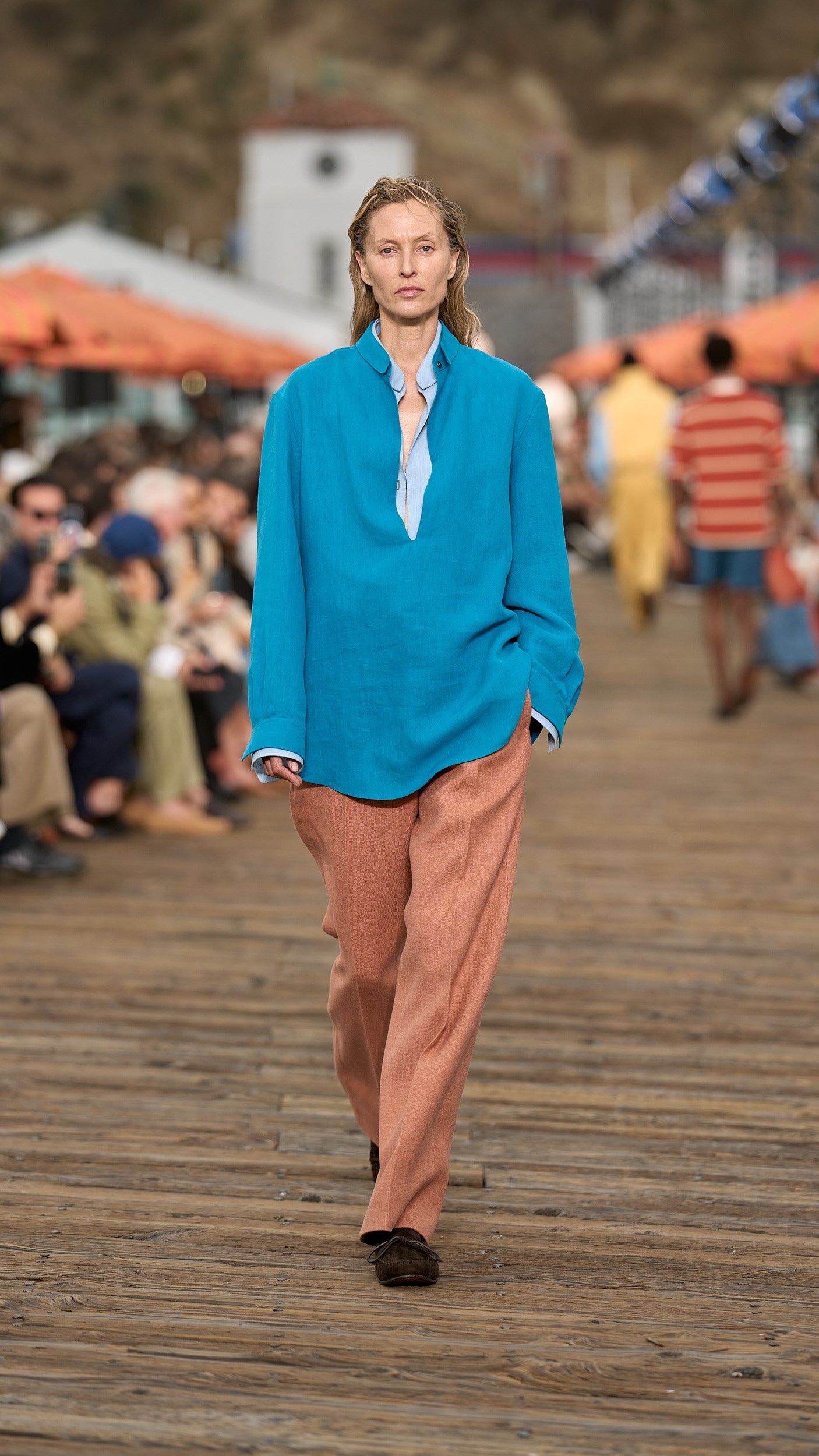
A few thousand miles away from their home in Milan, Alessandro Sartori and Zegna decided to stage their Spring/Summer 2027 collection – the unofficial start of the menswear season – on a pier jutting off the coast of Malibu on California’s coast. It’s an unexpected locale for a brand that has shown, in the past, in rolling Italian hills, or industrial silos, or in January in a recreation of the Zegna family’s closet, packed with antique clothes. Then again, isn’t their business all about exporting that distinctive Italianness around the world?
Vacation was the fitting inspiration, Sartori said in a preview. But rather than transatlantic jetsetting, private planes and in-flight wifi, it was the Italian tradition of villeggiare, which untranslatably means decamping with your famiglia to some grand country house for down time, as many families did in the middle of the last century, and some still do today. Zegna clients incidentally, get to do that – the brand took over the bungalows of the Chateau Marmont to create what it calls Villa Zegna, a carefully curated space engineered to hawk its wares for five days after this show, to around 120 well-heeled, deep-pocketed clients trucked in specially for this grand experiential show-and-sell.
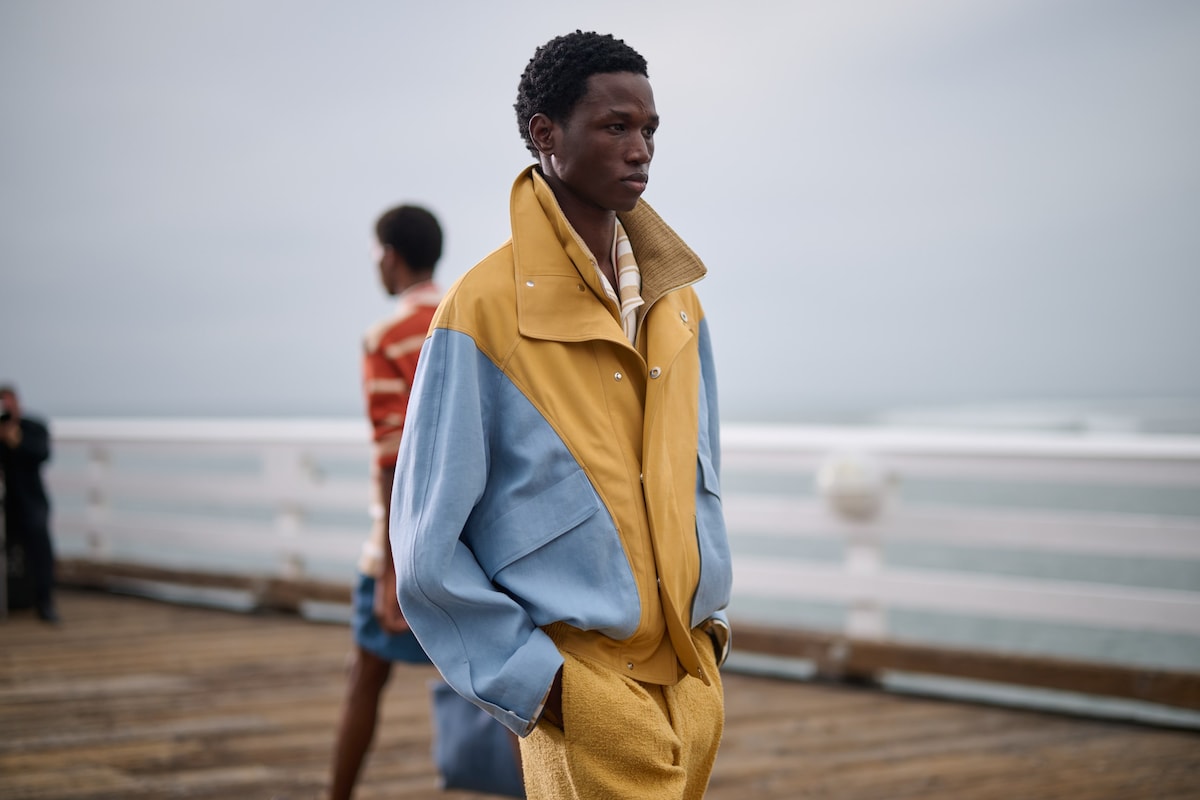
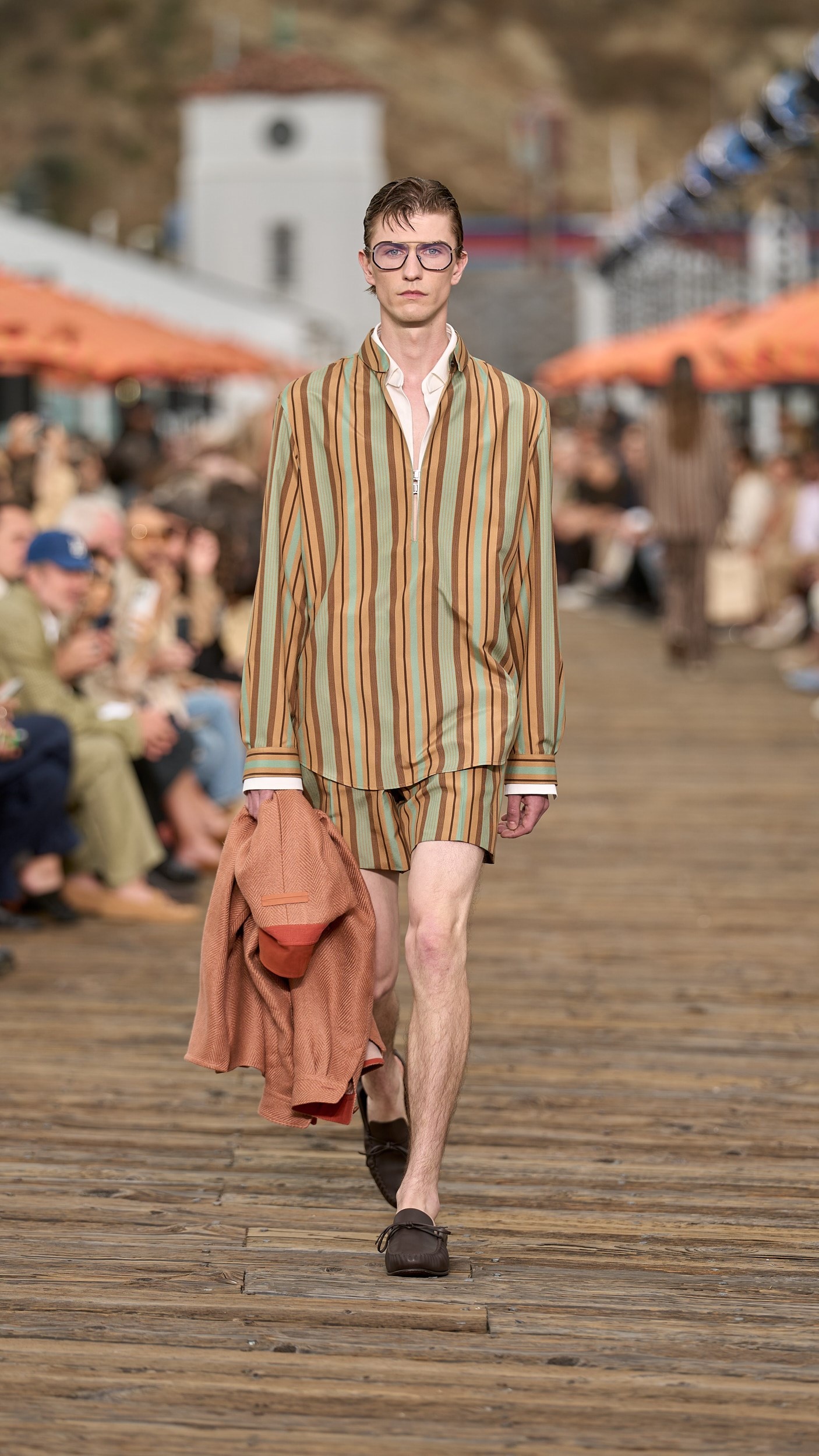
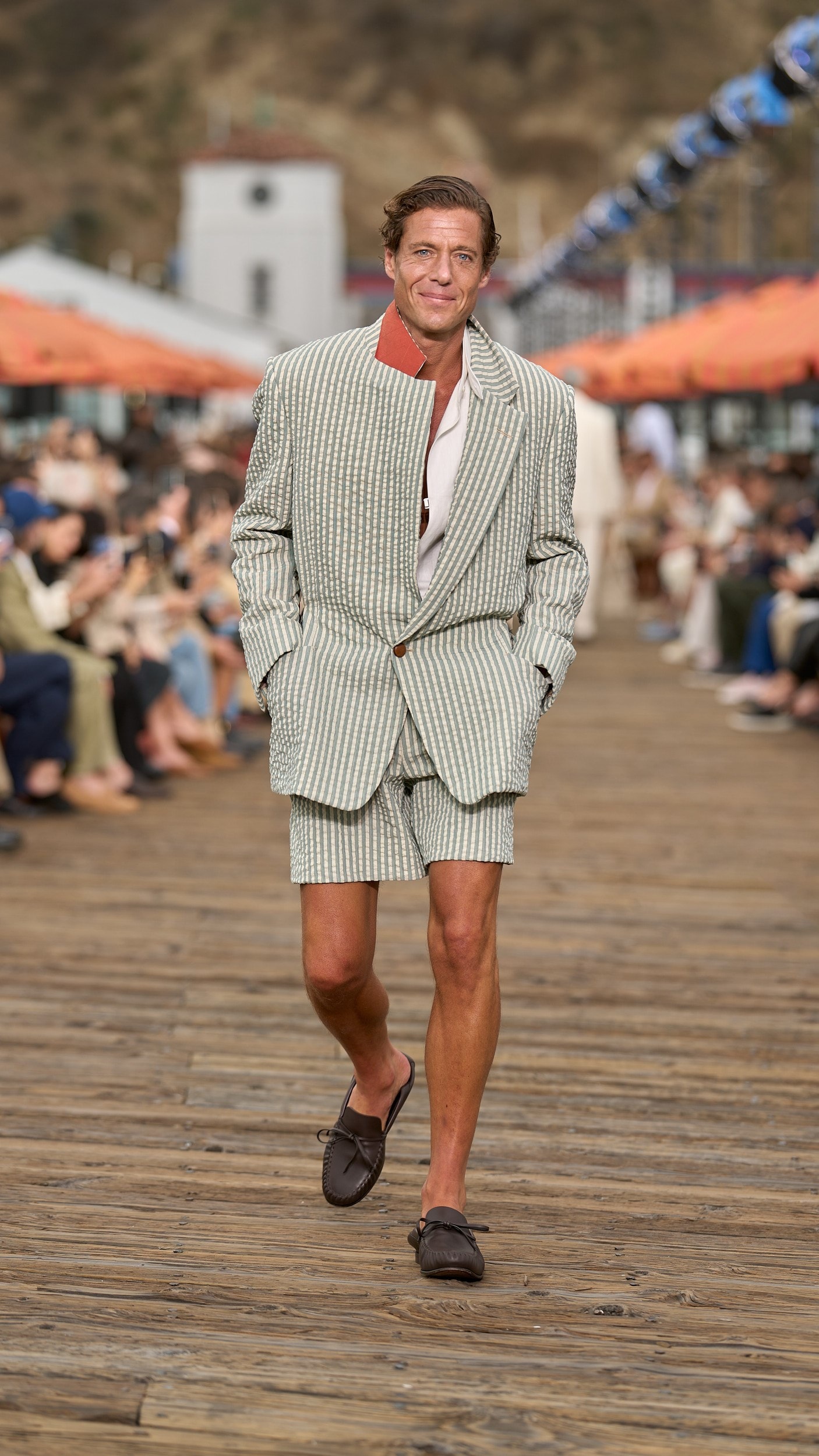
But it was deeper than that. The idea coloured clothes with a sense of summer – there were lots of shorts, and lightweight fabrics, and literal colours, muted, slightly sunbleached, as on rusty safari jackets with contrast bindings in leather, that seemed as if the body had faded leaving only the facings to pop in their original brights. The villeggiare inspired a passaggio on the pier (you can take the boy out of Italy, but …), of strolling models in short-shorts and Seventies-style tailoring, knit polos and Sahariennes and Royal Tenenbaum-esque track-jackets in contrasts of leather, a few dads toting big old luggage as if the car broke down a few miles away from the villa you’d rented.
Zegna Summer 2027Courtesy of Zegna
Zegna Summer 2027Courtesy of Zegna
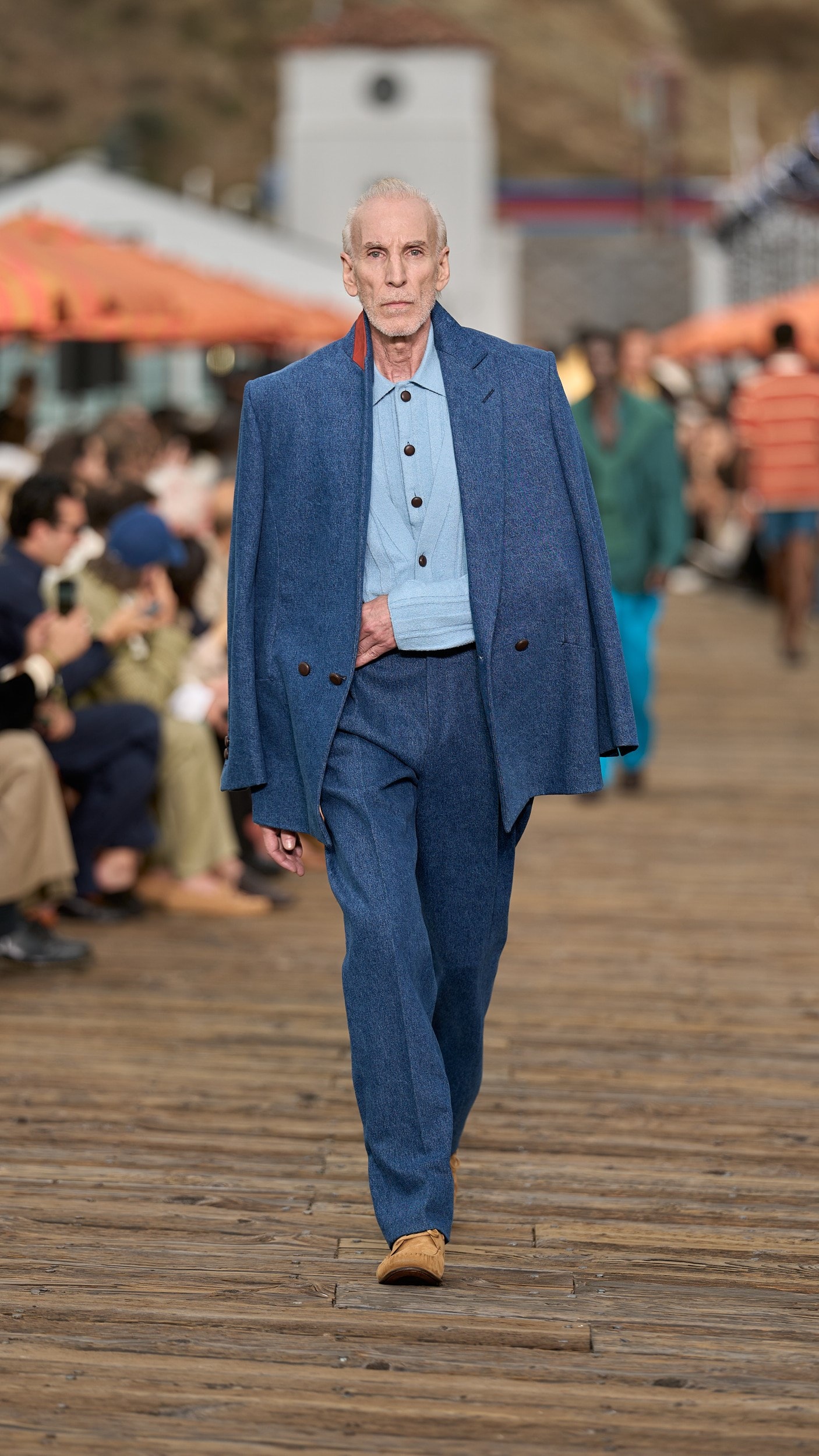
There’s also an appealing geekdom to Zegna that’s engaging, but also not essential. Guys can nerd out over the clever cuts, over the textiles and details – internal adjusting belts, 1.5 and 1.2-breasted cuts, tweeds woven with bits of paper on vintage looms last regularly used back in the 1950s – or can just embrace these pieces as the easy, direct clothes they are. They appeal to all kinds of men (and indeed women, who always look great when they’re peppered in Sartori’s shows).
Was there a California undercurrent to these clothes? Maybe. There were Googie architecture colours, pale mid-century yellows, contrasts of green and white, and a pair of blue suede shoes (moccasins, to be specific). The high-rise hems in awning stripes could’ve been Beach Boy as well as Italian ragazzi. There was also, Sartori asserted, a lot of hemp in the fabrications, which wasn’t an official nod to California’s free and easy cannabis laws yet raised a wry smile.
Zegna Summer 2027Courtesy of Zegna
Zegna Summer 2027Courtesy of Zegna
At its best, there was a sense of life to the whole thing. The retro mood was uncharacteristic of Sartori’s Zegna, generally a bastion of avowed modernism. “We can go back to that sort of elegance,” he said before the show. “It’s the same beauty, but for a modern situation.” And indeed, the fabrics were engineered, the silhouettes tweaked. As with the best nostalgia, everything was better than it used to be, back then.
in HTML format, including tags, to make it appealing and easy to read for Japanese-speaking readers aged 20 to 40 interested in fashion. Organize the content with appropriate headings and subheadings (h1, h2, h3, h4, h5, h6), translating all text, including headings, into Japanese. Retain any existing tags from
Lead ImageZegna Summer 2027Courtesy of Zegna
A few thousand miles away from their home in Milan, Alessandro Sartori and Zegna decided to stage their Spring/Summer 2027 collection – the unofficial start of the menswear season – on a pier jutting off the coast of Malibu on California’s coast. It’s an unexpected locale for a brand that has shown, in the past, in rolling Italian hills, or industrial silos, or in January in a recreation of the Zegna family’s closet, packed with antique clothes. Then again, isn’t their business all about exporting that distinctive Italianness around the world?
Vacation was the fitting inspiration, Sartori said in a preview. But rather than transatlantic jetsetting, private planes and in-flight wifi, it was the Italian tradition of villeggiare, which untranslatably means decamping with your famiglia to some grand country house for down time, as many families did in the middle of the last century, and some still do today. Zegna clients incidentally, get to do that – the brand took over the bungalows of the Chateau Marmont to create what it calls Villa Zegna, a carefully curated space engineered to hawk its wares for five days after this show, to around 120 well-heeled, deep-pocketed clients trucked in specially for this grand experiential show-and-sell.
But it was deeper than that. The idea coloured clothes with a sense of summer – there were lots of shorts, and lightweight fabrics, and literal colours, muted, slightly sunbleached, as on rusty safari jackets with contrast bindings in leather, that seemed as if the body had faded leaving only the facings to pop in their original brights. The villeggiare inspired a passaggio on the pier (you can take the boy out of Italy, but …), of strolling models in short-shorts and Seventies-style tailoring, knit polos and Sahariennes and Royal Tenenbaum-esque track-jackets in contrasts of leather, a few dads toting big old luggage as if the car broke down a few miles away from the villa you’d rented.
Zegna Summer 2027Courtesy of Zegna
Zegna Summer 2027Courtesy of Zegna
There’s also an appealing geekdom to Zegna that’s engaging, but also not essential. Guys can nerd out over the clever cuts, over the textiles and details – internal adjusting belts, 1.5 and 1.2-breasted cuts, tweeds woven with bits of paper on vintage looms last regularly used back in the 1950s – or can just embrace these pieces as the easy, direct clothes they are. They appeal to all kinds of men (and indeed women, who always look great when they’re peppered in Sartori’s shows).
Was there a California undercurrent to these clothes? Maybe. There were Googie architecture colours, pale mid-century yellows, contrasts of green and white, and a pair of blue suede shoes (moccasins, to be specific). The high-rise hems in awning stripes could’ve been Beach Boy as well as Italian ragazzi. There was also, Sartori asserted, a lot of hemp in the fabrications, which wasn’t an official nod to California’s free and easy cannabis laws yet raised a wry smile.
Zegna Summer 2027Courtesy of Zegna
Zegna Summer 2027Courtesy of Zegna
At its best, there was a sense of life to the whole thing. The retro mood was uncharacteristic of Sartori’s Zegna, generally a bastion of avowed modernism. “We can go back to that sort of elegance,” he said before the show. “It’s the same beauty, but for a modern situation.” And indeed, the fabrics were engineered, the silhouettes tweaked. As with the best nostalgia, everything was better than it used to be, back then.
and integrate them seamlessly into the new content without adding new tags. Ensure the new content is fashion-related, written entirely in Japanese, and approximately 1500 words. Conclude with a “結論” section and a well-formatted “よくある質問” section. Avoid including an introduction or a note explaining the process.