Rewrite
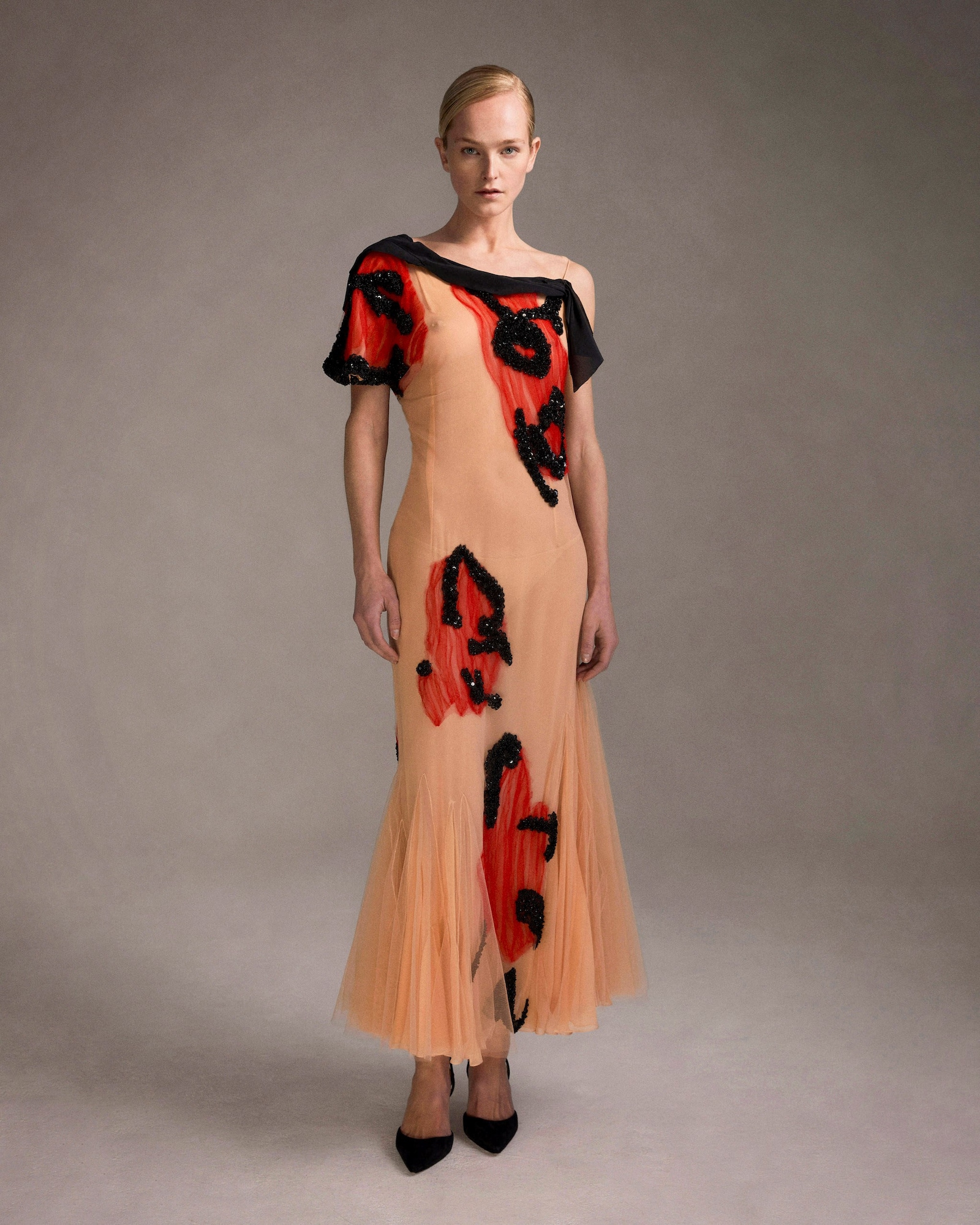
Lead ImageDress in silk crepe, silk georgette, silk organza and tulle with glass bugle beads by STEVE O SMITHPhotography by Camille Vivier. Styling by Rebecca Perlmutar. Set design by Camarenesi Pompili
This story is taken from the Spring/Summer 2026 issue of AnOther Magazine:
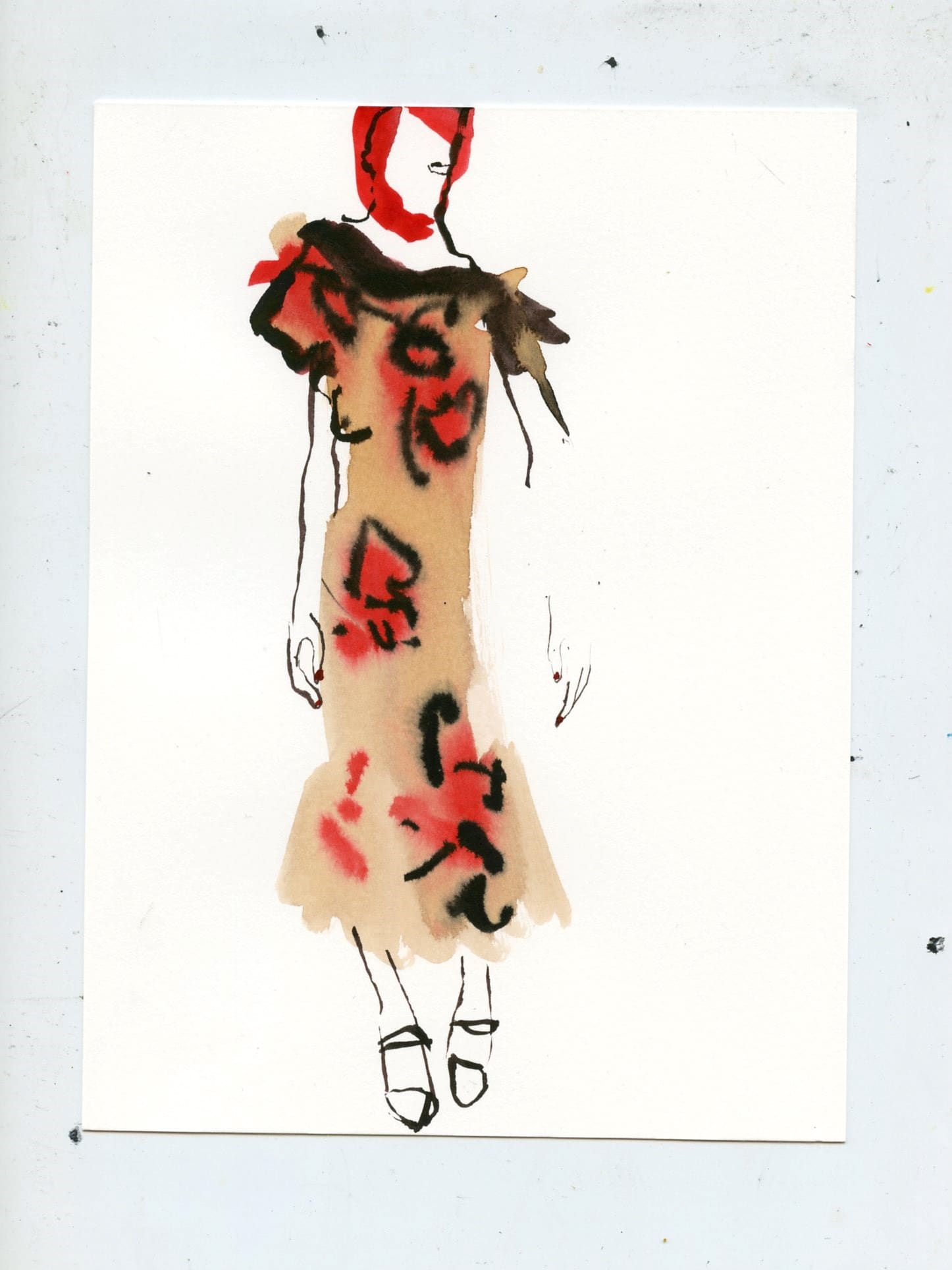
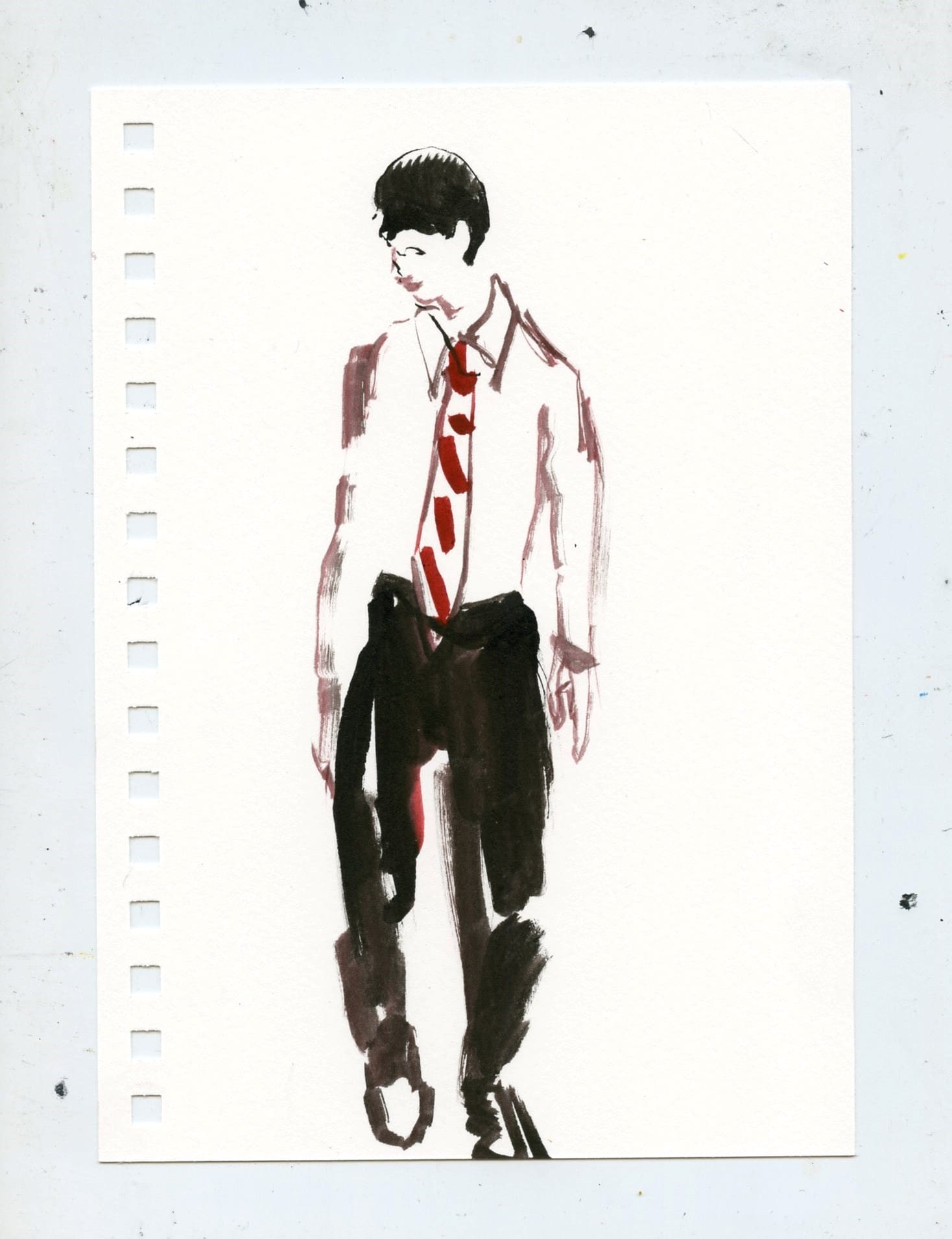
Pristine white from floor to ceiling, Steve O Smith’s east London studio is a blank canvas. Or, more fittingly, an empty page. Because, since his graduation from Central Saint Martins’ MA course almost four years ago, the young British designer has made a name for himself primarily by making drawings, in both a conventional and highly unconventional sense. Based on original sketches – thousands – by Smith himself, his clothes are startling for their illustrative lines, like pencil strokes brought incongruously yet literally into three dimensions around the body. For Smith, there is no barrier between paper and person, though. “I’m not making something that resembles a drawing,” he says. “It is the drawing. It exists. Just because it’s in fabric doesn’t invalidate its origin or what it is.”
There’s nothing unique about wearing drawings, in theory at least. It’s what fashion designers have always done, especially in the golden age of haute couture, when clients would often order clothes from the expressive sketches known in French as croquis. At least, that was the case until the 21st century, when the advent of digital imaging, mood boards and, latterly, AI generation tools has meant those methods have often superseded the humble hand-drawn sketch as a point of origin for the clothes we wear.
Smith’s process, however, is different. Every aspect of fashion is, in his words, “mark-making”: he compares the taut fabric of an embroidery tambour to a stretched canvas – “How’s that different from making a painting, really?” – and he uses fabric like charcoal or chalk, layering strokes of material to achieve visual effects. The clothes have a rich textural quality, but as with an illustration it’s primarily about the overall effect – and each one is born, literally, from a sketch on paper. Ironically, they often wind up looking like AI, the striking results sometimes appearing in photographs as if the drawings have been penned over the figure, rather than a physical garment in its own right.
“I’m not making something that resembles a drawing. It is the drawing” – Steve O Smith
Drawing, for Smith, was always his primary creative outlet. “I drew all the time,” he says of his childhood. In his own words he is “very dyslexic” – with bookish siblings, he was given crayons by his parents to express himself. Fashion was also, obliquely, present. “My grandmother was a dressmaker from Liverpool and she says she used to make dresses for the queen’s ladies-in-waiting.” He pauses, smiles. “But I think she lied. I used to watch her – talk to her and sit with her while she sewed. She had some very interesting ideas about construction. She made my mum’s wedding dress. So there was that.”

Born in Amsterdam but raised in the UK by a Canadian mother born in New York, Smith had the advantage, he says, of a US passport. That allowed him to enrol at the Rhode Island School of Design (RISD), where he spent four years studying for his BA. “Obama was in power,” Smith says now. “It was a different time. I remember buying Hillary Clinton’s book from the Brown bookstore and thinking she was going to be the president.” RISD was, Smith says, more like a contemporary art school than a fashion school – with rigour and discipline. “Our foundation year was very traditional – hours standing up and drawing every day,” he says. “I remember once the Masonite board slipped and fell on my foot and broke my toe, and they wouldn’t let me leave the class.”
Self-taught in many of the technical aspects of garment construction and pattern-cutting, Smith afterwards launched his own label in London in 2017 under the name SOS – a fitting moniker for a fledgling young-designer brand. He showed on-schedule and took wholesale orders from retailers, leading to a special window display for Opening Ceremony in New York in January 2020 – two months before the Covid-19 lockdowns began, but also seven days before that retailer announced it would close its doors.
At that point, Smith retrenched somewhat, shuttering his label and returning to study, this time at Central Saint Martins. “Because I’d already failed, really, I thought, I need to come out of this MA with a language and a signature and something that feels uniquely me,” he says. “I got fixated on my drawings during that time.” He came up with the idea of drawings not as part of a process, but as clothes themselves. “I was painting on clothes,” Smith says. “I would do these drawings and then I would sanitise them.”
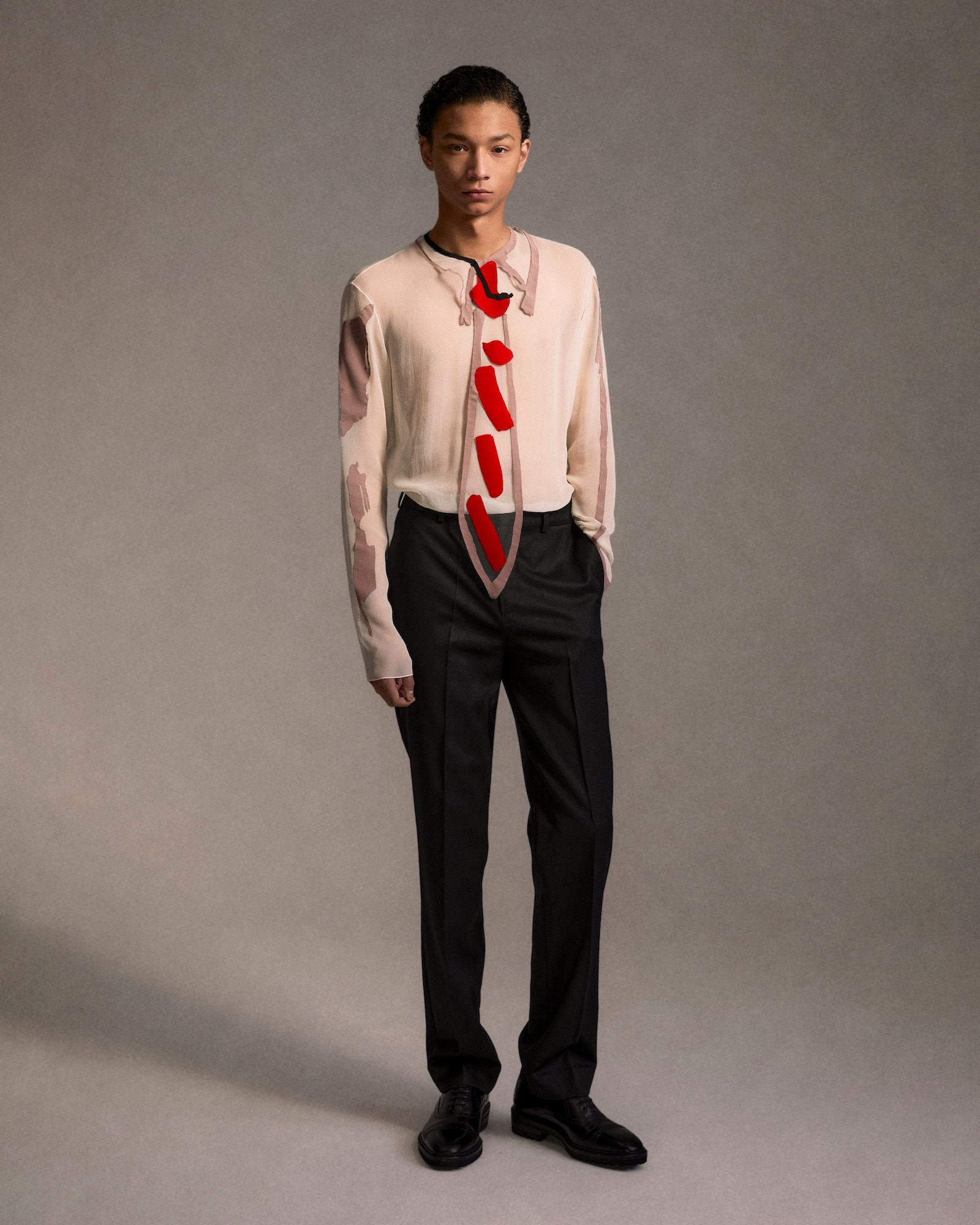
Like many designers pushed to invention through necessity, Smith devised his unique working method as a response to restriction. “I got Covid and was stuck in my flat on my own,” he remembers of his first year on the MA. “I couldn’t get fabric. There were just offcuts. That’s when I started … It was like drawing with the fabric, cutting the fabric into pieces that resemble the marks on paper and putting them down at the same speed.” He laughs. “The first ones were very feral. That’s when I was like, well, they are drawings.”
Smith has elaborated, expanded and pushed his techniques ever since, to acclaim. Eschewing wholesale, his work is entirely made to order, with well-heeled women (and some adventurous men) commissioning custom garments produced from his small studio. That space comes courtesy of recent success – in September 2025 he received the LVMH Karl Lagerfeld Prize of €200,000. It’s apt, given Lagerfeld’s own love of drawing, his appreciation of unexpected craftsmanship and constant search for newness. That’s how Smith’s clothes look: new. His work is created using “strokes” of tulle, painstakingly built up in layers. Tonally, he approaches it like an artist layering pigment, using fabric to achieve his effects, like mixing paints or pastels. He taps a sketch on the wall. “This whole one has to have a black underlying piece because I didn’t clean the brush.” He laughs again. “The mistakes are what make it human.”
“The mistakes are what make it human” – Steve O Smith
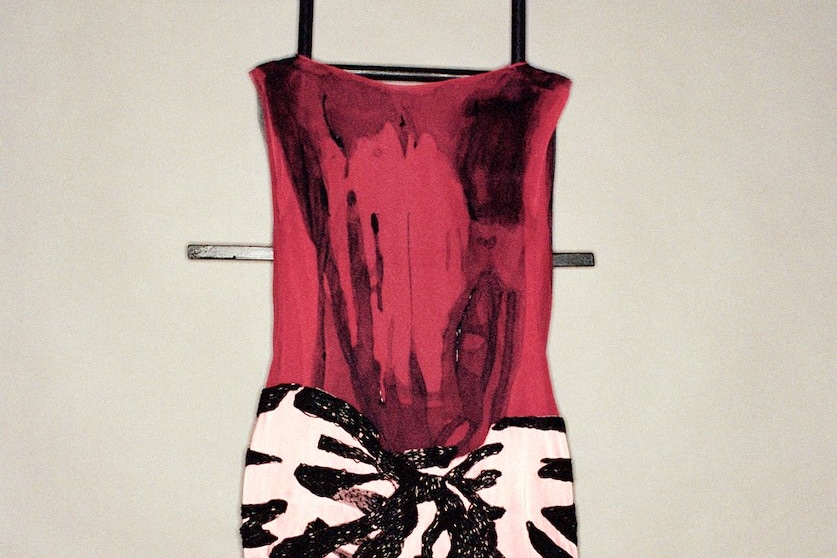
These clothes don’t seem accidental, though – although via the LVMH prize, Smith is now working with experienced embroidery technicians and a pattern cutter and tailor he found via TikTok – “He’s leaving me in the dust,” Smith says. His next collection, which was quietly shown in February, is a step on. “I’d only ever done black and white,” Smith says. “I wanted to show colour.” There’s vivid red, pink, some blue. He looked to Otto Dix and George Grosz of the German Neue Sachlichkeit movement of the 1920s, as well as one of their British counterparts, Edward Burra. “I’ve always been really obsessed with Grosz and Dix. I guess Burra was doing something similar, but what I love is that it’s got an English kind of … More of an empathy in itself.” There’s a softness to Smith’s interpretation, too, Dix’s stark red bleeding to a raspberry blush, with a knotted pink bow across the midriff of a gently drop-waisted cocktail dress. That is a preview of the looks to come – inasmuch as it’s the single piece finished when I visit in December. The ribbon seems a general motif for the forthcoming work, also embroidered across a long column gown, like a sharp stroke of ink. “Dix meets Vionnet” is a catchphrase, and the small, 15-or-so-piece collection has references to that interwar designer’s work, with knotted patterns delicately inlaid and embroidered with fragile, vintage glass bugle beads.
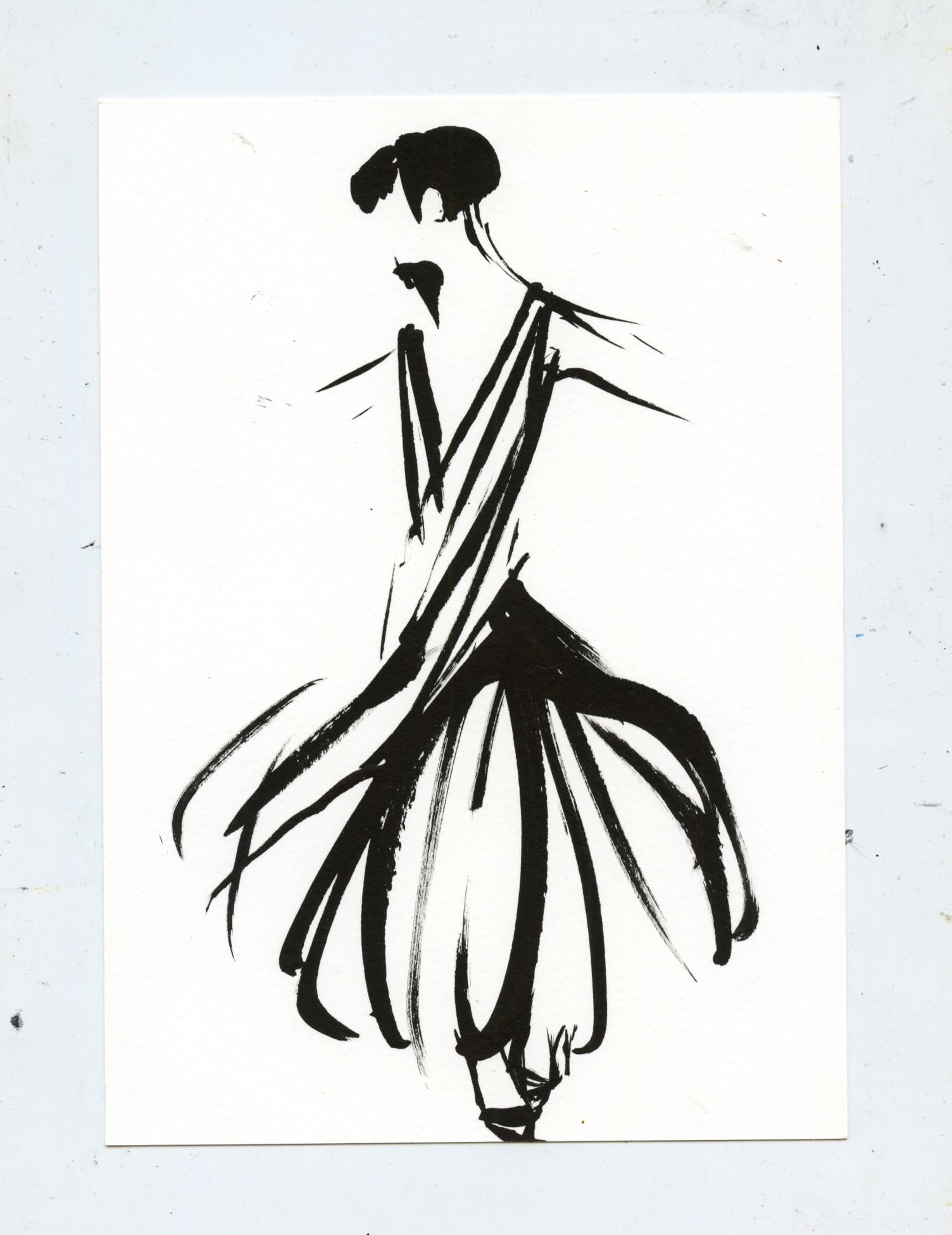
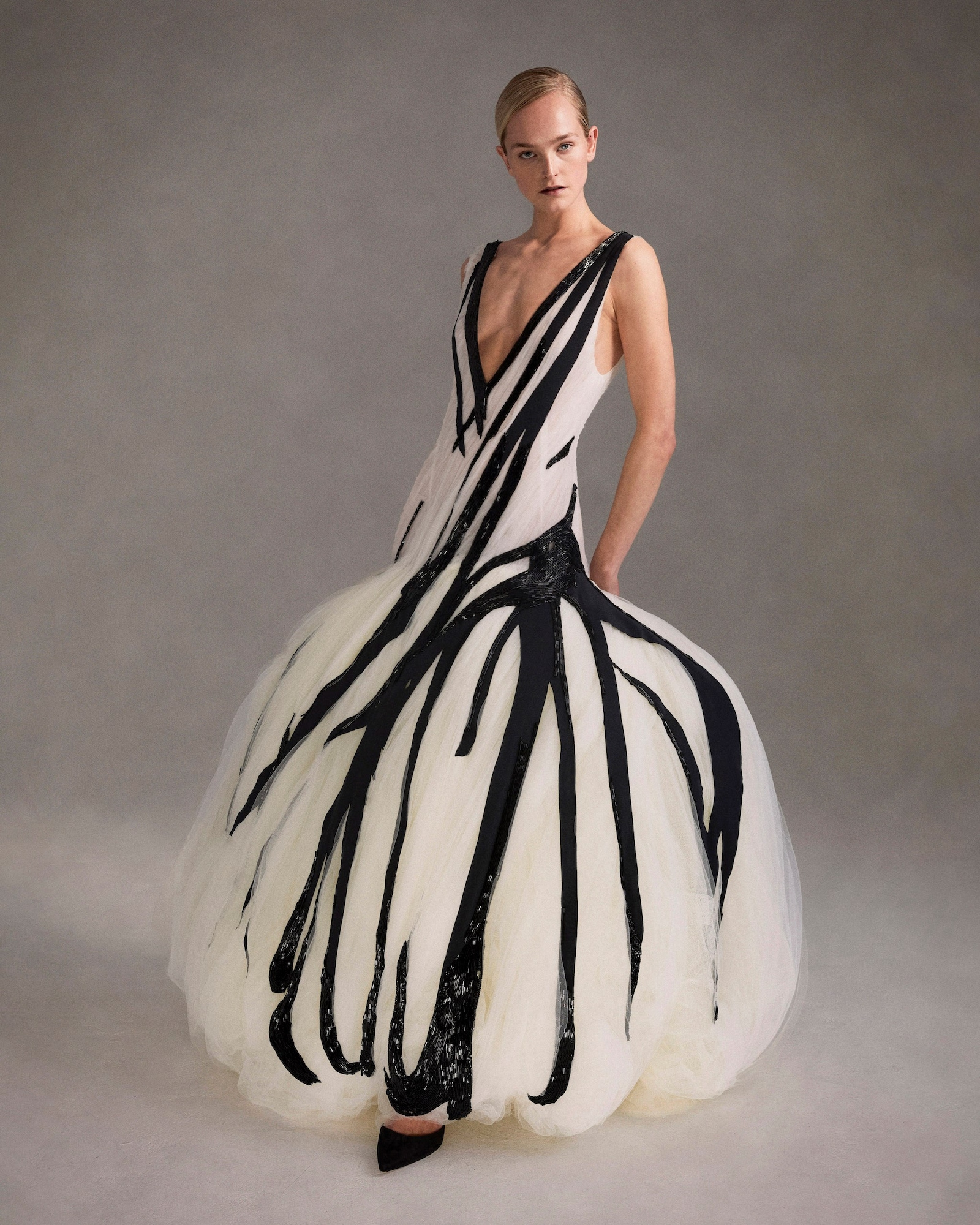
“I’m obsessed with the Weimar Republic era,” Smith says. Dix’s 1927–28 Metropolis triptych is unfolded in a book on one of his pattern-cutting tables, its central frame of decadent dancing on the lip of the volcano framed by war-crippled soldiers and marauding sex workers on what turned out to be the eve of financial and political ruin. “I think there are a lot of parallels, unfortunately, with what’s going on right now,” Smith says. “It feels very relevant.” That said, there’s no heavy sociopolitical cant to Smith’s clothes. If anything, they’re an antidote to the grim realities of now, something beautiful and even a touch otherworldly.
This story features in the Spring/Summer 2026 issue, marking 25 years of AnOther Magazine, on sale now.
in HTML format, including tags, to make it appealing and easy to read for Japanese-speaking readers aged 20 to 40 interested in fashion. Organize the content with appropriate headings and subheadings (h1, h2, h3, h4, h5, h6), translating all text, including headings, into Japanese. Retain any existing
tags from
Lead ImageDress in silk crepe, silk georgette, silk organza and tulle with glass bugle beads by STEVE O SMITHPhotography by Camille Vivier. Styling by Rebecca Perlmutar. Set design by Camarenesi Pompili
This story is taken from the Spring/Summer 2026 issue of AnOther Magazine:
Pristine white from floor to ceiling, Steve O Smith’s east London studio is a blank canvas. Or, more fittingly, an empty page. Because, since his graduation from Central Saint Martins’ MA course almost four years ago, the young British designer has made a name for himself primarily by making drawings, in both a conventional and highly unconventional sense. Based on original sketches – thousands – by Smith himself, his clothes are startling for their illustrative lines, like pencil strokes brought incongruously yet literally into three dimensions around the body. For Smith, there is no barrier between paper and person, though. “I’m not making something that resembles a drawing,” he says. “It is the drawing. It exists. Just because it’s in fabric doesn’t invalidate its origin or what it is.”
There’s nothing unique about wearing drawings, in theory at least. It’s what fashion designers have always done, especially in the golden age of haute couture, when clients would often order clothes from the expressive sketches known in French as croquis. At least, that was the case until the 21st century, when the advent of digital imaging, mood boards and, latterly, AI generation tools has meant those methods have often superseded the humble hand-drawn sketch as a point of origin for the clothes we wear.
Smith’s process, however, is different. Every aspect of fashion is, in his words, “mark-making”: he compares the taut fabric of an embroidery tambour to a stretched canvas – “How’s that different from making a painting, really?” – and he uses fabric like charcoal or chalk, layering strokes of material to achieve visual effects. The clothes have a rich textural quality, but as with an illustration it’s primarily about the overall effect – and each one is born, literally, from a sketch on paper. Ironically, they often wind up looking like AI, the striking results sometimes appearing in photographs as if the drawings have been penned over the figure, rather than a physical garment in its own right.
“I’m not making something that resembles a drawing. It is the drawing” – Steve O Smith
Drawing, for Smith, was always his primary creative outlet. “I drew all the time,” he says of his childhood. In his own words he is “very dyslexic” – with bookish siblings, he was given crayons by his parents to express himself. Fashion was also, obliquely, present. “My grandmother was a dressmaker from Liverpool and she says she used to make dresses for the queen’s ladies-in-waiting.” He pauses, smiles. “But I think she lied. I used to watch her – talk to her and sit with her while she sewed. She had some very interesting ideas about construction. She made my mum’s wedding dress. So there was that.”
Born in Amsterdam but raised in the UK by a Canadian mother born in New York, Smith had the advantage, he says, of a US passport. That allowed him to enrol at the Rhode Island School of Design (RISD), where he spent four years studying for his BA. “Obama was in power,” Smith says now. “It was a different time. I remember buying Hillary Clinton’s book from the Brown bookstore and thinking she was going to be the president.” RISD was, Smith says, more like a contemporary art school than a fashion school – with rigour and discipline. “Our foundation year was very traditional – hours standing up and drawing every day,” he says. “I remember once the Masonite board slipped and fell on my foot and broke my toe, and they wouldn’t let me leave the class.”
Self-taught in many of the technical aspects of garment construction and pattern-cutting, Smith afterwards launched his own label in London in 2017 under the name SOS – a fitting moniker for a fledgling young-designer brand. He showed on-schedule and took wholesale orders from retailers, leading to a special window display for Opening Ceremony in New York in January 2020 – two months before the Covid-19 lockdowns began, but also seven days before that retailer announced it would close its doors.
At that point, Smith retrenched somewhat, shuttering his label and returning to study, this time at Central Saint Martins. “Because I’d already failed, really, I thought, I need to come out of this MA with a language and a signature and something that feels uniquely me,” he says. “I got fixated on my drawings during that time.” He came up with the idea of drawings not as part of a process, but as clothes themselves. “I was painting on clothes,” Smith says. “I would do these drawings and then I would sanitise them.”
Like many designers pushed to invention through necessity, Smith devised his unique working method as a response to restriction. “I got Covid and was stuck in my flat on my own,” he remembers of his first year on the MA. “I couldn’t get fabric. There were just offcuts. That’s when I started … It was like drawing with the fabric, cutting the fabric into pieces that resemble the marks on paper and putting them down at the same speed.” He laughs. “The first ones were very feral. That’s when I was like, well, they are drawings.”
Smith has elaborated, expanded and pushed his techniques ever since, to acclaim. Eschewing wholesale, his work is entirely made to order, with well-heeled women (and some adventurous men) commissioning custom garments produced from his small studio. That space comes courtesy of recent success – in September 2025 he received the LVMH Karl Lagerfeld Prize of €200,000. It’s apt, given Lagerfeld’s own love of drawing, his appreciation of unexpected craftsmanship and constant search for newness. That’s how Smith’s clothes look: new. His work is created using “strokes” of tulle, painstakingly built up in layers. Tonally, he approaches it like an artist layering pigment, using fabric to achieve his effects, like mixing paints or pastels. He taps a sketch on the wall. “This whole one has to have a black underlying piece because I didn’t clean the brush.” He laughs again. “The mistakes are what make it human.”
“The mistakes are what make it human” – Steve O Smith
These clothes don’t seem accidental, though – although via the LVMH prize, Smith is now working with experienced embroidery technicians and a pattern cutter and tailor he found via TikTok – “He’s leaving me in the dust,” Smith says. His next collection, which was quietly shown in February, is a step on. “I’d only ever done black and white,” Smith says. “I wanted to show colour.” There’s vivid red, pink, some blue. He looked to Otto Dix and George Grosz of the German Neue Sachlichkeit movement of the 1920s, as well as one of their British counterparts, Edward Burra. “I’ve always been really obsessed with Grosz and Dix. I guess Burra was doing something similar, but what I love is that it’s got an English kind of … More of an empathy in itself.” There’s a softness to Smith’s interpretation, too, Dix’s stark red bleeding to a raspberry blush, with a knotted pink bow across the midriff of a gently drop-waisted cocktail dress. That is a preview of the looks to come – inasmuch as it’s the single piece finished when I visit in December. The ribbon seems a general motif for the forthcoming work, also embroidered across a long column gown, like a sharp stroke of ink. “Dix meets Vionnet” is a catchphrase, and the small, 15-or-so-piece collection has references to that interwar designer’s work, with knotted patterns delicately inlaid and embroidered with fragile, vintage glass bugle beads.
“I’m obsessed with the Weimar Republic era,” Smith says. Dix’s 1927–28 Metropolis triptych is unfolded in a book on one of his pattern-cutting tables, its central frame of decadent dancing on the lip of the volcano framed by war-crippled soldiers and marauding sex workers on what turned out to be the eve of financial and political ruin. “I think there are a lot of parallels, unfortunately, with what’s going on right now,” Smith says. “It feels very relevant.” That said, there’s no heavy sociopolitical cant to Smith’s clothes. If anything, they’re an antidote to the grim realities of now, something beautiful and even a touch otherworldly.
This story features in the Spring/Summer 2026 issue, marking 25 years of AnOther Magazine, on sale now.
and integrate them seamlessly into the new content without adding new tags. Ensure the new content is fashion-related, written entirely in Japanese, and approximately 1500 words. Conclude with a “結論” section and a well-formatted “よくある質問” section. Avoid including an introduction or a note explaining the process.