Rewrite
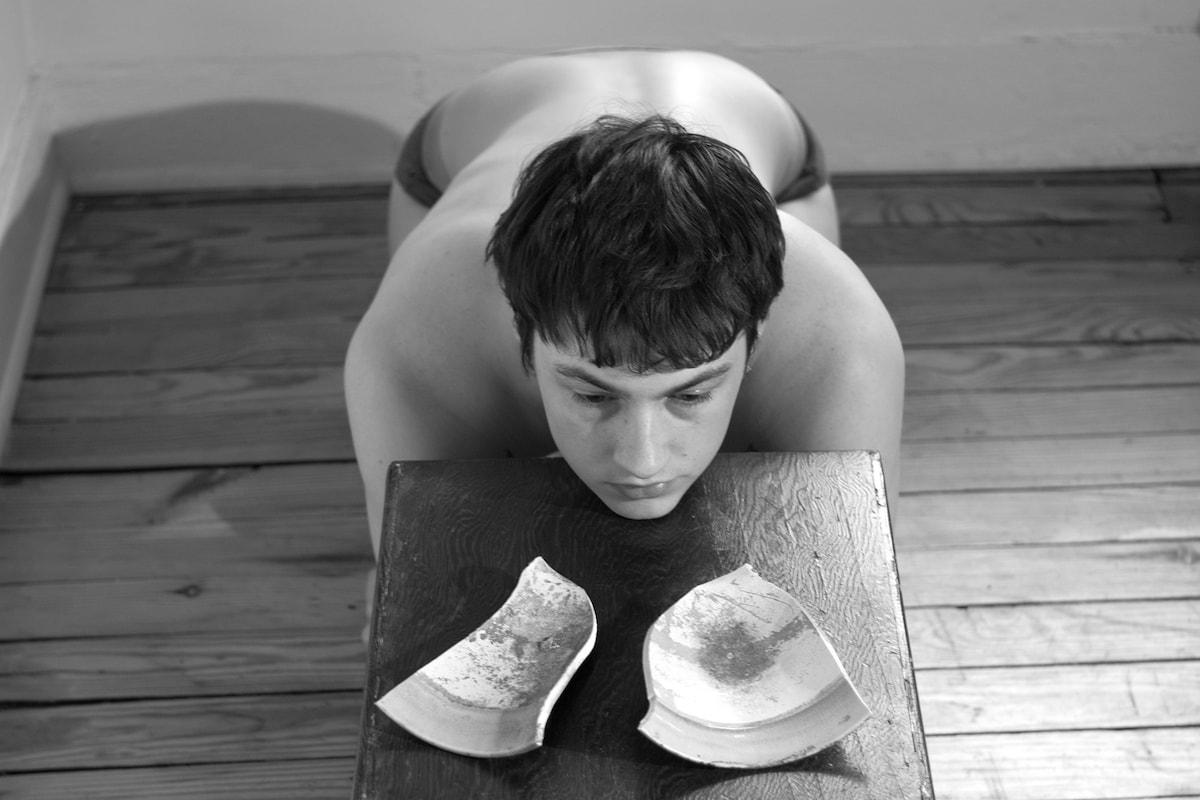
Lead ImageCollier Schorr, Vase and Visage, 2025Courtesy the artist, Modern Art & 303 Gallery, New York
Through drawings, films, and photographs in Problems and other stories at Modern Art in Paris, Collier Schorr investigates the relationship between the self and the subject. Her own presence recurs throughout a suite of films shaped by the influence of Chantal Akerman and Schorr’s impulse to – in her own words – “get out of her own head”. The films and photographs appear alongside portrait drawings of queer artists, friends, and long-standing collaborators, including Nicole Eisenman, Constance Debré and Tosh Basco.
In the conversation that follows, Schorr considers the notion of problems: who carries them, who makes them, and why they persist. We also discuss the porousness between Schorr’s commercial fashion photography and her artistic practice, the visual grammars of gender and sexuality, and the forms of kinship to which her work continually returns.
Sofia Hallstrom: There are many different subjects in both your work as a commercial fashion photographer and as an artist. I was wondering what that relationship is like behind the camera with people in front of the lens.
Collier Schorr: I was photographing Pamela Anderson for AnOther Magazine and was shipping out my show at Modern Art in the same week. I was going to include a picture of Pam — one large photo of her jumping in the air, with my drawings behind her. In the end I didn’t, but in the formation of the show, what was exciting was focusing on both performance and echoing. She was performing in a room with my drawings arranged in the show. It was a small but important path outside something curated entirely by me.
With editorial, you’re in proximity with a subject. They become part of your world, but it’s curated by somebody else. The works in the show span eight years documenting different relationships, often people I’ve known a long time. When you curate your work, and organise your work, you realise how much you’ve constructed a world.
SH: Drawing is an entirely different approach to photography …
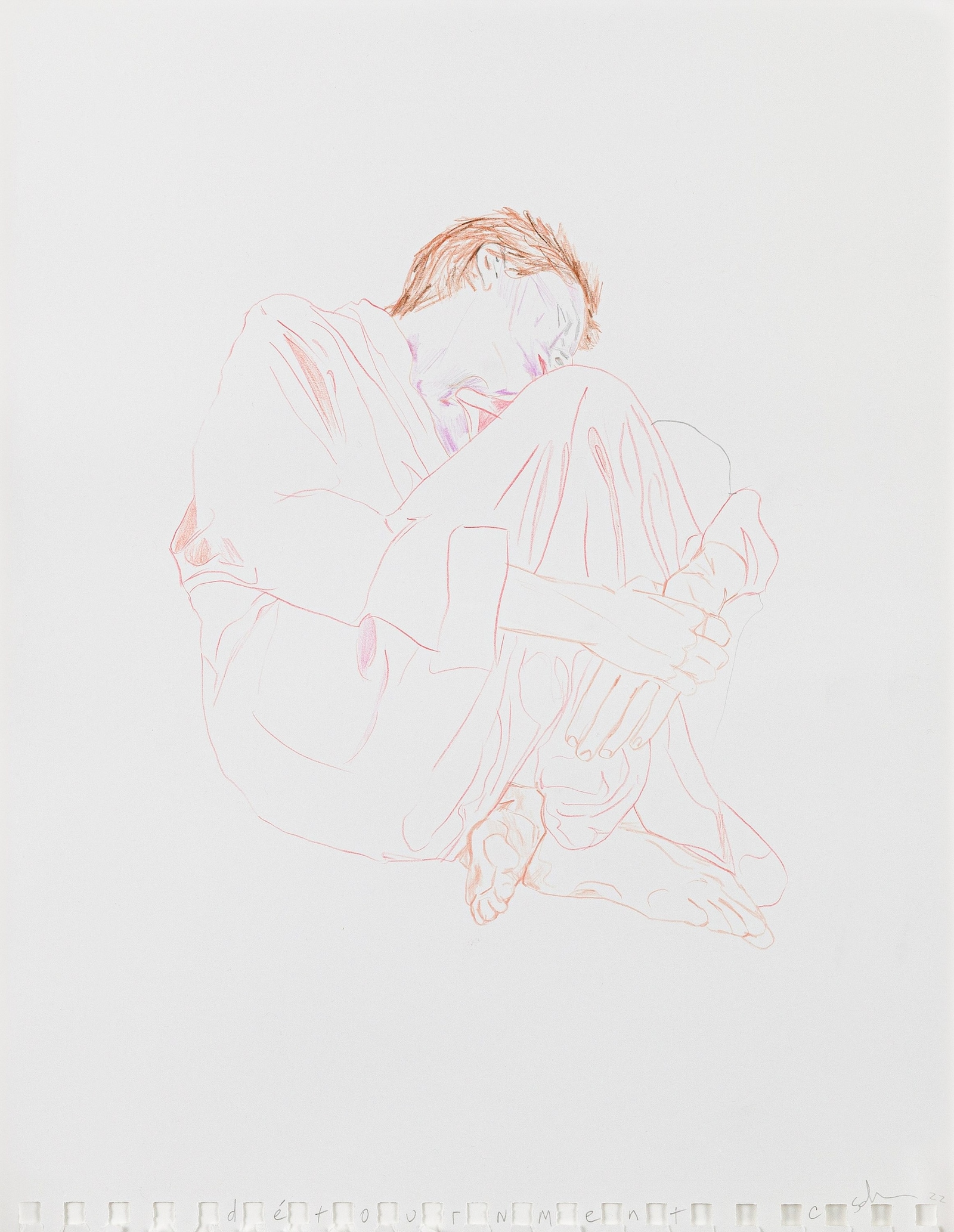
CS: I think of drawing as if there is nobody else in the room. The photographer’s mind is crowded with other people; drawing filters out that noise. With photography, it’s a social contract – a real engagement – and that’s its strength.

SH: I’m curious as to what drew you to photography in the first place? When did you start drawing and making films?
CS: I was drawn to photography because I was drawn to the fantasy of fashion magazines as a kid. I was obsessed with it, aware of its artificiality, but I didn’t care. It was better than high school. When I started taking pictures, there’s a thing that happens between the camera and the subject. It became a companionship.
Drawing started when I wanted to make a project about someone my father photographed in the 1960s, a drag-car racer killed in Vietnam. My father had looked at my pictures of teenage boys for years and he knew I was interested in military uniforms. Suddenly he pulled out of his drawers these pictures of this racer. I became obsessed with how my family history intersected with this character, and how much that character could be in my work. But he was dead, so I drew from my father’s pictures. That was the one time I drew from pictures I didn’t take, because I had to tell this story. During Covid, I started drawing again because isolation became a part of our lives, and it made sense to sit in the safety of the studio and engage with pictures in a new way.
“What do you do if you are a problem but entirely happy with yourself?” – Collier Schorr
SH: In a way, filmmaking holds all other mediums within it. Why are you drawn to Chantal Akerman’s films?
CS: Chantal wrote, directed, acted, and was such a comfortable public speaker. I related to the idea of having multiple arms. She influenced me as a Jewish lesbian with short hair who was an artist, and ten years older than me, making intentional, confident, well-received work at a young age. She did exactly what she wanted, so well.
I saw Je Tu Il Elle when it came out. I’d been thinking about performing in my own work but didn’t understand how to. Initially I thought about switching places with the subject, collaborating, walking into frame with someone. I was rewatching Chantal – someone who is in their own work – and realised the entire film is informed by dance, movement, art performance, theatre. I thought, maybe I can just dance the whole film. And I did, over several years, questioning: how do I get out of my head? How do I get the camera off my face? How do I direct physically rather than with voice? It didn’t feel like appropriation, it felt like adaptation. I danced as Chantal because I loved how she allowed herself to be seen, and she looked enough like me that it felt like an invitation.
SH: Her visual language as a filmmaker is so distinct.
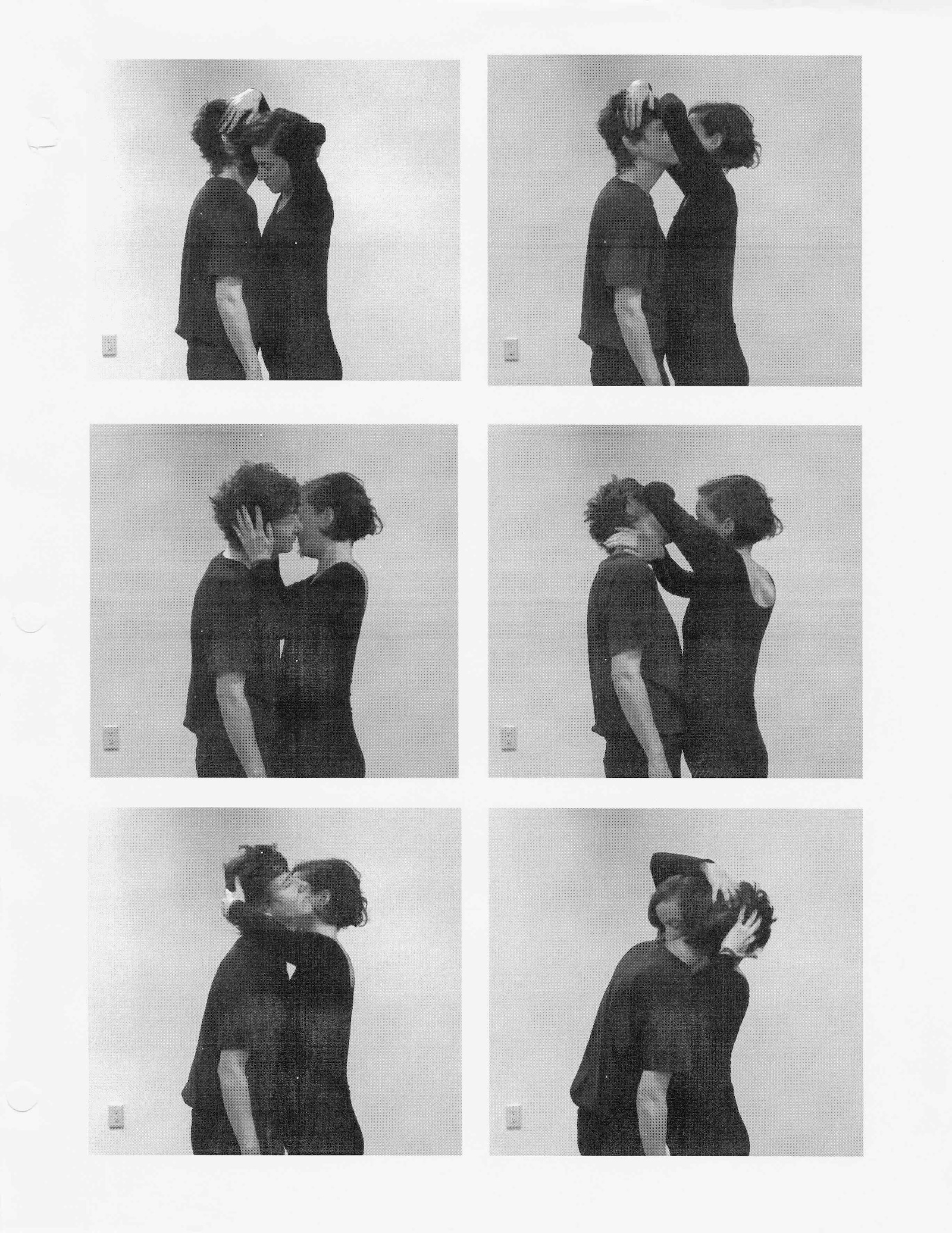
CS: My film is really three acts, and the last is a sex scene. Two bodies doing things bodies do in sex, whether or not you call it sex or acting sex. Some people think it’s the hottest scene, others think it’s clinical. It’s not filmed to turn you on, but everyone’s turned on by something different. When I danced it, I danced with five different dancers and the chemistry changed everything. Two bodies together, different body types, encompassed love, desire, grief, intimacy. It was always different depending on who I was that month.
SH: Can you speak about the title of the exhibition, Problems and other stories?
CS: When I look at the show, so much circles around that word. The problem with representation; the problem with desire; how I might exist as a problem for someone in society. I think about the Kristen Stewart pictures for Rolling Stone and what a problem those pictures were for some people, and how important that was.
I had the book Problems [from John Updike’s collection of short stories written over the 1970s] in my studio for years. I was obsessed with the title. At some point I clipped the cover onto a drawing of Maddie Boyd, the drummer for Kim Gordon. Then I put the scene I did with Kristen on top of the book. It was a clusterfuck. Kristen in a Beastie Boys ‘suck my dick’ T-shirt, and this Problems title, with a straight old white guy sandwiched between two lesbians.
SH: People always find problems!
CS: Right. What do you do if you are a problem but entirely happy with yourself? I wanted to translate the exuberance I feel around the people I’m engaged with. Almost everyone in the show is an artist, performer or writer. You could say it’s a show of queer people, or a show of artists.
SH: I wanted to ask about dancing. You trained in ballet and modern dance for your films.
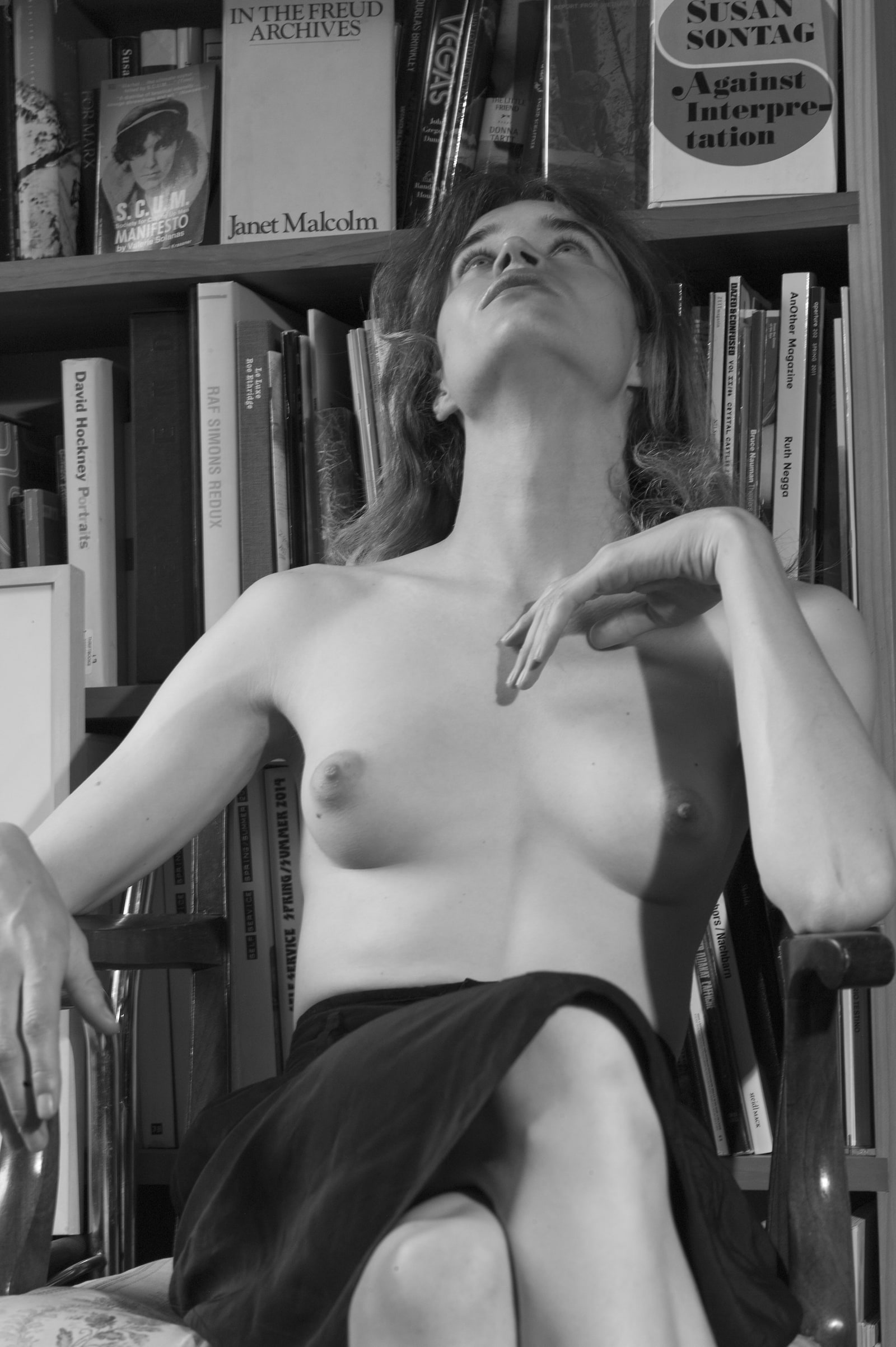
CS: I hired a choreographer friend, Cade Pyle, to work with me. The dance I do is probably based on what I saw photographing wrestlers in the 90s: movements that mix embrace and violence. It’s a relatively violent project, with a lot of longing and frustration. It’s called a ballet partly because it’s narrative and in acts. I wanted to grab the patriarchy of ballet.
SH: Did being in front of the camera change your understanding of your approach to photography, or your understanding of embodiment?
CS: I was aware for years that the way I held the camera had an element of partnering, of mirroring the subject, wanting them to follow. I try to get inside them mentally. What surprised me was being able to tolerate how I looked, not in a virtuosic way, but real. The sex scene in the film is a collision: a camera-ready body with a clumsier, heavier, realer one. That needs to be present. I never had a better time with myself.
Problems and other stories by Collier Schorr is on show at Modern Art in Paris until 4 April 2026.
in HTML format, including tags, to make it appealing and easy to read for Japanese-speaking readers aged 20 to 40 interested in fashion. Organize the content with appropriate headings and subheadings (h1, h2, h3, h4, h5, h6), translating all text, including headings, into Japanese. Retain any existing
tags from
Lead ImageCollier Schorr, Vase and Visage, 2025Courtesy the artist, Modern Art & 303 Gallery, New York
Through drawings, films, and photographs in Problems and other stories at Modern Art in Paris, Collier Schorr investigates the relationship between the self and the subject. Her own presence recurs throughout a suite of films shaped by the influence of Chantal Akerman and Schorr’s impulse to – in her own words – “get out of her own head”. The films and photographs appear alongside portrait drawings of queer artists, friends, and long-standing collaborators, including Nicole Eisenman, Constance Debré and Tosh Basco.
In the conversation that follows, Schorr considers the notion of problems: who carries them, who makes them, and why they persist. We also discuss the porousness between Schorr’s commercial fashion photography and her artistic practice, the visual grammars of gender and sexuality, and the forms of kinship to which her work continually returns.
Sofia Hallstrom: There are many different subjects in both your work as a commercial fashion photographer and as an artist. I was wondering what that relationship is like behind the camera with people in front of the lens.
Collier Schorr: I was photographing Pamela Anderson for AnOther Magazine and was shipping out my show at Modern Art in the same week. I was going to include a picture of Pam — one large photo of her jumping in the air, with my drawings behind her. In the end I didn’t, but in the formation of the show, what was exciting was focusing on both performance and echoing. She was performing in a room with my drawings arranged in the show. It was a small but important path outside something curated entirely by me.
With editorial, you’re in proximity with a subject. They become part of your world, but it’s curated by somebody else. The works in the show span eight years documenting different relationships, often people I’ve known a long time. When you curate your work, and organise your work, you realise how much you’ve constructed a world.
SH: Drawing is an entirely different approach to photography …
CS: I think of drawing as if there is nobody else in the room. The photographer’s mind is crowded with other people; drawing filters out that noise. With photography, it’s a social contract – a real engagement – and that’s its strength.
SH: I’m curious as to what drew you to photography in the first place? When did you start drawing and making films?
CS: I was drawn to photography because I was drawn to the fantasy of fashion magazines as a kid. I was obsessed with it, aware of its artificiality, but I didn’t care. It was better than high school. When I started taking pictures, there’s a thing that happens between the camera and the subject. It became a companionship.
Drawing started when I wanted to make a project about someone my father photographed in the 1960s, a drag-car racer killed in Vietnam. My father had looked at my pictures of teenage boys for years and he knew I was interested in military uniforms. Suddenly he pulled out of his drawers these pictures of this racer. I became obsessed with how my family history intersected with this character, and how much that character could be in my work. But he was dead, so I drew from my father’s pictures. That was the one time I drew from pictures I didn’t take, because I had to tell this story. During Covid, I started drawing again because isolation became a part of our lives, and it made sense to sit in the safety of the studio and engage with pictures in a new way.
“What do you do if you are a problem but entirely happy with yourself?” – Collier Schorr
SH: In a way, filmmaking holds all other mediums within it. Why are you drawn to Chantal Akerman’s films?
CS: Chantal wrote, directed, acted, and was such a comfortable public speaker. I related to the idea of having multiple arms. She influenced me as a Jewish lesbian with short hair who was an artist, and ten years older than me, making intentional, confident, well-received work at a young age. She did exactly what she wanted, so well.
I saw Je Tu Il Elle when it came out. I’d been thinking about performing in my own work but didn’t understand how to. Initially I thought about switching places with the subject, collaborating, walking into frame with someone. I was rewatching Chantal – someone who is in their own work – and realised the entire film is informed by dance, movement, art performance, theatre. I thought, maybe I can just dance the whole film. And I did, over several years, questioning: how do I get out of my head? How do I get the camera off my face? How do I direct physically rather than with voice? It didn’t feel like appropriation, it felt like adaptation. I danced as Chantal because I loved how she allowed herself to be seen, and she looked enough like me that it felt like an invitation.
SH: Her visual language as a filmmaker is so distinct.
CS: My film is really three acts, and the last is a sex scene. Two bodies doing things bodies do in sex, whether or not you call it sex or acting sex. Some people think it’s the hottest scene, others think it’s clinical. It’s not filmed to turn you on, but everyone’s turned on by something different. When I danced it, I danced with five different dancers and the chemistry changed everything. Two bodies together, different body types, encompassed love, desire, grief, intimacy. It was always different depending on who I was that month.
SH: Can you speak about the title of the exhibition, Problems and other stories?
CS: When I look at the show, so much circles around that word. The problem with representation; the problem with desire; how I might exist as a problem for someone in society. I think about the Kristen Stewart pictures for Rolling Stone and what a problem those pictures were for some people, and how important that was.
I had the book Problems [from John Updike’s collection of short stories written over the 1970s] in my studio for years. I was obsessed with the title. At some point I clipped the cover onto a drawing of Maddie Boyd, the drummer for Kim Gordon. Then I put the scene I did with Kristen on top of the book. It was a clusterfuck. Kristen in a Beastie Boys ‘suck my dick’ T-shirt, and this Problems title, with a straight old white guy sandwiched between two lesbians.
SH: People always find problems!
CS: Right. What do you do if you are a problem but entirely happy with yourself? I wanted to translate the exuberance I feel around the people I’m engaged with. Almost everyone in the show is an artist, performer or writer. You could say it’s a show of queer people, or a show of artists.
SH: I wanted to ask about dancing. You trained in ballet and modern dance for your films.
CS: I hired a choreographer friend, Cade Pyle, to work with me. The dance I do is probably based on what I saw photographing wrestlers in the 90s: movements that mix embrace and violence. It’s a relatively violent project, with a lot of longing and frustration. It’s called a ballet partly because it’s narrative and in acts. I wanted to grab the patriarchy of ballet.
SH: Did being in front of the camera change your understanding of your approach to photography, or your understanding of embodiment?
CS: I was aware for years that the way I held the camera had an element of partnering, of mirroring the subject, wanting them to follow. I try to get inside them mentally. What surprised me was being able to tolerate how I looked, not in a virtuosic way, but real. The sex scene in the film is a collision: a camera-ready body with a clumsier, heavier, realer one. That needs to be present. I never had a better time with myself.
Problems and other stories by Collier Schorr is on show at Modern Art in Paris until 4 April 2026.
and integrate them seamlessly into the new content without adding new tags. Ensure the new content is fashion-related, written entirely in Japanese, and approximately 1500 words. Conclude with a “結論” section and a well-formatted “よくある質問” section. Avoid including an introduction or a note explaining the process.