Rewrite
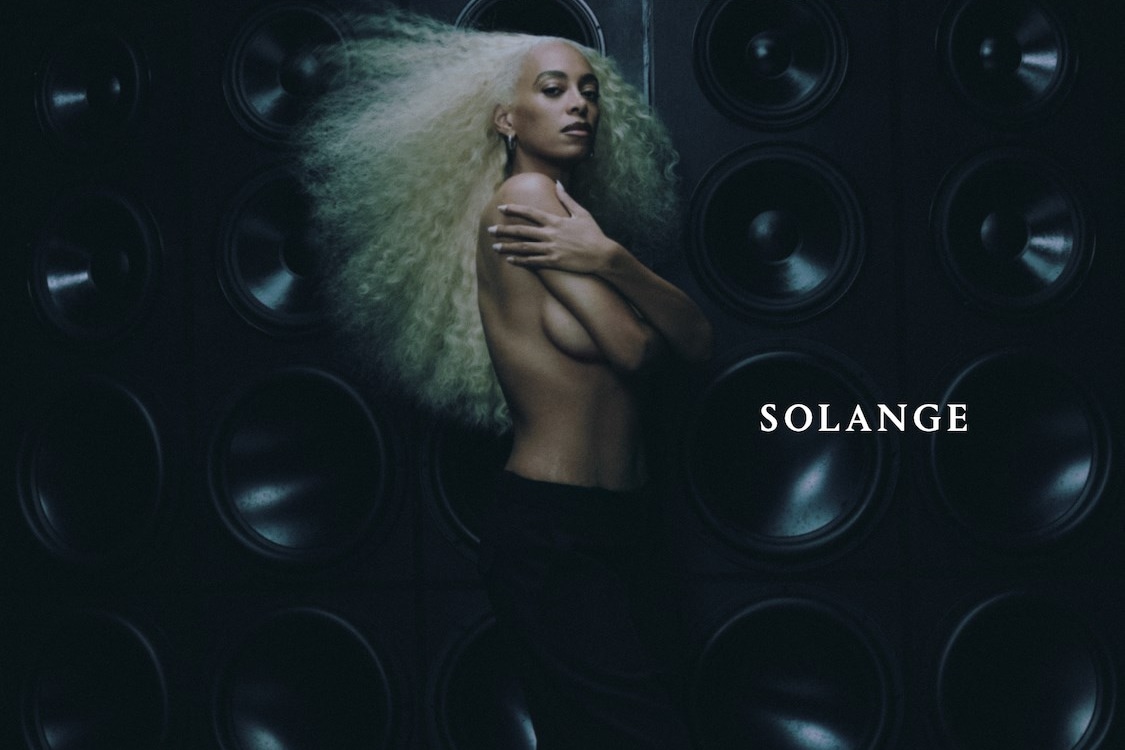
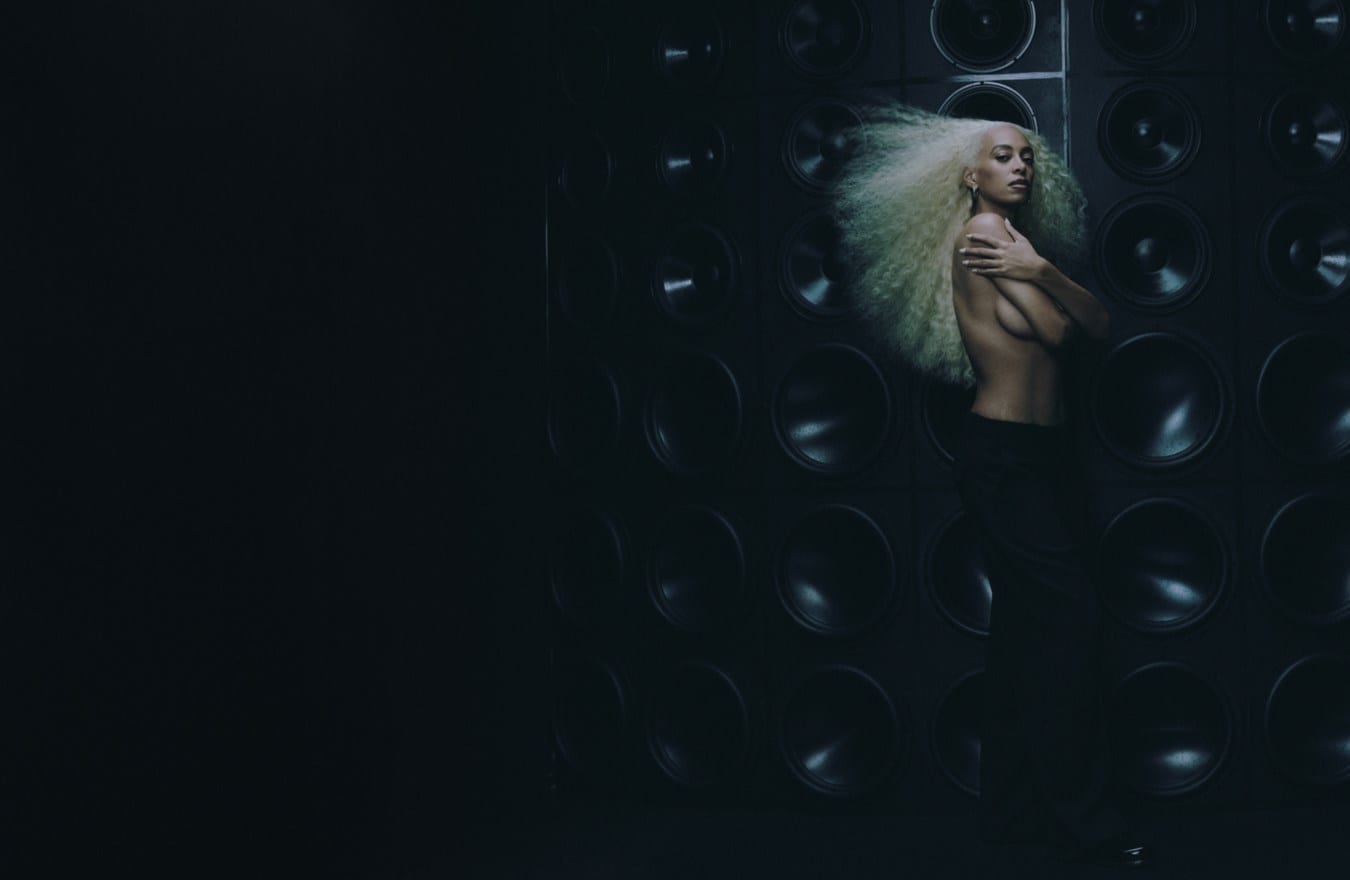
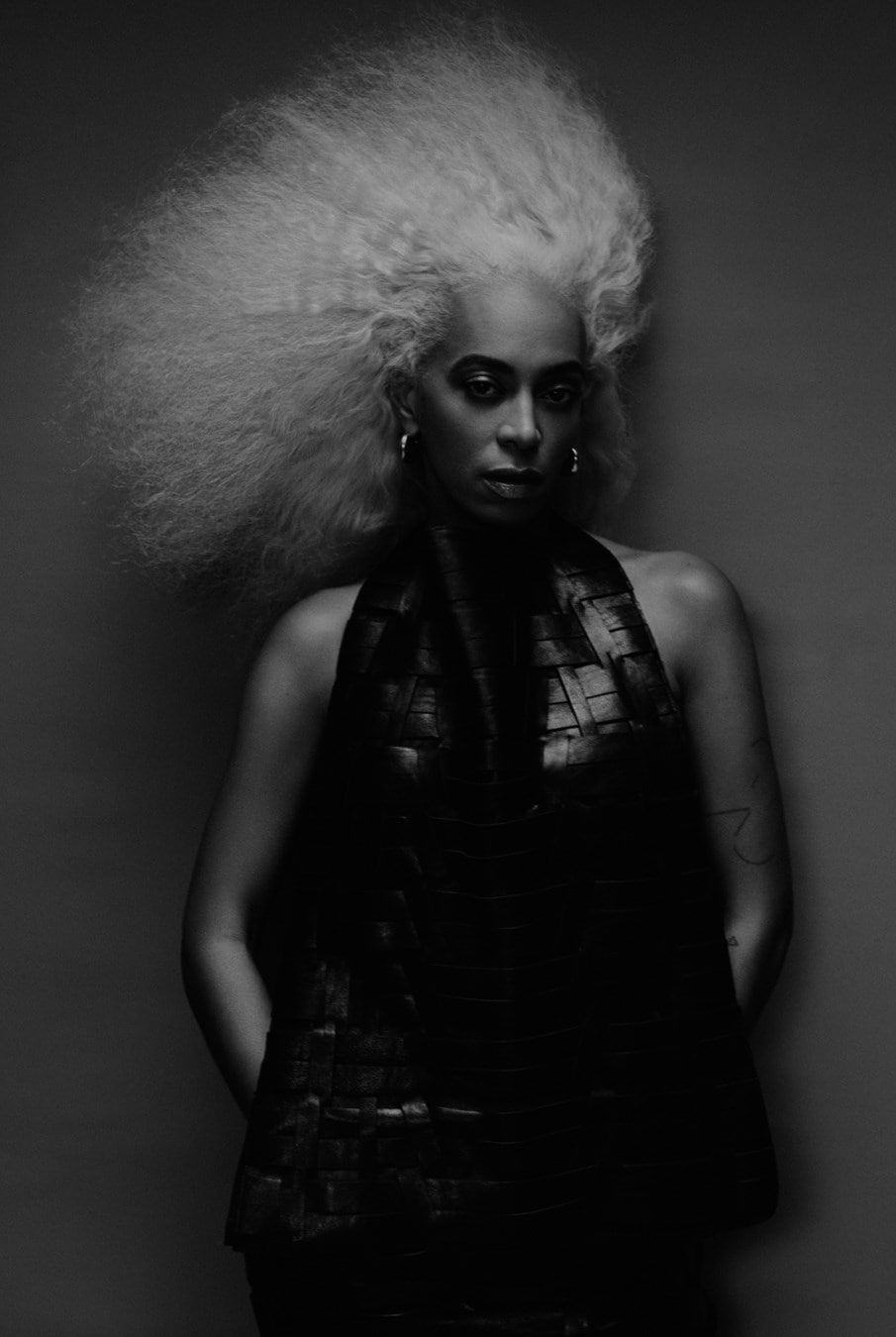
Lead ImageSolange is wearing trousers in viscose and loafers in patent leather by PHOEBE PHILO
This story is taken from the Spring/Summer 2026 issue of AnOther Magazine:
The artwork for 2016’s A Seat at the Table finds Solange paused mid-evolution. She’s not quite ready for her close-up, yet she has invited us here anyway.
Pastel duckbill clips are setting her hair in deep, chestnut waves. Her shoulders are bare. Her lips are gently parted, as though she might soon speak. (“Don’t test my mouth,” she’ll soon warn us in a song full of cautions, the sweetness of her register undermining its threat.) Our Black Mona Lisa, the artist as historical icon, has changed her hair to see if it might lift the metal clouds. It will not: neither will reading, or drinking, or dancing, or a new dress. Solange, who was raised in her mother’s salon, knows the ways her hair, her body, her being have indexed meanings she did not assign them. She knows these meanings will determine, to some incalculable degree, how the day will go, what ways her humanity will be denied, whether she’ll make it home in one piece. The mystery of her gaze meeting ours – is it curious? Suspicious? Proud? Wise? Certainly it’s a vulnerable way to see her, this private Black ritual of becoming made public, made regal. “I wanted to create an image that invited people to have an up-close and personal experience,” she once said in an interview with her older sister, Beyoncé. “Like, ‘Come and get close. It’s not going to be pretty. It’s not going to be perfect. It’s going to get a little gritty, and it might get a little intense, but it’s a conversation we need to have.’”
When she released A Seat at the Table, her gorgeous, masterful exploration of survival as a young Black woman in America, Solange had just turned 30. She had lived many lives already and was still living some of them. She had been a back-up dancer for Destiny’s Child; a teenager singing about big feelings over slick hip-hop production; a young wife; a young mother; a single mother; a DJ; a Motown classicist; a tabloid headline; an artist still finding her voice. The new album arrived in a season of riots and reckoning, following the fatal shooting by police of Alton Sterling in Louisiana and Philando Castile in Minnesota. Because of its breadth and subject matter, A Seat was comfortably positioned in a rarefied canon next to the music of Marvin Gaye, Sly & the Family Stone, Gil Scott-Heron, Lauryn Hill, D’Angelo, Kendrick Lamar – artists whose work aims to capture and perhaps change the spirit of the times. It skyrocketed Solange to that thorny post of lyrical cultural commentator, while also reintroducing her to the world as co-director, as costume designer, as fine artist. She said she wasn’t interested in entertainment and presented the album instead as performance art, descending on white-cube museums that launder great white myths and occupying them with her Black Gesamtkunstwerk. It was a signal that her self could not be contained by the reductive label of “pop star”, not because “pop” is a dirty word, but because it was simply one mode she could use to pose the questions that preoccupy her. This balletic, up-close and personal vantage whisked us not just into the diaristic fold of a Black artist’s intimate thoughts and feelings, but into an abbreviated history of Black sociopolitical struggle.
It seems fitting, then, to speak with Solange in another state of in-betweenness, at a moment between takes. This is not to say that she has been truant. In the years since When I Get Home (2019), her last formal studio album, the artist has composed for a ballet, established a community library, published books and research journals, archived relentlessly, made sculptures, curated a performance programme and joined the University of Southern California Thornton School of Music as scholar-in-residence. She has never, she assures me, stopped making music. But what pressures emerge from being elected the voice of a politicised, disaffected generation? How to resist constant punditry and continue to make your art slowly, at your own pace? How to continue your evolutions, to discover new selves and new mysteries, as the world waits for you to speak again?
This year, Solange will turn 40. She is wiser, perhaps, than she has ever been, but she’s still full of questions. Young motherhood made college studies inaccessible in her teenage years, but she now has the resources to study whatever she likes as a resident scholar and is revelling in the syllabus she’s putting together. She feels freer and more fluid, and perhaps more abstract. The commercial, gravitational pull of the album cycle has a negligible effect, and the desperation of her fans has a similarly diminished impact on her circadian rhythm. The time between A Seat at the Table and When I Get Home marked the shortest interval recorded in her discography; the seven-year period that has ensued constitutes the longest. What is sure is that Solange, ever on CP time, can never be rushed.

CONNOR GAREL: Where am I reaching you? What do you see?
SOLANGE: I’m in my living room and I am always very attracted to the wooden instruments that I have in the space.
CG: Has moving to a small town changed your relationship with making art?
S: I live so nomadically. And I feel very careful about what it means to take up space publicly in a place that I’m not sure I’ll stay in for long. But in my life now, I have a lot more fluidity to move around globally and to take the time to find wherever my new roots will be. There’s a level of impermanence I feel at this point in my life. It’s definitely inspiring me to create from a different vantage point.
Before, there was a level of permanence involved in how I positioned myself as an artist and in the things that I created – feeling like they live on for ever, which can bring a preciousness or weight that turns into anxiety, or fear, or resistance, or over-thinking, or interrogating. There’s a level of fluidity and freeness in the way I’ve been creating lately, and knowing that while things live on for ever, nothing truly does. And that’s been such a freeing place and vantage point to create from, because I’ve been able to explore and experiment from a purely selfish place of nowness and this exact moment in time. That’s been healthy for me.
CG: You seem to have this very natural way of integrating your art into your life. The result, at least for me, is that each album feels like this studious reflection of what you’ve learnt and felt in the intervals between releases. I guess I’m wondering what your life has been like since When I Get Home and what you’ve been seeing and feeling and learning since then.
“Surrendering was extremely hard for me as someone who, for most of my life, has been very in control of every step and stage” – Solange
S: One part of what really connects with how you ask that question is being a forever student. Someone asked me recently what my relationship with reading was, and I thought a lot about being a young person and my entry into reading not necessarily being this romanticised love affair where I was a child curled up in the corner getting lost in a book. I really studied as practice, with a yearning to understand the world better, to understand people’s minds better, to expand my vocabulary and vernacular. Even as a child I knew that my vantage point was made up of what was around me and that there was a world far beyond what I could see that existed. That has always been the spirit in which I’ve created.
When I Get Home was a powerful time in my life. I was exploring a lot of questions about mortality. And in my own thinking about that, because of my health at the time, because of my fear of the unknown, it really challenged and freed me. It felt so much like I was being led by a spirit through the making of that album. Typically, I take quite a bit of time between projects. That was the shortest turnaround in terms of a musical project while still being a significant amount of time. It was faster than I usually am. I think that was because I had so much idle time while resting my body and going through my own health journey. In that way, creating felt like a means of survival. It felt like I needed to occupy my spirit with something bigger than me, to help keep me pushing and to motivate and ground me in something that was larger than these questions I was asking. So it was a very powerful process – those questions were big.
CG: Yeah – to ask yourself, “What is home?”
S: It seems like such a simple, Wizard of Oz-ass question. But I think that when you actually start that journey to answer those questions for yourself, you are surprised by how much fear comes up and how much you’re confronted with. Because I wasn’t just asking myself about home as a physical space, but also as a spiritual one. And I think that God is such an omnipresent spirit and force that, to ask and be guided by Him, you have to surrender. And surrendering was extremely hard for me as someone who, for most of my life, has been very in control of every step and stage. That surrendering was probably the scariest thing. I can’t say that I mastered it through that record but I definitely came as close as I possibly could through making it.
Life became a lot simpler after that. A Seat at the Table and When I Get Home involved so much deep listening and research and lineage work. What’s interesting when I think about those records is that there’s only one song on each of them that’s dedicated to romantic relationships. Ninety-nine per cent of each was devoted to self, to mystery, to God, to history, to trauma. Those aren’t easy subjects. And it’s not to say that romantic life is not incredibly complex and doesn’t take up a lot of space in our lives, but you’re creating from an entirely different vantage point – one that’s all-consuming in a different way. Historically, growing up as an R&B enthusiast, there weren’t a lot of albums to reference where themes of romantic love didn’t show up.
CG: Right.
S: Creating from the space that I was in, it takes a lot out of you emotionally, mentally, spiritually. It’s a lot to perform it, relive it, to have to talk about and promote it, to make films and visual expansions of it. You’re kind of remaining in that space on a cellular level in your body, because you’re not detached from that work. A lot of the past year has been about a different type of creation that has allowed me some distance from those big questions and conversations. A lot of the work I’ve been doing with Saint Heron [the multidisciplinary platform and archive founded by Solange in 2013 to preserve and celebrate Black and brown creative voices] – archival work, tangible artefacts, scoring music – has been different interpretations of the same questions I was asking before, but it has allowed me more structure, distance and stability in how I go about answering them.
CG: We’re talking about the self and I’m thinking of this thing Amiri Baraka once wrote, in some liner notes [for the 1965 album The New Wave in Jazz]. He said, “New Black Music is this: find the self, then kill it.” It feels akin to this commitment you’re talking about, to evolution and covering a lot of artistic territory. What have you been asking yourself lately?
S: Thank you for sharing that quote with me, it really resonates. A lot of the questions I’ve been asking myself lately surround the urgency of Black women’s history. It almost feels like survival. I remember ten years ago coming across images of Senga Nengudi’s Ceremony for Freeway Fets performance. I remember looking tirelessly for other images, videos and interviews from that time, anything I could find. Now there are more documents that have been released and recovered, but there were so few at the time. Seeing that, I saw something I’d never found in performance before. It was by a woman who looked like me and who, when I heard her speak, shared a lot of the same ideas surrounding why she performed and created from the place that she did. As someone who was just starting their journey in translating ideas into performance art as a practice, I finally said, “OK, this existed, this is for me. This is something that I can confidently step into without feeling like I have to tiptoe.” It was important not to feel like I didn’t deserve to call myself a performance artist. It was really an awakening.
Since I was a child, since I started going to the Ensemble Theater in Houston and learnt about lighting and costume and monologue writing and the way all these things work together to create an expression, it always felt so limiting to me just to perform on stages. And so, when I had that moment, it was an epiphany and awakening to the fact that my understanding of performance had been so limiting. I remember being so frustrated that I could find an endless amount of resources, information, conversations, prints and videos of some of the other Black male artists who were part of the same Studio Z collective [as Nengudi]. I just remember saying, “This is really an issue,” and this is the evolution of a conversation that Saint Heron has to continue. It was a big moment for me. As I started to think about the next iteration and expression of Saint Heron, that was a north star in making sure that it became a space that was valuing these stories.
“It was important not to feel like I didn’t deserve to call myself a performance artist. It was really an awakening” – Solange
Another defining moment of that for me was when I went to Detroit and visited the techno museum. It’s a very small space – I think it’s called Exhibit 3000. These guys who preserved this story – they were all there at the birth of techno, which we know was Black people’s musical expression. They saved drum machines. They walked us through the conversation of how it was birthed. After the 70s and the death of disco, people sold off all their keyboards and drum machines. They weren’t of any value to them any more. All of these Black folks went and got them from the pawn shop and reinvented what that could be. It was such an empowering moment to see this space that’s maybe 700 square feet holding all this history that has permeated the globe. It empowered me to think that, no matter how micro or macro, these stories, these moments, these expressions that are happening around me and with people I’m lucky to hold space with are going to permeate the world in that same exact way, and I feel an urgency in ensuring there’s preservation of that. It has weighed on me in a productive way, but also as a bit of a state of emergency. I really fear that white institutions will, as history shows us they have, continue to be the access holders to all of these Black expression moments, be it the museums, or print materials … I’ve just been encouraging everyone around me to preserve their own things, because we’ve seen how this plays out.
CG: You’ve been in a real scholarly bag. There’s the community library through Saint Heron, the research journal you published on [the pioneering Black architect] Amaza Lee Meredith, your appointment as the scholar-in-residence at USC Thornton. I know that you often consult literature and have this research practice for your music. You’ve said that when you were working on A Seat at the Table, Claudia Rankine’s Citizen: An American Lyric was helpful for you in thinking about how to simplify language. What are you reading now?
S: I’m walking over to my little home library. I’ve been reading this book that Tina Turner wrote, Happiness Becomes You. What I love is that it’s documenting her relationship with Buddhism and how it changed her life. It’s a very small book but I love how she walks you through the journey of these different monumental events in her life and how, as her faith deepens, her success grows. Her trust in this higher power really ushers in a level of courage, freedom and artistry. In her later years, people doubted her and said she was too old to be a rock star or that she was trying to reinvent herself. It’s just really interesting to think about how our faith can lead us into certain places in our lives, careers and our artistry, and the trickle-down it has in its power. I’m in awe of how far Tina’s faith took her. I’m in awe of thinking about this leap of faith to move across the globe to a new continent and to embark on this new, very unconventional relationship, to completely transform herself sonically, visually.
We were talking earlier about how there really is no permanence, and so that has been inspiring for me as I grow. I’m turning 40 this year. It’s really an incredible evolution of time in my life and relationship with these older projects. I’ve been revisiting Solo Star, my first album, and Sol-Angel and the Hadley St Dreams, and True, and all these different versions of myself that I’ve been. I’ve been seeing those versions celebrated in a way that was far beyond my wildest dreams and thinking about how my own faith has evolved and been a grounding force through it all. Reading this book is like holding a mirror to my own journey. I got a little emo …
CG: The emotionality is our birthright as Cancers.
S: [Laughs] It’s true!
CG: But speaking of these old projects … You shared some diary excerpts recently, from just before you released Solo Star. There was this part I thought was interesting – “I’m just listening to this song that I did for Kelly [Rowland] called Obsession. And I just realised I have a gift to be able to take my feelings and elaborate my everyday experiences and share.” You would have been 15 or 16 when you journalled that. What do you remember about that time and this discovery?
“I’ve been seeing those versions celebrated in a way that was far beyond my wildest dreams” – Solange
S: Man, that was quite a time. I see people respond to a carefreeness that they feel I possess, and it’s such an honour and a blessing to be able to radiate that despite some of the things I’ve survived. I haven’t even broken the surface in beginning to tell my own story. I haven’t even scratched a centimetre of speaking on some of the things that I’ve survived. But I’ve lived them. And when I think about that time in my life, I feel so grateful that this gift was revealed to me so early, because I’ve always been able to have a clear voice. I’ve always known it was going to lead me, heal me, hear me, see me, feel me, be a means to survive and translate the inner workings of my mind.
I remember writing that song. I remember how I felt because, prior to that, I wanted to be a dancer. I wanted to go to Juilliard and be a contemporary, modern dancer. I wanted to use my body to tell stories. I had gone on tour dancing for Destiny’s Child about a year and a half prior, and that wasn’t part of the plan. One of their dancers had gotten pregnant and Michelle was freshly in the group, and they needed a dancer to keep the symmetry of the staging so she could feel comfortable. There was all this choreography, entrances and exits, so they needed to replace this dancer fairly quickly. It was kind of bounced around – “Maybe Solange could do it. She can dance.” At the time I was very seriously attending a conservatory, dancing five days a week. I went on this tour and ended up tearing my meniscus. I was told that I wouldn’t be able to dance for a couple of years.
CG: That’s really hard.
S: It was a total devastation for me. I’d had my life planned out. And in order for me to get into Juilliard I needed to be able to go to a certain high school and audition, and now I would no longer be able to do that. My parents had taken me out of school to home-school me so that I could join this tour. Now I’m on this tour with nothing to do and a cast. I was just at the back of the bus and I started writing these seriously emo songs – I just needed to get the feelings out. Those were very big teenage feelings and I needed an outlet. In the fourth grade I entered a songwriting competition for [the charitable organisation] United Way and ended up winning out of thousands of entries. That was a huge boost to my self-esteem as a young person. And Kelly heard me in the back of the bus singing these melodies. She asked what I was doing and I was like, “Oh, I’m just playing around writing these songs.” She was working on her album and said she’d love for me to come to the studio, that she liked what she was hearing and maybe we could try putting it over some instruments.
This was back in the day when there were album liner notes. I’d heard of this young producer named Troy Johnson, who was the son of George Johnson from the Brothers Johnson. I was a serious Shuggie Otis stan. Like, obsessive. I named my dog Shuggie. And so I’d heard of Troy, and he was the same age as me, so that felt really safe. I reached out to him, Lord knows how back then, in 2002. And we went in and cut these demos. When I wrote Obsession I remember being shook that those things came out of me. That was sort of the moment I decided I wanted to be a songwriter. Obviously I’d had a very up-close and personal front row seat to the birth of Destiny’s Child. I knew everything that would come with that. And I was scared that I wouldn’t be able to handle that level of visibility and pressure, and, at the time, this sense of needing to present in a certain way. It was the start of my journey to build the archetype of the artist that I wanted to be and to find a new blueprint for that.
CG: Are you working on anything right now that you’re excited about?
S: Well, I’m working on finishing my syllabus for 2027. USC Thornton gave me the option to start teaching this year or next, because this has been in the works since 2024 and I wanted an entire two years to develop what I want this course to be. I want to continue to be a student through the scholar-in-residence part of this programme, which is so exciting for me. I’m also doing some curatorial work with dance this year, and it’s so resourceful to get to go to USC, which has an endless amount of archives and libraries in the dance department. There are so many ways to lift the work I’ve historically done alone for 15 years through this residency.
I’m also working on this project with an architectural landmark. It hasn’t been announced yet, but I’ll say it’s one that I’ve been a fan and student of for a long time. One thing I’ve really been wanting to return to is working with light. When I did the Bridge-s performance [a site-specific performance created for the Getty Center in Los Angeles, directed with the artist duo Gerard & Kelly], we did a light study of the Getty at various times throughout the day for 48 hours, and I timed the performance to really let the light be the star. It’s very Cancer of me, but the sun rising and setting every day is one of the most miraculous gifts that God could ever give us, and I’ve been wanting to create ceremony out of that every day. I’m excited to invent performance from that miracle.
“I really fear that white institutions will, as history shows us they have, continue to be the access holders to all of these Black expression moments … I’ve just been encouraging everyone around me to preserve their own things, because we’ve seen how this plays out” – Solange
I’ve also been writing a lot. I’ve never stopped making music. Over the past year, I’ve been playing more in terms of the keys and the drums and returning to that. I played a lot of the keys on A Seat at the Table. On When I Get Home I produced a lot more electronic sounds and synthesisers and programmed drums. But I’ve been very excited to get back to the roots of writing with piano and drums, which has been great for me.
And I’ve started choreographing again for the first time in some years, and it’s been great to return to my body in that way and make it a daily practice. I’m expanding on my design practice as well. I’m scaling up with glass. I worked for two years on the next expansion of that, so I’m excited to release that into the world.
CG: What are you going to do when we get off the phone?
S: I am going to check out the new Studio Museum in Harlem. I’m a huge student of [the museum’s director and chief curator] Miss Thelma Golden – I have really looked to her as a mentor. I’m really excited to see the expansion. And then I’m going to have a glass of wine with an artist friend of mine that I work with, a fellow Houstonian. Her name is Autumn Knight. That’s going to be my day.
CG: You need to take pleasure where you can.
S: Yes, you do.
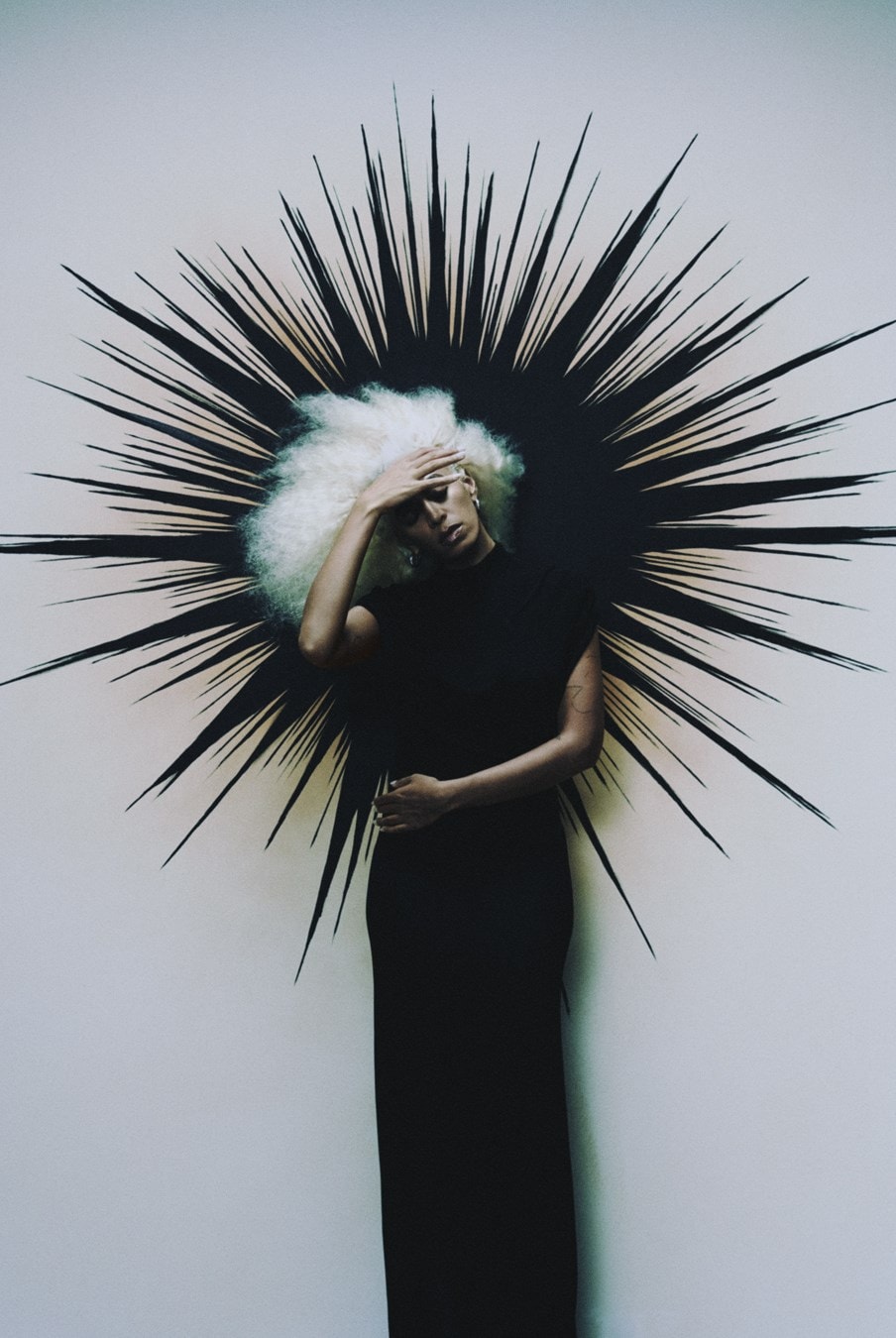
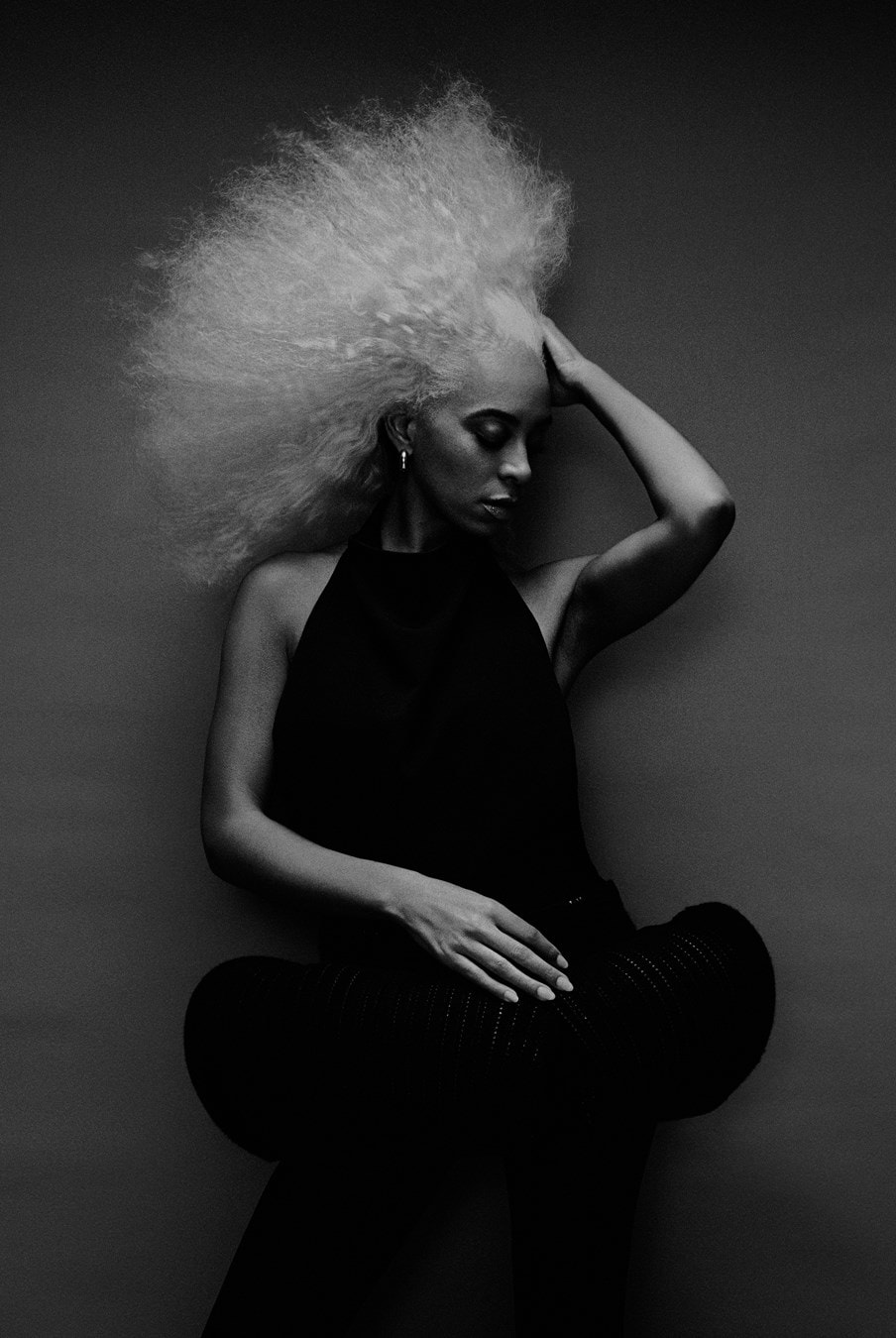
Casting: Greg Krelenstein. Hair: Jawara at Art Partner using SISLEY PARIS. Make-up: Miguel Ramos using VICTORIA BECKHAM BEAUTY. Manicure: Sunshine O using SALLY HANSEN. Set design: Nicholas des Jardins at Streeters. Star wall design: commissioned by Julia Dias. Digital tech: Jonathan Pivovar. Lighting: Darren Karl-Smith. Photographic assistants: Sergio Avellaneda, Shinobu Mochizuki and Juan Cuartas Rueda. Styling assistants: Tiwa Lee, Pheobe Icke and Douglas Miller. Hair assistants: Marvin Tarver and Tiffany Blake. Set design assistants: Aydan Huseynli, Ian Ashbaugh and Andrew Riley. Production: Concrete Rep. Local production: Pony Projects. Local producer: Leone Ioannou. Production assistants: Christopher McCann, Alec Kugler and Eleonora Trullo. Post-production: The Hand of God
This story features in the Spring/Summer 2026 issue, marking 25 years of AnOther Magazine, on sale internationally on 12 March 2026.
in HTML format, including tags, to make it appealing and easy to read for Japanese-speaking readers aged 20 to 40 interested in fashion. Organize the content with appropriate headings and subheadings (h1, h2, h3, h4, h5, h6), translating all text, including headings, into Japanese. Retain any existing
tags from
Lead ImageSolange is wearing trousers in viscose and loafers in patent leather by PHOEBE PHILO
This story is taken from the Spring/Summer 2026 issue of AnOther Magazine:
The artwork for 2016’s A Seat at the Table finds Solange paused mid-evolution. She’s not quite ready for her close-up, yet she has invited us here anyway.
Pastel duckbill clips are setting her hair in deep, chestnut waves. Her shoulders are bare. Her lips are gently parted, as though she might soon speak. (“Don’t test my mouth,” she’ll soon warn us in a song full of cautions, the sweetness of her register undermining its threat.) Our Black Mona Lisa, the artist as historical icon, has changed her hair to see if it might lift the metal clouds. It will not: neither will reading, or drinking, or dancing, or a new dress. Solange, who was raised in her mother’s salon, knows the ways her hair, her body, her being have indexed meanings she did not assign them. She knows these meanings will determine, to some incalculable degree, how the day will go, what ways her humanity will be denied, whether she’ll make it home in one piece. The mystery of her gaze meeting ours – is it curious? Suspicious? Proud? Wise? Certainly it’s a vulnerable way to see her, this private Black ritual of becoming made public, made regal. “I wanted to create an image that invited people to have an up-close and personal experience,” she once said in an interview with her older sister, Beyoncé. “Like, ‘Come and get close. It’s not going to be pretty. It’s not going to be perfect. It’s going to get a little gritty, and it might get a little intense, but it’s a conversation we need to have.’”
When she released A Seat at the Table, her gorgeous, masterful exploration of survival as a young Black woman in America, Solange had just turned 30. She had lived many lives already and was still living some of them. She had been a back-up dancer for Destiny’s Child; a teenager singing about big feelings over slick hip-hop production; a young wife; a young mother; a single mother; a DJ; a Motown classicist; a tabloid headline; an artist still finding her voice. The new album arrived in a season of riots and reckoning, following the fatal shooting by police of Alton Sterling in Louisiana and Philando Castile in Minnesota. Because of its breadth and subject matter, A Seat was comfortably positioned in a rarefied canon next to the music of Marvin Gaye, Sly & the Family Stone, Gil Scott-Heron, Lauryn Hill, D’Angelo, Kendrick Lamar – artists whose work aims to capture and perhaps change the spirit of the times. It skyrocketed Solange to that thorny post of lyrical cultural commentator, while also reintroducing her to the world as co-director, as costume designer, as fine artist. She said she wasn’t interested in entertainment and presented the album instead as performance art, descending on white-cube museums that launder great white myths and occupying them with her Black Gesamtkunstwerk. It was a signal that her self could not be contained by the reductive label of “pop star”, not because “pop” is a dirty word, but because it was simply one mode she could use to pose the questions that preoccupy her. This balletic, up-close and personal vantage whisked us not just into the diaristic fold of a Black artist’s intimate thoughts and feelings, but into an abbreviated history of Black sociopolitical struggle.
It seems fitting, then, to speak with Solange in another state of in-betweenness, at a moment between takes. This is not to say that she has been truant. In the years since When I Get Home (2019), her last formal studio album, the artist has composed for a ballet, established a community library, published books and research journals, archived relentlessly, made sculptures, curated a performance programme and joined the University of Southern California Thornton School of Music as scholar-in-residence. She has never, she assures me, stopped making music. But what pressures emerge from being elected the voice of a politicised, disaffected generation? How to resist constant punditry and continue to make your art slowly, at your own pace? How to continue your evolutions, to discover new selves and new mysteries, as the world waits for you to speak again?
This year, Solange will turn 40. She is wiser, perhaps, than she has ever been, but she’s still full of questions. Young motherhood made college studies inaccessible in her teenage years, but she now has the resources to study whatever she likes as a resident scholar and is revelling in the syllabus she’s putting together. She feels freer and more fluid, and perhaps more abstract. The commercial, gravitational pull of the album cycle has a negligible effect, and the desperation of her fans has a similarly diminished impact on her circadian rhythm. The time between A Seat at the Table and When I Get Home marked the shortest interval recorded in her discography; the seven-year period that has ensued constitutes the longest. What is sure is that Solange, ever on CP time, can never be rushed.
CONNOR GAREL: Where am I reaching you? What do you see?
SOLANGE: I’m in my living room and I am always very attracted to the wooden instruments that I have in the space.
CG: Has moving to a small town changed your relationship with making art?
S: I live so nomadically. And I feel very careful about what it means to take up space publicly in a place that I’m not sure I’ll stay in for long. But in my life now, I have a lot more fluidity to move around globally and to take the time to find wherever my new roots will be. There’s a level of impermanence I feel at this point in my life. It’s definitely inspiring me to create from a different vantage point.
Before, there was a level of permanence involved in how I positioned myself as an artist and in the things that I created – feeling like they live on for ever, which can bring a preciousness or weight that turns into anxiety, or fear, or resistance, or over-thinking, or interrogating. There’s a level of fluidity and freeness in the way I’ve been creating lately, and knowing that while things live on for ever, nothing truly does. And that’s been such a freeing place and vantage point to create from, because I’ve been able to explore and experiment from a purely selfish place of nowness and this exact moment in time. That’s been healthy for me.
CG: You seem to have this very natural way of integrating your art into your life. The result, at least for me, is that each album feels like this studious reflection of what you’ve learnt and felt in the intervals between releases. I guess I’m wondering what your life has been like since When I Get Home and what you’ve been seeing and feeling and learning since then.
“Surrendering was extremely hard for me as someone who, for most of my life, has been very in control of every step and stage” – Solange
S: One part of what really connects with how you ask that question is being a forever student. Someone asked me recently what my relationship with reading was, and I thought a lot about being a young person and my entry into reading not necessarily being this romanticised love affair where I was a child curled up in the corner getting lost in a book. I really studied as practice, with a yearning to understand the world better, to understand people’s minds better, to expand my vocabulary and vernacular. Even as a child I knew that my vantage point was made up of what was around me and that there was a world far beyond what I could see that existed. That has always been the spirit in which I’ve created.
When I Get Home was a powerful time in my life. I was exploring a lot of questions about mortality. And in my own thinking about that, because of my health at the time, because of my fear of the unknown, it really challenged and freed me. It felt so much like I was being led by a spirit through the making of that album. Typically, I take quite a bit of time between projects. That was the shortest turnaround in terms of a musical project while still being a significant amount of time. It was faster than I usually am. I think that was because I had so much idle time while resting my body and going through my own health journey. In that way, creating felt like a means of survival. It felt like I needed to occupy my spirit with something bigger than me, to help keep me pushing and to motivate and ground me in something that was larger than these questions I was asking. So it was a very powerful process – those questions were big.
CG: Yeah – to ask yourself, “What is home?”
S: It seems like such a simple, Wizard of Oz-ass question. But I think that when you actually start that journey to answer those questions for yourself, you are surprised by how much fear comes up and how much you’re confronted with. Because I wasn’t just asking myself about home as a physical space, but also as a spiritual one. And I think that God is such an omnipresent spirit and force that, to ask and be guided by Him, you have to surrender. And surrendering was extremely hard for me as someone who, for most of my life, has been very in control of every step and stage. That surrendering was probably the scariest thing. I can’t say that I mastered it through that record but I definitely came as close as I possibly could through making it.
Life became a lot simpler after that. A Seat at the Table and When I Get Home involved so much deep listening and research and lineage work. What’s interesting when I think about those records is that there’s only one song on each of them that’s dedicated to romantic relationships. Ninety-nine per cent of each was devoted to self, to mystery, to God, to history, to trauma. Those aren’t easy subjects. And it’s not to say that romantic life is not incredibly complex and doesn’t take up a lot of space in our lives, but you’re creating from an entirely different vantage point – one that’s all-consuming in a different way. Historically, growing up as an R&B enthusiast, there weren’t a lot of albums to reference where themes of romantic love didn’t show up.
CG: Right.
S: Creating from the space that I was in, it takes a lot out of you emotionally, mentally, spiritually. It’s a lot to perform it, relive it, to have to talk about and promote it, to make films and visual expansions of it. You’re kind of remaining in that space on a cellular level in your body, because you’re not detached from that work. A lot of the past year has been about a different type of creation that has allowed me some distance from those big questions and conversations. A lot of the work I’ve been doing with Saint Heron [the multidisciplinary platform and archive founded by Solange in 2013 to preserve and celebrate Black and brown creative voices] – archival work, tangible artefacts, scoring music – has been different interpretations of the same questions I was asking before, but it has allowed me more structure, distance and stability in how I go about answering them.
CG: We’re talking about the self and I’m thinking of this thing Amiri Baraka once wrote, in some liner notes [for the 1965 album The New Wave in Jazz]. He said, “New Black Music is this: find the self, then kill it.” It feels akin to this commitment you’re talking about, to evolution and covering a lot of artistic territory. What have you been asking yourself lately?
S: Thank you for sharing that quote with me, it really resonates. A lot of the questions I’ve been asking myself lately surround the urgency of Black women’s history. It almost feels like survival. I remember ten years ago coming across images of Senga Nengudi’s Ceremony for Freeway Fets performance. I remember looking tirelessly for other images, videos and interviews from that time, anything I could find. Now there are more documents that have been released and recovered, but there were so few at the time. Seeing that, I saw something I’d never found in performance before. It was by a woman who looked like me and who, when I heard her speak, shared a lot of the same ideas surrounding why she performed and created from the place that she did. As someone who was just starting their journey in translating ideas into performance art as a practice, I finally said, “OK, this existed, this is for me. This is something that I can confidently step into without feeling like I have to tiptoe.” It was important not to feel like I didn’t deserve to call myself a performance artist. It was really an awakening.
Since I was a child, since I started going to the Ensemble Theater in Houston and learnt about lighting and costume and monologue writing and the way all these things work together to create an expression, it always felt so limiting to me just to perform on stages. And so, when I had that moment, it was an epiphany and awakening to the fact that my understanding of performance had been so limiting. I remember being so frustrated that I could find an endless amount of resources, information, conversations, prints and videos of some of the other Black male artists who were part of the same Studio Z collective [as Nengudi]. I just remember saying, “This is really an issue,” and this is the evolution of a conversation that Saint Heron has to continue. It was a big moment for me. As I started to think about the next iteration and expression of Saint Heron, that was a north star in making sure that it became a space that was valuing these stories.
“It was important not to feel like I didn’t deserve to call myself a performance artist. It was really an awakening” – Solange
Another defining moment of that for me was when I went to Detroit and visited the techno museum. It’s a very small space – I think it’s called Exhibit 3000. These guys who preserved this story – they were all there at the birth of techno, which we know was Black people’s musical expression. They saved drum machines. They walked us through the conversation of how it was birthed. After the 70s and the death of disco, people sold off all their keyboards and drum machines. They weren’t of any value to them any more. All of these Black folks went and got them from the pawn shop and reinvented what that could be. It was such an empowering moment to see this space that’s maybe 700 square feet holding all this history that has permeated the globe. It empowered me to think that, no matter how micro or macro, these stories, these moments, these expressions that are happening around me and with people I’m lucky to hold space with are going to permeate the world in that same exact way, and I feel an urgency in ensuring there’s preservation of that. It has weighed on me in a productive way, but also as a bit of a state of emergency. I really fear that white institutions will, as history shows us they have, continue to be the access holders to all of these Black expression moments, be it the museums, or print materials … I’ve just been encouraging everyone around me to preserve their own things, because we’ve seen how this plays out.
CG: You’ve been in a real scholarly bag. There’s the community library through Saint Heron, the research journal you published on [the pioneering Black architect] Amaza Lee Meredith, your appointment as the scholar-in-residence at USC Thornton. I know that you often consult literature and have this research practice for your music. You’ve said that when you were working on A Seat at the Table, Claudia Rankine’s Citizen: An American Lyric was helpful for you in thinking about how to simplify language. What are you reading now?
S: I’m walking over to my little home library. I’ve been reading this book that Tina Turner wrote, Happiness Becomes You. What I love is that it’s documenting her relationship with Buddhism and how it changed her life. It’s a very small book but I love how she walks you through the journey of these different monumental events in her life and how, as her faith deepens, her success grows. Her trust in this higher power really ushers in a level of courage, freedom and artistry. In her later years, people doubted her and said she was too old to be a rock star or that she was trying to reinvent herself. It’s just really interesting to think about how our faith can lead us into certain places in our lives, careers and our artistry, and the trickle-down it has in its power. I’m in awe of how far Tina’s faith took her. I’m in awe of thinking about this leap of faith to move across the globe to a new continent and to embark on this new, very unconventional relationship, to completely transform herself sonically, visually.
We were talking earlier about how there really is no permanence, and so that has been inspiring for me as I grow. I’m turning 40 this year. It’s really an incredible evolution of time in my life and relationship with these older projects. I’ve been revisiting Solo Star, my first album, and Sol-Angel and the Hadley St Dreams, and True, and all these different versions of myself that I’ve been. I’ve been seeing those versions celebrated in a way that was far beyond my wildest dreams and thinking about how my own faith has evolved and been a grounding force through it all. Reading this book is like holding a mirror to my own journey. I got a little emo …
CG: The emotionality is our birthright as Cancers.
S: [Laughs] It’s true!
CG: But speaking of these old projects … You shared some diary excerpts recently, from just before you released Solo Star. There was this part I thought was interesting – “I’m just listening to this song that I did for Kelly [Rowland] called Obsession. And I just realised I have a gift to be able to take my feelings and elaborate my everyday experiences and share.” You would have been 15 or 16 when you journalled that. What do you remember about that time and this discovery?
“I’ve been seeing those versions celebrated in a way that was far beyond my wildest dreams” – Solange
S: Man, that was quite a time. I see people respond to a carefreeness that they feel I possess, and it’s such an honour and a blessing to be able to radiate that despite some of the things I’ve survived. I haven’t even broken the surface in beginning to tell my own story. I haven’t even scratched a centimetre of speaking on some of the things that I’ve survived. But I’ve lived them. And when I think about that time in my life, I feel so grateful that this gift was revealed to me so early, because I’ve always been able to have a clear voice. I’ve always known it was going to lead me, heal me, hear me, see me, feel me, be a means to survive and translate the inner workings of my mind.
I remember writing that song. I remember how I felt because, prior to that, I wanted to be a dancer. I wanted to go to Juilliard and be a contemporary, modern dancer. I wanted to use my body to tell stories. I had gone on tour dancing for Destiny’s Child about a year and a half prior, and that wasn’t part of the plan. One of their dancers had gotten pregnant and Michelle was freshly in the group, and they needed a dancer to keep the symmetry of the staging so she could feel comfortable. There was all this choreography, entrances and exits, so they needed to replace this dancer fairly quickly. It was kind of bounced around – “Maybe Solange could do it. She can dance.” At the time I was very seriously attending a conservatory, dancing five days a week. I went on this tour and ended up tearing my meniscus. I was told that I wouldn’t be able to dance for a couple of years.
CG: That’s really hard.
S: It was a total devastation for me. I’d had my life planned out. And in order for me to get into Juilliard I needed to be able to go to a certain high school and audition, and now I would no longer be able to do that. My parents had taken me out of school to home-school me so that I could join this tour. Now I’m on this tour with nothing to do and a cast. I was just at the back of the bus and I started writing these seriously emo songs – I just needed to get the feelings out. Those were very big teenage feelings and I needed an outlet. In the fourth grade I entered a songwriting competition for [the charitable organisation] United Way and ended up winning out of thousands of entries. That was a huge boost to my self-esteem as a young person. And Kelly heard me in the back of the bus singing these melodies. She asked what I was doing and I was like, “Oh, I’m just playing around writing these songs.” She was working on her album and said she’d love for me to come to the studio, that she liked what she was hearing and maybe we could try putting it over some instruments.
This was back in the day when there were album liner notes. I’d heard of this young producer named Troy Johnson, who was the son of George Johnson from the Brothers Johnson. I was a serious Shuggie Otis stan. Like, obsessive. I named my dog Shuggie. And so I’d heard of Troy, and he was the same age as me, so that felt really safe. I reached out to him, Lord knows how back then, in 2002. And we went in and cut these demos. When I wrote Obsession I remember being shook that those things came out of me. That was sort of the moment I decided I wanted to be a songwriter. Obviously I’d had a very up-close and personal front row seat to the birth of Destiny’s Child. I knew everything that would come with that. And I was scared that I wouldn’t be able to handle that level of visibility and pressure, and, at the time, this sense of needing to present in a certain way. It was the start of my journey to build the archetype of the artist that I wanted to be and to find a new blueprint for that.
CG: Are you working on anything right now that you’re excited about?
S: Well, I’m working on finishing my syllabus for 2027. USC Thornton gave me the option to start teaching this year or next, because this has been in the works since 2024 and I wanted an entire two years to develop what I want this course to be. I want to continue to be a student through the scholar-in-residence part of this programme, which is so exciting for me. I’m also doing some curatorial work with dance this year, and it’s so resourceful to get to go to USC, which has an endless amount of archives and libraries in the dance department. There are so many ways to lift the work I’ve historically done alone for 15 years through this residency.
I’m also working on this project with an architectural landmark. It hasn’t been announced yet, but I’ll say it’s one that I’ve been a fan and student of for a long time. One thing I’ve really been wanting to return to is working with light. When I did the Bridge-s performance [a site-specific performance created for the Getty Center in Los Angeles, directed with the artist duo Gerard & Kelly], we did a light study of the Getty at various times throughout the day for 48 hours, and I timed the performance to really let the light be the star. It’s very Cancer of me, but the sun rising and setting every day is one of the most miraculous gifts that God could ever give us, and I’ve been wanting to create ceremony out of that every day. I’m excited to invent performance from that miracle.
“I really fear that white institutions will, as history shows us they have, continue to be the access holders to all of these Black expression moments … I’ve just been encouraging everyone around me to preserve their own things, because we’ve seen how this plays out” – Solange
I’ve also been writing a lot. I’ve never stopped making music. Over the past year, I’ve been playing more in terms of the keys and the drums and returning to that. I played a lot of the keys on A Seat at the Table. On When I Get Home I produced a lot more electronic sounds and synthesisers and programmed drums. But I’ve been very excited to get back to the roots of writing with piano and drums, which has been great for me.
And I’ve started choreographing again for the first time in some years, and it’s been great to return to my body in that way and make it a daily practice. I’m expanding on my design practice as well. I’m scaling up with glass. I worked for two years on the next expansion of that, so I’m excited to release that into the world.
CG: What are you going to do when we get off the phone?
S: I am going to check out the new Studio Museum in Harlem. I’m a huge student of [the museum’s director and chief curator] Miss Thelma Golden – I have really looked to her as a mentor. I’m really excited to see the expansion. And then I’m going to have a glass of wine with an artist friend of mine that I work with, a fellow Houstonian. Her name is Autumn Knight. That’s going to be my day.
CG: You need to take pleasure where you can.
S: Yes, you do.
Casting: Greg Krelenstein. Hair: Jawara at Art Partner using SISLEY PARIS. Make-up: Miguel Ramos using VICTORIA BECKHAM BEAUTY. Manicure: Sunshine O using SALLY HANSEN. Set design: Nicholas des Jardins at Streeters. Star wall design: commissioned by Julia Dias. Digital tech: Jonathan Pivovar. Lighting: Darren Karl-Smith. Photographic assistants: Sergio Avellaneda, Shinobu Mochizuki and Juan Cuartas Rueda. Styling assistants: Tiwa Lee, Pheobe Icke and Douglas Miller. Hair assistants: Marvin Tarver and Tiffany Blake. Set design assistants: Aydan Huseynli, Ian Ashbaugh and Andrew Riley. Production: Concrete Rep. Local production: Pony Projects. Local producer: Leone Ioannou. Production assistants: Christopher McCann, Alec Kugler and Eleonora Trullo. Post-production: The Hand of God
This story features in the Spring/Summer 2026 issue, marking 25 years of AnOther Magazine, on sale internationally on 12 March 2026.
and integrate them seamlessly into the new content without adding new tags. Ensure the new content is fashion-related, written entirely in Japanese, and approximately 1500 words. Conclude with a “結論” section and a well-formatted “よくある質問” section. Avoid including an introduction or a note explaining the process.