Rewrite
Is Dove Ellis the next Rufus Wainwright? Is Sofie Royer the reason behind NxWorries? Do showcase festivals still rule the roost? Ben Tibbits discovers the answers – plus many more – on an icy trip to Northern Holland for Eurosonic.
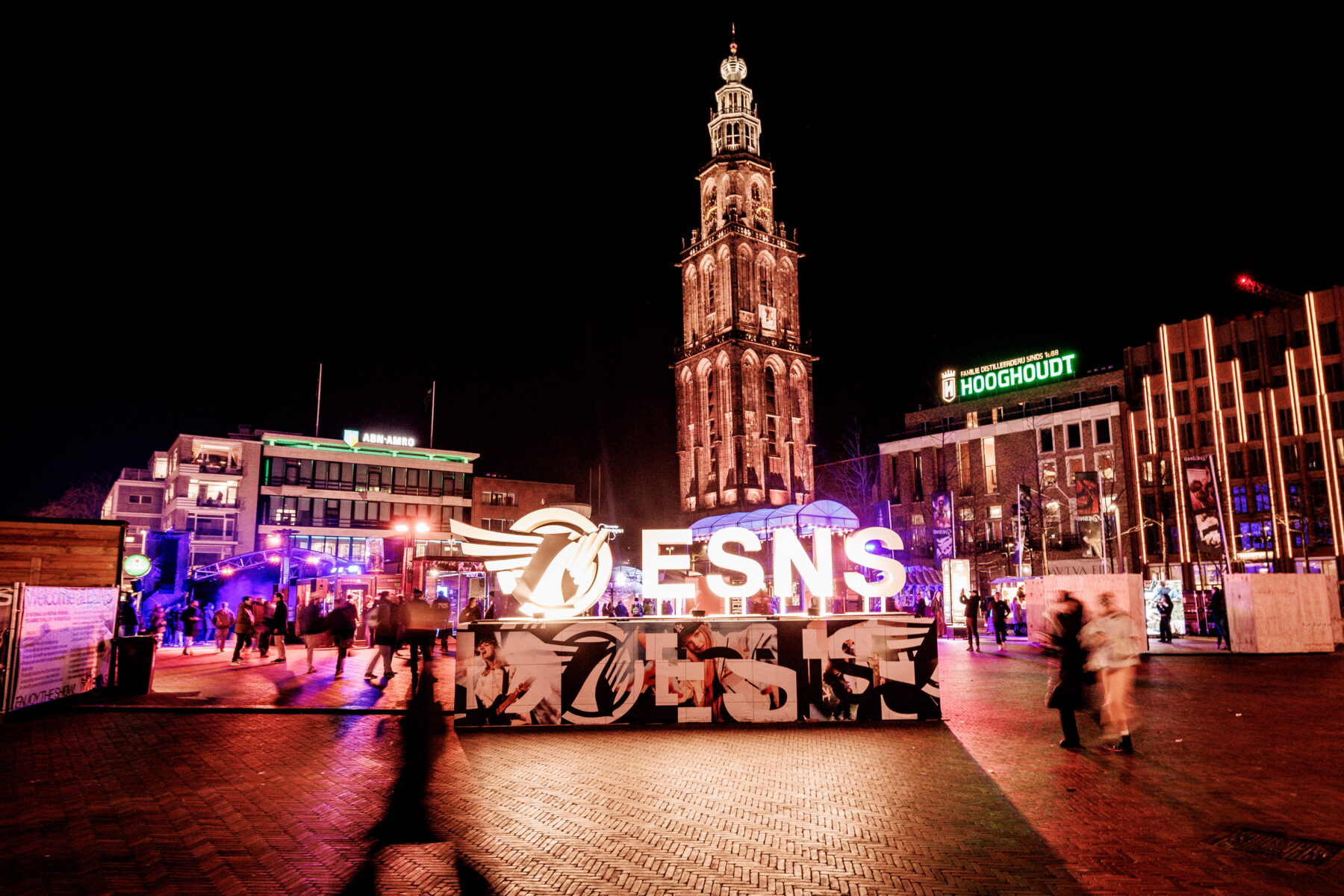
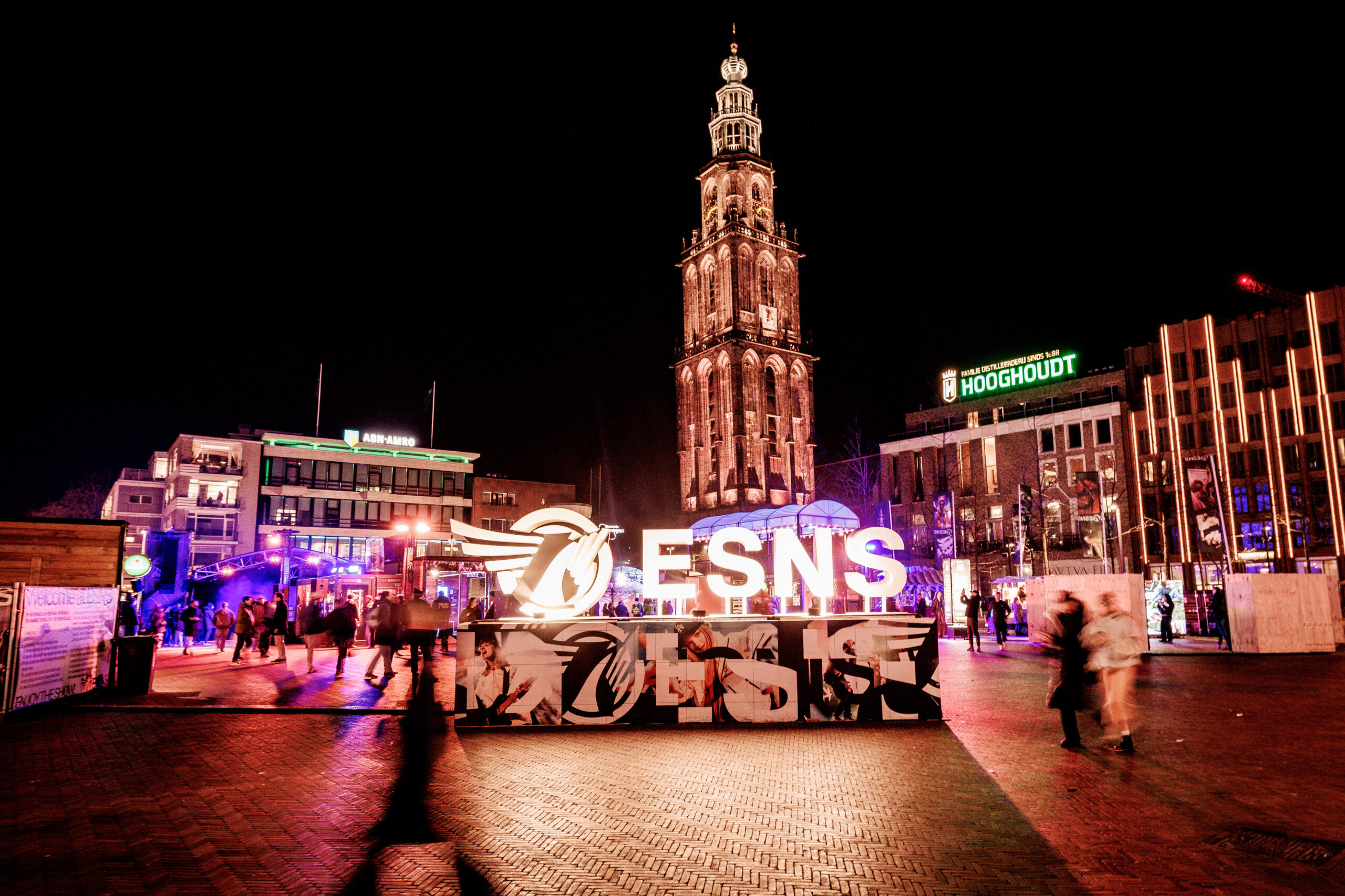
Anything that has existed for 40 years will likely boast an enduring, reputable legacy. But also face a plethora of challenges – how do you keep something new, exciting and progressive while remaining true to your lineage? These questions are what showcase festival Eurosonic has had to face this year, as it completes its fourth decade as a leading force in European music culture and business.
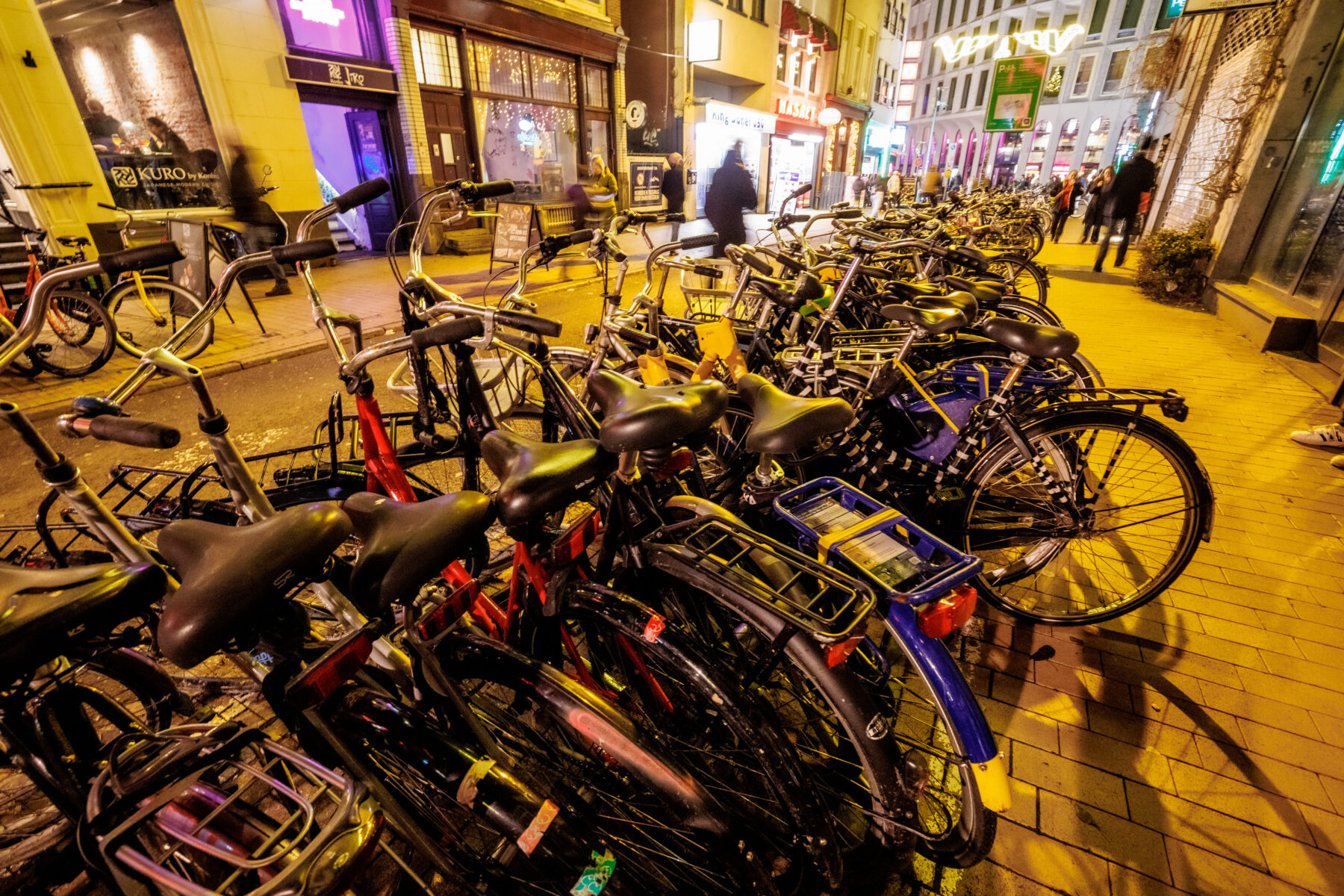
Based in Groningen, a quaint city in the north of the Netherlands that is about as Dutch as you can get (all bicycles, canals and tall, genteel people), Eurosonic has led the way in the global showcase festival sphere since its inception, bringing scores of artists and a coterie of industry professionals to the city every January. Alongside evenings teeming with live shows across the city’s various venues, there are conferences, meet-and-greets, and award shows. Global phenomenons like Dua Lipa, Sam Fender, James Blake, AURORA and many others have all made the rite of passage through the smiling gates of Groningen.
Showcase festivals are a quintessential facet of music’s eco-system. They book future superstars before you’ve heard of them, putting hidden gems and rising talents into the consciousness of bookers, managers, agents, journalists, etc. In other words, they are often the first point of call for discovery. And yet with the industry’s vast and drastic evolution across the past decade – an increasing reliance on social media, the plateauing of the music press, and the changing methods of talent booking – some may doubt if Eurosonic and its contemporaries still hold the weight that they historically will have. But those people have probably never attended. I have.
The train from Amsterdam Airport Schiphol to Groningen is an Arcadian delight. Fields of verdant pastures envelop into each other, with little to splice up the endless rurality but giant windmills, grazing livestock, and the reminiscence of early January’s heavy snow.
Thankfully, the weather has mellowed since the blizzard that coated Europe’s streets the week prior. I step off the train and stretch violently. It’s been a long morning, having been up before dawn to make my insufferably early flight to the Dutch capital. But I find vigour in the prospect of my week ahead.
It’s my second time in Groningen for Eurosonic. Last time, in a Heineken-fuelled blaze of glory, I discovered and/or grew to love the likes of CMAT, yuné pinku and English Teacher. I arrive with high expectations.
I drag my suitcase to my hotel and check in, unfortunately joining the queue moments after a party of university-aged young adults who, double-figured in number, are too excitable for my tired brain. After a quick freshen up, I amble around looking for a suitable place to dine/line my stomach. I’ve recently withdrawn meat from my diet, and finding a veggie spot is difficult. I conclude my search at an empty, warm-looking place.
Dimly lit, obscurely decorated; cultish religious country music surround me. I’m the only person in there except for the waiting staff and a rather liquored man who appears to be in charge. We have a tasteful conversation about vegetarianism and his favourite types of beer. I order his preferred lager, as well as a falafel burger. The portion is massive.
Fed and watered, I make my way to Oosterpoort, the cultural centre at the crux of Eurosonic. The queue is elongated. I’m confused by what’s about to happen. But things become clear when a luxury black car pulls up outside the building, accompanied by a police escort. The Queen of Holland is in town. Queen Máxima. She’s not Dutch, but Argentinian. She’s a local legend, though – and a defier of autocrats.
There’s a big ol’ opening show with speeches, performances, and dinner for those people of utmost significance. I skulk around in a back corner and observe. The Eurocentric rhetoric is far grander than 24 months prior. Everyone – from Máxima to the artists on stage to the ESNS Managing Director, Anna van Nunen – feels solemn in the face of the world’s mounting danger. But the mood is hopeful, one of unity, an emblem of the power of community that is only growing across the continent, shown here through the music industry. It’s a powerful moment.
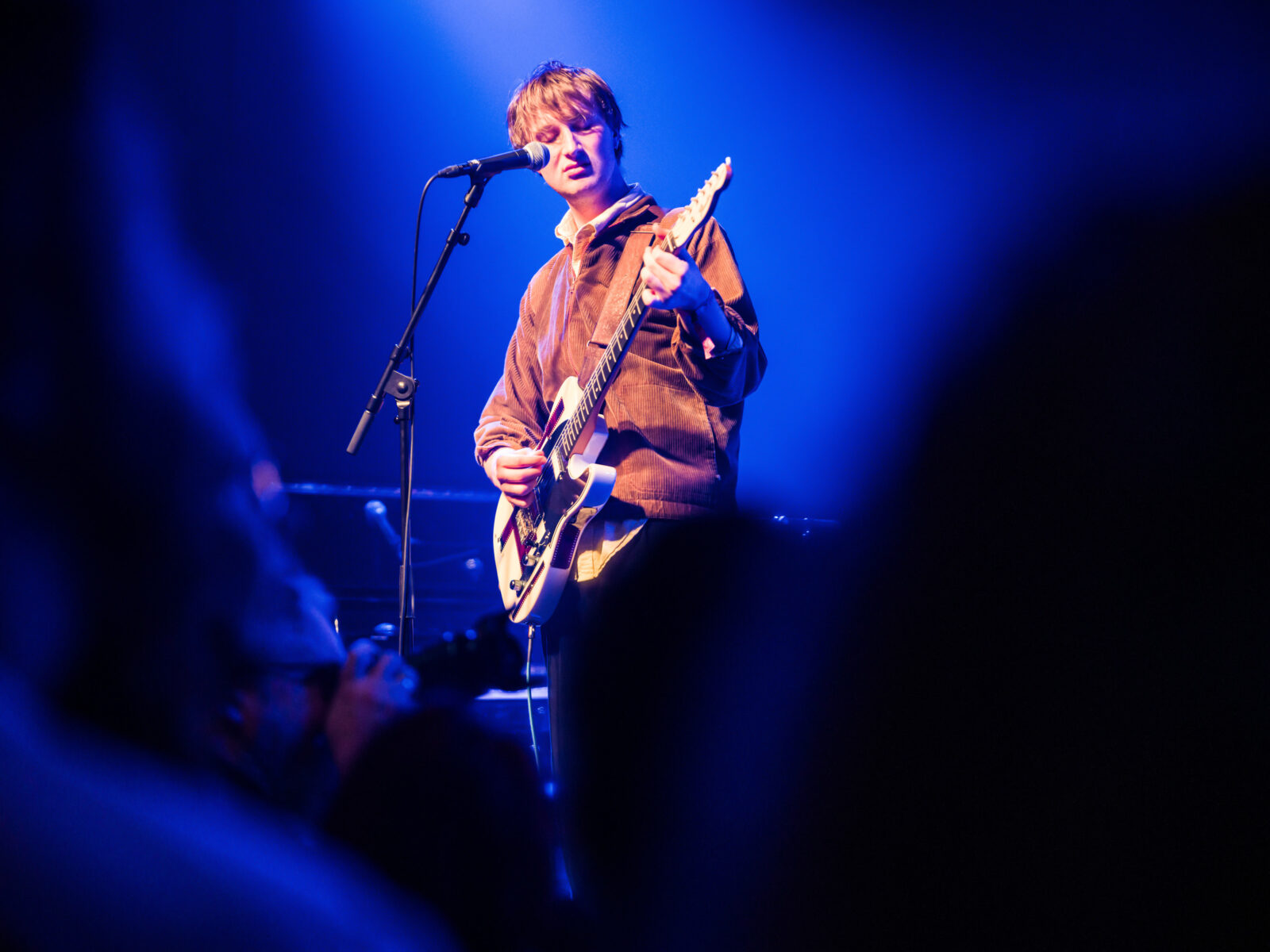
Onto some music. The first artist I see is also by far my most anticipated. Dove Ellis, the Manchester-based Irish enigma who has never done an interview but has supported Geese, released one of the best debut albums of 2025 and been backed by scores of publications in their start-of-year ones to watch lists – this one included. I arrive well in advance, and plenty of punters have the same idea. The venue is full to the brim as Ellis and the band step on stage.
His set is breathtaking. Luscious in tone, sophisticated in style. Softly stinging, emotionally potent and mature. Part Thom Yorke, part Elton John, part Jeff Buckley. Part Rufus Wainwright? He feels destined to be an immensely important artist in years to come.
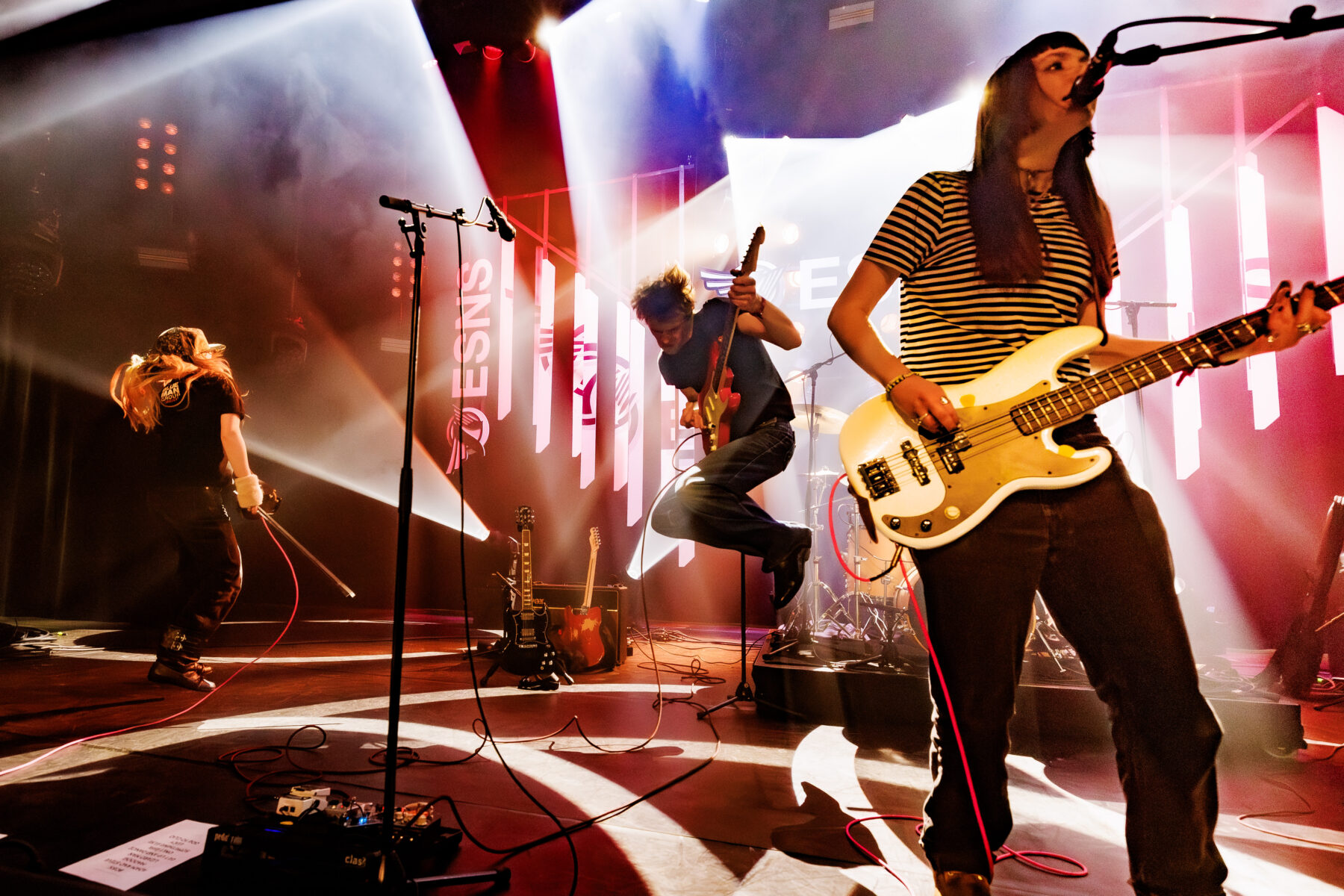
I catch some of the spiky colour and deft grooves of Belgium collective Lézard, before checking out Man/Woman/Chainsaw. I’ve seen them a few times before, and their hectic medley of fiercely entertaining art rock, post punk and folk tendencies is more of a visceral treat on each passing occasion. Then, with drooping eyelids and still blown away by Ellis, I stroll off into the night and a world of fantastical dreams.
I begin the next morning with a delightful meet and greet with the fellow press, as well as an introduction from the gregarious and charismatic Anna van Nunen. It’s always nice to get to know other journos – fellow word warriors on the frontier of finding work and reinventing their craft in a fledging era. It makes me feel at home, not alone, and if you’re lucky, hopeful about a brighter future.
Speaking of which, after filling my coffee cup one too many times, I buzz my way up to an interesting conference, discussing the significance of showcase festivals. On the panel sit my old friends FOCUS Wales, Iceland Airwaves, and more. The rhetoric isn’t dissimilar to the opening ceremony – all those taking part shine light on the importance of collectivity in their work, and the specific issues that affect their festivals’ respective futures. It grips me that what is happening in the festival market and music industry feels so in tune with the wider world.
After the eye-opening discussion, I embark to the Stadsschouwburg Theatre for some catch ups with two acts who are nominated for the festival’s annual Music Moves Europe Awards 2026. First up – Sofie Royer.
“I’m not as subversive or as mysterious as people think I am,” the singer-songwriter, producer, painter, DJ and model says, grinning as we sit down for a quick chat in one of the many (many) rooms in the grand old building. The Austrian-Iranian by way of California is refreshingly open in conversation, depicting an idiosyncratic scenic route to releasing her own music. She’s 34-years-old, but only began sharing her solo stuff in 2020 with a stunning and excellently-named debut, Cult Survivor.
The reasons for her late blooming to the spotlight are like pulling together adventures from an imaginary scrapbook. A musician since she was a young child, Royer played music throughout her life, studying classical music at the Conservatory of Vienna as a teenager, after moving to the city at 12, having spent her early years in the States. After finishing school, she wasn’t sure if she wanted to be a musician, and studied computer science, while “trying to find any type of excuse to leave Vienna.” She missed the sun and serendipity of California.
Such a motive finally came with an internship at Stones Throw Records, the independent label founded by legendary disc spinner Peanut Butter Wolf in 1996, to whom she has been signed to since she began releasing. It was a “total shot in the dark,” but she found the light at the end of the tunnel, and couch surfed her way into living her teenage dream. There, she learnt how to DJ from Wolf himself, alongside other legends like Jay Rock and DāM FunK. Talk about a schooling.
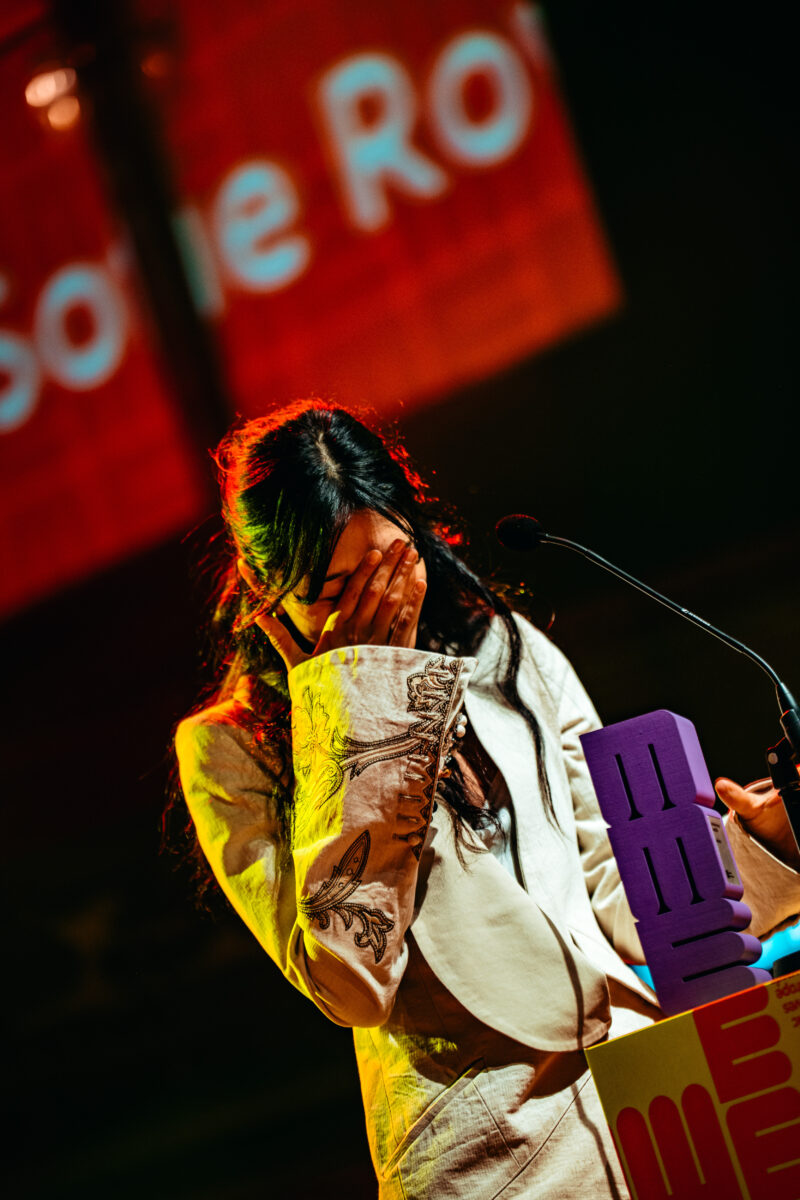
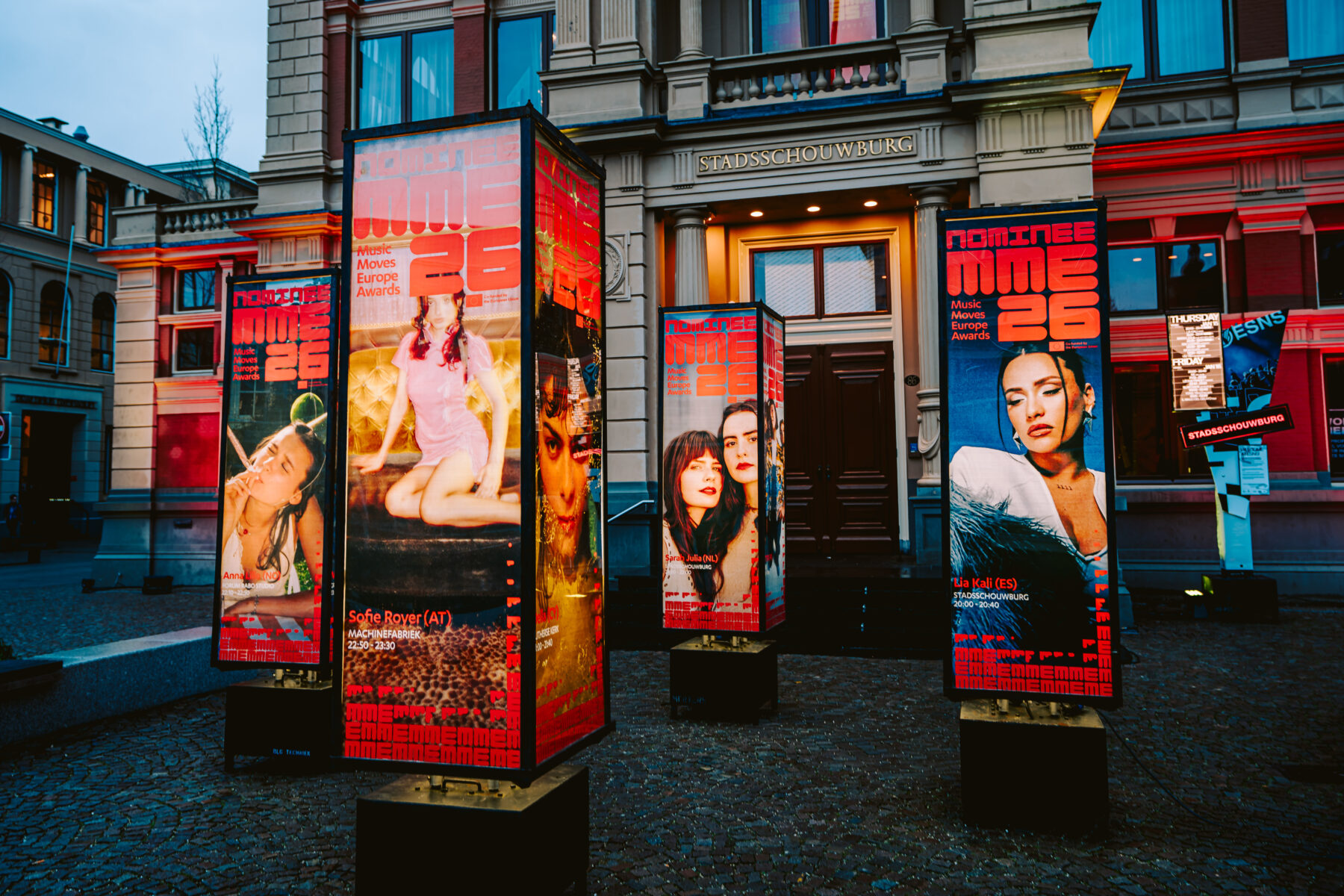
We don’t have much time together, which is a shame really, as I find Royer to be a fascinating person. She explains, with ridiculously breezy sentiment, how, at one stage, she lived with two artists who just so happened to be Knxwledge AND Anderson .Paak. NxWorries was inaugurated there. She’s got a few A&R credits at the label, she tells me coyly. Royer is as mysterious as she seems – at least to me.
I ask her, as a creative with such industry experience and now an artist who has an excellent catalogue of music (her aforementioned debut, its 2022 follow-up Harlequin, and last year’s Young-Girl Forever, my favourite), how it feels to be here at Eurosonic, very much a festival marketed for newcomers. “It’s very cool that you’ve heard of me but I do think for the majority of people I’m vastly unknown,” she giggles.
Royer is sort of self-depricating when it comes to her music. Or maybe just bitingly honest. She thinks she doesn’t have a core fan base. She feels that she walks a middle ground as an artist – “I sit musically in a very weird little void of maybe too much of an indie darling for the mainstream, but definitely too pop for the art world.” I’m not sure I agree. On which point, I’m not sure yet.
Oh, and she’s just handed in her latest album. It’s called Before/After. She shows me a meme that inspired the cover art. We laugh so much I spill fruity tea on my lap. I hope she doesn’t notice. Someone comes to look for us as we’ve run over our allotted time slot, and I’m keeping my next interviewees waiting. We bid farewell for now.
“Sorry!” I exclaim to the table full of label execs guarding their prized asset. Irish band Florence Road were, unsurprisingly, the artists that most of the press wanted to grab time with. I’m one of fourteen, they think. They had a meteoric 2025, shooting from complete obscurity to supporting Olivia Rodrigo in less than a year. “It was kinda insane,” they say as we settle in for a zippy chat.
Meeting and forming as a band in school, the group – now 21-ish – initially put out a debut single, “another seventeen” in 2022. Fast forward a few years while they finished school, the four-piece consisting of Lily Aron, Ailbhe Barry, Emma Brandon, and Hannah Kelly signed to Warner Records, and unleashed a re-debut. “Heavy” it’s called, shared accompanied by a video filmed live from a garage. It’s fair to say it captured the imagination of indie kids.
“I think it’s because that’s who we are in our nature,” the band say on the decision to unveil their re-debut release with a live video. “We love playing live. One of the most rewarding parts of being a musician is getting to go to these different places and meet all these people who like your music. It’s also just nice to see a band being a band and you can see everyone doing their parts. That was the thought we wanted to put forward first instead of a super polished music video. Especially for the first single, like – this is who we are.”
Hype snowballed into an avalanche, and the band shared their debut project, the five-track “Fall Back”, in June last year. Support slots with Wolf Alice and Olivia Rodrigo ensued. “It’s such a well-oiled machine watching a bigger act,” they comment on the experience of seeing the British band and Rodrigo in action. “Watching all their crew and everything. It’s really interesting. And it’s just super encouraging. Everyone we spoke to has been so lovely and so accommodating, making sure that we’re okay, we have everything we need. It’s been such a joy to watch and be behind the scenes. It kind of feels like, should we be here?”
Well, they definitely should. The band follow in the footsteps of recent Irish stars like Fontaines D.C., CMAT and Kneecap in threatening to go global. There’s something in the air. “It’s a country with so much heritage. It goes with the backstory, dare I say. We went to some stuff. There is such an amazing sense of community in Ireland. I think we feel that a lot. We feel very supported and we also have a lot of love for other Irish creatives, even if we don’t know them, there’s just this unspoken thing. I’m so proud of everyone because the Irish are doing things or not doing things. It’s such a lovely place to be from and we are so proud to be Irish and Irish speakers as well.”
Finishing up our swift but lovely chat, I say my goodbyes and head out into the crisp early afternoon, grabbing a tasty sandwich from a local bakery. Then I’m back in the hotel for a bit of typing, before having a few meetings with industry heads over an ice-cold Heineken. Next, I grab a solo dinner at a neon-soaked Japanese bar down a side street. It feels quite out of place in the city, but I enjoy it all the same. I think they do karaoke.
Music! First off I check out Wesley Joseph, the Walsall-born, London-based polymath who is sharing his long-awaited debut album in April. It’s his first show in three years, he says, but there’s no rust in his performance armour. To a crowd of punters who aren’t necessarily his target audience, he is immensely impressive, executing his immersive R&B-tinged rap numbers with charm and character.
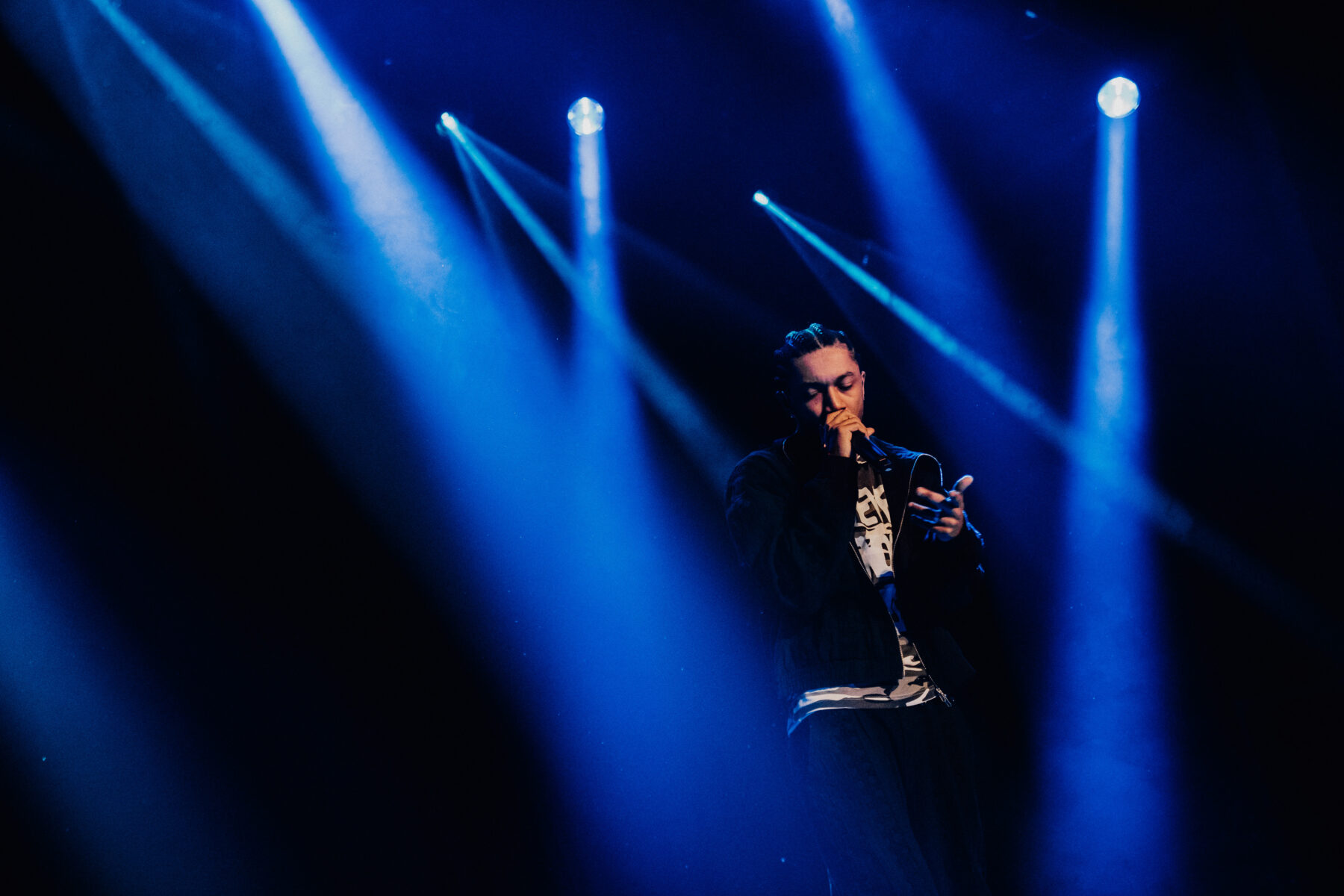
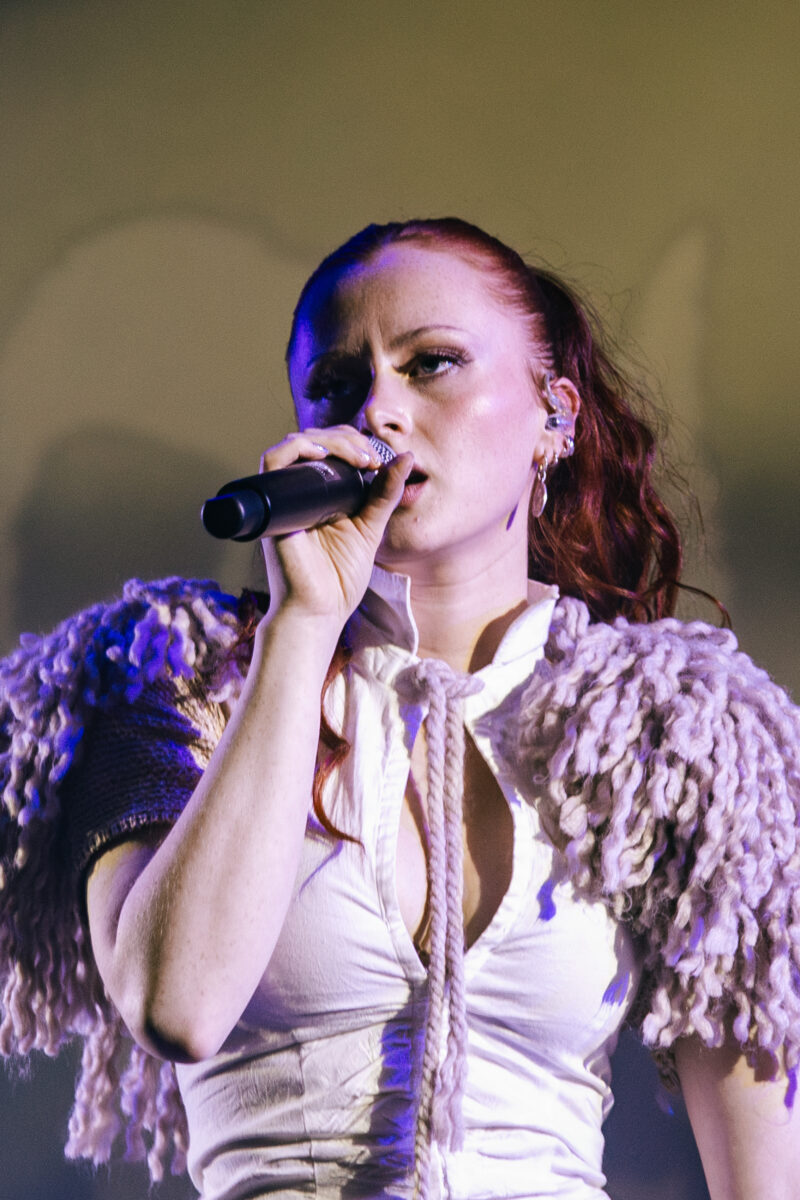
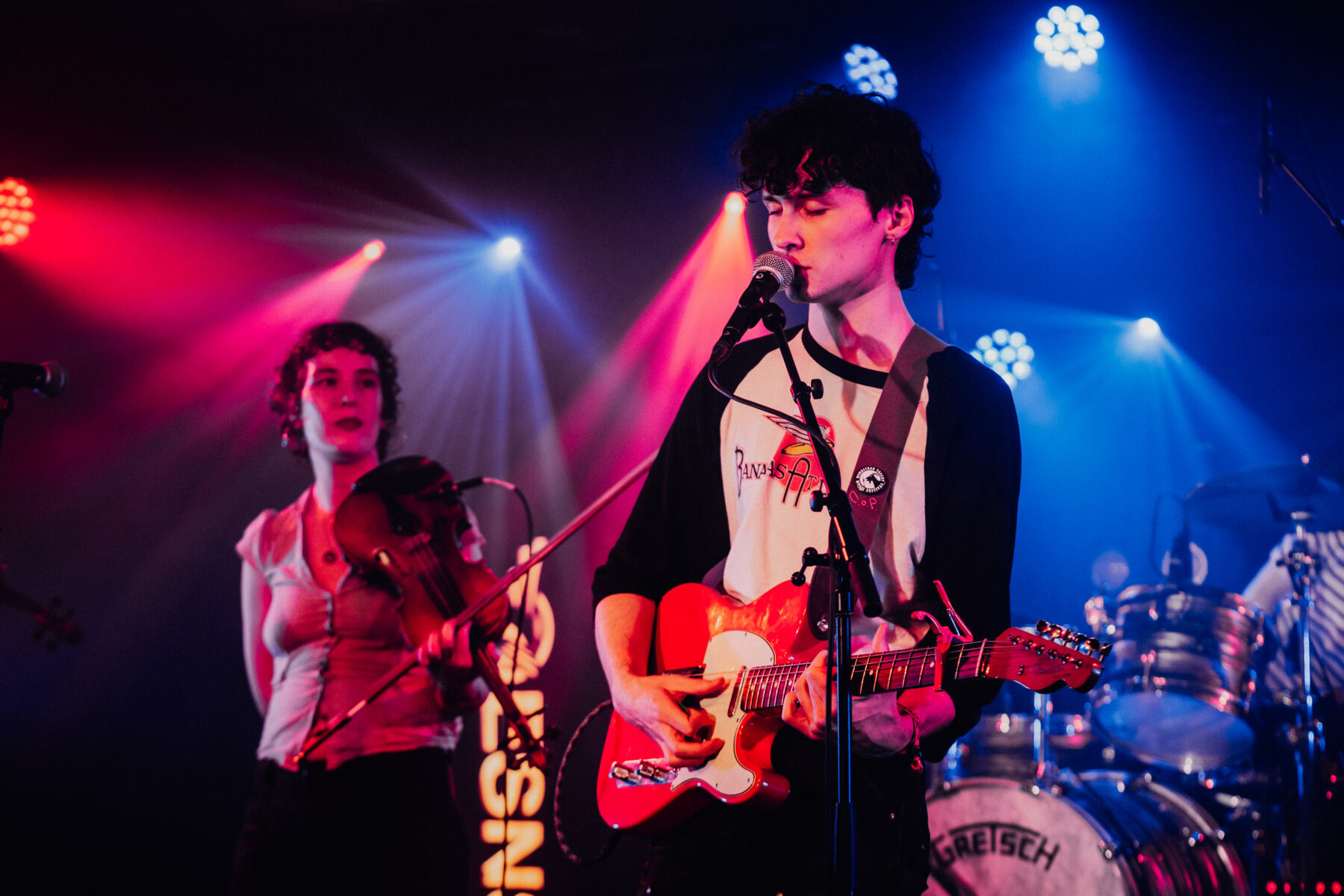
A solid start to the evening continues with Elín Hall, the Icelandic singer-songwriter and actress proving there is more to the nation’s music scene than Bjork. Hall’s gorgeous and melancholic pop is deeply engaging and emotive, as the crowd watches on silently, serenaded by sadness. Child of Prague comes next, Ireland’s answer to the Midwest emo renaissance currently sweeping the western market. The fresh-faced Dublin-based six-piece are towering musicians, merging atmospheric, swirling guitars with trad folk condiments. Their debut EP is well worth checking out.
The final act I muster is one we’re all now familiar with; Sofie Royer is a delectable live presence. The attendees again don’t feel like a natural fit for her music, and the large room feels fairly empty, but it doesn’t faze her. I find her performance spellbinding – so much so that it requires eight hours sleep after. Goodnight.
I know it’s boring, but I spent the entire next day locked in my hotel room – it’s Friday after all. So let’s save the word count. I finally find my way out and explore somewhere to eat. I get chatting to a waiter who is studying to be a lawyer. She gives me a free shot. I’m geared up for some tunes.
Firstly, I catch Irish rap raconteur Curtisy. The crowd is the smallest I’ve seen, but the man himself doesn’t seem too fussed. His zippy lethargy is a hit with me, though. Next, I cram myself in for snuggle, one of the hottest acts in the entire line-up. I’m a big fan of their debut record from last year, but I’m slightly disappointed in the show. The trio lacks a bassist, for one, and the sound feels a bit barren and raw. Their stage presence could do with some tightening. Still, a very promising band.
I wander over to catch an old pal mustbejohn next. I’ve been following him for years, and I’m pleasantly surprised (and slightly annoyed) to find a queue outside. By the time I get into the jam packed room, he’s on the last few tracks of the set. The crowd sings the words back to him. I’m happy for him, he deserves it.
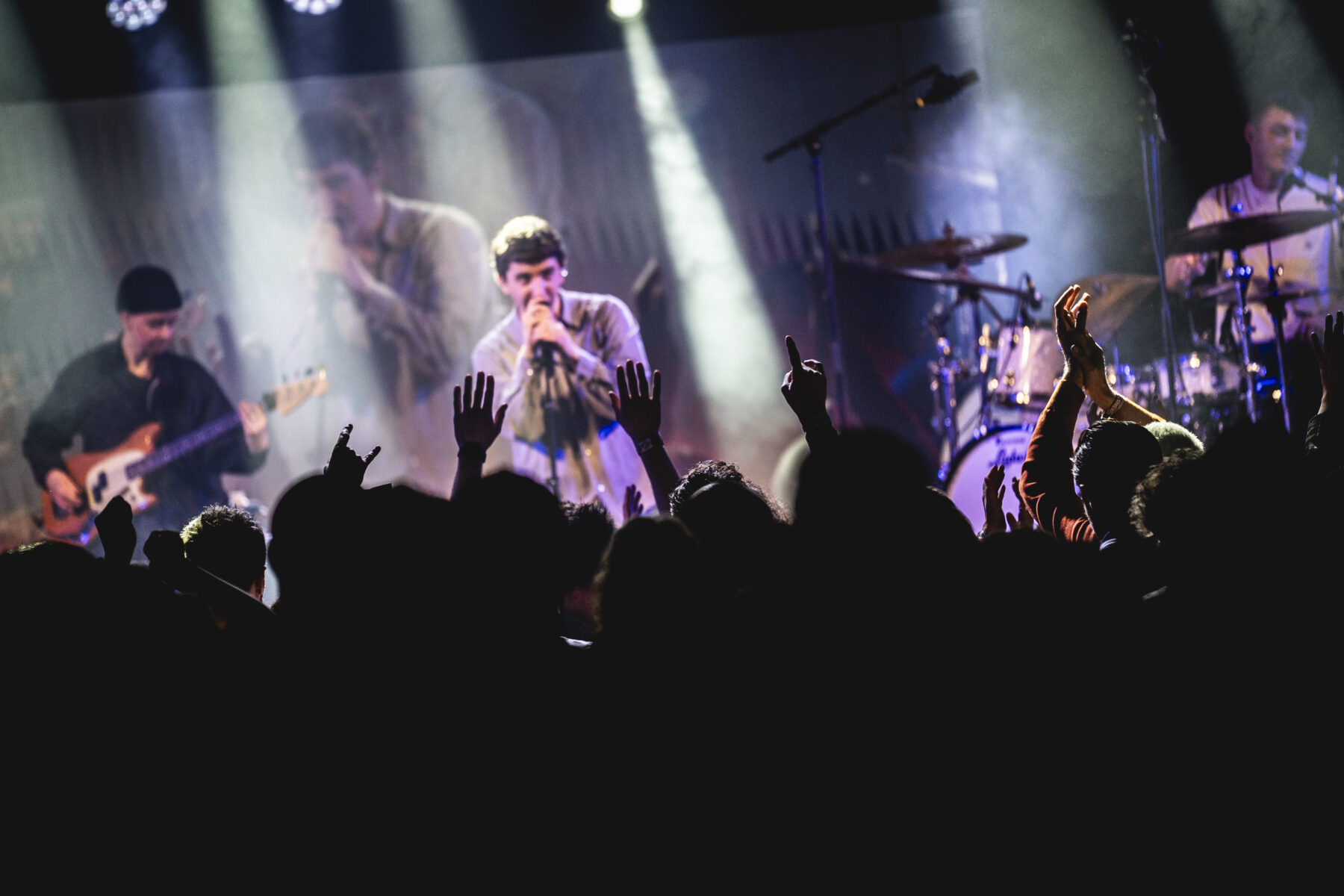
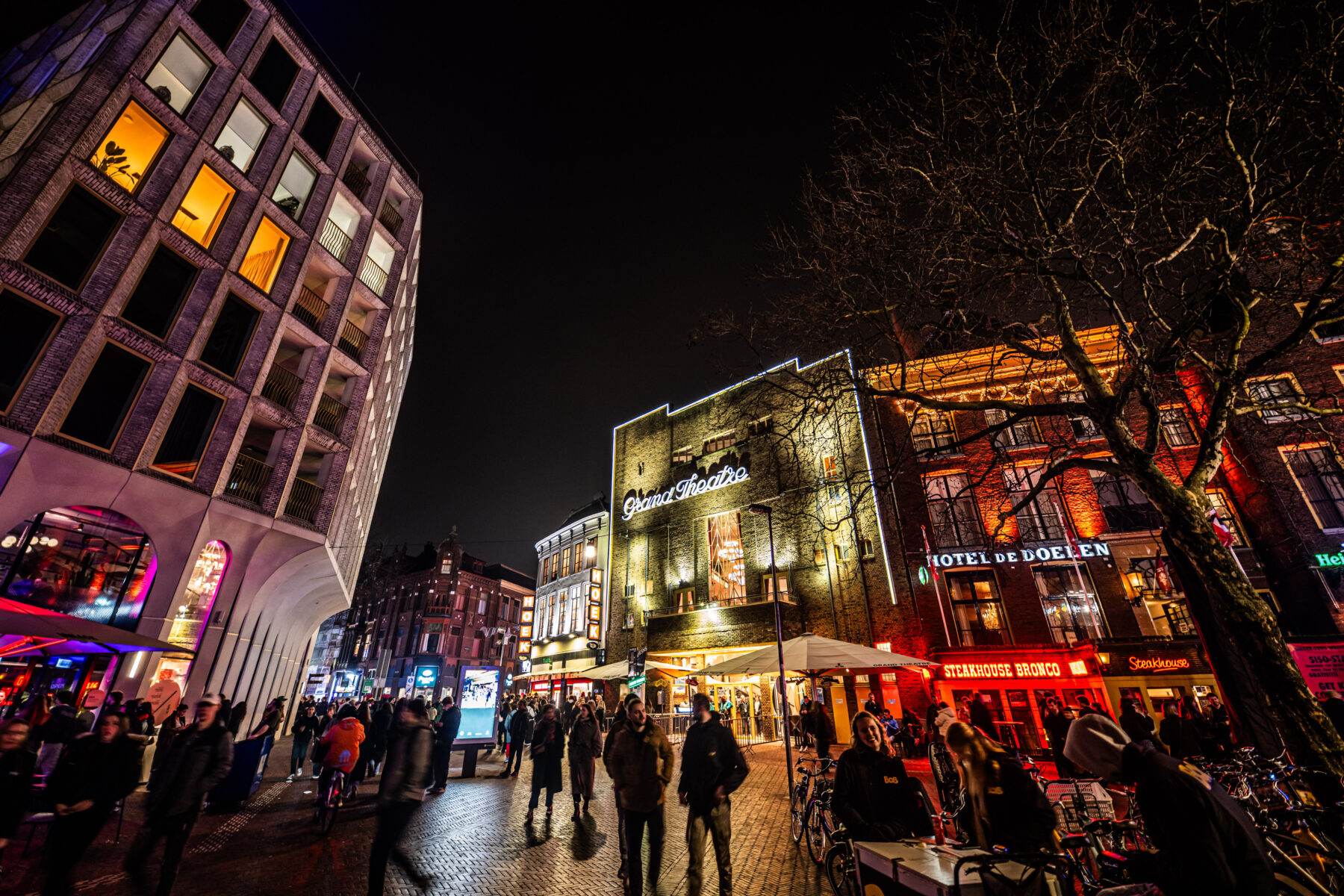
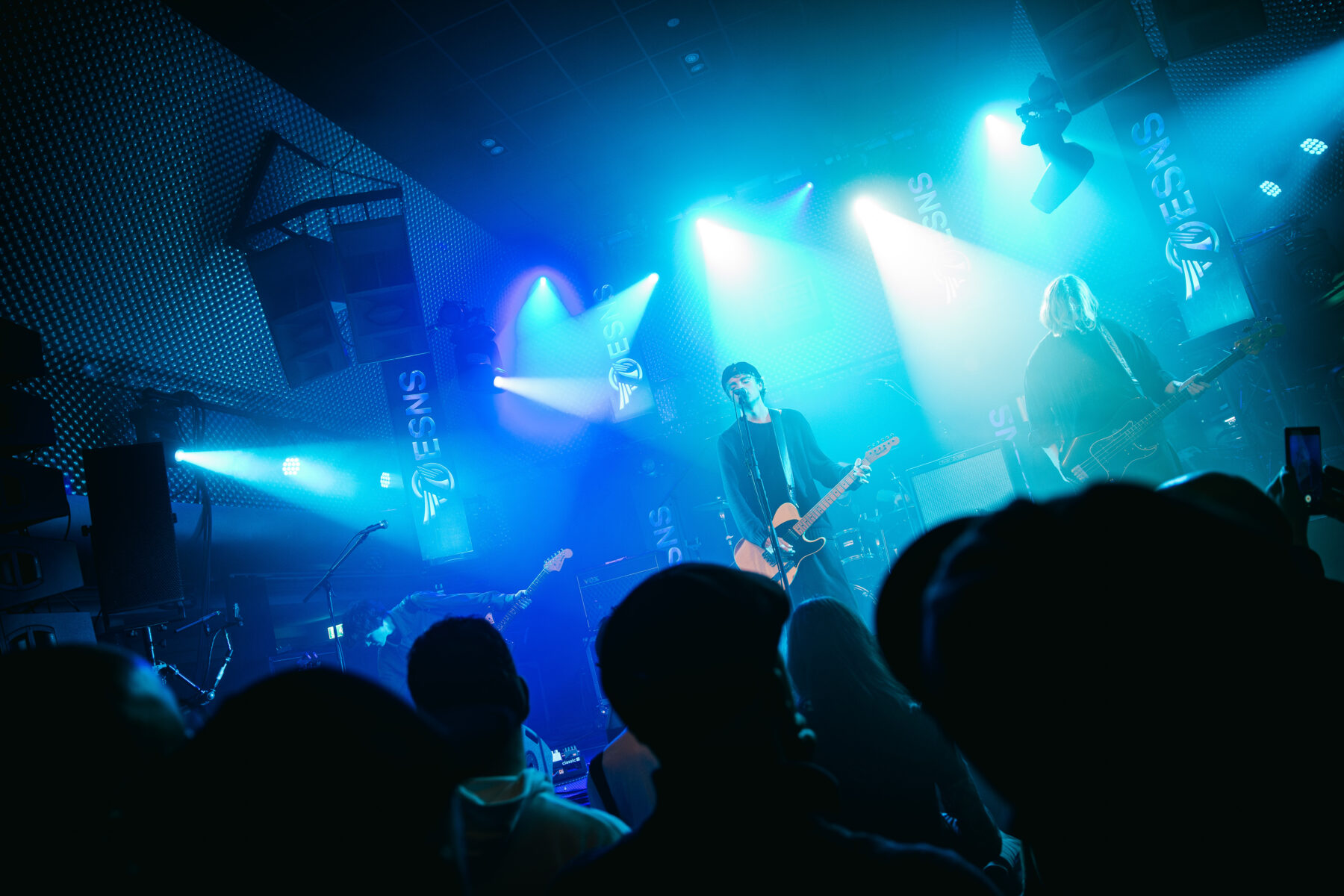
I manage to see some of Léonie Pernet’s set, a boundary-pushing producer, composer, singer, and drummer who merges the barrier between pop and poetry with soaring effect. But I rush off for Keo, the British band at the front of the indie renaissance. The line outside Huize Maas is huge, but I hack it, and get inside just in time. The set is decent… a little too similar for Wunderhorse for my liking. But still, some hair-raising tunes and a strong stage presence.
Yawn, my battery is running low. I had hoped to see the incredible Portuguese act Fidju Kitxora, who previously provided me with an existential experience in Braga. But I’m dead. I turn in early.
The travel home is relatively painless, bar a replacement bus from Gatwick to some fuck off town in Kent or Surrey, one of those places below London that come with a litany of Union Jack flags. But the journey allows time for retrospect.
Do showcase festivals still matter? Arguably, more than ever. With the line between quality and quantity getting increasingly lost, it feels imperative to keep a structure, to keep community in the music ecosystem. I’ve felt reassured by the collectivity, positivity and honesty of the Eurosonic team and attendees. The music wasn’t half bad either.
So there we have it. Dove Ellis is in fact, the new Rufus Wainwright (or Thom Yorke or Jeff Buckley), Sofie Royer did in fact, have an impact on NxWorries. And showcase festivals – specifically Eurosonic – uphold great importance. Glad we got to the bottom of that. Until next time!
Words – Ben Tibbits
in HTML format, including tags, to make it appealing and easy to read for Japanese-speaking readers aged 20 to 40 interested in fashion. Organize the content with appropriate headings and subheadings (h1, h2, h3, h4, h5, h6), translating all text, including headings, into Japanese. Retain any existing
tags from
Is Dove Ellis the next Rufus Wainwright? Is Sofie Royer the reason behind NxWorries? Do showcase festivals still rule the roost? Ben Tibbits discovers the answers – plus many more – on an icy trip to Northern Holland for Eurosonic.
Anything that has existed for 40 years will likely boast an enduring, reputable legacy. But also face a plethora of challenges – how do you keep something new, exciting and progressive while remaining true to your lineage? These questions are what showcase festival Eurosonic has had to face this year, as it completes its fourth decade as a leading force in European music culture and business.
Based in Groningen, a quaint city in the north of the Netherlands that is about as Dutch as you can get (all bicycles, canals and tall, genteel people), Eurosonic has led the way in the global showcase festival sphere since its inception, bringing scores of artists and a coterie of industry professionals to the city every January. Alongside evenings teeming with live shows across the city’s various venues, there are conferences, meet-and-greets, and award shows. Global phenomenons like Dua Lipa, Sam Fender, James Blake, AURORA and many others have all made the rite of passage through the smiling gates of Groningen.
Showcase festivals are a quintessential facet of music’s eco-system. They book future superstars before you’ve heard of them, putting hidden gems and rising talents into the consciousness of bookers, managers, agents, journalists, etc. In other words, they are often the first point of call for discovery. And yet with the industry’s vast and drastic evolution across the past decade – an increasing reliance on social media, the plateauing of the music press, and the changing methods of talent booking – some may doubt if Eurosonic and its contemporaries still hold the weight that they historically will have. But those people have probably never attended. I have.
The train from Amsterdam Airport Schiphol to Groningen is an Arcadian delight. Fields of verdant pastures envelop into each other, with little to splice up the endless rurality but giant windmills, grazing livestock, and the reminiscence of early January’s heavy snow.
Thankfully, the weather has mellowed since the blizzard that coated Europe’s streets the week prior. I step off the train and stretch violently. It’s been a long morning, having been up before dawn to make my insufferably early flight to the Dutch capital. But I find vigour in the prospect of my week ahead.
It’s my second time in Groningen for Eurosonic. Last time, in a Heineken-fuelled blaze of glory, I discovered and/or grew to love the likes of CMAT, yuné pinku and English Teacher. I arrive with high expectations.
I drag my suitcase to my hotel and check in, unfortunately joining the queue moments after a party of university-aged young adults who, double-figured in number, are too excitable for my tired brain. After a quick freshen up, I amble around looking for a suitable place to dine/line my stomach. I’ve recently withdrawn meat from my diet, and finding a veggie spot is difficult. I conclude my search at an empty, warm-looking place.
Dimly lit, obscurely decorated; cultish religious country music surround me. I’m the only person in there except for the waiting staff and a rather liquored man who appears to be in charge. We have a tasteful conversation about vegetarianism and his favourite types of beer. I order his preferred lager, as well as a falafel burger. The portion is massive.
Fed and watered, I make my way to Oosterpoort, the cultural centre at the crux of Eurosonic. The queue is elongated. I’m confused by what’s about to happen. But things become clear when a luxury black car pulls up outside the building, accompanied by a police escort. The Queen of Holland is in town. Queen Máxima. She’s not Dutch, but Argentinian. She’s a local legend, though – and a defier of autocrats.
There’s a big ol’ opening show with speeches, performances, and dinner for those people of utmost significance. I skulk around in a back corner and observe. The Eurocentric rhetoric is far grander than 24 months prior. Everyone – from Máxima to the artists on stage to the ESNS Managing Director, Anna van Nunen – feels solemn in the face of the world’s mounting danger. But the mood is hopeful, one of unity, an emblem of the power of community that is only growing across the continent, shown here through the music industry. It’s a powerful moment.
Onto some music. The first artist I see is also by far my most anticipated. Dove Ellis, the Manchester-based Irish enigma who has never done an interview but has supported Geese, released one of the best debut albums of 2025 and been backed by scores of publications in their start-of-year ones to watch lists – this one included. I arrive well in advance, and plenty of punters have the same idea. The venue is full to the brim as Ellis and the band step on stage.
His set is breathtaking. Luscious in tone, sophisticated in style. Softly stinging, emotionally potent and mature. Part Thom Yorke, part Elton John, part Jeff Buckley. Part Rufus Wainwright? He feels destined to be an immensely important artist in years to come.
I catch some of the spiky colour and deft grooves of Belgium collective Lézard, before checking out Man/Woman/Chainsaw. I’ve seen them a few times before, and their hectic medley of fiercely entertaining art rock, post punk and folk tendencies is more of a visceral treat on each passing occasion. Then, with drooping eyelids and still blown away by Ellis, I stroll off into the night and a world of fantastical dreams.
I begin the next morning with a delightful meet and greet with the fellow press, as well as an introduction from the gregarious and charismatic Anna van Nunen. It’s always nice to get to know other journos – fellow word warriors on the frontier of finding work and reinventing their craft in a fledging era. It makes me feel at home, not alone, and if you’re lucky, hopeful about a brighter future.
Speaking of which, after filling my coffee cup one too many times, I buzz my way up to an interesting conference, discussing the significance of showcase festivals. On the panel sit my old friends FOCUS Wales, Iceland Airwaves, and more. The rhetoric isn’t dissimilar to the opening ceremony – all those taking part shine light on the importance of collectivity in their work, and the specific issues that affect their festivals’ respective futures. It grips me that what is happening in the festival market and music industry feels so in tune with the wider world.
After the eye-opening discussion, I embark to the Stadsschouwburg Theatre for some catch ups with two acts who are nominated for the festival’s annual Music Moves Europe Awards 2026. First up – Sofie Royer.
“I’m not as subversive or as mysterious as people think I am,” the singer-songwriter, producer, painter, DJ and model says, grinning as we sit down for a quick chat in one of the many (many) rooms in the grand old building. The Austrian-Iranian by way of California is refreshingly open in conversation, depicting an idiosyncratic scenic route to releasing her own music. She’s 34-years-old, but only began sharing her solo stuff in 2020 with a stunning and excellently-named debut, Cult Survivor.
The reasons for her late blooming to the spotlight are like pulling together adventures from an imaginary scrapbook. A musician since she was a young child, Royer played music throughout her life, studying classical music at the Conservatory of Vienna as a teenager, after moving to the city at 12, having spent her early years in the States. After finishing school, she wasn’t sure if she wanted to be a musician, and studied computer science, while “trying to find any type of excuse to leave Vienna.” She missed the sun and serendipity of California.
Such a motive finally came with an internship at Stones Throw Records, the independent label founded by legendary disc spinner Peanut Butter Wolf in 1996, to whom she has been signed to since she began releasing. It was a “total shot in the dark,” but she found the light at the end of the tunnel, and couch surfed her way into living her teenage dream. There, she learnt how to DJ from Wolf himself, alongside other legends like Jay Rock and DāM FunK. Talk about a schooling.
We don’t have much time together, which is a shame really, as I find Royer to be a fascinating person. She explains, with ridiculously breezy sentiment, how, at one stage, she lived with two artists who just so happened to be Knxwledge AND Anderson .Paak. NxWorries was inaugurated there. She’s got a few A&R credits at the label, she tells me coyly. Royer is as mysterious as she seems – at least to me.
I ask her, as a creative with such industry experience and now an artist who has an excellent catalogue of music (her aforementioned debut, its 2022 follow-up Harlequin, and last year’s Young-Girl Forever, my favourite), how it feels to be here at Eurosonic, very much a festival marketed for newcomers. “It’s very cool that you’ve heard of me but I do think for the majority of people I’m vastly unknown,” she giggles.
Royer is sort of self-depricating when it comes to her music. Or maybe just bitingly honest. She thinks she doesn’t have a core fan base. She feels that she walks a middle ground as an artist – “I sit musically in a very weird little void of maybe too much of an indie darling for the mainstream, but definitely too pop for the art world.” I’m not sure I agree. On which point, I’m not sure yet.
Oh, and she’s just handed in her latest album. It’s called Before/After. She shows me a meme that inspired the cover art. We laugh so much I spill fruity tea on my lap. I hope she doesn’t notice. Someone comes to look for us as we’ve run over our allotted time slot, and I’m keeping my next interviewees waiting. We bid farewell for now.
“Sorry!” I exclaim to the table full of label execs guarding their prized asset. Irish band Florence Road were, unsurprisingly, the artists that most of the press wanted to grab time with. I’m one of fourteen, they think. They had a meteoric 2025, shooting from complete obscurity to supporting Olivia Rodrigo in less than a year. “It was kinda insane,” they say as we settle in for a zippy chat.
Meeting and forming as a band in school, the group – now 21-ish – initially put out a debut single, “another seventeen” in 2022. Fast forward a few years while they finished school, the four-piece consisting of Lily Aron, Ailbhe Barry, Emma Brandon, and Hannah Kelly signed to Warner Records, and unleashed a re-debut. “Heavy” it’s called, shared accompanied by a video filmed live from a garage. It’s fair to say it captured the imagination of indie kids.
“I think it’s because that’s who we are in our nature,” the band say on the decision to unveil their re-debut release with a live video. “We love playing live. One of the most rewarding parts of being a musician is getting to go to these different places and meet all these people who like your music. It’s also just nice to see a band being a band and you can see everyone doing their parts. That was the thought we wanted to put forward first instead of a super polished music video. Especially for the first single, like – this is who we are.”
Hype snowballed into an avalanche, and the band shared their debut project, the five-track “Fall Back”, in June last year. Support slots with Wolf Alice and Olivia Rodrigo ensued. “It’s such a well-oiled machine watching a bigger act,” they comment on the experience of seeing the British band and Rodrigo in action. “Watching all their crew and everything. It’s really interesting. And it’s just super encouraging. Everyone we spoke to has been so lovely and so accommodating, making sure that we’re okay, we have everything we need. It’s been such a joy to watch and be behind the scenes. It kind of feels like, should we be here?”
Well, they definitely should. The band follow in the footsteps of recent Irish stars like Fontaines D.C., CMAT and Kneecap in threatening to go global. There’s something in the air. “It’s a country with so much heritage. It goes with the backstory, dare I say. We went to some stuff. There is such an amazing sense of community in Ireland. I think we feel that a lot. We feel very supported and we also have a lot of love for other Irish creatives, even if we don’t know them, there’s just this unspoken thing. I’m so proud of everyone because the Irish are doing things or not doing things. It’s such a lovely place to be from and we are so proud to be Irish and Irish speakers as well.”
Finishing up our swift but lovely chat, I say my goodbyes and head out into the crisp early afternoon, grabbing a tasty sandwich from a local bakery. Then I’m back in the hotel for a bit of typing, before having a few meetings with industry heads over an ice-cold Heineken. Next, I grab a solo dinner at a neon-soaked Japanese bar down a side street. It feels quite out of place in the city, but I enjoy it all the same. I think they do karaoke.
Music! First off I check out Wesley Joseph, the Walsall-born, London-based polymath who is sharing his long-awaited debut album in April. It’s his first show in three years, he says, but there’s no rust in his performance armour. To a crowd of punters who aren’t necessarily his target audience, he is immensely impressive, executing his immersive R&B-tinged rap numbers with charm and character.
A solid start to the evening continues with Elín Hall, the Icelandic singer-songwriter and actress proving there is more to the nation’s music scene than Bjork. Hall’s gorgeous and melancholic pop is deeply engaging and emotive, as the crowd watches on silently, serenaded by sadness. Child of Prague comes next, Ireland’s answer to the Midwest emo renaissance currently sweeping the western market. The fresh-faced Dublin-based six-piece are towering musicians, merging atmospheric, swirling guitars with trad folk condiments. Their debut EP is well worth checking out.
The final act I muster is one we’re all now familiar with; Sofie Royer is a delectable live presence. The attendees again don’t feel like a natural fit for her music, and the large room feels fairly empty, but it doesn’t faze her. I find her performance spellbinding – so much so that it requires eight hours sleep after. Goodnight.
I know it’s boring, but I spent the entire next day locked in my hotel room – it’s Friday after all. So let’s save the word count. I finally find my way out and explore somewhere to eat. I get chatting to a waiter who is studying to be a lawyer. She gives me a free shot. I’m geared up for some tunes.
Firstly, I catch Irish rap raconteur Curtisy. The crowd is the smallest I’ve seen, but the man himself doesn’t seem too fussed. His zippy lethargy is a hit with me, though. Next, I cram myself in for snuggle, one of the hottest acts in the entire line-up. I’m a big fan of their debut record from last year, but I’m slightly disappointed in the show. The trio lacks a bassist, for one, and the sound feels a bit barren and raw. Their stage presence could do with some tightening. Still, a very promising band.
I wander over to catch an old pal mustbejohn next. I’ve been following him for years, and I’m pleasantly surprised (and slightly annoyed) to find a queue outside. By the time I get into the jam packed room, he’s on the last few tracks of the set. The crowd sings the words back to him. I’m happy for him, he deserves it.
I manage to see some of Léonie Pernet’s set, a boundary-pushing producer, composer, singer, and drummer who merges the barrier between pop and poetry with soaring effect. But I rush off for Keo, the British band at the front of the indie renaissance. The line outside Huize Maas is huge, but I hack it, and get inside just in time. The set is decent… a little too similar for Wunderhorse for my liking. But still, some hair-raising tunes and a strong stage presence.
Yawn, my battery is running low. I had hoped to see the incredible Portuguese act Fidju Kitxora, who previously provided me with an existential experience in Braga. But I’m dead. I turn in early.
The travel home is relatively painless, bar a replacement bus from Gatwick to some fuck off town in Kent or Surrey, one of those places below London that come with a litany of Union Jack flags. But the journey allows time for retrospect.
Do showcase festivals still matter? Arguably, more than ever. With the line between quality and quantity getting increasingly lost, it feels imperative to keep a structure, to keep community in the music ecosystem. I’ve felt reassured by the collectivity, positivity and honesty of the Eurosonic team and attendees. The music wasn’t half bad either.
So there we have it. Dove Ellis is in fact, the new Rufus Wainwright (or Thom Yorke or Jeff Buckley), Sofie Royer did in fact, have an impact on NxWorries. And showcase festivals – specifically Eurosonic – uphold great importance. Glad we got to the bottom of that. Until next time!
Words – Ben Tibbits
and integrate them seamlessly into the new content without adding new tags. Ensure the new content is fashion-related, written entirely in Japanese, and approximately 1500 words. Conclude with a “結論” section and a well-formatted “よくある質問” section. Avoid including an introduction or a note explaining the process.