Rewrite
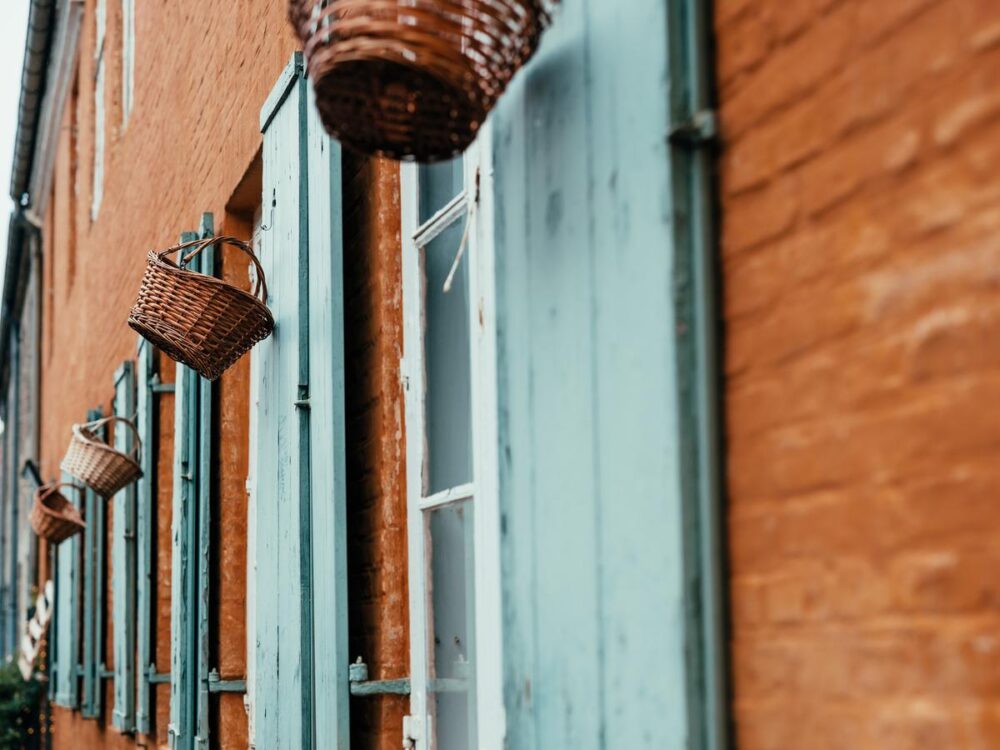
Christiansfeld. Image | Courtesy of Destination Trekantområdet
With its combination of breathtaking landscapes and cutting-edge design, Scandinavia has plenty to offer visitors. According to data by UK booking site Hellotickets, while fewer travellers headed abroad in general last summer compared to the previous year, Scandinavia experienced a boom. After a strong spring, with bookings three times higher, July saw these numbers triple again.
But beyond the bustle of the well-known capital cities, there are less beaten paths to explore. In the middle of Jutland, Denmark, is the area known as Trekantområdet (The Heart of Jutland or the Triangle Region), which includes Billund, Fredericia, Kolding and Vejle – and it’s easier to reach than you might think. As the birthplace of LEGO®, Billund has become a mecca for young families and fans of the iconic bricks, and boasts a tiny, but easily accessible international airport. But those less interested in theme parks, and more minded towards culture, culinary offerings and chilling at the spa, won’t be disappointed.
From the airport, it’s only a few minutes by bus to the centre of Billund. Here, LEGO® House – a design-led attraction aimed as much at adult visitors as children – is well worth a visit and will fill the best part of a day. There’s not much in the way of fine dining in the town, but you can enjoy a satisfying meal and friendly service at Billund Gastropub before driving (we recommend hiring a car to best explore the region) to Børkop.
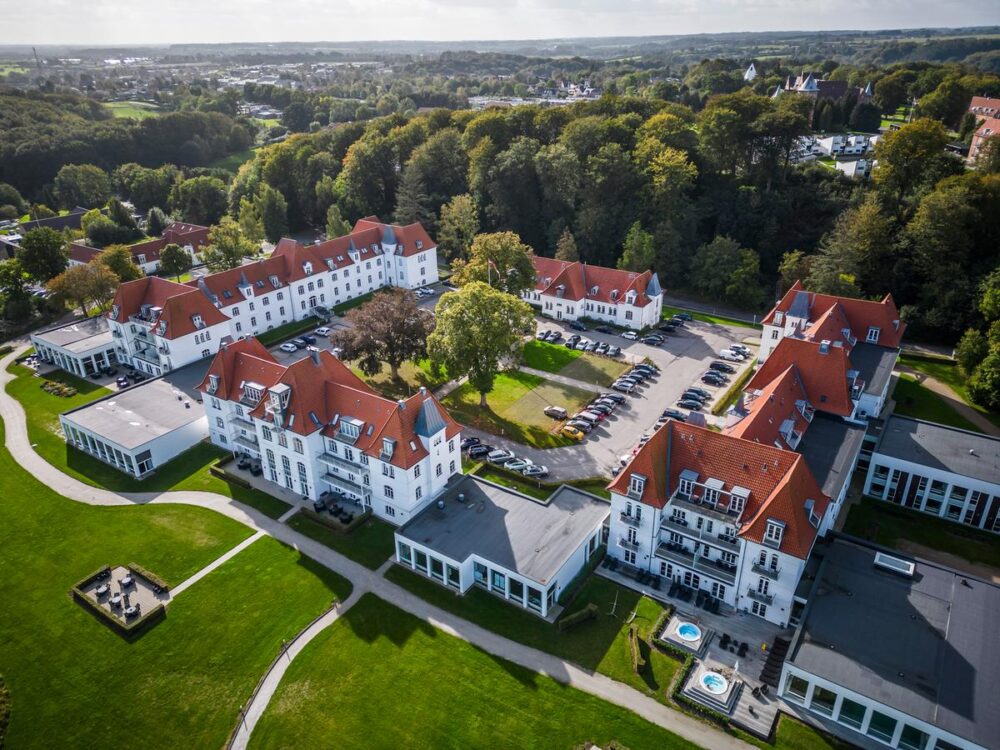
Comwell Kellers Park. Image | Courtesy of Destination Trekantområdet
Here you’ll find Comwell Kellers Park, a historic hotel set by Vejle Fjord and surrounded by parkland and forest. The impressive complex of white buildings with red tiled roofs, set around a leafy central courtyard, was built in 1901 as a care facility. It’s now part of the Comwell group, which was named Denmark’s Best Hotel Chain at last year’s Danish Travel Awards.
There are many reasons to come here, but let’s start with dinner. As well as a more casual eatery, the hotel has a fine dining restaurant with a seasonal three-course menu, plus pre-starter snacks and a wine pairing. To ensure variety for guests staying more than one night, the menu varies daily and changes completely every few weeks. There is also an à la carte option, but we were told that 95% of guests choose the set menu, which was endorsement enough for us.
The tables are all angled to face the floor to ceiling windows overlooking an expansive lawn and the pretty boats sailing down the fjord. The vista also takes in the small vineyard where the hotel produces a limited-edition sparkling wine and where guests are free to wander at leisure. At the opposite end of the restaurant is an impressive wine cellar behind glass. Our waiter Jens was so passionate and knowledgeable about the wine list that we mistook him for a sommelier.
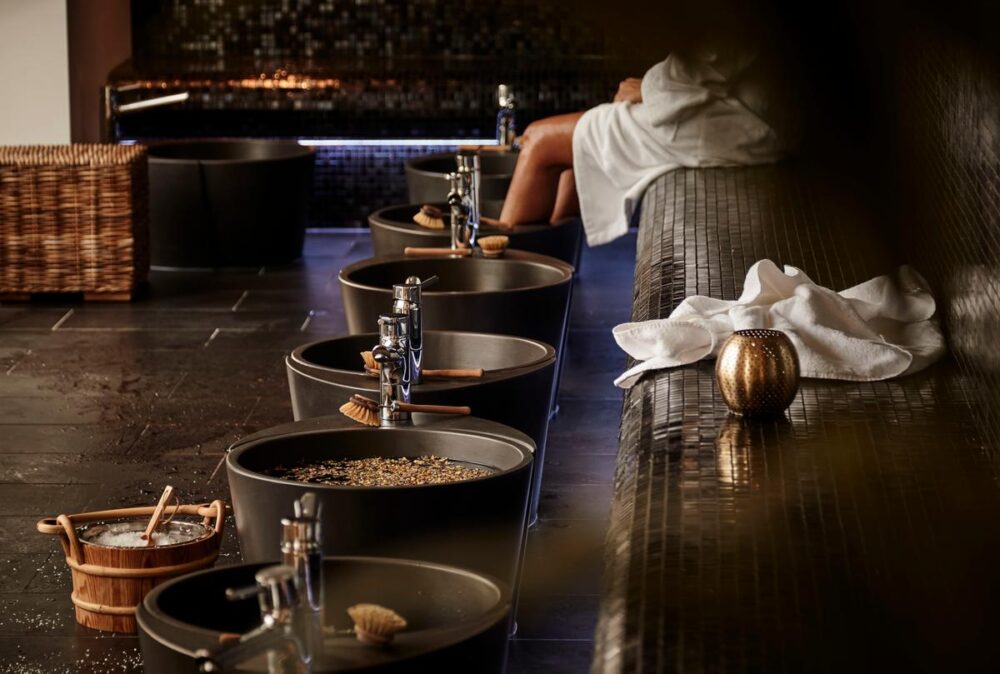
Spa at Comwell Kellers Park. Image | Courtesy of Destination Trekantområdet
But the big draw at Comwell Kellers Park is the spa, which won Spa of the Year at the Danish Beauty Award in 2024. The AquaSpa is a thermal area with herbal saunas, shower walks, baths, a foot spa and – a first for Denmark – an indoor beach with light therapy and heated sand. There are also steam rooms, pools and outdoor hot tubs with a view of the Fjord. Saunagus (guided, aromatic sauna rituals) are available in either traditional, hammam or ‘Viking’ variations. For true indulgence, book the Pure Spa treatment, which includes dry brushing, a full-body massage and a facial while you relax on a bed of heated lava stones.
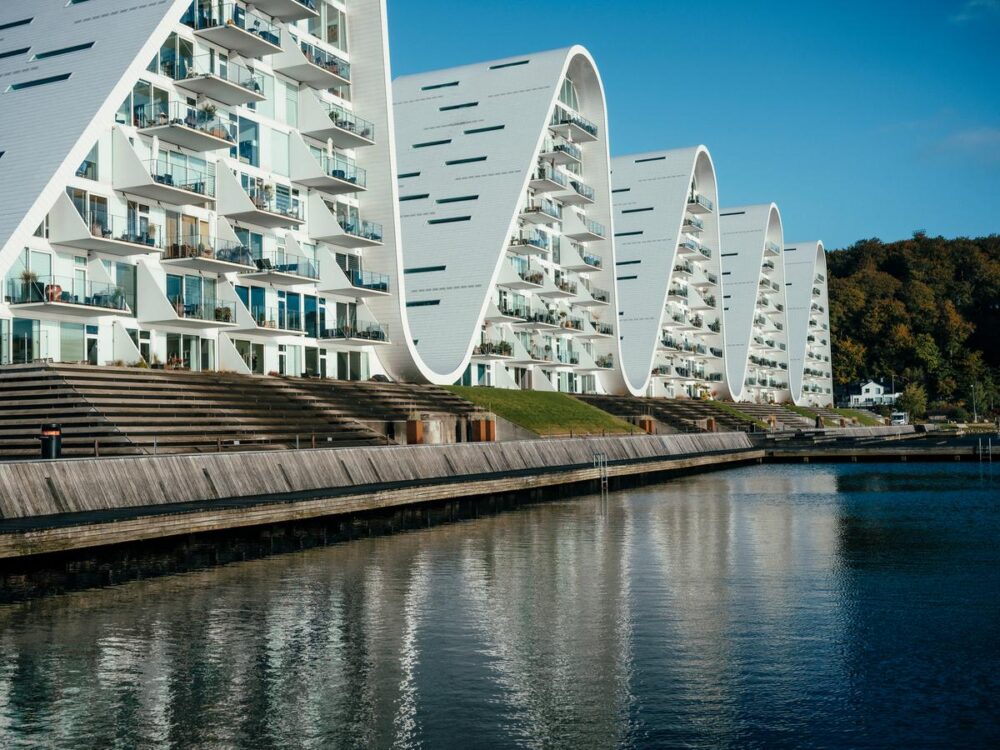
Bølgen (The Wave) building in Vejle. Image | Courtesy of Destination Trekantområdet
Our next stop was Vejle, a city that is known not only for the nature (forests, wetland, fjord) that surrounds it, but for award-winning contemporary architecture.
We lunched at Remouladen, which is situated in a chic, wood-clad building that seems to float above the harbour. From inside the warmly lit black interior, gaze at the rows of yachts and small children learning to fish, while you sample the house speciality: Danish open sandwiches (believe us, it’s more exciting than it sounds). Chef Kristian Vorsø Jørgensen’s focus is on simple food, carefully crafted, organic ingredients (locally sourced where possible) and animal welfare. One sandwich is perfect for a starter or two as a main. We tried the Fish Cakes with smoked bacon, asparagus and gooseberry remoulade, washed down with a Chardonnay-Pouilly Fumé, and the Tartare of Beef with harissa, roasted onion salsa, aioli, roasted onions and wild watercress. This was followed by Jeppe’s Strawberries with Cream, strawberry sorbet, rosehip and basil (a dish named after the owner of the farm where most of the fruit and vegetables are sourced).
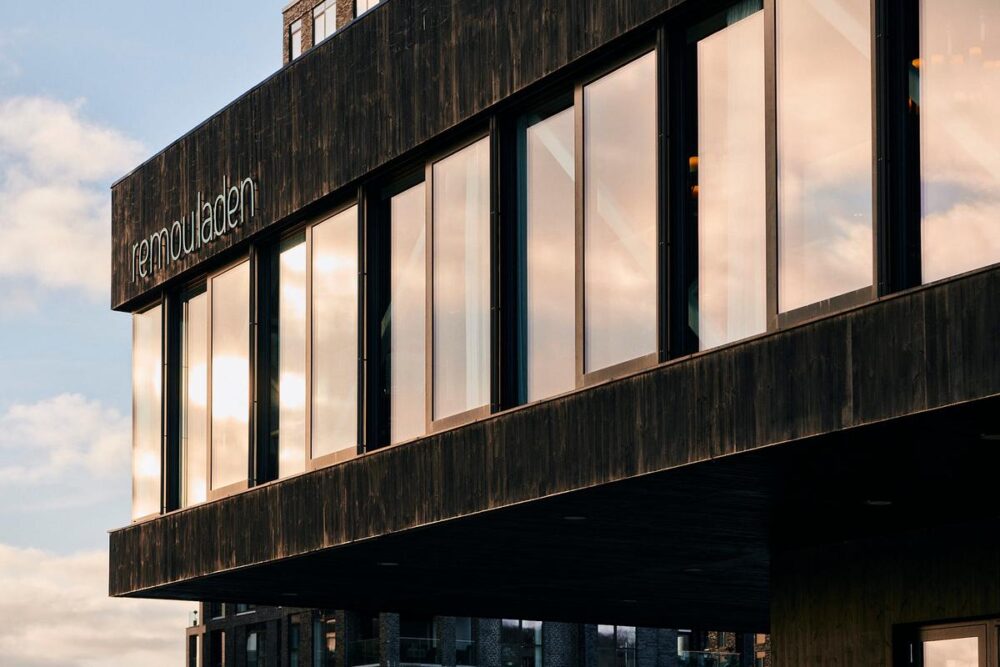
Remouladen. Image | Courtesy of Destination Trekantområdet
Just a short stroll away is Four Points Flex by Sheraton Vejle, which incorporates Kirk Suites: a great alternative to traditional hotel accommodation. Every apartment has in common a beautiful view, whether it’s of the city, forest or fjord, but each is individually designed with furnishings by the likes of Panton, Flos, Paustian and Eames. We stayed in the very spacious (77 m2) family suite with balcony, which includes an open plan kitchen/diner and living area, and a master bedroom, all in pale blue, green and rose hues and with wraparound floor to ceiling windows. The bathroom, meanwhile, was large enough to throw a party in.
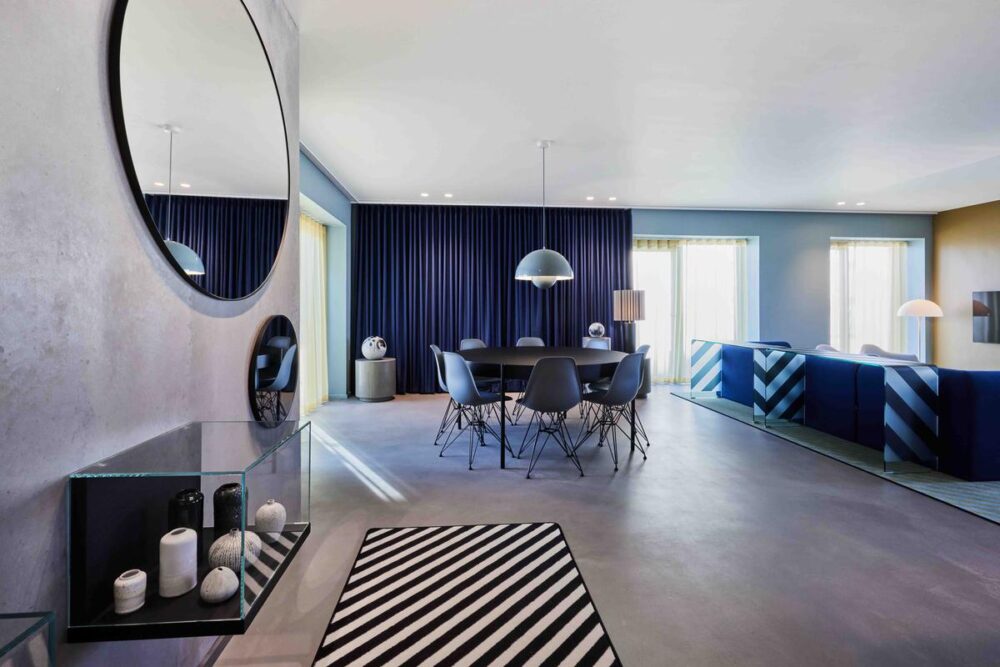
Kirk Suites. Image | Courtesy of Destination Trekantområdet
Unlike some soulless aparthotels we’ve encountered, Kirk Suites makes sure to include a personal tour on arrival. Guests benefit from an IRL reception, fitness area and breakfast in the main hotel. On the 11th floor, you’ll find a lounge and bar, again with panoramic views, but take your drink up a level and enjoy them from the roof terrace.
From here, you’ll be able to see the striking Fjordenhus, which appears to rise from the water like a modern-day fortress. Designed by Danish Icelandic artist Olafur Eliasson and his team, the building is registered as a work of art. The double height entrance floor is partially open to the public, so feel free to wonder across the footbridge to explore it, but you can also book a tour, as there is more intriguing art and design to be discovered inside. Also inside is LYST, one of two restaurants in The Heart of Jutland to be awarded a Michelin star, and reason enough to make a stop in Vejle.
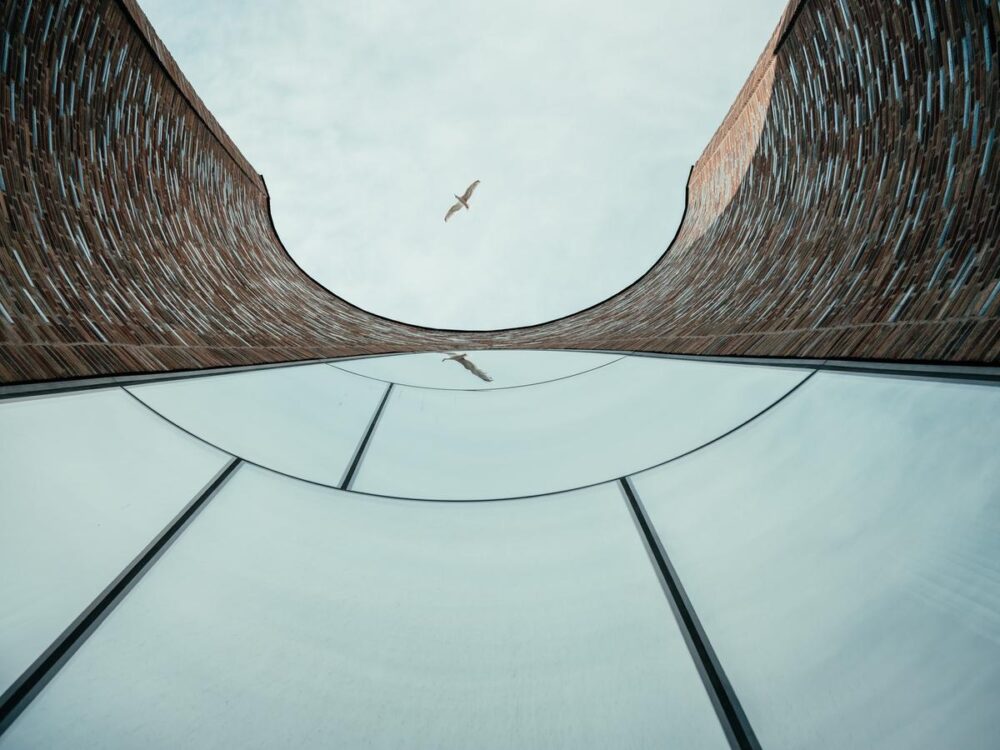
Fjordenhus. Image | Courtesy of Destination Trekantområdet
From Vejle, we travelled to Kolding. If you are planning a trip next year, make sure to add Trapholt to your itinerary. Currently closed for a major expansion, the museum for modern art, architecture, craft and design will reopen in spring 2027. As well as temporary exhibitions, it includes an impressive collection of Danish furniture, a sculpture garden, Arne Jacobsen’s summerhouse and Café Gustav Lind, which is a pleasant place to stop for brunch (if you are not still full after an epic dinner at LYST).
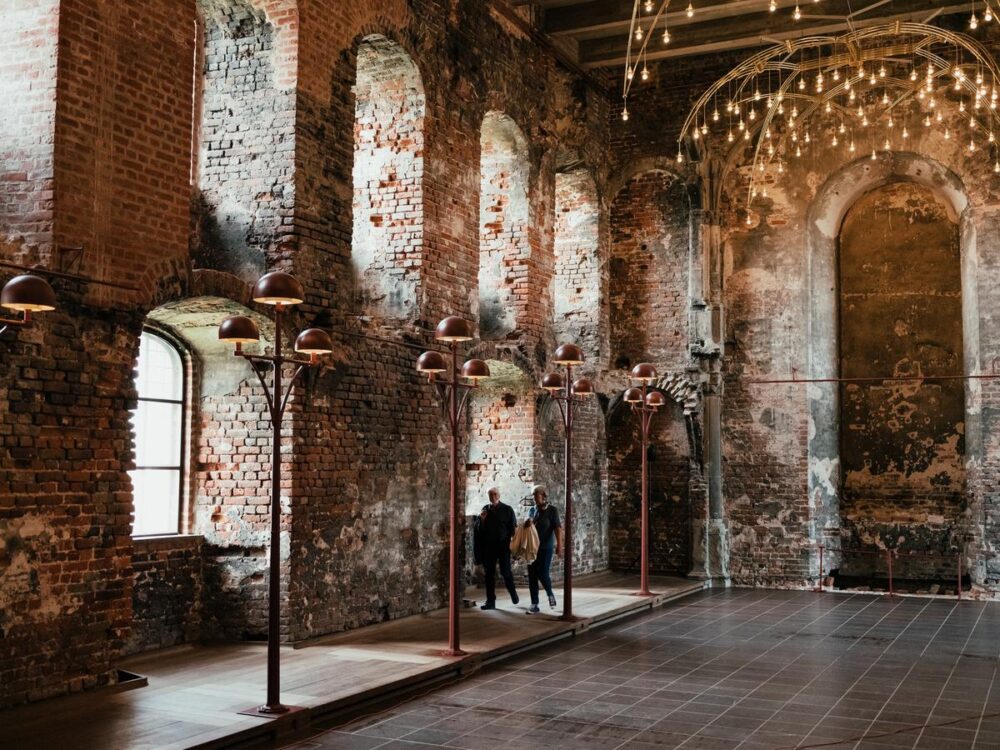
Koldinghus. Image | Courtesy of Destination Trekantområdet
In the meantime, visit the impressive Koldinghus: the last royal castle to be built in Jutland, with origins dating back to 1268. Here you can enjoy exhibitions, various activities from costume and renaissance dancing workshops to fencing and mead tasting, an atmospheric restaurant in the 15th Century basement, or simply stroll around and take in the royal collections and beautiful artworks. Or visit the LINDELY vineyard, where both local wine and brandy are produced in a very scenic setting.
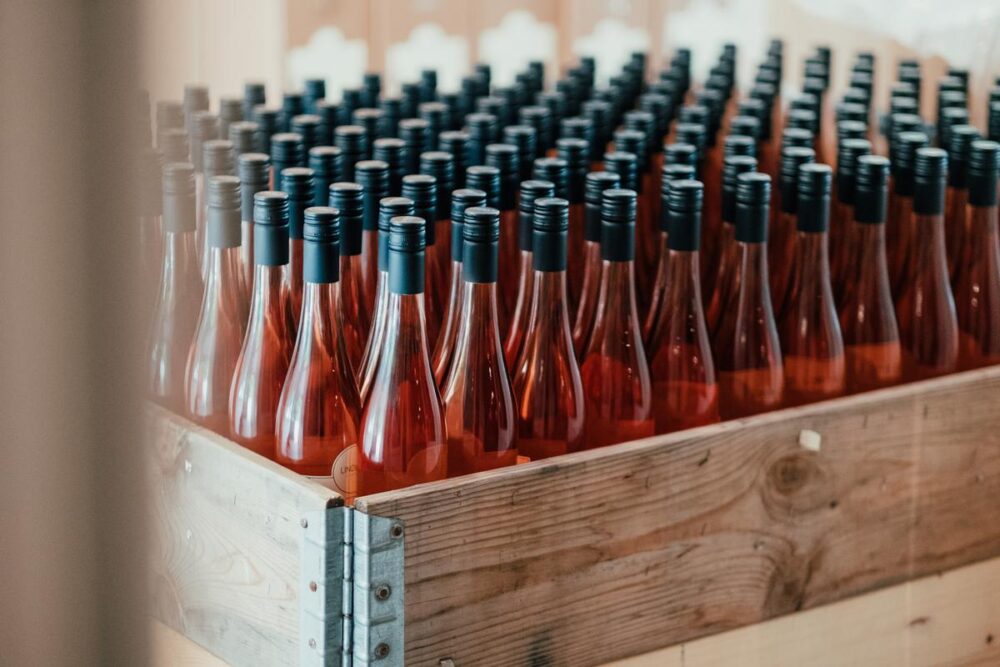
Lindely Vingaard. Image | Courtesy of Destination Trekantområdet
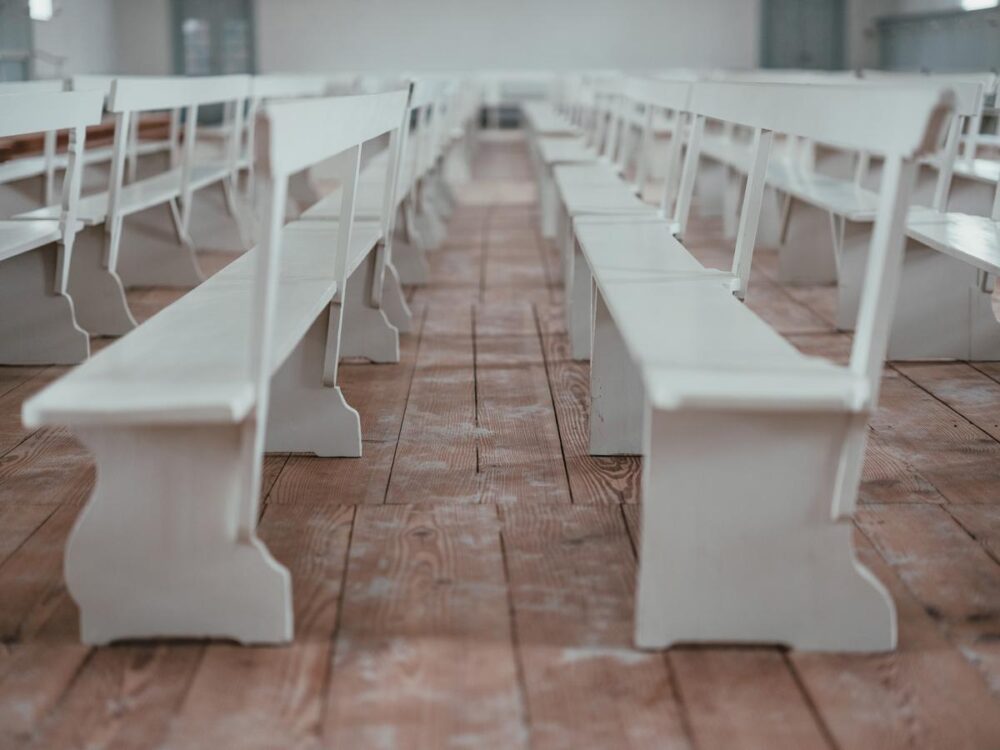
The UNESCO World Heritage Site of Christiansfeld is just a short drive or bus ride from Kolding. Having been impressed by the Brethren town of Zeist in The Netherlands, in 1773, King Christian VII invited the craftspeople and traders to Denmark to build a town there. The centre of Christiansfeld is considered to be one of the most beautifully preserved Brethren towns in Europe. Wander through the cobbled streets and admire the yellowstone houses, then visit the only Brethren church in Denmark, before exploring the town’s charming shops and cafés, especially the gingerbread bakeries. Christiansfeld also hosts an annual wine festival in the first week of August, with live music and tastings from both local and international producers.
There is much more to explore in The Heart of Jutland, including Federicia, a city that is both steeped in history and a gateway to an array of adventure and nature activities. If you are only here for a brief visit, consider a walk around the ramparts, which comprise 18km of trails and one of the largest urban parks in the country. Then refuel at Ti Trin Ned, the other Michelin-starred restaurant in this region. A seasonal, locally sourced menu focuses on elegant simplicity and produce from the sea. Expect dishes like Lobster, salt and basil or Turbot, juniper and autumn greens, and allow at least three hours for the experience.
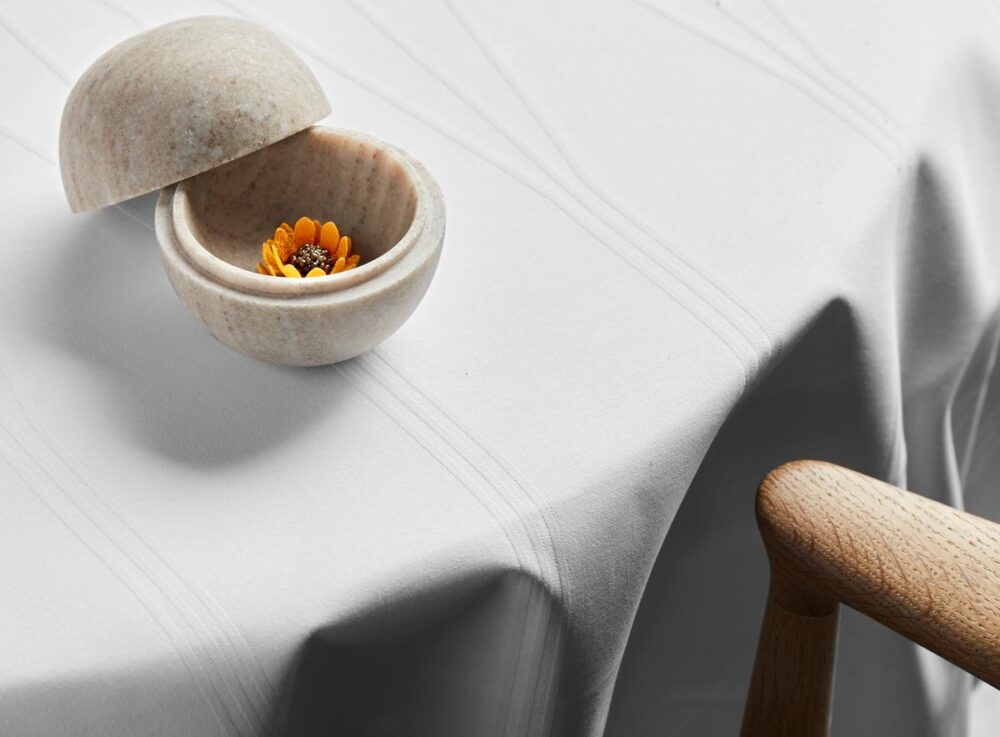
Ti Trin Ned. Image | Courtesy of Destination Trekantområdet. Photography | Michael Jepsen MTJ Studio
Read more about The Heart of Jutland here.
words. Huma Humayun
in HTML format, including tags, to make it appealing and easy to read for Japanese-speaking readers aged 20 to 40 interested in fashion. Organize the content with appropriate headings and subheadings (h1, h2, h3, h4, h5, h6), translating all text, including headings, into Japanese. Retain any existing
tags from
Christiansfeld. Image | Courtesy of Destination Trekantområdet
With its combination of breathtaking landscapes and cutting-edge design, Scandinavia has plenty to offer visitors. According to data by UK booking site Hellotickets, while fewer travellers headed abroad in general last summer compared to the previous year, Scandinavia experienced a boom. After a strong spring, with bookings three times higher, July saw these numbers triple again.
But beyond the bustle of the well-known capital cities, there are less beaten paths to explore. In the middle of Jutland, Denmark, is the area known as Trekantområdet (The Heart of Jutland or the Triangle Region), which includes Billund, Fredericia, Kolding and Vejle – and it’s easier to reach than you might think. As the birthplace of LEGO®, Billund has become a mecca for young families and fans of the iconic bricks, and boasts a tiny, but easily accessible international airport. But those less interested in theme parks, and more minded towards culture, culinary offerings and chilling at the spa, won’t be disappointed.
From the airport, it’s only a few minutes by bus to the centre of Billund. Here, LEGO® House – a design-led attraction aimed as much at adult visitors as children – is well worth a visit and will fill the best part of a day. There’s not much in the way of fine dining in the town, but you can enjoy a satisfying meal and friendly service at Billund Gastropub before driving (we recommend hiring a car to best explore the region) to Børkop.
Comwell Kellers Park. Image | Courtesy of Destination Trekantområdet
Here you’ll find Comwell Kellers Park, a historic hotel set by Vejle Fjord and surrounded by parkland and forest. The impressive complex of white buildings with red tiled roofs, set around a leafy central courtyard, was built in 1901 as a care facility. It’s now part of the Comwell group, which was named Denmark’s Best Hotel Chain at last year’s Danish Travel Awards.
There are many reasons to come here, but let’s start with dinner. As well as a more casual eatery, the hotel has a fine dining restaurant with a seasonal three-course menu, plus pre-starter snacks and a wine pairing. To ensure variety for guests staying more than one night, the menu varies daily and changes completely every few weeks. There is also an à la carte option, but we were told that 95% of guests choose the set menu, which was endorsement enough for us.
The tables are all angled to face the floor to ceiling windows overlooking an expansive lawn and the pretty boats sailing down the fjord. The vista also takes in the small vineyard where the hotel produces a limited-edition sparkling wine and where guests are free to wander at leisure. At the opposite end of the restaurant is an impressive wine cellar behind glass. Our waiter Jens was so passionate and knowledgeable about the wine list that we mistook him for a sommelier.
Spa at Comwell Kellers Park. Image | Courtesy of Destination Trekantområdet
But the big draw at Comwell Kellers Park is the spa, which won Spa of the Year at the Danish Beauty Award in 2024. The AquaSpa is a thermal area with herbal saunas, shower walks, baths, a foot spa and – a first for Denmark – an indoor beach with light therapy and heated sand. There are also steam rooms, pools and outdoor hot tubs with a view of the Fjord. Saunagus (guided, aromatic sauna rituals) are available in either traditional, hammam or ‘Viking’ variations. For true indulgence, book the Pure Spa treatment, which includes dry brushing, a full-body massage and a facial while you relax on a bed of heated lava stones.
Bølgen (The Wave) building in Vejle. Image | Courtesy of Destination Trekantområdet
Our next stop was Vejle, a city that is known not only for the nature (forests, wetland, fjord) that surrounds it, but for award-winning contemporary architecture.
We lunched at Remouladen, which is situated in a chic, wood-clad building that seems to float above the harbour. From inside the warmly lit black interior, gaze at the rows of yachts and small children learning to fish, while you sample the house speciality: Danish open sandwiches (believe us, it’s more exciting than it sounds). Chef Kristian Vorsø Jørgensen’s focus is on simple food, carefully crafted, organic ingredients (locally sourced where possible) and animal welfare. One sandwich is perfect for a starter or two as a main. We tried the Fish Cakes with smoked bacon, asparagus and gooseberry remoulade, washed down with a Chardonnay-Pouilly Fumé, and the Tartare of Beef with harissa, roasted onion salsa, aioli, roasted onions and wild watercress. This was followed by Jeppe’s Strawberries with Cream, strawberry sorbet, rosehip and basil (a dish named after the owner of the farm where most of the fruit and vegetables are sourced).
Remouladen. Image | Courtesy of Destination Trekantområdet
Just a short stroll away is Four Points Flex by Sheraton Vejle, which incorporates Kirk Suites: a great alternative to traditional hotel accommodation. Every apartment has in common a beautiful view, whether it’s of the city, forest or fjord, but each is individually designed with furnishings by the likes of Panton, Flos, Paustian and Eames. We stayed in the very spacious (77 m2) family suite with balcony, which includes an open plan kitchen/diner and living area, and a master bedroom, all in pale blue, green and rose hues and with wraparound floor to ceiling windows. The bathroom, meanwhile, was large enough to throw a party in.
Kirk Suites. Image | Courtesy of Destination Trekantområdet
Unlike some soulless aparthotels we’ve encountered, Kirk Suites makes sure to include a personal tour on arrival. Guests benefit from an IRL reception, fitness area and breakfast in the main hotel. On the 11th floor, you’ll find a lounge and bar, again with panoramic views, but take your drink up a level and enjoy them from the roof terrace.
From here, you’ll be able to see the striking Fjordenhus, which appears to rise from the water like a modern-day fortress. Designed by Danish Icelandic artist Olafur Eliasson and his team, the building is registered as a work of art. The double height entrance floor is partially open to the public, so feel free to wonder across the footbridge to explore it, but you can also book a tour, as there is more intriguing art and design to be discovered inside. Also inside is LYST, one of two restaurants in The Heart of Jutland to be awarded a Michelin star, and reason enough to make a stop in Vejle.
Fjordenhus. Image | Courtesy of Destination Trekantområdet
From Vejle, we travelled to Kolding. If you are planning a trip next year, make sure to add Trapholt to your itinerary. Currently closed for a major expansion, the museum for modern art, architecture, craft and design will reopen in spring 2027. As well as temporary exhibitions, it includes an impressive collection of Danish furniture, a sculpture garden, Arne Jacobsen’s summerhouse and Café Gustav Lind, which is a pleasant place to stop for brunch (if you are not still full after an epic dinner at LYST).
Koldinghus. Image | Courtesy of Destination Trekantområdet
In the meantime, visit the impressive Koldinghus: the last royal castle to be built in Jutland, with origins dating back to 1268. Here you can enjoy exhibitions, various activities from costume and renaissance dancing workshops to fencing and mead tasting, an atmospheric restaurant in the 15th Century basement, or simply stroll around and take in the royal collections and beautiful artworks. Or visit the LINDELY vineyard, where both local wine and brandy are produced in a very scenic setting.
Lindely Vingaard. Image | Courtesy of Destination Trekantområdet
The UNESCO World Heritage Site of Christiansfeld is just a short drive or bus ride from Kolding. Having been impressed by the Brethren town of Zeist in The Netherlands, in 1773, King Christian VII invited the craftspeople and traders to Denmark to build a town there. The centre of Christiansfeld is considered to be one of the most beautifully preserved Brethren towns in Europe. Wander through the cobbled streets and admire the yellowstone houses, then visit the only Brethren church in Denmark, before exploring the town’s charming shops and cafés, especially the gingerbread bakeries. Christiansfeld also hosts an annual wine festival in the first week of August, with live music and tastings from both local and international producers.
There is much more to explore in The Heart of Jutland, including Federicia, a city that is both steeped in history and a gateway to an array of adventure and nature activities. If you are only here for a brief visit, consider a walk around the ramparts, which comprise 18km of trails and one of the largest urban parks in the country. Then refuel at Ti Trin Ned, the other Michelin-starred restaurant in this region. A seasonal, locally sourced menu focuses on elegant simplicity and produce from the sea. Expect dishes like Lobster, salt and basil or Turbot, juniper and autumn greens, and allow at least three hours for the experience.
Ti Trin Ned. Image | Courtesy of Destination Trekantområdet. Photography | Michael Jepsen MTJ Studio
Read more about The Heart of Jutland here.
words. Huma Humayun
and integrate them seamlessly into the new content without adding new tags. Ensure the new content is fashion-related, written entirely in Japanese, and approximately 1500 words. Conclude with a “結論” section and a well-formatted “よくある質問” section. Avoid including an introduction or a note explaining the process.