Rewrite
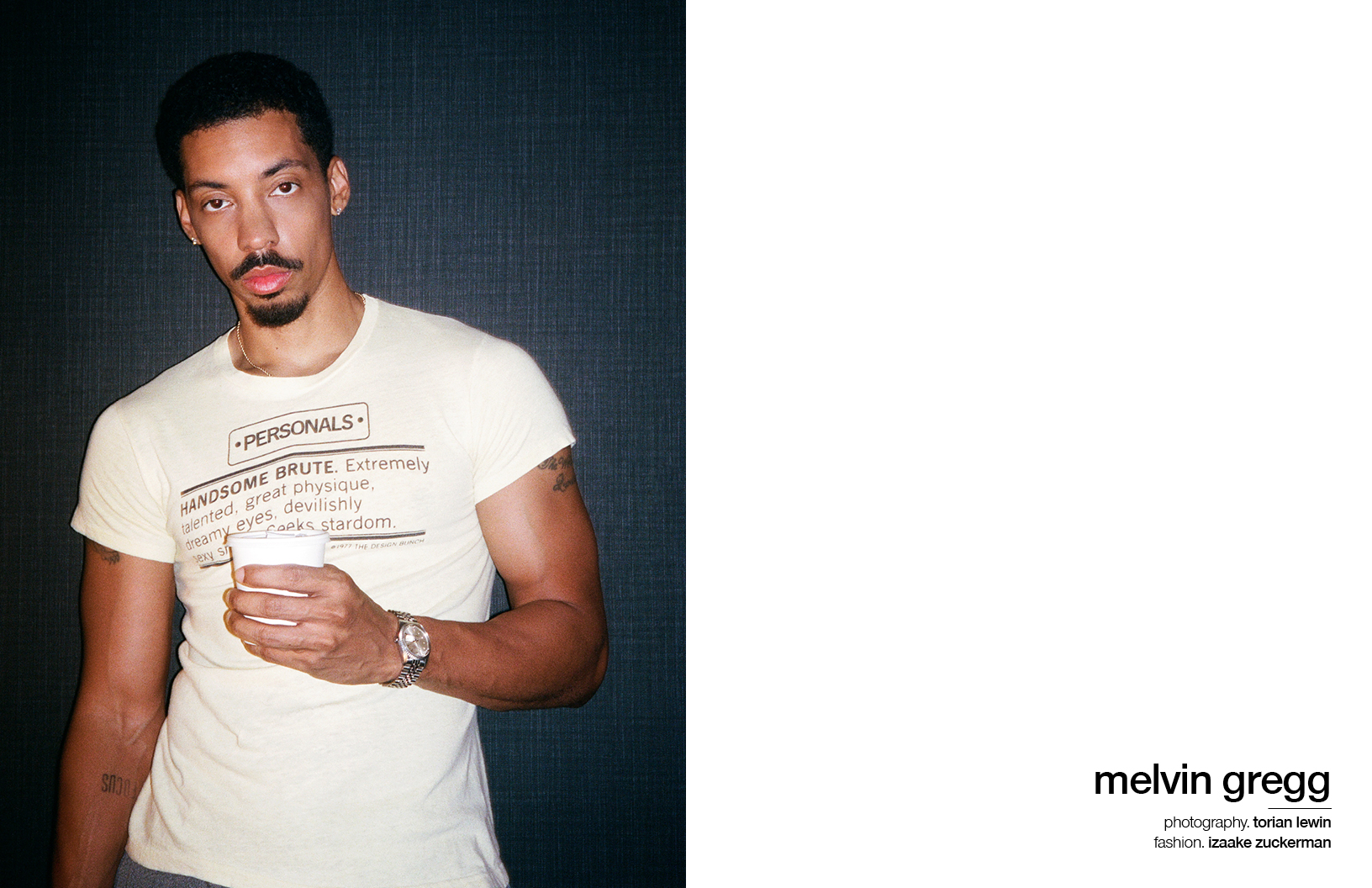
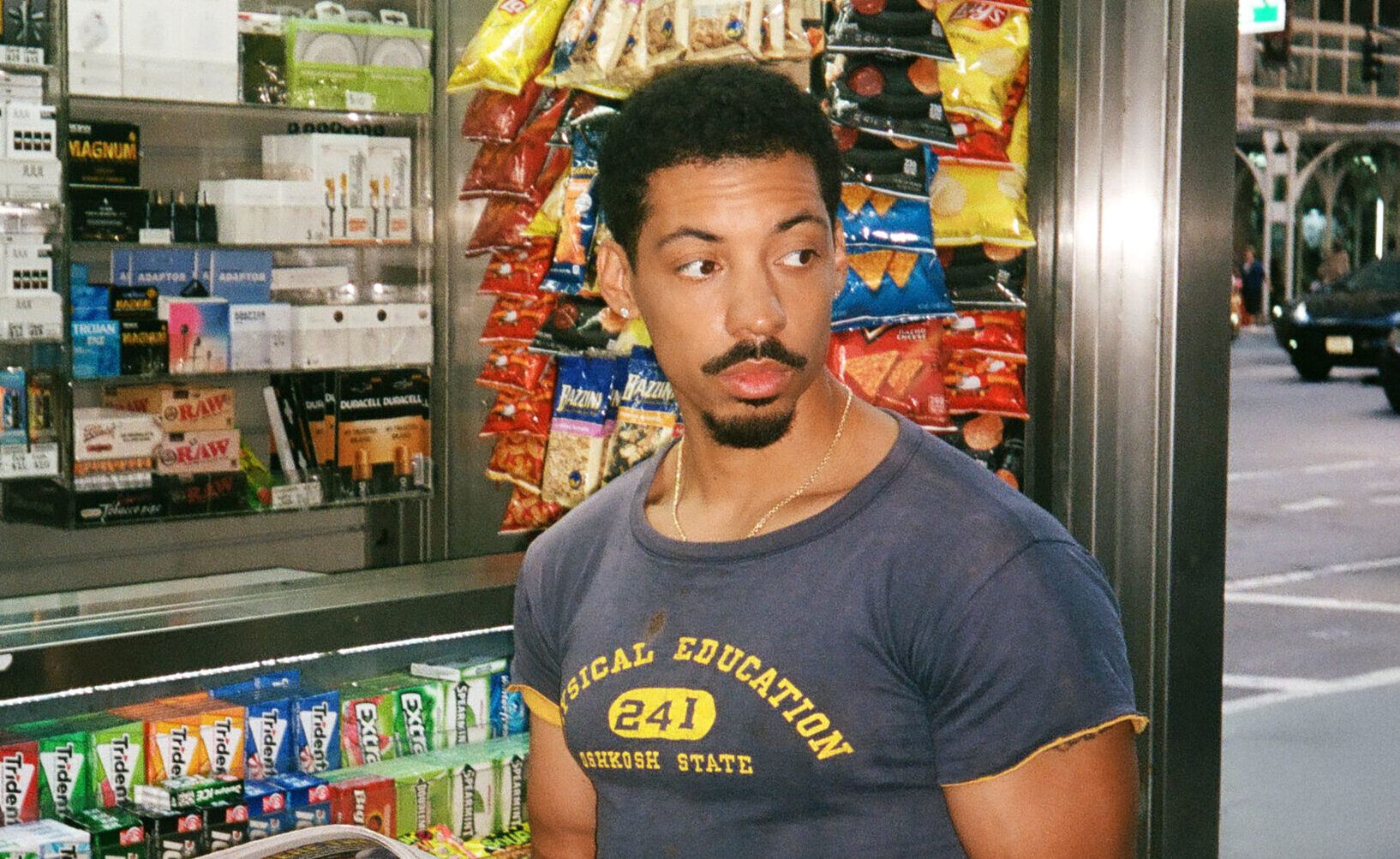
graphic t-shirt. The Society Archive
watch. Rolex
Melvin Gregg’s face once lived in six-second bursts—quick jokes, exaggerated expressions, instant laughter. Rising to fame during Vine’s golden era, he became one of the platform’s most recognizable creators. Today, his performances unfold more slowly and with greater emotional depth. From Snowfall to The Paper, Gregg has shifted toward characters defined by vulnerability, uncertainty, and quiet tension. His career now exists in the space between viral visibility and long-form storytelling, tracing not just a change in medium, but an ongoing search for identity beyond first impressions.
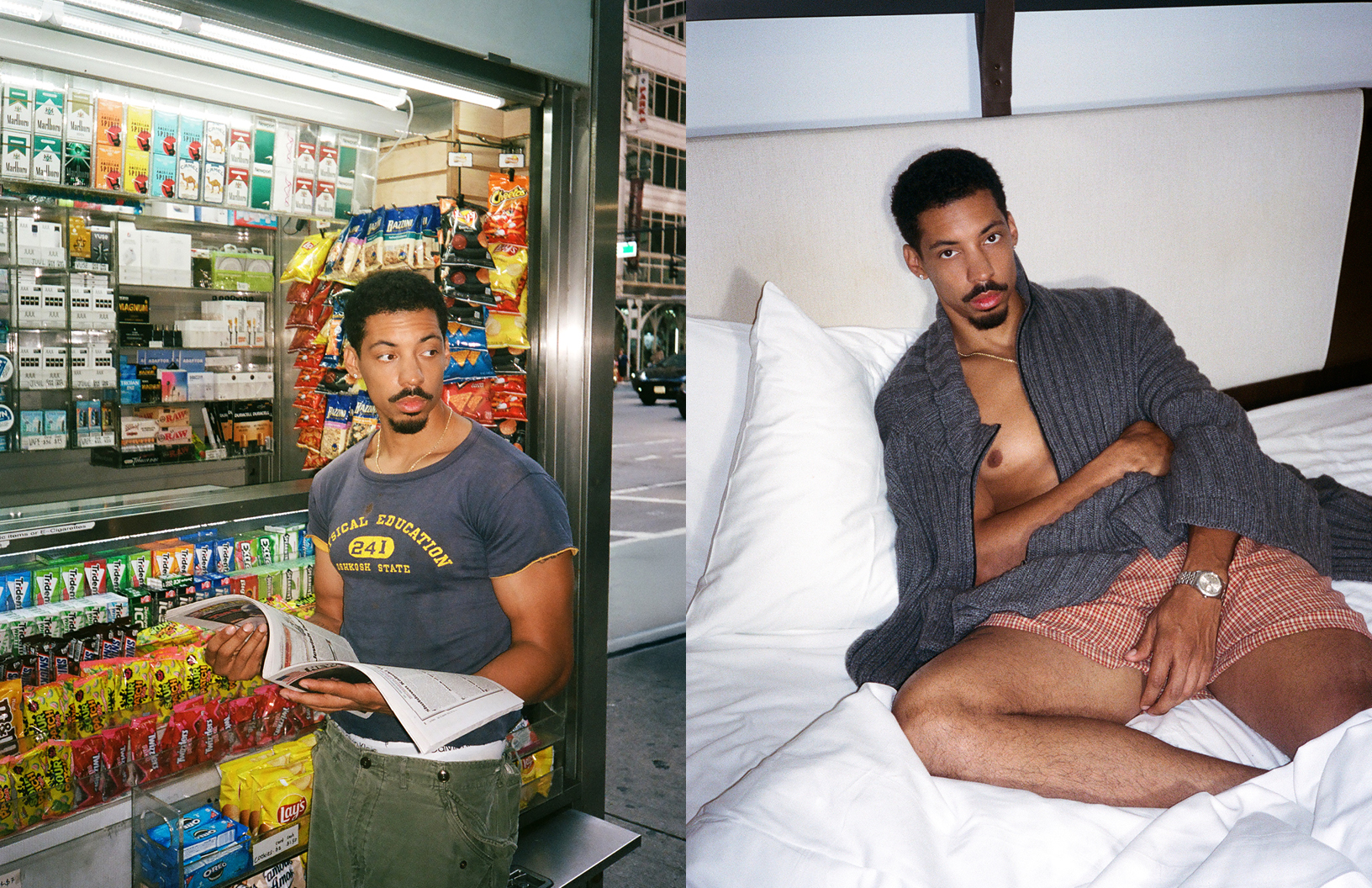
graphic t- shirt + trousers. The Society Archive
opposite
knit cape. Giorgio Armani
underwear. The Society Archive
necklace. Talent’s Own
watch. Rolex
You transitioned from making millions of people laugh on social media on Vine to carrying deep pain in front of the camera. In this journey between two extreme sides, what was the sharpest conflict between the version people expected from you and your true self?
What was the biggest difference between the version people expected and my true self? I think people often expect me to be exactly how they first encountered me. But like most people, I have many different sides depending on the moment, the person I am speaking to, and what is happening in my life.
Throughout my career, I have been able to tap into different sides of myself, but people tend to hold on to that first impression. If they discovered me online, they expect me to be very outgoing and energetic. That platform was centred on comedy, and with only six seconds, you had to be big and animated. In real life, I am not really like that. I am much more relaxed and low-key.
If someone meets me through Snowfall, I am playing a gangster, but I am not a gangster in real life. And now in The Paper, my character is a people pleaser. He is optimistic, enthusiastic, carefree, and awkward. I am not really like that most of the time. Maybe around certain people, but generally, I am more cynical than enthusiastic.
I am optimistic in my own way, but I am definitely not a people pleaser. I think all of my characters contain parts of me, but they also distort certain traits. It is a mix of truth and exaggeration. I actually miss the Vine era sometimes. TikTok is great too, but Vine was all about six or seven seconds. It felt more playful and spontaneous. It was definitely a moment.
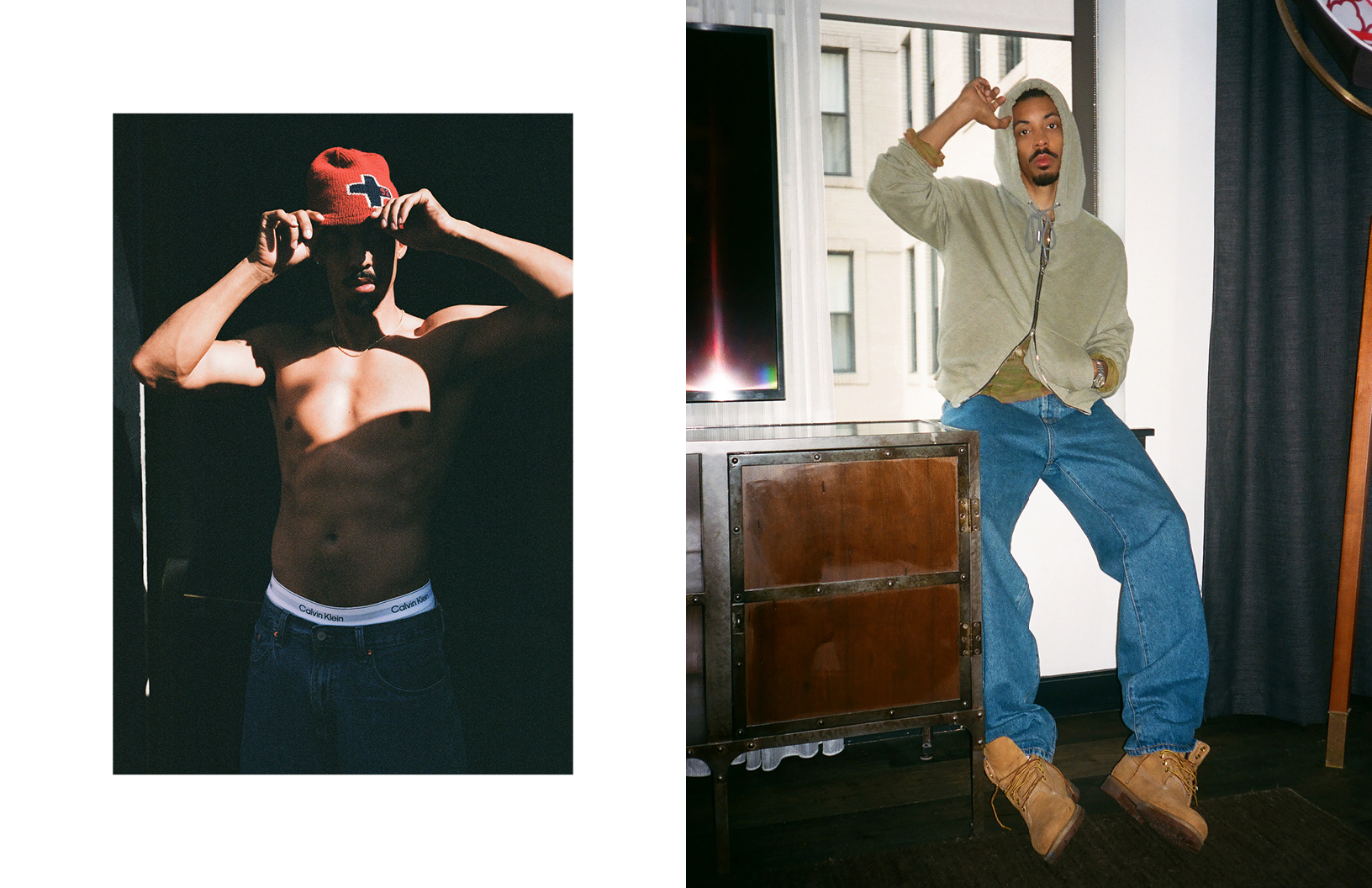
trousers. Levis Baggy Capri
underwear. Calvin Klein
beanie. The Society Archive
necklace. Talent’s Own
opposite
hoodie. Eckhaus Latta
shirt. Aubero
jeans. The Row
shoes. Timberlands
watch. Rolex
How did you reframe your career from going viral to leaving a lasting mark? What was the most frightening aspect of that transformation for you?
The thing about going viral is that you get a lot of attention, but not all attention is equal. People care for a few days, then something else goes viral, and they move on. It is very short-lived. You might reach more people, but the content itself is brief, so the impact does not last.
You do not go viral just once. You have to keep doing it constantly to stay relevant. That can be exciting, but it is also exhausting. In more traditional formats like television or film, you may not go viral, but the people who do watch your work carry it with them much longer.
When someone sits down to watch a film for an hour and a half, they get to know the character. They go on a journey. That experience stays with them. There are movies we watched as kids that still affect us today. A viral video usually does not have that kind of lasting effect. You may reach fewer people, but the attention you receive is deeper and more meaningful.
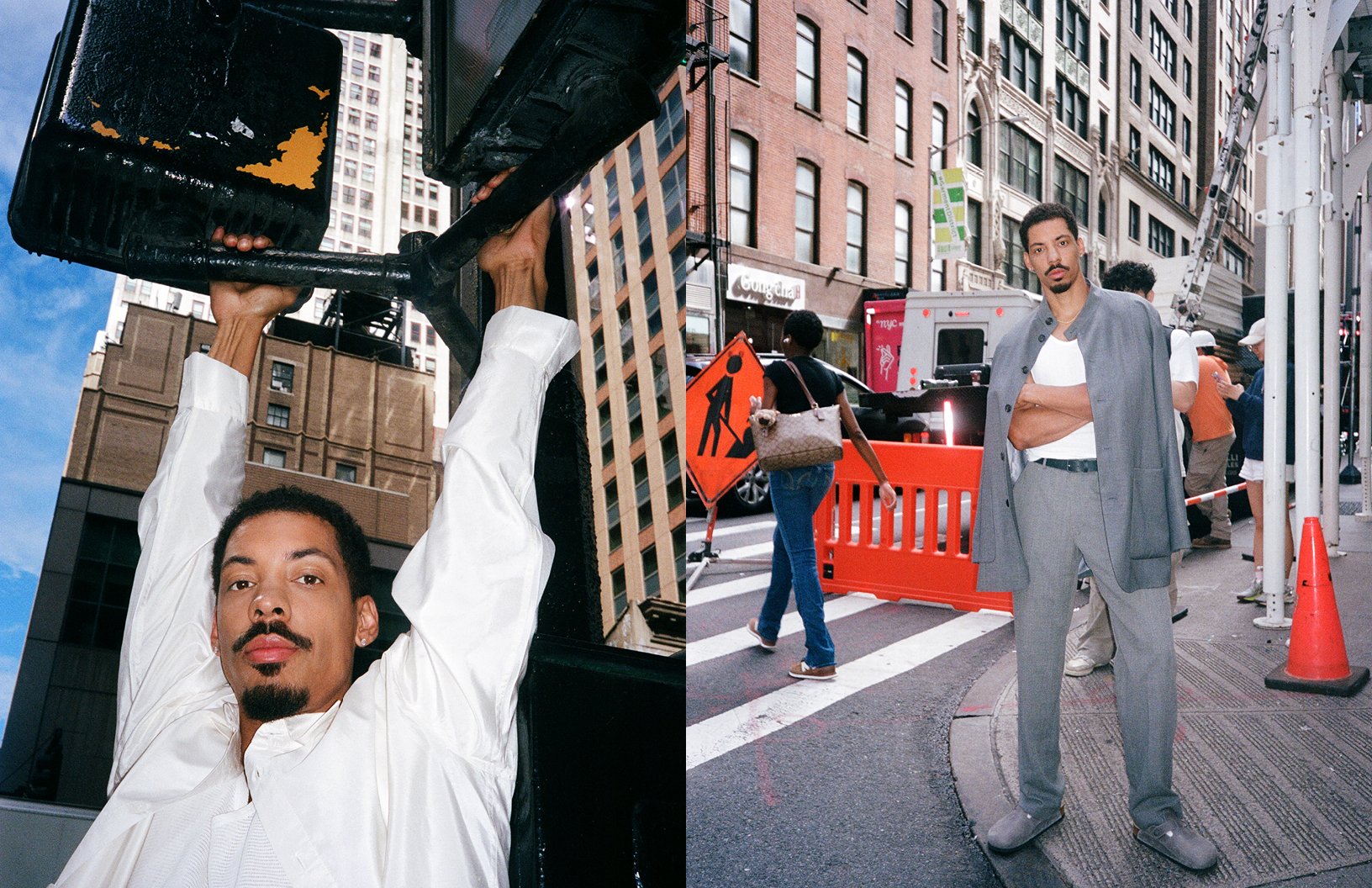
button up. Aubero
t-shirt. Barneys @ The Society Archive
opposite
blazer. Emporio Armani x Our Legacy
t-shirt. Barneys @ The Society Archive
trousers. Giorgio Armani
shoes. Birkenstock Boston Clog
belt. Talent’s Own
In productions like Not Perfect, Strangers, and The Way Back, we often hear an inner monologue shaping your characters. How do you construct those inner voices, and how close are they to your own?
I always try to find parallels between the character and things I can relate to in my own life. That might be something I am experiencing now or something I went through in the past. That connection helps me understand and justify the character. Once I understand who the character is, what they want, and how they see the world, I can exist in that space and let the environment affect me naturally.
In Not Perfect Strangers, a large part of my character’s story did not make the final cut. He resented social media because his wife wanted attention from people online more than from him. She was chasing validation from strangers, and he kept questioning what really mattered. Was it the attention of people you will never meet, or the attention of the person right in front of you? That idea connects directly to my own experience. Coming from social media, I sometimes felt like I was performing for people I did not know instead of focusing on the people closest to me. That parallel helped me live truthfully inside the character.
In The Paper, my character is in love but not receiving attention. He starts spiralling, trying to figure out how to get it. Should he play hard to get, or should he be honest and vulnerable? That is something most people have experienced, and it is something I have lived through myself. I try to find those shared emotional truths and let them guide the performance.
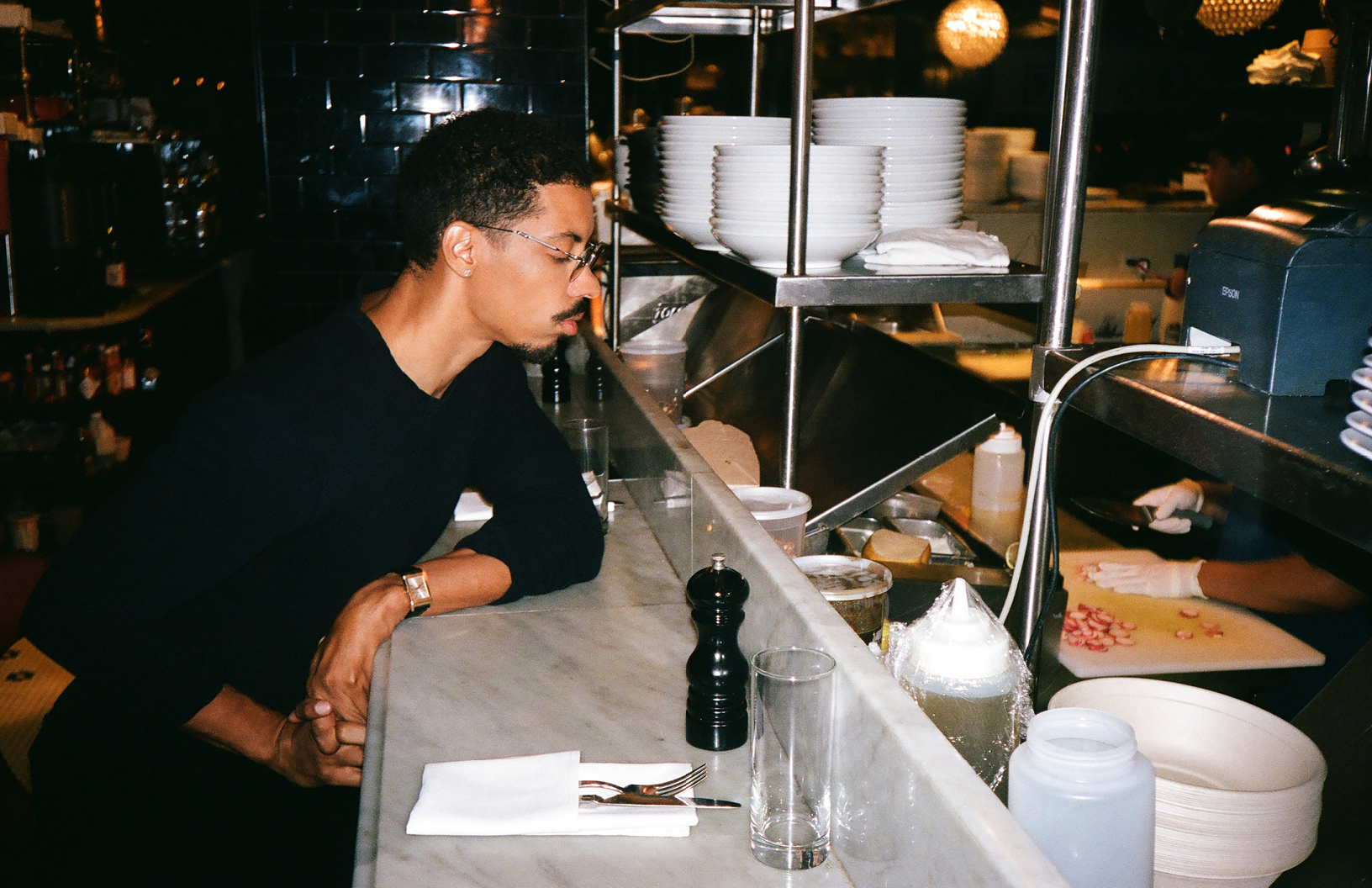
shirt. The Society Archive
trousers. Nili Lotan
watch. Jaeger La Couture
During your Vine days, was comedy a kind of protective shield? Looking back now, were there emotions you thought you were hiding that still came through on camera?
I would not say it was a shield. It was more about what worked best on that platform. Vine was built around shareability, and comedy is the most shareable form of content. People tell jokes all the time. You do not usually walk around sharing traumatic stories. Comedy simply worked, so that is what most of us leaned into. I do not think I was hiding much emotionally.
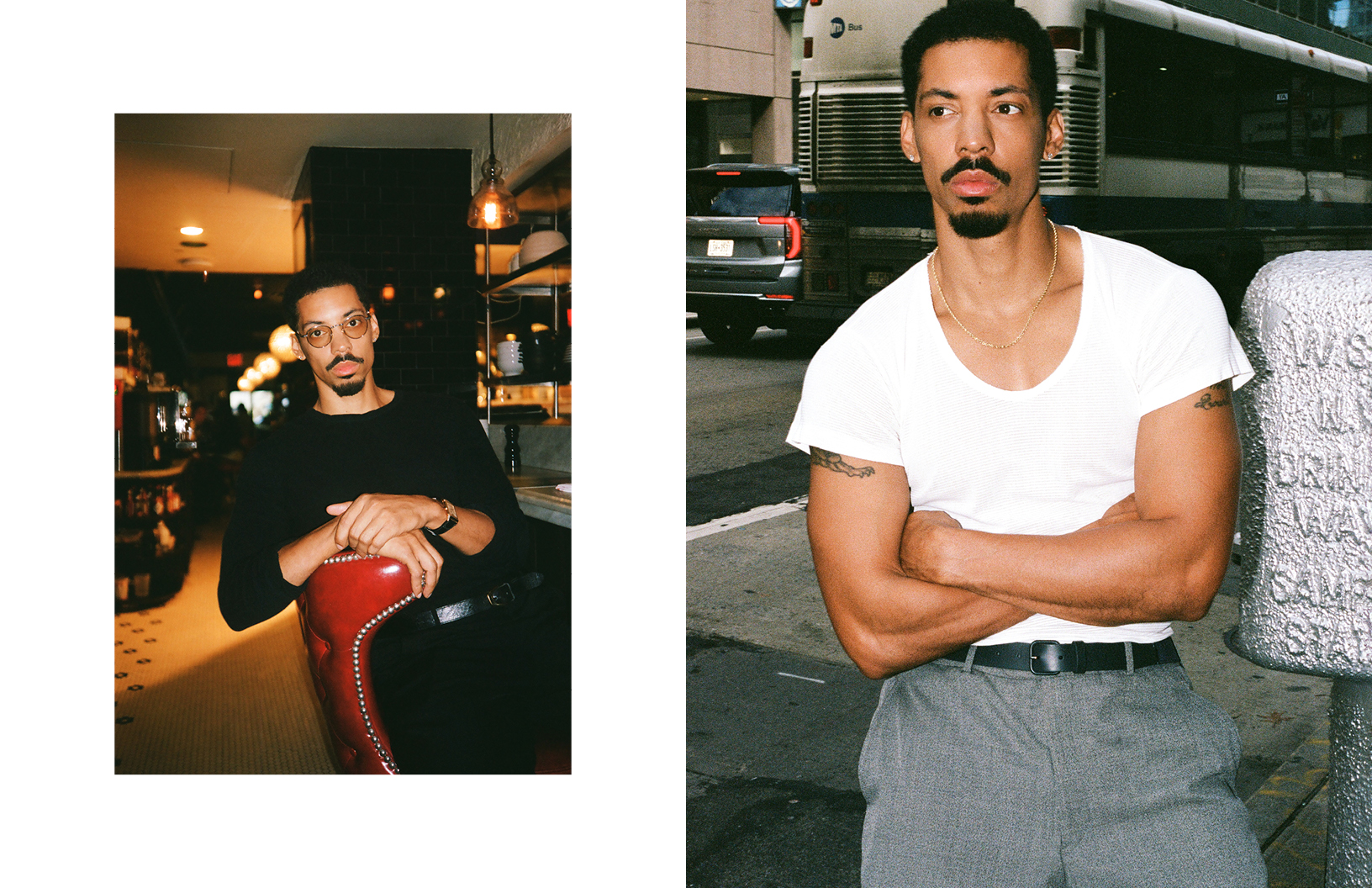
shirt. The Society Archive
trousers. Nili Lotan
watch. Jaeger La Couture
belt. Giorgio Armani
opposite
t-shirt. Barneys @ The Society Archive
trousers. Giorgio Armani
belt. Talent’s Own
How do you challenge dominant portrayals of Black masculinity as strong, stoic, and unbreakable when choosing roles? Do you actively look for vulnerability in a character?
I look for characters I can bring humility to. Black men are often portrayed as a single type or trope. If I can break that down and add more layers, then maybe audiences can walk away with a deeper understanding of masculinity, and specifically Black masculinity. With The Paper, I get to play someone who is not the traditionally cool or hyper-masculine guy. That feels important. Being Black and being a man is not a monolith. We come in many forms, personalities, and emotional registers. Exploring that range on screen feels necessary.
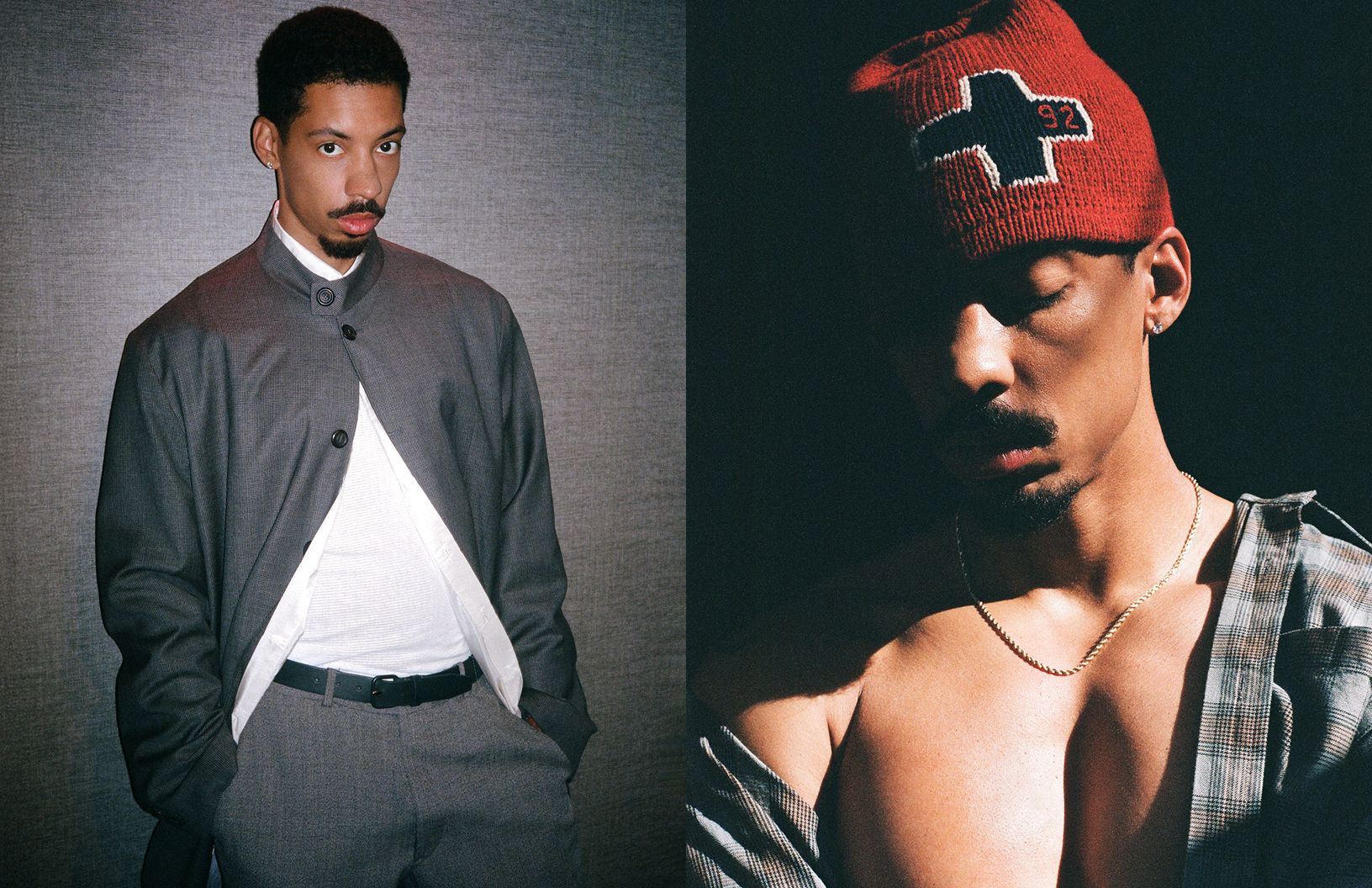
blazer. Emporio Armani x Our Legacy
button up. Aubero
t-shirt. Barneys @ The Society Archive
trousers. Giorgio Armani
belt. Talent’s Own
opposite
shirt + necklace. Talent’s Own
beanie. The Society Archive
If your career were a basketball game, where do you see yourself right now? Are you still playing offence, or are you beginning to direct the game?
I feel like a player who understands the game deeply. When I retire, I will probably coach. Right now, I am coming off the bench. I have strong games, but I am not a starter yet. I am not the star of the team. I have not yet been given the opportunity to fully take control and show everything I can do. At this point, I have mostly been a role player, but I believe I have the potential to be a key player on any team.
Is social media still a big part of your life today? Who is Melvin Gregg when the camera is not rolling? Are there habits or rituals we do not get to see?
I am still figuring out how social media fits into my life now. The perception around it has changed a lot. In the early days, it was not taken seriously because it was new. Now people understand its value, the reach, the numbers, the influence. I am trying to find a balance where I can benefit from having an audience without getting distracted by chasing virality. Sometimes productions want someone with a large following, but that is not really who I am anymore. It would not be genuine to my goals.
I try to create content based on my real interests rather than trends. Most of my life is not online. I am very intentional about what I share. If I post my family, it is because I hope it encourages people to spend time with theirs. If I post myself building something, I hope it inspires someone to put their phone down and create something themselves. If it does not serve that purpose, I usually do not post it.
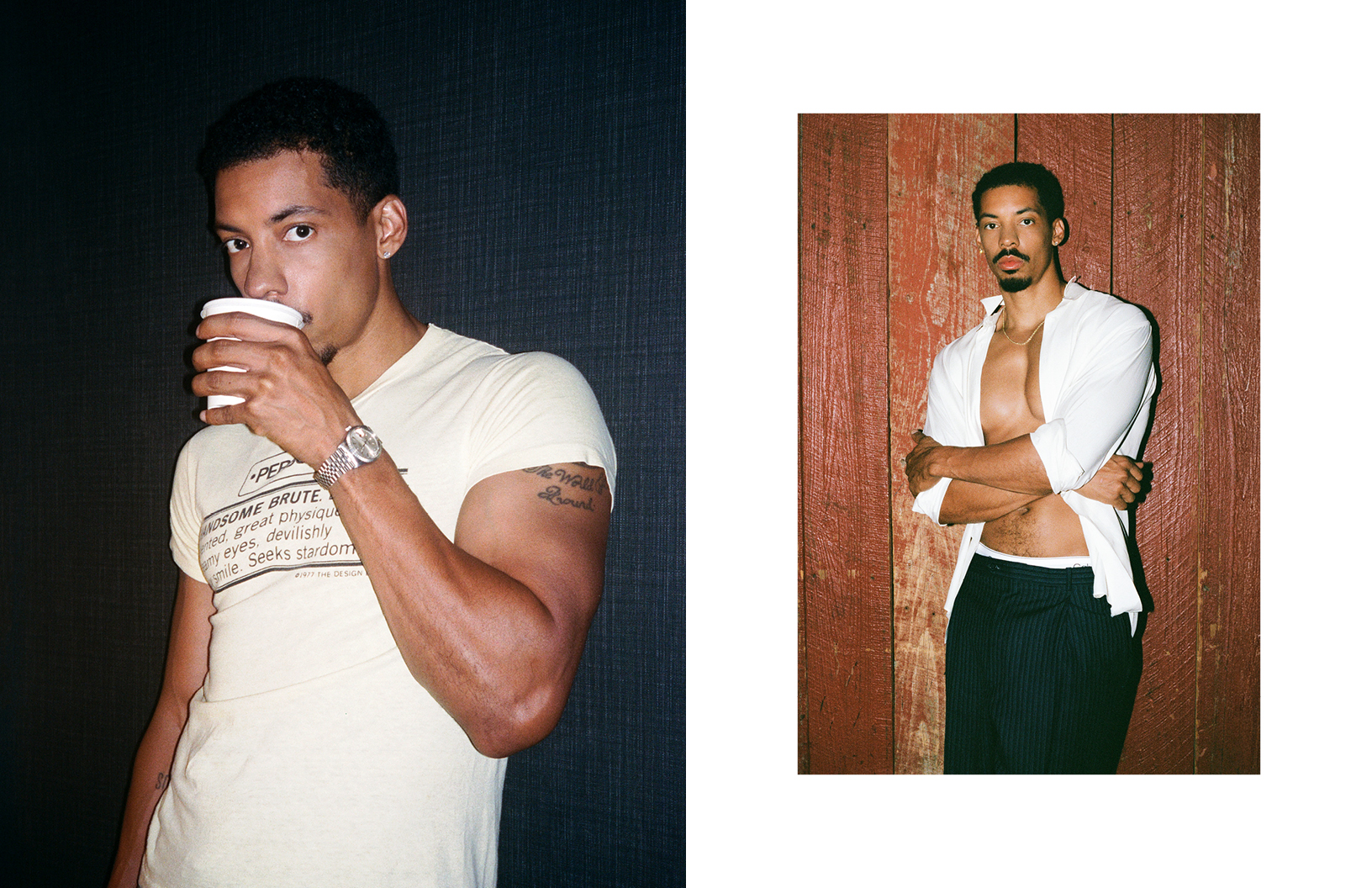
graphic t-shirt. The Society Archive
watch. Rolex
opposite
shirt. Giorgio Armani @ The Society Archive
trousers. THE SOCIETY ARCHIVE
underwear. Calvin Klein
necklace. Talent’s Own
You have spoken about your desire to write and tell your own stories. Is there a character or scene that has lived in your mind for years but has not yet been brought to life?
There are too many to count. When I was doing social media, I created new ideas every day for four years. When I stopped posting, the ideas did not stop. I just stopped sharing them publicly. I have written several scripts that I want to bring to life one day. The challenge is getting them made, especially in today’s industry. I have scripts I want to produce, ideas that are not even on paper yet, and projects I have already filmed that I am waiting to complete and release. The creativity never stops. Right now, it is just about navigating the process.
Are you currently writing? Are these scripts, or do you work in other forms as well?
Mostly scripts. I have written television shows and films across different genres. I am also working on a short film series right now. I have completed the first two and I am working on the third. I am always creating. It just takes longer to bring things into the world than it did with social media. Hopefully, when they do arrive, they resonate more deeply.
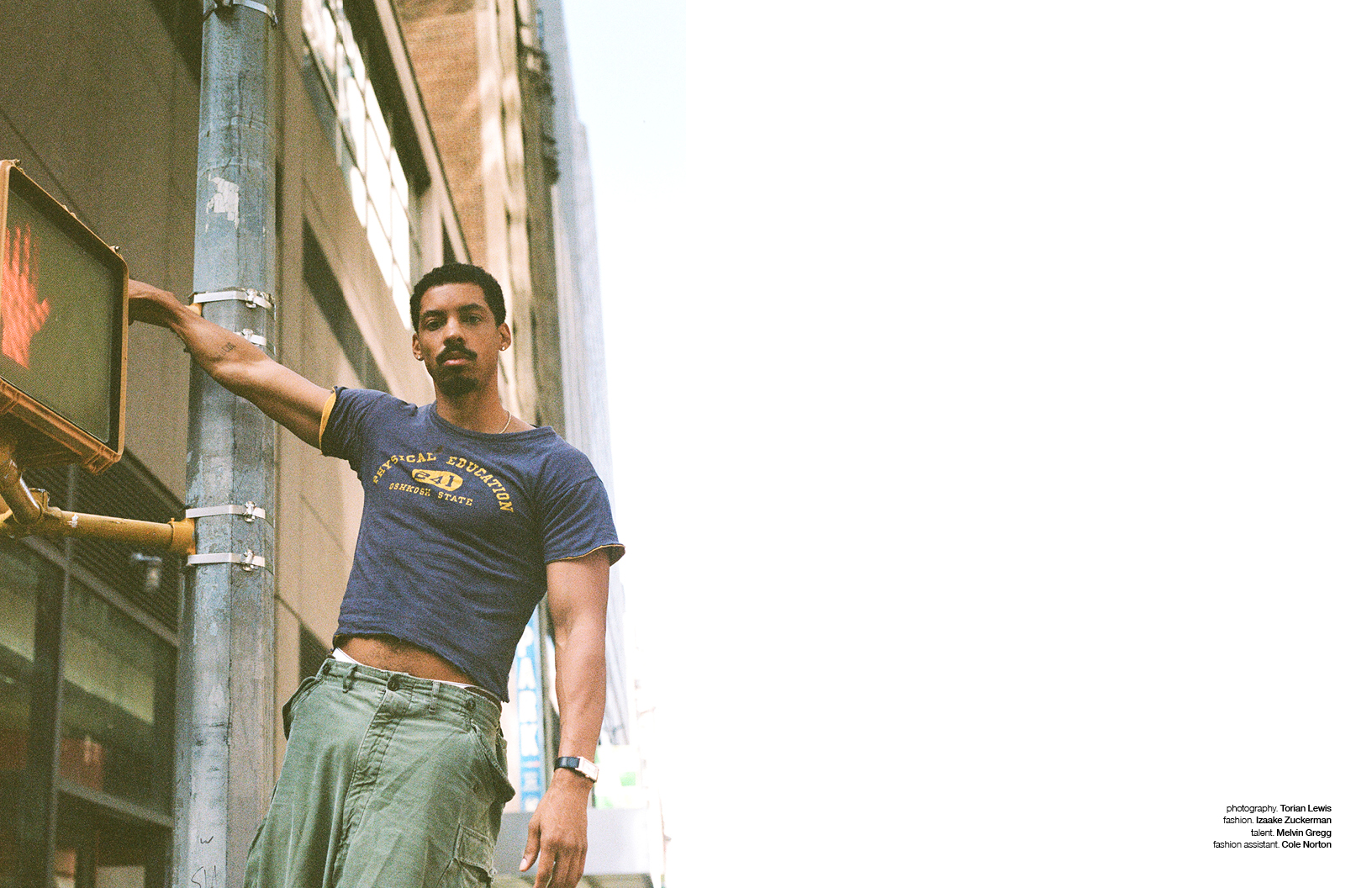
graphic t- shirt + trousers. The Society Archive
photography. Torian Lewin
fashion. Izaake Zuckerman
talent. Melvin Gregg
grooming. Lynda Esparza
fashion assistant. Cole Norton
interview. Alper Kurtel
special thanks. The Refinery Hotel, New York
in HTML format, including tags, to make it appealing and easy to read for Japanese-speaking readers aged 20 to 40 interested in fashion. Organize the content with appropriate headings and subheadings (h1, h2, h3, h4, h5, h6), translating all text, including headings, into Japanese. Retain any existing
tags from
graphic t-shirt. The Society Archive
watch. Rolex
Melvin Gregg’s face once lived in six-second bursts—quick jokes, exaggerated expressions, instant laughter. Rising to fame during Vine’s golden era, he became one of the platform’s most recognizable creators. Today, his performances unfold more slowly and with greater emotional depth. From Snowfall to The Paper, Gregg has shifted toward characters defined by vulnerability, uncertainty, and quiet tension. His career now exists in the space between viral visibility and long-form storytelling, tracing not just a change in medium, but an ongoing search for identity beyond first impressions.
graphic t- shirt + trousers. The Society Archive
opposite
knit cape. Giorgio Armani
underwear. The Society Archive
necklace. Talent’s Own
watch. Rolex
You transitioned from making millions of people laugh on social media on Vine to carrying deep pain in front of the camera. In this journey between two extreme sides, what was the sharpest conflict between the version people expected from you and your true self?
What was the biggest difference between the version people expected and my true self? I think people often expect me to be exactly how they first encountered me. But like most people, I have many different sides depending on the moment, the person I am speaking to, and what is happening in my life.
Throughout my career, I have been able to tap into different sides of myself, but people tend to hold on to that first impression. If they discovered me online, they expect me to be very outgoing and energetic. That platform was centred on comedy, and with only six seconds, you had to be big and animated. In real life, I am not really like that. I am much more relaxed and low-key.
If someone meets me through Snowfall, I am playing a gangster, but I am not a gangster in real life. And now in The Paper, my character is a people pleaser. He is optimistic, enthusiastic, carefree, and awkward. I am not really like that most of the time. Maybe around certain people, but generally, I am more cynical than enthusiastic.
I am optimistic in my own way, but I am definitely not a people pleaser. I think all of my characters contain parts of me, but they also distort certain traits. It is a mix of truth and exaggeration. I actually miss the Vine era sometimes. TikTok is great too, but Vine was all about six or seven seconds. It felt more playful and spontaneous. It was definitely a moment.
trousers. Levis Baggy Capri
underwear. Calvin Klein
beanie. The Society Archive
necklace. Talent’s Own
opposite
hoodie. Eckhaus Latta
shirt. Aubero
jeans. The Row
shoes. Timberlands
watch. Rolex
How did you reframe your career from going viral to leaving a lasting mark? What was the most frightening aspect of that transformation for you?
The thing about going viral is that you get a lot of attention, but not all attention is equal. People care for a few days, then something else goes viral, and they move on. It is very short-lived. You might reach more people, but the content itself is brief, so the impact does not last.
You do not go viral just once. You have to keep doing it constantly to stay relevant. That can be exciting, but it is also exhausting. In more traditional formats like television or film, you may not go viral, but the people who do watch your work carry it with them much longer.
When someone sits down to watch a film for an hour and a half, they get to know the character. They go on a journey. That experience stays with them. There are movies we watched as kids that still affect us today. A viral video usually does not have that kind of lasting effect. You may reach fewer people, but the attention you receive is deeper and more meaningful.
button up. Aubero
t-shirt. Barneys @ The Society Archive
opposite
blazer. Emporio Armani x Our Legacy
t-shirt. Barneys @ The Society Archive
trousers. Giorgio Armani
shoes. Birkenstock Boston Clog
belt. Talent’s Own
In productions like Not Perfect, Strangers, and The Way Back, we often hear an inner monologue shaping your characters. How do you construct those inner voices, and how close are they to your own?
I always try to find parallels between the character and things I can relate to in my own life. That might be something I am experiencing now or something I went through in the past. That connection helps me understand and justify the character. Once I understand who the character is, what they want, and how they see the world, I can exist in that space and let the environment affect me naturally.
In Not Perfect Strangers, a large part of my character’s story did not make the final cut. He resented social media because his wife wanted attention from people online more than from him. She was chasing validation from strangers, and he kept questioning what really mattered. Was it the attention of people you will never meet, or the attention of the person right in front of you? That idea connects directly to my own experience. Coming from social media, I sometimes felt like I was performing for people I did not know instead of focusing on the people closest to me. That parallel helped me live truthfully inside the character.
In The Paper, my character is in love but not receiving attention. He starts spiralling, trying to figure out how to get it. Should he play hard to get, or should he be honest and vulnerable? That is something most people have experienced, and it is something I have lived through myself. I try to find those shared emotional truths and let them guide the performance.
shirt. The Society Archive
trousers. Nili Lotan
watch. Jaeger La Couture
During your Vine days, was comedy a kind of protective shield? Looking back now, were there emotions you thought you were hiding that still came through on camera?
I would not say it was a shield. It was more about what worked best on that platform. Vine was built around shareability, and comedy is the most shareable form of content. People tell jokes all the time. You do not usually walk around sharing traumatic stories. Comedy simply worked, so that is what most of us leaned into. I do not think I was hiding much emotionally.
shirt. The Society Archive
trousers. Nili Lotan
watch. Jaeger La Couture
belt. Giorgio Armani
opposite
t-shirt. Barneys @ The Society Archive
trousers. Giorgio Armani
belt. Talent’s Own
How do you challenge dominant portrayals of Black masculinity as strong, stoic, and unbreakable when choosing roles? Do you actively look for vulnerability in a character?
I look for characters I can bring humility to. Black men are often portrayed as a single type or trope. If I can break that down and add more layers, then maybe audiences can walk away with a deeper understanding of masculinity, and specifically Black masculinity. With The Paper, I get to play someone who is not the traditionally cool or hyper-masculine guy. That feels important. Being Black and being a man is not a monolith. We come in many forms, personalities, and emotional registers. Exploring that range on screen feels necessary.
blazer. Emporio Armani x Our Legacy
button up. Aubero
t-shirt. Barneys @ The Society Archive
trousers. Giorgio Armani
belt. Talent’s Own
opposite
shirt + necklace. Talent’s Own
beanie. The Society Archive
If your career were a basketball game, where do you see yourself right now? Are you still playing offence, or are you beginning to direct the game?
I feel like a player who understands the game deeply. When I retire, I will probably coach. Right now, I am coming off the bench. I have strong games, but I am not a starter yet. I am not the star of the team. I have not yet been given the opportunity to fully take control and show everything I can do. At this point, I have mostly been a role player, but I believe I have the potential to be a key player on any team.
Is social media still a big part of your life today? Who is Melvin Gregg when the camera is not rolling? Are there habits or rituals we do not get to see?
I am still figuring out how social media fits into my life now. The perception around it has changed a lot. In the early days, it was not taken seriously because it was new. Now people understand its value, the reach, the numbers, the influence. I am trying to find a balance where I can benefit from having an audience without getting distracted by chasing virality. Sometimes productions want someone with a large following, but that is not really who I am anymore. It would not be genuine to my goals.
I try to create content based on my real interests rather than trends. Most of my life is not online. I am very intentional about what I share. If I post my family, it is because I hope it encourages people to spend time with theirs. If I post myself building something, I hope it inspires someone to put their phone down and create something themselves. If it does not serve that purpose, I usually do not post it.
graphic t-shirt. The Society Archive
watch. Rolex
opposite
shirt. Giorgio Armani @ The Society Archive
trousers. THE SOCIETY ARCHIVE
underwear. Calvin Klein
necklace. Talent’s Own
You have spoken about your desire to write and tell your own stories. Is there a character or scene that has lived in your mind for years but has not yet been brought to life?
There are too many to count. When I was doing social media, I created new ideas every day for four years. When I stopped posting, the ideas did not stop. I just stopped sharing them publicly. I have written several scripts that I want to bring to life one day. The challenge is getting them made, especially in today’s industry. I have scripts I want to produce, ideas that are not even on paper yet, and projects I have already filmed that I am waiting to complete and release. The creativity never stops. Right now, it is just about navigating the process.
Are you currently writing? Are these scripts, or do you work in other forms as well?
Mostly scripts. I have written television shows and films across different genres. I am also working on a short film series right now. I have completed the first two and I am working on the third. I am always creating. It just takes longer to bring things into the world than it did with social media. Hopefully, when they do arrive, they resonate more deeply.
graphic t- shirt + trousers. The Society Archive
photography. Torian Lewin
fashion. Izaake Zuckerman
talent. Melvin Gregg
grooming. Lynda Esparza
fashion assistant. Cole Norton
interview. Alper Kurtel
special thanks. The Refinery Hotel, New York
and integrate them seamlessly into the new content without adding new tags. Ensure the new content is fashion-related, written entirely in Japanese, and approximately 1500 words. Conclude with a “結論” section and a well-formatted “よくある質問” section. Avoid including an introduction or a note explaining the process.