Rewrite
The Black Lights, Timon Benson
Gallery / 13 images
There’s something absurd about the faded glamour of British seaside towns, and nowhere is this absurdity more palpable than Blackpool, on the north-west coast of England. The town’s Victorian architecture – where, in the 1960s, you could watch the Beatles and the Rolling Stones within a single week – is still standing, albeit with faded paint and crumbling facades, but the holidaymakers have largely jetted off for sunnier shores, leaving behind chaotic stag parties, punks, and other cultural outliers.
Adding to this mixing pot in June 2026 was the inaugural edition of The Black Lights, a biennial experimental music festival that took over more than 20 venues around the ‘Vegas of the North’. Organised by the team behind Salford’s The White Hotel (a now-legendary music venue that’s set to close its doors in January 2027), the festival staged performances by artists including Evian Christ, Jawnino, The Caretaker, and Blackhaine against “seaside Baroque” backdrops like the Blackpool Tower Ballroom and the opera house at the Winter Gardens.

“It was the perfect place for the festival,” says photographer Timon Benson, who was embedded among the crowds at The Black Lights, catching everything from Mica Levi’s collaboration with the BBC Philharmonic Orchestra to a sweaty rave among the fruit machines and sticky carpets of Blackpool Catholic Cub. “My mother lives in Blackpool and visiting her, I have always been taken by the charm of the place and the freedom for people to enjoy and express themselves.”
“Blackpool understands spectacle better than almost anywhere in Britain,” adds Austin Collings, creative director at The White Hotel. “It’s spent over a century inviting people to leave ordinary life behind for a weekend. In many ways, The Black Lights was simply joining a much older conversation.” But it’s not just history, he explains. “There’s a tendency to look at Blackpool through the rear-view mirror, as though it’s forever trapped inside somebody else’s nostalgia. Spend a weekend there and you realise it’s one of the most surreal, generous and culturally rich places in the country.”
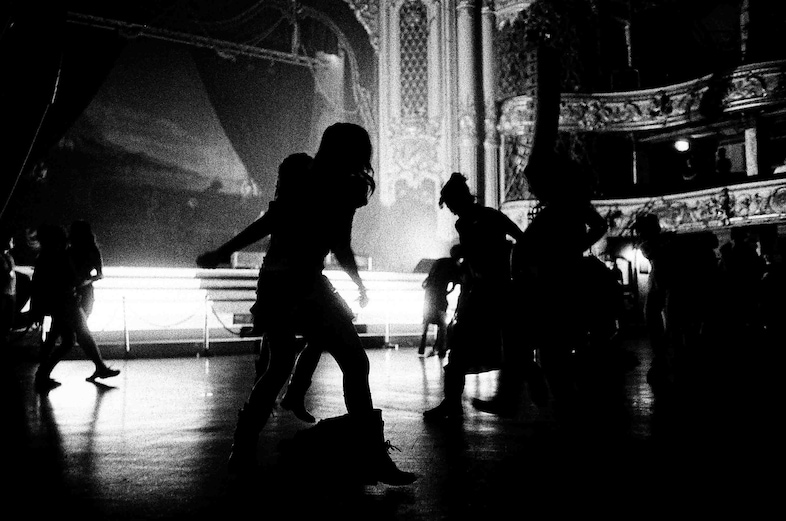
A personal highlight of The Black Lights, for Benson, came after the opening performance in the Blackpool Tower Ballroom featuring, among other artists, The Caretaker (in case you’re unfamiliar, the musician, real name James Leyland Kirby, explores the deterioration of memory, nostalgia, and the sense we’ve been “cheated out of” a more hopeful future – fitting stuff for an all-but-abandoned British holiday town). “As people dispersed, some waltzed around in the ballroom, others ran up the stairs to the fifth-floor arcade soundtracked by heavy techno from the club set next door,” says Benson. “Other groups went outside to comprehend what they had just witnessed. I think this moment is when everybody realised that we were in for something truly special.”
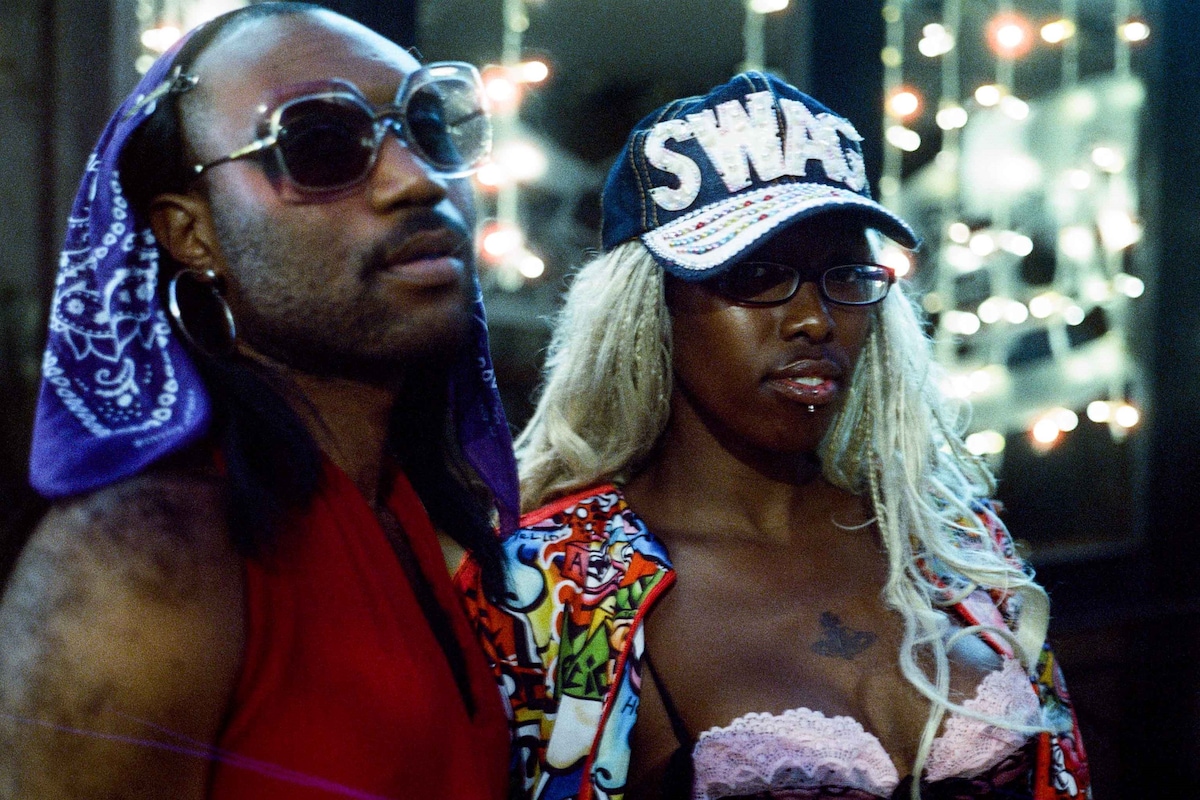
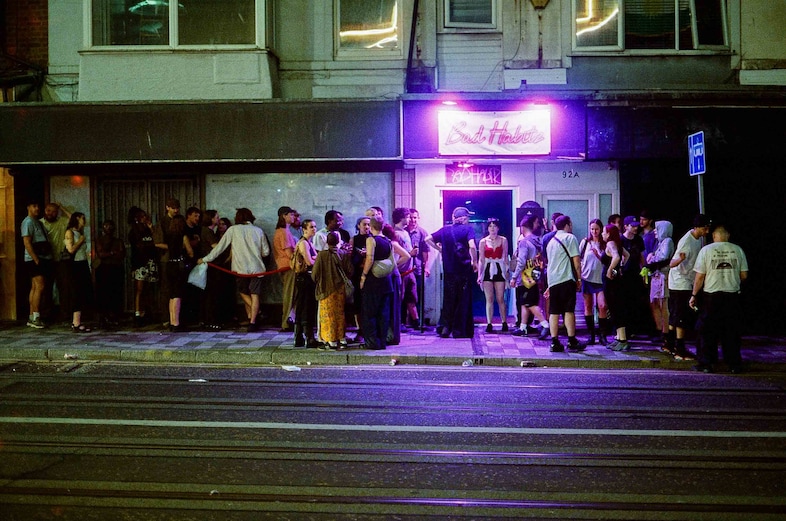
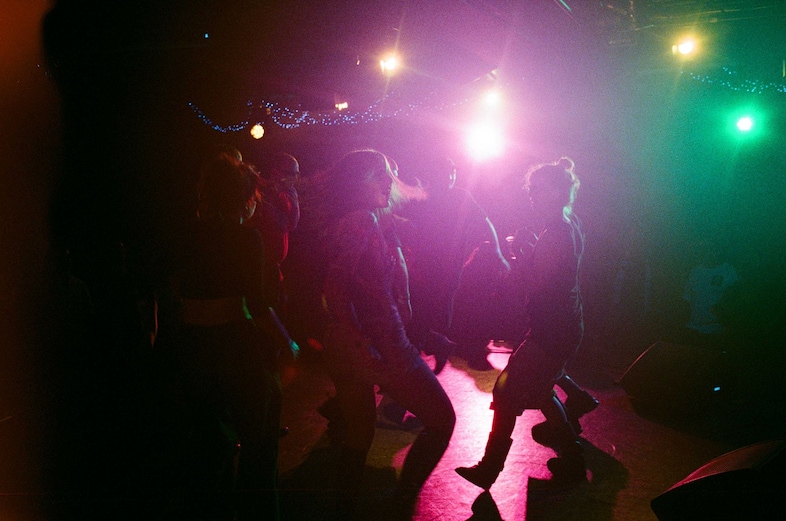
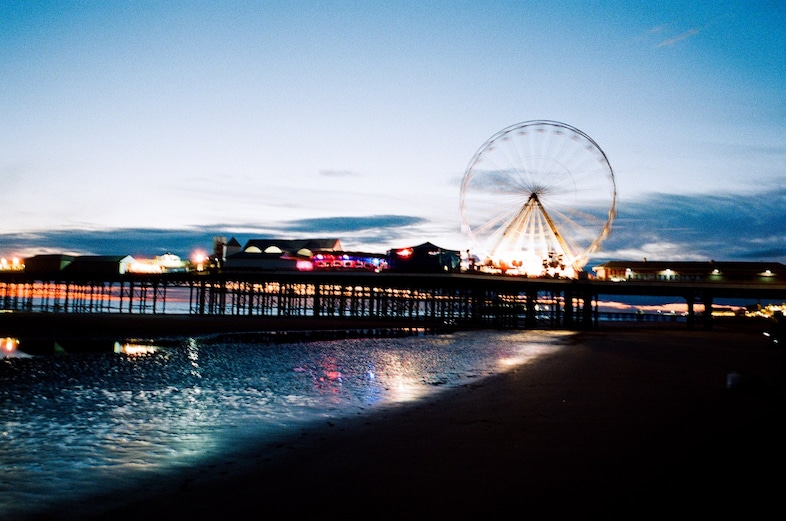
Benson’s photos, shot over the course of the following few days, are a testament to the festival’s success. Captured with a keen sense for texture and movement, there are snapshots of the queue outside Bad Habitz nightclub, crowds playing pool at the Catholic Club, pink-lit dancefloors and the pier at sunset. Meanwhile, charismatic portraits celebrate the “hugely varied” fans and “wondrous” atmosphere.
Collings also stresses the boundaryless nature of the event. “For a weekend, the town became a kind of dream machine,” he says. “People were drifting through arcades, the cinema, old pubs, ballrooms and the promenade, collecting fragments of conversations, music, art, food and films. One of the unexpected joys was watching worlds collide. Someone who’d come for an experimental noise set would find themselves transfixed by a film they’d never have chosen. A filmmaker would disappear into a brass performance. A DJ would spend an hour talking to someone they’d met in a café about an obscure record from 1978.”
Of course, this is not just a photo series about what went down in Blackpool. The Black Lights is a product of an ongoing cultural renaissance in the north of England as a whole, which Benson has experienced over five years of documenting the cultural scene that’s coalesced around The White Hotel. “The White Hotel for me, growing up, was a source of endless fascination,” he says. “There wasn’t really anywhere that I’d been that was like it. The organisers seem solely committed to experimentation and possibility, which has attracted a very interesting community that embodies the values of respect and care that the space demands.”
Collings is reluctant to call this community a “scene” as such, because scenes often tend toward uniformity. “What’s grown around The White Hotel feels much messier than that, and infinitely more interesting… a loose congregation of musicians, filmmakers, artists, writers, DJs and glorious misfits. The work can be noisy, delicate, funny, bewildering or impossible to categorise, but it almost always carries the thrill of somebody risking failure in public. That’s why people keep coming back.”
In recent years, many of the artists in the orbit of The White Hotel and the experimental networks of Manchester and the North (including the likes of Space Afrika, Rainy Miller, Skee Mask and aya) have received international acclaim. “The quality of the work is attracting a lot of attention… I think it’s raising the bar for what is possible,” Benson adds. But for the most part their success is still rooted in a localised, collaborative spirit. “Life is much more affordable than living in capital cities, and I think the artists that stay prioritise their craft over proximity to opportunity.”
Hopefully experimental events like The Black Lights, seen through a similarly creative lens like Benson’s, convince the next wave of Northern talents that it’s worth sticking to their roots as well, and watching the scene continue to flourish.
More than 200 of Timon Benson’s photos from The Black Lights will be hosted on the photographer’s website from August 12 to August 20. View them here.
in HTML format, including tags, to make it appealing and easy to read for Japanese-speaking readers aged 20 to 40 interested in fashion. Organize the content with appropriate headings and subheadings (h1, h2, h3, h4, h5, h6), translating all text, including headings, into Japanese. Retain any existing
tags from
The Black Lights, Timon Benson
Gallery / 13 images
There’s something absurd about the faded glamour of British seaside towns, and nowhere is this absurdity more palpable than Blackpool, on the north-west coast of England. The town’s Victorian architecture – where, in the 1960s, you could watch the Beatles and the Rolling Stones within a single week – is still standing, albeit with faded paint and crumbling facades, but the holidaymakers have largely jetted off for sunnier shores, leaving behind chaotic stag parties, punks, and other cultural outliers.
Adding to this mixing pot in June 2026 was the inaugural edition of The Black Lights, a biennial experimental music festival that took over more than 20 venues around the ‘Vegas of the North’. Organised by the team behind Salford’s The White Hotel (a now-legendary music venue that’s set to close its doors in January 2027), the festival staged performances by artists including Evian Christ, Jawnino, The Caretaker, and Blackhaine against “seaside Baroque” backdrops like the Blackpool Tower Ballroom and the opera house at the Winter Gardens.
“It was the perfect place for the festival,” says photographer Timon Benson, who was embedded among the crowds at The Black Lights, catching everything from Mica Levi’s collaboration with the BBC Philharmonic Orchestra to a sweaty rave among the fruit machines and sticky carpets of Blackpool Catholic Cub. “My mother lives in Blackpool and visiting her, I have always been taken by the charm of the place and the freedom for people to enjoy and express themselves.”
“Blackpool understands spectacle better than almost anywhere in Britain,” adds Austin Collings, creative director at The White Hotel. “It’s spent over a century inviting people to leave ordinary life behind for a weekend. In many ways, The Black Lights was simply joining a much older conversation.” But it’s not just history, he explains. “There’s a tendency to look at Blackpool through the rear-view mirror, as though it’s forever trapped inside somebody else’s nostalgia. Spend a weekend there and you realise it’s one of the most surreal, generous and culturally rich places in the country.”
A personal highlight of The Black Lights, for Benson, came after the opening performance in the Blackpool Tower Ballroom featuring, among other artists, The Caretaker (in case you’re unfamiliar, the musician, real name James Leyland Kirby, explores the deterioration of memory, nostalgia, and the sense we’ve been “cheated out of” a more hopeful future – fitting stuff for an all-but-abandoned British holiday town). “As people dispersed, some waltzed around in the ballroom, others ran up the stairs to the fifth-floor arcade soundtracked by heavy techno from the club set next door,” says Benson. “Other groups went outside to comprehend what they had just witnessed. I think this moment is when everybody realised that we were in for something truly special.”
Benson’s photos, shot over the course of the following few days, are a testament to the festival’s success. Captured with a keen sense for texture and movement, there are snapshots of the queue outside Bad Habitz nightclub, crowds playing pool at the Catholic Club, pink-lit dancefloors and the pier at sunset. Meanwhile, charismatic portraits celebrate the “hugely varied” fans and “wondrous” atmosphere.
Collings also stresses the boundaryless nature of the event. “For a weekend, the town became a kind of dream machine,” he says. “People were drifting through arcades, the cinema, old pubs, ballrooms and the promenade, collecting fragments of conversations, music, art, food and films. One of the unexpected joys was watching worlds collide. Someone who’d come for an experimental noise set would find themselves transfixed by a film they’d never have chosen. A filmmaker would disappear into a brass performance. A DJ would spend an hour talking to someone they’d met in a café about an obscure record from 1978.”
Of course, this is not just a photo series about what went down in Blackpool. The Black Lights is a product of an ongoing cultural renaissance in the north of England as a whole, which Benson has experienced over five years of documenting the cultural scene that’s coalesced around The White Hotel. “The White Hotel for me, growing up, was a source of endless fascination,” he says. “There wasn’t really anywhere that I’d been that was like it. The organisers seem solely committed to experimentation and possibility, which has attracted a very interesting community that embodies the values of respect and care that the space demands.”
Collings is reluctant to call this community a “scene” as such, because scenes often tend toward uniformity. “What’s grown around The White Hotel feels much messier than that, and infinitely more interesting… a loose congregation of musicians, filmmakers, artists, writers, DJs and glorious misfits. The work can be noisy, delicate, funny, bewildering or impossible to categorise, but it almost always carries the thrill of somebody risking failure in public. That’s why people keep coming back.”
In recent years, many of the artists in the orbit of The White Hotel and the experimental networks of Manchester and the North (including the likes of Space Afrika, Rainy Miller, Skee Mask and aya) have received international acclaim. “The quality of the work is attracting a lot of attention… I think it’s raising the bar for what is possible,” Benson adds. But for the most part their success is still rooted in a localised, collaborative spirit. “Life is much more affordable than living in capital cities, and I think the artists that stay prioritise their craft over proximity to opportunity.”
Hopefully experimental events like The Black Lights, seen through a similarly creative lens like Benson’s, convince the next wave of Northern talents that it’s worth sticking to their roots as well, and watching the scene continue to flourish.
More than 200 of Timon Benson’s photos from The Black Lights will be hosted on the photographer’s website from August 12 to August 20. View them here.
and integrate them seamlessly into the new content without adding new tags. Ensure the new content is fashion-related, written entirely in Japanese, and approximately 1500 words. Conclude with a “結論” section and a well-formatted “よくある質問” section. Avoid including an introduction or a note explaining the process.