Rewrite
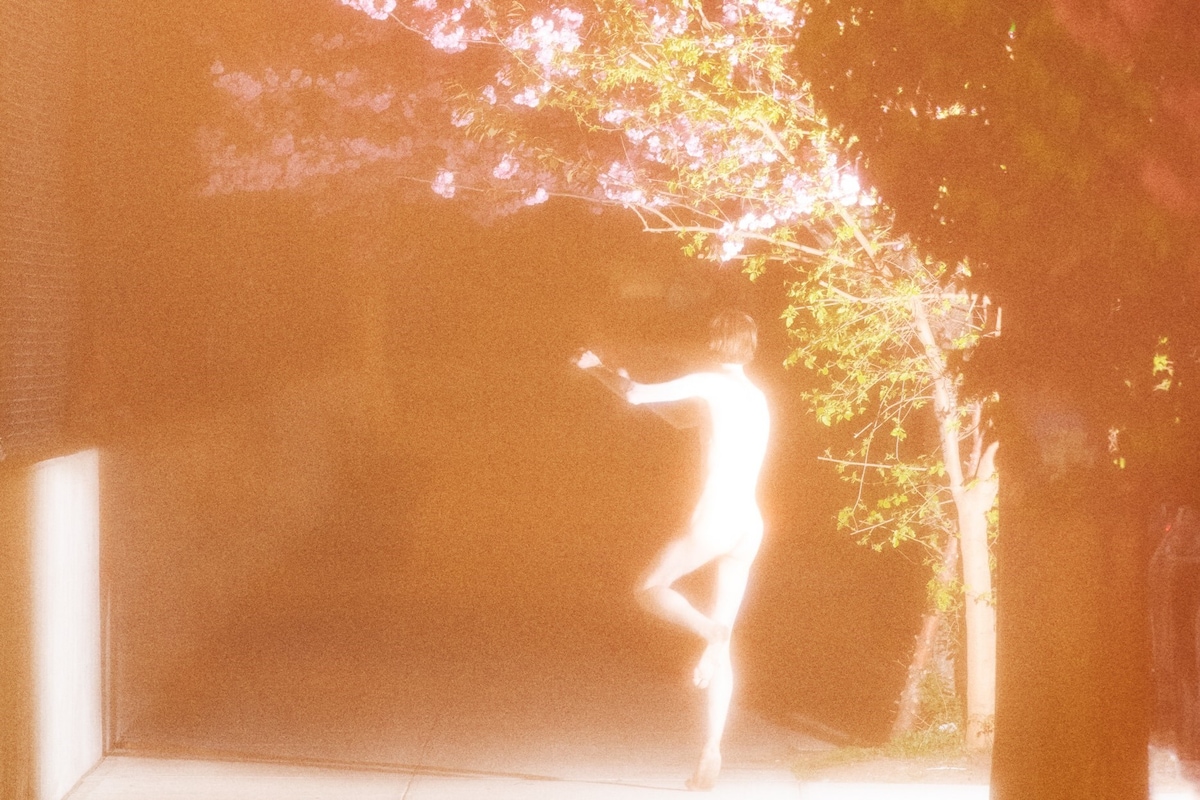
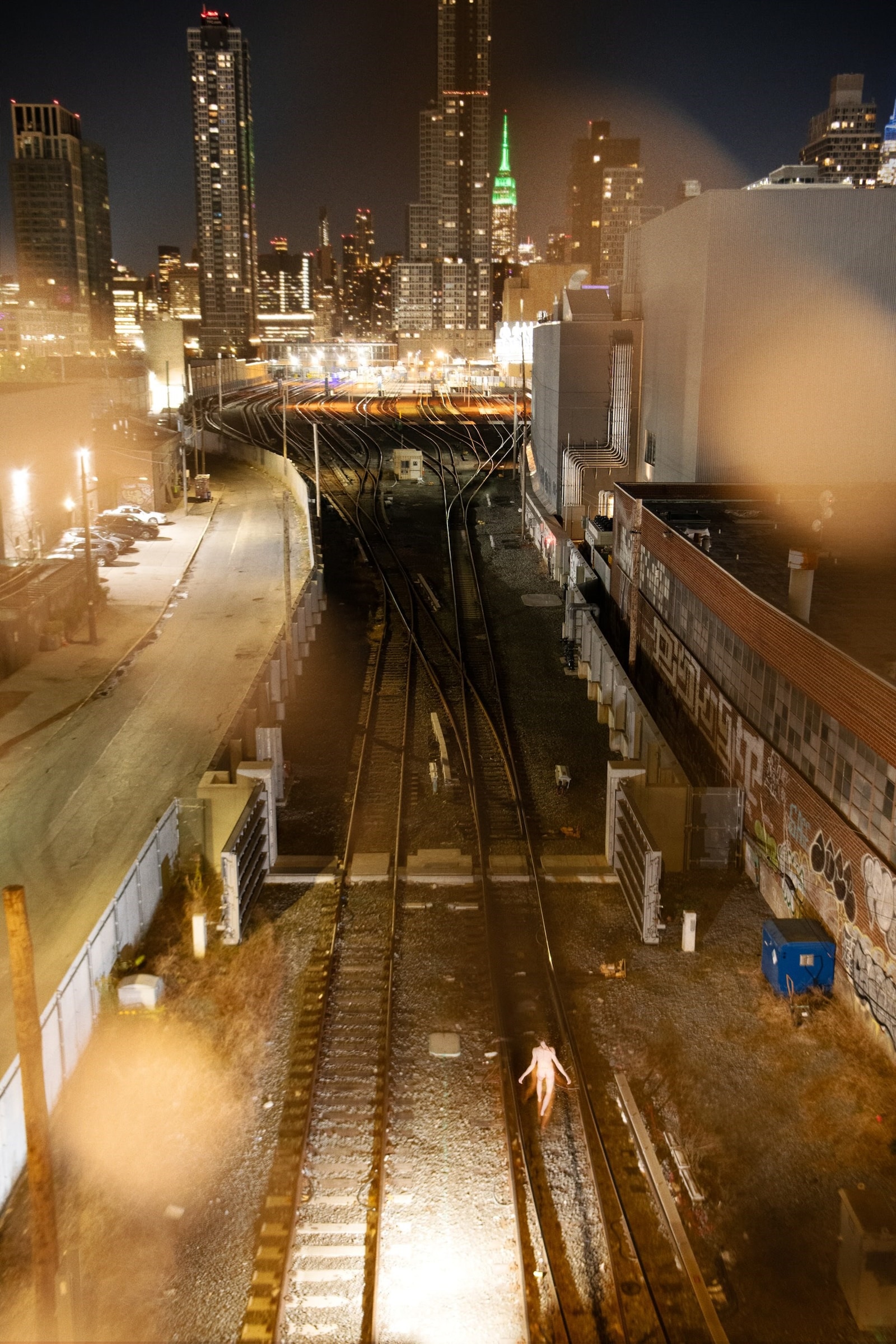
Lead Image29th St, Queens, 2026© Ryan McGinley. Courtesy of the artist and Jeffrey Deitch, New York and Los Angeles
On the Thursday morning after the New York Knicks’ historic NBA finals comeback, Ryan McGinley is busy installing his new exhibition at Jeffrey Deitch, an influential contemporary art gallery housed in a vast cast-iron loft space in SoHo. “New York is on fire right now,” he says, recalling the electric energy of the riots in the city the night before, when New Yorkers took to the streets en masse to celebrate the basketball team’s last-minute victory during a scorching heatwave. “Street energy is amazing, in any city.”
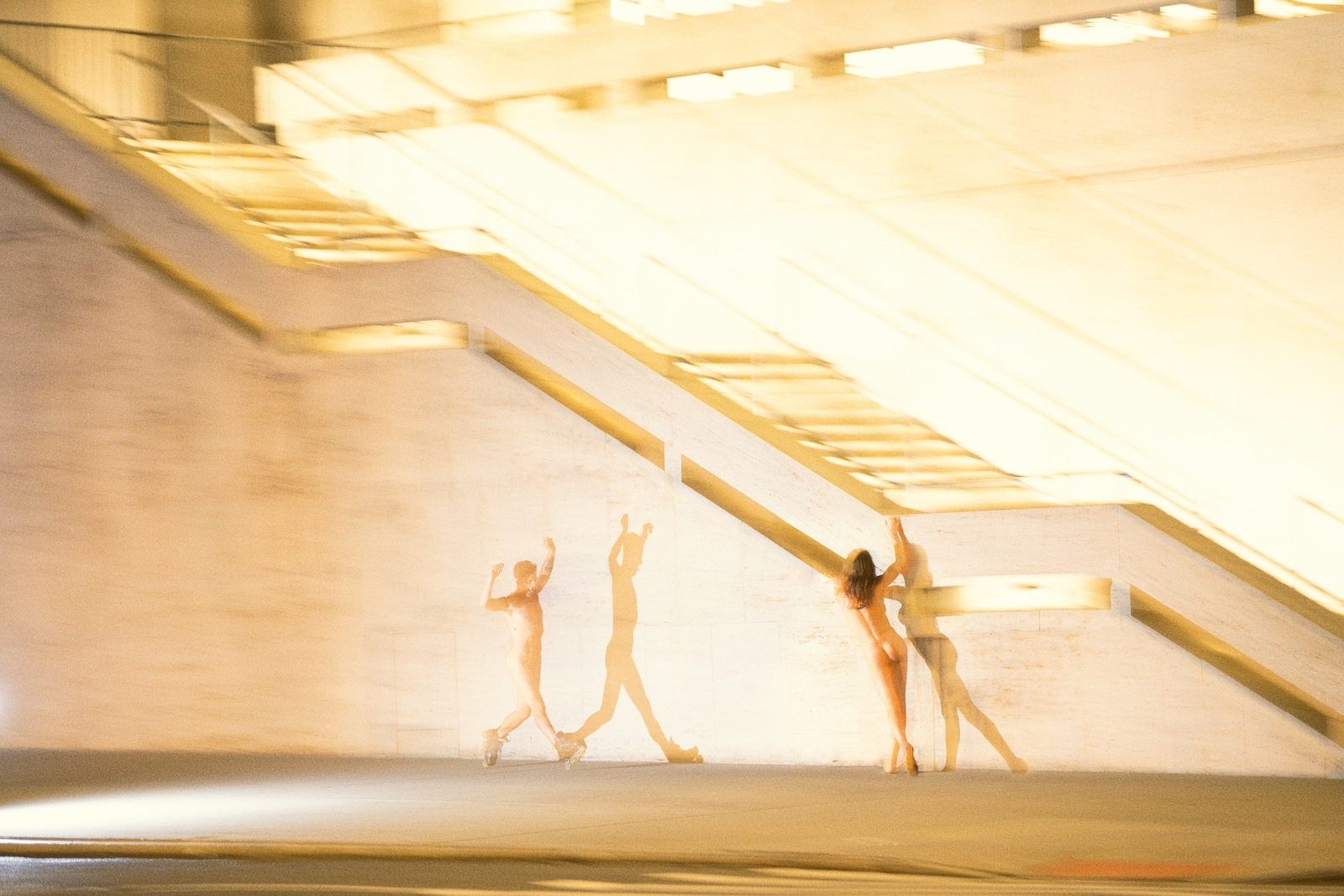
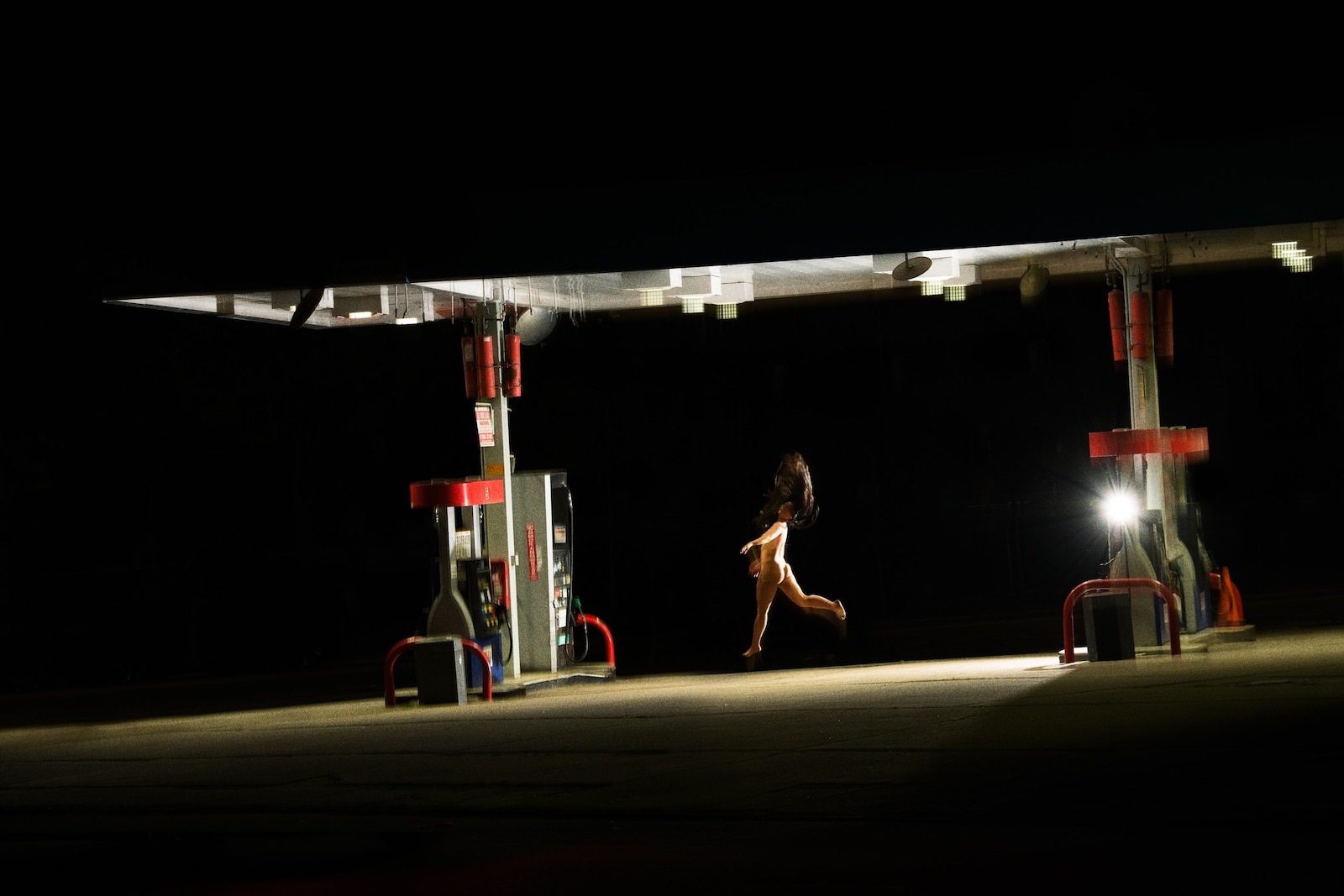
It’s a fitting atmosphere that is mirrored in McGinley’s hallucinatory new series, Night Shift, which captures nude figures cavorting across all five boroughs of New York City by night, backdropped by glittering highways and cityscapes, garbage trucks, bridges, tunnels, graveyards, shipping containers, fairground rides, gas stations and pitch-black bodies of water. Bosch-like in its carnality and painterly in its vivid approach to light, colour and movement, it’s a triumphant return to form for McGinley in both spirit and subject matter. Captured on gruelling night shifts from 9pm to 5am over the course of one year, the series draws a clear divide between the waking world – and its traditional 9-to-5 workers – and a parallel universe of nocturnal artists and their strange universe of unfettered creativity.
It’s been more than two decades since the American photographer first shot to fame at just 25 years old with his debut solo exhibition, The Kids Were Alright, at the Whitney in 2003, a body of work that captured the hedonistic lifestyle of his inner circle of friends and collaborators in downtown New York on the cusp of the millennium. With its unflinching depictions of sex, drug use and violence, the series drew immediate comparisons to the work of documentary photographers Larry Clark and Nan Goldin, although McGinley’s images seemed to be less anguished and more liberated. Shifting his focus away from the city, he then began embarking on cross-country American road trips with groups of street-cast models and friends (Petra Collins among them), producing otherworldly images of nude figures ensconced in golden fields of grassland, jagged sheets of ice, rolling sand dunes and vast caves. Now almost three decades into his career, Night Shift folds in all the spirit of his earlier work, with its poetic framing of the nude body, the landscape, and his queer circle of friends in downtown New York.
Here, Ryan McGinley talks about the making of Night Shift, falling in love with New York again, and his advice for young photographers.
Violet Conroy: What sparked the idea for this new body of work?
RM: This project started a year ago, when I began shooting cherry blossoms. Around the end of March through to April, they pop up everywhere in New York City for about three weeks. They show up in the craziest cracks of the sidewalks in New York City, or next to garbage piles and tenement buildings. Cherry blossoms have this purity within the grime of the city, and I love that combination. My favourite thing is high and low together.
I worked on this project for a year. We shot 60 nights, from 9pm to 5am all over the five boroughs of New York City. Through that process, I started to fall in love with the city again, and all of its architecture, imperfections, garbage and bridges. I started to get so inspired by tunnels, and by the things that I gravitate towards as a New Yorker, which aren’t necessarily things that a tourist might come here to photograph. It’s really like my poem to the city.
It felt like a big shift in my work to come back to New York after road tripping for a decade. I tried to bring everything into it: the graffiti spirit of my early work, the lyricism of the nude body on my road trips across America, hitting the concrete and all the queer activism that I do throughout the city.

VC: How did you pick the shoot locations?
RM: I wanted to cover all five boroughs and discover more parts of the city. I’ve been living in New York for two decades now. I’ve spent a lot of time in Manhattan because that’s where I live, and Brooklyn as well, but I wanted to explore Queens and the Bronx. I’d be driving around location scouting, looking for things we could interact with, things we could climb and thinking about the colour palette. When you’re shooting at nighttime, your colour palette really changes, so I had to think about what would look good in the dark. We also wanted to have buildings that were important to us, like Freedom Tower or the Empire State Building, but have them be a very small component of the photograph, in the distance. We didn’t want the iconic building to be the centrepiece.
VC: Nudity has been such a big part of your work over the years. What initially drew you to photographing naked bodies?
RM: I grew up very Roman Catholic, and my mum brought me to church almost every day. She could tell that I wasn’t taking in the information since I was kind of ADHD, so she got me hooked on Catholicism through the art and she would buy me the books of all the paintings. David by Michelangelo and the paintings of Caravaggio were really important to me. All the people were nude in these artworks, and I really gravitated towards them.
When I was a young artist, I went to the MoMA and saw Dance by Matisse. It’s a painting of four nude bodies holding hands in a circle, dancing around and it had a huge impact on me. When I started to take photos, it was a way for me to claim my queerness. It was challenging to come out because I had to go around and tell every person, ‘Hey, I’m gay now.’ It was easier to just take a photo of me and my boyfriend at the time, nude in bed, and put that on the wall and be like, ‘I’m having an exhibition,’ than actually having to explain myself. [Laughs]. Even with my family, it was just like, ‘Here it is.’
VC: You’ve spoken previously about how your cross-country American road trip photos were about removing yourself from the city. How did it feel to bring that road trip spirit back to New York City?
RM: Nature is so healing; I’ve always loved the GOD acronym: the great outdoors. New York City is hardcore. It doesn’t matter what time it is, there are still cars buzzing and people screaming into the void at 5am. Every corner you turn, there are people on the street, delis and bodegas open, taxis flying around, and people working. Doing this project reengaged me with the city that I’ve lived in for so long, and brought my eye to it again. It’s about finding the beauty in the grime, and the poetry in the chaos. As a photographer, I really desperately need the city, and I really desperately need nature. Those two things are my rice and beans combo.
“Doing this project reengaged me with the city that I’ve lived in for so long … It’s about finding the beauty in the grime” – Ryan McGinley
VC: What have you been finding inspiring lately?
RM: I just saw Geese play at Gov Ball in New York. They’re so cool. I was in the mosh pit, getting pushed around and sweaty, and it was really bringing out my teenage energy. It felt so good. Geese is the band that has been making me really happy.
VC: Speaking of music, you recently shot Olivia Rodrigo for the cover of Dazed. You take quite unusual photographs of celebrities for magazines. How do you want to frame your subjects?
Ryan McGinley: I try to keep an adventurous spirit throughout all my work. With the photo of Olivia, she’s in the clouds and there’s a childlike playfulness to it. I wanted to bring it to an otherworldly place. The magazine commissions are especially collaborative with musicians because they’re coming in with so many of their own codes from whatever tour or album they’re on – like a colour palette – so it’s a combination of my aesthetics and their aesthetics. It’s fun, and I love it. At the end of the day, I’m a fan, and I feel really lucky to photograph the musicians whose music I really love.
Music is such a big part of my world. I play music on all my shoots, and I feel like I have the spirit of a musician. It’s a very similar kind of life, being a roadtripping photographer versus a musician on tour, so I feel like we have the same sensibility.
VC: Are there any young photographers whose work you’re enjoying at the moment?
RM: She’s been around for a minute, but Sandy Kim is one of my favorite photographers. Her work is really engaging, and I think about her a lot. In a weird way, I’ve become like the ‘daddy’, so there are a lot of people who I still think of as young photographers – even though they’ve been working for the past decade – that came out of my studio, like Tyler Mitchell, Petra Collins and Nick Sethi.
A young photographer who I really love is Farah Al Qasimi, who was an assistant at our studio. She just had a room at the Tate, and her work is mindblowing. Another photographer who is really having his moment is Dean Majd. He has this work about Palestine up at MoMA PS1 in their Greater New York show. I’m so proud of him, and his work has evolved into such a beautiful place.
VC: What advice you have for young photographers who are just starting out?
RM: [Having] a vision is everything. If you’re really young, you need to try everything. Photograph your friends and go to a protest or a parade. Access is everything. If your family has access to something, use it in your work; if you’re an X-ray technician, use X-rays in your work. Try everything out, but also hone in on your vision that separates you from other people.
One of the most important things is to print out your work and put it on the wall. That’s something that isn’t happening as much anymore with the way that we’re doing social media and how everything exists on the phone in such rapid speed. Get a small printer and print out your photos, tack ten of them to the wall, invite a group of friends to come over and look at them and have an opening. It doesn’t matter if it’s in your apartment, an outdoor space, or somewhere that you rent. It doesn’t have to be a gallery. All you really need is a community of people around you to show up, and for you to stand by your work and have it hung on the wall, and say, ‘This is mine, this photograph is art, and it’s important to me.’ Taking that step really separates a lot of people in terms of being an artist.
Night Shift by Ryan McGinley is on show at Jeffrey Deitch in New York until 8 August 2026.
in HTML format, including tags, to make it appealing and easy to read for Japanese-speaking readers aged 20 to 40 interested in fashion. Organize the content with appropriate headings and subheadings (h1, h2, h3, h4, h5, h6), translating all text, including headings, into Japanese. Retain any existing
tags from
Lead Image29th St, Queens, 2026© Ryan McGinley. Courtesy of the artist and Jeffrey Deitch, New York and Los Angeles
On the Thursday morning after the New York Knicks’ historic NBA finals comeback, Ryan McGinley is busy installing his new exhibition at Jeffrey Deitch, an influential contemporary art gallery housed in a vast cast-iron loft space in SoHo. “New York is on fire right now,” he says, recalling the electric energy of the riots in the city the night before, when New Yorkers took to the streets en masse to celebrate the basketball team’s last-minute victory during a scorching heatwave. “Street energy is amazing, in any city.”
It’s a fitting atmosphere that is mirrored in McGinley’s hallucinatory new series, Night Shift, which captures nude figures cavorting across all five boroughs of New York City by night, backdropped by glittering highways and cityscapes, garbage trucks, bridges, tunnels, graveyards, shipping containers, fairground rides, gas stations and pitch-black bodies of water. Bosch-like in its carnality and painterly in its vivid approach to light, colour and movement, it’s a triumphant return to form for McGinley in both spirit and subject matter. Captured on gruelling night shifts from 9pm to 5am over the course of one year, the series draws a clear divide between the waking world – and its traditional 9-to-5 workers – and a parallel universe of nocturnal artists and their strange universe of unfettered creativity.
It’s been more than two decades since the American photographer first shot to fame at just 25 years old with his debut solo exhibition, The Kids Were Alright, at the Whitney in 2003, a body of work that captured the hedonistic lifestyle of his inner circle of friends and collaborators in downtown New York on the cusp of the millennium. With its unflinching depictions of sex, drug use and violence, the series drew immediate comparisons to the work of documentary photographers Larry Clark and Nan Goldin, although McGinley’s images seemed to be less anguished and more liberated. Shifting his focus away from the city, he then began embarking on cross-country American road trips with groups of street-cast models and friends (Petra Collins among them), producing otherworldly images of nude figures ensconced in golden fields of grassland, jagged sheets of ice, rolling sand dunes and vast caves. Now almost three decades into his career, Night Shift folds in all the spirit of his earlier work, with its poetic framing of the nude body, the landscape, and his queer circle of friends in downtown New York.
Here, Ryan McGinley talks about the making of Night Shift, falling in love with New York again, and his advice for young photographers.
Violet Conroy: What sparked the idea for this new body of work?
RM: This project started a year ago, when I began shooting cherry blossoms. Around the end of March through to April, they pop up everywhere in New York City for about three weeks. They show up in the craziest cracks of the sidewalks in New York City, or next to garbage piles and tenement buildings. Cherry blossoms have this purity within the grime of the city, and I love that combination. My favourite thing is high and low together.
I worked on this project for a year. We shot 60 nights, from 9pm to 5am all over the five boroughs of New York City. Through that process, I started to fall in love with the city again, and all of its architecture, imperfections, garbage and bridges. I started to get so inspired by tunnels, and by the things that I gravitate towards as a New Yorker, which aren’t necessarily things that a tourist might come here to photograph. It’s really like my poem to the city.
It felt like a big shift in my work to come back to New York after road tripping for a decade. I tried to bring everything into it: the graffiti spirit of my early work, the lyricism of the nude body on my road trips across America, hitting the concrete and all the queer activism that I do throughout the city.
VC: How did you pick the shoot locations?
RM: I wanted to cover all five boroughs and discover more parts of the city. I’ve been living in New York for two decades now. I’ve spent a lot of time in Manhattan because that’s where I live, and Brooklyn as well, but I wanted to explore Queens and the Bronx. I’d be driving around location scouting, looking for things we could interact with, things we could climb and thinking about the colour palette. When you’re shooting at nighttime, your colour palette really changes, so I had to think about what would look good in the dark. We also wanted to have buildings that were important to us, like Freedom Tower or the Empire State Building, but have them be a very small component of the photograph, in the distance. We didn’t want the iconic building to be the centrepiece.
VC: Nudity has been such a big part of your work over the years. What initially drew you to photographing naked bodies?
RM: I grew up very Roman Catholic, and my mum brought me to church almost every day. She could tell that I wasn’t taking in the information since I was kind of ADHD, so she got me hooked on Catholicism through the art and she would buy me the books of all the paintings. David by Michelangelo and the paintings of Caravaggio were really important to me. All the people were nude in these artworks, and I really gravitated towards them.
When I was a young artist, I went to the MoMA and saw Dance by Matisse. It’s a painting of four nude bodies holding hands in a circle, dancing around and it had a huge impact on me. When I started to take photos, it was a way for me to claim my queerness. It was challenging to come out because I had to go around and tell every person, ‘Hey, I’m gay now.’ It was easier to just take a photo of me and my boyfriend at the time, nude in bed, and put that on the wall and be like, ‘I’m having an exhibition,’ than actually having to explain myself. [Laughs]. Even with my family, it was just like, ‘Here it is.’
VC: You’ve spoken previously about how your cross-country American road trip photos were about removing yourself from the city. How did it feel to bring that road trip spirit back to New York City?
RM: Nature is so healing; I’ve always loved the GOD acronym: the great outdoors. New York City is hardcore. It doesn’t matter what time it is, there are still cars buzzing and people screaming into the void at 5am. Every corner you turn, there are people on the street, delis and bodegas open, taxis flying around, and people working. Doing this project reengaged me with the city that I’ve lived in for so long, and brought my eye to it again. It’s about finding the beauty in the grime, and the poetry in the chaos. As a photographer, I really desperately need the city, and I really desperately need nature. Those two things are my rice and beans combo.
“Doing this project reengaged me with the city that I’ve lived in for so long … It’s about finding the beauty in the grime” – Ryan McGinley
VC: What have you been finding inspiring lately?
RM: I just saw Geese play at Gov Ball in New York. They’re so cool. I was in the mosh pit, getting pushed around and sweaty, and it was really bringing out my teenage energy. It felt so good. Geese is the band that has been making me really happy.
VC: Speaking of music, you recently shot Olivia Rodrigo for the cover of Dazed. You take quite unusual photographs of celebrities for magazines. How do you want to frame your subjects?
Ryan McGinley: I try to keep an adventurous spirit throughout all my work. With the photo of Olivia, she’s in the clouds and there’s a childlike playfulness to it. I wanted to bring it to an otherworldly place. The magazine commissions are especially collaborative with musicians because they’re coming in with so many of their own codes from whatever tour or album they’re on – like a colour palette – so it’s a combination of my aesthetics and their aesthetics. It’s fun, and I love it. At the end of the day, I’m a fan, and I feel really lucky to photograph the musicians whose music I really love.
Music is such a big part of my world. I play music on all my shoots, and I feel like I have the spirit of a musician. It’s a very similar kind of life, being a roadtripping photographer versus a musician on tour, so I feel like we have the same sensibility.
VC: Are there any young photographers whose work you’re enjoying at the moment?
RM: She’s been around for a minute, but Sandy Kim is one of my favorite photographers. Her work is really engaging, and I think about her a lot. In a weird way, I’ve become like the ‘daddy’, so there are a lot of people who I still think of as young photographers – even though they’ve been working for the past decade – that came out of my studio, like Tyler Mitchell, Petra Collins and Nick Sethi.
A young photographer who I really love is Farah Al Qasimi, who was an assistant at our studio. She just had a room at the Tate, and her work is mindblowing. Another photographer who is really having his moment is Dean Majd. He has this work about Palestine up at MoMA PS1 in their Greater New York show. I’m so proud of him, and his work has evolved into such a beautiful place.
VC: What advice you have for young photographers who are just starting out?
RM: [Having] a vision is everything. If you’re really young, you need to try everything. Photograph your friends and go to a protest or a parade. Access is everything. If your family has access to something, use it in your work; if you’re an X-ray technician, use X-rays in your work. Try everything out, but also hone in on your vision that separates you from other people.
One of the most important things is to print out your work and put it on the wall. That’s something that isn’t happening as much anymore with the way that we’re doing social media and how everything exists on the phone in such rapid speed. Get a small printer and print out your photos, tack ten of them to the wall, invite a group of friends to come over and look at them and have an opening. It doesn’t matter if it’s in your apartment, an outdoor space, or somewhere that you rent. It doesn’t have to be a gallery. All you really need is a community of people around you to show up, and for you to stand by your work and have it hung on the wall, and say, ‘This is mine, this photograph is art, and it’s important to me.’ Taking that step really separates a lot of people in terms of being an artist.
Night Shift by Ryan McGinley is on show at Jeffrey Deitch in New York until 8 August 2026.
and integrate them seamlessly into the new content without adding new tags. Ensure the new content is fashion-related, written entirely in Japanese, and approximately 1500 words. Conclude with a “結論” section and a well-formatted “よくある質問” section. Avoid including an introduction or a note explaining the process.