Rewrite
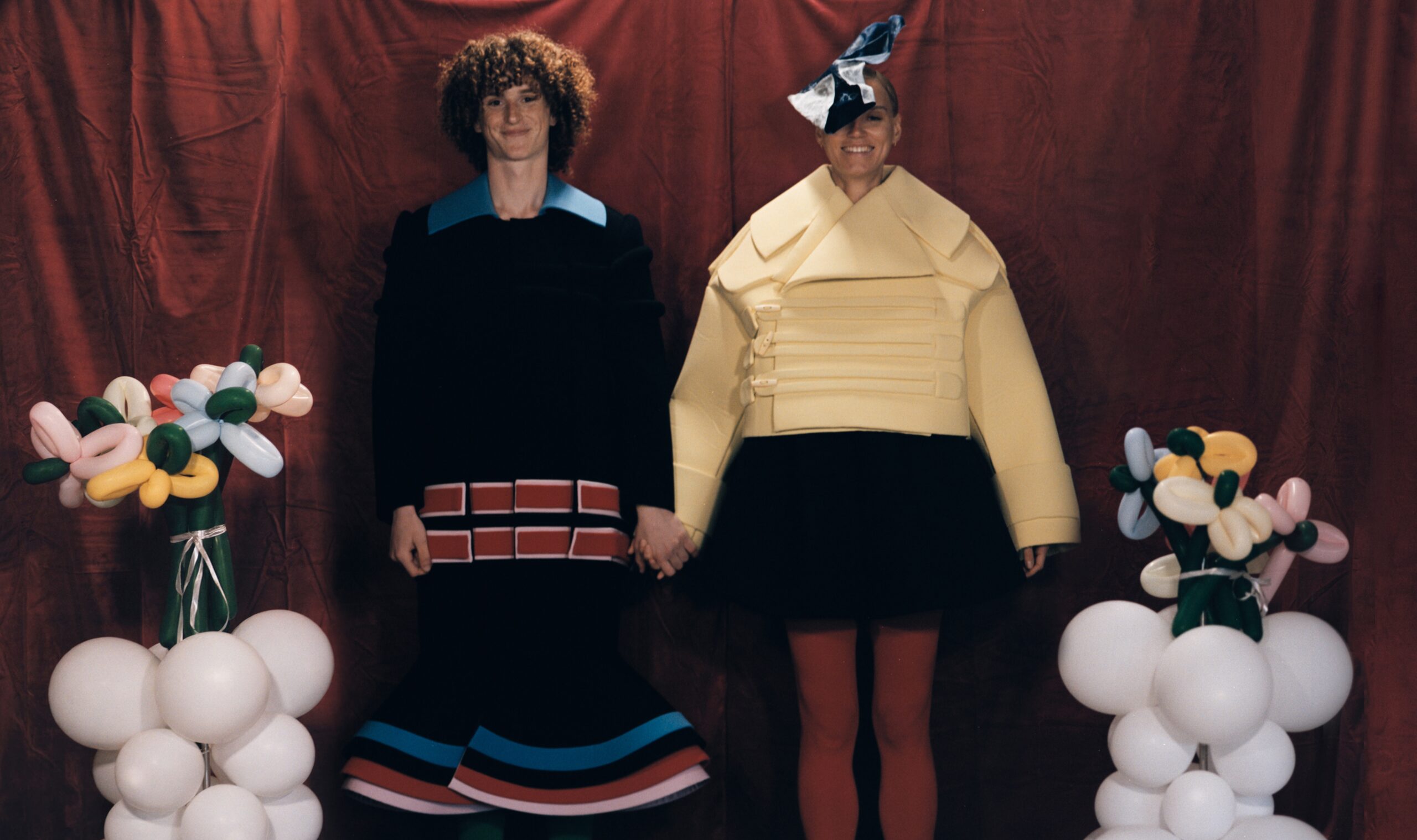
So long, concrete jungle, hello concrete… car park. For this year’s CSM BA Fashion show, 40 designers went stride for stride on the coveted runway. This time round, their messages packed a punch – the clothes went even harder.
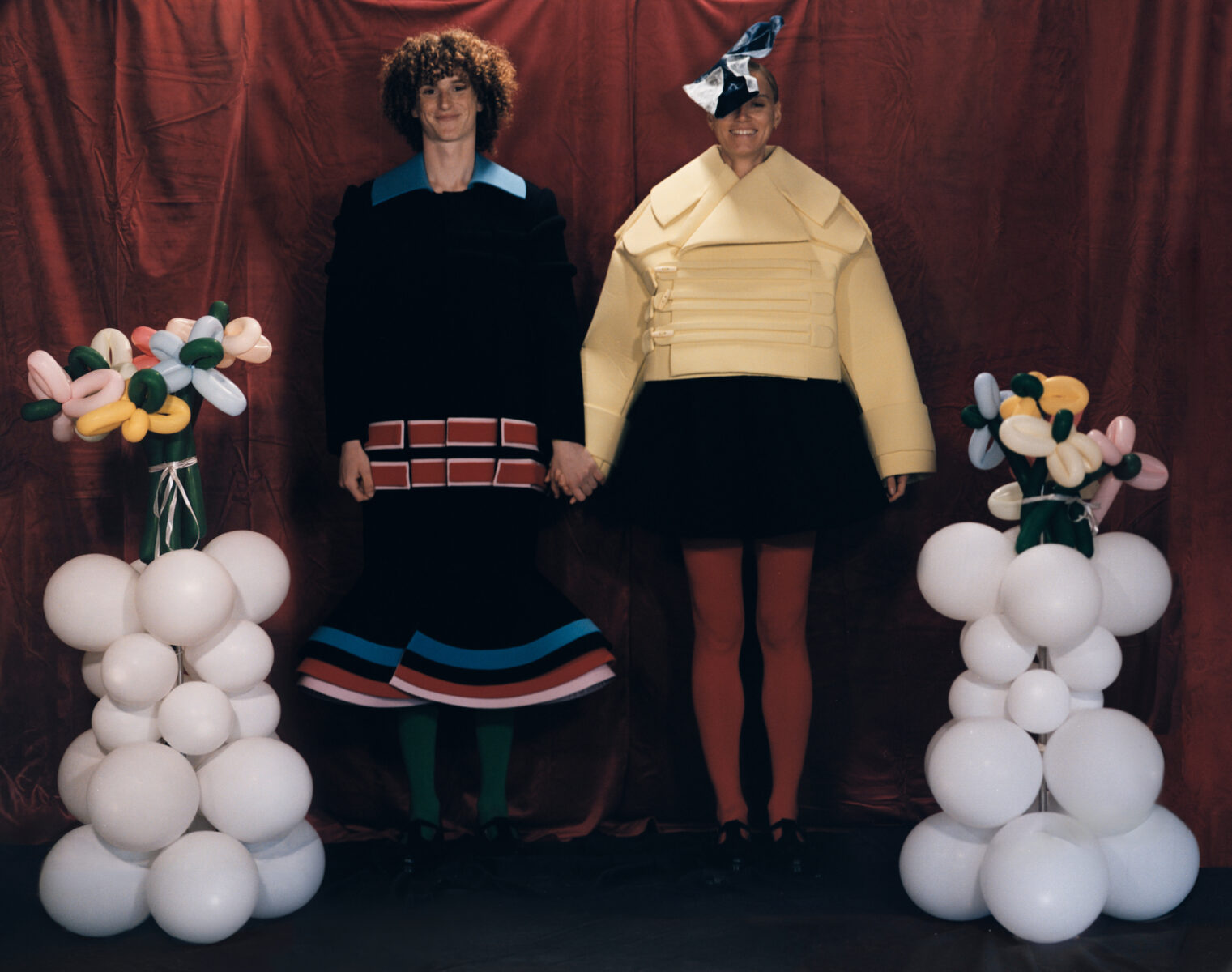
For the first time, the 2026 Central Saint Martins BA Fashion Show left its Granary Square home behind. Instead, it took over the upper decks of Peckham Levels, a former multi-storey car park in south London. Against a backdrop of raw concrete, exposed to the city’s natural elements, wind became an uninvited collaborator as 40 designers presented collections that oscillated between deeply personal narratives and wildly imaginative worlds. Across womenswear, menswear, knitwear and print, the graduating class explored themes of identity, displacement, memory, queerness, craft and belonging. It was hectic, occasionally inconvenient (for the models on stilts, ducking under the ceilings), and entirely fitting for a legacy showcase that has long thrived on experimentation.
40 graduating designers each presented six looks, creating roughly 240 looks in procession of personal histories, obsessions and ambitions. The venue’s industrial setting only heightened the atmosphere. Perhaps that is what fashion education demands now: adaptability, reinvention, and a willingness to create meaning within unfamiliar terrain. The venue’s disruption echoed the spirit of the collections themselves, many challenging established ideas of the self and where we belong. Breaking the body down and reconstructing the garments again with no limitation. These designers refuse the comfort of an easy narrative.
For Polina Kadilnikova, the 2026 L’Oréal Professionnel Young Talent Award winner, the ongoing war in Ukraine became the starting point for an exploration of loss and remembrance, questioning what survives when home exists only in memory. Travelling across the globe, Shane Elias reflected on childhood memories linked to his family’s connection to New York’s garment industry to create a collection rooted in nostalgia and belonging. Similarly, Sophia Layk transformed personal grief into material form, dedicating her collection to her late mother, an author, through garments composed of thousands of interconnected leather fragments, referencing the expansive collection of books she obtained after her mother’s passing.
Noticeably, some of the most compelling collections emerged from acts of radical self-examination. Cross-continent duo Paris.N.London, the L’Oréal Professionnel Young Talent Award runners-up, reinvent E8’s Ridley Road Market through a voyeuristic lens on the aunties and uncles on the strip. Through Cameron and Harley’s collaboration, the two represent this joint connection, advocating for the preservation of the beloved market and getting familiar with the area’s vibrant spirit – bringing the community spirit back together. Ex-Savile Row’er Daniel Haworth revisited his years working on the prestigious strip, disrupting the traditions of tailoring through exaggerated proportions and playful awkwardness. Meanwhile, menswear designer Joseph Richman explored the quirks of middle-class suburban life, finding humour in awkward tailoring, drawing upon an obsessive file of photos of his daily commute into CSM’s Kings Cross campus.
Material experimentation proved equally significant. Luke Saul transformed scraps into inventive garments inspired by his Newcastle neighbourhood’s attitude to repurposing materials through building bicycle ramps for its youth. Pakistani designer Kyal Heanly used indecision as a creative compass, combining references to his South Asian heritage with material experimentation, which was particularly evident in his use of bookcloth, a rigid material that cracked and fractured during construction, allowing the garment to physically embody themes of indecision and imperfection, while Lili Seroussi examined power and authority through military garments transformed into animal-like forms. In contrast, Buzz Shatford’s “Snowy Mountain Princess Party” celebrated friendship and Toronto nightlife, balancing glamour and practicality through frost-like textures and bright colour.
Collectively, their garments became fairytale-like takes on the autobiographical, revealing a cohort unafraid to draw from deeply personal experiences, whether that meant confronting grief, revisiting childhood memories, questioning ideas of home, or finding humour in everyday life. That willingness to challenge boundaries has long defined Central Saint Martins, but this year’s graduates seemed particularly committed to expanding the possibilities of what fashion can and should communicate. The result was a portrait of a generation unafraid to wrangle personal experiences within wider social realities.
The CSM graduating class of 2026 proved that fashion remains one of the most powerful tools for making sense of an increasingly complex world. Though some may be anxiety ridden with what the creativescape looks like under increasing economic pressures – even more daunted by what it could mean to take this space across borders – these designers charge at these hurdles head-on.
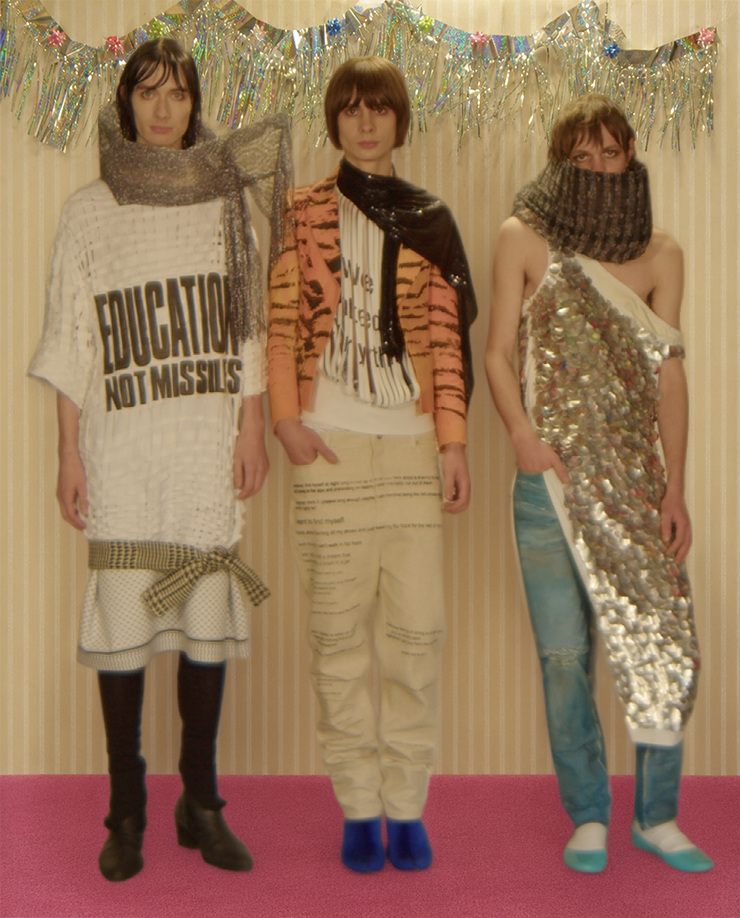
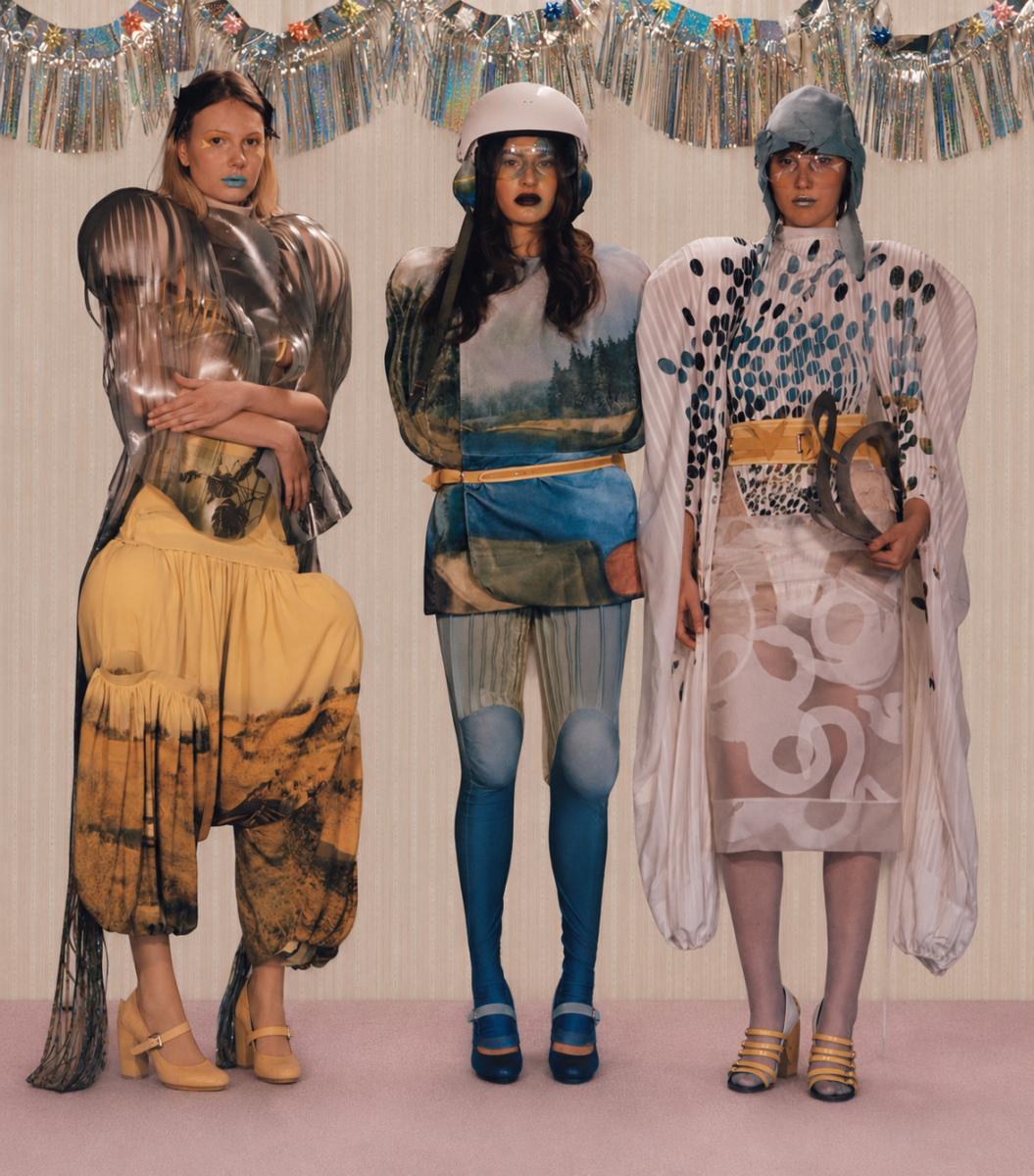
With photographer Shenell Wellington’s fanciful lens on the ground and Ares Karagiannis’ creative direction, a series called ‘P.S. the final act’, meet the graduate designers who set Peckham Levels ablaze with their crafty collections at this year’s BA showcase.
Luke Saul
Walk us through the inspiration for your collection — when did the idea for it first come about? What is its story?
One of those was the pure, unpoisoned creativity of working-class children. I remember every day seeing a group of 2 or 3 kids building a bike ramp on the grass hill behind my house in Newcastle. They created with no one to impress, no rules of how to do it, simply just the human urge to create. My goal was to make a sustainable collection and prove that it can still look appealing and not box myself in the category of a sustainable designer.
What did you learn about yourself through this process?
For the longest time, I had convinced myself that I couldn’t compete with the students around me for all sorts of reasons, and it was only in my final year of CSM that I realised that this was all bullshit that I had convinced myself, for the sake of my own sanity, as if I had prepared myself for mediocrity. Growing up in an environment like I did myself, it’s normal to believe you can’t have a creative job, or be anyone special, or even leave your hometown.
What’s the biggest misconception about CSM?
That everyone is rich. Don’t get me wrong, there’s a lot – and I mean, a lot – of rich kids at CSM. But as a whole, it’s a dangerous narrative to push, one that honestly could push working-class people away from these spaces. It’s important we, as working- class young creatives, be aggressive in infiltrating these places. Don’t be afraid of being the odd one out. Research scholarships and funding, and get yourself right in the thick of things.
Polina Kadilnikova
Post-show, how are you feeling about everything?
Overwhelmed but very happy the story reached so many people.
Walk us through the inspiration for your collection — when did the idea for it first come about? What is its story?
My collection, ‘Casualties’, explored the violence of the full-scale invasion in Ukraine and its effect on memories of the times before [the] war. I started by looking at the silhouettes of traditional garments that were once banned or erased, and covering them with prints of pictures from occupied territories or cities that are constantly being shelled to expand the memories of those places and save them from vanishing. Through print, I wanted to capture the feeling of nostalgia and peace. I had to find what reflected that feeling for me. In the end, I was looking at wedding pictures, school interiors, children’s playgrounds and very specific photo wallpapers that are mostly found in hospital interiors. I’ve used a lot of imagery from hospitals and sanatoriums, as they’ve become places of temporary relocation for people and a place of rehabilitation for soldiers. All of the research comes from within Ukraine; traditional museum photography, pictures of contemporary Ukrainian photographers like Iryna Vasylenko’s imagery from her series, “Anguish in Green”. Even though the project is about war, it is a hopeful overview of our culture where we’ve accepted the traumatic past and present and have built something from it.
If you could redo your years here, what would you do differently?
I would experiment more in my early work, without having an obsession to find a defined style – it’s exciting to work in directions you wouldn’t expect yourself to be in. And maybe talk to more people.
Buzz Shatford
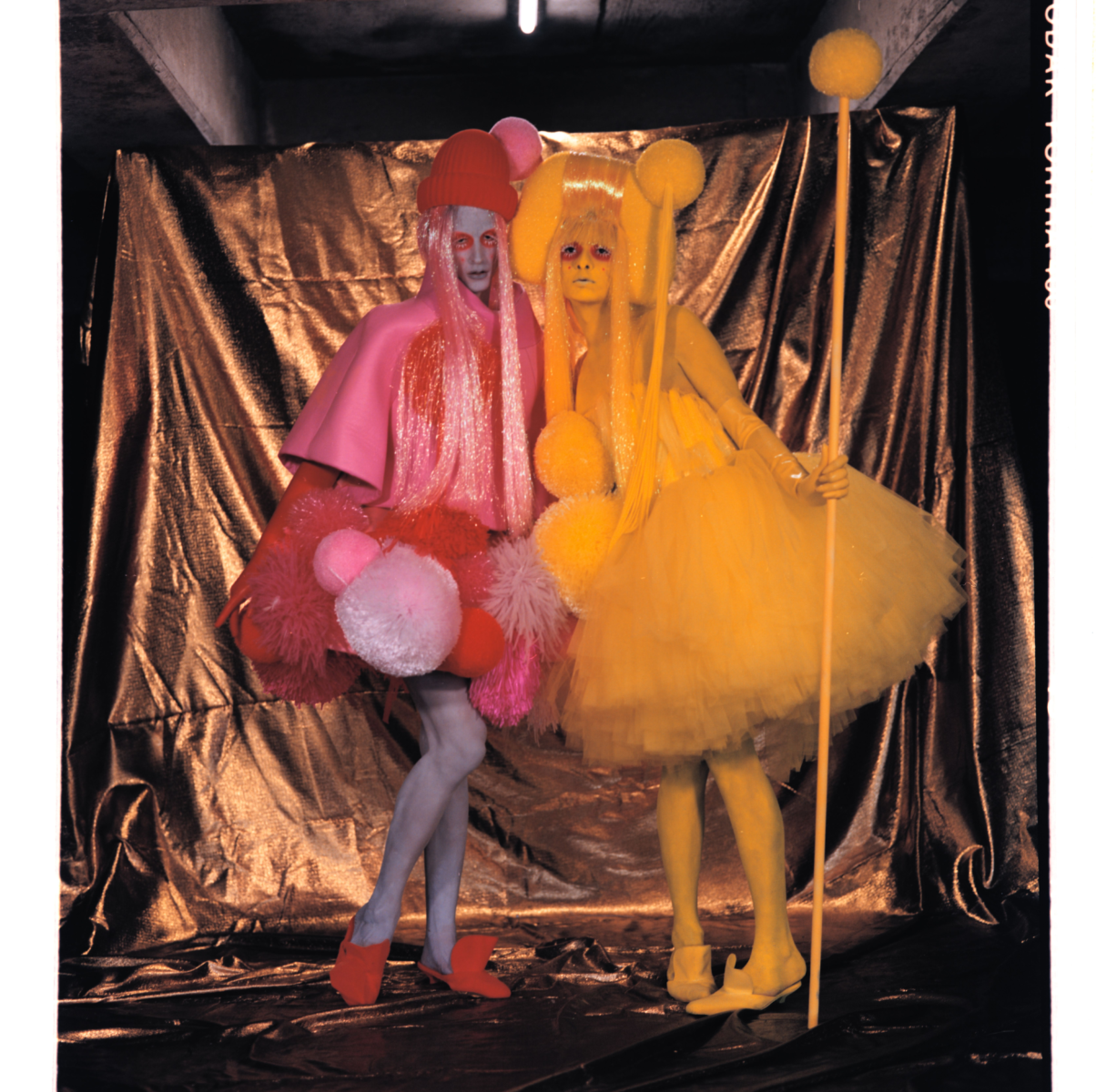
Walk us through the inspiration for your collection – when did the idea for it first come about? What is its story?
It’s called “Snowy Mountain Princess Party”. When I thought about my graduate collection, I realised it just had to start with everything I like, and the thing I like most is cold weather. It occurred to me that the best memories of my entire life, more often than not, take place in the winter. The way you really have to be creative and committed to have fun in these challenging conditions makes everything more special, and this felt analogous to the mindset I’ve had to adopt to make this course work for me, so that’s when it clicked. It’s about every winter I’ve ever experienced, with an emphasis on a period, 10-12 years ago or so, when I was actively trying to make it as a nightlife personality in Toronto. The friends I made at that time and the distinct sensibility of how we all dressed and socialised, wintertime or otherwise, informed a lot of the choices I made. In the end, the collection was mostly about a mix between the absurdity and inconvenience of wintertime drag, and an opposing, idealised notion of winter you might find in like, a snow globe or a Christmas card.
What did you learn about yourself through this process?
I’m a lot more patient than I realised. A lot of the techniques that characterise the collection were really time-consuming, and the most fun moments came from just plugging away at those tasks without regard for results.
Was there a figure, celebrity, or person that you envisioned when designing/mapping out your collection?
Tori Amos was a big one, chiefly her song “Winter”, which always snapped me back into the seasonal vibe of everything, and provided the pathos and sentimentality that surprisingly propelled me forward most. My friend, Macy Rodman, who remixed that song for my runway soundtrack as well – her podcast “Nymphowars” (with Theda Hammel) was a sort of true north, logic-wise, in terms of the post-ironic joy I was after. Of course, the drag queens who really planted the seeds for the flavour of everything in the collection: Proddy, Mary Messhausen, and Peg.
Joseph Richman
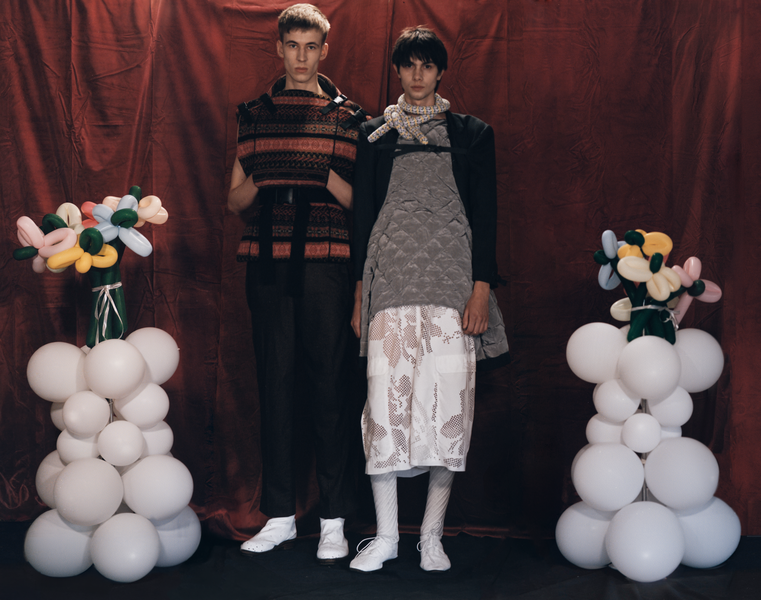
Walk us through the inspiration for your collection — when did the idea for it first come about? What is its story?
I’ve lived at home in the suburbs of Teddington my whole time at CSM and because of that I’ve always had this stark contrast of my ‘normality’ and art school. My work is always quite funny and I think this is because middle-class suburban British dress is inherently quite awkward and funny.
What did you learn about yourself through this process?
What was originally quite a tame womenswear collection became quite an exciting and slightly perverted men’s collection. A year ago I would have never put a man in a dress or a backless boiler suit but I decided to lean into it, the unintentional sexiness kind of mirrored the awkward sexiness of middle class dress as well.
What’s the biggest misconception about CSM?
What this school appreciates the most and is really apparent in this year’s show is unrelenting vision. You don’t have to be the craziest, but you have to be whatever you are 100%.
Daniel Haworth
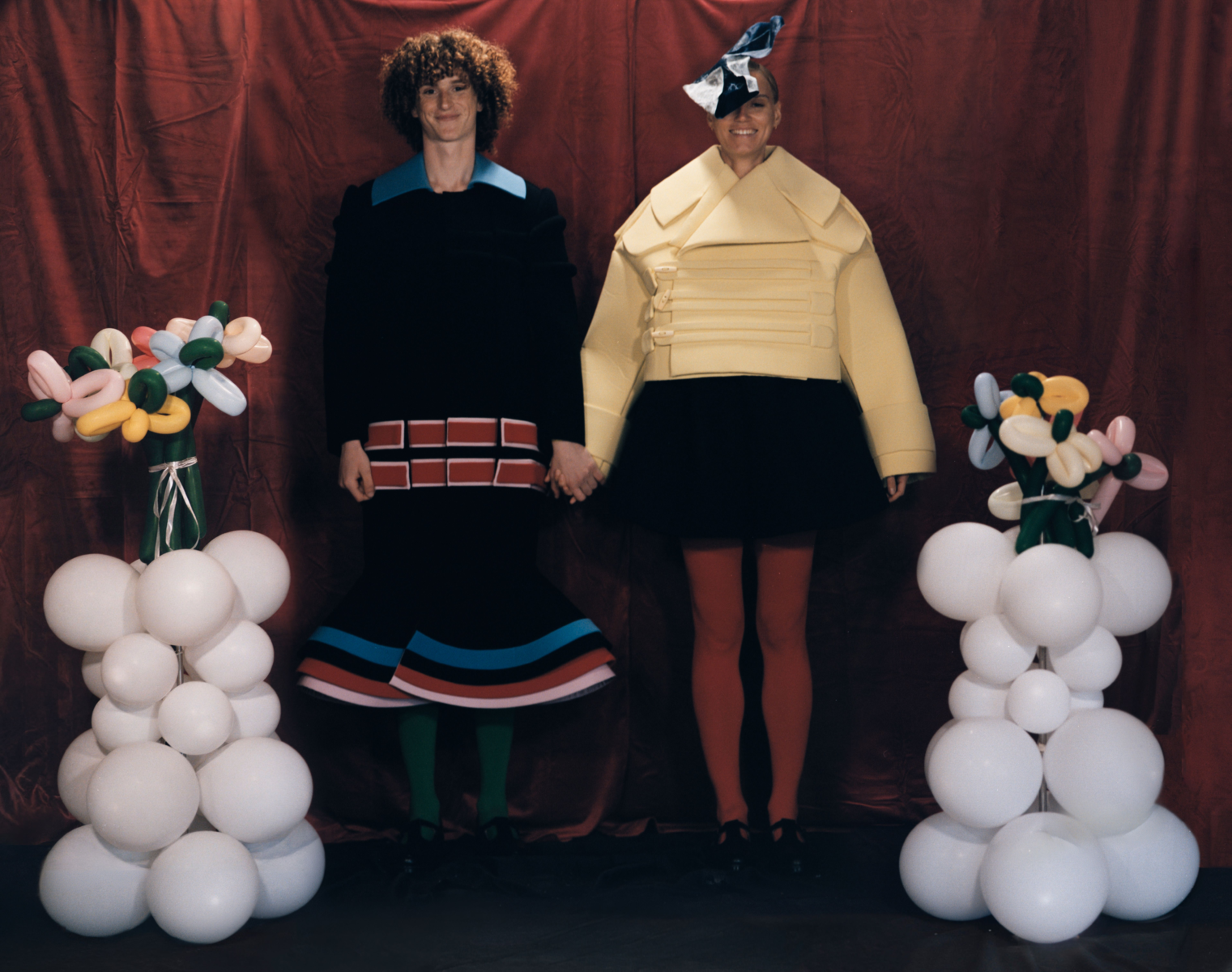
Walk us through the inspiration for your collection — when did the idea for it first come about? What is its story?
My collection is called ‘WHEN I GROW UP I WANTED TO BE A TAILOR’. It’s about my experience training and working as a tailor on Savile Row from the ages of 18 to 25. I was promoted to Head Cutter of a Savile Row company at a very young age – it was an amazing honour. However, I felt completely out of place in such a traditional world. I wanted to pair the tailoring forms and skills with this feeling of childishness that I felt at the time. I looked at children’s clothing silhouettes from the Victorian era, children’s toys and British street photographers from the 20th century. I used multiple layers of bonded neoprene with tailoring fabrics to create these exaggerated bold forms.
Was there a figure, celebrity or person that you envisioned when designing/mapping out your collection?
Feathers McGraw
Upon graduating from CSM, what would your ‘famous last words’ be?
As lame as it sounds: ‘Fake it till you make it’. You need a healthy level of delusion to get to where you want to be!
Lili Seroussi
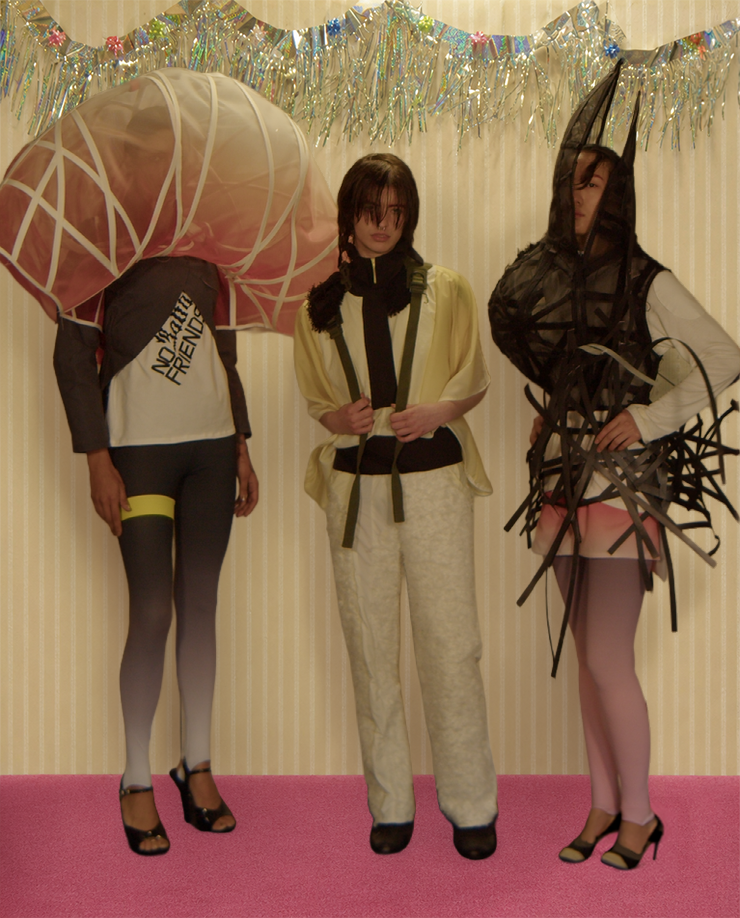
Post-show, how are you feeling about everything?
For the first time, I’m seeing a design language that I feel is completely coherent with myself, and I am very, very happy to be leaving university with this acquired confidence. It’s a first collection for a reason.
Walk us through the inspiration for your collection — when did the idea for it first come about? What is its story? What materials did you use? What did the design process look like?
My collection is a fable, updated and modernised to our current world — Inspired by Jean de la Fontaine’s, drawing from two specific ones, The Animals Sick of the Plague and The Wolf and the Lamb. These fables speak on injustice and abuse of power through violence and hierarchies; themes perfectly aligned with current headlines. I saw so many references to military uniforms in my research files, and it made me uneasy.
Was there a figure, celebrity or person that you envisioned when designing/mapping out your collection?
I could envision young Thom Yorke, David Bowie, Tilda Swinton and Grace Jones (at any age), wearing the clothes. But when I was actively designing, I was imagining if the collection was to be on a stage designed by Robert Wilson, how would it look? If my raven were to step out onto a lit background, how would the transparency work with the shape and the body within it?
What’s the biggest misconception about CSM?
There are about 150 graduating fashion students in our year – you saw 40 on the press show runway. There are so many interesting people and stories throughout the school.
Sophia Layk
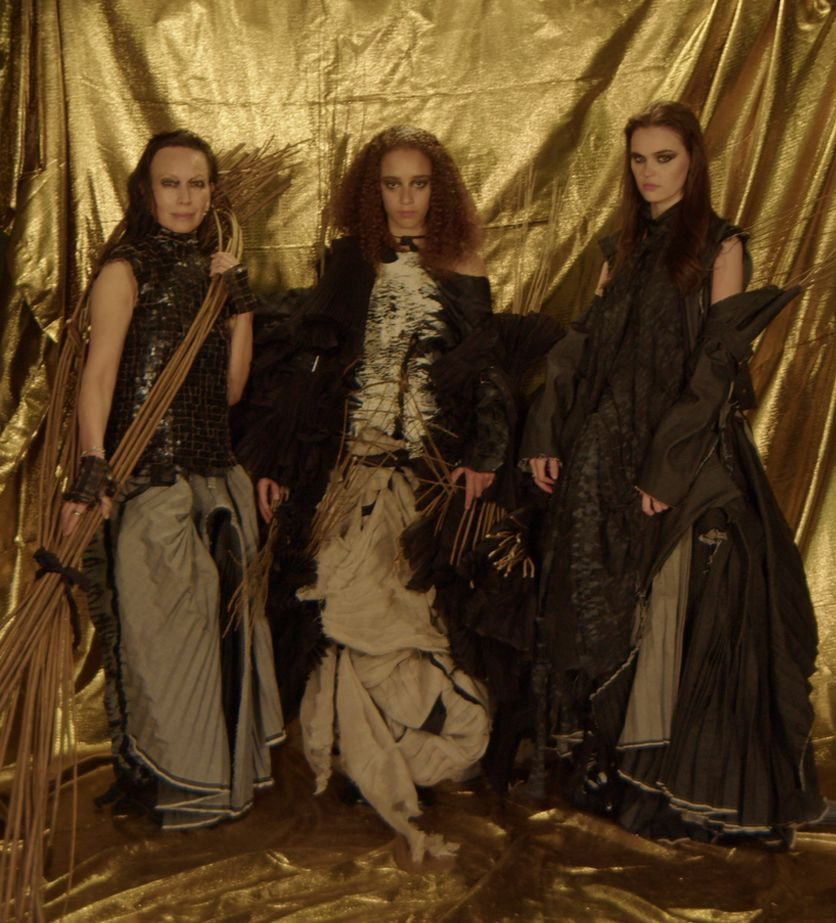
Post-show, how are you feeling about everything?
Elated. Show day passed like a blur. I was so focused on getting the collection out onto the runway. I feel content to have achieved that; that my months of research, patterning and construction came together as I intended in that minute. It was just a minute in the end.
Walk us through the inspiration for your collection — when did the idea for it first come about? What is its story?
‘Postscript’ is dedicated to the memory of my mother, who passed away in December 2024, while I was in my final year here. My mother was a writer; I grew up around literature. After she passed away, I took a year out and moved back home out of London. I was inspired by The Woodlanders by Thomas Hardy in the way rural English landscapes hold grief. My project is an exploration of personal grief and transformation.
What did you learn about yourself through this process?
I learned that I am capable of transformation: I can reinvent myself as often as I like. There is a freedom in adaptability, but ultimately, we are tethered to our authentic selves.
Any last words?
Probably something like “See you later” or “Until next time…” I’m going to be back for MA in a few months.
Cameron Bisseck and Harley Angrabeit
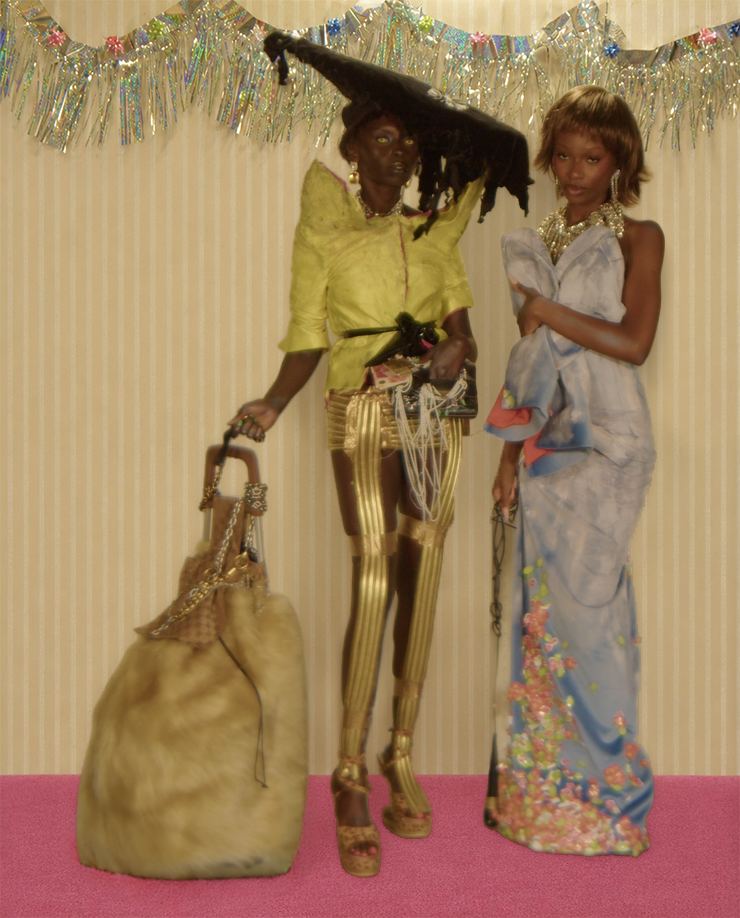
Walk us through the inspiration for your collection — when did the idea for it first come about? What is its story?
This collection is inspired by my earliest memories are of going to the market on weekends with my mother and grandmother, walking between stalls to buy our fruit, meat, and, if I was lucky, a piece of sugar cane to chew on the way home. The market became a place where people constantly reinvented things, a T-Shirt wrapped into a headscarf, a coat could be worn three different ways, a market stall could become a social hub, and personal style was built from resourcefulness rather than luxury. The collection is centred around the Black diasporic community of Ridley Road Market, particularly the women I grew up around. I wanted to celebrate the humour, confidence, resilience and individuality that I saw in these aunties every week – their ability to carry heavy bags home, negotiate prices, build community and still present themselves with pride. Each look is inspired by a different character from the market: the jewellery seller surrounded by blingy jewels, the uncle walking through the market blasting music from a speaker, the trader setting up their stall in the early morning, ready to unclip their marquee, and the shopper whose receipts, bags and purchases seem to multiply throughout the day.
Was there a figure, celebrity or person that you envisioned when designing/mapping out your collection?
My muse was the Ridley Road Market auntie. If I were to compare her to cultural figures, I’d say she has the fearlessness of Grace Jones, the authenticity of Michaela Coel and the confidence of Rihanna.
What did you learn about yourself through this process?
Early on in my research, I worried about whether my references were “fashion” enough. I was drawing inspiration from Caribbean aunties and communities that aren’t often represented in luxury fashion. Over time, I realised these women and cultures were already incredibly fashionable, just often overlooked. The biggest lesson was understanding that my role as a designer isn’t to make these references fit fashion, but to make fashion pay attention to them.
Any last words?
Every mikkle mek a muckle.
Kyal Heanly
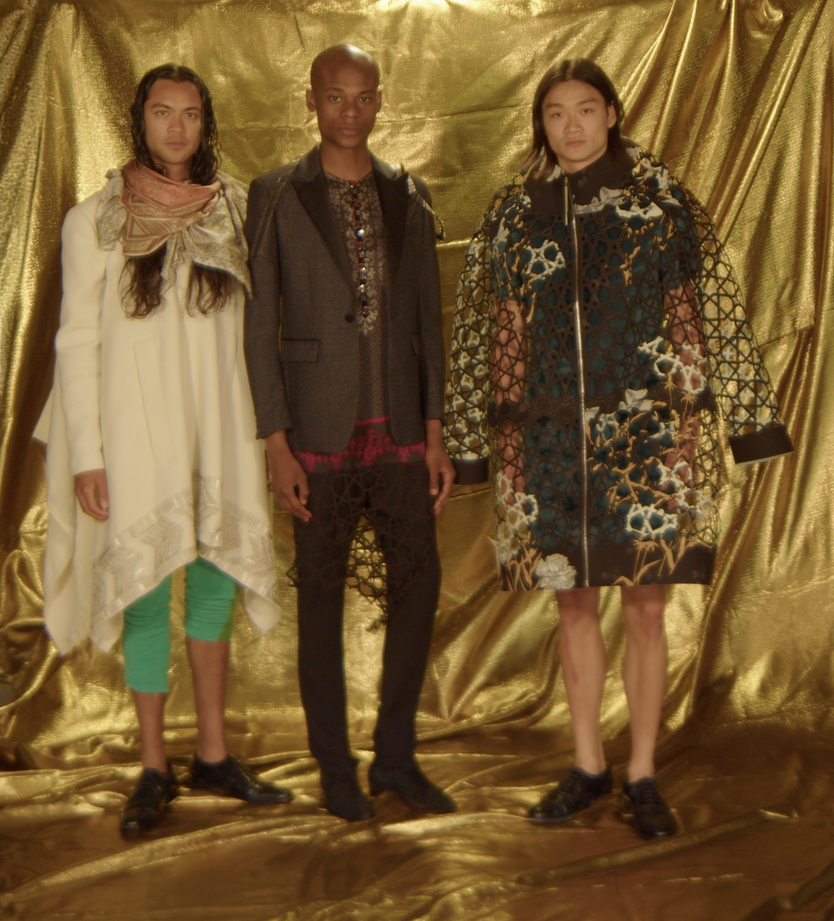
Walk us through the inspiration for your collection — when did the idea for it first come about? What is its story?
It went down many different routes, and I was wasting a lot of time by constantly changing my mind. Instead, I chose to view these trials as an accumulation of ideas rather than discarding them. The techniques within this collection aim to document decision-making, whilst many of the garment references stem from my Pakistani heritage.
What did you learn about yourself through this process?
I learnt that letting go of responsibility is so beneficial when trying to produce a full collection. I handed over many tasks to my sister and two helpers (Maggie and Zac), which is something I did not think I’d be capable of as a bit of a control freak.
What’s the biggest misconception about CSM?
That people are mean and scary. Obviously, some are, but the friends I made during my time at CSM are such a big part of the reason I got through it all.
Shane Elias
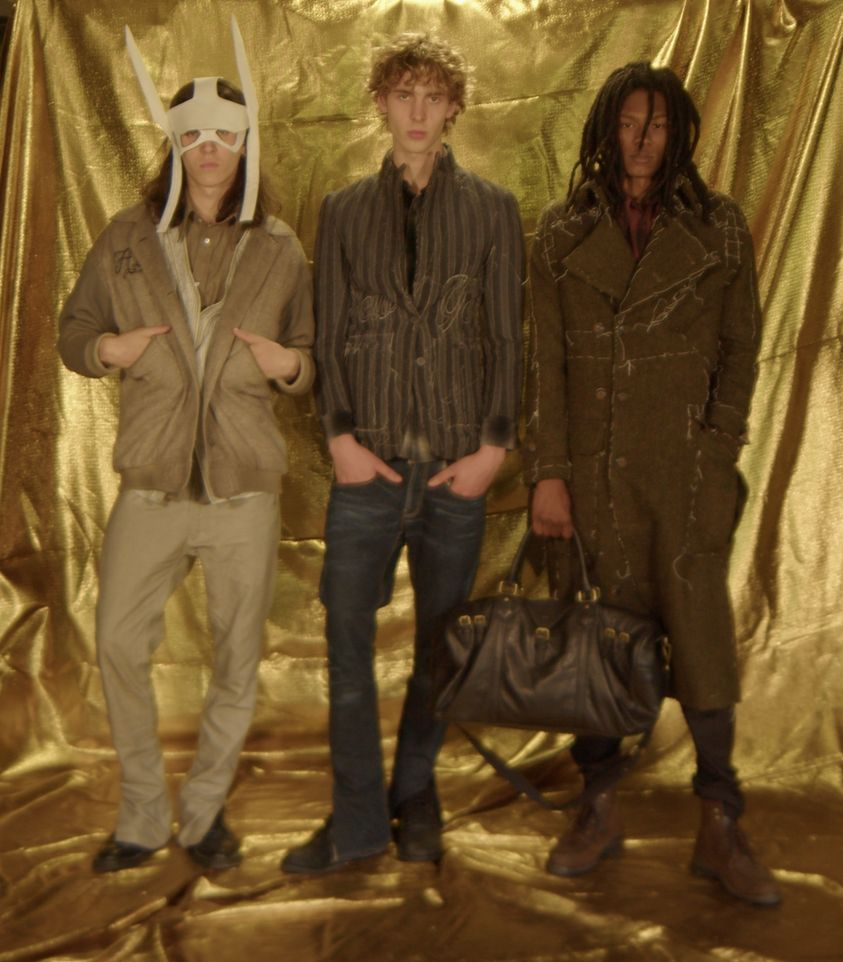
Walk us through the inspiration for your collection — when did the idea for it first come about? What is its story?
The collection was inspired by my relationship with my childhood and family history growing up in New York. I drew upon familiar outerwear silhouettes that surrounded me throughout my youth, integrating them with pop culture symbols and icons that I grew up with (Like comic book characters such as Batman, and New York City sports teams). The idea came about over the summer, before I started my final year, after spending time back in New York. I realised how much I loved the city – and how much it impacted my decision-making as a designer.
What did you learn about yourself through this process?
Perfection lies within imperfection. Ideas will constantly change and reinvent themselves. Constant trial and error will inform your decision-making and lead you to new, fresh ideas.
What do your next steps look like? What comes next for you?
To hopefully get a men’s or women’s outerwear design position. I would love to work for a European house or even move back home! I want to be given the opportunity to utilise my skills and design language within a large house.
Matteo Dunkley
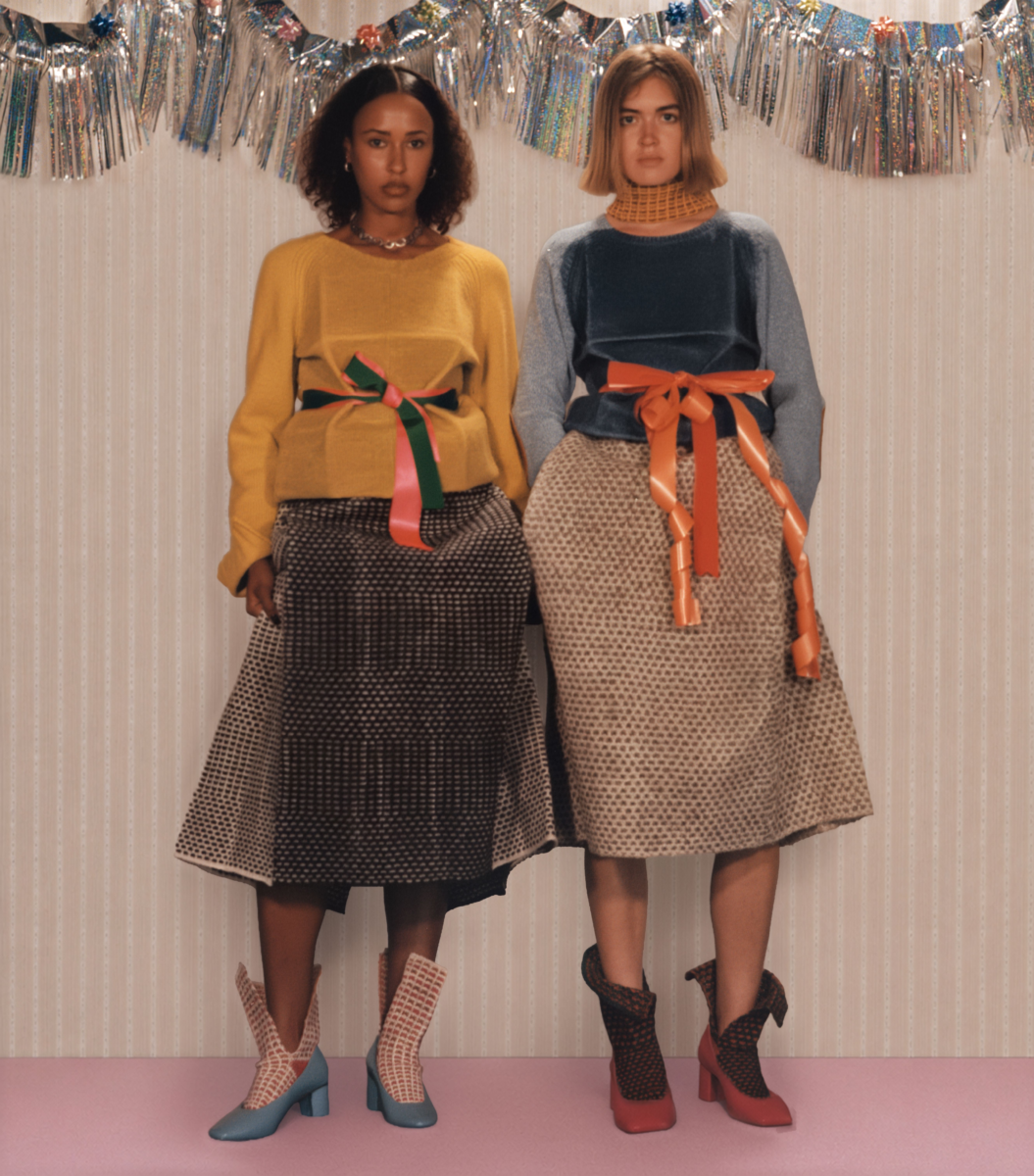
Walk us through the inspiration for your collection — when did the idea for it first come about? What is its story?
Two months before the deadline, my tutor advised that I hone in on just one of them and from there, my entire collection became about this waxed knit material I had developed. It was exciting to use as I’d never worked with a material like it – it was rigid, soft and malleable all in one, it was these properties that I reacted to and designed my entire collection off the back of. I wanted a collection that felt fun and playful yet also had a degree of sophistication.
What did you learn about yourself through this process?
I learned that it was possible to design a collection from scratch in 2 months.
If you could redo your years here, what would you do differently?
I had this idea of what fashion was meant to be, and I didn’t swerve from it. It was only until my intern year, when I worked at Ponte, that everything changed for me.
Any last words?
Work hard and be nice to people.
Photography – Shenell Wellington Creative Direction – Ares Karagiannis
Words – Dharam Rana and Poppy Wilson
in HTML format, including tags, to make it appealing and easy to read for Japanese-speaking readers aged 20 to 40 interested in fashion. Organize the content with appropriate headings and subheadings (h1, h2, h3, h4, h5, h6), translating all text, including headings, into Japanese. Retain any existing
tags from
So long, concrete jungle, hello concrete… car park. For this year’s CSM BA Fashion show, 40 designers went stride for stride on the coveted runway. This time round, their messages packed a punch – the clothes went even harder.
For the first time, the 2026 Central Saint Martins BA Fashion Show left its Granary Square home behind. Instead, it took over the upper decks of Peckham Levels, a former multi-storey car park in south London. Against a backdrop of raw concrete, exposed to the city’s natural elements, wind became an uninvited collaborator as 40 designers presented collections that oscillated between deeply personal narratives and wildly imaginative worlds. Across womenswear, menswear, knitwear and print, the graduating class explored themes of identity, displacement, memory, queerness, craft and belonging. It was hectic, occasionally inconvenient (for the models on stilts, ducking under the ceilings), and entirely fitting for a legacy showcase that has long thrived on experimentation.
40 graduating designers each presented six looks, creating roughly 240 looks in procession of personal histories, obsessions and ambitions. The venue’s industrial setting only heightened the atmosphere. Perhaps that is what fashion education demands now: adaptability, reinvention, and a willingness to create meaning within unfamiliar terrain. The venue’s disruption echoed the spirit of the collections themselves, many challenging established ideas of the self and where we belong. Breaking the body down and reconstructing the garments again with no limitation. These designers refuse the comfort of an easy narrative.
For Polina Kadilnikova, the 2026 L’Oréal Professionnel Young Talent Award winner, the ongoing war in Ukraine became the starting point for an exploration of loss and remembrance, questioning what survives when home exists only in memory. Travelling across the globe, Shane Elias reflected on childhood memories linked to his family’s connection to New York’s garment industry to create a collection rooted in nostalgia and belonging. Similarly, Sophia Layk transformed personal grief into material form, dedicating her collection to her late mother, an author, through garments composed of thousands of interconnected leather fragments, referencing the expansive collection of books she obtained after her mother’s passing.
Noticeably, some of the most compelling collections emerged from acts of radical self-examination. Cross-continent duo Paris.N.London, the L’Oréal Professionnel Young Talent Award runners-up, reinvent E8’s Ridley Road Market through a voyeuristic lens on the aunties and uncles on the strip. Through Cameron and Harley’s collaboration, the two represent this joint connection, advocating for the preservation of the beloved market and getting familiar with the area’s vibrant spirit – bringing the community spirit back together. Ex-Savile Row’er Daniel Haworth revisited his years working on the prestigious strip, disrupting the traditions of tailoring through exaggerated proportions and playful awkwardness. Meanwhile, menswear designer Joseph Richman explored the quirks of middle-class suburban life, finding humour in awkward tailoring, drawing upon an obsessive file of photos of his daily commute into CSM’s Kings Cross campus.
Material experimentation proved equally significant. Luke Saul transformed scraps into inventive garments inspired by his Newcastle neighbourhood’s attitude to repurposing materials through building bicycle ramps for its youth. Pakistani designer Kyal Heanly used indecision as a creative compass, combining references to his South Asian heritage with material experimentation, which was particularly evident in his use of bookcloth, a rigid material that cracked and fractured during construction, allowing the garment to physically embody themes of indecision and imperfection, while Lili Seroussi examined power and authority through military garments transformed into animal-like forms. In contrast, Buzz Shatford’s “Snowy Mountain Princess Party” celebrated friendship and Toronto nightlife, balancing glamour and practicality through frost-like textures and bright colour.
Collectively, their garments became fairytale-like takes on the autobiographical, revealing a cohort unafraid to draw from deeply personal experiences, whether that meant confronting grief, revisiting childhood memories, questioning ideas of home, or finding humour in everyday life. That willingness to challenge boundaries has long defined Central Saint Martins, but this year’s graduates seemed particularly committed to expanding the possibilities of what fashion can and should communicate. The result was a portrait of a generation unafraid to wrangle personal experiences within wider social realities.
The CSM graduating class of 2026 proved that fashion remains one of the most powerful tools for making sense of an increasingly complex world. Though some may be anxiety ridden with what the creativescape looks like under increasing economic pressures – even more daunted by what it could mean to take this space across borders – these designers charge at these hurdles head-on.
With photographer Shenell Wellington’s fanciful lens on the ground and Ares Karagiannis’ creative direction, a series called ‘P.S. the final act’, meet the graduate designers who set Peckham Levels ablaze with their crafty collections at this year’s BA showcase.
Luke Saul
Walk us through the inspiration for your collection — when did the idea for it first come about? What is its story?
One of those was the pure, unpoisoned creativity of working-class children. I remember every day seeing a group of 2 or 3 kids building a bike ramp on the grass hill behind my house in Newcastle. They created with no one to impress, no rules of how to do it, simply just the human urge to create. My goal was to make a sustainable collection and prove that it can still look appealing and not box myself in the category of a sustainable designer.
What did you learn about yourself through this process?
For the longest time, I had convinced myself that I couldn’t compete with the students around me for all sorts of reasons, and it was only in my final year of CSM that I realised that this was all bullshit that I had convinced myself, for the sake of my own sanity, as if I had prepared myself for mediocrity. Growing up in an environment like I did myself, it’s normal to believe you can’t have a creative job, or be anyone special, or even leave your hometown.
What’s the biggest misconception about CSM?
That everyone is rich. Don’t get me wrong, there’s a lot – and I mean, a lot – of rich kids at CSM. But as a whole, it’s a dangerous narrative to push, one that honestly could push working-class people away from these spaces. It’s important we, as working- class young creatives, be aggressive in infiltrating these places. Don’t be afraid of being the odd one out. Research scholarships and funding, and get yourself right in the thick of things.
Polina Kadilnikova
Post-show, how are you feeling about everything?
Overwhelmed but very happy the story reached so many people.
Walk us through the inspiration for your collection — when did the idea for it first come about? What is its story?
My collection, ‘Casualties’, explored the violence of the full-scale invasion in Ukraine and its effect on memories of the times before [the] war. I started by looking at the silhouettes of traditional garments that were once banned or erased, and covering them with prints of pictures from occupied territories or cities that are constantly being shelled to expand the memories of those places and save them from vanishing. Through print, I wanted to capture the feeling of nostalgia and peace. I had to find what reflected that feeling for me. In the end, I was looking at wedding pictures, school interiors, children’s playgrounds and very specific photo wallpapers that are mostly found in hospital interiors. I’ve used a lot of imagery from hospitals and sanatoriums, as they’ve become places of temporary relocation for people and a place of rehabilitation for soldiers. All of the research comes from within Ukraine; traditional museum photography, pictures of contemporary Ukrainian photographers like Iryna Vasylenko’s imagery from her series, “Anguish in Green”. Even though the project is about war, it is a hopeful overview of our culture where we’ve accepted the traumatic past and present and have built something from it.
If you could redo your years here, what would you do differently?
I would experiment more in my early work, without having an obsession to find a defined style – it’s exciting to work in directions you wouldn’t expect yourself to be in. And maybe talk to more people.
Buzz Shatford
Walk us through the inspiration for your collection – when did the idea for it first come about? What is its story?
It’s called “Snowy Mountain Princess Party”. When I thought about my graduate collection, I realised it just had to start with everything I like, and the thing I like most is cold weather. It occurred to me that the best memories of my entire life, more often than not, take place in the winter. The way you really have to be creative and committed to have fun in these challenging conditions makes everything more special, and this felt analogous to the mindset I’ve had to adopt to make this course work for me, so that’s when it clicked. It’s about every winter I’ve ever experienced, with an emphasis on a period, 10-12 years ago or so, when I was actively trying to make it as a nightlife personality in Toronto. The friends I made at that time and the distinct sensibility of how we all dressed and socialised, wintertime or otherwise, informed a lot of the choices I made. In the end, the collection was mostly about a mix between the absurdity and inconvenience of wintertime drag, and an opposing, idealised notion of winter you might find in like, a snow globe or a Christmas card.
What did you learn about yourself through this process?
I’m a lot more patient than I realised. A lot of the techniques that characterise the collection were really time-consuming, and the most fun moments came from just plugging away at those tasks without regard for results.
Was there a figure, celebrity, or person that you envisioned when designing/mapping out your collection?
Tori Amos was a big one, chiefly her song “Winter”, which always snapped me back into the seasonal vibe of everything, and provided the pathos and sentimentality that surprisingly propelled me forward most. My friend, Macy Rodman, who remixed that song for my runway soundtrack as well – her podcast “Nymphowars” (with Theda Hammel) was a sort of true north, logic-wise, in terms of the post-ironic joy I was after. Of course, the drag queens who really planted the seeds for the flavour of everything in the collection: Proddy, Mary Messhausen, and Peg.
Joseph Richman
Walk us through the inspiration for your collection — when did the idea for it first come about? What is its story?
I’ve lived at home in the suburbs of Teddington my whole time at CSM and because of that I’ve always had this stark contrast of my ‘normality’ and art school. My work is always quite funny and I think this is because middle-class suburban British dress is inherently quite awkward and funny.
What did you learn about yourself through this process?
What was originally quite a tame womenswear collection became quite an exciting and slightly perverted men’s collection. A year ago I would have never put a man in a dress or a backless boiler suit but I decided to lean into it, the unintentional sexiness kind of mirrored the awkward sexiness of middle class dress as well.
What’s the biggest misconception about CSM?
What this school appreciates the most and is really apparent in this year’s show is unrelenting vision. You don’t have to be the craziest, but you have to be whatever you are 100%.
Daniel Haworth
Walk us through the inspiration for your collection — when did the idea for it first come about? What is its story?
My collection is called ‘WHEN I GROW UP I WANTED TO BE A TAILOR’. It’s about my experience training and working as a tailor on Savile Row from the ages of 18 to 25. I was promoted to Head Cutter of a Savile Row company at a very young age – it was an amazing honour. However, I felt completely out of place in such a traditional world. I wanted to pair the tailoring forms and skills with this feeling of childishness that I felt at the time. I looked at children’s clothing silhouettes from the Victorian era, children’s toys and British street photographers from the 20th century. I used multiple layers of bonded neoprene with tailoring fabrics to create these exaggerated bold forms.
Was there a figure, celebrity or person that you envisioned when designing/mapping out your collection?
Feathers McGraw
Upon graduating from CSM, what would your ‘famous last words’ be?
As lame as it sounds: ‘Fake it till you make it’. You need a healthy level of delusion to get to where you want to be!
Lili Seroussi
Post-show, how are you feeling about everything?
For the first time, I’m seeing a design language that I feel is completely coherent with myself, and I am very, very happy to be leaving university with this acquired confidence. It’s a first collection for a reason.
Walk us through the inspiration for your collection — when did the idea for it first come about? What is its story? What materials did you use? What did the design process look like?
My collection is a fable, updated and modernised to our current world — Inspired by Jean de la Fontaine’s, drawing from two specific ones, The Animals Sick of the Plague and The Wolf and the Lamb. These fables speak on injustice and abuse of power through violence and hierarchies; themes perfectly aligned with current headlines. I saw so many references to military uniforms in my research files, and it made me uneasy.
Was there a figure, celebrity or person that you envisioned when designing/mapping out your collection?
I could envision young Thom Yorke, David Bowie, Tilda Swinton and Grace Jones (at any age), wearing the clothes. But when I was actively designing, I was imagining if the collection was to be on a stage designed by Robert Wilson, how would it look? If my raven were to step out onto a lit background, how would the transparency work with the shape and the body within it?
What’s the biggest misconception about CSM?
There are about 150 graduating fashion students in our year – you saw 40 on the press show runway. There are so many interesting people and stories throughout the school.
Sophia Layk
Post-show, how are you feeling about everything?
Elated. Show day passed like a blur. I was so focused on getting the collection out onto the runway. I feel content to have achieved that; that my months of research, patterning and construction came together as I intended in that minute. It was just a minute in the end.
Walk us through the inspiration for your collection — when did the idea for it first come about? What is its story?
‘Postscript’ is dedicated to the memory of my mother, who passed away in December 2024, while I was in my final year here. My mother was a writer; I grew up around literature. After she passed away, I took a year out and moved back home out of London. I was inspired by The Woodlanders by Thomas Hardy in the way rural English landscapes hold grief. My project is an exploration of personal grief and transformation.
What did you learn about yourself through this process?
I learned that I am capable of transformation: I can reinvent myself as often as I like. There is a freedom in adaptability, but ultimately, we are tethered to our authentic selves.
Any last words?
Probably something like “See you later” or “Until next time…” I’m going to be back for MA in a few months.
Cameron Bisseck and Harley Angrabeit
Walk us through the inspiration for your collection — when did the idea for it first come about? What is its story?
This collection is inspired by my earliest memories are of going to the market on weekends with my mother and grandmother, walking between stalls to buy our fruit, meat, and, if I was lucky, a piece of sugar cane to chew on the way home. The market became a place where people constantly reinvented things, a T-Shirt wrapped into a headscarf, a coat could be worn three different ways, a market stall could become a social hub, and personal style was built from resourcefulness rather than luxury. The collection is centred around the Black diasporic community of Ridley Road Market, particularly the women I grew up around. I wanted to celebrate the humour, confidence, resilience and individuality that I saw in these aunties every week – their ability to carry heavy bags home, negotiate prices, build community and still present themselves with pride. Each look is inspired by a different character from the market: the jewellery seller surrounded by blingy jewels, the uncle walking through the market blasting music from a speaker, the trader setting up their stall in the early morning, ready to unclip their marquee, and the shopper whose receipts, bags and purchases seem to multiply throughout the day.
Was there a figure, celebrity or person that you envisioned when designing/mapping out your collection?
My muse was the Ridley Road Market auntie. If I were to compare her to cultural figures, I’d say she has the fearlessness of Grace Jones, the authenticity of Michaela Coel and the confidence of Rihanna.
What did you learn about yourself through this process?
Early on in my research, I worried about whether my references were “fashion” enough. I was drawing inspiration from Caribbean aunties and communities that aren’t often represented in luxury fashion. Over time, I realised these women and cultures were already incredibly fashionable, just often overlooked. The biggest lesson was understanding that my role as a designer isn’t to make these references fit fashion, but to make fashion pay attention to them.
Any last words?
Every mikkle mek a muckle.
Kyal Heanly
Walk us through the inspiration for your collection — when did the idea for it first come about? What is its story?
It went down many different routes, and I was wasting a lot of time by constantly changing my mind. Instead, I chose to view these trials as an accumulation of ideas rather than discarding them. The techniques within this collection aim to document decision-making, whilst many of the garment references stem from my Pakistani heritage.
What did you learn about yourself through this process?
I learnt that letting go of responsibility is so beneficial when trying to produce a full collection. I handed over many tasks to my sister and two helpers (Maggie and Zac), which is something I did not think I’d be capable of as a bit of a control freak.
What’s the biggest misconception about CSM?
That people are mean and scary. Obviously, some are, but the friends I made during my time at CSM are such a big part of the reason I got through it all.
Shane Elias
Walk us through the inspiration for your collection — when did the idea for it first come about? What is its story?
The collection was inspired by my relationship with my childhood and family history growing up in New York. I drew upon familiar outerwear silhouettes that surrounded me throughout my youth, integrating them with pop culture symbols and icons that I grew up with (Like comic book characters such as Batman, and New York City sports teams). The idea came about over the summer, before I started my final year, after spending time back in New York. I realised how much I loved the city – and how much it impacted my decision-making as a designer.
What did you learn about yourself through this process?
Perfection lies within imperfection. Ideas will constantly change and reinvent themselves. Constant trial and error will inform your decision-making and lead you to new, fresh ideas.
What do your next steps look like? What comes next for you?
To hopefully get a men’s or women’s outerwear design position. I would love to work for a European house or even move back home! I want to be given the opportunity to utilise my skills and design language within a large house.
Matteo Dunkley
Walk us through the inspiration for your collection — when did the idea for it first come about? What is its story?
Two months before the deadline, my tutor advised that I hone in on just one of them and from there, my entire collection became about this waxed knit material I had developed. It was exciting to use as I’d never worked with a material like it – it was rigid, soft and malleable all in one, it was these properties that I reacted to and designed my entire collection off the back of. I wanted a collection that felt fun and playful yet also had a degree of sophistication.
What did you learn about yourself through this process?
I learned that it was possible to design a collection from scratch in 2 months.
If you could redo your years here, what would you do differently?
I had this idea of what fashion was meant to be, and I didn’t swerve from it. It was only until my intern year, when I worked at Ponte, that everything changed for me.
Any last words?
Work hard and be nice to people.
Photography – Shenell Wellington Creative Direction – Ares Karagiannis
Words – Dharam Rana and Poppy Wilson
and integrate them seamlessly into the new content without adding new tags. Ensure the new content is fashion-related, written entirely in Japanese, and approximately 1500 words. Conclude with a “結論” section and a well-formatted “よくある質問” section. Avoid including an introduction or a note explaining the process.