Rewrite
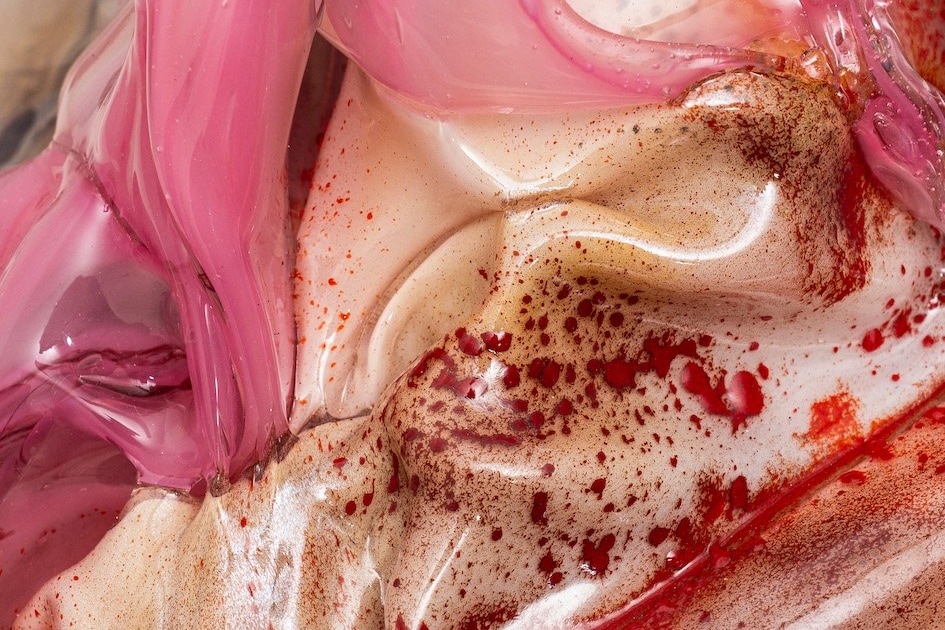
Lead ImageFaun’s Flesh (Arena Rosada), 2025, by Maria Koshenkova, DenmarkCourtesy of Loewe Foundation Craft Prize
“For us, the idea of craft doesn’t necessarily have to be crafty,” says Lazaro Hernandez, one half the new creative director duo now steering Loewe alongside Jack McCollough. Conceived in 2014 and first awarded three years later, the Loewe Foundation Craft Prize marks a decade this year. Established to champion contemporary craft at its most inventive, the annual award has become a barometer for where artisanal practice is heading next. More than 5,100 submissions arrived from 133 countries and regions for the 2026 edition in Singapore, though only 30 finalists made the cut, selected by a panel of jurors that, this year, includes McCollough and Hernandez for the first time. “The deliberation process was really difficult,” says McCollough. “There were some heated discussions, but we’re super happy with the final result.” This year’s winner has been named as Jongjin Park, who will recieve €50,000, while special mentions are awarded to Graziano Visintin and Álvaro Catalán de Ocón, who will each receive €5,000 apiece.
There is another anniversary in the air, too: Loewe turns 180 this year. The house traces its beginnings back to calle Lobo in Madrid, where a collective of artisans made leather purses, wallets, cigarette cases and frames for Spanish royalty and, eventually, an international cast that included Ernest Hemingway, Sophia Loren, Rita Hayworth and Marlene Dietrich. 25 years later, the German craftsman Enrique Loewe Roessberg acquired the workshop and gave it his name. Luxury history tends to tell the rest in sweeping terms, though Loewe has remained unusually nimble for a house of its age: leather specialists, cultural instigators and more recently a surrealist fever dreamer during Jonathan Anderson’s awesomely transformative tenure. Now, under McCollough and Hernandez, a new chapter has begun.
And through it all, Loewe remains crafty to the core. This year’s prize is held in Singapore, a city where deep-rooted craft traditions exist alongside a forward-looking sensibility. The city-state sits at the heart of a region where artisanal practice remains embedded in everyday life, while its reputation for innovation and modern urban thinking has helped foster a growing appetite for contemporary craft. For the Loewe Foundation, which has increasingly sought to expand the prize beyond its usual centres, the location feels timely, particularly within one of Singapore’s leading cultural institutions.
Last year’s winner, the Japanese artist Kunimasa Aoki, was also invited to sit on the jury. His winning clay sculpture, built from a series of compressed layers, explored time, pressure and accumulation through material alone. “After winning and now joining the jury, I’m able to understand my work in the third person, where I can take one step back and view the world around me,” Aoki tells AnOther. “Now I can’t believe I won after such a rigorous jury process. My confidence has been growing slightly every day. Slowly, I feel my work has found its place not just in Japan, but in the world too.”
As an exhibition showcasing the work of the 30 finalists of this year’s Loewe Foundation Craft Prize opens in Singapore’s National Gallery, we select five highlights to look out for.

目次
Jongjin Park, Republic of Korea
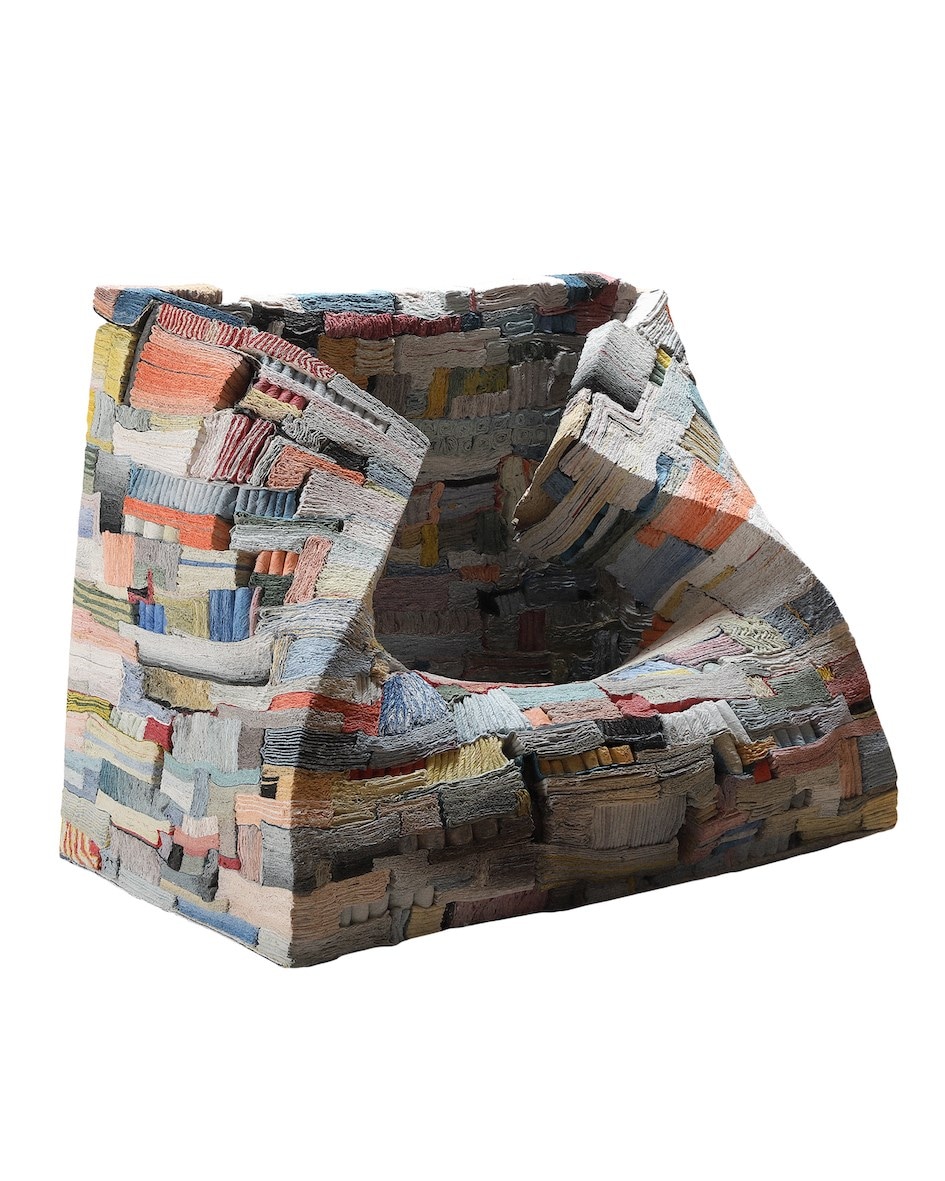
Winner of this year’s Loewe Foundation Craft Prize, Seoul-based ceramicist Jongjin Park makes works that appear almost geological, like dense, stratified blocks that resemble excavated rock. Using porcelain slip-coated paper, folded and compacted into layered forms before firing, his pieces toy with perception. There is something defiant about the work, too. While notions of speed, automation and artificial intelligence are whirring around above our heads, Park’s painstaking process is an argument for slowness and for the enduring value of the human hand. “When I first saw photos of Jongjin Park’s work I said, ‘Wow, he is amazing,’ then I saw it in person and I was completely blown away,” Kunimasa Aoki tells AnOther. “I automatically thought he was going to be in first place because of its visual strength. It almost looks like paper despite it being clay and extremely heavy. It has this great existence.”
Nan Wei, China
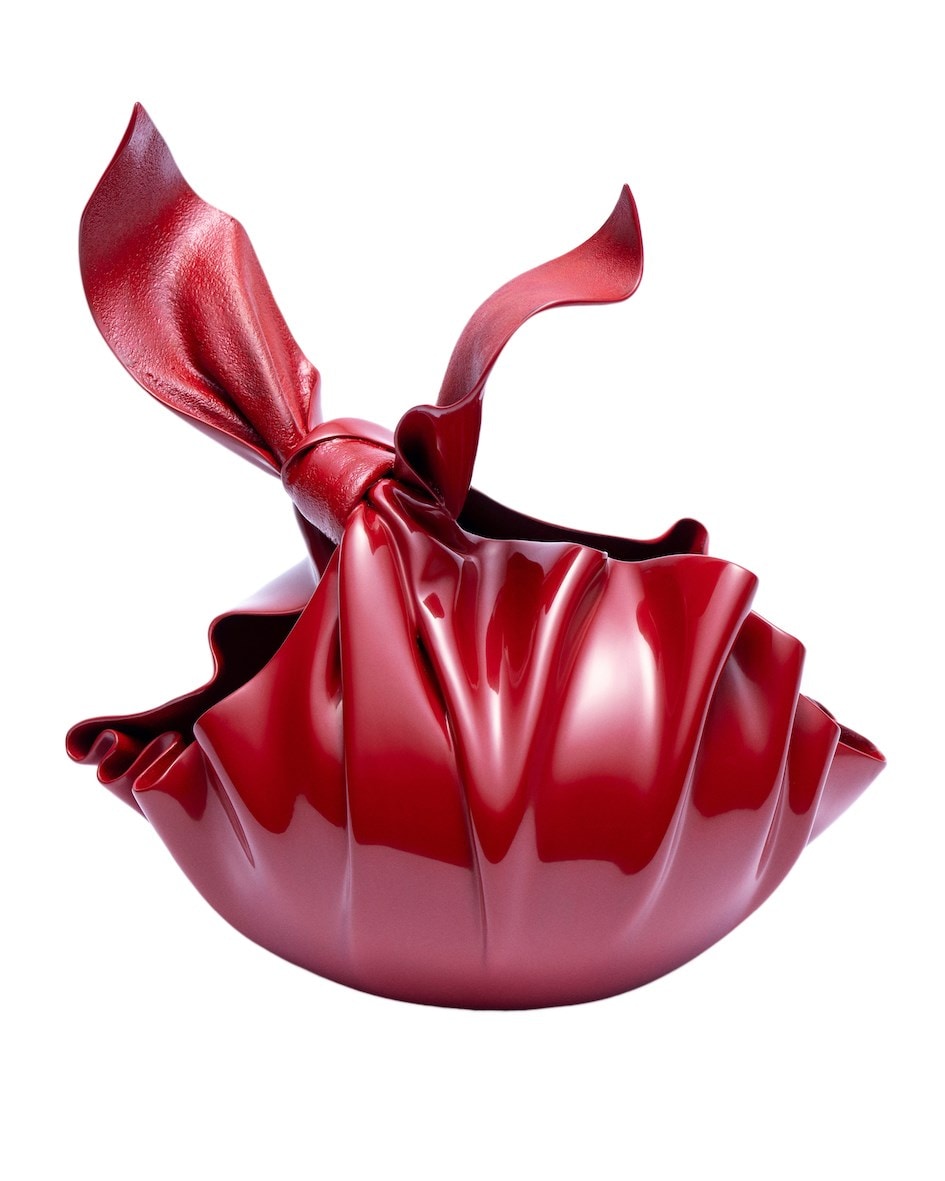
“That leather bow … we’re excited to meet [Nan Wei] tonight,” Lazaro Hernandez tells AnOther. “I think there’s possible collaboration there.” Chinese artist Nan Wei’s lacquered leather sculptures feel strangely alive, pulsing and folded into forms that resemble knots, muscles or beating hearts. Trained in Japan and now collected by the Victoria and Albert Museum, she uses traditional shippi lacquer techniques to stretch, sand and polish leather into shape, preserving what she calls its “movement” and “vibrancy”. “The way to show the softness of the leather is to tie a knot,” she tells us. It’s the tension at the centre of this work that gives her meticulously worked sculptures an almost uncanny sense of motion. Will we see these red leather knots embellishing Loewe bags in the near future? Time will tell.
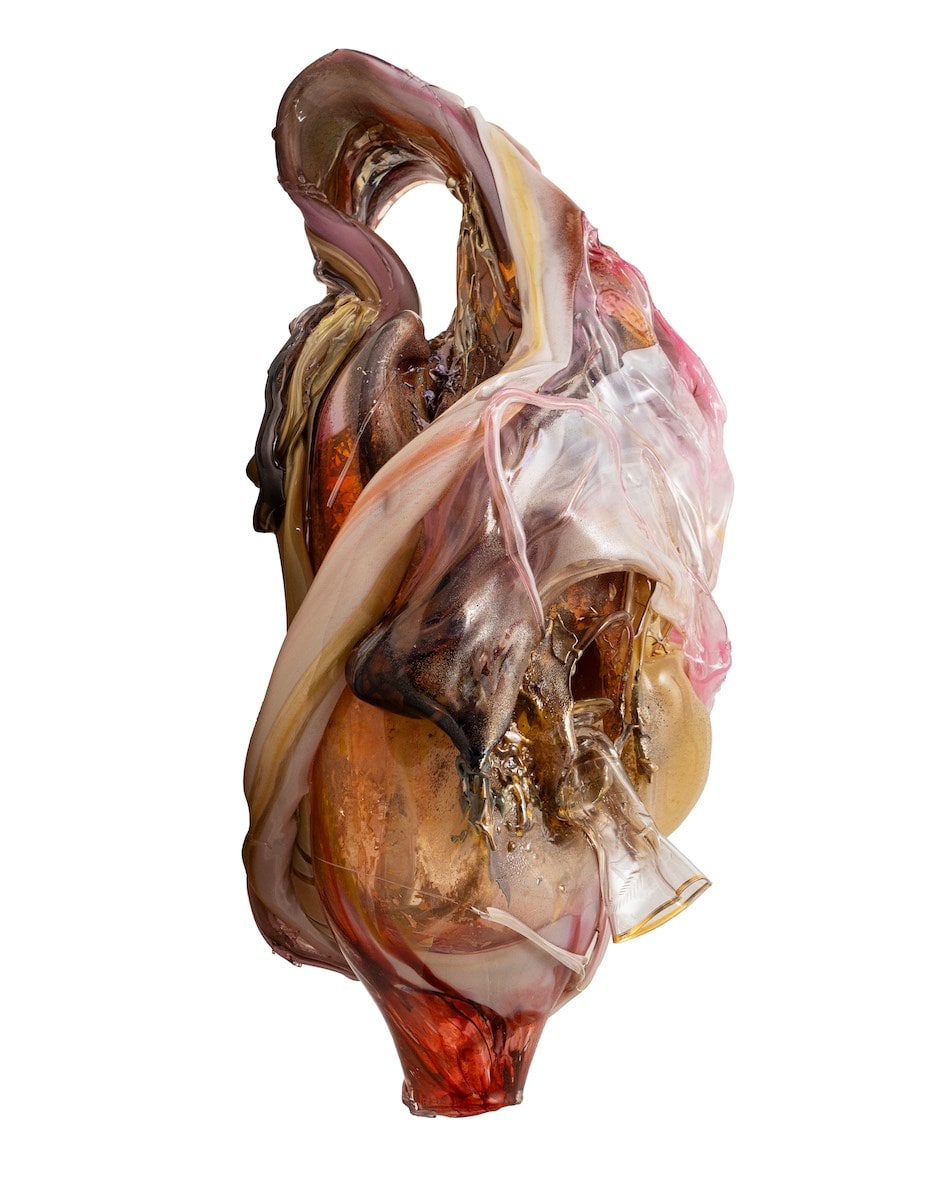
Maria Koshenkova, Denmark
Maria Koshenkova’s molten glass sculptures are tangled, fleshy forms that twist and buckle with the tension of something trying to break free. The Russian-Danish artist, who once trained as a dancer before injury redirected her towards glass, approaches the material with a physicality, likening the act of making to choreography. Excitable and fast-talking in person, she imbues her sculptures with that same nervous energy, improvising as she works alongside glassblowers in her Copenhagen studio. The resulting forms feel almost bodily, with fleshy glass muscles hiding something intricate beneath.
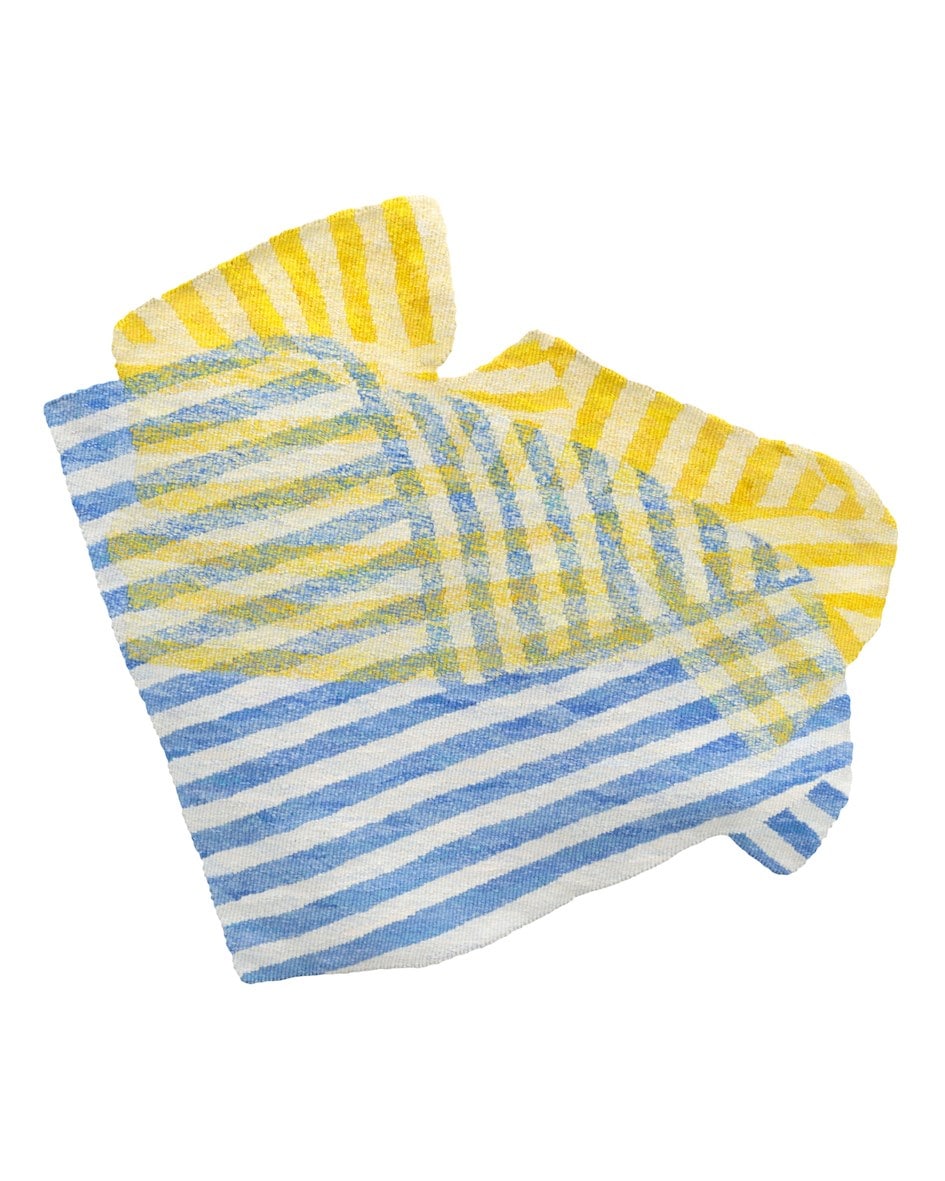
Misako Nakahira, Japan
Kyoto-based textile artist Misako Nakahira creates tapestries that seem to shift before your eyes. Interaction #YB is among her most experimental pieces to date: a work with no fixed orientation, which can be viewed from multiple angles, front and back. When asked why she chose to submit this particular piece to the Loewe Foundation Craft Prize, Nakahira told AnOther it was because the work “has no direction”, unlike her other tapestries, which traditionally move from top to bottom. But this one also introduces another rarity: blue. Nakahira typically works in yellow tones, a colour she says can signify both “burning or danger” and “happiness and joy or life”, a feeling that gives her intricate works their strange psychological pull.
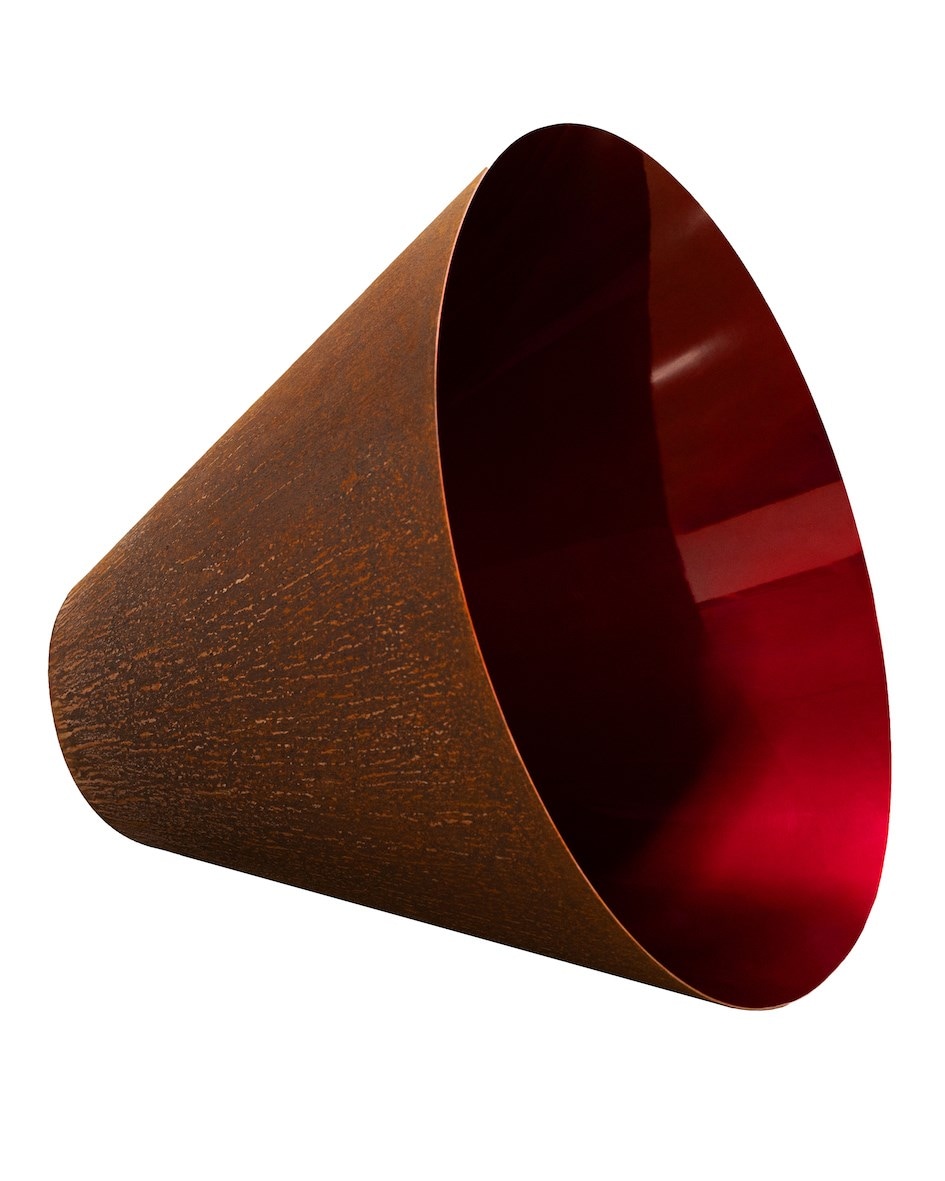
Jobe Burns, United Kingdom
Jobe Burns’ hulking steel vessels are rooted in the industrial landscapes of Birmingham and the Black Country, where the artist grew up. Made from rolled steel and finished using techniques borrowed from car painting (taught to him by his father, a professional car painter) the works carry what Burns calls an “industrial exhaustion”. Speaking to AnOther, he describes his fascination with factories that are “just about hanging on” and with the specialist workers whose skills are increasingly overlooked. The timing feels particularly poignant, just one day following the announcement of Keir Starmer’s plans to bring British Steel back into public ownership. “The industry really needs support,” he says. “This feels more British to me than having a Union Jack hanging outside the crib.” His piece, Laying Vessel, features a rusted exterior and vivid, gleaming red interior which suggests both decay and birth. “It’s a vessel, it’s a body,” Burns says of the work. “You approach it from one way and it just feels like a discarded piece of steel. But actually, it’s embedded with so much movement. It pulls you into it.”
Find out more about the Loewe Foundation Craft Prize 2026 here.
in HTML format, including tags, to make it appealing and easy to read for Japanese-speaking readers aged 20 to 40 interested in fashion. Organize the content with appropriate headings and subheadings (h1, h2, h3, h4, h5, h6), translating all text, including headings, into Japanese. Retain any existing
tags from
Lead ImageFaun’s Flesh (Arena Rosada), 2025, by Maria Koshenkova, DenmarkCourtesy of Loewe Foundation Craft Prize
“For us, the idea of craft doesn’t necessarily have to be crafty,” says Lazaro Hernandez, one half the new creative director duo now steering Loewe alongside Jack McCollough. Conceived in 2014 and first awarded three years later, the Loewe Foundation Craft Prize marks a decade this year. Established to champion contemporary craft at its most inventive, the annual award has become a barometer for where artisanal practice is heading next. More than 5,100 submissions arrived from 133 countries and regions for the 2026 edition in Singapore, though only 30 finalists made the cut, selected by a panel of jurors that, this year, includes McCollough and Hernandez for the first time. “The deliberation process was really difficult,” says McCollough. “There were some heated discussions, but we’re super happy with the final result.” This year’s winner has been named as Jongjin Park, who will recieve €50,000, while special mentions are awarded to Graziano Visintin and Álvaro Catalán de Ocón, who will each receive €5,000 apiece.
There is another anniversary in the air, too: Loewe turns 180 this year. The house traces its beginnings back to calle Lobo in Madrid, where a collective of artisans made leather purses, wallets, cigarette cases and frames for Spanish royalty and, eventually, an international cast that included Ernest Hemingway, Sophia Loren, Rita Hayworth and Marlene Dietrich. 25 years later, the German craftsman Enrique Loewe Roessberg acquired the workshop and gave it his name. Luxury history tends to tell the rest in sweeping terms, though Loewe has remained unusually nimble for a house of its age: leather specialists, cultural instigators and more recently a surrealist fever dreamer during Jonathan Anderson’s awesomely transformative tenure. Now, under McCollough and Hernandez, a new chapter has begun.
And through it all, Loewe remains crafty to the core. This year’s prize is held in Singapore, a city where deep-rooted craft traditions exist alongside a forward-looking sensibility. The city-state sits at the heart of a region where artisanal practice remains embedded in everyday life, while its reputation for innovation and modern urban thinking has helped foster a growing appetite for contemporary craft. For the Loewe Foundation, which has increasingly sought to expand the prize beyond its usual centres, the location feels timely, particularly within one of Singapore’s leading cultural institutions.
Last year’s winner, the Japanese artist Kunimasa Aoki, was also invited to sit on the jury. His winning clay sculpture, built from a series of compressed layers, explored time, pressure and accumulation through material alone. “After winning and now joining the jury, I’m able to understand my work in the third person, where I can take one step back and view the world around me,” Aoki tells AnOther. “Now I can’t believe I won after such a rigorous jury process. My confidence has been growing slightly every day. Slowly, I feel my work has found its place not just in Japan, but in the world too.”
As an exhibition showcasing the work of the 30 finalists of this year’s Loewe Foundation Craft Prize opens in Singapore’s National Gallery, we select five highlights to look out for.
Jongjin Park, Republic of Korea
Winner of this year’s Loewe Foundation Craft Prize, Seoul-based ceramicist Jongjin Park makes works that appear almost geological, like dense, stratified blocks that resemble excavated rock. Using porcelain slip-coated paper, folded and compacted into layered forms before firing, his pieces toy with perception. There is something defiant about the work, too. While notions of speed, automation and artificial intelligence are whirring around above our heads, Park’s painstaking process is an argument for slowness and for the enduring value of the human hand. “When I first saw photos of Jongjin Park’s work I said, ‘Wow, he is amazing,’ then I saw it in person and I was completely blown away,” Kunimasa Aoki tells AnOther. “I automatically thought he was going to be in first place because of its visual strength. It almost looks like paper despite it being clay and extremely heavy. It has this great existence.”
Nan Wei, China
“That leather bow … we’re excited to meet [Nan Wei] tonight,” Lazaro Hernandez tells AnOther. “I think there’s possible collaboration there.” Chinese artist Nan Wei’s lacquered leather sculptures feel strangely alive, pulsing and folded into forms that resemble knots, muscles or beating hearts. Trained in Japan and now collected by the Victoria and Albert Museum, she uses traditional shippi lacquer techniques to stretch, sand and polish leather into shape, preserving what she calls its “movement” and “vibrancy”. “The way to show the softness of the leather is to tie a knot,” she tells us. It’s the tension at the centre of this work that gives her meticulously worked sculptures an almost uncanny sense of motion. Will we see these red leather knots embellishing Loewe bags in the near future? Time will tell.
Maria Koshenkova, Denmark
Maria Koshenkova’s molten glass sculptures are tangled, fleshy forms that twist and buckle with the tension of something trying to break free. The Russian-Danish artist, who once trained as a dancer before injury redirected her towards glass, approaches the material with a physicality, likening the act of making to choreography. Excitable and fast-talking in person, she imbues her sculptures with that same nervous energy, improvising as she works alongside glassblowers in her Copenhagen studio. The resulting forms feel almost bodily, with fleshy glass muscles hiding something intricate beneath.
Misako Nakahira, Japan
Kyoto-based textile artist Misako Nakahira creates tapestries that seem to shift before your eyes. Interaction #YB is among her most experimental pieces to date: a work with no fixed orientation, which can be viewed from multiple angles, front and back. When asked why she chose to submit this particular piece to the Loewe Foundation Craft Prize, Nakahira told AnOther it was because the work “has no direction”, unlike her other tapestries, which traditionally move from top to bottom. But this one also introduces another rarity: blue. Nakahira typically works in yellow tones, a colour she says can signify both “burning or danger” and “happiness and joy or life”, a feeling that gives her intricate works their strange psychological pull.
Jobe Burns, United Kingdom
Jobe Burns’ hulking steel vessels are rooted in the industrial landscapes of Birmingham and the Black Country, where the artist grew up. Made from rolled steel and finished using techniques borrowed from car painting (taught to him by his father, a professional car painter) the works carry what Burns calls an “industrial exhaustion”. Speaking to AnOther, he describes his fascination with factories that are “just about hanging on” and with the specialist workers whose skills are increasingly overlooked. The timing feels particularly poignant, just one day following the announcement of Keir Starmer’s plans to bring British Steel back into public ownership. “The industry really needs support,” he says. “This feels more British to me than having a Union Jack hanging outside the crib.” His piece, Laying Vessel, features a rusted exterior and vivid, gleaming red interior which suggests both decay and birth. “It’s a vessel, it’s a body,” Burns says of the work. “You approach it from one way and it just feels like a discarded piece of steel. But actually, it’s embedded with so much movement. It pulls you into it.”
Find out more about the Loewe Foundation Craft Prize 2026 here.
and integrate them seamlessly into the new content without adding new tags. Ensure the new content is fashion-related, written entirely in Japanese, and approximately 1500 words. Conclude with a “結論” section and a well-formatted “よくある質問” section. Avoid including an introduction or a note explaining the process.