Rewrite
In stepping away from the scale of buildings and laser-focusing on the intricacy of footwear, Giles Tettey Nartey finds new ground – quite literally – and this time, with Dover Street Market Paris.
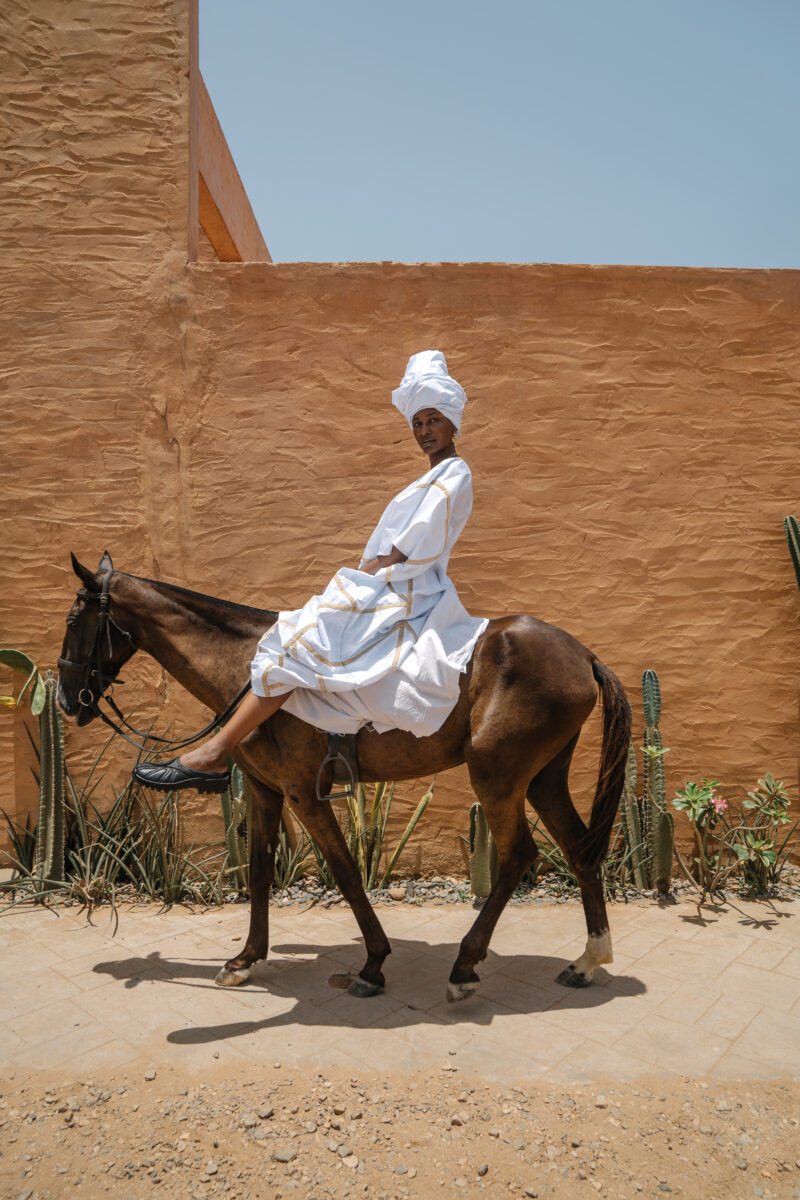
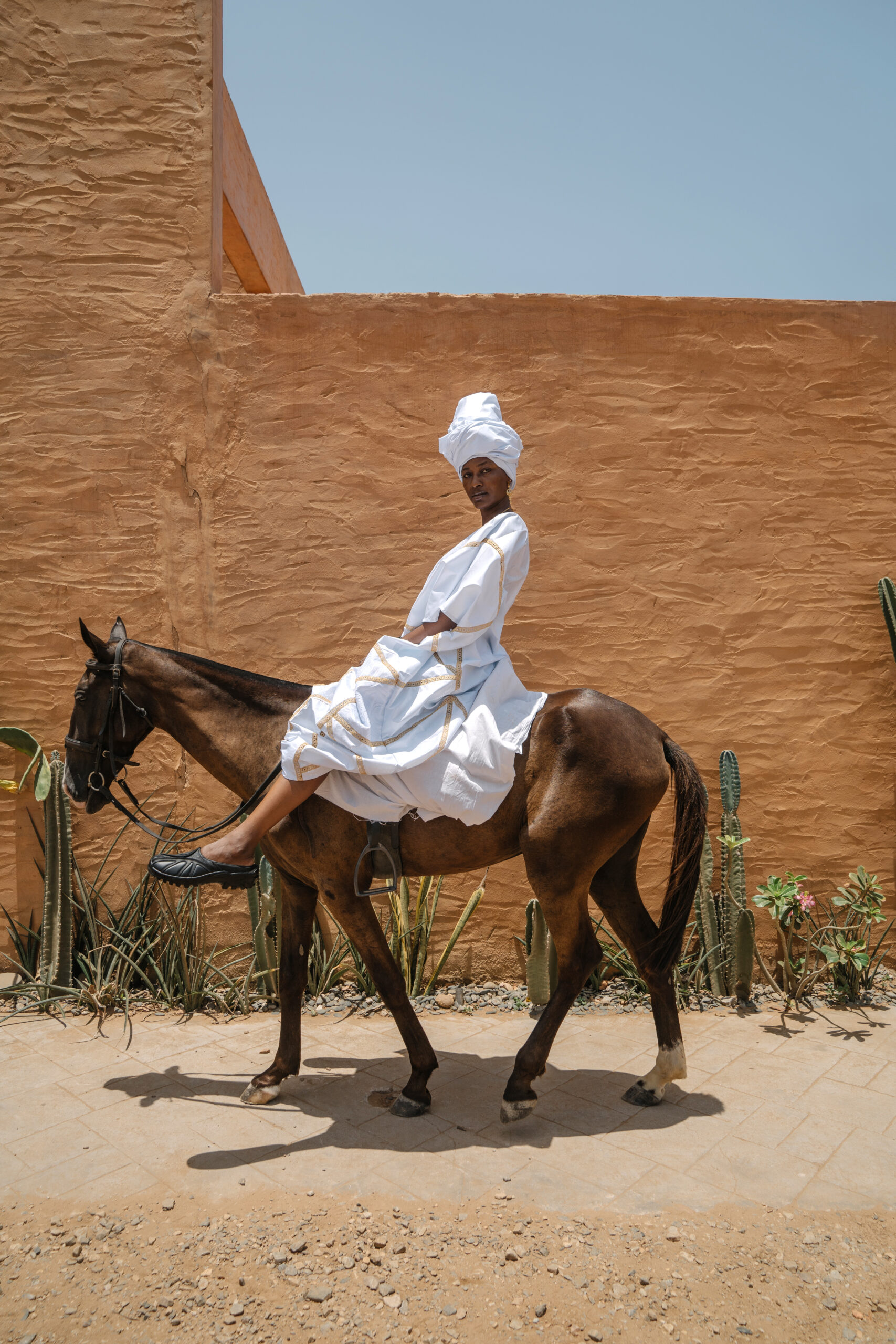
There are first objects, and then there are first objects that carry the full weight of a practice. For Giles Tettey Nartey, his debut GTN Mule is by no means a departure from architecture, but a distilling of it. Putting his education and practice to its most fashionable use, Giles creates sculptures in a form fit for feet-ed purpose, that is shaped by years of research into Afro-Atlantic material cultures, social space-making, and material poetics.
Created in collaboration with Italian heritage manufacturer Demon Footwear and unveiled at a cosmopolitan zeitgeist’s favourite pitstop Dover Street Market Paris, the mule translates a spatial expression into something wearable.
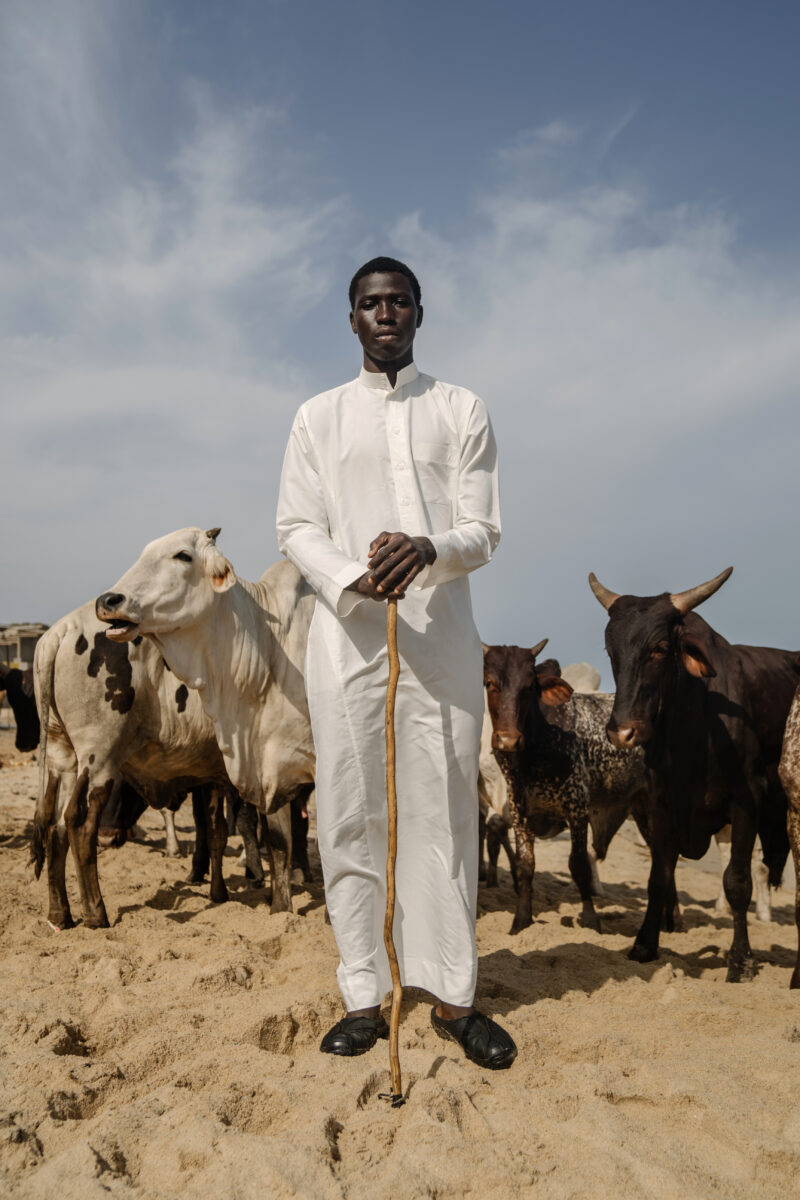
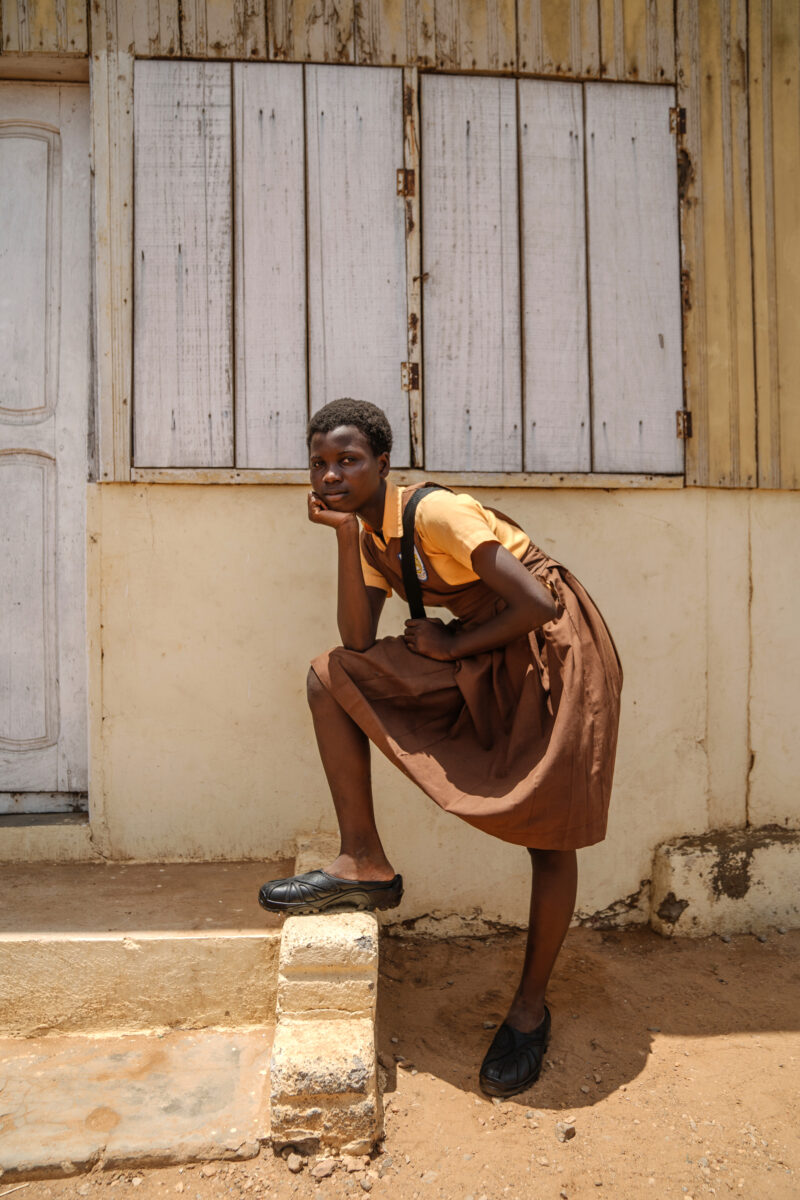
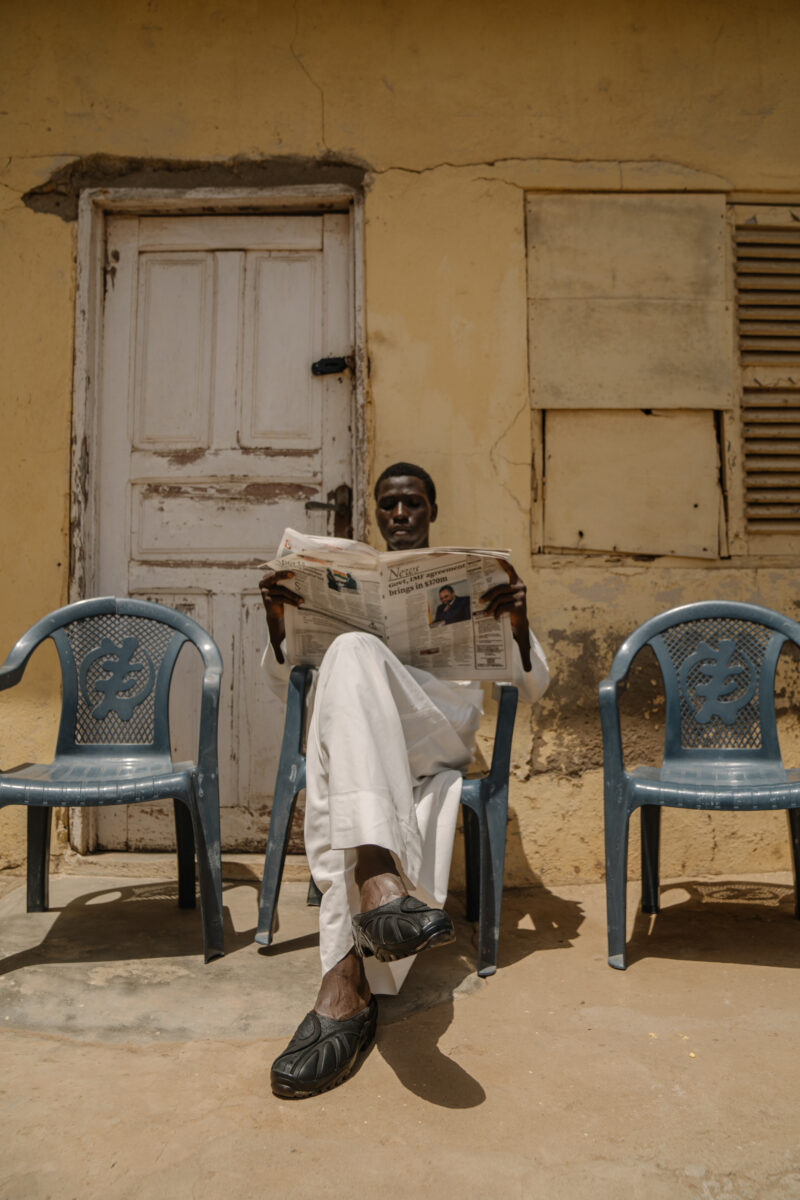
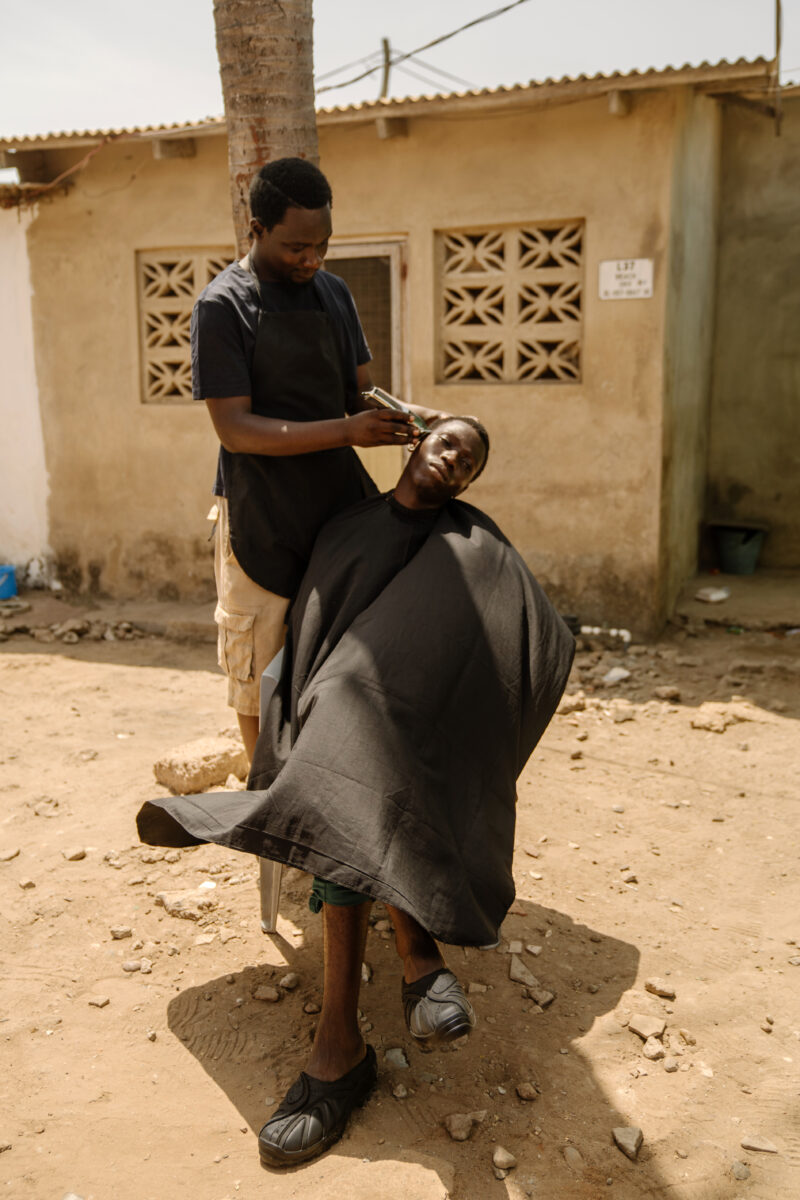
His early obsession with Nike TNs catalysed a research-led studio practice that allowed him to creatively shift between film, installation, and design. In this instance, Giles approaches material as poetic justice. A physical form of cultural lyricism. Shot in Accra, Ghana and grounded in everyday movement rather than merely cause for spectacle, the trainer campaign pushes the object into a wider cultural conversation around diasporic authorship and use.
With Wonderland, Giles reflects on architecture becoming footwear, and what it means to place a mule – informed as much by Montebelluna’s artisanal systems as by Ghana’s ‘chale wate’ – in front of a global lens.
What shoes did you wear growing up, or which ones did you always want?
I remember being obsessed with Nike TNs, and to be honest that obsession has carried through to today. There’s something in the shape that captured me then, and it still does.
You trained as an architect before expanding into film, installation, and object design. What initially drew you to architecture?
I was always interested in architecture as a social practice – architecture with a lower case ‘a’. I have been concerned with the ways people self-organise and make things, places, and objects, beyond top-down views of construction. The expansion of the practice into other mediums is my way of using different forms to capture the full extent of a spatially oriented practice. The activation of the material world.
Your practice centres on Afro-Atlantic material cultures. When did that research focus first emerge?
I think it has always carried undertones of this, whether it was autobiographical, or now shaped through a more intentional devotion to exploring and expanding the boundaries of what that means today. It feels impossible to think of architecture as a social practice of space making without attending to the materials and the ways of making it embedded in culture.
How did the collaboration with Demon Footwear come about?
Alberto and I met in 2014 at Politecnico di Milano and stayed in touch for years, speaking loosely about making something when the timing aligned. Working together now felt like the right timing: the trust was already there, and the project demanded a serious commitment to testing and refinement. I brought a research-led approach to form and cultural meaning; Demon brought deep manufacturing knowledge. The outcome sits inside that conversation, engineered with discipline, and shaped as a bearer of Narrative.
This is your first wearable object. How did translating your research-led practice into something owned and lived with shift your approach to design?
Design functions as a language for me. Material carries narrative and propositions, whether that becomes a sculpture, a film, a spatial intervention, or in this case a shoe. I use form and making as a conduit for expression, and I build that language through research, testing, and use. That process moves across architecture, art, and the space in between, such as the GTN Mule. I approached it as a real everyday object first. It had to be comfortable and well-made. At the same time, it allowed me to test ideas that run through my wider work, how a gesture becomes a form, and how an object can hold meaning through use. A shoe is in constant contact with the body and the ground, so it carries the work into daily life rather than an exhibition or institutional space.
Looking back at your earlier projects, what threads feel continuous with the GTN Mule?
I would say there are a few threads that carry through. Across most of my design work the questions may shift, but the methodology stays consistent. The first thread is the building of a visual world through still and moving-image. This is a key part of my process and how I see the world. It is one of the first things I think about, because it allows the story of an object to be told as a sensory proposition. A second thread is material poetics, and much of that comes down to detail. How materials meet, how joints are resolved, what gets emphasised or hidden, and what the finish does. The dividing line feels faint in my practice. I think through shoes, objects, and spaces in the same way, as designed systems that produce experience through contact.
The leather was selected for its ability to record texture. Are you interested in wear as a form of authorship by the owner?
Activation sits at the centre of my practice. I pay attention to how certain poetics become visible through the making of the work, and through the use of it. I am interested in both sides of the process: the process of making, and the process of change that begins once something enters use. The shoe only becomes complete once it is worn. I design the form and the material, but the wearer finishes the work through use. Marks over time, creases, scuffs, changes in shape, they show how someone moves and lives in it. That is the point. Wear becomes a record of where it has been, how it has been used, and by who.
Why a mule? What does the open heel suggest to you?
I landed on the mule, strangely, through ‘chale wate’ the word we use in Ghana for slippers, and a really ubiquitous sight. I’ve always liked the ease and informality of them. Their silhouette is low to the ground. You slip them on, you slip them off. There was a quickness I liked. I wanted that kind of readiness in the shoe, but I also wanted room to build an expression into it. So the mule felt right. It sits between categories. It has the simplicity of a slipper, it’s immediate and everyday, but it can hold design in its form and surface. You can still see formal traces of the ‘chale wate’ inquiry if you look hard enough.
Do you see the GTN Mule as part of a broader conversation about diasporic authorship within European luxury design?
For sure. I think there’s a general interest in alternative stories and alternative lineages, other material vocabularies, and different worldviews. The position of working from Europe is important, though; it allows the dreaming and writing of a distant homeland. The distance matters in the creation of these imaginaries. However, authorship is imperative, and it requires a sensitivity when working with creations that speak to different places. The question is how these stories are cared for, disseminated, and handled without compression.
The campaign was shot in Accra. How did returning the object to that context reframe its meaning for you? Why was it important to shoot there?
The shoot was creatively directed by me, so I approached Natalija with a clear idea of the world I wanted the shoe to sit in. We worked closely to create the world. The main thing for me was to place the shoe in real situations in Accra, not in a studio setting. I wanted the campaign to focus on everyday life, ordinary moments, movement, and the street, without turning the city into a spectacle.
What did footwear allow you to explore that architecture, or other disciplines, cannot?
The GTN Mule gave me an opportunity to extend a language I’ve been developing across scales, and to condense it into something wearable with direct contact to the body and the ground. It offered a distillation of the wider practice into a product that can travel, be owned, and be lived with, so the research enters the social world through an everyday object.
Does this mark a new direction for your studio, more objects, more fashion-based work, or is this a one-off?
In short yes, but I think it is less of a new direction and more of adding another medium to the practice. I’m definitely interested in continuing this line of inquiry into more fashion-based work. There’s an immediacy that I’m currently enjoying. I want to keep developing my language across different mediums and scales, from small architectural builds to continuing film work that treats design as narrative. I’m focused on projects that can move between institutions and real everyday life.
What surprised you most about working within a heritage manufacturing system?
The draw was Demon’s knowledge of artisanal manufacturing and its access to the technical culture of Montebelluna, alongside a shared interest in materials and process. In Montebelluna, I encountered a closed, small, cottage industry ecology. Everyone knows everyone. I saw the entire process up close. Family operations, handmade by real people with specific stories. The work is held together by community relationships.
If this mule is a first chapter, what might a second chapter look like?
I think it’s about expanding the small world suggested by the first chapter. What does a second version look like, or what would apparel look like? There’s something exciting about the possibilities. GTN, as a studio, is concerned with answering some of these questions.
What does it mean to debut this work at Dover Street Market Paris, a space known for curatorial retail?
It’s a great alignment. There’s a clear synergy between our fixation on the details of image, story, and the space between. It really treats the work as wear sculpture.
More on Dover Street Market Paris here // More on Demon Footwear here.
in HTML format, including tags, to make it appealing and easy to read for Japanese-speaking readers aged 20 to 40 interested in fashion. Organize the content with appropriate headings and subheadings (h1, h2, h3, h4, h5, h6), translating all text, including headings, into Japanese. Retain any existing
tags from
In stepping away from the scale of buildings and laser-focusing on the intricacy of footwear, Giles Tettey Nartey finds new ground – quite literally – and this time, with Dover Street Market Paris.
There are first objects, and then there are first objects that carry the full weight of a practice. For Giles Tettey Nartey, his debut GTN Mule is by no means a departure from architecture, but a distilling of it. Putting his education and practice to its most fashionable use, Giles creates sculptures in a form fit for feet-ed purpose, that is shaped by years of research into Afro-Atlantic material cultures, social space-making, and material poetics.
Created in collaboration with Italian heritage manufacturer Demon Footwear and unveiled at a cosmopolitan zeitgeist’s favourite pitstop Dover Street Market Paris, the mule translates a spatial expression into something wearable.
His early obsession with Nike TNs catalysed a research-led studio practice that allowed him to creatively shift between film, installation, and design. In this instance, Giles approaches material as poetic justice. A physical form of cultural lyricism. Shot in Accra, Ghana and grounded in everyday movement rather than merely cause for spectacle, the trainer campaign pushes the object into a wider cultural conversation around diasporic authorship and use.
With Wonderland, Giles reflects on architecture becoming footwear, and what it means to place a mule – informed as much by Montebelluna’s artisanal systems as by Ghana’s ‘chale wate’ – in front of a global lens.
What shoes did you wear growing up, or which ones did you always want?
I remember being obsessed with Nike TNs, and to be honest that obsession has carried through to today. There’s something in the shape that captured me then, and it still does.
You trained as an architect before expanding into film, installation, and object design. What initially drew you to architecture?
I was always interested in architecture as a social practice – architecture with a lower case ‘a’. I have been concerned with the ways people self-organise and make things, places, and objects, beyond top-down views of construction. The expansion of the practice into other mediums is my way of using different forms to capture the full extent of a spatially oriented practice. The activation of the material world.
Your practice centres on Afro-Atlantic material cultures. When did that research focus first emerge?
I think it has always carried undertones of this, whether it was autobiographical, or now shaped through a more intentional devotion to exploring and expanding the boundaries of what that means today. It feels impossible to think of architecture as a social practice of space making without attending to the materials and the ways of making it embedded in culture.
How did the collaboration with Demon Footwear come about?
Alberto and I met in 2014 at Politecnico di Milano and stayed in touch for years, speaking loosely about making something when the timing aligned. Working together now felt like the right timing: the trust was already there, and the project demanded a serious commitment to testing and refinement. I brought a research-led approach to form and cultural meaning; Demon brought deep manufacturing knowledge. The outcome sits inside that conversation, engineered with discipline, and shaped as a bearer of Narrative.
This is your first wearable object. How did translating your research-led practice into something owned and lived with shift your approach to design?
Design functions as a language for me. Material carries narrative and propositions, whether that becomes a sculpture, a film, a spatial intervention, or in this case a shoe. I use form and making as a conduit for expression, and I build that language through research, testing, and use. That process moves across architecture, art, and the space in between, such as the GTN Mule. I approached it as a real everyday object first. It had to be comfortable and well-made. At the same time, it allowed me to test ideas that run through my wider work, how a gesture becomes a form, and how an object can hold meaning through use. A shoe is in constant contact with the body and the ground, so it carries the work into daily life rather than an exhibition or institutional space.
Looking back at your earlier projects, what threads feel continuous with the GTN Mule?
I would say there are a few threads that carry through. Across most of my design work the questions may shift, but the methodology stays consistent. The first thread is the building of a visual world through still and moving-image. This is a key part of my process and how I see the world. It is one of the first things I think about, because it allows the story of an object to be told as a sensory proposition. A second thread is material poetics, and much of that comes down to detail. How materials meet, how joints are resolved, what gets emphasised or hidden, and what the finish does. The dividing line feels faint in my practice. I think through shoes, objects, and spaces in the same way, as designed systems that produce experience through contact.
The leather was selected for its ability to record texture. Are you interested in wear as a form of authorship by the owner?
Activation sits at the centre of my practice. I pay attention to how certain poetics become visible through the making of the work, and through the use of it. I am interested in both sides of the process: the process of making, and the process of change that begins once something enters use. The shoe only becomes complete once it is worn. I design the form and the material, but the wearer finishes the work through use. Marks over time, creases, scuffs, changes in shape, they show how someone moves and lives in it. That is the point. Wear becomes a record of where it has been, how it has been used, and by who.
Why a mule? What does the open heel suggest to you?
I landed on the mule, strangely, through ‘chale wate’ the word we use in Ghana for slippers, and a really ubiquitous sight. I’ve always liked the ease and informality of them. Their silhouette is low to the ground. You slip them on, you slip them off. There was a quickness I liked. I wanted that kind of readiness in the shoe, but I also wanted room to build an expression into it. So the mule felt right. It sits between categories. It has the simplicity of a slipper, it’s immediate and everyday, but it can hold design in its form and surface. You can still see formal traces of the ‘chale wate’ inquiry if you look hard enough.
Do you see the GTN Mule as part of a broader conversation about diasporic authorship within European luxury design?
For sure. I think there’s a general interest in alternative stories and alternative lineages, other material vocabularies, and different worldviews. The position of working from Europe is important, though; it allows the dreaming and writing of a distant homeland. The distance matters in the creation of these imaginaries. However, authorship is imperative, and it requires a sensitivity when working with creations that speak to different places. The question is how these stories are cared for, disseminated, and handled without compression.
The campaign was shot in Accra. How did returning the object to that context reframe its meaning for you? Why was it important to shoot there?
The shoot was creatively directed by me, so I approached Natalija with a clear idea of the world I wanted the shoe to sit in. We worked closely to create the world. The main thing for me was to place the shoe in real situations in Accra, not in a studio setting. I wanted the campaign to focus on everyday life, ordinary moments, movement, and the street, without turning the city into a spectacle.
What did footwear allow you to explore that architecture, or other disciplines, cannot?
The GTN Mule gave me an opportunity to extend a language I’ve been developing across scales, and to condense it into something wearable with direct contact to the body and the ground. It offered a distillation of the wider practice into a product that can travel, be owned, and be lived with, so the research enters the social world through an everyday object.
Does this mark a new direction for your studio, more objects, more fashion-based work, or is this a one-off?
In short yes, but I think it is less of a new direction and more of adding another medium to the practice. I’m definitely interested in continuing this line of inquiry into more fashion-based work. There’s an immediacy that I’m currently enjoying. I want to keep developing my language across different mediums and scales, from small architectural builds to continuing film work that treats design as narrative. I’m focused on projects that can move between institutions and real everyday life.
What surprised you most about working within a heritage manufacturing system?
The draw was Demon’s knowledge of artisanal manufacturing and its access to the technical culture of Montebelluna, alongside a shared interest in materials and process. In Montebelluna, I encountered a closed, small, cottage industry ecology. Everyone knows everyone. I saw the entire process up close. Family operations, handmade by real people with specific stories. The work is held together by community relationships.
If this mule is a first chapter, what might a second chapter look like?
I think it’s about expanding the small world suggested by the first chapter. What does a second version look like, or what would apparel look like? There’s something exciting about the possibilities. GTN, as a studio, is concerned with answering some of these questions.
What does it mean to debut this work at Dover Street Market Paris, a space known for curatorial retail?
It’s a great alignment. There’s a clear synergy between our fixation on the details of image, story, and the space between. It really treats the work as wear sculpture.
More on Dover Street Market Paris here // More on Demon Footwear here.
and integrate them seamlessly into the new content without adding new tags. Ensure the new content is fashion-related, written entirely in Japanese, and approximately 1500 words. Conclude with a “結論” section and a well-formatted “よくある質問” section. Avoid including an introduction or a note explaining the process.