Rewrite
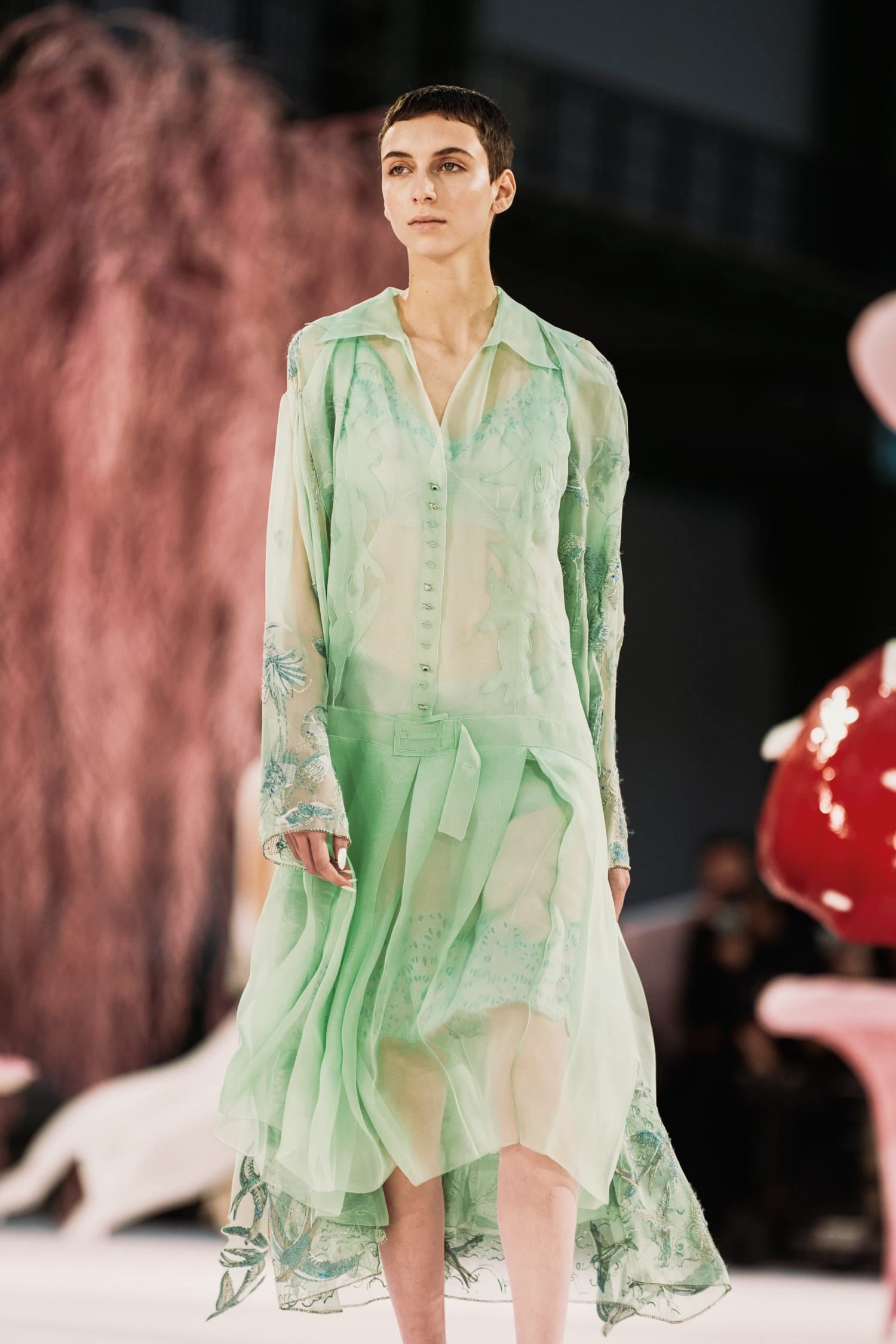
Lead ImageChanel Spring/Summer 2026 haute coutureCourtesy of Chanel
What is haute couture? It’s an existential, philosophical question that always arises around this fashion as art form, an anachronism in our modern world. Why does couture persist? Why should it exist? It’s something designers are grappling with this week, not least Matthieu Blazy in his Chanel haute couture debut. For him, couture is about intimacy, privacy, and an impossible, almost unbearable lightness. Couture is about doing what has never been done before. He made this Chanel collection directly on the body. “That is the definition of couture,” he said backstage. No sketches, no reference images. “Zero.” Zero basically being the antithesis of the 100 RPM, 1001 Nights, cranked-up 100 decibel volume of what everyone thinks couture should be, but the definition of what Chanel always stood for. After all, Scheherazade is easy, a little black dress is difficult. Who said that again?
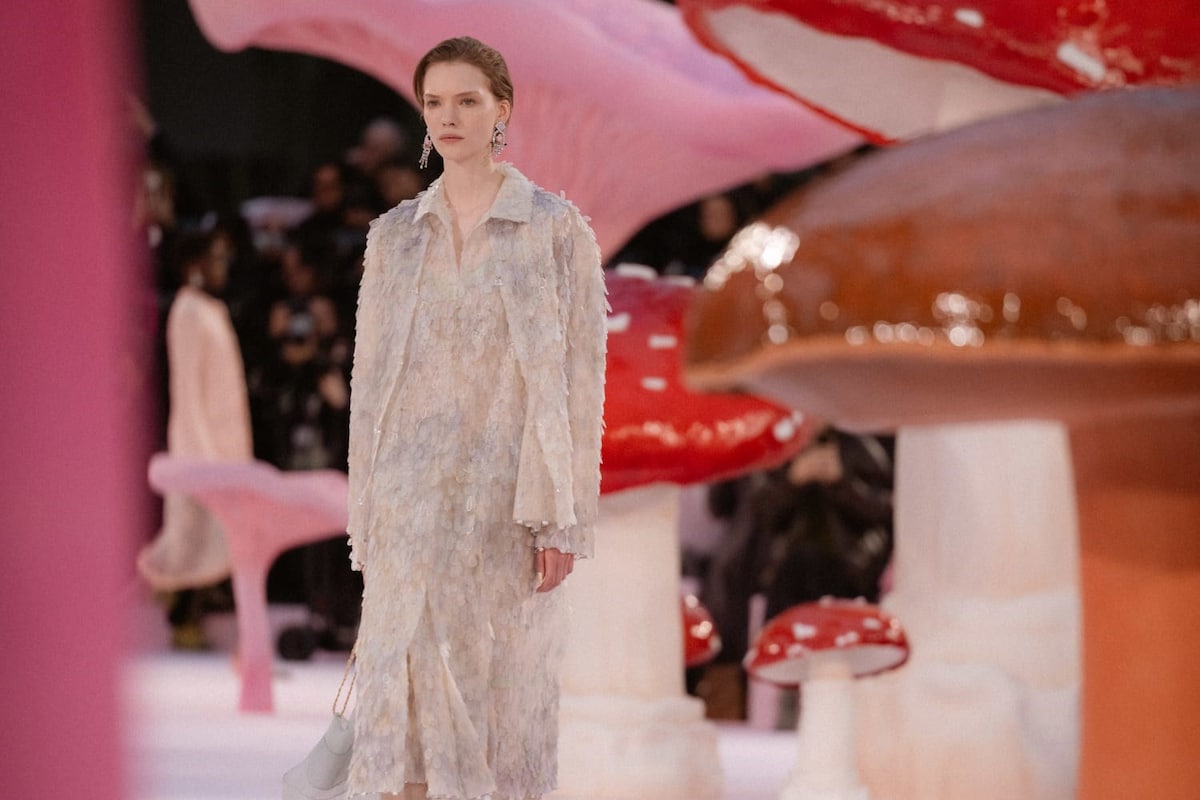
Couture here was about essentiality, reduction to the very basis. It was quietly radical, and bang in line with Gabrielle Chanel’s own philosophies, of course. Blazy was inspired by a haiku of a bird sat on a mushroom. He read it, and wondered if he could spin out a three-line poem into enough information for a fashion collection, enough to fill the Grand Palais with the necessary spectacular Chanel set (of heightened nature, Bunyanian toadstools and pastel willows weeping and a Disney soundtrack) and people it with extraordinary clothes. Was it enough? Can you do a lot with a little? Again, it’s a challenging, provocative paradox within the more-is-never-enough world of haute couture.
But that was his thinking, which felt instinctive rather than rigorous. Blazy reduced everything down to the essence absolue. His opening Chanel suit – and those that followed – flowed like lingerie around the body, executed in French-seamed silk mousseline so fine that even through multiple layers you could still see skin. Even the Chanel 2.55 was reduced to nothingness, a glorious crumpled mess of see-through fabric clutched in a fist, a simple gesture in cloth. In his ongoing, exhaustive research into the facets of Gabrielle Chanel no one has ever heard of, Blazy uncovered the fact that she was the first couturier to actually use mousseline as a stand-alone fabric, rather than a backing for embroidery. “It was considered a poor material. I am always interested in how Chanel freed the women with these things, things that were simple.”

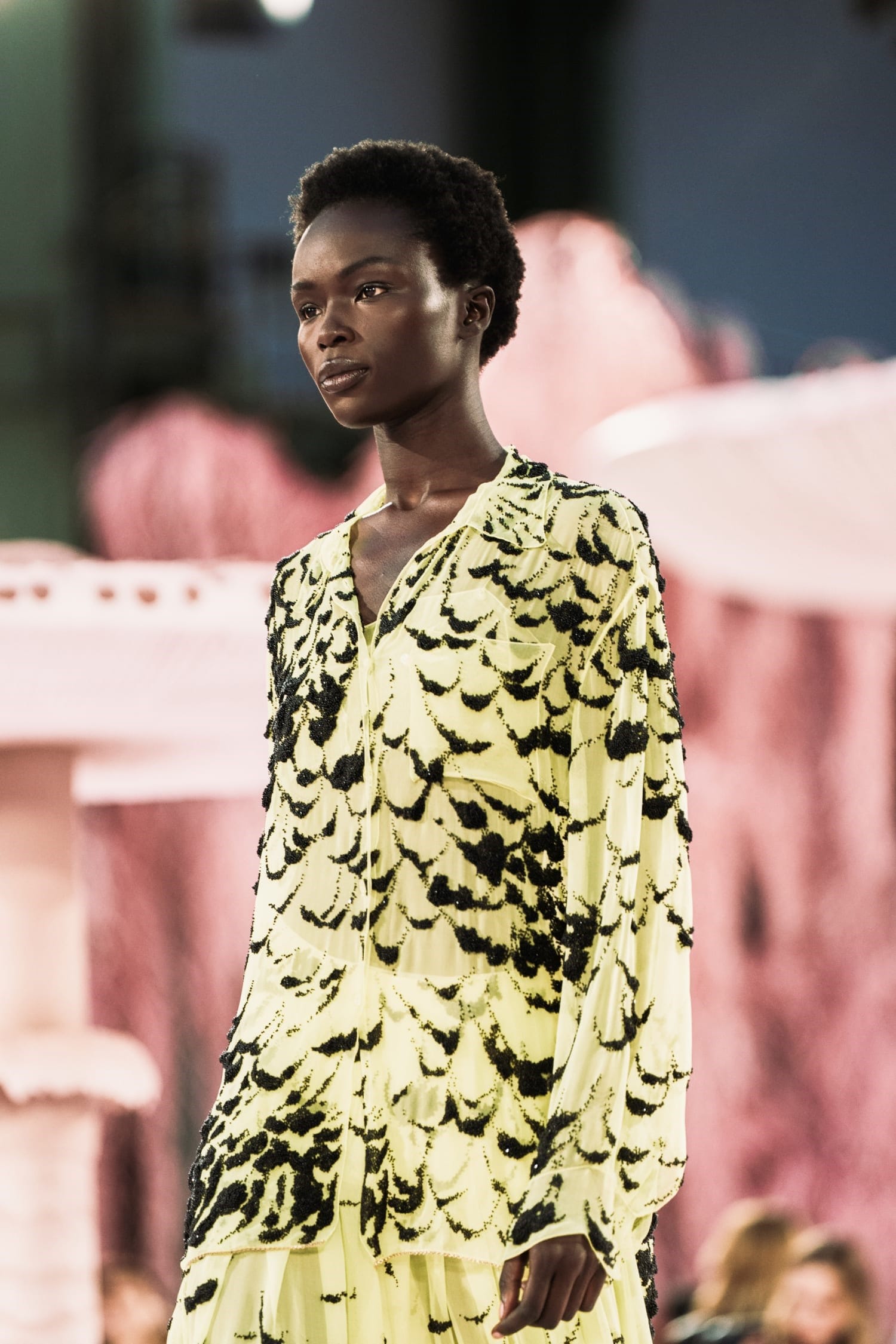
These were simple clothes with a complex meaning, clothes that equally challenged our modern pre-conceived notions about couture, clothes that had to be seen up close to be appreciated. “As we went on, we tried to reduce,” Blazy said. “Normally, you wonder what’s the wow of the show, so you go big. This time it was the opposite. Without the wow, it felt better.”
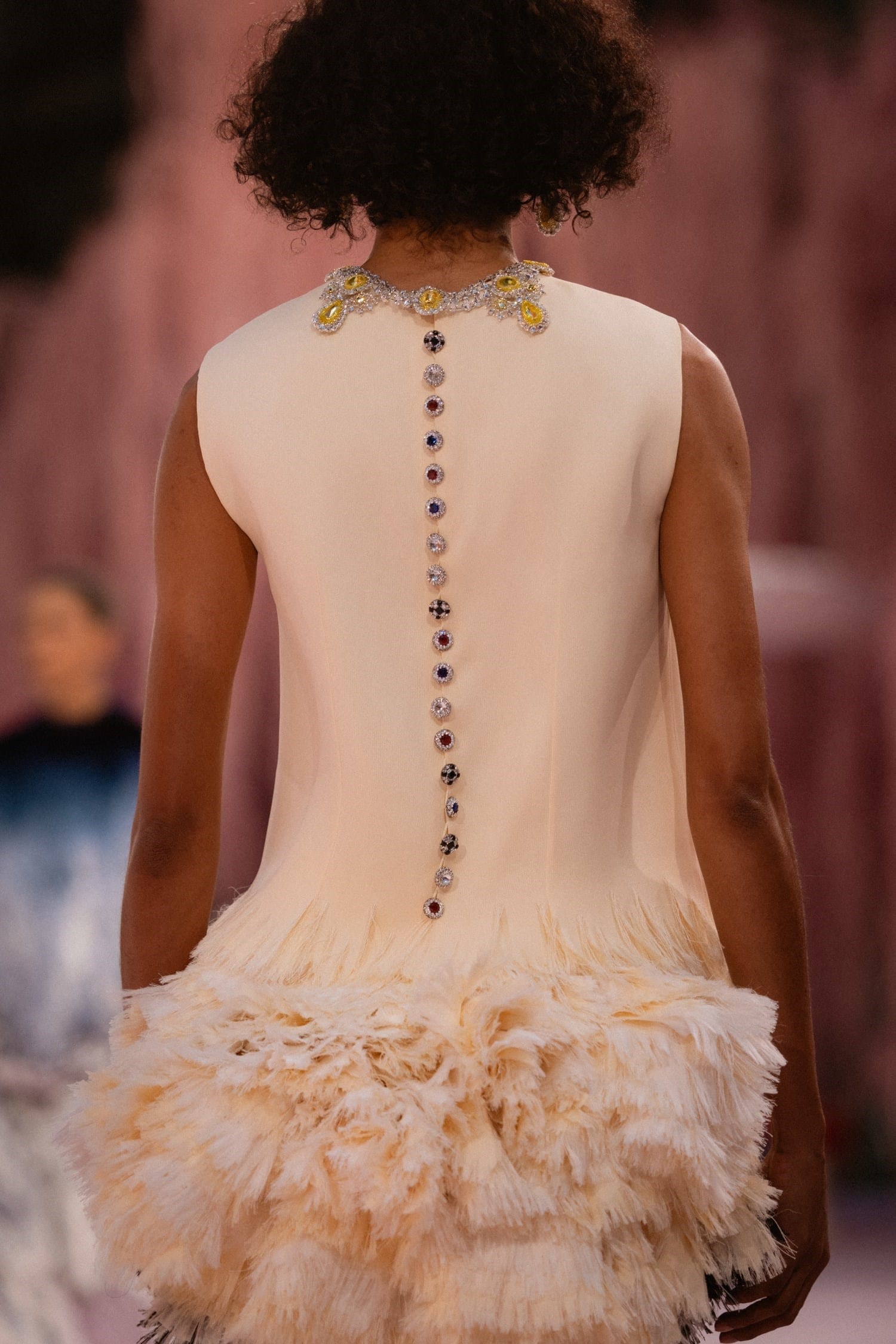
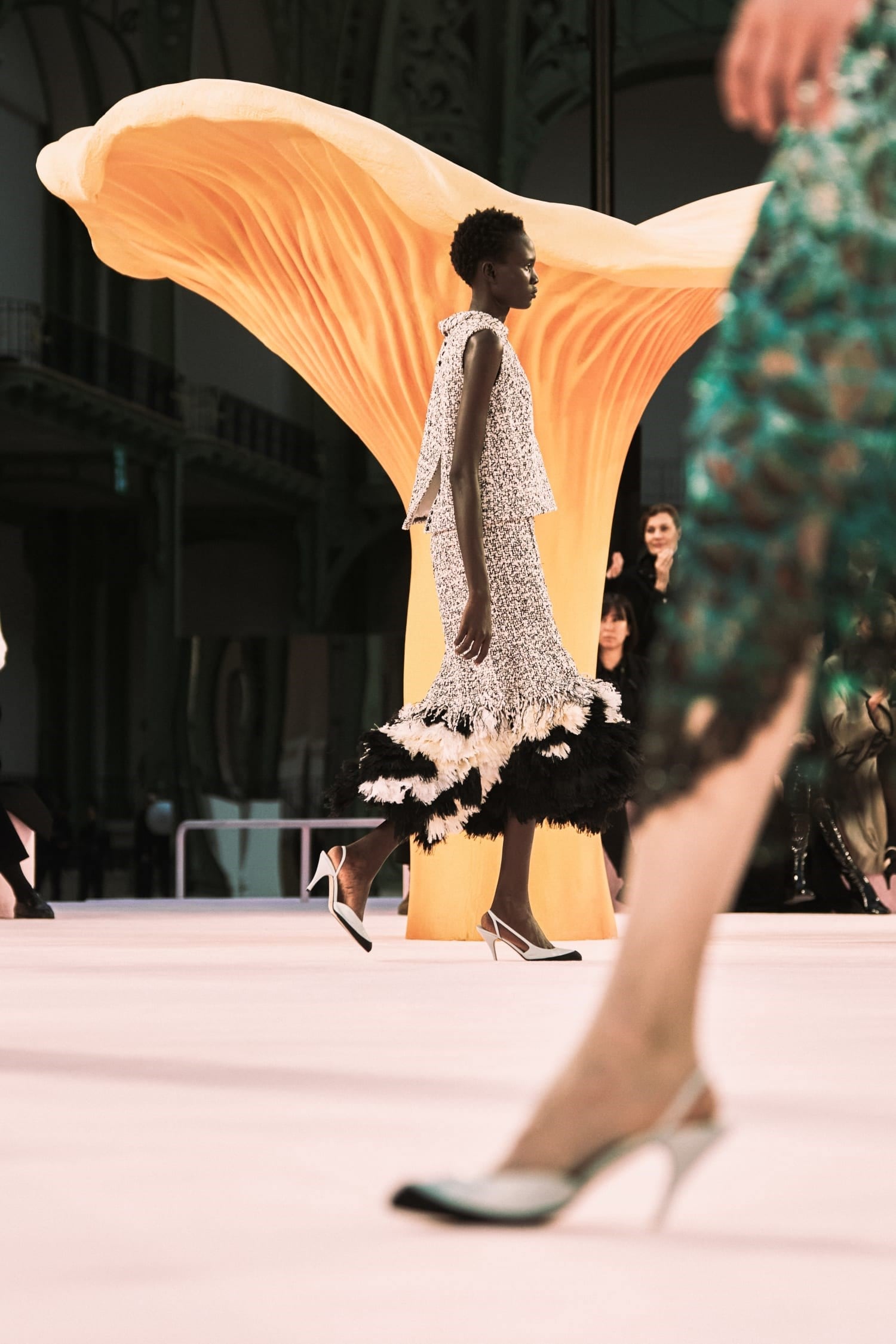
The wow was there, though, in the salons of the rue Cambon, where clients were clamouring for pieces and the press got to turn everything inside out. Here, the simple transmogrified into the sublime, the extreme even, a measure of the breadth of skill only possible within haute couture. The everyday became utterly impossible, to make and to understand. Pieces were barely anchored to the body, the signature Chanel chain at the hem, decorated with pearls and charms like pieces of jewellery, serving a true function, the only thing keeping these fly-away garments held. A pair of jeans dissolved into chiffon nothingness; a Chanel suit, seemingly spun from thread embroidery and nothing else, had all the substance of thistledown. The wedding gown was a shirt and straight skirt, crusted with mother-of-pearl shaved to paper-thin petals, or feathers indeed. The bird inspiration translated to more fake plumes – “mocking birds” Blazy called them – reinterpretations in organzas, in silk frayed, in fils coupé printed with chicken feathers. The colours were low, muted, pea-hen rather than peacock, the females of the species – could anything be more Chanel? There was one spectacular hood, a mushroom cap of black-tipped quills atop a slender red silk stem, where the model ended up, Blazy said, like an avian-mycelium hybrid. She was the loudest, boldest thing in the Grand Palais – but in the salons, next to the rest, she faded away.
Is that what couture is about? Closeness, confidentiality, the inside rather than the out. It’s not how we’ve perceived couture for the past half-century, since its influence as a fashion standard had waned – since Gabrielle Chanel herself died, in 1971, actually. But it’s how Blazy envisages his, and how he relates back to Chanel. His casting was notable, femmes d’un certain âge, as they expressively say in France. Sensuality was the word Blazy used, and these were sensual clothes in that they were sensory, about looking, sure, but primarily about touching, feeling. The models each carried a love letter, embroidered by Lesage with their own words; the clothes bore their individual initials and totems selected by them and for them – a heart, crossed tarot cards perhaps. They were almost like couture tattoos, marking allegiance and alliances.
As a couture show, Chanel was like a quiet whisper in a room full of screams. But that whisper was ultimately what you strain to listen to, a pervasive, persuasive and insistent message of private luxury, of personal pleasure. And, throughout the identity was there – of couture, and of Chanel. “With Chanel, you can remove everything – you don’t need the gallon, you don’t need the pockets, it doesn’t have to be tweed,” Blazy reasoned. “It’s still Chanel.”
in HTML format, including tags, to make it appealing and easy to read for Japanese-speaking readers aged 20 to 40 interested in fashion. Organize the content with appropriate headings and subheadings (h1, h2, h3, h4, h5, h6), translating all text, including headings, into Japanese. Retain any existing
tags from
Lead ImageChanel Spring/Summer 2026 haute coutureCourtesy of Chanel
What is haute couture? It’s an existential, philosophical question that always arises around this fashion as art form, an anachronism in our modern world. Why does couture persist? Why should it exist? It’s something designers are grappling with this week, not least Matthieu Blazy in his Chanel haute couture debut. For him, couture is about intimacy, privacy, and an impossible, almost unbearable lightness. Couture is about doing what has never been done before. He made this Chanel collection directly on the body. “That is the definition of couture,” he said backstage. No sketches, no reference images. “Zero.” Zero basically being the antithesis of the 100 RPM, 1001 Nights, cranked-up 100 decibel volume of what everyone thinks couture should be, but the definition of what Chanel always stood for. After all, Scheherazade is easy, a little black dress is difficult. Who said that again?
Couture here was about essentiality, reduction to the very basis. It was quietly radical, and bang in line with Gabrielle Chanel’s own philosophies, of course. Blazy was inspired by a haiku of a bird sat on a mushroom. He read it, and wondered if he could spin out a three-line poem into enough information for a fashion collection, enough to fill the Grand Palais with the necessary spectacular Chanel set (of heightened nature, Bunyanian toadstools and pastel willows weeping and a Disney soundtrack) and people it with extraordinary clothes. Was it enough? Can you do a lot with a little? Again, it’s a challenging, provocative paradox within the more-is-never-enough world of haute couture.
But that was his thinking, which felt instinctive rather than rigorous. Blazy reduced everything down to the essence absolue. His opening Chanel suit – and those that followed – flowed like lingerie around the body, executed in French-seamed silk mousseline so fine that even through multiple layers you could still see skin. Even the Chanel 2.55 was reduced to nothingness, a glorious crumpled mess of see-through fabric clutched in a fist, a simple gesture in cloth. In his ongoing, exhaustive research into the facets of Gabrielle Chanel no one has ever heard of, Blazy uncovered the fact that she was the first couturier to actually use mousseline as a stand-alone fabric, rather than a backing for embroidery. “It was considered a poor material. I am always interested in how Chanel freed the women with these things, things that were simple.”
These were simple clothes with a complex meaning, clothes that equally challenged our modern pre-conceived notions about couture, clothes that had to be seen up close to be appreciated. “As we went on, we tried to reduce,” Blazy said. “Normally, you wonder what’s the wow of the show, so you go big. This time it was the opposite. Without the wow, it felt better.”
The wow was there, though, in the salons of the rue Cambon, where clients were clamouring for pieces and the press got to turn everything inside out. Here, the simple transmogrified into the sublime, the extreme even, a measure of the breadth of skill only possible within haute couture. The everyday became utterly impossible, to make and to understand. Pieces were barely anchored to the body, the signature Chanel chain at the hem, decorated with pearls and charms like pieces of jewellery, serving a true function, the only thing keeping these fly-away garments held. A pair of jeans dissolved into chiffon nothingness; a Chanel suit, seemingly spun from thread embroidery and nothing else, had all the substance of thistledown. The wedding gown was a shirt and straight skirt, crusted with mother-of-pearl shaved to paper-thin petals, or feathers indeed. The bird inspiration translated to more fake plumes – “mocking birds” Blazy called them – reinterpretations in organzas, in silk frayed, in fils coupé printed with chicken feathers. The colours were low, muted, pea-hen rather than peacock, the females of the species – could anything be more Chanel? There was one spectacular hood, a mushroom cap of black-tipped quills atop a slender red silk stem, where the model ended up, Blazy said, like an avian-mycelium hybrid. She was the loudest, boldest thing in the Grand Palais – but in the salons, next to the rest, she faded away.
Is that what couture is about? Closeness, confidentiality, the inside rather than the out. It’s not how we’ve perceived couture for the past half-century, since its influence as a fashion standard had waned – since Gabrielle Chanel herself died, in 1971, actually. But it’s how Blazy envisages his, and how he relates back to Chanel. His casting was notable, femmes d’un certain âge, as they expressively say in France. Sensuality was the word Blazy used, and these were sensual clothes in that they were sensory, about looking, sure, but primarily about touching, feeling. The models each carried a love letter, embroidered by Lesage with their own words; the clothes bore their individual initials and totems selected by them and for them – a heart, crossed tarot cards perhaps. They were almost like couture tattoos, marking allegiance and alliances.
As a couture show, Chanel was like a quiet whisper in a room full of screams. But that whisper was ultimately what you strain to listen to, a pervasive, persuasive and insistent message of private luxury, of personal pleasure. And, throughout the identity was there – of couture, and of Chanel. “With Chanel, you can remove everything – you don’t need the gallon, you don’t need the pockets, it doesn’t have to be tweed,” Blazy reasoned. “It’s still Chanel.”
and integrate them seamlessly into the new content without adding new tags. Ensure the new content is fashion-related, written entirely in Japanese, and approximately 1500 words. Conclude with a “結論” section and a well-formatted “よくある質問” section. Avoid including an introduction or a note explaining the process.