Lead ImageBurberry Spring/Summer 2027Courtesy of Burberry
The phenomenally influential Octogenarian textile designer Celia Birtwell is probably best known to the general public as Mrs Clark, via her beatific appearance, haloed by blonde ringlets in the late David Hockney’s 1970-71 portrait of her, her then-husband and fashion collaborator Ossie Clark, and their cat Percy (actually, her name was Blanche). An Arnolfini Marriage for the 20th century, or indeed a British counterpart to Grant Wood’s pitchfork-wielding American Gothic, it is like those two pictures loaded with adumbrated meaning – Clark was known for his affairs with men and women, and the marriage broke down in 1974. Regardless, it’s an archetypical, emblematic example of contemporary British art. Which is reason alone for Birtwell to come to the attention of Daniel Lee and his creative cohorts when devising its Spring/Summer 2027 Burberry collection, given the shared stomping ground.
61Burberry Spring/Summer 2027
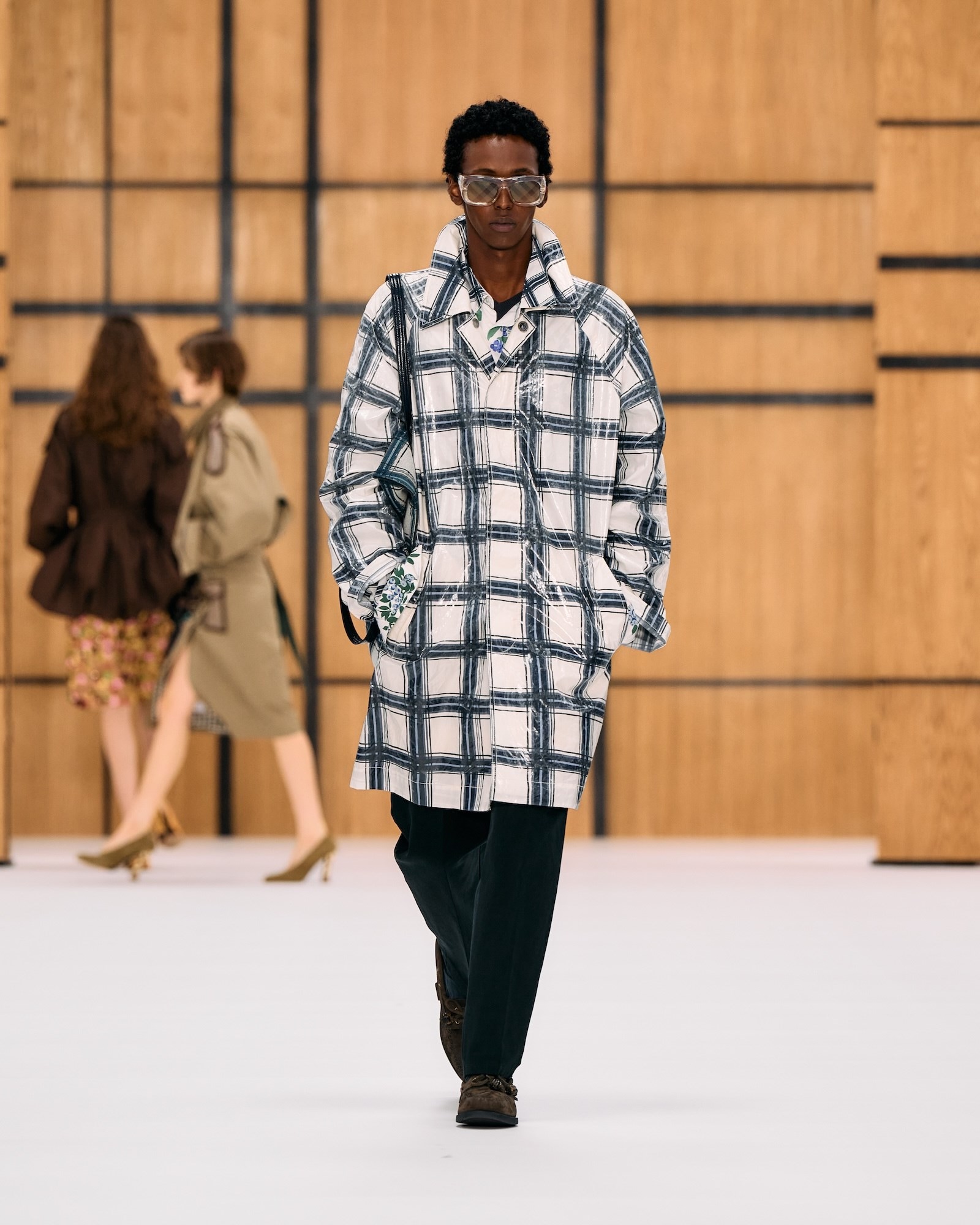
Yet, there’s much more to Birtwell than her pretty face – although she sufficiently fascinated Hockney to be a paid sitting model for him later in the Seventies. A major retrospective of her work with Clark is poised to open in a few weeks, showcasing their coupling of his inventive, sensuous cutting skills with Birtwell’s invigorating prints. Those enormously influential styles were, to put it bluntly, ripped off by a multitude of contemporaries at every level (even Yves Saint Laurent took a sideways glance), defining the style of the Seventies and in turn, in many eyes, an indelible expression of a London look. If that doesn’t sound too naff. Birtwell’s work then, as now, comprised illustrative expressively hand-drawn floral prints and hatched trellises that, obviously, link right into Burberry and its big old checks. “You can really feel the human hand in it,” said Lee. “Humanity,” indeed, was a word he used with insistency.
Burberry Spring/Summer 2027Courtesy of Burberry
Burberry Spring/Summer 2027Courtesy of Burberry
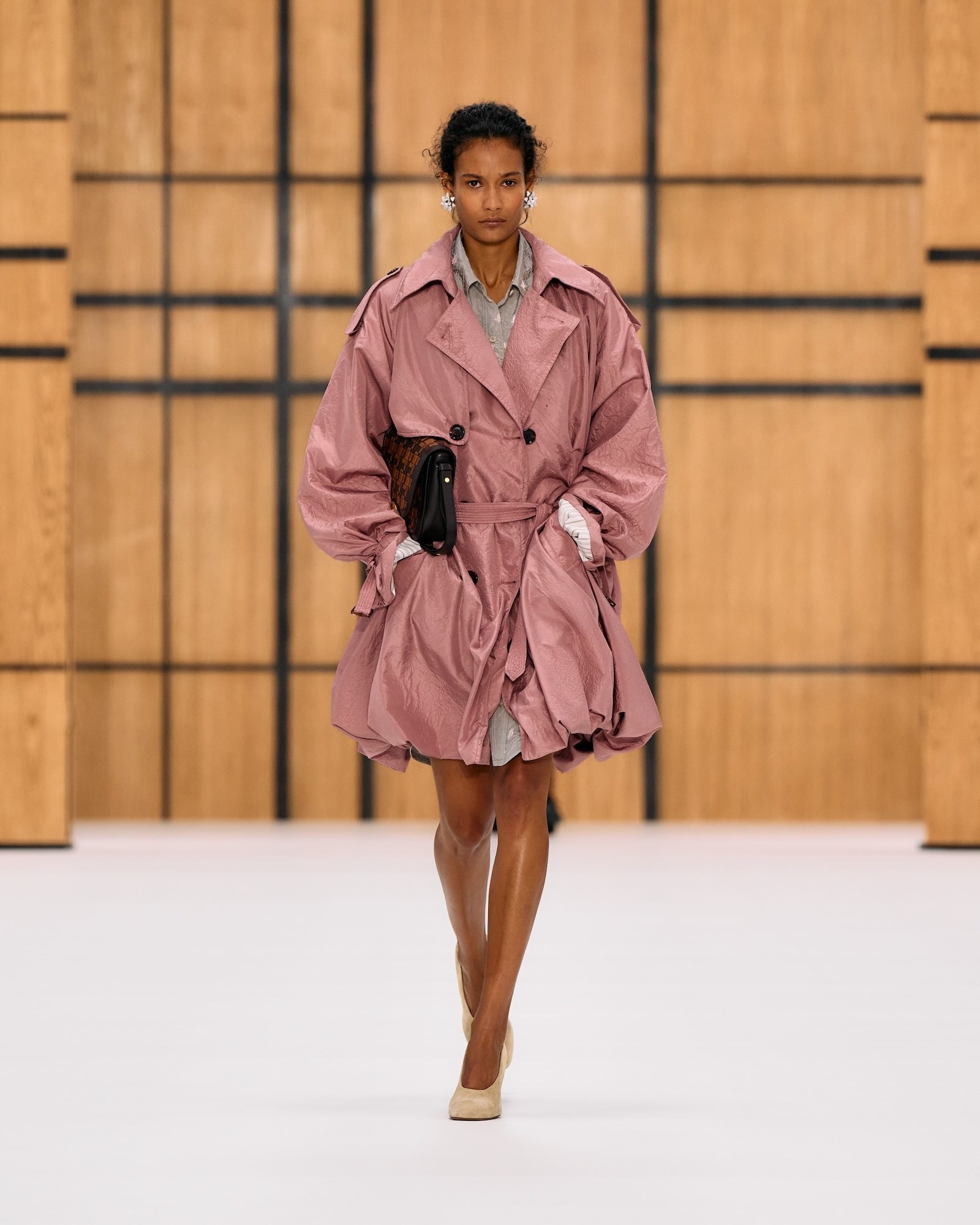
That seems to be an undercurrent of the season, a season of slightly mashed and bashed clothes with chopped-off hems and cack-handed seams – a riposte, perhaps, to the prevalence of eerily slick and barely detectable AI, as well as the commercialisation and conglomerate-ification that persists in reshaping fashion to resemble a commodities market. Burberry is, of course, a publicly listed juggernaut itself, so a reset towards something human was a clever move by Lee. There are, of course, people at the heart of the company – not just Lee and co, but the hundreds of workers in Burberry’s factories in Yorkshire, where it’s trench coats are still assembled by hand.
Burberry Spring/Summer 2027Courtesy of Burberry
Burberry Spring/Summer 2027Courtesy of Burberry
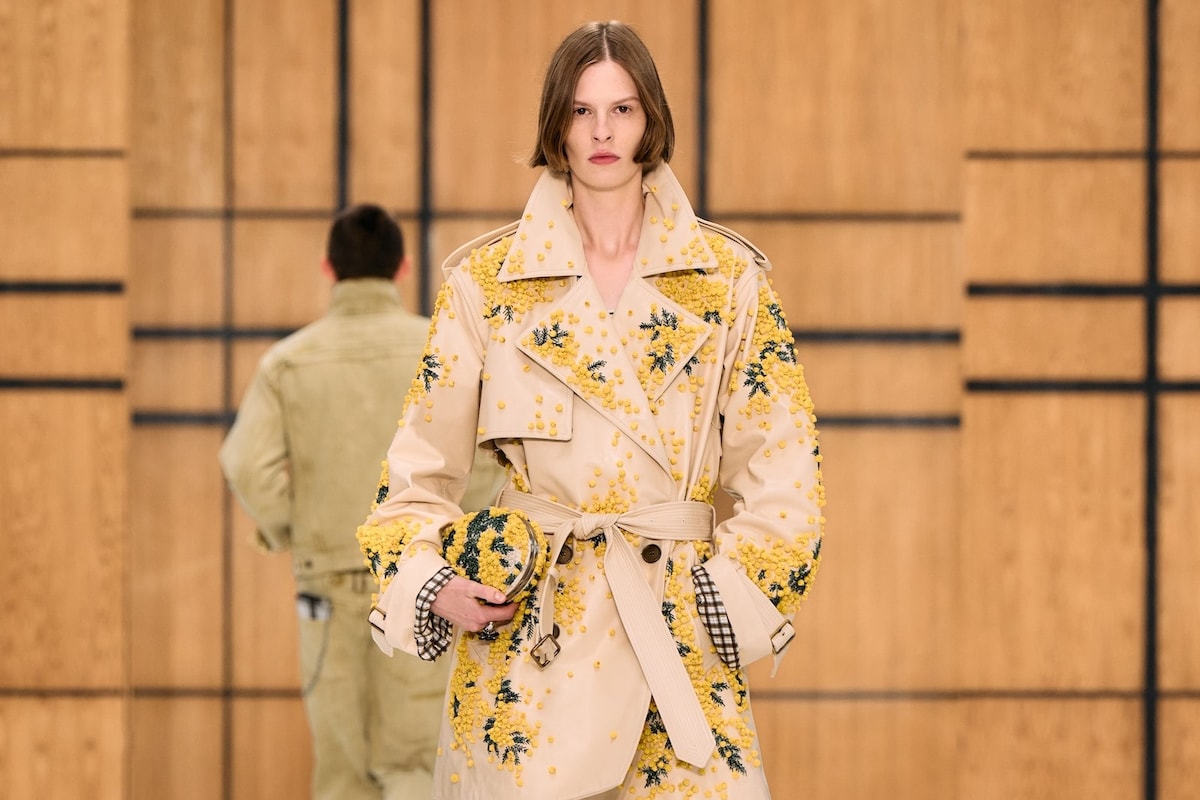
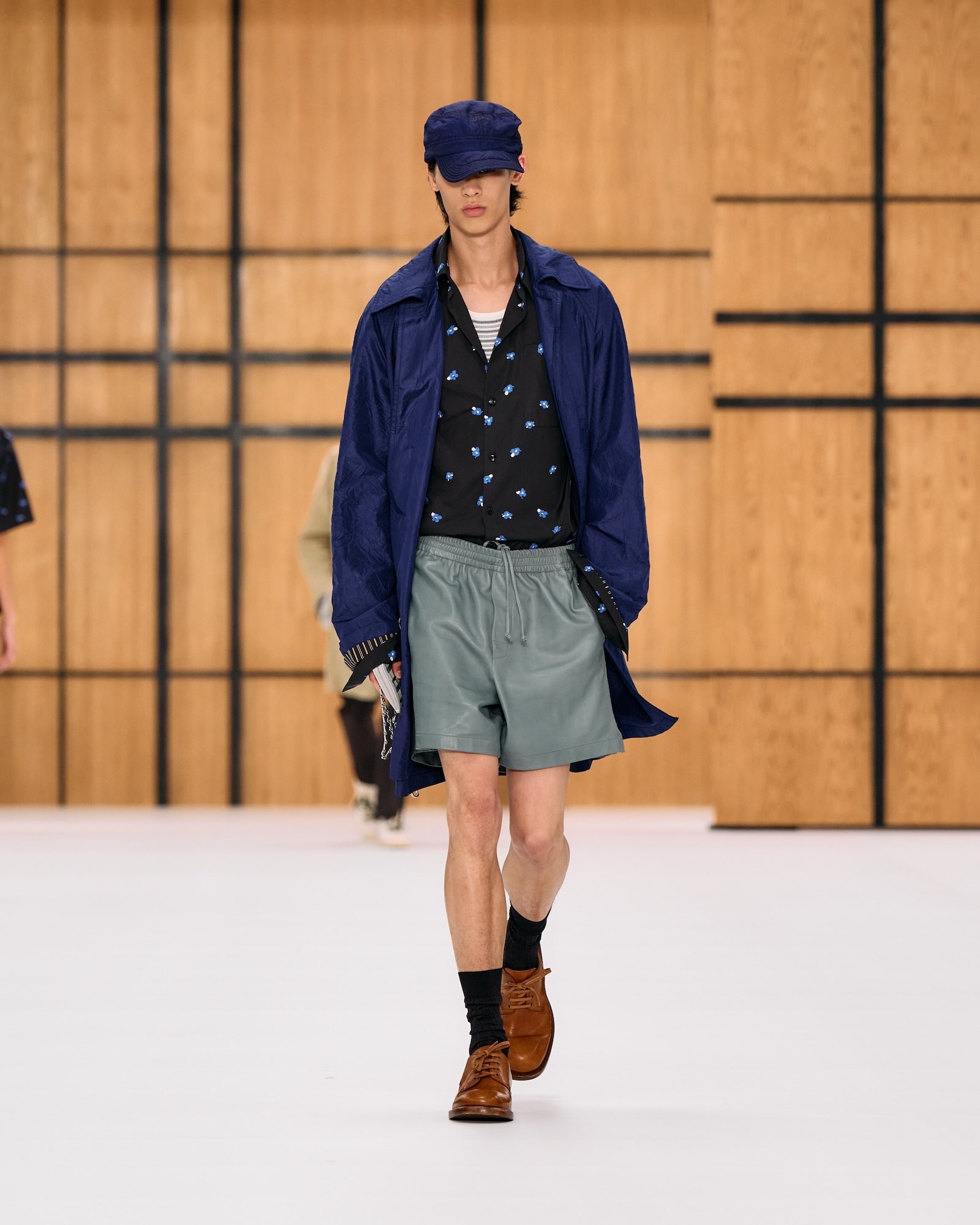
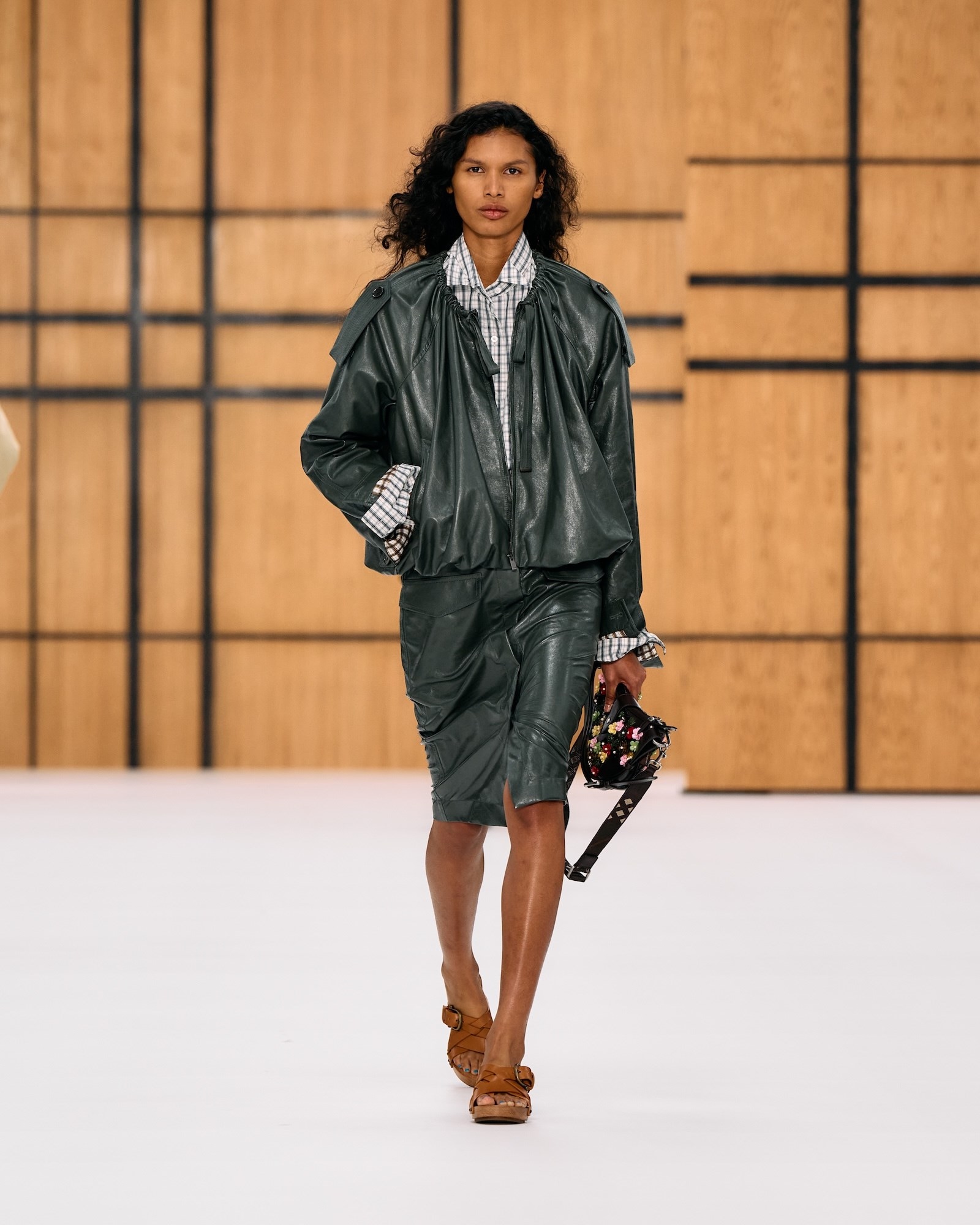
So, obviously, all that melded together in this collection. The trench coat was worn in, trodden on, in washed silks and cotton in rinsed-out shades, Queen Mother shades of persimmon and primrose. “Intentional imperfection” was Lee’s soundbite, which is fair enough as these clothes will need to be produced en masse. But luckily, it wasn’t a meticulously mapped out planning of every crease and wrinkle. There was a truth to these clothes, not least in their adherence to our sense of what Burberry should be. Namely, practical, pragmatic garments – gabardine outerwear of neat Harringtons, car coats, those aforementioned trenches. “A return to the basis of things,” was Lee’s fitting summary. That said, everything was lightened – it is the summer season, and even British temperatures have been heightened of late. Even leather was paper-thin, puckered and gathered or studded with decidedly English roses.
Burberry Spring/Summer 2027Courtesy of Burberry
Burberry Spring/Summer 2027Courtesy of Burberry
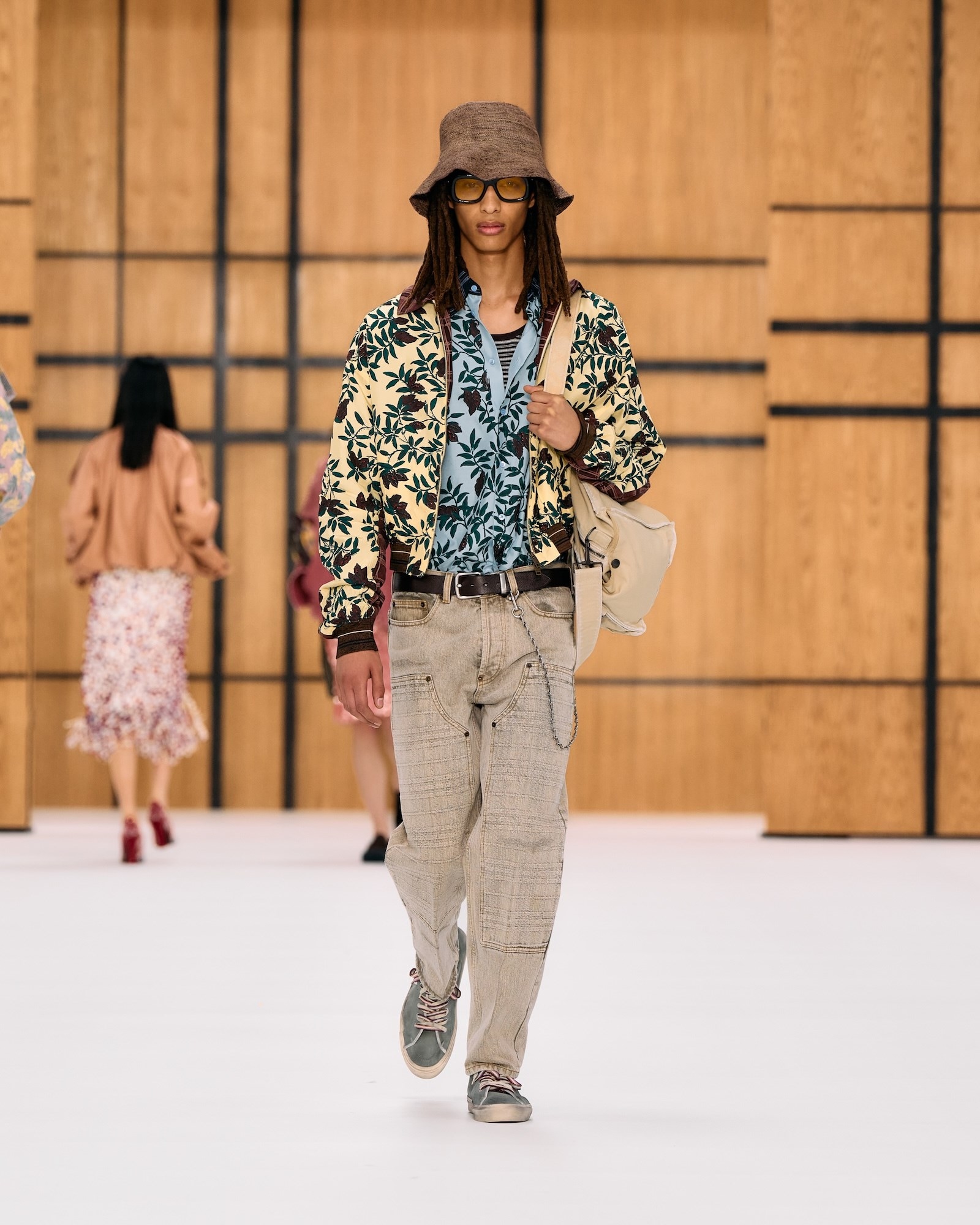
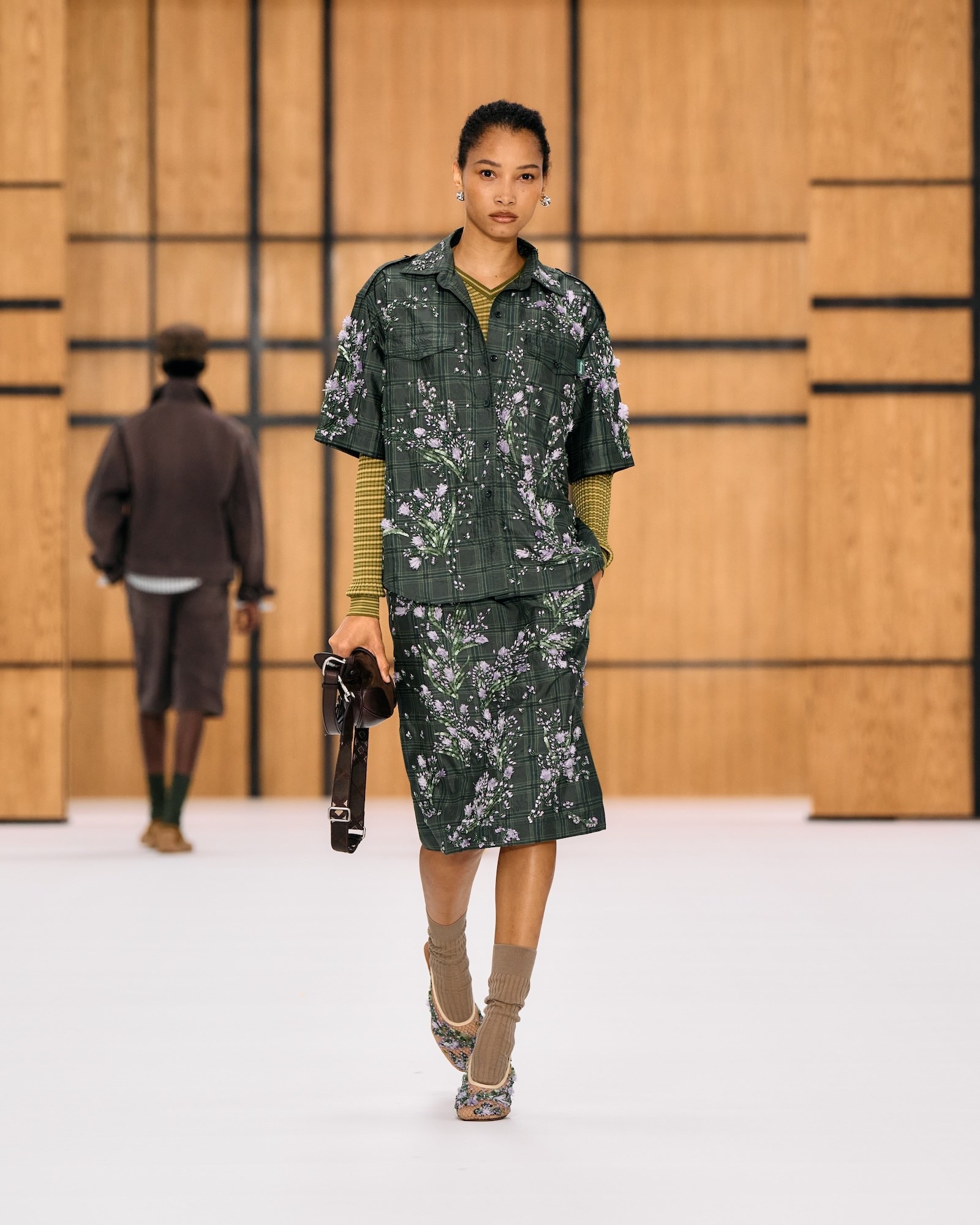
Lee saw this collection as a return to the soul of Burberry. “To something instinctive,” he said. “Something felt. Something true.” That all felt apt, with clothes printed with Birtwell’s blooms or embroidered with sprays of flowers – tiny mimosa, heathery lilacs – that seemed direct, pure and cheerfully unconsidered, great scads of foliage tossed over clothes. A lightness of material, but also of touch, and of mind. In short, it felt like it’s exactly what Burberry should be.
in HTML format, including tags, to make it appealing and easy to read for Japanese-speaking readers aged 20 to 40 interested in fashion. Organize the content with appropriate headings and subheadings (h1, h2, h3, h4, h5, h6), translating all text, including headings, into Japanese. Retain any existing tags from
Lead ImageBurberry Spring/Summer 2027Courtesy of Burberry
The phenomenally influential Octogenarian textile designer Celia Birtwell is probably best known to the general public as Mrs Clark, via her beatific appearance, haloed by blonde ringlets in the late David Hockney’s 1970-71 portrait of her, her then-husband and fashion collaborator Ossie Clark, and their cat Percy (actually, her name was Blanche). An Arnolfini Marriage for the 20th century, or indeed a British counterpart to Grant Wood’s pitchfork-wielding American Gothic, it is like those two pictures loaded with adumbrated meaning – Clark was known for his affairs with men and women, and the marriage broke down in 1974. Regardless, it’s an archetypical, emblematic example of contemporary British art. Which is reason alone for Birtwell to come to the attention of Daniel Lee and his creative cohorts when devising its Spring/Summer 2027 Burberry collection, given the shared stomping ground.
61Burberry Spring/Summer 2027
Yet, there’s much more to Birtwell than her pretty face – although she sufficiently fascinated Hockney to be a paid sitting model for him later in the Seventies. A major retrospective of her work with Clark is poised to open in a few weeks, showcasing their coupling of his inventive, sensuous cutting skills with Birtwell’s invigorating prints. Those enormously influential styles were, to put it bluntly, ripped off by a multitude of contemporaries at every level (even Yves Saint Laurent took a sideways glance), defining the style of the Seventies and in turn, in many eyes, an indelible expression of a London look. If that doesn’t sound too naff. Birtwell’s work then, as now, comprised illustrative expressively hand-drawn floral prints and hatched trellises that, obviously, link right into Burberry and its big old checks. “You can really feel the human hand in it,” said Lee. “Humanity,” indeed, was a word he used with insistency.
Burberry Spring/Summer 2027Courtesy of Burberry
Burberry Spring/Summer 2027Courtesy of Burberry
That seems to be an undercurrent of the season, a season of slightly mashed and bashed clothes with chopped-off hems and cack-handed seams – a riposte, perhaps, to the prevalence of eerily slick and barely detectable AI, as well as the commercialisation and conglomerate-ification that persists in reshaping fashion to resemble a commodities market. Burberry is, of course, a publicly listed juggernaut itself, so a reset towards something human was a clever move by Lee. There are, of course, people at the heart of the company – not just Lee and co, but the hundreds of workers in Burberry’s factories in Yorkshire, where it’s trench coats are still assembled by hand.
Burberry Spring/Summer 2027Courtesy of Burberry
Burberry Spring/Summer 2027Courtesy of Burberry
So, obviously, all that melded together in this collection. The trench coat was worn in, trodden on, in washed silks and cotton in rinsed-out shades, Queen Mother shades of persimmon and primrose. “Intentional imperfection” was Lee’s soundbite, which is fair enough as these clothes will need to be produced en masse. But luckily, it wasn’t a meticulously mapped out planning of every crease and wrinkle. There was a truth to these clothes, not least in their adherence to our sense of what Burberry should be. Namely, practical, pragmatic garments – gabardine outerwear of neat Harringtons, car coats, those aforementioned trenches. “A return to the basis of things,” was Lee’s fitting summary. That said, everything was lightened – it is the summer season, and even British temperatures have been heightened of late. Even leather was paper-thin, puckered and gathered or studded with decidedly English roses.
Burberry Spring/Summer 2027Courtesy of Burberry
Burberry Spring/Summer 2027Courtesy of Burberry
Lee saw this collection as a return to the soul of Burberry. “To something instinctive,” he said. “Something felt. Something true.” That all felt apt, with clothes printed with Birtwell’s blooms or embroidered with sprays of flowers – tiny mimosa, heathery lilacs – that seemed direct, pure and cheerfully unconsidered, great scads of foliage tossed over clothes. A lightness of material, but also of touch, and of mind. In short, it felt like it’s exactly what Burberry should be.
and integrate them seamlessly into the new content without adding new tags. Ensure the new content is fashion-related, written entirely in Japanese, and approximately 1500 words. Conclude with a “結論” section and a well-formatted “よくある質問” section. Avoid including an introduction or a note explaining the process.