Rewrite
From KNWLS’ pop-up and Jawara Alleyne’s reflections on lost nightlife to Erdem’s 20th anniversary and Burberry’s city-ready trench coats, London Fashion Week AW26 was a season of personal narratives, sharp tailoring, and clothes made for real life, and after dark.
This London Fashion Week, many favourite brands returned with installations and inventive ways of presenting collections. For example, KNWLS showcased their new collection through exhibited images shot by Aidan Zamiri and launched their first pop-up store; Jawara Alleyne exhibited artworks and pieces reflecting on the loss of nightlife spaces and the impact this has on shaping culture and community; and Ewusie, one of the newer designers on the schedule, used his slot to host a talk discussing the themes of the collection and his practice, and presenting online through a look book what was one of the most exciting collections of the week.
Almost a rite of passage at the start of London Fashion Week every February is the CSM MA Fashion show, the perfect opening where stories of all kinds are given space to unfold. Highlights included Ennis Finnerty Mackay, who explored addiction through tailoring that mixed a family’s version of a New Look dress with his father’s 80s tailoring, even inventing a new textile made from discarded condoms. Benaissa Majeris, the opening collection, presented garments reflecting British working-class life and the slow erosion of “imagined futures”, and there were many other collections carrying messages as powerful as their craft.
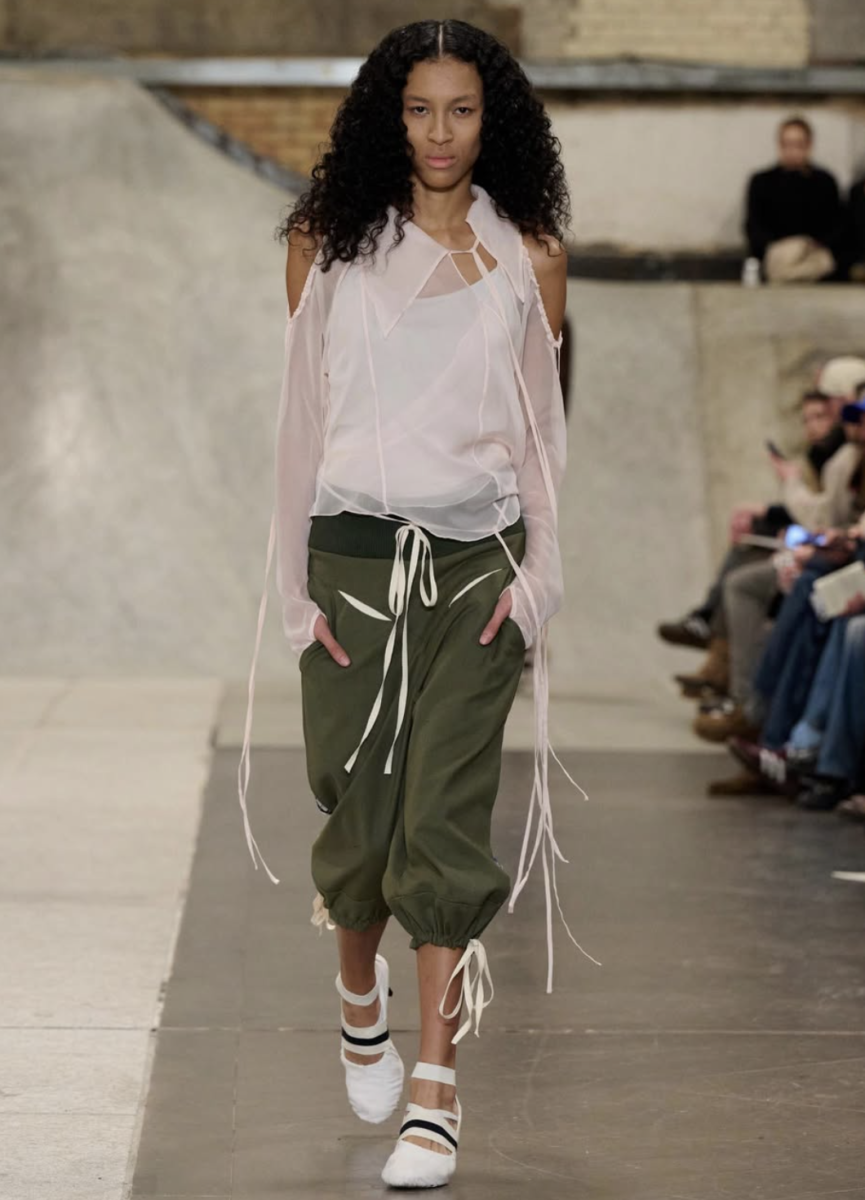
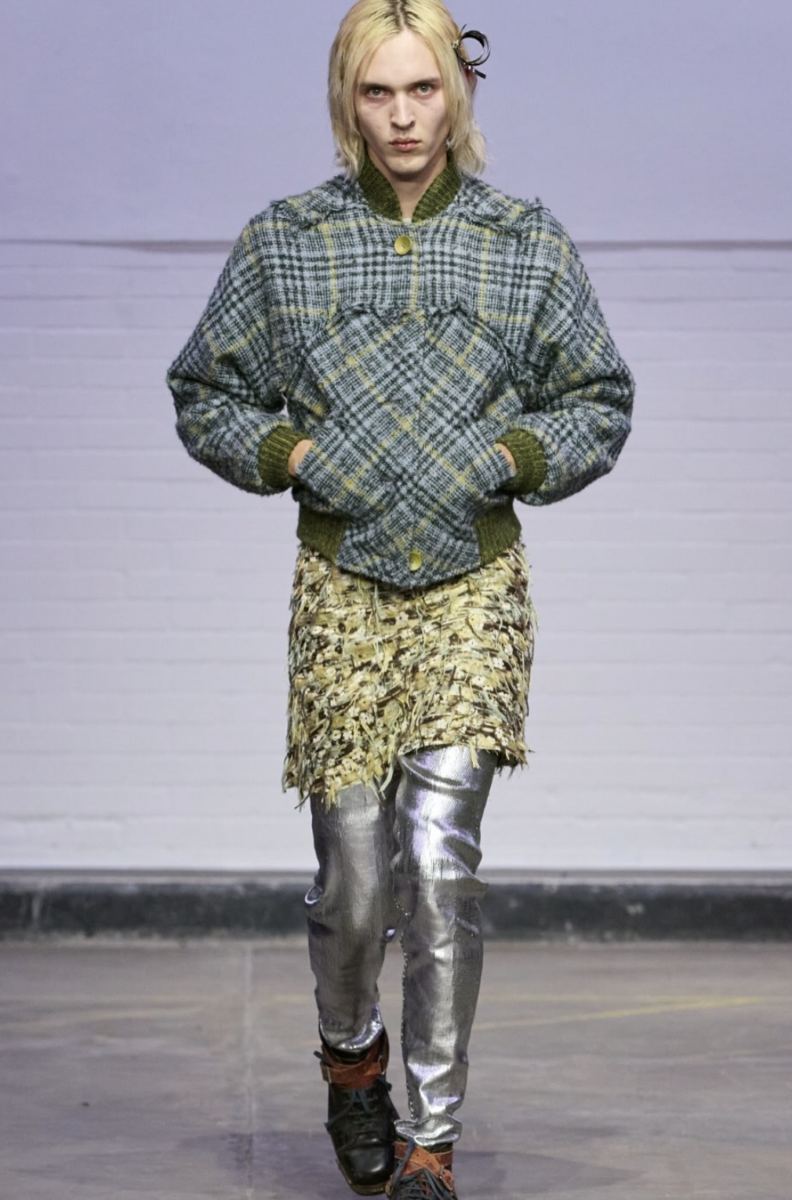
Fashion East returned with Jacek Gleba, Mayhem, and Goyagoma. Gleba developed his poetic take on menswear, further refining his design language. Goyagoma presented an after-hours wardrobe for women, including slip dresses and a suede trench with a croc print lasered on, while Mayhem delivered a well-styled collection of mischievous treasures.
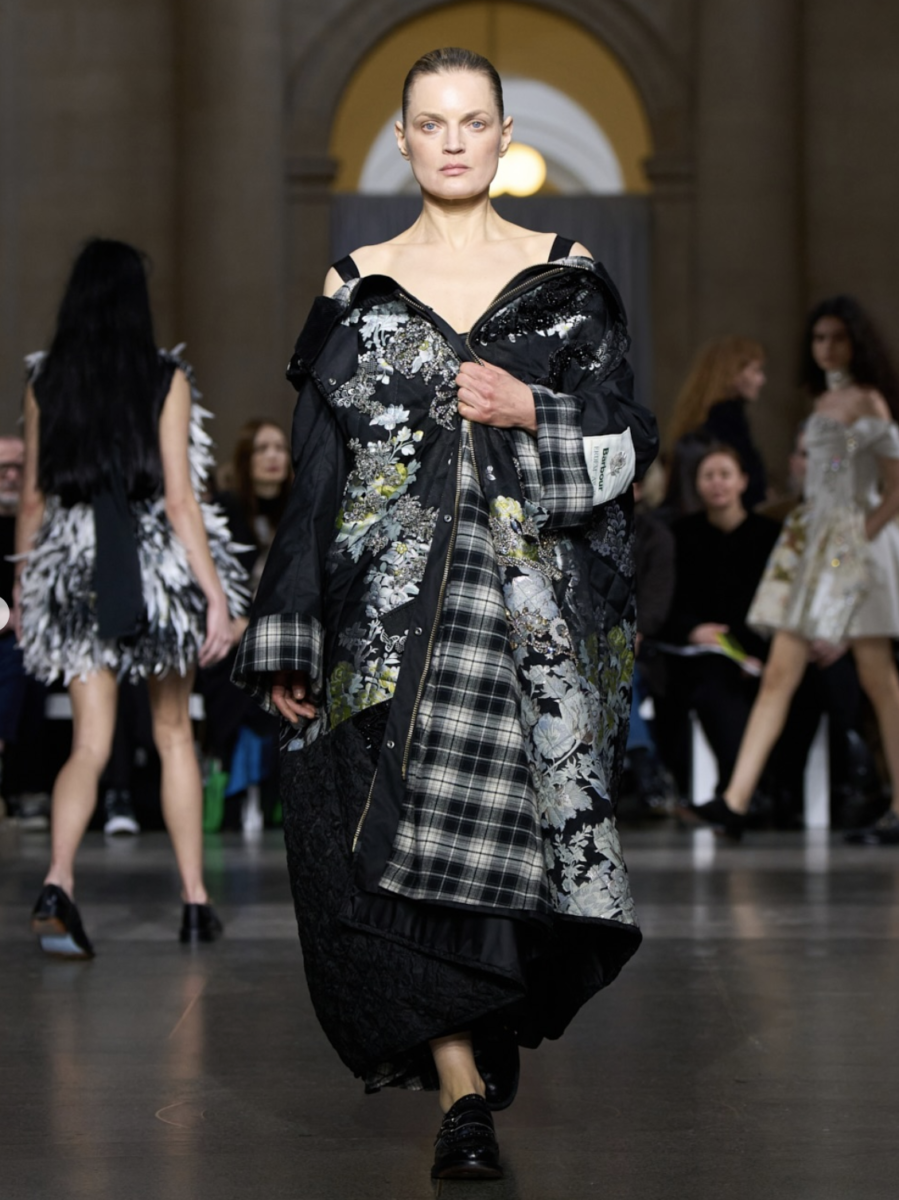
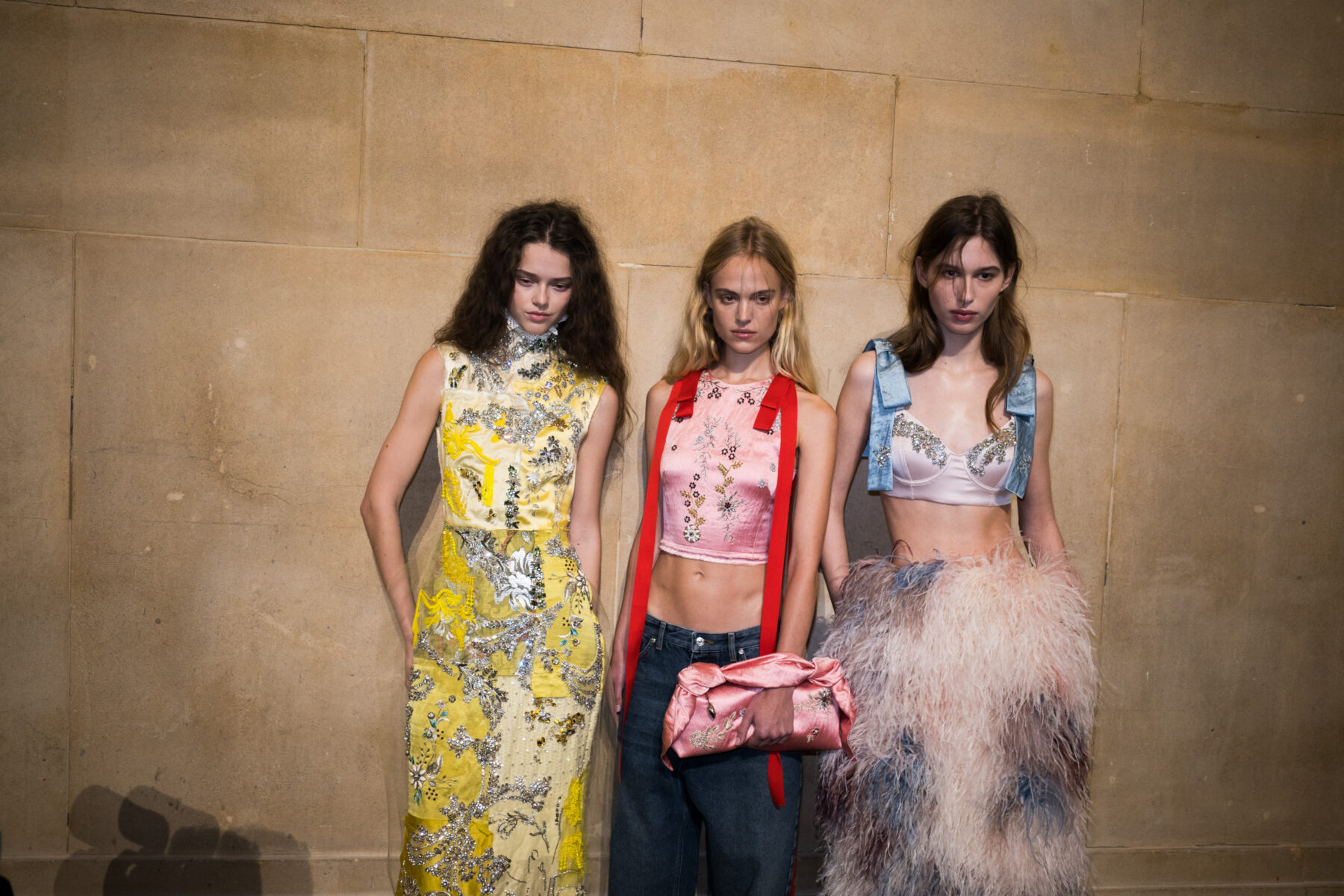
At Erdem’s 20th anniversary show, beautiful dresses abounded. The Barbour collaboration returned, and although references leaned heavily on 1950s ballgowns reminiscent of Elizabeth II or Una Vincenzo, the collection still felt effortless and easy to wear, with intricate pieces styled with jeans or patchworked textiles. It was an homage to the designer’s two decades of excellence, to becoming a force in the London scene and an example of resilience and creative force, as an independent designer who carved his space amidst the big league.
“Erdem built it from his archive — cutting it up, repurposing it, turning classics upside down and stitching them back together in an unexpected way. I applied that same philosophy to the hair,” KEVIN.MURPHY’s Pro Ambassador Eugene Souleiman told Wonderland backstage at the show, as models strutted around the runway with beautiful, lived-in and exaggerated natural looks.
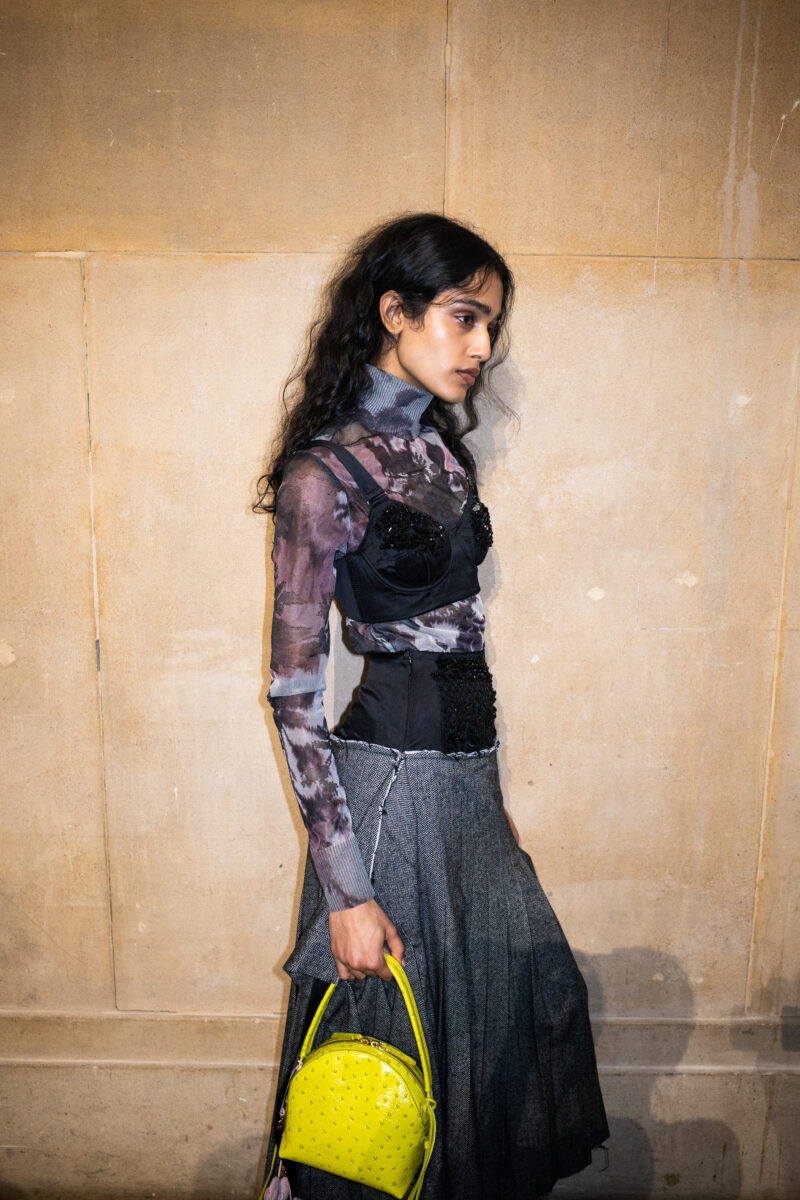
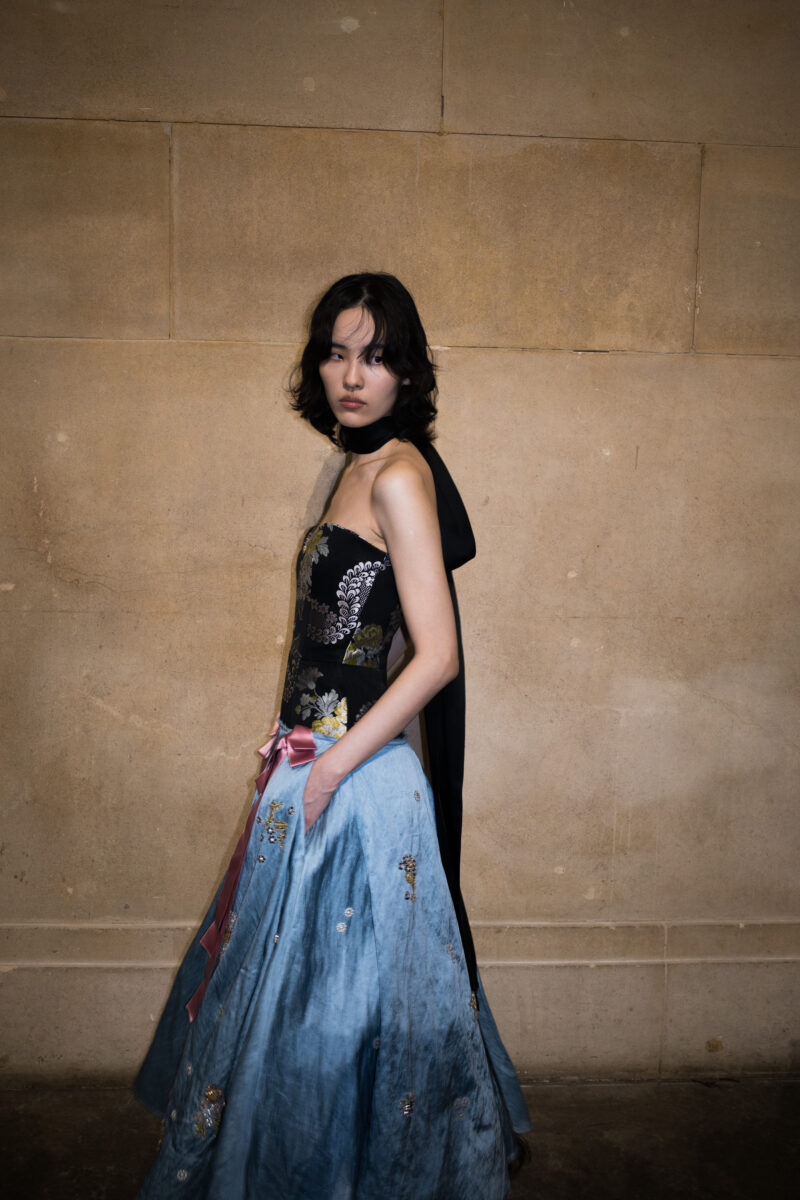
Courtesy of Kevin Murphy
“The show itself was really about this idea of the imaginary conversation and thinking about all these muses from the last 20 years, cutting things up, mixing things together. And really, when we were trying to figure out the hair, which is such an important part of everything, we were kind of obsessed with the idea of every girl looking like an individual and really looking like herself,” Moralıoğlu added.
Front-row supporters included Keira Knightley, Helen Mirren, and Glenn Close, whom Erdem dressed for the BAFTAs that same night.
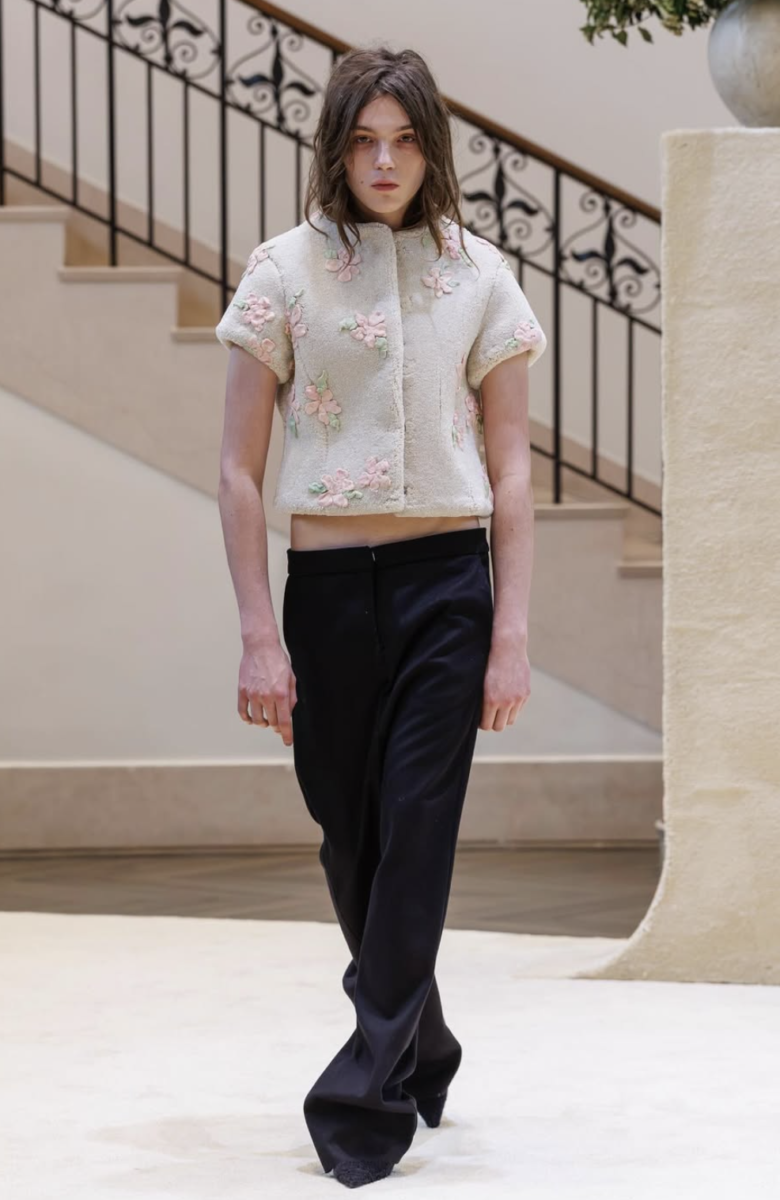
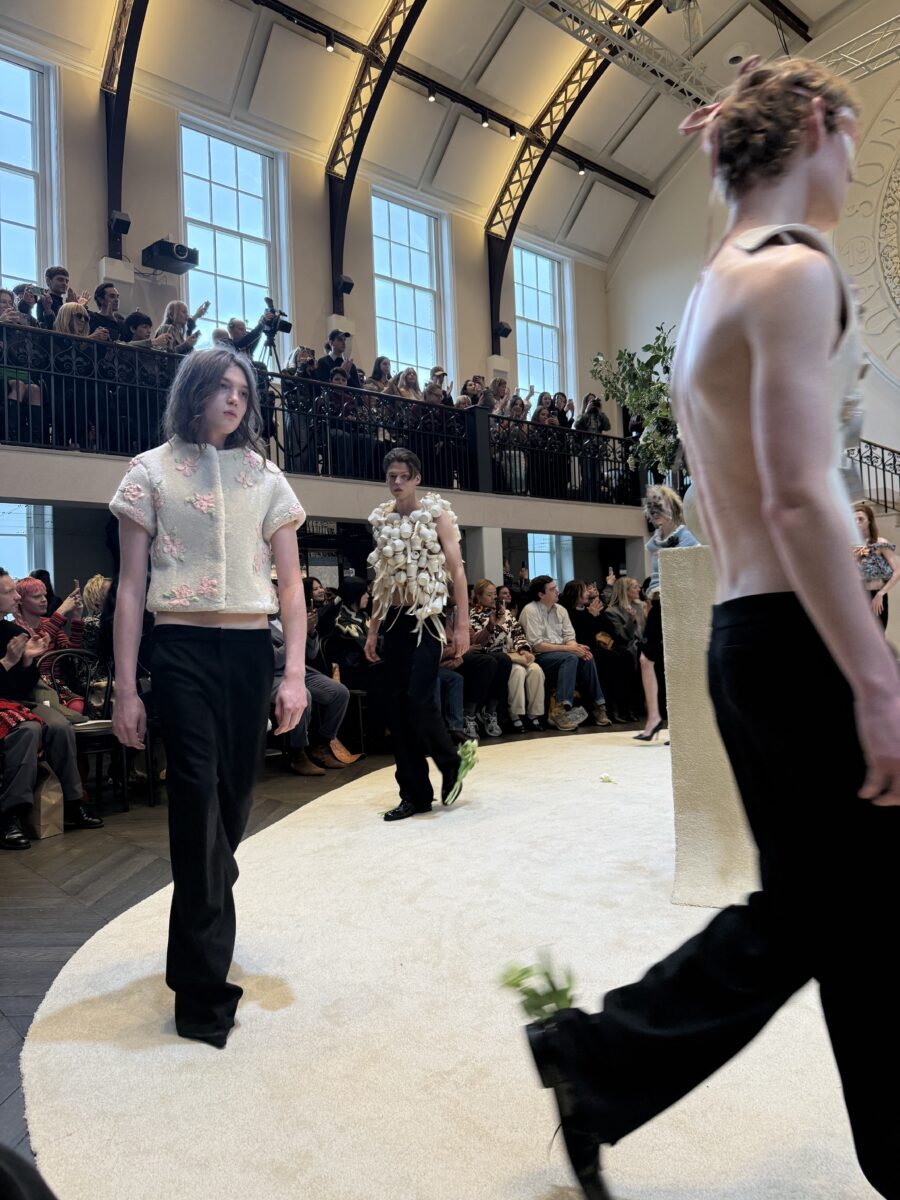
The Vxlley, a designer recently nominated for the LVMH Prize, presented a collection that belonged in a museum. The Spanish designer, whose name is Daniel Del Valle and who works as a florist, created a very personal show that incorporated references from his native Andalusia tiles to a look made with bread, his dad is a baker. Despite incorporating the weight of mosaic vases and ceramics that hugged the models’ bodies, the pieces seemed to remain comfortable to wear. It was a collection that took time to make and didn’t begin as a fashion project, without pressure on the designer to continue immediately, though we hope to see more from him in the future.
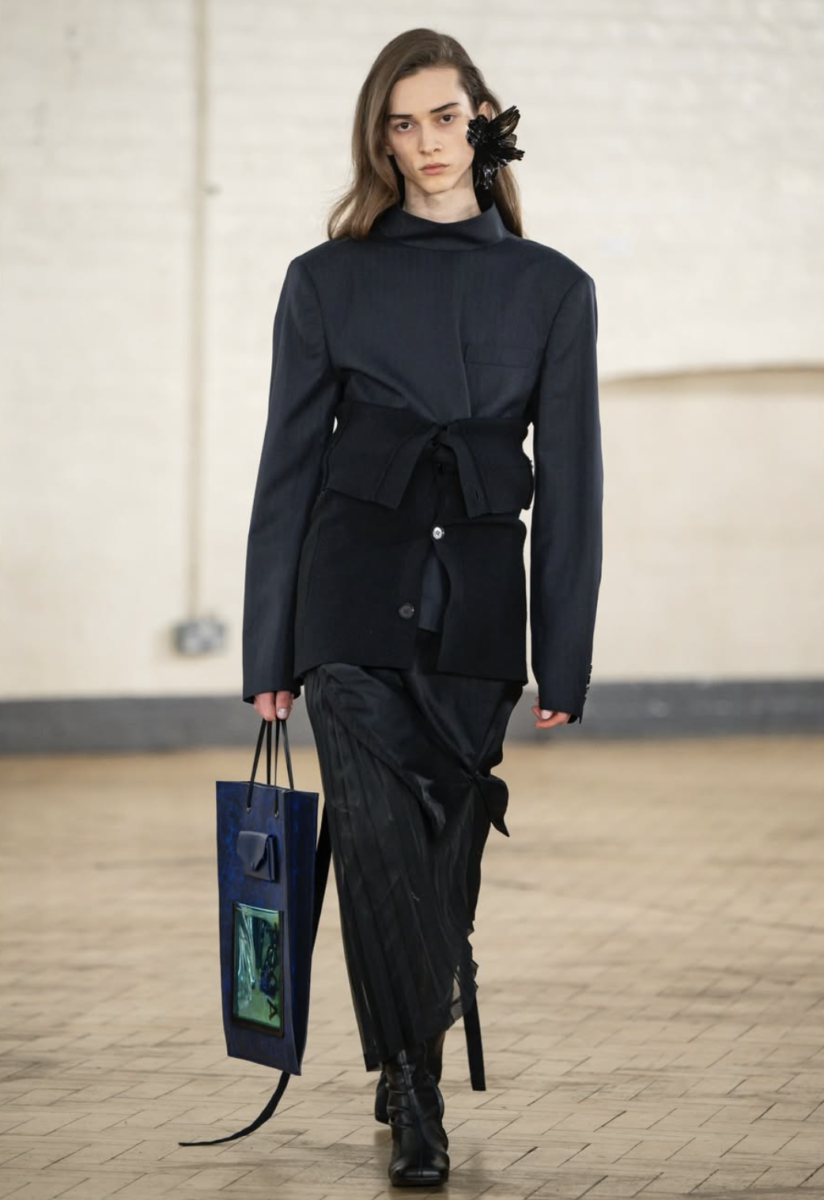
For Fall 2026, Toga’s Yasuko Furuta explored how materials respond to strain and how clothing can echo that resilience. Presented in a grand Bloomsbury drill hall, the runway treated tension as a design tool: airy fabrics met high-shine synthetics, traditional plaids brushed against iridescent trims, and soft knits were gathered, pinned, and reconfigured mid-silhouette. Many looks invited adjustment, with trousers shifting proportion, jackets suggesting layered illusions, and dresses spliced with denim from a Wrangler collaboration. Furuta’s hallmark hybridity, blurring womenswear and menswear, felt assured, balancing experimentation with polish and wit.
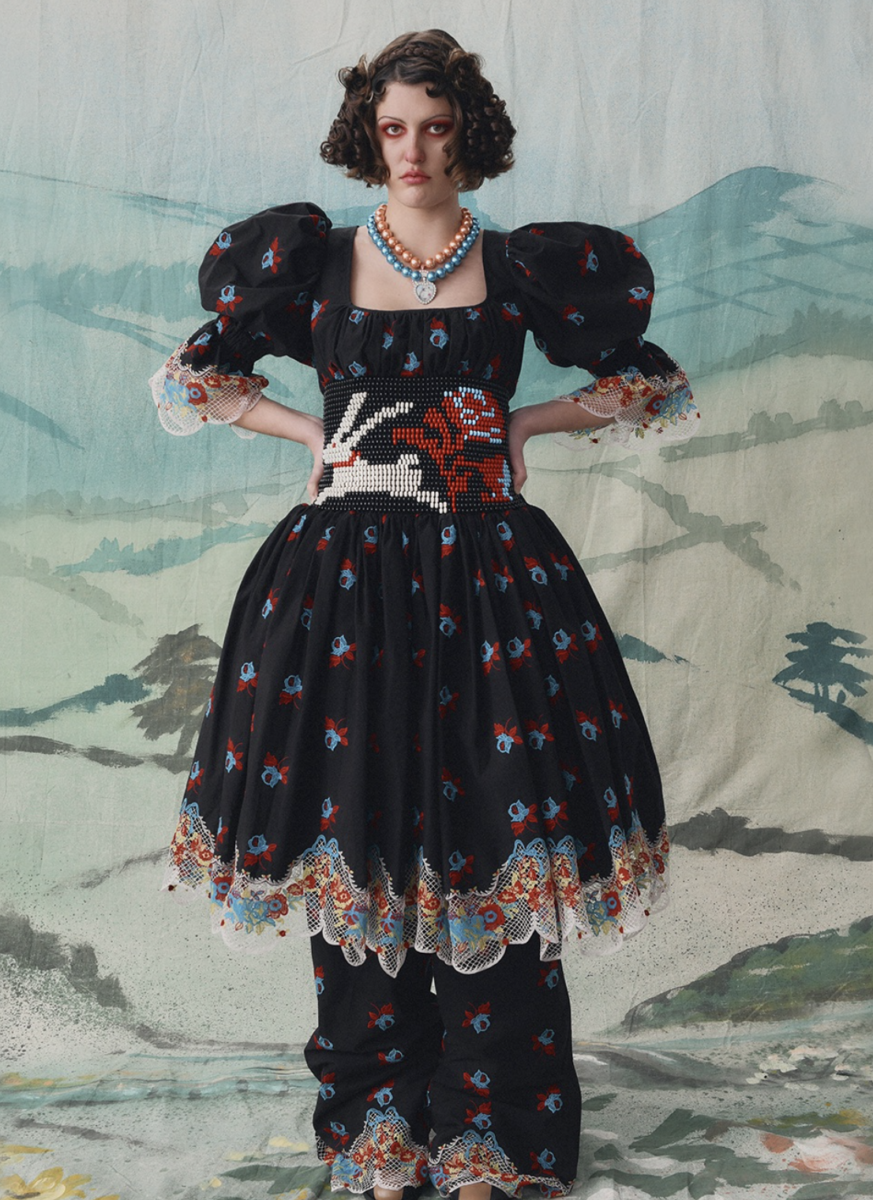
At Chopova Lowena, AW26 felt like stepping into a particularly eccentric corner of British girlhood, where Regency romance collided with golf-course rituals. Shown to one of the largest crowds at London Fashion Week so far, the collection reworked square necklines, boned bodices, and rose sleeves into the duo’s signature clash of argyles, kilts, and sporty references. Pearls met patchworked corsets, butterflies landed in beadwork, tartans and ribboned knits amplified the nostalgia. Deadstock hybrids and the playful Chopova Lowena Feelings line expanded their universe, while guests dressed head-to-toe in the brand proved once again: this is less a label, more a club.
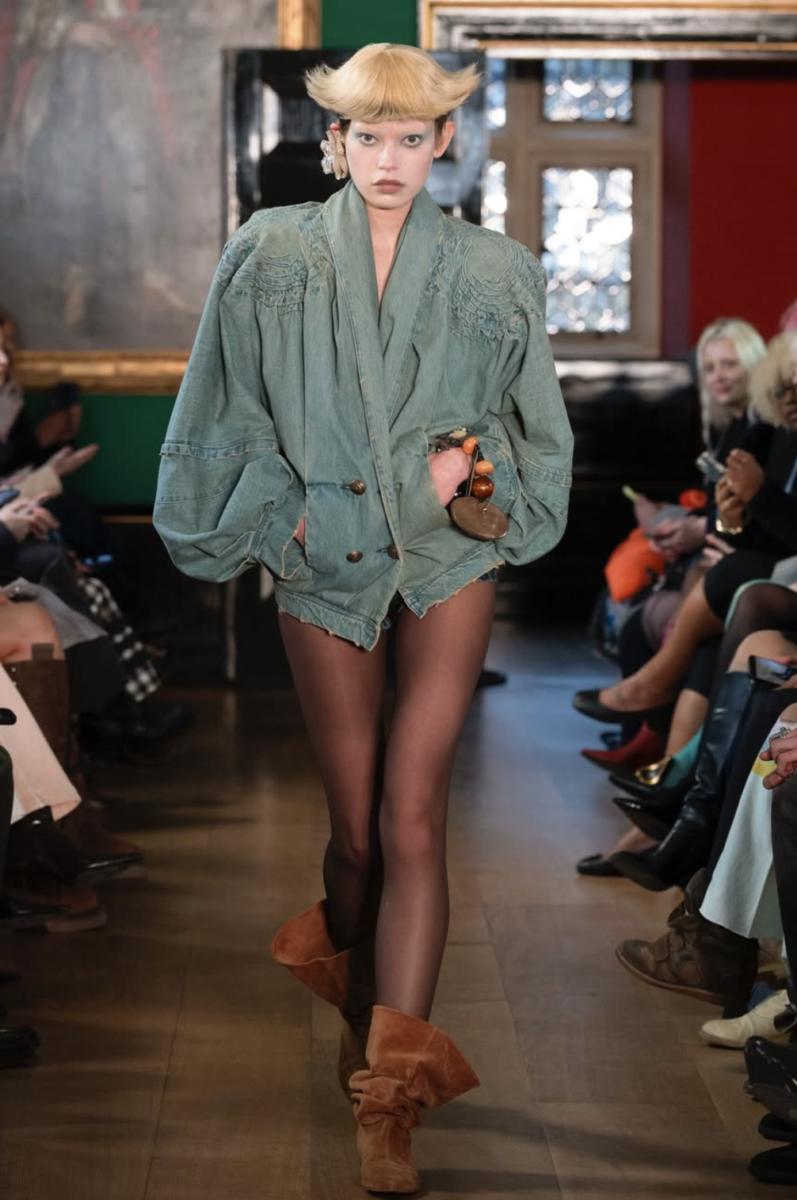
Masha Popova is back. After three seasons away, the cult favourite of young Londoners and celebrities alike, like Charli XCX, returned with a collection titled Intimate Hours. Shown inside Charterhouse, the collection unfolded somewhere between the hyper-personal space of a girl’s bedroom and the tragic romance of Only Lovers Left Alive. It was a louche, nocturnal wardrobe: piped silk pyjamas, fuzzy robes slit high at the leg, Nosferatu collars, and spiral-stitched trenches. Fangs appeared across draped tees; floral shorts peeked from beneath bathrobe silhouettes. Denim, her signature, came sliced at the hips or doubled into warped, low-slung skirts. Sensual, slightly undone, and very cheeky.
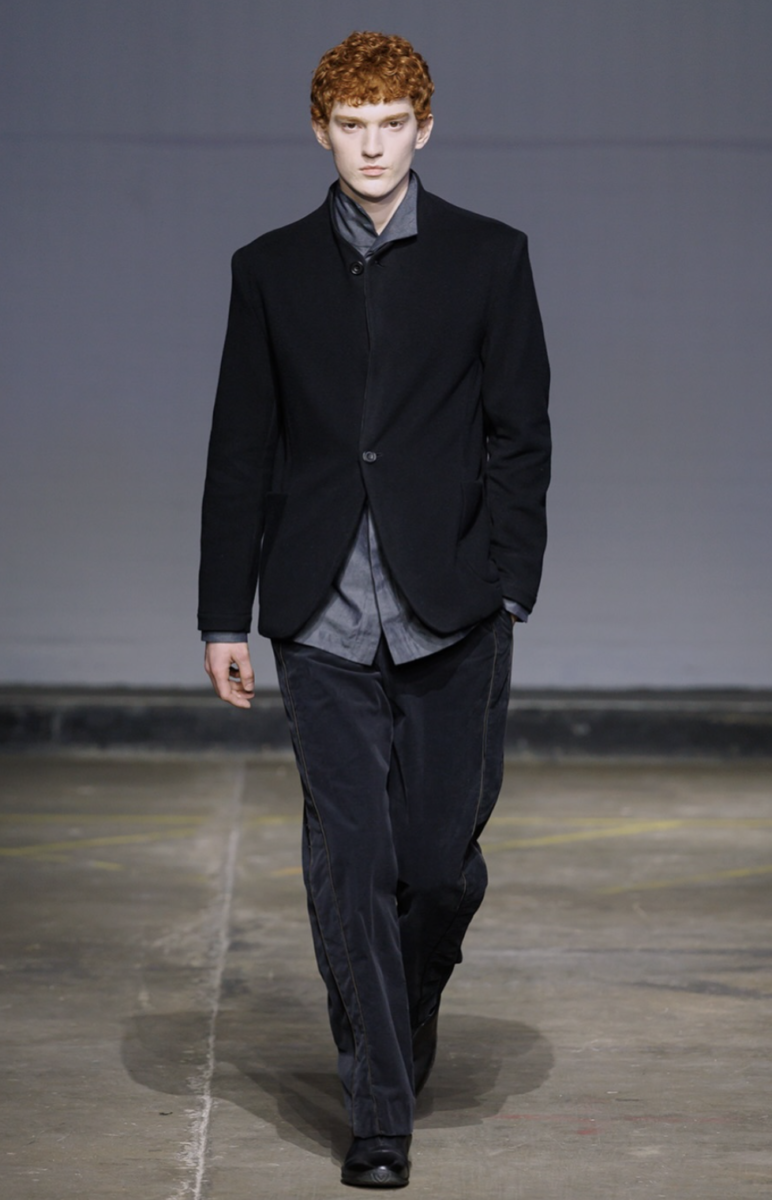
Luke Derrick, a semi-finalist for the LVMH Prize with training at Dunhill and on Savile Row, brings that rigour into conversation with contemporary London street style. His proposition is sharp yet relaxed: tuxedo jackets, double-breasted suits, and slouchy trousers cut with precision, rendered in Japanese wool jersey, iridescent chambray, micro-corduroy, and velveteen in navies, greens, and mustard tones. From afar, the silhouettes nod to traditional British tailoring; if you look closely, they are soft, compressible, and built for movement, tailoring for the city’s best dressed, for people in constant motion.
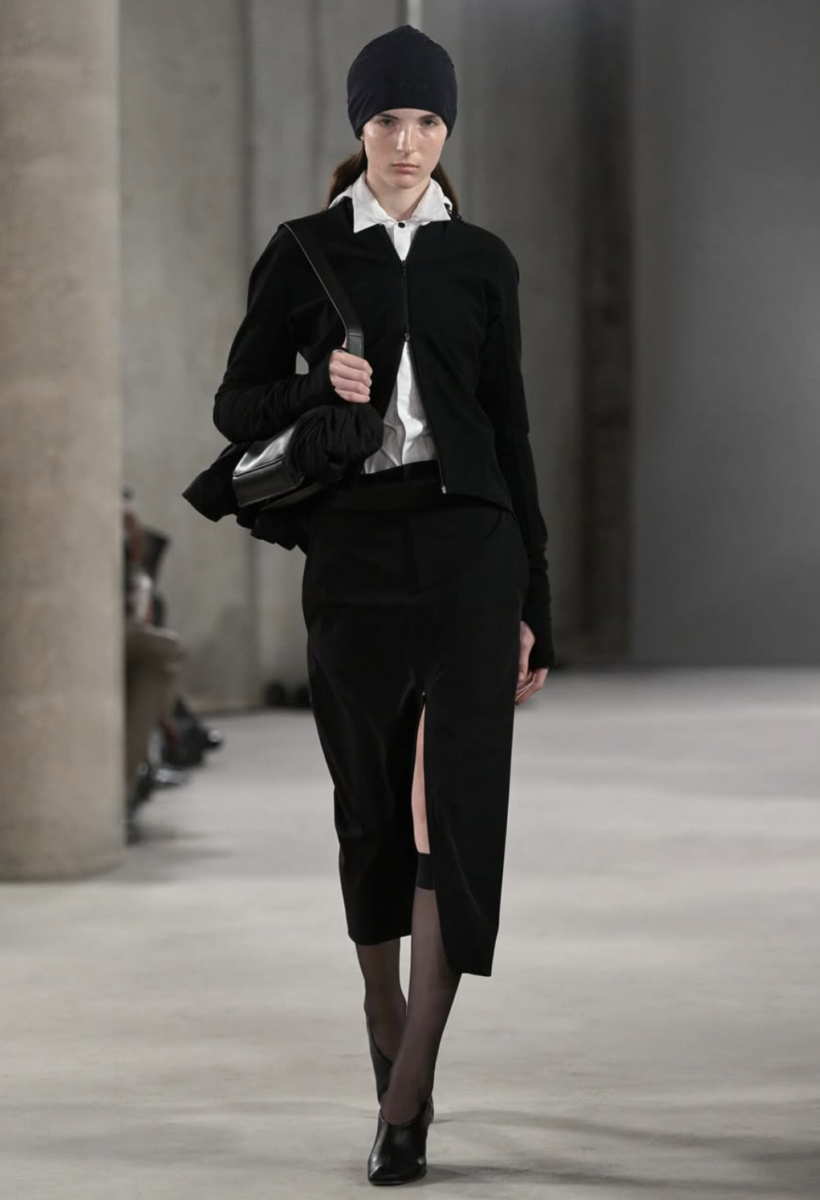
Johanna Parv insists on ergonomics. A fitted nylon jacket and trousers opened the show, with concealed zips, lower-back storage, and engineered stretch at the cuffs. Tights layered over trousers, quilted jackets, water-repellent car coats, molten tank dresses, and bestselling base-layer hoodies reinforced her commuter-minded clarity. Streamlined silhouettes, cinched at the waist with buckle-less leather belts, proved once again that function in her hands is a form of beauty: extremely chic and sleek.
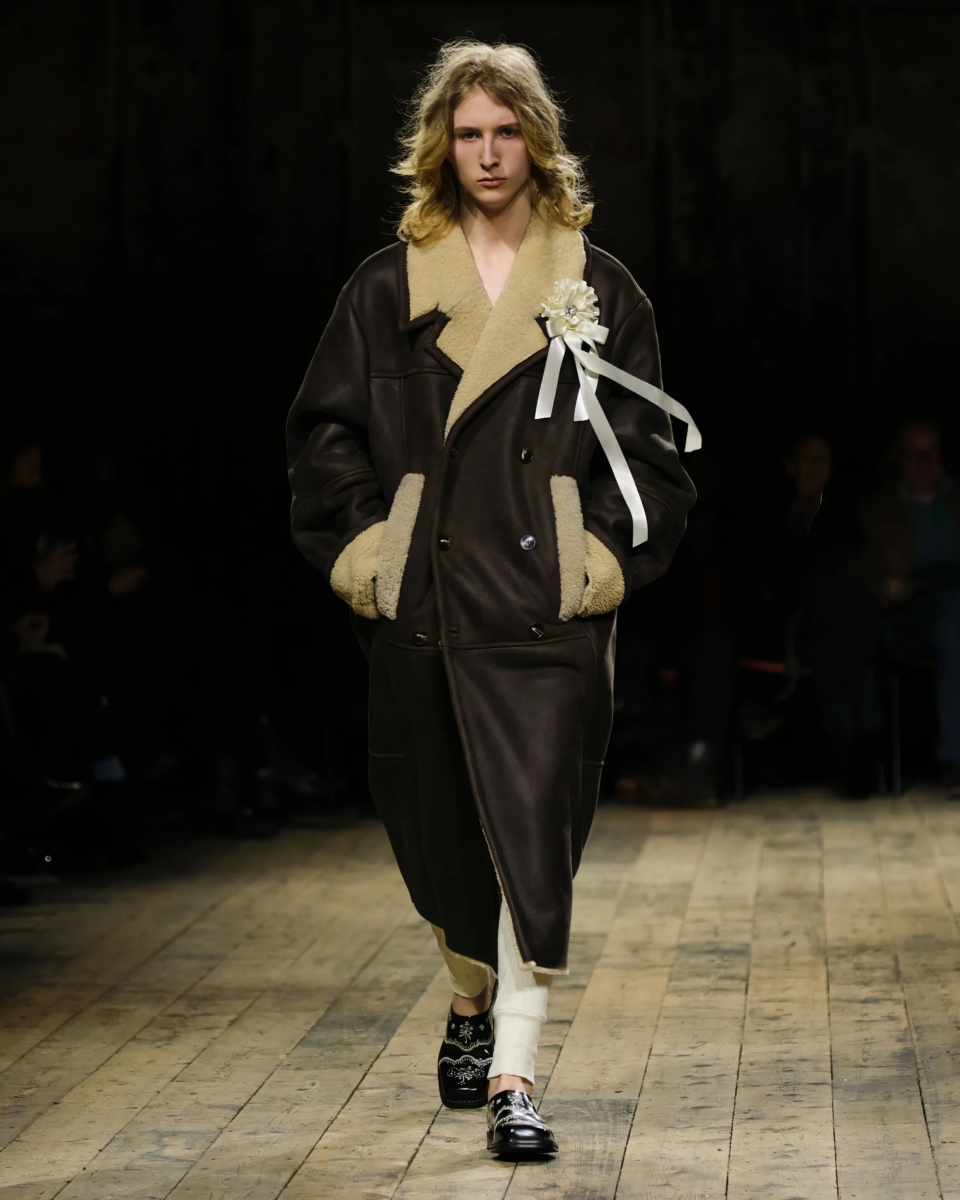
Simone Rocha delivered one of the most talked-about outings with her AW26 collection, the go-to brand for editors and cool girls because it is equal parts romantic and relatable. Drawing on Irish mythic themes and cultural imagery, Rocha balanced ethereal, delicately embellished dresses with rugged utilitarian references. Lace-trimmed pieces and ribbon accents intertwined with her Adidas Originals collaboration, from pearl-studded track jackets to embellished sneakers, softening sportswear codes with her distinct flourish. Across the runway, voluminous gowns sat alongside tailored suiting and tweedwork, each piece rich in texture and detail.
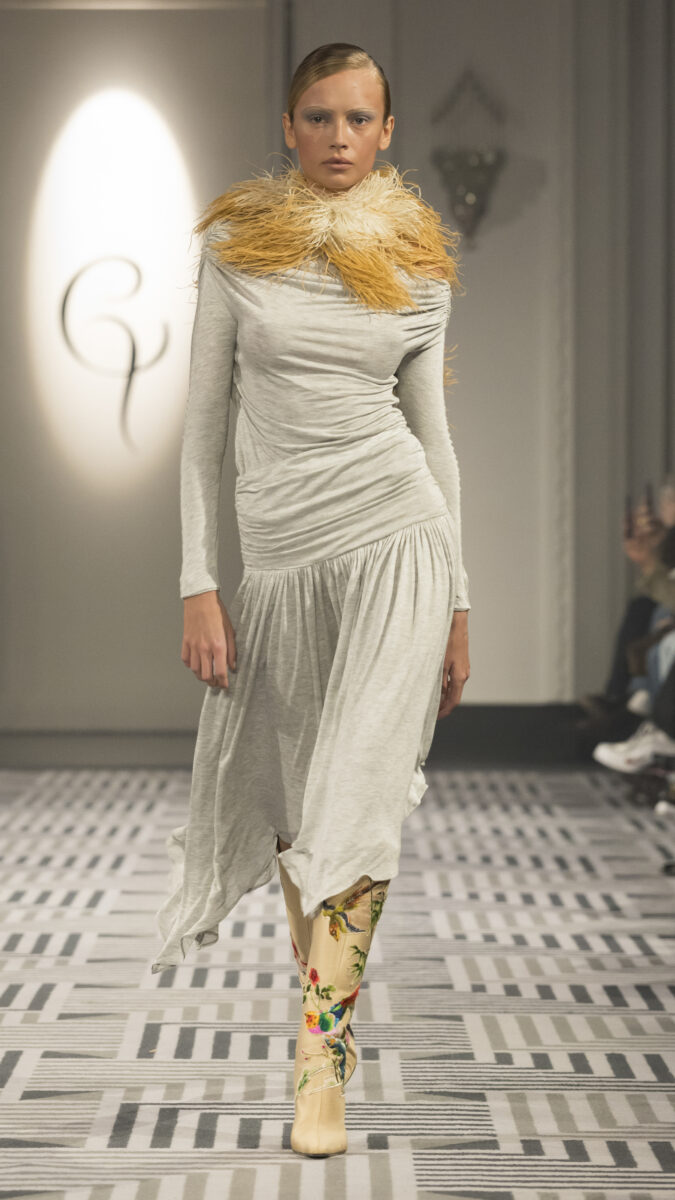
Conner Ives styled the “closet for neo-Americans”, well-dressed friends, in what he called a “family affair” both on the runway and in the front row, including Samantha Jones, aka Kim Cattrall. Inspired by the Weimar Republic and 1920s -30s hedonism in Germany, Ives presented aristocratic, party-ready garments: a black halter-neck gown featuring dramatic foraged turkey feathers, a spiral-cut dress decorated with 300 hand-painted leaves, a bridal gown made from deadstock silk organza, and a pink spaghetti-strap dress inspired by Gwyneth Paltrow’s 1999 Oscars look.
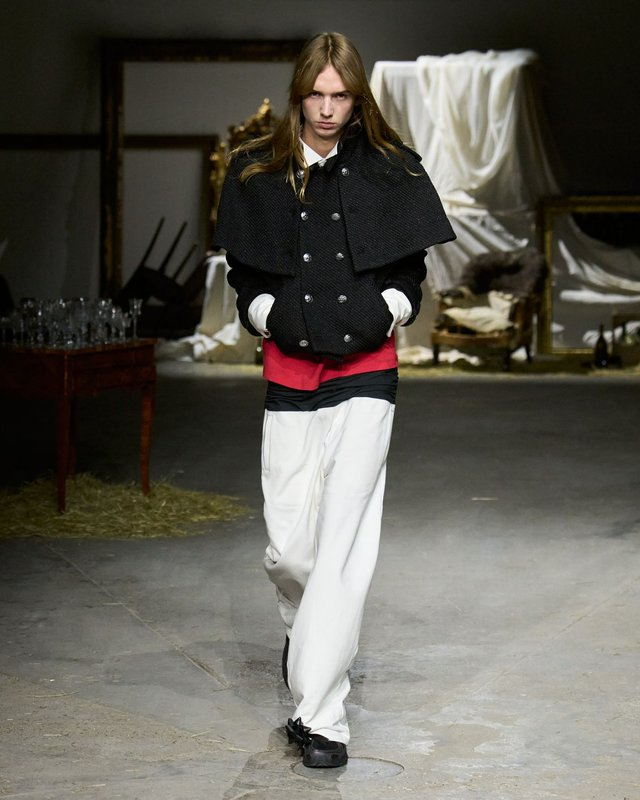
Oscar Ouyang brought playful, maybe even anarchic energy to his second runway show. He imagined a rowdy soirée unfolding in lavish country estates, with models wearing masquerade masks, surrounded by empty glasses and hay bales. Outfits felt like a wardrobe heist: military jackets, capes, and heritage tweeds borrowed from parents’ closets layered over shredded jeans, oversized trapper hats, and relaxed wool trousers. Ouyang’s strenght lies on the knitwear, with Fair Isle sweaters and turtlenecks incorporating epaulette-like shoulders and distressed details, while tailoring combined Virgin wool with LVMH-sourced llama. The cast looked effortlessly youthful, rebellious, and impeccably styled.
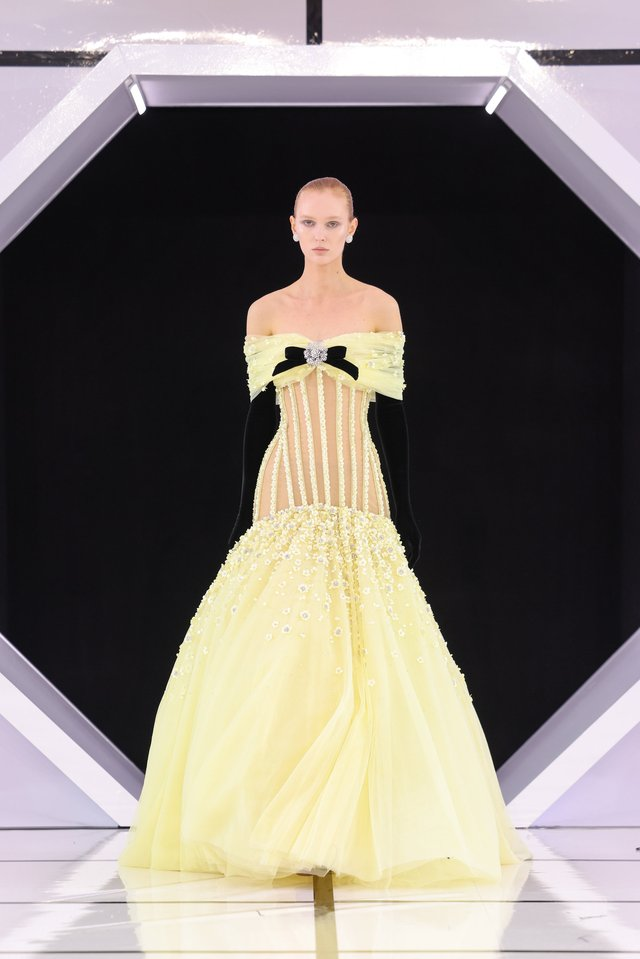
Richard Quinn’s glittering gowns arrive each season like a parade of celebration, made for weddings, galas, or any occasion that deserves something truly spectacular. This season, 44 looks moved from classic black-and-white to pops of red, fuchsia, and pastel, adorned with signature florals, from diamanté brooches to crinoline-skimming garlands, and styled by Carine Roitfeld with PVC thigh-high boots and, occasionally, gloves. Inspired by 1950s–1980s couture and Old Hollywood, his South London atelier ensures every piece can be ordered and personalised. Quinn isn’t showing for the press or the regular fashion aficionado; he’s making dresses women will wear, treasure, and pass down.
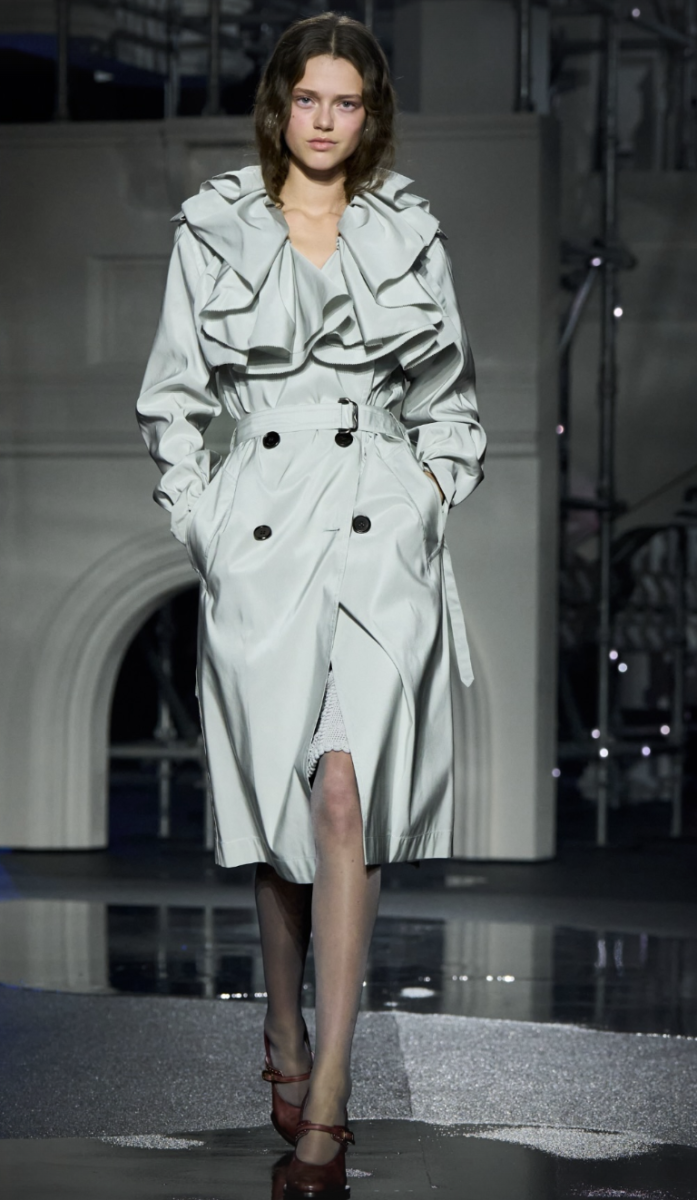
Always the big finale of LFW, Burberry this season was made for London nightlife. Under a scaffolded recreation of Tower Bridge, Daniel Lee presented a leather- and fur-heavy collection (not real fur, but emulated through shearling), with standout faille trench coats featuring ruffled necklines in ivory, teal, and midnight blue. With FKA Twigs on the soundtrack, Lee celebrated rainy city life with a day-to-night wardrobe equally ready for a premiere or for the club that reminded of the 2010s Burberry Prorsum line. There were iterations in patchwork shearling, crumpled silk, and even a leather trench with a map of London embroidered. Daniel Lee has officially convinced me: all I need is a great coat.
in HTML format, including tags, to make it appealing and easy to read for Japanese-speaking readers aged 20 to 40 interested in fashion. Organize the content with appropriate headings and subheadings (h1, h2, h3, h4, h5, h6), translating all text, including headings, into Japanese. Retain any existing
tags from
From KNWLS’ pop-up and Jawara Alleyne’s reflections on lost nightlife to Erdem’s 20th anniversary and Burberry’s city-ready trench coats, London Fashion Week AW26 was a season of personal narratives, sharp tailoring, and clothes made for real life, and after dark.
This London Fashion Week, many favourite brands returned with installations and inventive ways of presenting collections. For example, KNWLS showcased their new collection through exhibited images shot by Aidan Zamiri and launched their first pop-up store; Jawara Alleyne exhibited artworks and pieces reflecting on the loss of nightlife spaces and the impact this has on shaping culture and community; and Ewusie, one of the newer designers on the schedule, used his slot to host a talk discussing the themes of the collection and his practice, and presenting online through a look book what was one of the most exciting collections of the week.
Almost a rite of passage at the start of London Fashion Week every February is the CSM MA Fashion show, the perfect opening where stories of all kinds are given space to unfold. Highlights included Ennis Finnerty Mackay, who explored addiction through tailoring that mixed a family’s version of a New Look dress with his father’s 80s tailoring, even inventing a new textile made from discarded condoms. Benaissa Majeris, the opening collection, presented garments reflecting British working-class life and the slow erosion of “imagined futures”, and there were many other collections carrying messages as powerful as their craft.
Fashion East returned with Jacek Gleba, Mayhem, and Goyagoma. Gleba developed his poetic take on menswear, further refining his design language. Goyagoma presented an after-hours wardrobe for women, including slip dresses and a suede trench with a croc print lasered on, while Mayhem delivered a well-styled collection of mischievous treasures.
At Erdem’s 20th anniversary show, beautiful dresses abounded. The Barbour collaboration returned, and although references leaned heavily on 1950s ballgowns reminiscent of Elizabeth II or Una Vincenzo, the collection still felt effortless and easy to wear, with intricate pieces styled with jeans or patchworked textiles. It was an homage to the designer’s two decades of excellence, to becoming a force in the London scene and an example of resilience and creative force, as an independent designer who carved his space amidst the big league.
“Erdem built it from his archive — cutting it up, repurposing it, turning classics upside down and stitching them back together in an unexpected way. I applied that same philosophy to the hair,” KEVIN.MURPHY’s Pro Ambassador Eugene Souleiman told Wonderland backstage at the show, as models strutted around the runway with beautiful, lived-in and exaggerated natural looks.
Courtesy of Kevin Murphy
“The show itself was really about this idea of the imaginary conversation and thinking about all these muses from the last 20 years, cutting things up, mixing things together. And really, when we were trying to figure out the hair, which is such an important part of everything, we were kind of obsessed with the idea of every girl looking like an individual and really looking like herself,” Moralıoğlu added.
Front-row supporters included Keira Knightley, Helen Mirren, and Glenn Close, whom Erdem dressed for the BAFTAs that same night.
The Vxlley, a designer recently nominated for the LVMH Prize, presented a collection that belonged in a museum. The Spanish designer, whose name is Daniel Del Valle and who works as a florist, created a very personal show that incorporated references from his native Andalusia tiles to a look made with bread, his dad is a baker. Despite incorporating the weight of mosaic vases and ceramics that hugged the models’ bodies, the pieces seemed to remain comfortable to wear. It was a collection that took time to make and didn’t begin as a fashion project, without pressure on the designer to continue immediately, though we hope to see more from him in the future.
For Fall 2026, Toga’s Yasuko Furuta explored how materials respond to strain and how clothing can echo that resilience. Presented in a grand Bloomsbury drill hall, the runway treated tension as a design tool: airy fabrics met high-shine synthetics, traditional plaids brushed against iridescent trims, and soft knits were gathered, pinned, and reconfigured mid-silhouette. Many looks invited adjustment, with trousers shifting proportion, jackets suggesting layered illusions, and dresses spliced with denim from a Wrangler collaboration. Furuta’s hallmark hybridity, blurring womenswear and menswear, felt assured, balancing experimentation with polish and wit.
At Chopova Lowena, AW26 felt like stepping into a particularly eccentric corner of British girlhood, where Regency romance collided with golf-course rituals. Shown to one of the largest crowds at London Fashion Week so far, the collection reworked square necklines, boned bodices, and rose sleeves into the duo’s signature clash of argyles, kilts, and sporty references. Pearls met patchworked corsets, butterflies landed in beadwork, tartans and ribboned knits amplified the nostalgia. Deadstock hybrids and the playful Chopova Lowena Feelings line expanded their universe, while guests dressed head-to-toe in the brand proved once again: this is less a label, more a club.
Masha Popova is back. After three seasons away, the cult favourite of young Londoners and celebrities alike, like Charli XCX, returned with a collection titled Intimate Hours. Shown inside Charterhouse, the collection unfolded somewhere between the hyper-personal space of a girl’s bedroom and the tragic romance of Only Lovers Left Alive. It was a louche, nocturnal wardrobe: piped silk pyjamas, fuzzy robes slit high at the leg, Nosferatu collars, and spiral-stitched trenches. Fangs appeared across draped tees; floral shorts peeked from beneath bathrobe silhouettes. Denim, her signature, came sliced at the hips or doubled into warped, low-slung skirts. Sensual, slightly undone, and very cheeky.
Luke Derrick, a semi-finalist for the LVMH Prize with training at Dunhill and on Savile Row, brings that rigour into conversation with contemporary London street style. His proposition is sharp yet relaxed: tuxedo jackets, double-breasted suits, and slouchy trousers cut with precision, rendered in Japanese wool jersey, iridescent chambray, micro-corduroy, and velveteen in navies, greens, and mustard tones. From afar, the silhouettes nod to traditional British tailoring; if you look closely, they are soft, compressible, and built for movement, tailoring for the city’s best dressed, for people in constant motion.
Johanna Parv insists on ergonomics. A fitted nylon jacket and trousers opened the show, with concealed zips, lower-back storage, and engineered stretch at the cuffs. Tights layered over trousers, quilted jackets, water-repellent car coats, molten tank dresses, and bestselling base-layer hoodies reinforced her commuter-minded clarity. Streamlined silhouettes, cinched at the waist with buckle-less leather belts, proved once again that function in her hands is a form of beauty: extremely chic and sleek.
Simone Rocha delivered one of the most talked-about outings with her AW26 collection, the go-to brand for editors and cool girls because it is equal parts romantic and relatable. Drawing on Irish mythic themes and cultural imagery, Rocha balanced ethereal, delicately embellished dresses with rugged utilitarian references. Lace-trimmed pieces and ribbon accents intertwined with her Adidas Originals collaboration, from pearl-studded track jackets to embellished sneakers, softening sportswear codes with her distinct flourish. Across the runway, voluminous gowns sat alongside tailored suiting and tweedwork, each piece rich in texture and detail.
Conner Ives styled the “closet for neo-Americans”, well-dressed friends, in what he called a “family affair” both on the runway and in the front row, including Samantha Jones, aka Kim Cattrall. Inspired by the Weimar Republic and 1920s -30s hedonism in Germany, Ives presented aristocratic, party-ready garments: a black halter-neck gown featuring dramatic foraged turkey feathers, a spiral-cut dress decorated with 300 hand-painted leaves, a bridal gown made from deadstock silk organza, and a pink spaghetti-strap dress inspired by Gwyneth Paltrow’s 1999 Oscars look.
Oscar Ouyang brought playful, maybe even anarchic energy to his second runway show. He imagined a rowdy soirée unfolding in lavish country estates, with models wearing masquerade masks, surrounded by empty glasses and hay bales. Outfits felt like a wardrobe heist: military jackets, capes, and heritage tweeds borrowed from parents’ closets layered over shredded jeans, oversized trapper hats, and relaxed wool trousers. Ouyang’s strenght lies on the knitwear, with Fair Isle sweaters and turtlenecks incorporating epaulette-like shoulders and distressed details, while tailoring combined Virgin wool with LVMH-sourced llama. The cast looked effortlessly youthful, rebellious, and impeccably styled.
Richard Quinn’s glittering gowns arrive each season like a parade of celebration, made for weddings, galas, or any occasion that deserves something truly spectacular. This season, 44 looks moved from classic black-and-white to pops of red, fuchsia, and pastel, adorned with signature florals, from diamanté brooches to crinoline-skimming garlands, and styled by Carine Roitfeld with PVC thigh-high boots and, occasionally, gloves. Inspired by 1950s–1980s couture and Old Hollywood, his South London atelier ensures every piece can be ordered and personalised. Quinn isn’t showing for the press or the regular fashion aficionado; he’s making dresses women will wear, treasure, and pass down.
Always the big finale of LFW, Burberry this season was made for London nightlife. Under a scaffolded recreation of Tower Bridge, Daniel Lee presented a leather- and fur-heavy collection (not real fur, but emulated through shearling), with standout faille trench coats featuring ruffled necklines in ivory, teal, and midnight blue. With FKA Twigs on the soundtrack, Lee celebrated rainy city life with a day-to-night wardrobe equally ready for a premiere or for the club that reminded of the 2010s Burberry Prorsum line. There were iterations in patchwork shearling, crumpled silk, and even a leather trench with a map of London embroidered. Daniel Lee has officially convinced me: all I need is a great coat.
and integrate them seamlessly into the new content without adding new tags. Ensure the new content is fashion-related, written entirely in Japanese, and approximately 1500 words. Conclude with a “結論” section and a well-formatted “よくある質問” section. Avoid including an introduction or a note explaining the process.