Rewrite
25 years after their self-titled debut album spawned a digital revolution, the world’s best virtual band Gorillaz sit atop The Mountain on their ninth studio album. Inspired by their revolutionary trip to India in the wake of both their fathers passing, the record shows that, although Jamie Hewlett and Damon Albarn may be at the peak of their powers, they ain’t done climbing yet.
Once a while, in popular music, indelible change occurs. The Beatles appearing on the Ed Sullivan Show in 1964, for instance, kickstarting the ‘British invasion’ on contemporary music and sketching the outlines of what a pop band is – contours that still remain today. Bob Dylan going electric at Newport Folk Festival, Hendrix’s anti-Vietnam War rendition of “The Star-Spangled Banner” at Woodstock ‘69, Queen’s legendary Live Aid performance in ‘85. 2Pac and All Eyez On Me. The birth of Napster, the launch of iTunes and the eventual domination of Spotify. Beyoncé’s surprise-released self-titled album. Kendrick Lamar’s “Not Like Us”. The Oasis reunion tour.
Such happenstances shift the industry’s tectonic plates. Culture and perspective move forward (or backwards sometimes, depending on your outlook), and new dogmas are lit from the ashes of seminality. These turning points are what makes modern music what it is today, and what it will be in years to come.
Another of these pivotal moments came in the fleeting months of the 20th century. Two men, thirty-ish, sat in their shared West London home, licking their wounds from recent well-publicised break-ups, at somewhat of a crossroads in their respective careers. It’d been a decade of acclaim and prosperity for them, but also of disillusionment and disdain for the increasingly shallow nature of the cultural and musical movement that surrounded them. Britpop was once a symbol of playful patriotism and bohemian artistry, but was now an omen of empty vanity and banal fame-seeking.
Jamie Hewlett, the artist, illustrator and co-creator of 1988-founded anarcho-punk comic strip Tank Girl, and Damon Albarn, the frontman and songwriter of one of the country’s biggest bands Blur, watched in displeasure as MTV crashed onto their television screen. On it, a motorway of manufactured bands rolled on, revving their engines as they sat in traffic, impatiently on route to major label record deals and undeserving No.1 singles. The two men agreed that the days when being in a band meant something authentic, something cool, were in danger of a slow, 5ive-fuelled demise. There was nothing new about this music, no edge, no excitement.
From this conversation birthed the world’s greatest digital band. A four-piece conceived of imaginary animated characters who are by nature ‘manufactured’, and yet felt and feel more human than most of their real-life contemporaries. A band who, through story-telling, live performance, and digitalism, revolutionised what the word ‘band’ could even mean, gaining billions of streams and GRAMMY and BRIT Awards in the process. A band who, while most popular music looked to the past for influence, pushed boundaries to model a new era, while addressing and foreshadowing socio-political and environmental issues of the past, present, and future.
That band is, of course, Gorillaz. Who, in releasing their ninth album, The Mountain, on 27th February 2026, a sprawling, star-studded medley of grief-tinged catharsis, celebration of community, homage to Indian music, and autocracy-imbued warning shots, have reached an apex. A physical and metaphorical summit. The finishing line?
They both groan.
“We’re in complete denial about our age,” says 57-year-old Damon with a knowing smile. “I don’t mind my age,” Jamie replies, who’s 10 days younger than his friend of 30 plus years. “But because we lost our fathers, we’ve moved up a level in the grand computer game of life. We are the patriarchs of the family now. Which is a bit of a shock; who’s supposed to be in charge?”
The first month of 2026 trundles towards a close as I’m sitting in the kitchen of Studio 13, Damon Albarn’s recording space in West London, drinking a rather delicious cup of coffee made from the Blur frontman’s recently acquired machine. I had arrived 15 minutes early to the several-storied building full of confusingly long corridors and endless doors (finding the toilet is an odyssey), and was escorted to the top floor, to Damon’s personal studio, to wait until the two men were primed for our conversation. I ran into Jamie on my way up. “I need to do 100 squat thrusts before the interview,” he says after we shake hands. “Me too, actually,” I reply.
Damon’s utopian penthouse is enough to make a musician weak at the knees. Being up there alone feels almost naughty, like waiting for the school headmaster, only the Principal in question is one of Britain’s most important songwriters of his generation. I perch, rather than lounge, on the edge of a bright red couch, frantically stealing glances around the room. There’s a library of instruments and trinkets – from various acoustic and electric guitars, keyboards, synths, modulators, and global musical tools I could only hazard a guess at naming. And then there’s the books themselves: too many to fully take in, from Yuval Noah Harari’s chronicle of people, Sapiens: A Brief History of Humankind to The New Penguin Book of English Folk Songs from 2012. And there’s a hammock on the balcony outside. I wonder who has laid on it.
“Pick away!” Jamie exclaims 10 minutes later, as I’m properly introduced to the pair, and I assure them of the privilege to unravel their minds for a short while. “Well, what’s left of them,” Damon replies.
“You have to understand that we’ve done a lot of interviews so far and there’s a fear of repeating ourselves,” Jamie continues between puffs on a rollie. Both he and his partner in crime are dressed down, hat on and hood up. Jamie is more whimsical while Damon feels world-weary; both are wise and full of humour. “Obviously there are themes that need to be discussed, questions that need to be asked, so we attempt to answer slightly differently.” In the two and a half decade tenure of Gorillaz, press has, not exclusively, but in large, been handled by the band’s four digital avatar members: the endearing frontman 2D, tyrannical bassist Murdoc Niccals, enigmatic guitarist Noodle, and tormented drummer, Russel Hobbs. But now, for this album, The Mountain, arguably the duo’s most personal as Gorillaz inspired by a revelatory trip to India in the wake of the passing of both of their fathers, the two men step out from behind the characters to face the curiosity of over-eager journalists.
At least they are well-versed in the activity – Damon especially. “I’ve been doing interviews since 1990,” he reminds me. “Which is before you were born, I’m sure.”
As we meet in the run up to The Mountain’s release, both men are keeping busy. Damon no doubt deep in various musical endeavours, including contributions to the forthcoming James Ford-produced War Child Records compilation album, Help(2), alongside Fontaines D.C. frontman Grian Chatten, Kae Tempest, Olivia Rodrigo, Geese’s Cameron Winter, and many more. He’s also working on a project that’s in some way AI related, but he can’t talk about it right now. “I’ve written a song for it,” is all he divulges, adding, “and the chorus line is, ‘You may not recognise here when you get back.’ That’s it – don’t expect to understand what you’re playing with.”
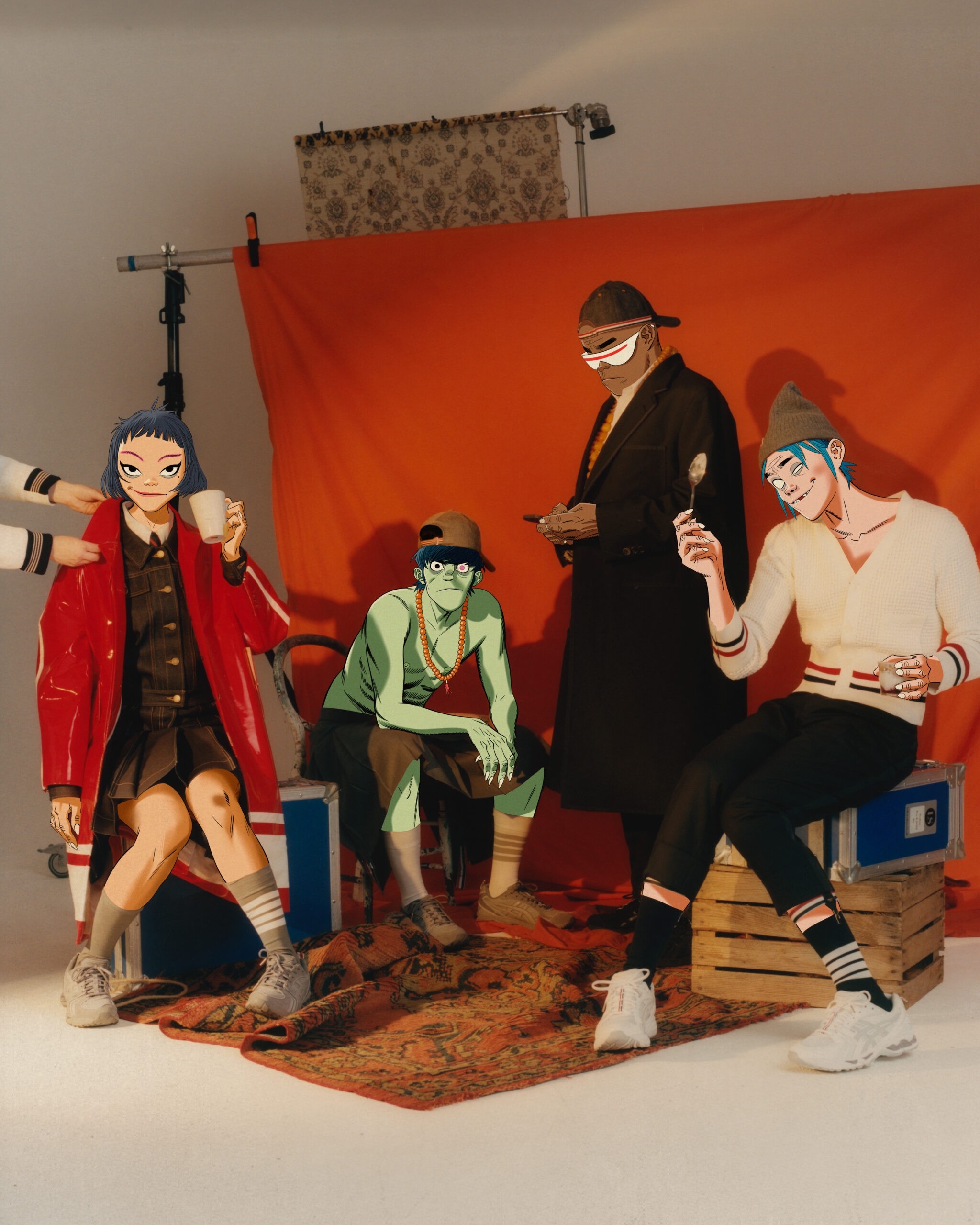
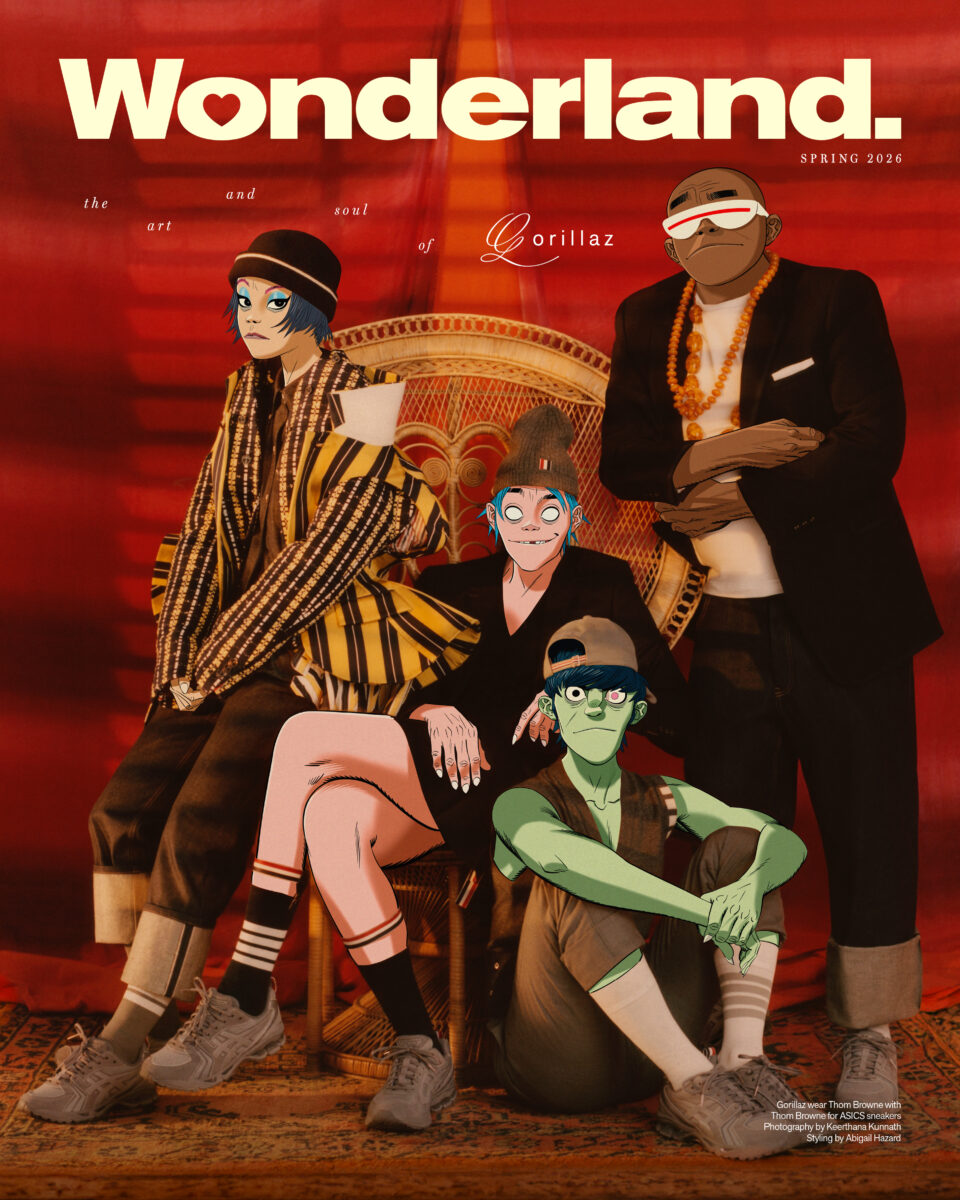
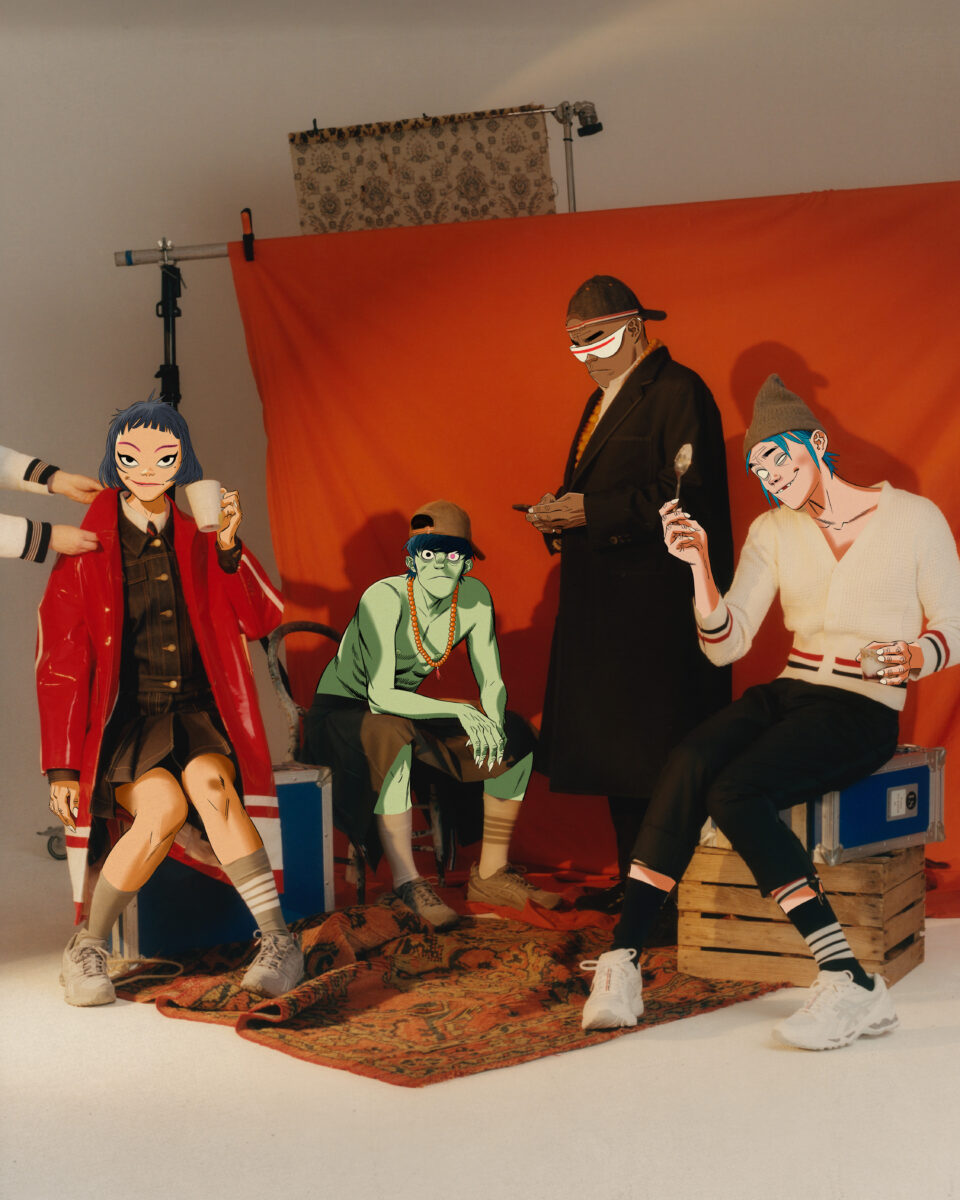
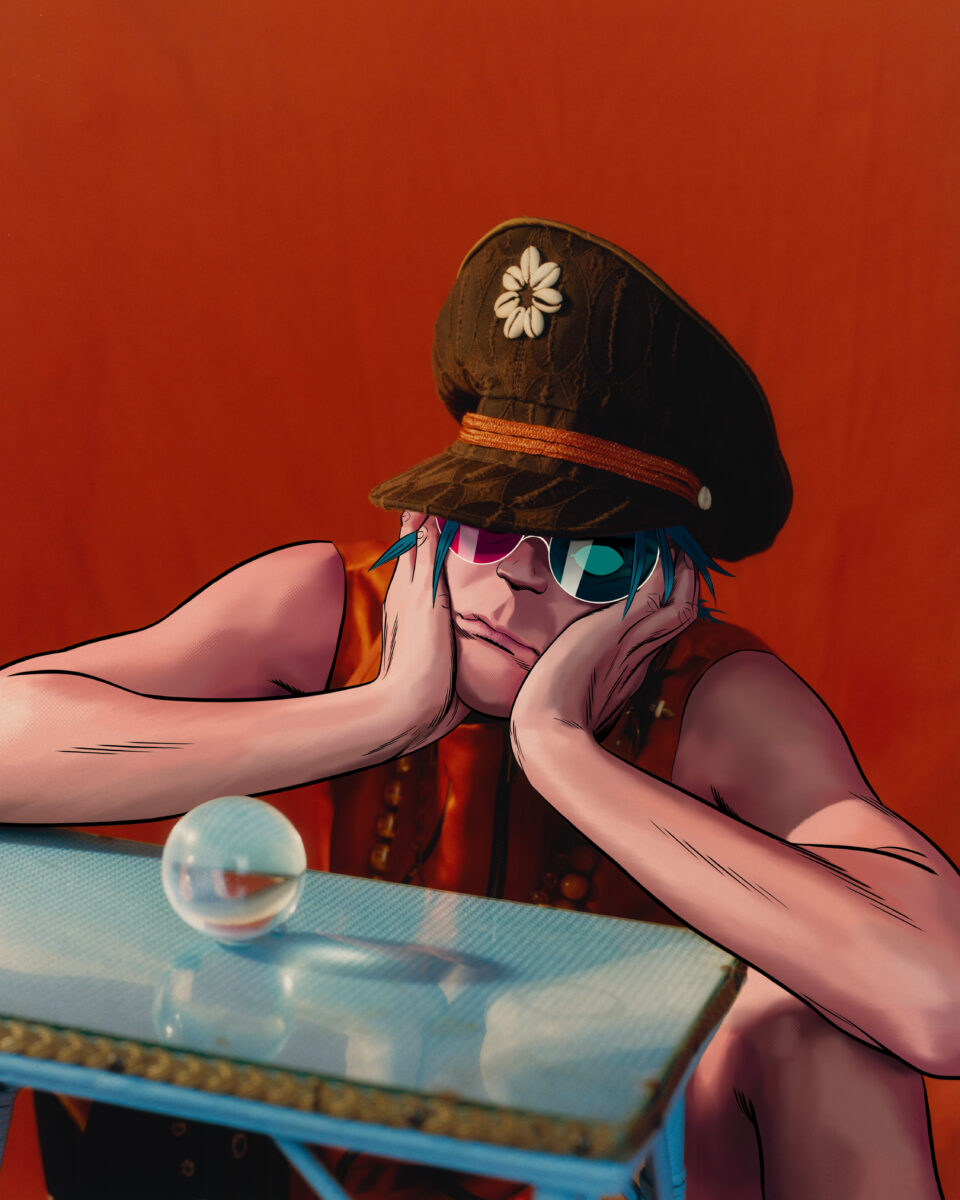
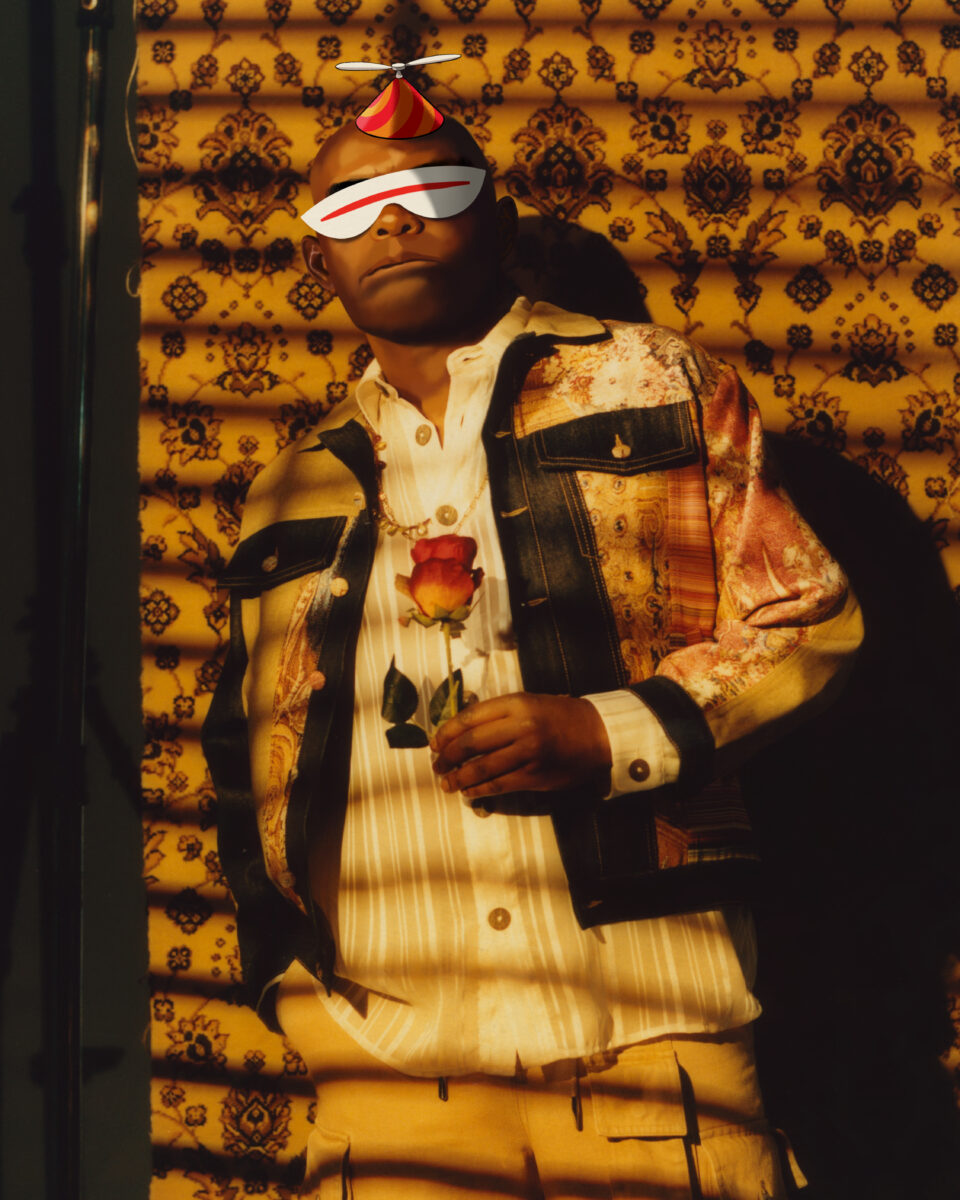
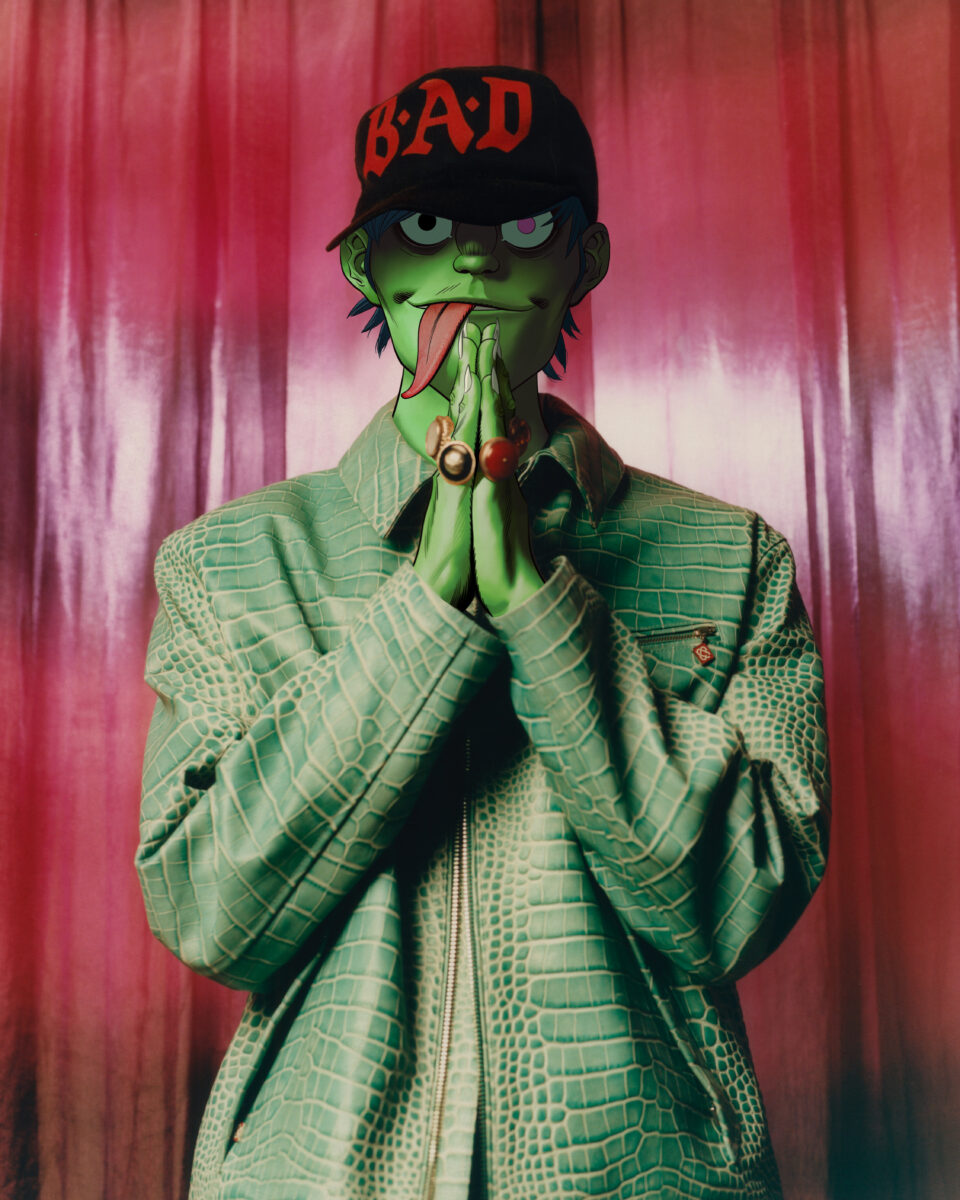
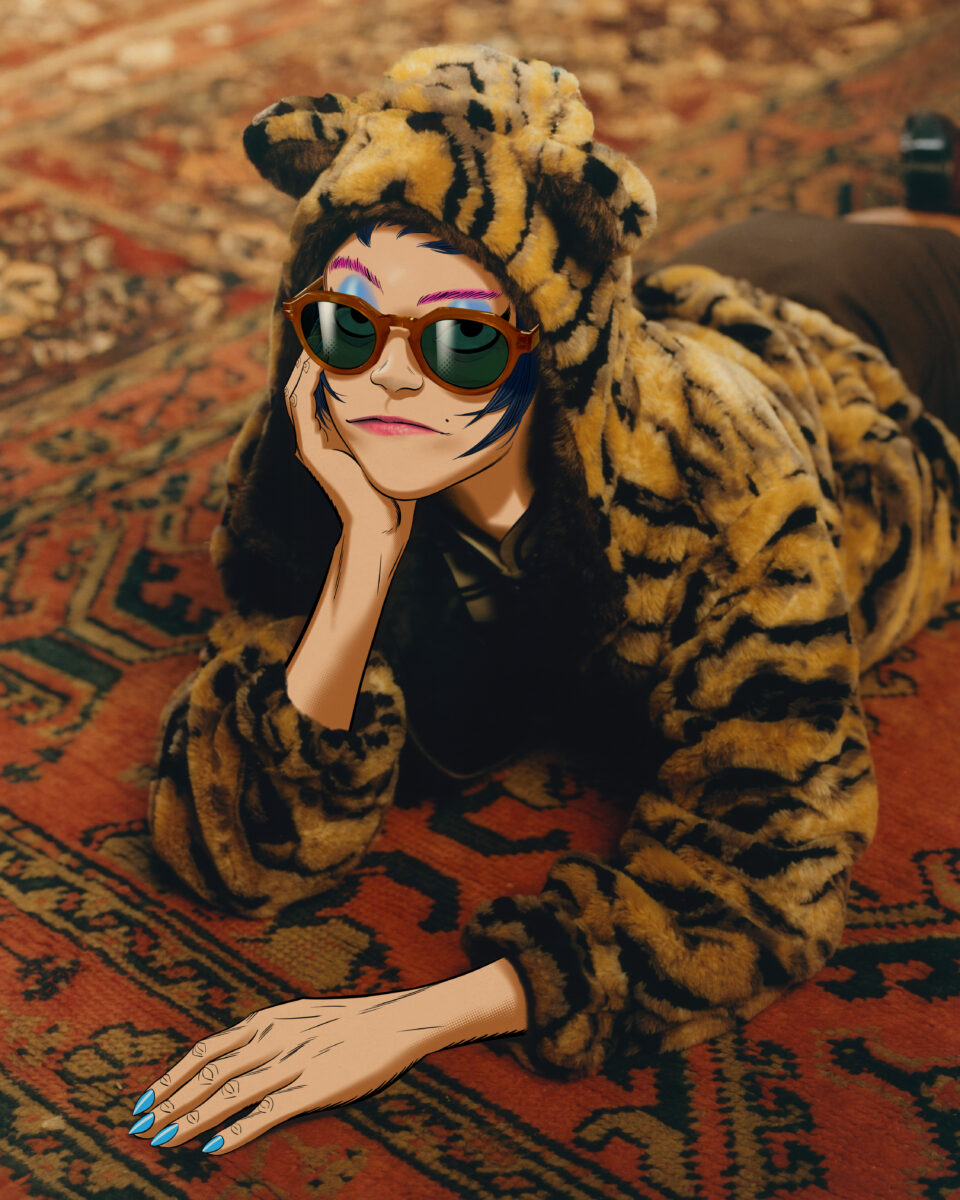
“We’re at the beginning of all of my favourite science fiction movies from the ‘90s,” Jamie chimes in on the subject, chuckling. He’s been spending his January working on the artwork for Gorillaz’s Wonderland cover story. Watching the process come to life has been a marvel; from human models draped into Thom Browne, to Jamie’s illustrations sketched and coloured atop the images, bringing the four characters to life through his art and extending the band’s animated lineage that stretches back for over 25 years.
Like Damon, Jamie’s recent practice has been openly combative against the tidal wave of artificial intelligence. For The Mountain, he stripped back his process, focusing on simple line drawings for the album cover and the index of further imagery, which will feature in a book released alongside the record. “I’m not getting on a soapbox and preaching about it,” he quips. “I’m just attempting to show how beautiful something can be when it’s made by humans.”
Emblematic of this is the hand-animated eight minute short film that also accompanies the album’s unveiling. “We looked back at how Disney made Jungle Book and 101 Dalmatians,” Jamie explains. “The techniques that they used, even down to things like putting Vaseline on the lens of the camera to get water effects, and using rostrum cameras, where you have a painting and the camera just moves across the painting and then zooms in. All that really old-fashioned style. The animation company I’m working with called The Line, when I bought them the idea, they got so excited. All the animators were like, ‘Ah, yes, we don’t do that anymore, how exciting.’”
It’s fitting that the two men who made daring and disruptive in-roads through the digitialisation of music are now among the vanguard fighting back against AI’s imminent takeover. But their methods were never for material gain or searching for a shortcut – more to prove a point, and to be a vehicle of truth beyond physical possibility.
Gorillaz’ 2001 debut self-titled album came at a pinnacle time for the music industry, as well as both men’s careers. Backed by the ingenuity and uniqueness of Jamie’s animated characters and their slowly unraveling narrative, Damon was able to shapeshift away from his reputation as Blur’s Anglo-laddish frontman (a repute he’d already somewhat escaped from thanks to 13, his band’s emotional and stylish Britpop-defying 1999 record), and explore an amalgam of unexplored sonic terrain, from trip to hip-hop and dub. “Clint Eastwood”, the album’s breakout single featuring Del the Funky Homosapien, sits on over 1.1 billion streams on Spotify alone, showcasing the band’s artistic and commercial virtue alike.
Many consider the 2005 follow-up, Demon Days, as the Gorillaz quintessential record. It certainly best shows the metamorphosis from invigorating side-project to influential artistic juggernaut. It brought us modern classics like “Feel Good Inc.” and “DARE”, and kick-started the band’s limitless collaborative essence, with contributors ranging from Shaun Ryder to Bootie Brown and De Le Soul. It also depicted a world in transit – the Twin Towers had fallen, war was raging in the Middle East, the internet was becoming unavoidable. The 21st century was beginning to show itself, and Gorillaz saw it unfolding lucidly. They envisioned a “world in a state of night,” Damon once described. “We could see the world changing dramatically and we had no idea what was going to happen,” Jamie says. “It’s 25 years later, but Demon Days is more relevant now than when it first came out.”
Throughout their catalogue, Gorillaz have presaged the adversities of the near future. Take their third album, early 2010’s Plastic Beach, a conceptual and complex depiction of the synthetic world around us, a caution to environmental fears that at the time were met by muted worry, but have become progressively pertinent in the last 16 years. Despite the frightening themes, the LP is among the band’s most musically decadent, ambitious, and radio friendly – from the serene sorrow of “On Melancholy Hill” to the anthemic idiosyncrasy of “Rhinestone Eyes”. There’s a boat load of contributors, ranging from Kano to Snoop Dogg and Lou Reed, and the bolstering of a huge ensuing world tour, Escape to Plastic Beach. But no amount of grandiosity or achievement could hide the dread that lay central to the work – and the story now seems more forecast than fiction. “You have to accept that, when you put things out, it’s not going to be understood as well as it will be in the future,” Damon reflects. “And you just have to take that knock and hope that you’ll be around long enough to appreciate it when people do appreciate it.”
“And go, ‘Hey, I told you so! Wankers!’” Jamie appends.
The Fall followed on Christmas Day that same year, a quieter, more meditative album that Damon created on an iPad, before a semi-public falling out between the two men meant that Gorillaz appeared to be, for years, a thing of the past. Eventually though, in 2017, they returned with Humanz, a comeback work defined as “the party for the end of the world,” with the likes of Kali Uchis, Popcaan, and Vince Staples joining in the apocalyptic festivities.
The Now Now came the following year, which held some of the simplest, most polished pop songs of its maker’s career – although there was still room for a Snoop Dogg feature. Then the COVID-era Song Machine, Season One: Strange Timez, their most uniquely collaborative record (from Schoolboy Q to Skepta, each song holds at least one feature) that’s presented less like an album, more a series of short-form episodes. Then February 2023’s Cracker Island, an album that, with help from Bad Bunny, Stevie Nicks, Thundercat and co, shines like a collectors item of Damon’s many sonic shades.
Across all of these musical phases, and with the personal joy, pain, and growth in Damon and Jamie’s lives, 2D, Murdoc, Noodle and Russel have mirrored their makers and acted as vessels of entertainment and expression. From their origins at Kong Headquarters to Murdoc’s multiple spells in prison, to discovering the landfill-made island of Plastic Beach to joining a cult, and most recently escaping to Mumbai when the Los Angeles Police Department issued a warrant – the story of the Gorillaz has been brought to life through music videos, short films, and various multi-media formats. Watching the four anti-heroes evolve has been a thrilling and ineffable experience that takes the pioneering band far beyond the constructs of reality or a singular artistic construct. Yet they feel so grounded in humanity. So now, over 25 years old, what do they mean to their creator? “They’re an excuse for us to do what the fuck we want to do,” Jamie smirks. “Behind them, we can do anything we want to do. We can work with anybody we want to work with and talk about any subject we want to talk about.”
While the digital characters hide in India, the two humans travelled to the same nation to feel seen. “We just love going out and going on adventures more than anything, don’t we?” Damon asks his old friend and creative partner when talk turns to the pair’s significant trip to Asia for the making of The Mountain. “We’ve been on a few, haven’t we,” Jamie smiles back.
They reminisce on trips they’ve shared, always “defining moments” in their lives. China, for one. “It was that amazing moment when China thought they wanted to open up to the West,” Damon remembers. “The door went ajar and we scurried in and then we left and they shut again,” Jamie adds mischievously. “We had a police escort which we thought was because we were important but then we realised that they were just keeping an eye on us.”
India is the latest of these worldly jaunts. Jamie had been twice prior: his first time was “to the south in 2017 to do a panchakarma [a detoxification program]. I did lots of yoga and flushed my body out and had an MOT. Came back feeling a million dollars and then within a week of being back in London I was back on my bad habits.” His second time was when his mother-in-law suffered a stroke which she sadly would never recover from. He spent weeks in Jaipur, the capital of Rajasthan in the country’s north-west. A time of grief and sadness, but also seeing something vital and galvanising in the city.
Alongside Jamie’s mother-in-law, both his and Damon’s fathers also recently died – 10 days apart, an astounding coincidence given the two sons were born 10 days apart. “I guess it means that when Damon shuffles off this mortal coil, I’ve got 10 days to get my shit together,” the artist jokes. And so, under the shadow of loss, with Jamie’s eye-opening experience in Jaipur and Damon (whose parents were “committed hippies”) an inquisitive globetrotter who saw natural synergy with philosophical aspects of Indian culture, the friends decided to take a voyage to India together, to heal, discover, and write a new album.
Death, and the act of dealing with losing the people closest to you, is stitched into The Mountain’s mosaic. ‘You know the hardest thing is to say goodbye to someone you love,’ croons Damon on the hook to “Orange County”, the gorgeous mid track-list ballad that is perhaps the most vivid lens on his melancholy. “We were both dealing with unfortunate things. Dad things,” he says, quietly. “Just carrying them with us trying to work it through. When you make music in that place, it’s almost impossible not to show it. If it doesn’t, there’s something wrong with you.”
Yet sonically and tonally, The Mountain has some of the most uplifting work in the Gorillaz catalogue, with luscious arrangements and bright, affecting cadences that often burst into euphoric passages of melodious relief. There is an underlying stream of hope coursing through the work, stemming from the search “for a different version of what happens when you die, opposed to the one that we’ve grown up to believe in,” as Jamie puts it; something they found in India. “[The way we look at death is] so dark in this country,” Damon agrees. “It’s awful. I’ve been to too many fucking cemeteries off ring roads on grey days. I’ve had enough of it, you know. Just an hour in Varanasi and your faith in humanity is restored.”
They took more than culture and attitudes towards death from their trip, too. Like The Beatles’s Revolver, in instrumental choices, song structuring, and overarching timbre, Indian influence lies at the crux of The Mountain. That’s partially thanks to Damon’s life-long fascination with Indian classical music, and also due to the collaborators they worked with from the country. Amaan and Ayaan Ali Bangash, the brotherly duo from Delhi, play the stringed sarod on multiple tracks. Ajay Prasanna, the renowned flautist, pops up several times. And Anoushka Shankar, the daughter of Indian musical icon Ravi Shankar and a distinguished sitar player in her own right, is a glowing presence. Her sitar floats through the album with an air of omniscience, drifting in and out at all the right moments – a gentle respite from the record’s emotional density. “Oh, she’s so intuitive,” Damon lauds.
The standout of the Indian contributions though, comes from Asha Bhosle – the 92-year-old Queen of Bollywood. “The very idea that we could meet her was overwhelming really,” Damon says. “We went to her house because of her granddaughter actually,” Jamie proceeds. “We spent the afternoon with her and it was really cool. Then we went back, took recording equipment with us and said let’s try something. She hadn’t said yes at that point [to appearing on the album] but she kind of got into it. Damon worked with her in her wonderful apartment in Mumbai and she started to sing… and then he came back out and said, ‘We’ve got her on tape!’” And they had; on the breathtaking “Shadowy Light”, her words encapsulate the album beautifully: ‘Lower my boat into the deep end / And take me to the other side / Where there’s no joy or sorrow / No victory or loss / Where the universe becomes one with me.’
Aside from the Indian collaborators, there is, as always with a Gorillaz LP, a coterie of global guests who sing across five languages (Arabic, English, Hindi, Spanish, and Yoruba) on The Mountain. The age range is miraculous; from 92-year-old Asha to 23-year-old Argentine rap wonderkid Trueno – who Damon thinks “was still at school when I met him” – there’s 70 years worth of generational and geographical perspective. There’s newcomers to the Gorillazverse, like The Roots’s MC Black Thought, folk singer-songwriter Kara Jackson, and IDLES frontman Joe Talbot. And also – poetically given the theme and purpose of the album – an array of artists who feature from beyond the grave, such as The Fall’s iconic lead singer Mark E. Smith, Detroit hip-hop goat Proof, soul great Bobby Womack, and Nigerian drummer Tony Allen. “It’s everything,” Damon says on the breadth of his collaborators. “It’s about community.”
The Mountain, released via Kong, the Gorillaz own newly formed label, is available in an assortment of physical manifestations, such as on vinyl, tape and CD. And it’s the type of record that can only be enjoyed one way – from front to back, like its makers designed it to be. It’s a work that takes you on a transient journey through life and death, wary of the dangers of the modern world, (“There’s definitely some rather unpleasant Gods on the mountain,” Damon comments on the underlying motif of autocracy), a spiritual and cinematic quest to enlightenment and understanding.
It’s an album about death, made in hopes of us all better dealing with our impending doom. Did it work? “I suppose when you’ve stared it in the face, whether it’s your own or someone else’s, you’re slightly less [scared],” Damon says. “And it’s death isn’t it? It’s death. There’s nothing wrong with imagining what comes after. I think it’s been something that’s preoccupied man since he’s become able to employ an imagination. It’s okay. It’s inevitable and okay.”
“I think you should spend your time focusing on being here,” Jamie muses. ”Well, this [gestures to his body] gets put in the ground. I won’t be needing this, I’m tired of this. But this [points to his heart] I don’t know, I’m still ruminating on that one. But I do feel better about [death] since our adventures in India and making this record. I do feel less stress in my stomach about it. So I don’t know. I guess that’s a good thing.”
The album’s stunning cover art sees the four Gorillaz members standing atop a mountain high into the clouds, facing away, surveying the endlessness of the sky. There’s a lot to take from the image – most obviously, that they are at the summit. So what does that represent in the context of their restlessly innovative creators? They have, in nine albums and across two and a half decades, rewritten the rule book on what a band is, trailblazing artistry for the digital age, while pulling together a web of collaborators that is peerless beyond the point of comparison. It’s a worthy apogee.
But for Jamie and Damon, there is no beginning nor end – only new ideas, challenges, and defiance.
“When you’ve been doing it for as long as I have, you always want to try to make it feel like somewhere new, like you have a new destination,” Damon explains. “But the truth of the matter is, you know what it’s like to play stadiums, you know what it’s like to play little clubs. You know what it’s like to get fucked up, you know what it’s like to fight your demons. You know all of this stuff. So your narratives have to change a bit. It can become so fettered by money and vanity. All of those things. It’s like, you’ve got the opportunity just to explore your creativity in life. What is all of this?”
That seems like the greatest privilege of all, no? Dedicating one’s life to creativity?
“Of course it is. That’s it. There’s nothing else. That’s why I get up every day. That’s why I’ve built my entire life around being able to be in nice environments and do my work. Because I love it. From time to time, people who I work with, you can see that they’re losing sight of that. And once you lose sight of that, nothing’s good enough. You’re not happy with the money you’re getting paid, you’re not happy with your environment, with yourself, with anything. Because you’ve lost sight of why you were there in the first place.”
“And then you only want blue M&Ms,” Jamie chimes in. “And that’s it. You’ve got to keep your ego in check. Because we all have one, and that kind of level of celebrity, 99% of people can’t control that. My biggest joy is sitting down and drawing pictures every day. I couldn’t be fucking happier. I don’t need any of the other bullshit. And working with him means that we get to do that.”
I tell them I couldn’t agree more. As someone who profiles famous people for a living – or people looking for fame, at least – it’s refreshing, revitalising even, to hear two people at the peak of their respective crafts still carry an indisputable devotion for it.
Damon Albarn gives half a smile in acknowledgement. “You know, there was a point in ‘96 or ‘97 when I could have gone and really pursued fame. And I did the opposite. I pursued creativity. And I know people who have just pursued fame since then. And they are considerably more famous than I am now. But at least I can still get on the tube. That’s fucking brilliant when you want to travel across London.”
We all laugh. “And that’s what it all boils down to,” Jamie Hewlett finishes with a buoyant grin at his best friend. “Still being able to go out and buy a pint of milk.”
Gorillaz’ new album The Mountain is out now. Pre-order Wonderland’s Spring 26 issue here.
Photography by Keerthana Kunnath
Styling by Abigail Hazard
Words by Ben Tibbits
Set Design by Kate Sutton at Maison Mardi Mgmt
Lighting by Blair Gauld
Digitech Emanuele Moi
Fashion Interns Scarlett Milroy Jiayue Jenny Li
Set Design Assistant Roman Snow
Special Thanks to Fotis Rimer, Sherin Lova at Body London, Michael Magumbe, Joe Joden
in HTML format, including tags, to make it appealing and easy to read for Japanese-speaking readers aged 20 to 40 interested in fashion. Organize the content with appropriate headings and subheadings (h1, h2, h3, h4, h5, h6), translating all text, including headings, into Japanese. Retain any existing
tags from
25 years after their self-titled debut album spawned a digital revolution, the world’s best virtual band Gorillaz sit atop The Mountain on their ninth studio album. Inspired by their revolutionary trip to India in the wake of both their fathers passing, the record shows that, although Jamie Hewlett and Damon Albarn may be at the peak of their powers, they ain’t done climbing yet.
Once a while, in popular music, indelible change occurs. The Beatles appearing on the Ed Sullivan Show in 1964, for instance, kickstarting the ‘British invasion’ on contemporary music and sketching the outlines of what a pop band is – contours that still remain today. Bob Dylan going electric at Newport Folk Festival, Hendrix’s anti-Vietnam War rendition of “The Star-Spangled Banner” at Woodstock ‘69, Queen’s legendary Live Aid performance in ‘85. 2Pac and All Eyez On Me. The birth of Napster, the launch of iTunes and the eventual domination of Spotify. Beyoncé’s surprise-released self-titled album. Kendrick Lamar’s “Not Like Us”. The Oasis reunion tour.
Such happenstances shift the industry’s tectonic plates. Culture and perspective move forward (or backwards sometimes, depending on your outlook), and new dogmas are lit from the ashes of seminality. These turning points are what makes modern music what it is today, and what it will be in years to come.
Another of these pivotal moments came in the fleeting months of the 20th century. Two men, thirty-ish, sat in their shared West London home, licking their wounds from recent well-publicised break-ups, at somewhat of a crossroads in their respective careers. It’d been a decade of acclaim and prosperity for them, but also of disillusionment and disdain for the increasingly shallow nature of the cultural and musical movement that surrounded them. Britpop was once a symbol of playful patriotism and bohemian artistry, but was now an omen of empty vanity and banal fame-seeking.
Jamie Hewlett, the artist, illustrator and co-creator of 1988-founded anarcho-punk comic strip Tank Girl, and Damon Albarn, the frontman and songwriter of one of the country’s biggest bands Blur, watched in displeasure as MTV crashed onto their television screen. On it, a motorway of manufactured bands rolled on, revving their engines as they sat in traffic, impatiently on route to major label record deals and undeserving No.1 singles. The two men agreed that the days when being in a band meant something authentic, something cool, were in danger of a slow, 5ive-fuelled demise. There was nothing new about this music, no edge, no excitement.
From this conversation birthed the world’s greatest digital band. A four-piece conceived of imaginary animated characters who are by nature ‘manufactured’, and yet felt and feel more human than most of their real-life contemporaries. A band who, through story-telling, live performance, and digitalism, revolutionised what the word ‘band’ could even mean, gaining billions of streams and GRAMMY and BRIT Awards in the process. A band who, while most popular music looked to the past for influence, pushed boundaries to model a new era, while addressing and foreshadowing socio-political and environmental issues of the past, present, and future.
That band is, of course, Gorillaz. Who, in releasing their ninth album, The Mountain, on 27th February 2026, a sprawling, star-studded medley of grief-tinged catharsis, celebration of community, homage to Indian music, and autocracy-imbued warning shots, have reached an apex. A physical and metaphorical summit. The finishing line?
They both groan.
“We’re in complete denial about our age,” says 57-year-old Damon with a knowing smile. “I don’t mind my age,” Jamie replies, who’s 10 days younger than his friend of 30 plus years. “But because we lost our fathers, we’ve moved up a level in the grand computer game of life. We are the patriarchs of the family now. Which is a bit of a shock; who’s supposed to be in charge?”
The first month of 2026 trundles towards a close as I’m sitting in the kitchen of Studio 13, Damon Albarn’s recording space in West London, drinking a rather delicious cup of coffee made from the Blur frontman’s recently acquired machine. I had arrived 15 minutes early to the several-storied building full of confusingly long corridors and endless doors (finding the toilet is an odyssey), and was escorted to the top floor, to Damon’s personal studio, to wait until the two men were primed for our conversation. I ran into Jamie on my way up. “I need to do 100 squat thrusts before the interview,” he says after we shake hands. “Me too, actually,” I reply.
Damon’s utopian penthouse is enough to make a musician weak at the knees. Being up there alone feels almost naughty, like waiting for the school headmaster, only the Principal in question is one of Britain’s most important songwriters of his generation. I perch, rather than lounge, on the edge of a bright red couch, frantically stealing glances around the room. There’s a library of instruments and trinkets – from various acoustic and electric guitars, keyboards, synths, modulators, and global musical tools I could only hazard a guess at naming. And then there’s the books themselves: too many to fully take in, from Yuval Noah Harari’s chronicle of people, Sapiens: A Brief History of Humankind to The New Penguin Book of English Folk Songs from 2012. And there’s a hammock on the balcony outside. I wonder who has laid on it.
“Pick away!” Jamie exclaims 10 minutes later, as I’m properly introduced to the pair, and I assure them of the privilege to unravel their minds for a short while. “Well, what’s left of them,” Damon replies.
“You have to understand that we’ve done a lot of interviews so far and there’s a fear of repeating ourselves,” Jamie continues between puffs on a rollie. Both he and his partner in crime are dressed down, hat on and hood up. Jamie is more whimsical while Damon feels world-weary; both are wise and full of humour. “Obviously there are themes that need to be discussed, questions that need to be asked, so we attempt to answer slightly differently.” In the two and a half decade tenure of Gorillaz, press has, not exclusively, but in large, been handled by the band’s four digital avatar members: the endearing frontman 2D, tyrannical bassist Murdoc Niccals, enigmatic guitarist Noodle, and tormented drummer, Russel Hobbs. But now, for this album, The Mountain, arguably the duo’s most personal as Gorillaz inspired by a revelatory trip to India in the wake of the passing of both of their fathers, the two men step out from behind the characters to face the curiosity of over-eager journalists.
At least they are well-versed in the activity – Damon especially. “I’ve been doing interviews since 1990,” he reminds me. “Which is before you were born, I’m sure.”
As we meet in the run up to The Mountain’s release, both men are keeping busy. Damon no doubt deep in various musical endeavours, including contributions to the forthcoming James Ford-produced War Child Records compilation album, Help(2), alongside Fontaines D.C. frontman Grian Chatten, Kae Tempest, Olivia Rodrigo, Geese’s Cameron Winter, and many more. He’s also working on a project that’s in some way AI related, but he can’t talk about it right now. “I’ve written a song for it,” is all he divulges, adding, “and the chorus line is, ‘You may not recognise here when you get back.’ That’s it – don’t expect to understand what you’re playing with.”
“We’re at the beginning of all of my favourite science fiction movies from the ‘90s,” Jamie chimes in on the subject, chuckling. He’s been spending his January working on the artwork for Gorillaz’s Wonderland cover story. Watching the process come to life has been a marvel; from human models draped into Thom Browne, to Jamie’s illustrations sketched and coloured atop the images, bringing the four characters to life through his art and extending the band’s animated lineage that stretches back for over 25 years.
Like Damon, Jamie’s recent practice has been openly combative against the tidal wave of artificial intelligence. For The Mountain, he stripped back his process, focusing on simple line drawings for the album cover and the index of further imagery, which will feature in a book released alongside the record. “I’m not getting on a soapbox and preaching about it,” he quips. “I’m just attempting to show how beautiful something can be when it’s made by humans.”
Emblematic of this is the hand-animated eight minute short film that also accompanies the album’s unveiling. “We looked back at how Disney made Jungle Book and 101 Dalmatians,” Jamie explains. “The techniques that they used, even down to things like putting Vaseline on the lens of the camera to get water effects, and using rostrum cameras, where you have a painting and the camera just moves across the painting and then zooms in. All that really old-fashioned style. The animation company I’m working with called The Line, when I bought them the idea, they got so excited. All the animators were like, ‘Ah, yes, we don’t do that anymore, how exciting.’”
It’s fitting that the two men who made daring and disruptive in-roads through the digitialisation of music are now among the vanguard fighting back against AI’s imminent takeover. But their methods were never for material gain or searching for a shortcut – more to prove a point, and to be a vehicle of truth beyond physical possibility.
Gorillaz’ 2001 debut self-titled album came at a pinnacle time for the music industry, as well as both men’s careers. Backed by the ingenuity and uniqueness of Jamie’s animated characters and their slowly unraveling narrative, Damon was able to shapeshift away from his reputation as Blur’s Anglo-laddish frontman (a repute he’d already somewhat escaped from thanks to 13, his band’s emotional and stylish Britpop-defying 1999 record), and explore an amalgam of unexplored sonic terrain, from trip to hip-hop and dub. “Clint Eastwood”, the album’s breakout single featuring Del the Funky Homosapien, sits on over 1.1 billion streams on Spotify alone, showcasing the band’s artistic and commercial virtue alike.
Many consider the 2005 follow-up, Demon Days, as the Gorillaz quintessential record. It certainly best shows the metamorphosis from invigorating side-project to influential artistic juggernaut. It brought us modern classics like “Feel Good Inc.” and “DARE”, and kick-started the band’s limitless collaborative essence, with contributors ranging from Shaun Ryder to Bootie Brown and De Le Soul. It also depicted a world in transit – the Twin Towers had fallen, war was raging in the Middle East, the internet was becoming unavoidable. The 21st century was beginning to show itself, and Gorillaz saw it unfolding lucidly. They envisioned a “world in a state of night,” Damon once described. “We could see the world changing dramatically and we had no idea what was going to happen,” Jamie says. “It’s 25 years later, but Demon Days is more relevant now than when it first came out.”
Throughout their catalogue, Gorillaz have presaged the adversities of the near future. Take their third album, early 2010’s Plastic Beach, a conceptual and complex depiction of the synthetic world around us, a caution to environmental fears that at the time were met by muted worry, but have become progressively pertinent in the last 16 years. Despite the frightening themes, the LP is among the band’s most musically decadent, ambitious, and radio friendly – from the serene sorrow of “On Melancholy Hill” to the anthemic idiosyncrasy of “Rhinestone Eyes”. There’s a boat load of contributors, ranging from Kano to Snoop Dogg and Lou Reed, and the bolstering of a huge ensuing world tour, Escape to Plastic Beach. But no amount of grandiosity or achievement could hide the dread that lay central to the work – and the story now seems more forecast than fiction. “You have to accept that, when you put things out, it’s not going to be understood as well as it will be in the future,” Damon reflects. “And you just have to take that knock and hope that you’ll be around long enough to appreciate it when people do appreciate it.”
“And go, ‘Hey, I told you so! Wankers!’” Jamie appends.
The Fall followed on Christmas Day that same year, a quieter, more meditative album that Damon created on an iPad, before a semi-public falling out between the two men meant that Gorillaz appeared to be, for years, a thing of the past. Eventually though, in 2017, they returned with Humanz, a comeback work defined as “the party for the end of the world,” with the likes of Kali Uchis, Popcaan, and Vince Staples joining in the apocalyptic festivities.
The Now Now came the following year, which held some of the simplest, most polished pop songs of its maker’s career – although there was still room for a Snoop Dogg feature. Then the COVID-era Song Machine, Season One: Strange Timez, their most uniquely collaborative record (from Schoolboy Q to Skepta, each song holds at least one feature) that’s presented less like an album, more a series of short-form episodes. Then February 2023’s Cracker Island, an album that, with help from Bad Bunny, Stevie Nicks, Thundercat and co, shines like a collectors item of Damon’s many sonic shades.
Across all of these musical phases, and with the personal joy, pain, and growth in Damon and Jamie’s lives, 2D, Murdoc, Noodle and Russel have mirrored their makers and acted as vessels of entertainment and expression. From their origins at Kong Headquarters to Murdoc’s multiple spells in prison, to discovering the landfill-made island of Plastic Beach to joining a cult, and most recently escaping to Mumbai when the Los Angeles Police Department issued a warrant – the story of the Gorillaz has been brought to life through music videos, short films, and various multi-media formats. Watching the four anti-heroes evolve has been a thrilling and ineffable experience that takes the pioneering band far beyond the constructs of reality or a singular artistic construct. Yet they feel so grounded in humanity. So now, over 25 years old, what do they mean to their creator? “They’re an excuse for us to do what the fuck we want to do,” Jamie smirks. “Behind them, we can do anything we want to do. We can work with anybody we want to work with and talk about any subject we want to talk about.”
While the digital characters hide in India, the two humans travelled to the same nation to feel seen. “We just love going out and going on adventures more than anything, don’t we?” Damon asks his old friend and creative partner when talk turns to the pair’s significant trip to Asia for the making of The Mountain. “We’ve been on a few, haven’t we,” Jamie smiles back.
They reminisce on trips they’ve shared, always “defining moments” in their lives. China, for one. “It was that amazing moment when China thought they wanted to open up to the West,” Damon remembers. “The door went ajar and we scurried in and then we left and they shut again,” Jamie adds mischievously. “We had a police escort which we thought was because we were important but then we realised that they were just keeping an eye on us.”
India is the latest of these worldly jaunts. Jamie had been twice prior: his first time was “to the south in 2017 to do a panchakarma [a detoxification program]. I did lots of yoga and flushed my body out and had an MOT. Came back feeling a million dollars and then within a week of being back in London I was back on my bad habits.” His second time was when his mother-in-law suffered a stroke which she sadly would never recover from. He spent weeks in Jaipur, the capital of Rajasthan in the country’s north-west. A time of grief and sadness, but also seeing something vital and galvanising in the city.
Alongside Jamie’s mother-in-law, both his and Damon’s fathers also recently died – 10 days apart, an astounding coincidence given the two sons were born 10 days apart. “I guess it means that when Damon shuffles off this mortal coil, I’ve got 10 days to get my shit together,” the artist jokes. And so, under the shadow of loss, with Jamie’s eye-opening experience in Jaipur and Damon (whose parents were “committed hippies”) an inquisitive globetrotter who saw natural synergy with philosophical aspects of Indian culture, the friends decided to take a voyage to India together, to heal, discover, and write a new album.
Death, and the act of dealing with losing the people closest to you, is stitched into The Mountain’s mosaic. ‘You know the hardest thing is to say goodbye to someone you love,’ croons Damon on the hook to “Orange County”, the gorgeous mid track-list ballad that is perhaps the most vivid lens on his melancholy. “We were both dealing with unfortunate things. Dad things,” he says, quietly. “Just carrying them with us trying to work it through. When you make music in that place, it’s almost impossible not to show it. If it doesn’t, there’s something wrong with you.”
Yet sonically and tonally, The Mountain has some of the most uplifting work in the Gorillaz catalogue, with luscious arrangements and bright, affecting cadences that often burst into euphoric passages of melodious relief. There is an underlying stream of hope coursing through the work, stemming from the search “for a different version of what happens when you die, opposed to the one that we’ve grown up to believe in,” as Jamie puts it; something they found in India. “[The way we look at death is] so dark in this country,” Damon agrees. “It’s awful. I’ve been to too many fucking cemeteries off ring roads on grey days. I’ve had enough of it, you know. Just an hour in Varanasi and your faith in humanity is restored.”
They took more than culture and attitudes towards death from their trip, too. Like The Beatles’s Revolver, in instrumental choices, song structuring, and overarching timbre, Indian influence lies at the crux of The Mountain. That’s partially thanks to Damon’s life-long fascination with Indian classical music, and also due to the collaborators they worked with from the country. Amaan and Ayaan Ali Bangash, the brotherly duo from Delhi, play the stringed sarod on multiple tracks. Ajay Prasanna, the renowned flautist, pops up several times. And Anoushka Shankar, the daughter of Indian musical icon Ravi Shankar and a distinguished sitar player in her own right, is a glowing presence. Her sitar floats through the album with an air of omniscience, drifting in and out at all the right moments – a gentle respite from the record’s emotional density. “Oh, she’s so intuitive,” Damon lauds.
The standout of the Indian contributions though, comes from Asha Bhosle – the 92-year-old Queen of Bollywood. “The very idea that we could meet her was overwhelming really,” Damon says. “We went to her house because of her granddaughter actually,” Jamie proceeds. “We spent the afternoon with her and it was really cool. Then we went back, took recording equipment with us and said let’s try something. She hadn’t said yes at that point [to appearing on the album] but she kind of got into it. Damon worked with her in her wonderful apartment in Mumbai and she started to sing… and then he came back out and said, ‘We’ve got her on tape!’” And they had; on the breathtaking “Shadowy Light”, her words encapsulate the album beautifully: ‘Lower my boat into the deep end / And take me to the other side / Where there’s no joy or sorrow / No victory or loss / Where the universe becomes one with me.’
Aside from the Indian collaborators, there is, as always with a Gorillaz LP, a coterie of global guests who sing across five languages (Arabic, English, Hindi, Spanish, and Yoruba) on The Mountain. The age range is miraculous; from 92-year-old Asha to 23-year-old Argentine rap wonderkid Trueno – who Damon thinks “was still at school when I met him” – there’s 70 years worth of generational and geographical perspective. There’s newcomers to the Gorillazverse, like The Roots’s MC Black Thought, folk singer-songwriter Kara Jackson, and IDLES frontman Joe Talbot. And also – poetically given the theme and purpose of the album – an array of artists who feature from beyond the grave, such as The Fall’s iconic lead singer Mark E. Smith, Detroit hip-hop goat Proof, soul great Bobby Womack, and Nigerian drummer Tony Allen. “It’s everything,” Damon says on the breadth of his collaborators. “It’s about community.”
The Mountain, released via Kong, the Gorillaz own newly formed label, is available in an assortment of physical manifestations, such as on vinyl, tape and CD. And it’s the type of record that can only be enjoyed one way – from front to back, like its makers designed it to be. It’s a work that takes you on a transient journey through life and death, wary of the dangers of the modern world, (“There’s definitely some rather unpleasant Gods on the mountain,” Damon comments on the underlying motif of autocracy), a spiritual and cinematic quest to enlightenment and understanding.
It’s an album about death, made in hopes of us all better dealing with our impending doom. Did it work? “I suppose when you’ve stared it in the face, whether it’s your own or someone else’s, you’re slightly less [scared],” Damon says. “And it’s death isn’t it? It’s death. There’s nothing wrong with imagining what comes after. I think it’s been something that’s preoccupied man since he’s become able to employ an imagination. It’s okay. It’s inevitable and okay.”
“I think you should spend your time focusing on being here,” Jamie muses. ”Well, this [gestures to his body] gets put in the ground. I won’t be needing this, I’m tired of this. But this [points to his heart] I don’t know, I’m still ruminating on that one. But I do feel better about [death] since our adventures in India and making this record. I do feel less stress in my stomach about it. So I don’t know. I guess that’s a good thing.”
The album’s stunning cover art sees the four Gorillaz members standing atop a mountain high into the clouds, facing away, surveying the endlessness of the sky. There’s a lot to take from the image – most obviously, that they are at the summit. So what does that represent in the context of their restlessly innovative creators? They have, in nine albums and across two and a half decades, rewritten the rule book on what a band is, trailblazing artistry for the digital age, while pulling together a web of collaborators that is peerless beyond the point of comparison. It’s a worthy apogee.
But for Jamie and Damon, there is no beginning nor end – only new ideas, challenges, and defiance.
“When you’ve been doing it for as long as I have, you always want to try to make it feel like somewhere new, like you have a new destination,” Damon explains. “But the truth of the matter is, you know what it’s like to play stadiums, you know what it’s like to play little clubs. You know what it’s like to get fucked up, you know what it’s like to fight your demons. You know all of this stuff. So your narratives have to change a bit. It can become so fettered by money and vanity. All of those things. It’s like, you’ve got the opportunity just to explore your creativity in life. What is all of this?”
That seems like the greatest privilege of all, no? Dedicating one’s life to creativity?
“Of course it is. That’s it. There’s nothing else. That’s why I get up every day. That’s why I’ve built my entire life around being able to be in nice environments and do my work. Because I love it. From time to time, people who I work with, you can see that they’re losing sight of that. And once you lose sight of that, nothing’s good enough. You’re not happy with the money you’re getting paid, you’re not happy with your environment, with yourself, with anything. Because you’ve lost sight of why you were there in the first place.”
“And then you only want blue M&Ms,” Jamie chimes in. “And that’s it. You’ve got to keep your ego in check. Because we all have one, and that kind of level of celebrity, 99% of people can’t control that. My biggest joy is sitting down and drawing pictures every day. I couldn’t be fucking happier. I don’t need any of the other bullshit. And working with him means that we get to do that.”
I tell them I couldn’t agree more. As someone who profiles famous people for a living – or people looking for fame, at least – it’s refreshing, revitalising even, to hear two people at the peak of their respective crafts still carry an indisputable devotion for it.
Damon Albarn gives half a smile in acknowledgement. “You know, there was a point in ‘96 or ‘97 when I could have gone and really pursued fame. And I did the opposite. I pursued creativity. And I know people who have just pursued fame since then. And they are considerably more famous than I am now. But at least I can still get on the tube. That’s fucking brilliant when you want to travel across London.”
We all laugh. “And that’s what it all boils down to,” Jamie Hewlett finishes with a buoyant grin at his best friend. “Still being able to go out and buy a pint of milk.”
Gorillaz’ new album The Mountain is out now. Pre-order Wonderland’s Spring 26 issue here.
Photography by Keerthana Kunnath
Styling by Abigail Hazard
Words by Ben Tibbits
Set Design by Kate Sutton at Maison Mardi Mgmt
Lighting by Blair Gauld
Digitech Emanuele Moi
Fashion Interns Scarlett Milroy Jiayue Jenny Li
Set Design Assistant Roman Snow
Special Thanks to Fotis Rimer, Sherin Lova at Body London, Michael Magumbe, Joe Joden
and integrate them seamlessly into the new content without adding new tags. Ensure the new content is fashion-related, written entirely in Japanese, and approximately 1500 words. Conclude with a “結論” section and a well-formatted “よくある質問” section. Avoid including an introduction or a note explaining the process.